
The commercial vacuum truck manufacturing sector plays a pivotal role in various industries, including logistics, construction, and waste management. With a diverse range of manufacturers contributing to this market, understanding their strengths and innovations is crucial for professionals tasked with procuring reliable, effective, and environmentally friendly equipment. This article explores leading manufacturers such as Federal Signal, Vac-Con, and K&E in the United States, and highlights notable international players like KOKS Group from the Netherlands and emerging Chinese companies. Additionally, the piece delves into recent technological advancements driving the industry, global market trends affecting supply chain dynamics, and the overarching challenges and opportunities present in this vital sector, empowering company owners and procurement teams to make informed decisions.
The Manufacturers Shaping Commercial Vacuum Trucks: Global Players, Strengths, and Market Direction
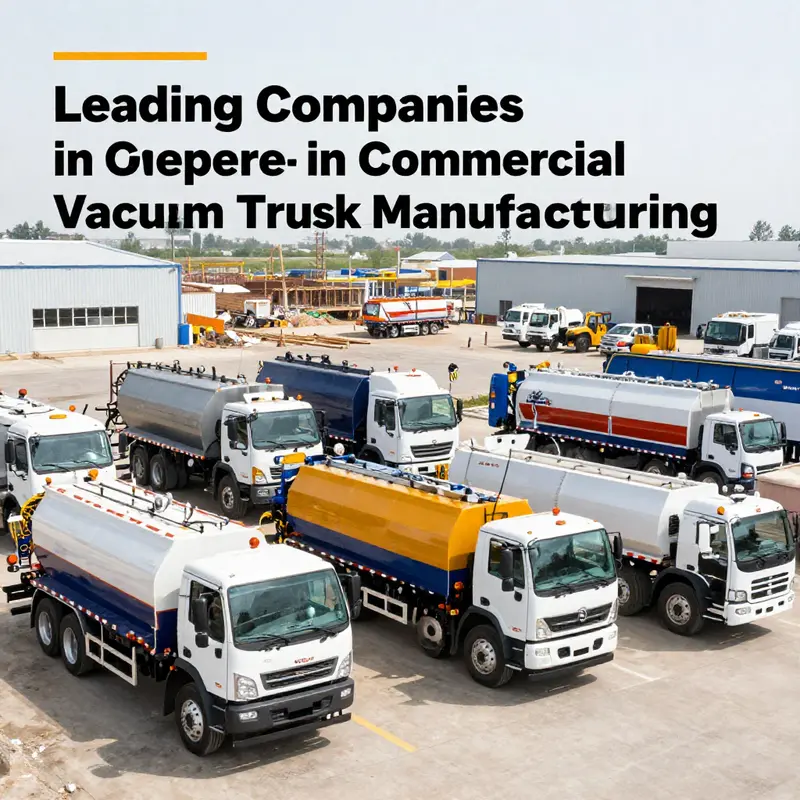
Leading builders set the standards for commercial vacuum trucks through design focus and market reach. Manufacturers vary in scale, specialization, and approach. Some concentrate on heavy industrial duty and high-capacity suction. Others design combination units that handle both dry and wet material. Many integrate features that respond to environmental rules and operator needs. The result is a market where brand choice influences uptime, operating cost, and application fit.
Major North American manufacturers anchor the sector with deep dealer networks and strong aftermarket support. These firms emphasize robustness and serviceability. Their trucks are common with municipalities, contractors, and industrial service providers. They often offer modular chassis and vacuum unit options to suit local requirements. That flexibility reduces integration issues and speeds deployment on new jobs. Historically, these companies built reputations on reliability and parts availability. Buyers in the region frequently weigh total cost of ownership above initial price. Warranty terms, local service presence, and the size of the spare parts inventory become critical decision factors.
Another group of producers focuses on sewer and pipeline maintenance. These specialized builders combine high-pressure water systems with vacuum units designed to recover solids and liquids from confined spaces. Their machines prioritize filtration, solids handling, and safe disposal pathways. Features often include remote operation, hot-water systems for heavy grease removal, and advanced debris separation to maximize runtime. For operations that require rapid turnaround, these manufacturers design quick-access service points and simplified controls. The result is equipment tailored to frequent starts and stops and dirty, abrasive loads.
European manufacturers approach vacuum truck design with a strong emphasis on efficiency and environmental impact. They include specialized engineering to limit emissions, minimize noise, and reduce water use. European firms also adopt a systems view. They engineer vacuum units, chassis adaptations, and operator ergonomics as one solution. This approach helps fleet operators meet tightening emissions and noise regulations. It also eases compliance reporting and lowers risk in urban operations where rules are strict.
Asia, and China specifically, has become a notable source of both cost-competitive models and rapidly evolving technology. Chinese companies have grown in both domestic and export markets. Their advantage is often aggressive pricing and fast lead times. Many now invest in quality control and overseas certification. Buyers considering these options must verify build standards and dealer support. When supported by a reliable sales and service channel, these trucks can offer strong value for price-sensitive markets. However, long-term parts availability and compatibility with local components remain top concerns.
Across regions, mid-size specialists and niche manufacturers fill critical roles. These companies innovate in areas like lightweight construction, compact mounting, and custom bodywork. They serve customers with unique needs, such as industrial vacuuming in sensitive facilities or operations that require custom attachments. Their smaller scale allows rapid iteration and closer collaboration with customers. For specialized tasks, they often deliver better-fit solutions than high-volume builders.
Technology differentiates modern machines. Recent advances include improved suction capacity through optimized blower and pump designs. Filtration systems have progressed to capture finer solids while protecting the vacuum train. Water recycling systems reduce freshwater consumption and lower disposal volumes. Controls now provide better diagnostic data and simpler interfaces. Some manufacturers deliver telematics and predictive maintenance tools. Those features reduce downtime and support better asset management. The companies that integrate practical applications of these technologies tend to win repeat business.
Regulatory pressure shapes product development. Builders adapt to emissions standards and noise limits in targeted markets. Many engage with regulatory bodies and customers to interpret evolving rules. This engagement ensures new models meet or anticipate requirements. For buyers, this means a manufacturer’s regulatory focus can translate directly into fewer retrofits and lower compliance risk. For more context on how OEMs face emissions rules, see the industry commentary on OEMs seek clarity in emissions regulations.
Sustainability trends are pushing manufacturers toward alternate powertrains. Hybrid and electric vacuum systems are under development. These designs aim to cut emissions and reduce fuel use during extended idle periods. Electrification also addresses urban operation constraints, where local ordinances increasingly limit diesel emissions. Adoption is still uneven. Battery weight, energy density, and infrastructure costs remain limiting factors. Early implementations often pair electric drive components with conventional engines. As battery tech improves, expect broader availability of fully electric units for urban and planned-route work.
Serviceability remains a deciding factor for most buyers. Manufacturers that design easy access to wear items lower maintenance time. Standardization of parts across model lines simplifies inventory. Training resources, clear diagnostics, and remote support further reduce downtime. For fleets, a vendor with an extensive service footprint and responsive support can save significant operating expense over a truck’s life. Leasing and rental partners increasingly prefer manufacturers with predictable maintenance needs and strong technical documentation.
Customization and upfitting are common. Many manufacturers provide base vacuum systems that integrators adapt to customer chassis. Options include tank volumes, water recovery systems, hose storage, and specialized nozzles. Buyers must evaluate how flexible the manufacturer is with custom requests. A cooperative engineering approach avoids costly retrofits later. The best suppliers help customers define specifications that align with real-world tasks. Those relationships often begin with detailed application reviews and end with field trials and iterative adjustments.
Global supply chains influence delivery times and pricing. Manufacturers with diversified production footprints can mitigate regional disruptions. Conversely, those that rely on single-source components may face extended lead times. In choosing a supplier, fleet managers should examine sourcing strategies and contingency plans. Transparency about production capacity and component lead times helps set realistic procurement expectations.
Market segmentation is important to understand. Municipal fleets typically prioritize public-safety features, emission compliance, and noise control. Industrial customers focus on capacity, filtration efficiency, and reliability under continuous heavy use. Environmental service companies value combination units that handle both hazardous and non-hazardous materials. The best manufacturers offer model lines and options that match these segments. Buyers who align specifications with intended use secure better lifecycle performance and cost predictability.
Dealer networks and parts logistics complete the picture. Large manufacturers maintain nationwide dealer coverage. That presence provides easier access to trained technicians and faster parts shipping. Smaller builders may compensate with regional partnerships and specialized training. Buyers should verify spare parts delivery times and whether field technicians receive regular factory training. These behind-the-scenes capabilities most affect long-term uptime and costs.
Choosing among manufacturers is a process of matching product strengths to operational needs. Consider capacity, filtration performance, ease of maintenance, emissions strategy, and the vendor’s aftermarket support. Where possible, evaluate machines in the field and request reference fleets. A short pilot program reveals many practical differences. For a consolidated comparison of suppliers and how to weigh capacity, filtration, and application features, consult a comprehensive industry overview available here: https://www.vacuumtruck.com/top-industrial-vacuum-truck-service-companies/.
null
null
Global Currents of Commercial Vacuum Truck Manufacturing: Growth, Geography, and the Rise of a Connected Fleet

The global commercial vacuum truck manufacturing landscape is evolving into a robust, multi-paceted ecosystem where demand from municipal services, industrial waste management, and environmental remediation converges with rapid technological advancement and a progressively globalized supply chain. Market analyses place the industry on a steady growth trajectory, with a valuation around USD 2.17 billion in 2025 and a projected compound annual growth rate (CAGR) of approximately 7.6% to 2031. Other forecasts push the growth closer to 9.8% or even 12.18%, suggesting the market could approach USD 3.97 billion by 2034. Such a consensus points to sustained momentum, driven by a mix of practical needs and strategic investments that together shape how cities and industries manage liquids, sludge, and debris. The trajectory is not merely about larger or more capable machines; it is about how fleets are configured, serviced, and integrated into broader operations that value reliability, efficiency, and environmental stewardship. In this sense, the market’s growth reflects a shift from isolated purchases to a more holistic view of fleet performance, maintenance costs, and regulatory compliance, with manufacturers responding to these concerns through adaptable platforms and smarter production approaches.
At the heart of this expansion are several intertwined drivers. Advances in vehicle technology have improved the integrity of vacuum systems and the durability of tanks, pumps, and safety features. Materials science now enables tanks that resist corrosion and wear under harsh liquids and slurries, while pumping technologies are optimized for faster draw rates and reduced power consumption. Safety enhancements—ranging from integrated monitoring to improved noise containment and spill prevention—enhance operator confidence and meet stringent workplace standards. Urbanization magnifies the pressure to manage wastewater, street cleaning, and sewer maintenance more efficiently, and vacuum trucks are increasingly deployed to address those tasks with minimal disruption to dense urban environments. In addition, stricter environmental regulations are nudging both public agencies and private operators toward equipment that reduces emissions, mitigates noise, and supports safer handling of hazardous substances.
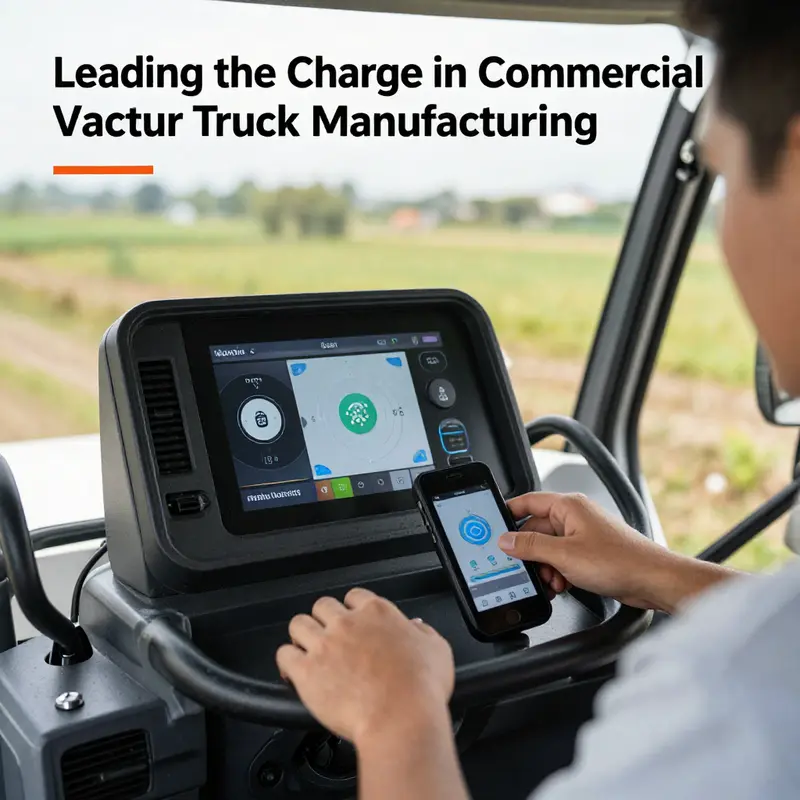
Another pivotal factor is the ongoing integration of digital technologies into fleet management. Telematics, remote diagnostics, and real-time performance analytics enable operators to monitor suction capacity, pumping efficiency, and maintenance needs across entire fleets. This digital layer translates into lower total cost of ownership and higher uptime, because issues are anticipated, scheduled, and resolved before they escalate into costly outages. End users are discovering that data-driven maintenance helps align procurement with maintenance budgets, spare parts strategies, and service networks, which in turn reinforces confidence in larger capital purchases and longer-term planning. These capabilities position vacuum trucks not merely as standalone workhorses but as components of a connected operations ecosystem that spans procurement, maintenance, and compliance.
Geographically, the industry’s manufacturing and distribution footprint mirrors a broader trend in modern industrial production. Key hubs are located in North America, Europe, and parts of the Asia-Pacific region, with a growing emphasis on regional assembly and final-testing facilities to shorten lead times and adapt configurations to local standards. A defining characteristic of today’s market is its globalized supply chain: while many manufacturers are anchored in Western markets, complex subsystems—particularly high-precision pumps and sophisticated electronic controls—are sourced from Asia and other regions to optimize cost efficiency without compromising quality or regulatory compliance. This globalized model supports flexible production schedules and a broader, more responsive service network that can respond to regional demand patterns while maintaining global compatibility across models and configurations.
End users benefit from this distribution dynamic in tangible ways. A global network promises access to a broader array of configurations suited to diverse tasks, from municipal sewer maintenance to industrial spill response. Standardization also matters; common specifications—such as tire sizes suitable for Class 6–8 vehicles—facilitate maintenance, reduce downtime, and simplify parts inventories for fleets that span multiple regions. Such standardization does not erase regional customization; rather, it creates a baseline that enables manufacturers to deliver tailored packages for different markets while preserving interoperability. The result is greater predictability in operations and more consistent service levels for fleet operators who manage multiple sites or jurisdictions.
Within this landscape, the role of regulatory environments cannot be overstated. Environmental regulations, noise restrictions, and safety codes exert a powerful influence on design priorities and purchasing decisions. Authorities increasingly emphasize lower emissions and quieter operation, pushing manufacturers to explore electric and hybrid propulsion concepts where feasible and to refine engine and pump combinations that minimize environmental impact without sacrificing performance. In parallel, there is a push toward more transparent data sharing around emissions, fuel usage, and maintenance histories, which dovetails with the broader trend toward digital fleet management. As the regulatory landscape evolves, operators and manufacturers alike must navigate a shifting set of expectations that rewards transparent reporting, energy efficiency, and safer work practices.
The interplay between market growth and global distribution also reshapes how end users evaluate value. Municipal agencies, utilities, and industrial contractors increasingly seek solutions that balance upfront cost with long-term reliability and serviceability. This calculus favors manufacturers that invest in modular designs, widely distributed training programs, and robust after-sales support. Comprehensive service networks become a differentiator when downtime costs rise with larger fleets and more demanding contracts. In this context, the ability to source spare parts quickly, access training resources, and obtain timely field service becomes as important as the initial purchase price. The result is a more mature market where value is defined by a coherent ecosystem—equipment, services, data, and the ability to scale operations in step with urban growth and regulatory change.
The chapter’s theme also intersects with a broader conversation about how the industry responds to labor and skills challenges. As fleets expand and diversifying tasks increase, operators require user-friendly interfaces and serviceability that reduce training burdens and downtime. This has spurred interest in redesigned interfaces, more intuitive maintenance procedures, and modular components that technicians can replace with minimal specialized tools. The shift toward ease of service and lower lifecycle costs aligns with the industry’s longer-term goals of sustainability and efficiency. Even as markets expand, there is recognition that the strongest players will be those who can harmonize performance with accessibility—making the equipment both capable and easy to deploy across varied teams and projects.
The future horizon is shaped by several converging trends. Electric and hybrid drive configurations are gradually entering the segment, offering potential reductions in fuel consumption and emissions that align with increasingly ambitious environmental targets. While electrification may be uneven across geographies due to infrastructure and range considerations, the pursuit of alternative powertrains underscores a broader industry commitment to lowering the environmental footprint without sacrificing service rates or suction efficacy. Alongside propulsion shifts, improvements in tank design, material science, and suction technology continue to push reliability and productivity higher. Water recycling and efficient hydro-mechanical systems are becoming more common, enabling operations to reuse fluids where appropriate and to minimize waste handling costs on job sites. The integration of smart controls and diagnostic capabilities further accelerates the adoption of predictive maintenance and proactive fleet management, helping operators optimize routes, utilization, and uptime.
Against this backdrop, the market’s global distribution and acceleration in demand reflect a sophisticated balance of scale, specialization, and adaptability. In regions with mature waste and water infrastructure, demand tends to favor larger, more feature-rich configurations that can address complex urban networks and industrial sites. In developing markets, the emphasis may tilt toward cost-effective, reliable solutions that can perform essential tasks with fewer support resources. The same core capabilities—powerful suction, robust containment, safe handling of liquids, and flexible deployment—are crucial across markets, but the path to achieving these needs varies with local conditions, procurement policies, and regulatory contexts. This reality reinforces the value of an integrated supply chain that can respond to regional needs while maintaining compatibility with global standards.
From an industry-wide perspective, the thrust of future growth will hinge on how well manufacturers translate global scale into local relevance. This means sustaining a pipeline of adaptable product families, expanding regional training and service networks, and fostering closer collaboration with municipal buyers, industrial customers, and environmental service providers. It also means communicating clearly about total cost of ownership, lifecycle performance, and the practical benefits of data-driven fleet management. In an arena where end users increasingly value uptime and operational resilience, the winning formula blends technical excellence with a responsive, location-aware support framework. The result is a market that not only grows in size but also deepens in its capacity to address the nuanced needs of diverse customers across multiple continents.
For readers seeking to situate these trends within a broader research context, recent industry analyses highlight a shared expectation of sustained expansion alongside a growing commitment to sustainable practices and digital enablement. The data points to a resilient foundation for continued investment in both product development and regional capacity. It also points to a need for ongoing attention to regulatory alignment, supply chain stability, and the cultivation of skilled service networks that can keep pace with advancing technology and rising user expectations. In this sense, the global distribution and market trends of commercial vacuum truck manufacturing are not simply about where the vehicles are made or sold; they reflect a broader industrial shift toward integrated, data-informed, environmentally conscious fleet operations that can meet the demands of modern urban and industrial landscapes.
In the context of these dynamics, the industry must also consider the implications for cross-border collaboration and policy alignment. As supply chains become more interconnected, the importance of harmonizing standards, testing protocols, and export controls grows. Operators who plan regional or international projects benefit from clarity on regulatory expectations, the ability to source compatible components across borders, and the assurance that service and maintenance will be consistently supported regardless of location. The pace of change calls for strategic partnerships and a capacity to adapt quickly to evolving market conditions, whether that means retooling facilities to accommodate new drivetrains, updating training curricula for technicians, or redesigning components to meet tighter noise or emissions requirements. This adaptive posture is not merely a competitive advantage; it is a practical necessity in a market defined by rapid technological progress and increasingly stringent environmental expectations.
As this chapter closes, the picture that emerges is one of a dynamic, globally interconnected manufacturing sector that is reshaping how cities and industries manage waste, cleanup, and environmental stewardship. The convergence of urban growth, regulatory pressure, innovation in propulsion and materials, and the strategic use of digital tools is fueling a durable upward trajectory. Operators stand to gain from a diversified ecosystem that offers scalable configurations, dependable service networks, and data-enabled efficiency. Manufacturers, in turn, are compelled to balance global reach with local adaptability, investing in modular designs, regional partnerships, and continuous improvement programs that keep pace with ever-shifting requirements. In short, the market’s evolution is less a story of a few dominant players and more a narrative of a connected, responsive ecosystem that can deliver reliable, compliant, and cost-effective solutions to a broad spectrum of customers across the world. For stakeholders seeking deeper insight into the external research that informs these projections, see the external data reference below.
External data reference: TechSci Research vacuum truck market report.
For readers exploring related industry discourse or practical implications, consider the broader conversations around emissions policy and fleet compliance in the trucking sector, which intersect with the ways manufacturers approach system design and integration. As OEMs seek clarity in emissions regulations, the alignment between regulatory clarity and product capability becomes a clearer path to longer-term affordability and performance across global fleets.
Balancing Growth and Friction: Challenges and Opportunities for Commercial Vacuum Truck Manufacturers
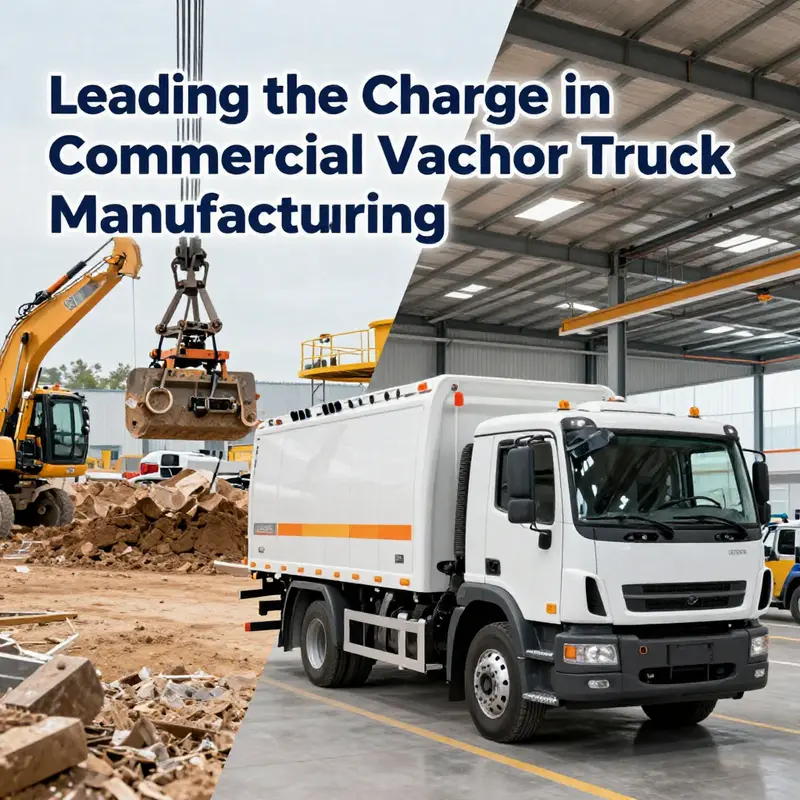
The market for commercial vacuum trucks sits at an inflection point where clear, near-term opportunities collide with structural challenges. Demand drivers are strong and diverse: tighter environmental rules, expanding urban infrastructure, and broader acceptance of specialized cleaning and excavation methods are all increasing the need for capable vehicles. At the same time, manufacturers face high capital costs, skilled labor shortages, supply-chain fragility, and rising customer expectations for sustainability and digital integration. The companies that succeed will be those that translate technical innovation into predictable total cost of ownership, that build service networks adapted to dispersed end users, and that design platforms flexible enough to meet regulation-driven variations across regions.
Regulatory pressure is one of the strongest and most consistent growth levers. Governments are tightening standards for emissions, noise, and hazardous material handling. These rules force fleet managers and contractors to upgrade or replace older equipment. Such mandates create steady demand for new units with improved filtration, containment, and exhaust systems. Clarity in emissions policy helps manufacturers plan powertrain strategies, which is why industry stakeholders closely follow regulatory guidance and lobbying outcomes. For a deeper look at how OEMs are engaging on regulatory clarity, see OEMs seek clarity in emissions regulations. Clear rules reduce compliance risk for buyers, supporting higher investment in modern equipment.
Technology is another major opportunity. Advances in suction systems, water recycling, and high-pressure jetting make vacuum trucks more efficient and more versatile. Integration of non-destructive excavation technologies broadens addressable markets to include utility locating and underground infrastructure work. Telemetry and remote-control capabilities raise safety levels and enable predictive maintenance. When manufacturers embed sensors and analytics, they create recurring value beyond the sale of the vehicle. Customers gain uptime, and manufacturers gain recurring revenue streams or differentiation in tender competitions.
Yet these technological gains often come with higher upfront prices. Advanced vacuum units require robust pumps, high-end filtration systems, and sometimes complex hybrid or electric drivetrains. For large contractors and municipalities, the lifetime benefits justify investment. For smaller operators, the sticker shock can be prohibitive. This cost barrier is compounded by maintenance expenses and the need for specialized spare parts. Manufacturers therefore face a dual task: continue to push technical boundaries while developing pricing and ownership models that broaden market access.
Financing and ownership models are strategic tools to overcome cost barriers. Leasing, rental fleets, and pay-per-use arrangements reduce initial outlays. Manufacturers working with financiers can create bundled offers that include maintenance and telematics. Such packages convert a capital expense into an operating expense, which can be more palatable for small and medium-sized enterprises. Additionally, an emphasis on modular design reduces lifecycle costs by enabling component replacement and upgrades rather than full-unit swaps.
Modularity also helps with production economics and customization. A modular platform lets manufacturers build multiple configurations from shared subassemblies. This reduces inventory complexity and enables faster response to custom requests. For example, a shared chassis and vacuum module with interchangeable tanks or jetting systems keeps manufacturing flexible. Modular strategies can translate into lower unit costs at higher volumes and a shorter lead time for custom orders. However, achieving true modularity requires upfront engineering investment and tight supplier coordination.
Supply-chain resilience is an area of acute vulnerability. High-value components like specialized vacuum pumps, filtration cartridges, and electronic controllers are often sourced from a narrow supplier base. Disruptions can delay delivery schedules and inflate costs. Manufacturers can hedge by qualifying multiple suppliers, keeping critical spares in regional warehouses, or partnering for local production. These steps improve uptime for end users too, since spare-part availability often determines how quickly a vehicle returns to service.
Workforce competency shapes operational viability across the industry. Advanced vacuum trucks demand operators with mechanical and digital skills. Training programs, certified service networks, and clear operating manuals are indispensable. Manufacturers that invest in dealer training and certification win long-term loyalty. They also help reduce accidents and compliance failures, which protects brand reputation and reduces liability. For smaller fleets, manufacturer-provided training or on-call remote diagnostics reduces downtime and compensates for limited in-house expertise.
Market segmentation and channel strategies matter. Municipalities and large industrial contractors prioritize reliability and total cost of ownership. Small contractors and rental houses prioritize upfront affordability and ease of maintenance. Manufacturers that tailor offerings to these segments increase market penetration. For instance, lower-cost models with simplified controls can serve local contractors, while premium, fully instrumented units serve industrial and hazardous-material markets. Rental companies can act as demand multipliers, introducing advanced technologies to smaller operators who cannot justify full purchase.
Sustainability is both a compliance issue and a differentiator. Water recycling systems, reduced fuel consumption through efficient pumps, and noise suppression systems reduce environmental impacts and operating costs. Electric and hybrid drivetrains are emerging as strategic bets in regions with supportive infrastructure and strict emissions standards. Manufacturers must weigh battery weight and range against the operational needs of high-power vacuuming tasks. Where full electrification remains impractical, hybrid solutions can still deliver meaningful emissions and noise reductions.
International competition reshapes pricing and value expectations. Manufacturers from regions with lower production costs have expanded globally, offering price-competitive units. This competition forces established manufacturers to justify premium prices through quality, certification, and after-sales support. At the same time, global players face localization needs, including compliance with regional regulations and adaptation to local service networks. Strategic partnerships, local assembly, and focused distributor relationships help international suppliers gain traction while allowing incumbents to defend market share.
Aftermarket support influences buying decisions as much as upfront capability. Rapid access to spare parts, certified repair centers, and software updates keeps fleets operational. Manufacturers that offer extended warranties, remote diagnostics, and scheduled maintenance contracts raise the perceived value of their units. Effective aftermarket services can also be a source of recurring revenue and a hedge against margin compression in new equipment sales.
Safety and operational ergonomics remain central concerns. Remote-control systems and improved cab layouts reduce operator fatigue and exposure to hazardous materials. Filtration and containment designs that limit airborne contaminants protect operators and reduce regulatory risk. Demonstrated safety features shorten procurement cycles for risk-averse buyers and can be decisive in contract awards for public sector work.
Looking ahead, data and connectivity promise new revenue models and operational benefits. Telematics enable usage-based maintenance, route optimization, and fleet-level performance analytics. Manufacturers that standardize data outputs and offer analytics platforms can capture additional value. Such services help customers reduce downtime and optimize asset deployment across projects.
Finally, collaboration across the value chain unlocks opportunities. Partnerships with component makers, financing institutions, and rental operators expand market reach. Joint development projects with utilities and municipalities can produce purpose-built solutions and accelerate adoption. Where manufacturers engage early with regulators, they can influence standards in ways that favor practical, verifiable technical solutions. As regulatory regimes evolve, such collaboration shortens the adaptation cycle and reduces compliance uncertainty.
The net picture is clear: the vacuum truck industry is poised for growth, but realizing that growth requires deliberate responses to cost, logistics, skills, and regulation. Manufacturers that align modular design, resilient supply chains, and financing options with strong aftermarket support and a focus on sustainability will capture the largest share of emerging demand. Those that lag on service networks or ignore total cost of ownership risk being undercut by lower-priced rivals or sidelined by rapid regulatory shifts. For a detailed exploration of the market drivers and projected growth through 2026, see the linked market overview: https://www.linkedin.com/pulse/vacuum-truck-market-growth-drivers-opportunities-2026-2026-02-25/.
Final thoughts
As the commercial vacuum truck market continues to evolve, driven by technological advancements and a growing emphasis on sustainability, recognizing the leading manufacturers and their innovative approaches becomes essential for logistics and construction professionals. By understanding the landscape of manufacturers like Federal Signal, Vac-Con, and the emerging players best positioned to navigate market dynamics, stakeholders can make informed choices that align with their operational needs and environmental standards. The future of commercial vacuum trucks holds both challenges and opportunities, which can yield greater efficiencies and improved service delivery across industries.