
The Queens-Midtown Tunnel serves as a vital conduit for commuters and transport across New York City, yet commercial trucks face strict regulations regarding access. For logistics and freight company owners, construction and mining enterprise procurement teams, as well as small business owners with delivery fleets, understanding these regulations is critical. This article will shed light on the restrictions commercial trucks face while traversing the tunnel, outline available exceptions, guide on local truck routes, examine technical regulations that impact access, and ultimately underscore the strategic importance of this artery within logistical operations.
When Giants Pass Beneath the River: Navigating Commercial Truck Access to the Queens Midtown Tunnel
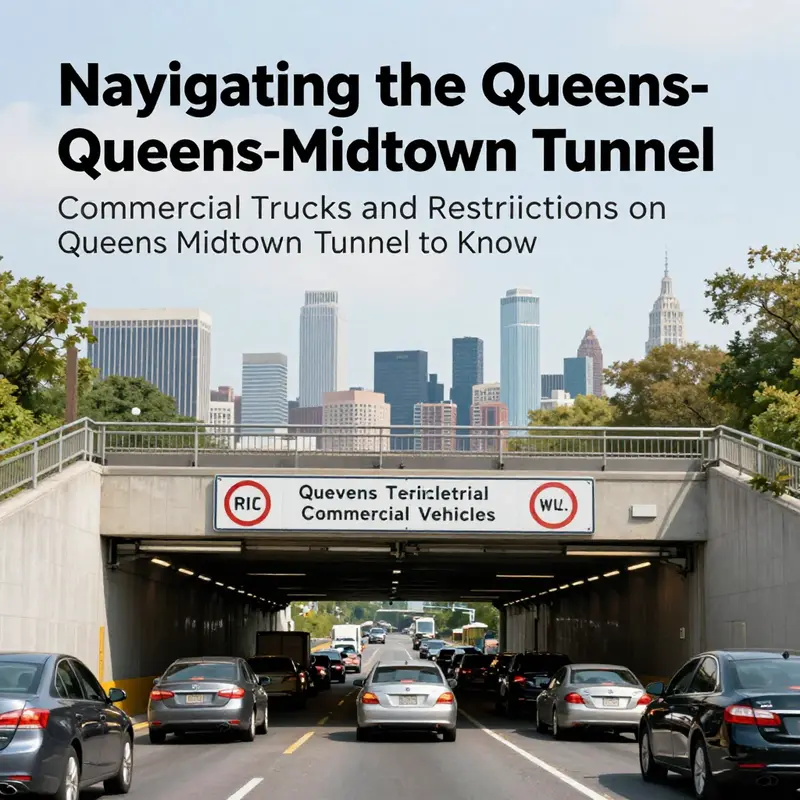
The Queens Midtown Tunnel is more than a conduit between boroughs; it is a carefully managed artery that channels millions of journeys through a narrow, engineered corridor beneath the East River. Its purpose is straightforward in name yet complex in operation: move people efficiently while preserving safety, ventilation, and structural integrity in a space engineered for hundreds of thousands of daily trips, not for the unbounded flow of freight. In practical terms, this means commercial trucks—those essential if sometimes inconvenient participants in city logistics—face a framework of rules that make the tunnel accessible to only a subset of freight movements. The bottom line, reinforced by policy and practice, is clear: commercial trucks are generally not permitted to use the Queens Midtown Tunnel. Yet the door is not permanently shut; the door can open, under strict conditions, to carriers who can demonstrate necessity, route specificity, and compliance with a tightly controlled authorization process through local routes standing within New York City’s broader truck-network framework. This distinction—general prohibition paired with tightly scoped exceptions—underlines a citywide effort to balance freight needs with the tunnel’s capacity for safe, predictable operation in an underground environment.
The general prohibition rests on several pillars. First, the tunnel is designed around a traffic mix that prioritizes predictability and safety in a confined space. A freight vehicle, especially a large one, introduces dynamics—weight-induced stress, slower maneuvering, longer stopping distances, and the potential for vehicle malfunctions or cargo shifts—that can disproportionately impact tunnel safety. In a setting where emergency egress routes, ventilation shafts, and bore integrity must be maintained within tight margins, keeping the tunnel free from most commercial traffic reduces risk and helps preserve ventilation effectiveness and incident response times. Second, the tunnel’s operating plans consider incidents that could cascade into hours of lane closures, reducing the capacity to handle both freight disruptions and commuter demand. Restricting trucks to a regulated framework allows agencies to respond quickly to incidents without compounding risk for other tunnel users. In short, the policy is not a blanket rejection of freight mobility but a deliberate calibration that preserves safety, reliability, and the integrity of critical infrastructure.
However, a nuanced pathway does exist for certain trucks within New York City’s local truck route network. The policy permits, under proper authorization, movement of trucks along specific local routes that may intersect or pass through the vicinity of the Queens Midtown Tunnel. This pathway requires a formal determination of need, alignment with a defined corridor plan, and, crucially, adherence to size, weight, and equipment constraints that are compatible with the tunnel’s physical and operational realities. In practice, a truck traveling from one end of Queens to the other could be considered for access, but only if the route is pre-approved and the operator can demonstrate that crossing the tunnel constitutes the most efficient or necessary option within a sanctioned travel plan. The authorization is not a general privilege; it is a permission granted after review by the responsible municipal or state authorities, and it assumes ongoing compliance with the route, time windows, and any escort or staging requirements that may be stipulated by the approving agency. This framework reflects a broader principle in urban freight policy: efficient goods movement must be reconciled with the realities of dense urban traffic, vulnerable infrastructure, and the city’s commitment to protecting all road users.
The local-route approach also clarifies why High Occupancy Vehicle (HOV) concepts do not translate into a backdoor for freight through the tunnel. HOV provisions are designed to optimize the movement of people, not freight. Even in corridors where carpooling or bus traffic receives priority, commercial trucks do not gain entry on the basis of passenger occupancy. The tunnel’s access calculus places freight within a distinct regulatory lane, separate from HOV lanes that are reserved for non-commercial travel. This separation helps maintain separation of risk profiles and ensures that incentives intended to reduce vehicle counts on city streets do not collide with the safety and capacity constraints that govern underground infrastructure.
Beyond the policy framework, the Queens Midtown Tunnel’s physical constraints reinforce the accessibility picture, though they are not the sole determinants of access. Height and width restrictions—visible as you approach the bore—are significant. Taller trailers and unusually wide configurations encounter clearance challenges and may be physically unable to fit, regardless of authorization. The tunnel’s interior geometry, pillars, and lane widths shape what is possible, and these features interact with the operational rules in ways that limit exceptions. Yet the most decisive factor remains regulatory: the tunnel is not a freight corridor by default, and any access must align with a carefully choreographed plan that prioritizes safety, traffic predictability, and the protection of critical life-safety systems.
Keeping abreast of changes is essential for anyone responsible for planning freight movement in this part of the city. The regulatory landscape is dynamic, with updates often reflected in guidance published by the New York State Department of Transportation (NYSDOT) and the Metropolitan Transportation Authority (MTA), as well as by the New York City Department of Transportation (NYC DOT). The high-level takeaway is simple: before a truck attempts to enter the approach to the tunnel, the operator should verify current access rules, confirm that the route qualifies under the local truck-route program, and ensure that all permits and route conditions are in hand. In practice, this means routine consultation of official sources, proactive route planning, and a readiness to reroute if conditions require. The emphasis on official information helps prevent unnecessary detours, reduces the risk of penalties for unauthorized entry, and promotes smoother operations for fleets that rely on the tunnel as part of a broader cross-borough movement strategy.
From a planning perspective, the restrictions in the Queens Midtown Tunnel shape the logistics calculus for city freight. Shippers, carriers, and dispatchers must weigh the benefits of a shorter river crossing against the likelihood of encountering a restricted corridor. Often, this translates into routing freight around the tunnel to other crossings or into the outer boroughs’ street networks, where larger vehicles can be integrated into the broader city delivery ecosystem with fewer regulatory hurdles. The decision is rarely about distance alone; it is about reliability, predictability, and the ability to align with permit conditions, weigh-station interpretations, lane-management schemes, and the city’s evolving freight policy. The economic implications ripple through schedules, equipment utilization, and customer expectations, reinforcing the reality that urban freight movement operates within a tight weave of policy, infrastructure, and practical constraints.
For readers seeking broader context on how such regulatory issues fit into the larger freight movement landscape, there is ongoing discussion in industry circles about cross-border regulatory issues and the ways in which local rules interact with state and federal guidance. This conversation helps illuminate why a seemingly straightforward question—can a commercial truck go through the Queens Midtown Tunnel? yields a layered answer tied to route specificity, authorization, and ongoing coordination with city and state agencies. The discussion also serves as a reminder that urban freight policy is not static; it evolves with traffic patterns, safety data, and the city’s broader goals for sustainable, reliable movement of goods.
Within industry discussions, regulatory complexities are revisited in broader contexts, as seen in the discussion of cross-border regulatory issues and related policy developments tcas-cross-border-regulatory-issues-event. This kind of reference helps frame how local rules interact with state and federal guidelines and why a simple question about tunnel access often yields a more nuanced answer that depends on route, purpose, and authorization. In that sense, the Queens Midtown Tunnel becomes a case study in how a city negotiates the tension between keeping a critical transit artery open for safety and operations, and ensuring freight movement remains viable through mechanisms built on planning, permits, and disciplined routing.
Ultimately, the Queens Midtown Tunnel remains a gate that favors controlled movement of freight rather than an open channel for all commercial traffic. It embodies a design and policy choice: to reserve a safety-critical artery for trips that are tightly controlled and well planned, even as the rest of the city continues to push for efficient, reliable freight movement through other channels. For shippers and drivers, the practical takeaway is plain—check the permit conditions, know the local truck routes, and always confirm with the official agencies before entering a tunnel that is not meant for general freight use. The goal is not to stymie freight but to harmonize it with the city’s people-moving priorities and the tunnel’s life-safety responsibilities. As cities grow and freight networks adapt, this kind of careful, rules-based approach helps ensure that infrastructure like the Queens Midtown Tunnel remains safe, reliable, and capable of serving its essential function for years to come. External resource: https://www.dot.ny.gov/queens-midtown-tunnel
Crossing Boundaries with Caution: The Nuanced Rules Governing Commercial Trucks and the Queens Midtown Tunnel
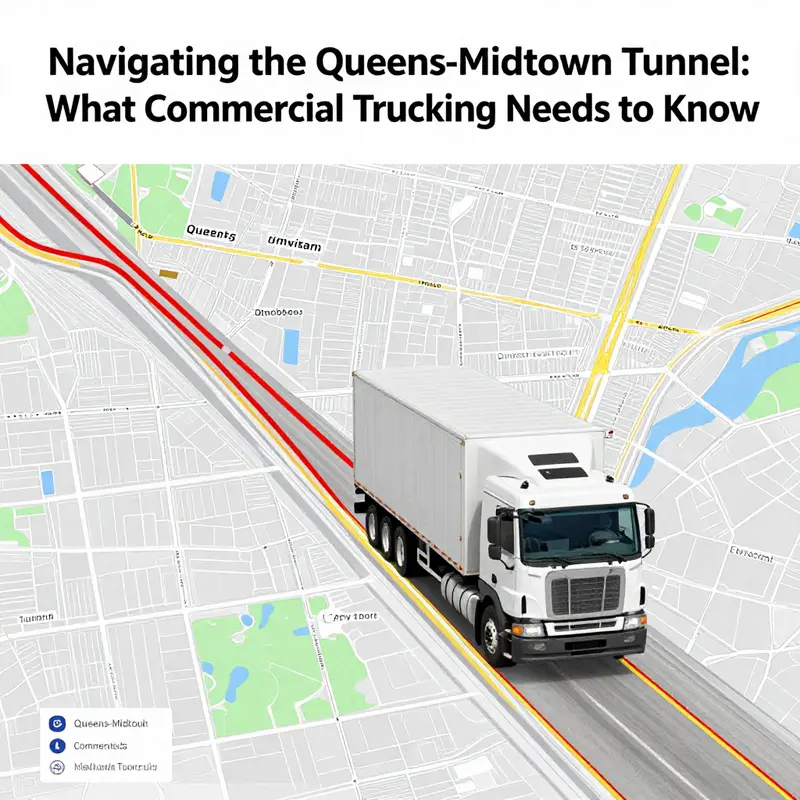
When a freight planner or driver asks whether commercial trucks can pass through the Queens Midtown Tunnel, the answer is not a simple yes or no. The policy is built on safety, ventilation, and urban congestion considerations, which means many heavy trucks face restrictions or must use authorized routes. However, an exception framework exists: if a truck’s journey across Queens is part of a city-approved movement and aligns with designated local truck routes, passage can be authorized.
The New York City Department of Transportation provides definitive guidance on local truck routes and authorization steps. Fleet managers should confirm route eligibility, obtain any required permits, and check for day-to-day changes due to maintenance or traffic management. Ongoing construction around the tunnel can lead to lane reductions and delays, so timing and real-time information are essential.
In practice, the tunnel becomes a viable option only when all conditions are satisfied: the vehicle’s GVWR and equipment meet limits for the tunnel; the route aligns with authorized corridors; and permit status is current. Operators should plan with alternatives in mind and be prepared to adjust schedules to avoid peak periods or disruptions.
For decision-makers, the key takeaway is to treat the Queens Midtown Tunnel as a constrained asset: use it when it reduces overall distance and time and when the route is formally approved, otherwise choose certified detours. Always verify current rules via the NYC DOT trucks page or official advisories before scheduling a crossing.
As context, ongoing infrastructure work around the tunnel can affect access windows and timing, underscoring the value of proactive route planning and real-time traffic information as companions to formal authorization.
Gateways and Guardrails: Navigating Local Truck Routes to Access the Queens Midtown Tunnel
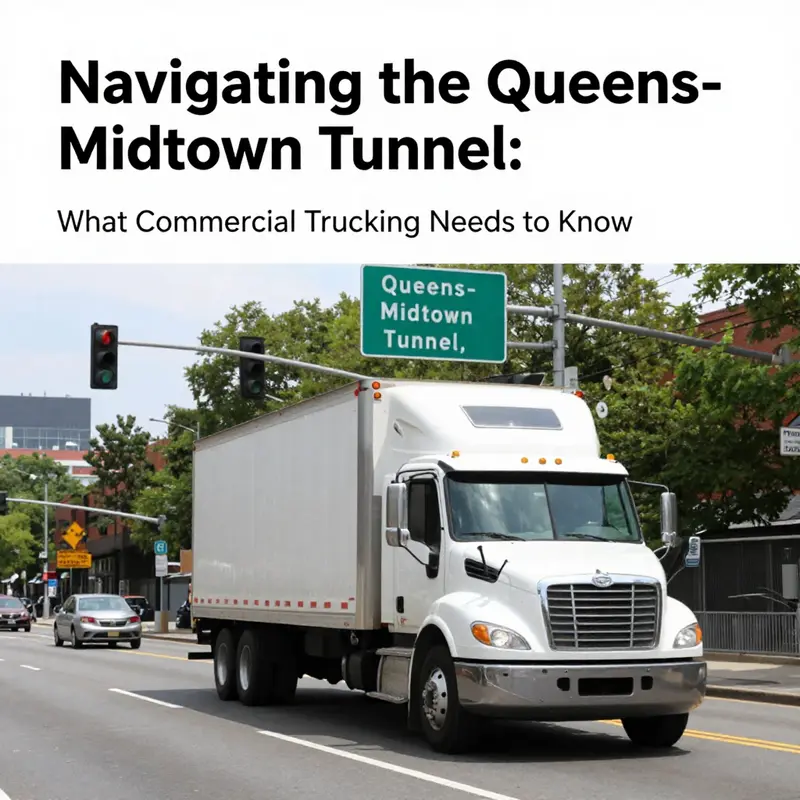
The Queens Midtown Tunnel stands as a crucial artery between two of New York City’s most densely trafficked boroughs, a route that many fleets rely on for timely deliveries and efficient operations. Yet for commercial trucks, passage through its interior is not guaranteed. The tunnel operates under a framework of rules designed to protect safety, maintain traffic flow, and preserve the structural integrity of the passage. While many large commercial vehicles are not permitted to enter, there are carefully defined exceptions tied to the city’s local truck routing network. For drivers planning cross-Queens trips from one end of the borough to the other, these routes offer a potential path to the tunnel—but only when the vehicle and the schedule align with the city’s regulatory and logistical constraints. In practice, the process is less about universal access and more about disciplined routing, precise measurements, and up-to-date authorization. To navigate this landscape, a driver must understand not only the tunnel’s physical constraints but also the web of local rules that governs where and when a truck may travel through the heart of the city.
The physical constraints of the Queens Midtown Tunnel are a first, non-negotiable gate. The structure imposes a height clearance of 12 feet 1 inch and a width clearance of 8 feet 6 inches. These clearances are non-negotiable and serve as a hard stop for any vehicle that would otherwise squeeze through the tunnel’s east- or westbound lanes. In a city where dimensions matter as much as schedules do, a miscalculation with even a few inches of overhang or a marginally oversized load can result in a detour, a costly inspection at the toll plaza, or a return trip. Even when a route seems logical on a map, a driver must confirm that the vehicle’s gross vehicle weight rating, its overall width, and its height are within those limits before attempting the approach. That restriction alone narrows the field dramatically but ensures that the tunnel’s structural design and its traffic management systems function smoothly for those who qualify to pass.
Beyond the physical envelope, the regulatory framework around commercial traffic in this corridor adds a second layer of diligence. The tunnel’s general prohibition on many commercial vehicles is balanced by a carefully orchestrated network of local truck routes. For trucks moving across Queens, the city’s routing network can authorize a lawful passage through or near the tunnel, but this permission hinges on meeting criteria set by city regulators and on aligning with declared routes. In other words, a vehicle cannot simply decide to take the tunnel if it does not have a designated routing path and the proper approvals. The emphasis here is on predictability and safety: routes are designed to minimize conflicts with residential areas, pedestrian activity, and tightly constrained lanes near entry points. The goal is to enable legitimate freight movement while reducing the risk of incidents that would escalate into broader traffic disruptions.
For drivers who operate within the local truck route framework, the practical implications are clear. If a trip within Queens requires crossing from one end to the other, using the designated truck routes can place the tunnel within reach. This is not a universal loophole for all commercial trucks but a controlled corridor where authorization, route compliance, and vehicle specifications align. The process is dynamic and subject to change. Construction projects, emergency repairs, or adjustments to traffic management strategies can alter what is permitted on any given day. Because the city’s street grid is dense and interconnected, even seemingly small routing changes can ripple through to the tunnel’s accessibility. Therefore, drivers must stay informed through official resources and be prepared to adjust plans if a route is temporarily altered or restricted. When a vehicle is prepared to traverse the local routes, it is essential that the operator follows the exact sequence prescribed by the city to reach the tunnel’s approach ramps without deviating into non-permitted corridors.
From a planning perspective, understanding the routing network is as important as knowing the vehicle’s specifications. Before departure, a dispatcher or driver should consult the city’s official guidance on truck routes to confirm which segments are open to their specific vehicle class and load characteristics. The guidance is designed to reflect the city’s current conditions and to minimize the chance of a late-night detour turning into a traffic incident. A practical approach combines route verification with a pre-drive inspection of the truck’s dimensions and weight. The goal is to ensure that the vehicle remains within the permitted envelope throughout the journey, including any adjustments necessitated by roadworks, lane closures, or temporary restrictions. It is common for drivers to cross-check multiple sources, including maps, permit records, and real-time updates from municipal agencies, to build a route that remains viable from start to finish.
The local routing framework also recognizes a distinction between freight movements that cross the tunnel with a clear purpose and vehicles making more localized trips that might approach the curb or use near-tunnel facilities as part of a longer, city-wide itinerary. In some cases, commercial vans and smaller vehicles may undertake these local trips within the defined network, but even those operations must adhere to the established truck routing program. The city’s intent is to confine access to the tunnel to trips that comply with the network, reinforcing both safety and operational efficiency. This is especially important given the tunnel’s high traffic volumes and the surrounding urban environment, where an ill-timed maneuver could trigger cascading delays across multiple corridors.
For anyone navigating these rules, the value of formal guidance cannot be overstated. The official city resources provide the most accurate and up-to-date information, including interactive maps that show permitted routes, time-based restrictions, and the precise points at which trucks may and may not enter the tunnel area. The maps are designed to be user-friendly while also reflecting the city’s evolving traffic management strategies. Practically, this means a driver should not rely on memory or informal hearsay when planning a Queens-to-Manhattan crossing. Instead, a current route plan, verified against the latest city guidance, should anchor the decision to attempt passage through the tunnel. In addition, the guidance often highlights the importance of timing, suggesting that certain routes may be discouraged during peak congestion windows to maintain efficiency and reduce the potential for gridlock.
Within this framework, a driver can weave a sensible narrative of a trip that respects the rules while achieving the needed delivery schedule. The narrative begins with a careful assessment of vehicle dimensions, proceeds through route selection within the local truck network, and culminates in a check against the tunnel’s physical constraints at the entry point. The aim is not simply to reach the tunnel but to approach it with a plan that minimizes risk and maximizes predictability for other road users. The tension between a truck’s need to move goods and the city’s obligation to manage a dense, diverse urban street system is resolved not through friction but through a shared discipline: adherence to routes, respect for clearances, and reliance on authoritative guidance.
As a practical matter for the reader, this means that when a shipment requires passage through the Queens Midtown Tunnel, the route must be validated against the local truck routing network before a single mile is logged. This is not a matter of discretionary access but a matter of policy and safety, codified in city guidance that is periodically updated to reflect real-world conditions. For the fleet operator, the payoff is straightforward: reduced risk of fines or emergency maneuvers, smoother coordination with traffic control devices, and a higher likelihood of delivering on time. For the city, the payoff is a well-managed flow of freight that minimizes disruption to residents and everyday traffic.
The path to the tunnel, then, is less about a universal permit and more about a disciplined, informed, and compliant journey through a carefully mapped taxi of streets. To stay aligned with best practices, operators should tether their on-road decisions to the most current official resources, remain mindful of the tunnel’s clearances, and treat the local truck route network as the controlled pathway that governs access to one of the city’s most consequential freight corridors. For further reading and to verify route specifics, see the NYC DOT Trucks page. The page contains current guidance on truck routes and restrictions. For a broader context, also consult the Truck Routing page with interactive maps and route guidance: https://www.nyc.gov/site/dot/programs/truck-routing.page
Guardrails and Gateways: How Safety Rules Shape Commercial Truck Access to the Queens Midtown Tunnel
The Queens Midtown Tunnel sits at the crossroads of commerce and city life, a tunnel that under the East River quietly bears witness to the steady drumbeat of industry and daily transit. To the untrained eye it is a passage from one borough to another, a straightforward connector that helps move people and goods efficiently. But beneath its concrete arches lies a layered framework of safety standards and design limitations that govern every vehicle that dares to enter. For commercial fleets, this framework translates into a clear, if sometimes frustrating, set of constraints. The tunnel’s purpose is not only to facilitate movement but to do so while preserving the integrity of the infrastructure and the safety of the thousands who pass through each day. The result is a carefully calibrated balance between accessibility and protection, a balance that often narrows the window of permitted commercial access in ways that corridor planners and truck operators alike must respect and plan around.
At the heart of the regulatory picture are three technical provisions that most directly shape a truck’s eligibility to traverse the Queens Midtown Tunnel. First, there is a strict length restriction: vehicles longer than 33 feet are prohibited from entering the tunnel. This rule effectively excludes most longer combinations and many specialized trucks that might be used in distribution networks or industrial operations. The practical effect is that a significant portion of standard drayage equipment, with trailers in the 40-foot to 53-foot range, cannot be accommodated in the tunnel’s confines unless special routing or an alternate corridor is chosen. This is not a mere formality; it is an engineering decision tethered to lane width, sightlines, and the geometry of the tunnel’s approach ramps. The second constraint concerns height. The tunnel’s clearance is fixed at approximately 13 feet 6 inches, a limit that excludes many high-cab, flatbed, and double-stack configurations. The third major constraint is weight, which, while not expressed in a single gross vehicle weight rating in every public-facing document, is governed by the New York City Department of Transportation’s transportation code. The weight limit reflects the city’s emphasis on protecting structural components, ventilation systems, and roadbed integrity, all of which bear the burden when heavier vehicles pass through a tunnel that was built and tuned for much lighter traffic profiles than those seen on modern intercity corridors.
Together these regulations create an operational landscape that is as much about route design as it is about vehicle capability. Some readers might wonder why such limits are not simply waived for critical deliveries or urgent shipments. The answer lies in the tandem goals that underlie tunnel management: safety and reliability. The tunnel is a constrained environment. Its ventilation systems are calibrated for certain exhaust loads, its lane widths do not easily accommodate oversized turning radii, and the emergency egress and incident response plans assume a particular vehicle profile. When a truck longer than 33 feet, taller than 13 feet 6 inches, or heavier than the city’s standard thresholds attempts to pass through, the risk of an accident increases. Even when a vehicle might technically reach the tunnel if a permit were granted, the cost in potential disruption and the probability of a traffic incident would be far too high to justify routine allowances. The enforcement response to violations is not merely punitive; it is a public safety measure that prevents bottlenecks and accidents from rippling across a major urban corridor.
But the story is not a simple one of blanket prohibition. The city does recognize that there are legitimate times when a commercial vehicle must be routed through the area, and it maintains a framework for exceptions through its local truck route network. In practice, a truck traveling from one end of Queens to the other may be permitted to use the local truck route network, which could include access to the Queens Midtown Tunnel under certain conditions and with proper authorization. This caveat turns the tunnel into a potential gateway for certain operations, provided that the vehicle and its trip comply with the designated routes, obtain the necessary permits, and navigate the posted conditions with diligence. The process underscores a broader philosophy: safety and efficiency can coexist when there is clarity about where a truck may go, what it can carry, and how it should move through high-risk infrastructure. Fleet planners often frame their route strategies around these rules, mapping out alternatives that keep heavy or oversized equipment off the tunnel while still meeting delivery windows. They may opt to utilize other crossings or to time shipments to avoid peak periods when congestion and operational stress on the tunnel are highest, thereby preserving reliability for both freight and passenger traffic.
This regulatory environment invites a broader reflection on how cities balance the needs of modern commerce with the imperative to protect aging infrastructure and urban safety. The Queens Midtown Tunnel is a conduit not just for goods but for the city’s broader economic health. When a truck is envisioned as part of a larger logistical chain, planners must reconcile the objective of timely, cost-effective delivery with the constraints imposed by geometry, weight-bearing capacity, and emergency responsiveness. The dialogue between regulatory clarity and operational flexibility plays out in every shipment that contemplates crossing under the East River. It is a dialogue that requires ongoing coordination among fleet operators, city agencies, and local authorities who monitor, adjust, and sometimes update the local truck route designations. In that sense, the rules are less about restrictive commands and more about an adaptable framework that can respond to evolving traffic patterns, changing infrastructure conditions, and the city’s evolving demands for efficient but safe freight movement.
For industry practitioners, the practical takeaway is to engage early with the city’s transportation office and to cross-check the official local truck route designations before attempting a Queens Midtown Tunnel crossing with a commercial vehicle. The guidance is explicit that authorization and route compliance are prerequisites for any access that might be allowed under exceptional circumstances. A key part of this process is understanding the eligibility of a vehicle for a given route, ensuring that the truck’s physical dimensions align with posted clearance limits, and confirming that the vehicle’s weight is within permissible bounds for the specific tunnel segment and time of day. Signage, lane assignments, and ramp geometries can shift with maintenance cycles or traffic management strategies, so reliance on static assumptions is risky. The most prudent path is to treat the tunnel as a controlled access point, where a permit, a clear route plan, and a well-documented justification for entry are the baseline requirements.
Within the larger ecosystem of freight and regulatory knowledge, this topic sits alongside broader conversations about how trucking practices adapt to changing policy environments. Industry conversations and regulatory forums regularly explore how local and cross-border rules shape route planning, vehicle configurations, and compliance strategies. For readers who want to explore these conversations, there is a relevant industry briefing that examines cross-border regulatory issues and their implications for fleet operations. This discussion highlights how interconnected regulatory landscapes can be, influencing decisions about vehicle specifications, routing, and the timing of shipments across metropolitan hubs. TCAs cross-border regulatory issues event serves as a reminder that a truck’s ability to move through a city corridor is not just a matter of metric limits but a piece of a larger strategic puzzle.
As the chapter moves forward, readers will see how these rules intersect with other urban freight considerations, including emissions considerations, the balance between efficiency and safety, and the practical realities of operating in a dense, time-critical urban environment. The Queens Midtown Tunnel thus exemplifies how a single piece of infrastructure can shape the decisions of countless stakeholders—from the owner-operator planning a daily route to the municipal officials designing and revising the corridor’s regulatory framework. It is not merely a tunnel; it is a living test case in how modern cities manage the tension between movement and safety, between the needs of commerce and the imperative to protect people and infrastructure. When fleets approach the tunnel with eyes open to its limits and the permission pathways, they step into a domain where precise measurements—length, height, weight—are not obstacles to be defeated but guardrails that keep the system functioning for all.
For those seeking official guidance, the best path remains direct consultation with city authorities and the official DOT resources. Up-to-date information on truck access, route designations, and permit requirements can be found on the city’s transportation website, which provides current maps and contact information for the appropriate offices. This ensures that operators are working from the latest regulations and that their plans align with the city’s safety and infrastructure protection objectives. Official guidance is available at https://www.nyc.gov/site/dot/trucks.page.
Bridge, Barrier, and Backbone: The Queens-Midtown Tunnel in New York City’s Freight Network
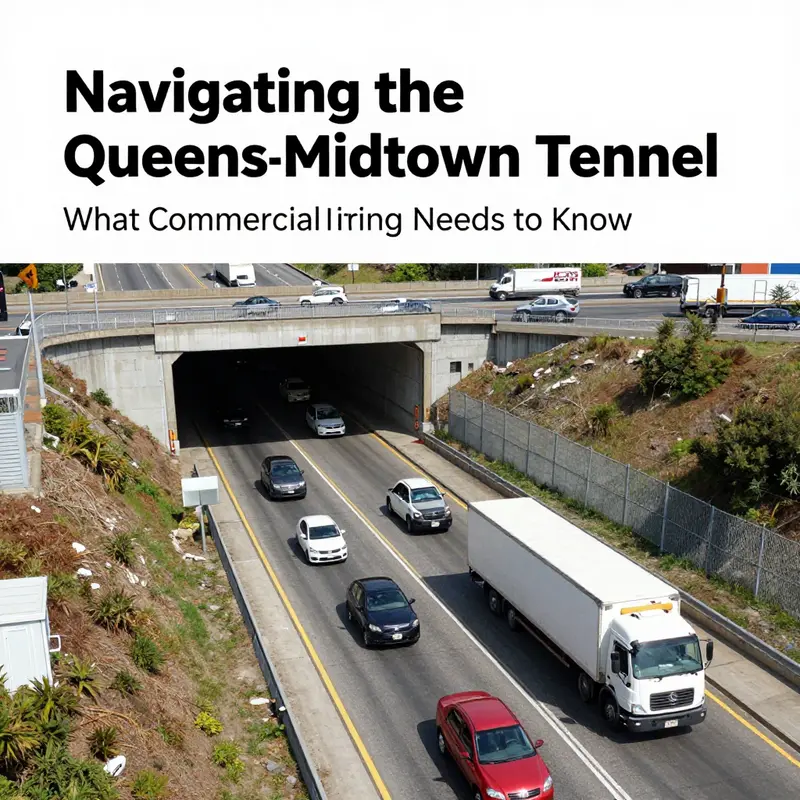
The Queens-Midtown Tunnel sits at a crossroads in more ways than one. It is both a bridge over the East River and a barrier that reshapes how goods move through one of the world’s most congested urban landscapes. For many fleets, this tunnel is less a simple crossing than a strategic decision point—one that can speed deliveries to Manhattan’s densest markets while also imposing strict limits that force planners to rethink routes, schedules, and vehicle configurations. The basic image is familiar: a tunnel linking Queens directly to Midtown, a straight shot into or out of the city’s central business districts. But the practical realities behind that image reveal a careful carve-out between the needs of commerce and the imperative of urban safety, emissions control, and traffic management. In that tension lies the chamber where commercial transport strategies are tested and refined, and where the city’s travel times and economic vitality are subtly calibrated every day. The tunnel’s regulatory framework matters as much as its physical dimensions because it determines whether a given shipment can ride the East River corridor at all and, if so, under what conditions and on what schedule. Commercial trucks are generally restricted from entering the Queens-Midtown Tunnel, a rule that reflects the city’s broader balance of freight efficiency and street stability. The restriction is not arbitrary; it stems from considerations about ventilation in enclosed spaces, the complex interchanges that feed the tunnel, and the cascading effects on surface traffic if heavy vehicles became a common sight through a narrow, urban artery. Yet the restrictions are not universal prohibitions. Within the city’s designated local truck route network, certain trucks can traverse the corridor between Queens and Manhattan, provided they meet specific criteria and obtain the necessary authorization. This nuanced stance—tight restrictions paired with clearly delineated exceptions—underscores a fundamental truth about urban freight: access is a privilege that comes with accountability, and that accountability is a shared responsibility among federal, state, and city authorities, highway operators, and the fleets that move through the city each day. The authoritative framework is housed in municipal transportation policy, with the NYC Department of Transportation taking the lead on route designations, permit processes, and operational constraints. For fleets seeking clarity on whether a particular route through the tunnel is permissible, the city’s official guidance is the best starting point, and operators will often cross-check updates as part of their pre-trip risk assessments. This is not a static set of rules. It evolves with changes in traffic patterns, environmental goals, and the city’s broader transportation plans. A single permit can unlock access for a defined set of trucks within a specific time window or on a specific corridor, while a lapse or a violation may revoke that access. The permit process, in turn, reinforces accountability: trucks must adhere to prescribed routes, avoid restricted hours, and comply with any posted limitations on dimensions, weights, or emergency detour requirements. The practical takeaway for operators is straightforward but exacting. If a truck’s GVWR—the standard measure used to describe a vehicle’s weight when loaded—exceeds a local threshold, entry to the tunnel is typically off-limits unless the vehicle is operating within an approved local truck route and is covered by an authorized permit. This framework reflects the city’s intent to preserve the tunnel’s safety and reliability for all road users while still preserving a vital, though carefully managed, connection between Queens and Manhattan. The regulatory posture is not merely about keeping heavy trucks out; it is also about ensuring predictability for supply chains that rely on the tunnel for time-sensitive deliveries. When a fleet strategizes around Manhattan-bound freight, the decision to route through the Queens-Midtown Tunnel becomes a function of timing, certainty, and the ability to meet service-level commitments. In many cases, carriers will opt for surface routes or alternative crossings to avoid the risk of denied entry or excessive detours. Yet the tunnel’s strategic value remains intact. Its location—deep in the heart of a regional network—connects Queens to the most densely trafficked districts of Manhattan and supports access to major commercial hubs, wholesale corridors, and the distribution centers that anchor the city’s economy. This central position is underscored by findings from regional transportation studies that emphasize the tunnel’s integration with broader corridors, notably the connection from 21st Street south of 49th Avenue to the Queens-Midtown Tunnel. The linkage points to a deliberate design: freight movement is woven into a network that moves people and goods with a shared purpose of efficiency and reliability. The tunnel’s traffic capacity reinforces that role. It is a conduit designed to handle significant volumes of two-way traffic, providing a consistent link for freight vehicles, delivery trucks, and other commercial traffic that depend on steady access to Manhattan’s business districts. When freight demands spike—whether driven by seasonality, e-commerce surges, or just-in-time production cycles—the tunnel’s performance becomes a bellwether for the city’s logistical health. In this sense, the Queens-Midtown Tunnel operates as a backbone within New York City’s freight strategy, a corridor whose importance is exponential because it interacts with multiple modes, routes, and centers of gravity within the metropolitan economy. The economic implications extend beyond the tunnel’s physical footprint. A reliable cross-river link enables smaller companies and regional suppliers to reach Manhattan without absorbing the costs and delays of longer detours. It supports the rapid turnover of inventory in retail corridors, the timely replenishment of hospital and municipal facilities, and the daily rhythm of service-based industries that keep a city functioning. Conversely, the constraints surrounding tunnel access shape how fleets design networks. If a shipment cannot qualify for the local truck route authorization, operators may reroute through other river crossings or adjust the delivery window to operate on permissible segments of the city’s streets. The interplay between access and restriction then informs the broader freight strategy, shaping everything from fleet composition to scheduling, from lane utilization to maintenance planning. Taken together, these dynamics illuminate a central theme: the Queens-Midtown Tunnel is not simply a route; it is a calibrating device for the city’s freight forward planning. It channels a portion of the city’s commercial traffic in a way that reduces surface congestion and stabilizes delivery windows, while simultaneously demanding a disciplined approach from operators who must navigate permitting processes, route designations, and weight-based constraints. This complexity invites a broader perspective on how fleets adapt to urban geography and regulatory environments. For readers looking to connect freight-market dynamics with operational choices, a useful lens is the evolving conversation about capacity and utilization in trucking. A related stream of analysis examines how market conditions—such as shifting capacity, changing demand, and the costs of compliance—shape decisions about route selection, vehicle configuration, and service commitments. An accessible entry point into that broader discussion can be found in discussions of excess capacity in the trucking market insights, which explore how fleets adapt to fluctuations in demand and how those shifts reverberate through the choices that carriers make about when and how to use restricted corridors like the Queens-Midtown Tunnel. For a broader view on market dynamics and fleet decisions, see excess capacity in the trucking market insights. This connection helps situate the tunnel’s regulatory environment within the larger context of freight strategy, where infrastructure constraints and market forces intersect to shape what is feasible, what is reliable, and what must be planned for in the days and weeks ahead. As part of this larger framework, it is also prudent to consult the official regulatory references that govern tunnel access and routing. The City’s truck-related guidance remains the authoritative compass for operators, outlining which corridors are designated as local truck routes, what permits are required, and how adherence to approved paths can reduce the risk of disruptions. In practice, the Queens-Midtown Tunnel embodies a nuanced balance: it remains a potent, strategic artery for delivering goods into Manhattan while enforcing guardrails that protect urban mobility, air quality, and safety. That balance is a living, dynamic part of the city’s freight narrative, one that requires ongoing dialogue among policymakers, operators, and communities who rely on predictable freight flows every day. External references and official guidance continuously inform the practical steps fleets must take to use the tunnel effectively, ensuring that when a shipment needs a cross-river leap, it can be accomplished with clarity, compliance, and confidence. For those who want to ground this discussion in regulatory specifics, the NYC DOT’s trucks page offers the most current, comprehensive details on permitted routes, permit processes, and restricted vehicle classes. NYC DOT trucks page
Final thoughts
Navigating the regulations and potential access routes for commercial trucks in the Queens-Midtown Tunnel is essential for maximizing operational efficiency. By understanding the restrictions, exploring exceptions, and leveraging local truck routes, logistics professionals can integrate this vital transit route into their supply chain strategies. The Queens-Midtown Tunnel not only facilitates cross-borough movement of goods but also enhances connectivity, making it a critical asset in the commercial transport landscape.