
When planning logistics and delivery routes, understanding roadway restrictions is vital, especially for those involved in the transportation of goods. Arthur Ray Teague Parkway, a limited-access road managed by the Texas Department of Transportation (TxDOT), presents specific restrictions that pose essential considerations for logistics and freight companies, construction and mining enterprises, and small business owners operating delivery fleets. This article delves into the limitations imposed on commercial trucks on the parkway, delving into safety regulations and traffic management policies to provide a comprehensive view that aids in strategic decision-making.
On the Edge of Access: Truck Restrictions and Arthur Ray Teague Parkway
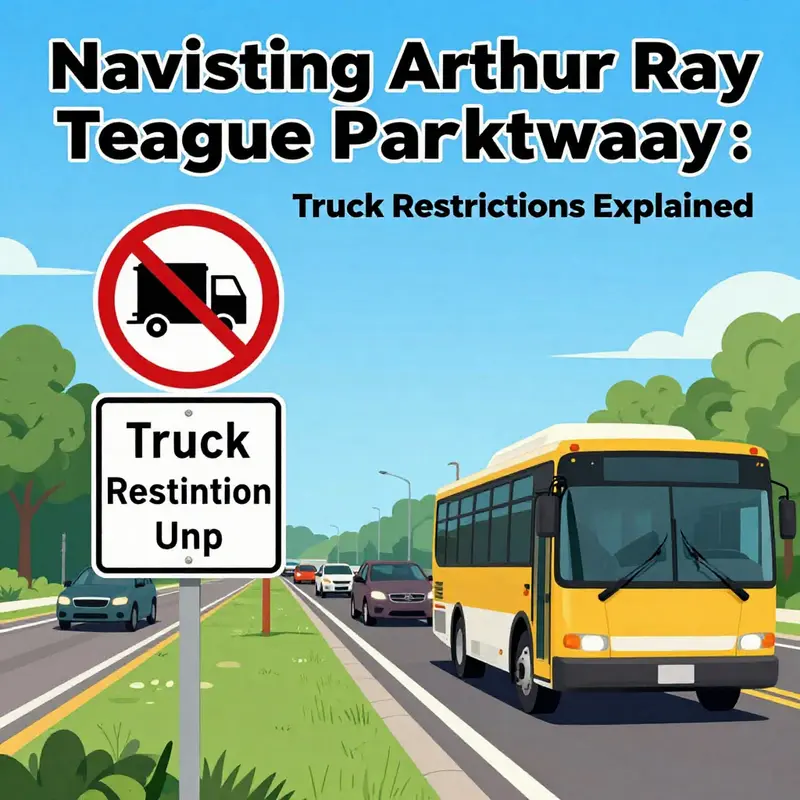
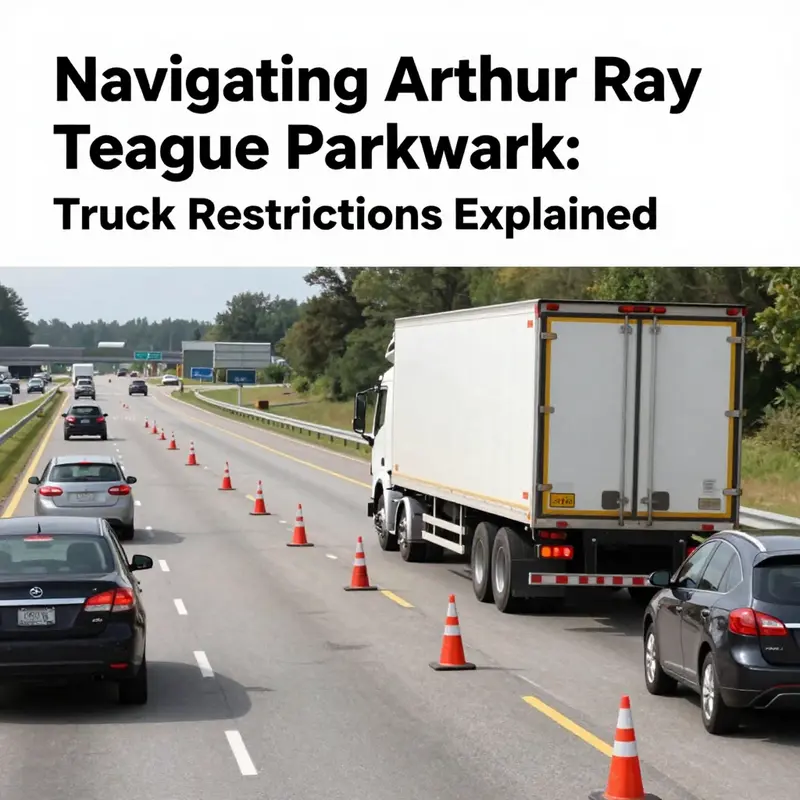
Arthur Ray Teague Parkway represents a restricted-access corridor where commercial trucks often face specific limits mirroring safety, bridge load considerations, and local traffic management. Understanding whether a given tractor-trailer may traverse the parkway goes beyond a single sign; it requires reading posted weight and height restrictions, and checking for temporary detours issued during maintenance or incidents.
In practice, operators should plan by consulting official sources such as the Texas Department of Transportation (TxDOT) and local signage. Even if a truck meets general national or state class standards for weight and length, local parkway restrictions can prohibit entry for certain vehicle configurations or payloads. Real-time updates, posted on the parkway and the agency portal, are essential to confirm eligibility before routing a trip.
For fleet planners, the takeaway is to treat Arthur Ray Teague Parkway as a corridor with calibrated limits designed to protect infrastructure and nearby communities. The decision to permit or restrict trucks depends on geometry, ramp design, and enforcement, not on a single rule. When in doubt, an alternative route such as higher-capacity arterials or interstate corridors may offer safer, more reliable options, albeit with tradeoffs in distance, time, or tolls.
Bottom line: always verify current restrictions prior to departure, and rely on official TxDOT materials and local signage for the authoritative guidance.
null
null
Access, Curb Strategy, and the Modern Road: Rethinking Commercial Truck Rules on Arthur Ray Teague Parkway

Arthur Ray Teague Parkway sits at a crossroads of speed, safety, and everyday commerce. As a limited-access route, it is designed to move people with minimal interruption and to keep heavy vehicles at bay where their presence could disrupt flows or raise risk on ramps and interchanges. The question of whether commercial trucks should be allowed on this parkway is not simply a binary yes or no; it is a lens on how cities and states manage risk, balance economic activity, and adapt to new technologies that promise to reshape driving behavior. The parkway functions within a broader network managed by a state transportation agency, and its design and operating rules reflect deliberate judgments about vehicle mix, lane discipline, and the reliability of travel times for noncommercial travelers. In this light, evaluating truck access becomes a matter of understanding how a road system can sustain mobility for all users while safeguarding the efficiency that arterial corridors depend on. The initial research landscape for Arthur Ray Teague Parkway emphasizes that, at present, commercial trucks are generally restricted on this kind of parkway, a conclusion grounded in the road’s physical characteristics and the safety calculus that accompanies limited-access facilities. This stance aligns with the broader practice across many jurisdictions, where parkways built to prioritize passenger vehicles and high-speed travel impose constraints to avoid cascading conflicts with large, slow-moving, or long-highway-destination trucks. Yet the same set of policy choices also invites a closer look at what is necessary to adapt to evolving freight patterns, delivery needs, and the coming wave of automated and connected vehicle technologies that promise new efficiencies but also new forms of congestion if not managed with care.
To begin, the policy architecture surrounding Arthur Ray Teague Parkway must be read as part of a broader ecosystem. The parkway’s restrictions are not merely about protecting pavement from wear or reducing impediments at entrances; they reflect safety margins designed to preserve predictable speeds and short headways in segments where merging and weaving occur. When trucks are restricted, it reduces the risk of large vehicles encroaching on the dedicated paths of passenger cars, diminishes blind-spot interactions at exit ramps, and helps maintain smoother throughput for commuters and emergency responders alike. The logic is straightforward in the abstract, but the policy implications become more nuanced when one considers the daily rhythms of a metropolitan area, the distribution of trip origins and destinations, and the way curbside space is contested by a host of users—taxis, ride-hail, delivery vehicles, and private couriers—each with distinct loading requirements and time pressures.
A data-driven approach to this topic invites us to examine not only whether trucks can traverse the parkway but how the surrounding network reacts to their presence or absence. Traffic engineers increasingly rely on dynamic signal timing, real-time surveillance, and predictive models to anticipate how changes in vehicle mix ripple across corridors. In a hypothetical scenario where trucks are given greater access during specific windows, the question becomes one of how to preserve safety and efficiency on Arthur Ray Teague Parkway while accommodating legitimate delivery needs for nearby commercial corridors. The literature on automated vehicles (AVs) adds another layer of complexity. Proponents emphasize that AVs could optimize spacing, reduce reaction times, and smooth traffic flow, potentially lowering the likelihood of abrupt slowdowns caused by human error. Critics, however, warn that AVs could increase vehicle miles traveled if convenience and accessibility spur more trips, or could complicate enforcement and curb management when mixed fleets share the same right-of-way. These divergent possibilities are not mere theoretical musings; they translate into concrete policy questions about when, where, and how to permit or restrict truck movements and how to pair those decisions with the lanes, ramps, and signals that shape day-to-day travel.
The case for a cautious yet forward-looking posture around Arthur Ray Teague Parkway rests on several pillars. First, the road’s design parameters—radius of curves, sight distances, ramp grades, and weaving sections—are critical determinants of suitability for heavy freight traffic. Even if a jurisdiction were to permit trucks on certain segments, those segments would need additional safeguards to prevent conflicts with merging passenger vehicles and to preserve the uniformity of travel speeds. Second, curb management becomes central when trucks operate in adjacent commercial streets or loading zones near the parkway. Curb spaces are valuable assets that regulate where and when deliveries occur, impacting pedestrian safety, bus operations, and overall street efficiency. A 2025 assessment by national practice leaders highlights several curb-management levers that can improve reliability and safety: designated freight zones, time-limited parking, and digital enforcement tools. The idea is not to remove trucks from the urban fabric but to ensure their movements do not degrade the pedestrian realm or obstruct through traffic on arterial corridors. Third, the integration of real-time data and adaptive technologies—ranging from variable message signs to connected sensors and smart curb platforms—offers the potential to tailor access in response to observed conditions. In short, policy decisions about Arthur Ray Teague Parkway must balance the demand for freight access with the parkway’s mission to sustain safe, efficient, and predictable travel for the majority of users.
Within this balancing act, the concept of dedicated or prioritized lanes emerges as a practical possibility. While many parkways are designed for passenger cars, some urban corridors experiment with lanes that support high-occupancy or freight movements during peak periods or in defined zones. The economics of such an arrangement are nuanced. A dedicated freight lane could improve delivery reliability and reduce conflicts with through traffic, but it also reduces capacity available to other users and requires careful enforcement and maintenance. If such lanes are pursued, they must be complemented by targeted curb strategies at loading sites, a clear enforcement framework, and adjacent infrastructure that accommodates trucks safely, including widened shoulders or improved exit ramp geometries. The policy aim would be to preserve mobility for commuters and emergency services while acknowledging the legitimate operational needs of businesses that rely on timely freight movement. In the long view, adaptive and phased approaches may offer the best path forward: starting with enhanced curb management and monitoring, then testing limited access windows for trucks, and finally evaluating performance through robust data collection and stakeholder feedback.
A crucial piece of the policy puzzle concerns the loading and unloading behavior around the parkway, particularly with regards to commercial vehicle curb use near on-ramps and interchanges. The curb is a bidirectional boundary: it serves freight as a staging area and pedestrians as a safety buffer. When curb management is weak or misaligned with demand, several adverse outcomes can materialize. Double-parking, obstructed sidewalks, and spillover congestion onto arterial lanes can erode the efficiency gains the parkway is meant to deliver. Conversely, well-designed curb strategies can unlock more predictable and safer operations. The National Association of City Transportation Officials (NACTO) emphasizes that curb management should include distinct freight zones, time-based parking restrictions to ensure turnover, and digital tools that aid enforcement. These measures do not merely constrain behavior; they enable smoother performance by guiding where and when deliveries occur and by freeing through lanes for passenger movement during critical periods. In applying these ideas to Arthur Ray Teague Parkway, policymakers would not only consider where trucks can travel but how loading activity in nearby corridors interacts with the parkway’s capacity and safety margins. A practical approach would link curb-management reforms with traffic-sensing and signal-control investments across the corridor, ensuring that any shift in access outcomes is captured and adjusted in near real time.
The policy debate, therefore, is not about closing a single loophole on a single road. It is about orchestrating a family of policies that together shape the lived experience of mobility for a region. A data-driven framework would gather input from a spectrum of stakeholders: local businesses that rely on timely deliveries, drivers who navigate the corridor daily, transit operators that serve adjacent communities, and residents who experience the quality of life impacts tied to curb activity and road risk. The goal is to create a resilient system whose rules are not static but responsive to changing conditions—economic cycles, evolving freight patterns, and the trajectory of AVs and connected vehicles. In practice, this means designing a policy architecture with guardrails, not just restrictions. Guardrails would include clear criteria for truck access based on time of day, traffic conditions, weather, and safety assessments; transparent performance metrics such as average travel time reliability and incident rates; and a governance mechanism that revisits the policy as data accumulate and technology evolves.
From a practical standpoint, the implementation of these ideas requires cross-cutting investments. Dynamic traffic signal control can reduce stop-and-go conditions that often magnify the risk of conflicts between trucks and passenger vehicles. Adaptive signals would respond to fluctuating volumes, particularly during peak freight windows on nearby arterials where trucks may stage or resume movements after deliveries. A system of adaptive signals would be most effective when paired with real-time data feeds that inform both field operators and travelers about current conditions. Previously deployed traffic management concepts demonstrate that live data, when properly interpreted, can improve flow and safety without necessitating wholesale changes to road geometry. Yet, as with any technological upgrade, the success of dynamic signaling depends on governance, data integrity, and public trust. The accuracy and timeliness of data, the clarity of the rules that govern signal changes, and the accountability mechanisms for policy adjustments are all critical to ensuring that such tools deliver on their promise rather than merely shifting congestion from one place to another.
Another essential thread concerns how delivery operations adapt in response to policy constraints. The trucking industry has long contended with a tension between operational flexibility and regulatory compliance. In markets with tight curb space and high pedestrian activity, delivery windows and loading zones become decisive factors in whether a business can meet its schedules. This is where the broader market context matters. The literature on freight demand and capacity suggests that there is often residual capacity in the system, even in busy corridors, when cities optimize the timing and location of freight activity. Policies that encourage better scheduling, lane prioritization during critical periods, and digital enforcement of curb rules can unlock that latent efficiency without requiring expensive new infrastructure. Integrating these concepts with Arthur Ray Teague Parkway’s policy framework could yield a pragmatic path forward: preserve the parkway for passenger mobility and safety, while enabling structured, monitored access for freight that aligns with curb capacity and network performance.
An explicit acknowledgment of market dynamics also invites a careful conversation about equity and access. Freight operations serve essential functions for communities, and disruption of delivery services can have ripple effects on local businesses, hospitals, schools, and residents who rely on timely goods. Accordingly, any policy move to restrict or expand truck access should be accompanied by a transparent consultation process, metrics that track social and economic outcomes, and targeted exemptions where they are warranted. A balanced approach recognizes that truck access on a parkway is not purely a road engineering decision; it is a governance decision about how a city chooses to reconcile the speed and serenity of a passenger-focused route with the must-have capabilities of a modern freight system. The challenge is to craft a policy that remains faithful to safety, respects the community’s broader needs, and remains adaptable to emerging technologies and changing freight patterns.
In sum, the route to rethinking commercial truck rules on Arthur Ray Teague Parkway is not a simple redesign of lanes or signs but a reimagining of how curb spaces, traffic control, and vehicle access cohere into a unified operating philosophy. A phased, data-informed strategy that foregrounds curb management and adaptable signal control can yield tangible benefits: smoother traffic flow, safer streets for pedestrians and frontline workers, and greater predictability for delivery operations without compromising the parkway’s core mission. The path forward should be anchored in real-time analytics, robust stakeholder engagement, and a willingness to test and refine policy instruments as technology and markets evolve. The lessons from broader curb-management literature reinforce a practical, evidence-based approach: designate freight zones where appropriate, implement time-based loading rules to ensure turnover, and deploy digital enforcement tools that support compliance without creating bottlenecks. The result is not a rigid prohibition on trucks, but a thoughtfully calibrated framework that preserves safe travel for all users while acknowledging and addressing the legitimate needs of modern freight.
For readers seeking a deeper dive into curb strategy and its implications for traffic enforcement, see the linked external resource that offers a structured, evidence-based perspective on these practices. This chapter’s exploration of Arthur Ray Teague Parkway thus sits at the intersection of transportation engineering, urban planning, and freight logistics, highlighting how the parkway’s future use will depend on meticulous policy design as much as technical capability. In the end, the question of whether commercial trucks belong on this parkway becomes a question about governance: how a transportation system can be both efficient and equitable, both dynamic and predictable, in a world where technology and commerce are continually reshaping the roads we share. The outcome will reflect not only the road’s geometry and traffic volumes but the clarity of the policies that guide curb space, the intelligence of the signals that steer vehicles, and the resilience of the oversight that keeps a complex urban system working for everyone.
Internal reference: the transportation policy landscape around freight and curb management continues to evolve. For a broader set of industry perspectives on market dynamics and capacity considerations that inform these policy choices, you can explore related observations on excess capacity in the trucking market—insights, which offer a lens on how supply conditions may influence access decisions during different economic cycles. Excess capacity in the trucking market—insights.
External resource: for practical guidance on curb management and traffic enforcement that informs these discussions, see the National Association of City Transportation Officials publication on advancing curb management and traffic enforcement. https://nacto.org/publication/advancing-curb-management-and-traffic-enforcement/
Final thoughts
Navigating the Arthur Ray Teague Parkway requires awareness of its restrictions on commercial trucks, which are crucial for ensuring compliance with traffic regulations and safety logistics. By understanding these limitations alongside the safety regulations and traffic management policies, stakeholders in logistics, construction, and delivery services can make informed decisions that optimize their operations while adhering to the roadway’s specific requirements. Engaging with the TxDOT and continuously updating knowledge on roadway restrictions will further support efficient logistics strategies.