
For logistics, construction, and businesses relying on delivery fleets, selecting the right commercial truck topper is a crucial investment. Understanding the cost structures surrounding these toppers can significantly affect procurement decisions, operational efficiency, and overall business performance. This article provides a detailed exploration of the various pricing dimensions, material choices, features, market trends, and installation associations pertinent to commercial truck toppers, each critical for informed decision-making. In doing so, this guide aims to equip business owners and procurement teams with the knowledge needed to make sound financial choices that align with their operational needs.
Beyond the Bed: Unpacking the True Cost of Commercial Truck Toppers and What It Means for Fleets
Prices for commercial truck toppers—sometimes called caps or bed shells—rest on a balance of materials, size, design, and the tasks the topper is asked to perform. A single, bare-essentials shell will sit at the lower end of the spectrum, while specialized units with climate control, reinforced storage, or integrated electronics push past the mid-range and into premium territory. The broader picture is straightforward enough: expect new toppers to run roughly from about $1,000 to $5,000 or more, with material choice and feature set acting as the main levers behind that spread. But that snapshot only scratches the surface of the decision calculus fleets face when budgeting for a topper. In practice, the upfront sticker price interacts with durability, compatibility, installation costs, and the particular demands of the cargo and routes to shape the total cost of ownership over the life of the vehicle.
Material choices anchor much of the pricing conversation. Aluminum toppers tend to be the durable workhorses that many operators value for their light weight and resistance to rust. Their price bands usually land between $1,500 and $3,500, though higher-end configurations that add insulation, extra locking options, or streamlined interiors can nudge the total higher. Fiberglass toppers, prized for their smooth finish and robust impact resistance, typically fall in the $2,000 to $4,500 range. They can be painted to match the truck, which matters for branding and aesthetics on customer-facing routes; heavy-duty or custom fiberglass models with enhanced accessories can cross the $5,000 mark. Soft toppers, which are fabric-covered and considerably easier on the wallet, sit closer to the bottom of the range, often $800 to $2,000, but they trade off long-term durability and cargo protection. When fleets require something more than the standard, specialized or custom toppers—such as collapsible designs, or configurations tailored to utility, construction, or emergency services—the price can rise substantially, frequently landing in the $4,000 to $6,000+ zone depending on engineering complexity, insulation, and added functionality like climate control or tool storage systems.
But the material price is only part of the equation. The overall sticker price on a topper often masks how much a unit will cost a fleet over time. Installation costs, for example, can add $200 to $600, depending on vehicle compatibility and the complexity of mounting hardware. And once the topper is in place, additional upgrades—reinforced frames, more sophisticated locking systems, LED lighting, or a higher-grade interior liner—can shift the economics by hundreds of dollars more. In essence, a seemingly simple decision about whether to buy aluminum or fiberglass can ripple into a broader assessment of service life, repairability, and resale value. Durable toppers tend to withstand denting and weather exposure better, which translates into lower maintenance costs and less downtime when vehicles are out of service. The corrosion resistance of aluminum, in particular, becomes a long-term cost saver for fleets operating across varied climates or salt-sprayed coastal routes.
Industry needs further tailor these price signals. When cargo integrity and regulatory compliance are non-negotiable—such as refrigerated toppers that must stabilize temperatures for perishable goods or pharmaceuticals—the engineering demands grow. Insulation thickness, temperature control capabilities, and precise seals contribute to reliability but also push upfront costs higher. Such specialized toppers are not just about keeping cargo at a target temperature; they are about meeting strict safety and freshness standards that regulators and customers scrutinize. In practice, the more rigorous the industry requirements, the more the unit price reflects not only materials and workmanship but also the engineering precision and test regimes behind the design. The result is a pricing ecosystem that rewards durability, security, and compliance as much as aesthetics or basic utility. For readers seeking deeper context on how these components influence total cost, the official guide from the Truck Equipment Association offers a standards-first perspective on commercial toppers and the industry needs they support: Understanding Commercial Truck Toppers: Standards and Industry Needs (external resource).
Feeding these material and regulatory realities are broader market dynamics that can color everyday pricing. The cost of toppers is not divorced from the supply chain pressures and demand cycles that affect all parts of the trucking ecosystem. When trailer orders, for instance, shift in response to freight demand, margins can compress or expand in ways that ripple into topper pricing and availability. Fleets may find themselves weighing the price of a top-up on a given unit against the cost of alternative cargo-security or weather protection solutions. In some market segments, a well-chosen topper can preserve payload integrity, minimize cargo spoilage, and reduce loading and unloading delays, which translates into tangible savings that offset higher upfront costs. For a practical sense of how these market dynamics translate into budgeting decisions, it helps to glance at analyses that tie topper investments to broader fleet economics—such as how trailer orders impact truckload margins. That line of inquiry, and related market insights, are explored in industry-focused analyses like this: Trailer Orders Impact Truckload Margins.
A useful way to visualize the decision is to set a simple scenario against the ranges described above. Consider a mid-size 8-foot bed with a basic aluminum topper. If you add standard installation and a pair of locking latches, you might see a total in the neighborhood of $2,200 to $2,550. If your fleet wants a fiberglass shell with a factory-match paint finish, a couple of interior shelves, and reinforced cross-members, the number could easily approach $3,500 to $4,500, depending on local labor rates and whether climate control or extra insulation is included. Soft toppers for a similar bed size could come in around $1,000 to $1,400, but those prices reflect tradeoffs in durability and weather sealing—factors that matter on long-haul runs or routes with frequent exposure to rain and cold. The most bespoke configurations—such as collapsible designs built for rapid conversion between cargo and securing configurations, or toppers designed to meet stringent industry-specific requirements—can push total costs well beyond $5,000, especially when they incorporate climate control, advanced internal organization, or integrated electrical systems. Each scenario illustrates a practical truth: the headline price tells only part of the story. The value proposition hinges on how a topper preserves cargo, reduces downtime, and extends vehicle usable life in the particular operating conditions a fleet faces.
Beyond the engineering and installation, the decision to invest in a topper often aligns with longer-term business objectives. Cars and trucks that travel through winter storms, coastal salt, or desert heat face different wear-and-tear profiles, and toppers behave differently under those stresses. Aluminum’s light weight and corrosion resistance can offer better fuel efficiency and lower maintenance costs over years of service, while fiberglass may deliver a smoother, more paintable exterior that aligns with company branding and customer perceptions of quality. Soft toppers, while less protective against theft and weather, offer quick access to cargo and can be swapped out more rapidly when scheduling or route needs change. For fleets evaluating options, a holistic cost of ownership approach—one that weighs upfront price against maintenance, protection level, and resale value—tends to yield the clearest guide to the most economical choice across a fleet’s lifecycle.
Internal links can illuminate the broader context of topper pricing within the freight economy. For a perspective on how market dynamics influence topper-related budgeting decisions, see the analysis titled Trailer Orders Impact Truckload Margins. This kind of link helps connect the dollar figures on a topper to the material shifts, demand cycles, and profitability pressures that shape fleet procurement strategies. In parallel, industry standards provide a roadmap for what a topper must deliver to meet safety, security, and thermal requirements. The external reference of record, Understanding Commercial Truck Toppers: Standards and Industry Needs, anchors the discussion in documented guidelines and regulatory expectations that help justify the added investment when the top is designed to perform consistently across fleets and routes.
As toppers continue to evolve with new materials, smarter locking systems, and better interior organization, prices will reflect those advances. But the core takeaway remains stable: choosing a topper is not merely a purchase; it is a strategic decision that can influence cargo protection, uptime, and the bottom line over the vehicle’s service life. The right topper, selected with an eye toward operational realities, can deliver durable value that outlasts weather, wear, and the occasional dent. The result is a cost structure that, when viewed through the lens of total cost of ownership, often proves to be a prudent investment for fleets balancing protection, efficiency, and reliability.
External resource: Understanding Commercial Truck Toppers: Standards and Industry Needs. https://www.truckequipmentassociation.org/resources/understanding-commercial-truck-toppers-standards-and-industry-needs
Materials That Move the Meter: How Aluminum, Fiberglass, and Fabric Topper Choices Shape Commercial Truck Topper Costs
Choosing a commercial truck topper is more than picking a color or a look. It is an exercise in balancing upfront price, durability, and long-term utility. The material you select sets the baseline for every subsequent cost—installation, repairs, energy use inside the cargo space, and how the shell behaves in wind, rain, and heat. Across the market, new toppers typically range from about $1,000 to $5,000, but the material explains most of the variation within that spectrum. For a fleet manager, the decision carries a heavy weight because it touches daily operations, maintenance schedules, and the bottom line. The goal is to choose a shell that protects cargo, survives road hazards, and keeps fuel and maintenance costs in check without forcing an excessive upfront spend. In practical terms, the material dictates how long the topper lasts, how easy it is to repair, and how it interacts with the truck’s performance on the highway. These are not abstract concerns; they translate into predictable differences in downtime, insurance considerations, and resale value. When you scale from a single operator to a small fleet, the material choice becomes a shared driver of total cost of ownership. The conversation, then, moves from style to structure, from appearance to engineering, from initial sticker price to lifetime value. And that shift matters because toppers exist not merely to cap a truck bed but to extend the utility of the vehicle itself, ensuring the fleet can meet daily demands with reliability and efficiency. The cost narrative around toppers is therefore inseparable from the operational context of the business. A decision anchored in material realities helps prevent overbuying a feature that isn’t needed while still ensuring protection against weather and theft. In that sense, choice is a form of risk management, and cost is a reflection of the risk you’re willing to assume and the value you place on long-term performance.
Aluminum toppers are a frequent first choice for professional operators who need durability without dragging the payload. They are typically lightweight, resist rust, and offer a favorable strength-to-weight ratio that translates into lower axle load concerns and simpler handling during installation. The cost range, roughly $1,500 to $3,500, reflects both the raw material and the internal framing that supports doors, locking systems, and weather seals. Aluminum is straightforward to repair; a dent is often easier to fix than a dent in fiberglass, and the repair can be more economical in many service shops. However, aluminum toppers tend to be less aerodynamic than fiberglass, which can translate into modest fuel economy penalties at highway speeds and a bit more road noise or vibration in certain installations. Those tradeoffs matter in fleets that prioritize quick turnarounds and steady uptime. In terms of longevity, aluminum provides strong resistance to corrosion, which is a critical factor for outdoor use, salt exposure in winter, and humid environments. Maintenance is typically simpler, and parts replacement tends to be cost-effective over the vehicle’s life. For operators who want a robust, repair-friendly option that keeps ongoing costs predictable, aluminum is often the practical backbone of efficient fleet operations.
Soft toppers offer a different cost calculus entirely. They occupy the low end of the price spectrum, usually between $800 and $2,000, with installation adding roughly $150 to $400 if professional fitting is required. Fabric and frame construction emphasize portability and quick removal, which makes soft toppers attractive for operators who need short-term protection, seasonal flexibility, or a temporary solution while a more permanent topper is under consideration. The protection soft toppers offer, while adequate for weatherproofing and basic security, is not on par with rigid toppers when it comes to heavy cargo protection or long-term exposure. They are lighter and can be easier to manage on a budget, but they also face greater wear and tear in harsh variables such as high winds, rain, and particulate exposure. The fabric tends to wear with sun exposure, and the frame requires careful maintenance to preserve fit and seal integrity. For a business focused on cashflow and flexibility, soft toppers fulfill a niche: economical coverage for short-term use, experimentation with cargo organization, or trials of a topper product before committing to a more permanent solution. The practical implication is clear: you trade some durability for a lower upfront cost and easier removal when circumstances change. In environments where cargo protection is less critical or where the truck travels less frequently in severe weather, soft toppers can be the prudent initial step.
Fiberglass toppers sit at the higher end of the cost spectrum, usually ranging from $2,000 to $4,500, with premium models and integrated features occasionally exceeding $5,000. The appeal of fiberglass lies in its sleek, factory-like appearance and strong weather protection. The material typically offers better aerodynamics than aluminum, which can yield modest fuel efficiency improvements during steady highway runs. The finish is smooth and paintable to match the truck, providing a more integrated aesthetic. Yet fiberglass comes with caveats. Repairs can be more challenging; a crack or chip may require specialized repair work, and some impacts cannot be as easily fixed as with aluminum. This translates into higher potential maintenance costs and downtime if damage occurs. High-end fiberglass toppers often incorporate additional insulation and interior lining, climate-control options, or tool storage systems that unlock specialized usage scenarios. These features contribute to greater overall value in environments that face temperature extremes, require extra security, or rely on organized storage within the topper’s interior. The tradeoff is clear: fiberglass gives you a premium look and robust weather sealing, but the cost of ownership is more variable and often higher, especially if design refinements or customizations drive the price beyond standard configurations.
Beyond the base material costs, several other factors influence the final price tag and the practical value of a topper. Installation, typically ranging from $200 to $600, can add meaningful expense if the fit isn’t straightforward or if the vehicle requires a precision seal to prevent leaks. Upgrades such as reinforced frames, locking systems, LED lighting, or interior lining elevate price but can enhance security, visibility, and comfort for drivers who spend long hours on the road. Climate control or integrated tool storage systems are examples of how specialty toppers can be tailored to specific industries, turning a basic shell into a critical workstation on wheels. The cost calculus thus evolves from material choice to a broader package that aligns with the fleet’s operational profile. For fleets managing varied routes and equipment, a modular approach—starting with a solid base and adding features as needs become clear—often yields the best return. This approach also helps allocate capital more efficiently, spreading spend over time as the business grows and demands shift. For broader context on how material costs feed fleet economics, see the discussion on trailer orders impact truckload margins.
An informed selection also benefits from looking at long-term performance and maintenance rather than chasing the lowest upfront price. Aluminum’s durability and repairability can translate into lower life-cycle costs for fleets facing frequent use or exposure to challenging environments. Fiberglass, while pricier up front, can deliver superior weather resistance and a refined appearance that might be worth the premium for businesses that emphasize branding or premium service in certain markets. Soft toppers, with their simplicity and lower price, may serve well for seasonal or experimental deployments, while custom or specialty toppers can address unique industry needs—such as climate control or integrated storage systems—where the immediate expense is justified by productivity gains and cargo-security improvements.
To decide, operators should quantify not just the sticker price but also downtime, repair frequency, and the impact on cargo handling. A useful framework is to compare the total cost of ownership over a typical contract or fleet cycle, factoring in installation, potential upgrades, fuel implications from aerodynamics, and expected service life. For the business, the mathematics is practical: if a topper reduces weather-related cargo loss, aids in secure storage, and minimizes time spent on maintenance, the higher upfront cost can be a rational investment. If the route profile, climate, and cargo sensitivity align more with a lower-cost solution, a soft topper or a basic aluminum shell may deliver adequate protection with fewer complications. In either case, the material choice anchors the cost trajectory, while the surrounding features and service expectations steer the ultimate value delivered to the fleet.
External resource for further reading: https://www.truckinmag.com/truck-topper-materials-guide
Internal reference for related fleet economics discussion: Trailer orders impact truckload margins
Beyond the Sticker Price: How Materials, Customization, and Fit Shape Commercial Truck Topper Costs
Choosing a commercial truck topper is rarely about chasing the lowest price alone. Fleet managers and independent operators weigh how a topper protects assets, reduces downtime, and fits into daily workflows. The sticker price on a new topper can start around a thousand dollars for fabric covered options and rise quickly toward five figures for highly customized builds. The distance between budget models and premium configurations is defined less by style and more by the practical tests that a truck encounters on the road—dust, rain, shifting cargo, and long hours of operation.
Material choice matters. Aluminum toppers are popular because they are light yet durable, resisting rust and corrosion. Their price band, roughly 1,500 to 3,500 dollars, makes them appealing for daily use where fuel economy and simple maintenance matter as much as outright capacity. Fiberglass toppers sit higher in cost, typically 2,000 to 4,500, with the potential to exceed 5,000 when you add features like integrated insulation, better sealants, or a seamless paint job to match the truck. The finish is smooth, often paintable, and the weight is manageable, but the added capabilities and the aesthetic finish push the price upward.
Soft toppers cost 800–2,000, reflecting a different set of priorities: lightness, portability, and easy removal. They are better suited for seasonal needs, light cargo, or customers who prioritize cost over armor against weather or theft. Nevertheless, they offer less in terms of structural rigidity and security, which means operators weigh those tradeoffs against the job requirements.
Custom or specialty toppers lift the price further, starting around 4,000 and climbing beyond 6,000 for highly engineered configurations. These units are designed for specific industries or use cases, including collapsible designs, climate control, or tool storage systems that turn the topper into a miniature mobile workshop. The cost adds up quickly when you factor in engineering, insulation, sealed wiring, or integrated power systems that can run power tools on site or in transit.
Beyond the base unit, installation matters. Professional fitting adds 200 to 600 dollars, depending on truck model, the complexity of mounting, and whether the installer must address roof vents, tailgate compatibility, or weather seals. Then there are upgrades that can push the total even higher: reinforced frames for heavier loads, locking systems to deter theft, LED lighting for working at night, or interior lining to reduce noise and temperature swings. Each upgrade is a bolt-on decision that can shift total cost by hundreds or thousands of dollars, but the long term savings on cargo protection and operator efficiency can justify the expense.
Within the feature set, there are core elements that most buyers assess first. Integrated storage solutions, such as built-in tool organizers or gun racks, promise fewer lost tools and faster job site turnarounds. Ventilation and climate control entries help preserve temperature-sensitive cargo and provide a more comfortable space when crews need to stay inside for extended periods. Built-in lighting, particularly LED options, improves visibility around the truck at dawn or after dark, reducing risk and increasing productivity. These features carry visible price tags, but they are also the direct line to better uptime and faster service calls.
Customization options also reflect the realities of the job site. Reinforced panels extend the life of the topper in rough environments. Custom paint finishes support branding, helping a fleet project a professional image while protecting the metal surface from UV and corrosion. Specialized access doors make it easier to retrieve tools without crawling into the cab, and electrical wiring can power chargers or small power tools, reducing the need for multiple power sources at job sites. Some buyers add side windows or sliding doors for quick access without opening the entire tailgate, while others prefer a fully enclosed roof to improve insulation and weather resistance. The breadth of options means every operator can tailor a topper to the precise shape of the workweek: a rugged storage capsule for construction crews, or a discreet, climate-controlled cargo space for sensitive equipment.
All this customization has a simple economic logic: what you add improves functionality and protection, but it also raises the price. The level of customization often dictates the final cost, with standard, off-the-shelf toppers offering reliable, predictable pricing and highly customized units delivering a premium with corresponding benefits. For stakeholders, the task is not merely choosing a price point but balancing it against operational realities. A fleet that depends on secure tool storage in rough terrain will justify reinforced panels and robust locking systems. A delivery service that keeps perishables at a fixed temperature will weigh climate control and insulation more heavily. Asking the right questions—how often will the topper be used, what cargo is carried, and what is the value of downtime reduction—helps translate features into measurable value.
Market dynamics also shape what buyers pay. The spectrum of options—from budget aluminum to premium custom fiberglass—ensures that there is a solution for almost every budget and every operational demand. In practice, the decision often hinges on total cost of ownership rather than upfront price alone. A lower initial price may come with higher maintenance costs or more frequent replacements, while a higher initial investment can reduce ongoing expenses if it delivers longer service life and better cargo protection. The math is straightforward but sometimes overlooked: factor in maintenance, insurance, fuel, and the potential cost of lost time when cargo is exposed to weather or theft. The best buyers consider not only immediate needs but what the topper will deliver over the life of the truck.
Industry analysis such as the relationship between trailer orders and truckload margins offers a broader lens on how capex for equipment like toppers interacts with overall fleet economics. For a concise view of how volumes in trailer orders influence pricing and margins, read this analysis on Trailer orders’ impact on truckload margins.
Finally, a practical take on cost evaluation: gather quotes that reflect not just price but the total project scope, including installation and any required modifications to the body, and compare the expected lifespan and maintenance schedule. A well-chosen topper can preserve cargo integrity, reduce downtime, and maintain resale value, which in many cases translates into a lower cost per mile over the life of the vehicle than a cheaper, less capable unit.
External resources for detailed product configurations and quotes are plentiful. In parallel with direct supplier conversations, platforms that connect buyers with manufacturers provide a quick way to compare configurations and prices. External resource for broader configurability: https://www.alibaba.com/showroom/commercial-truck-topper.html
Fiberglass Demand and Global Shifts: Navigating the Cost Terrain of Commercial Truck Toppers
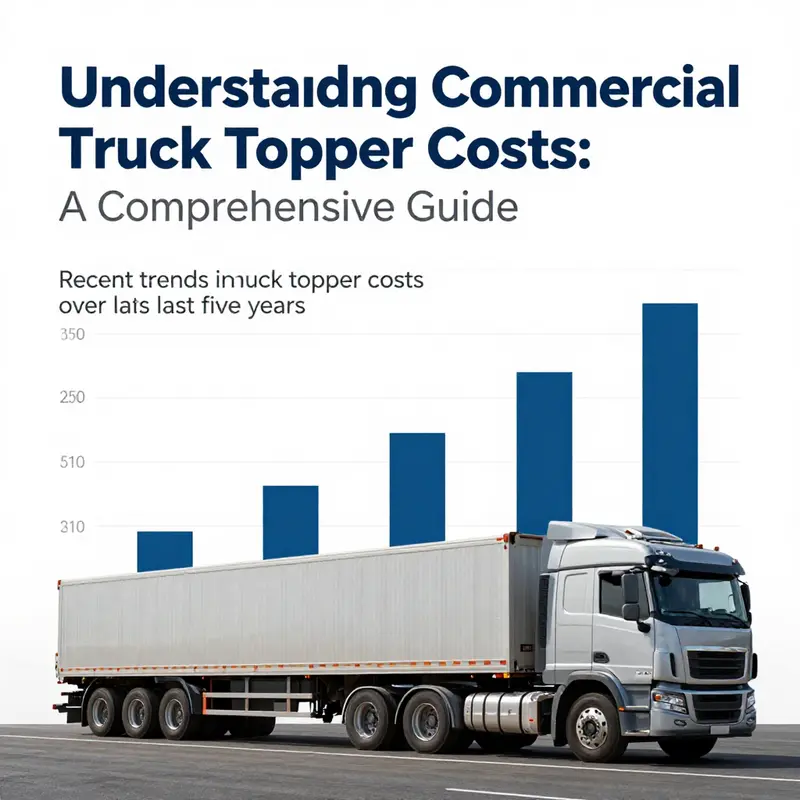
The market for commercial truck toppers operates at a careful crossroads of capability, protection, and total-cost thinking. Fleet operators weigh not only the sticker price of a topper but the longer arc of maintenance, fuel use, and payload efficiency. Prices for new toppers span a broad band, reflecting material choice, size, and features, yet the underlying cost dynamics extend far beyond the initial purchase. In practice, the choice between lightweight, corrosion-resistant fiberglass and rugged, budget-friendly aluminum—or even softer, fabric-covered options—reframes a simple cap into a strategic investment with implications for maintenance cycles, insurance considerations, and resale value. As fleets modernize and shops optimize their toolkits, buyers increasingly see toppers not as a one-off purchase but as an enduring component of a truck’s operating lifecycle, with cost baked in through insulation, seals, locking systems, and even integrated lighting or interior linings that promise durability or energy savings over time.
A quick orientation helps ground the discussion: new toppers generally cost from roughly a thousand dollars on the entry side to well over five thousand for premium, customized or specialty designs. Aluminum toppers tend to land in the mid-range, prized for their lightness and corrosion resistance, while fiberglass options—valued for impact resistance and the option to paint to match the truck’s finish—often sit in a similar band but can exceed it when high-end features or tailored shells are requested. Soft toppers, by contrast, occupy the lower end of the spectrum but trade off protection and durability. The economic picture becomes more complex when installation is factored in, alongside optional upgrades like reinforced frames, locking mechanisms, LED lighting, or interior linings, each contributing to the total cost of ownership. This layered cost reality is precisely what market trends are shifting, and it is in these shifts that buyers discover the clearest signal of where the price floor and ceiling might be headed.
Material shifts are the most visible current driver of cost dynamics. Fiberglass has gained traction not only for its resistance to corrosion but also for its lighter weight relative to steel. The reduced weight translates into measurable fuel savings over the life of a vehicle, a factor many fleets now treat as a line-item in a cost-benefit analysis. This preference aligns with broader industry incentives to improve efficiency and lower operating costs, particularly in fleets with high utilization. The lightweight quality of fiberglass also supports architectural and design flexibility, enabling smoother finishes and easier painting to match the cab and trailer—a consideration for operators aiming for a cohesive brand image or a professional, uniform appearance across a growing fleet. Aluminum, meanwhile, remains a staple for durability and long-term value, especially in regions with harsh weather or where corrosion risk is a persistent concern. The choice between fiberglass and aluminum often hinges on a balancing act between upfront price, lifecycle costs, climate exposure, and the expected utilization profile of the vehicle.
Beyond material preferences, market growth projections are shaping the price trajectory of toppers. Industry analyses point to a double-digit momentum for fiberglass shells and toppers over a multi-year horizon, with a compound annual growth rate in the neighborhood of 11.3 percent projected from 2026 to 2033. This momentum signals a tightening market for capacity and a push toward more sophisticated manufacturing processes that can deliver consistent quality at scale. Economies of scale can drive unit costs lower as demand expands, and process improvements can streamline fabrication, finishing, and assembly. Yet, the same trend toward higher volumes tends to elevate the value of customization. When fleets seek tailored insulation, climate control options, integrated tool storage, or specialty geometry designed to fit unusual bed lengths or commercial bodies, labor and engineering costs rise. The result is a bifurcated price path: mass-produced toppers may trend downward in relative cost per unit, while bespoke, highly integrated designs push price up. This duality makes the market both competitive and opportunity-rich for providers who can balance standardization with still-needed customization.
The customization wave is not limited to aesthetics or interior finishes. Advancements in design enable better sealing, insulation, and accessibility—features that improve comfort, climate control, and cargo protection. Insulation performance can influence interior temperature stability, which is more relevant for fleets that transport temperature-sensitive goods or require maintainable environments for tools and equipment stored inside the topper. The ability to integrate climate-control options, lighting, or modular storage solutions adds tangible value but also drives up costs, sometimes significantly, when compared with simpler configurations. In short, the premium attached to a topper often reflects the added utility that can reduce losses, extend the life of stored equipment, and shorten dwell times at job sites. This is precisely why fleets that prioritize reliability and uptime are increasingly willing to invest in higher-spec toppers, even as price sensitivity remains a constant consideration for budgeting operations.
Supply chain dynamics are another curtain-raiser to the price story. Global production patterns and regional demand swings shape the availability of raw materials, components, and finished toppers. North America and the Asia-Pacific region, in particular, are key nodes in the chain for composites, resins, and aluminum alloys, and fluctuations in material pricing or freight costs reverberate through the final price tag. Shipping costs, lead times, and fluctuating exchange rates all have a bearing on quoted prices and delivery schedules. In a market where a topper can be produced to a customer’s exact specifications but with a long lead time or overtime labor charges, the total cost of ownership becomes sensitive to these external pressures. The logistics layer also touches warranty and service costs. If a topper arrives with minor defects or requires on-site adjustments, the cost impact can be amplified by travel expenses and downtime for technicians. Fleet managers increasingly view these variables through a risk-adjusted lens, preferring suppliers who can offer predictable lead times, robust after-sales support, and transparent pricing amid volatility.
Regulatory and environmental considerations are quietly but steadily lifting the baseline cost floor in many regions. Regulations around manufacturing practices, waste handling, and recyclability influence material choices and processing methods. For instance, stricter emissions standards, energy-use guidelines, and end-of-life recycling requirements can tilt preferences toward materials and processes that align with regulatory compliance, even if they carry a higher upfront price. This policy-driven layer reinforces the long-term value proposition of toppers designed for durability and longevity. Operators who plan multi-year asset cycles benefit from this approach, as the combination of longer life and better end-of-life stewardship can offset higher initial expenditures with lower replacement frequency and improved resale value.
For buyers navigating these currents, cost is best understood as a spectrum rather than a single figure. The headline price of a topper only tells part of the story. Installation fees, which can range from roughly two hundred to six hundred dollars depending on the complexity of the fit and whether a professional installs it, are a recurring reminder that the value of a topper hinges on how well it integrates with the truck’s existing systems. Upgrades like reinforced frames, locking systems, LED lighting, or interior lining contribute additional layers of cost but can also deliver measurable benefits in security, visibility, and comfort. A well-chosen topper can streamline operations, protect cargo more effectively, and reduce maintenance downtime, translating into lower operating costs over the asset’s life.
As operators weigh these factors, they also pull in industry context from broader market analyses. The interplay between demand, capacity, and pricing is complex and dynamic, and it reflects more than the preference for one material over another. It encompasses fleet utilization patterns, maintenance budgets, and the strategic importance of uptime. A practical takeaway for decision-makers is to assess toppers through the lens of total cost of ownership rather than price alone. The right choice aligns with mission-critical needs—whether it is maximizing cargo-protection, enhancing fleet branding, or ensuring compatibility with climate-control requirements on longer routes. In this sense, the topper becomes a lever for efficiency and reliability, not merely a protective shell.
For fleet leadership seeking deeper context on how broader trailer and truckload dynamics inform topper costs, industry analyses highlight the broader relationship between demand signals, margins, and accessory investments such as toppers. See how fleet orders and the competitive pricing environment interplay in the broader market by exploring related industry insight here: Trailer Orders and Truckload Margins.
Finally, for readers who want to situate these trends within a larger macro outlook, there is value in reviewing the latest commercial vehicle market outlook. The assessment from a leading market intelligence provider outlines growth trends, supply chain pressures, and policy influences that shape the entire ecosystem of equipment like toppers, trailers, and related components. This external resource provides a broader frame for understanding the cost paths discussed here and can help readers calibrate expectations as they plan capital investments over coming years: https://www.spglobal.com/marketintelligence/en/insights/industry-reports/commercial-vehicle-market-outlook-2026-growth-trends.
Beyond the Sticker Price: Navigating Installation and Maintenance Costs for Commercial Truck Toppers
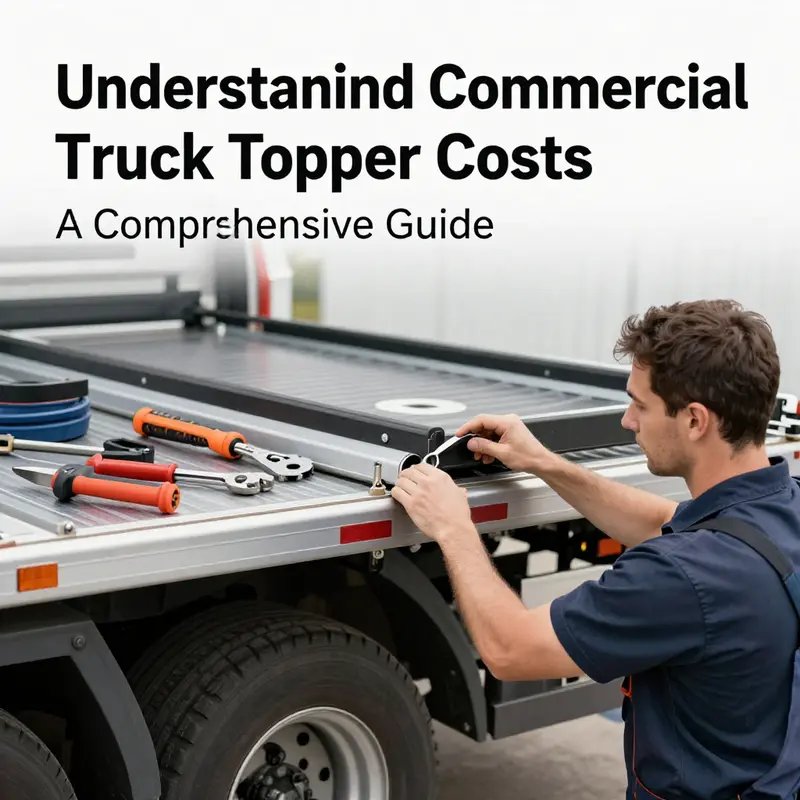
Commercial truck toppers provide valuable additional space and weather protection, but the real cost story begins after the purchase. The base price of new toppers ranges from $1,000 to $5,000 plus, depending on material, size, brand, and features. Aluminum toppers lean toward durability and light weight, typically $1,500 to $3,500, favored by professionals who prize rust resistance and long-term value. Fiberglass toppers offer a smoother finish and strong impact resistance, often $2,000 to $4,500, but high-end models or those with integrated accessories can surpass $5,000. Soft toppers, though cheapest, provide limited protection and durability, commonly $800 to $2,000, while custom or specialty toppers designed for specific industries can run from $4,000 to $6,000 or more. These numbers set the stage, but the installed cost and ongoing upkeep can swing the total economic picture in significant ways.
Installation costs are a major line item and vary with the topper type and the truck it will fit. Basic aluminum toppers, when professionally installed, typically come in around $1,500 to $3,000 for the unit plus labor. More robust configurations—fiberglass or custom steel builds—often push the installed price into the $4,000 to $8,000 range or higher, especially when a precise, fleet-ready fit is required. Labor charges depend on the installer’s experience, local market rates, and the need for special brackets, seals, or weatherproofing. In some cases, installers will require bed or chassis modifications to ensure the topper remains securely mounted in rough conditions or under heavy loads. Those modifications can add hundreds or even thousands to the total, expanding the upfront investment beyond the sticker price of the topper itself. For fleets operating multiple vehicles, these cumulative installation costs can tilt a fat ledger toward a longer payback horizon, unless there is a clear advantage in protecting cargo, extending vehicle uptime, or enabling safer, more organized operations. The financial calculus becomes more sophisticated, because every dollar spent on installation reduces the immediate available capital for other improvements and can delay the moment when a truck returns to work after a retrofit.
Maintenance costs, though less conspicuous than the sticker price or the installation bill, recur with a regular cadence and influence the total cost of ownership. Routine upkeep encompasses inspections, seal checks, cleaning, and fastener maintenance, all aimed at preserving structural integrity and weather-tight performance. Aluminum toppers generally fare better in terms of corrosion resistance, which translates to fewer rust-related issues and typically lower maintenance costs over time. Yet no material is truly maintenance-free. Seams and joints can degrade, seals can dry out, and hinges or latches may wear, especially in climates with extreme temperature swings or salty road conditions. Annual resealing and tightening of fasteners are common recommendations, and addressing small problems early can prevent more costly repairs later. When damage does occur, repair expenses can range from $200 to $1,000 per incident, depending on whether the damage is cosmetic, affects structural integrity, or requires parts replacement. For fleets, the risk of recurring incidents grows with duty cycles and miles; the cumulative maintenance burden can be substantial, particularly if toppers are exposed to heavy impacts, frequent loading and unloading, or high humidity and road salt.
Beyond the mechanical and cosmetic wear, maintenance tangentially touches the broader economics of owning a topper. Proper upkeep helps preserve cargo security, which is a nontrivial risk factor in many operations. A compromised seal or a loose mounting can invite water intrusion, damp freight, or even a derailment of a load plan if a strap or tarp no longer fits as intended. Routine care also supports resale value, a factor fleets weigh when budgeting replacements or upgrades. Consequently, many managers build maintenance into standard operating procedures, aligning it with regular inspections of the truck and body components. Integrated maintenance planning can yield indirect savings by reducing downtime, preventing last-minute service calls, and improving driver confidence when loading and unloading. For a fleet evaluating whether to move forward with a topper, the North American freight environment offers a useful practical lens: the decision often hinges on a holistic cost view that weighs upfront price against installation complexity, uptime benefits, and long-term durability. In such calculations, awareness of broader industry dynamics helps. For instance, fleets may explore how trailer and body equipment orders influence margins across the network, an effect that is sometimes discussed under the topic of trailer orders impact on truckload margins. Trailer Orders Impact on Truckload Margins could be a reference point for economists or operations planners evaluating whether adding toppers is worth the disruption and cost, given how capital allocation competes with other fleet improvements.
Safety and compliance considerations also shape the ongoing cost narrative. Aftermarket modifications must stay within regulatory boundaries to preserve both roadworthiness and insurance coverage. Manufacturer recommendations and safety standards provide guardrails for when and how toppers should be installed, used, and maintained. In parallel, drivers and maintenance staff should be trained to recognize early signs of wear, such as gapping seals or unusual creaks when the topper is opened or closed, and to document findings systematically. The goal is not merely to avoid penalties or costly repairs but to maintain consistent freight protection, which reduces the risk of damage to goods and the cost of claim settlements.
The financial bottom line, therefore, rests on a careful synthesis of purchase price, installation, maintenance, and the intangible benefits of cargo protection and operational reliability. When a topper is planned as part of a larger equipment upgrade, it becomes one piece of a broader strategic calculation about fleet resilience and efficiency. In that context, managers should also account for potential variability in aftermarket service costs, parts availability, and the time required for specialized technicians to perform adjustments on older trucks or non-standard bed configurations. The range of installation and maintenance costs, coupled with the base price differences among aluminum, fiberglass, soft, and custom toppers, creates a spectrum rather than a single figure. Fleet leaders who model this spectrum with realistic maintenance intervals, anticipated use cycles, and risk assessments can avoid the twin traps of over-investment and under-protection. They can design a procurement approach that aligns with maintenance schedules and service contracts, ensuring that toppers contribute to either increased payload efficiency or improved freight protection without becoming a hidden drain on margins.
For readers seeking deeper industry dynamics, regulatory and safety resources are worth consulting. The National Highway Traffic Safety Administration (NHTSA) provides guidance on vehicle modifications and safety standards, helping ensure aftermarket toppers do not compromise road safety or vehicle integrity. This connection is essential because it reinforces the principle that cost management is not only about the sticker price but also about compliance, driver safety, and long-term fleet health. External resources can illuminate how standards translate into practical maintenance and inspection routines that minimize long-term costs while safeguarding operations. In sum, the cost story of commercial truck toppers is not merely about what you pay upfront. It is a careful balance of installation complexity, ongoing care, and the strategic value of secure, protected cargo in a competitive logistics landscape.
External reference: https://www.nhtsa.gov
Final thoughts
Navigating the complexities of commercial truck topper costs requires a thorough understanding of various factors that influence pricing. From the choice between aluminum and fiberglass materials to the impact of customized features and current market trends, every element plays a role in shaping the total cost. Additionally, considering installation and maintenance expenses ensures that companies can budget accurately and minimize unexpected expenditures. Armed with this knowledge, logistics managers, procurement teams, and small business owners can make strategic decisions that enhance the efficiency and productivity of their fleets.