
In Lakeland, Florida, the rental of commercial trucks is a critical service for logistics and freight companies, construction enterprises, and small business owners who operate delivery fleets. Understanding the options available for truck rentals is paramount for these professionals, as it can greatly impact operational efficiency and overall business success. This guide aims to inform you about various providers, pricing structures, seasonal demand trends, and customer insights related to commercial truck rentals in Lakeland. Each chapter will build upon the previous one to provide a holistic view of the possibilities and considerations when selecting a rental service. From local availability to specific needs, this resource will serve as a foundational tool for your business needs.
Moving Forward in Lakeland: A Practical Guide to Renting a Commercial Truck for Local Business
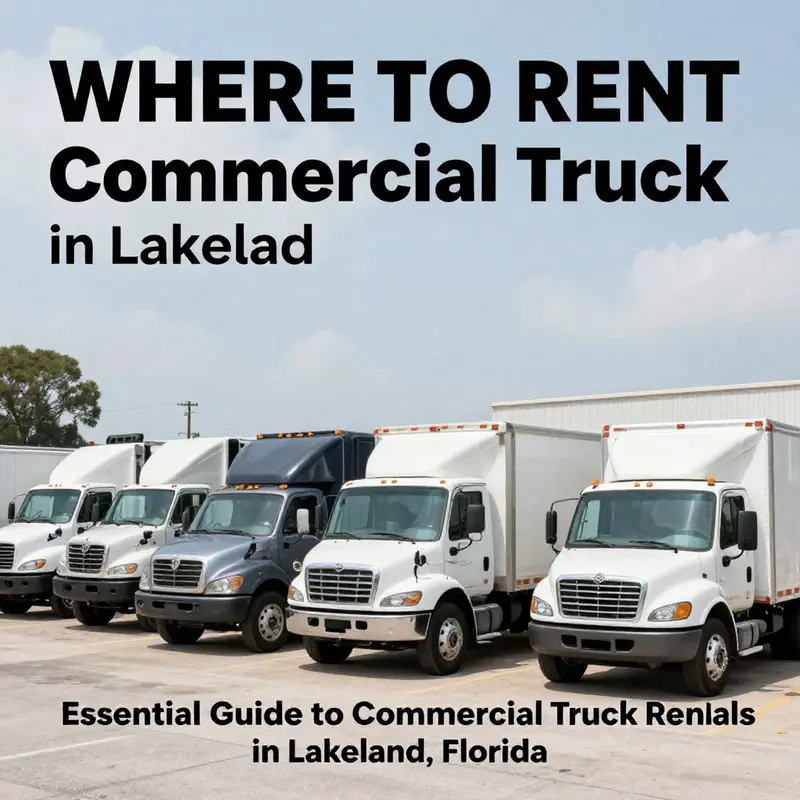
Lakeland, Florida sits at a crossroads of commerce and logistics in central Florida. Its networks pulse with trade routes that connect growers, manufacturers, and small businesses to a wider regional market. For a growing enterprise, renting a commercial truck here is less about finding a shiny vehicle and more about securing a reliable partner for a specific mission: moving goods, meeting tight delivery windows, and keeping costs predictable in a market that values speed and precision. The choice, in other words, hinges on fit as much as on availability. A prudent approach begins with clarity about your cargo, your routes, and your timing, then expands outward to the fleet options and terms that let you scale without collapsing your margins.
Begin with a clear-eyed assessment of what your operation needs. How far will you travel, and will the trip be local, regional, or one-way? What will you be carrying—boxes, pallets, bulky industrial equipment, or temperature-sensitive items? Will you require a lift gate, a refrigerated unit, or specialized equipment like a flatbed or a dry cargo trailer? Answering these questions helps you map the fleet spectrum in Lakeland. The most common commercial rental choices fall into a few broad categories: box trucks with cargo space that protects goods from weather and road grime; cargo vans for smaller loads and tighter urban routes; and heavier, purpose-built trucks that handle weightier shipments or longer hauls. Each category comes with its own sweet spots and trade-offs around payload, maneuverability, fuel efficiency, and daily or weekly pricing.
In Lakeland, the rental landscape is shaped by a mix of national brands with broad fleets and local operators with fleet specialization and closer proximity to business customers. The big-picture advantage of a national chain is reliability and a standardized service model—consistent pickup and return processes, predictable maintenance, and a nationwide support backbone that can help when a driver is stranded or a breakdown occurs on a late-night run. For many Lakeland companies, this translates into a straightforward experience: a broad selection of truck sizes, straightforward reservation systems, and clear terms around mileage and insurance. A local and regional dealer network, by contrast, tends to excel in fleet customization and availability of specific configurations that match tight timelines and immediate needs. They can often tailor pickup windows, offer flexible payment terms, or provide a more intimate understanding of the local traffic patterns and preferred routes around I-4, US-98, and the surrounding industrial parks. Either way, the core decision is anchored in the reliability of the vehicle and the consistency of the service, not merely the headline price.
For many business users, the rental process begins with a quick inventory check that translates your needs into a truck category. If your operation is moving a steady stream of goods between warehouses or into regional markets, a mid-size box truck with a lift gate offers a compelling balance of payload and accessibility. For fragile or perishable items, a refrigerated option may be essential, even if it commands a premium. If you are transporting equipment or oversized items, a larger box or a flatbed configuration could be the better fit. And for last-minute local moves or shuttle runs, a cargo van can be sufficient and surprisingly versatile, especially when the price per mile and total cost of ownership are kept in check. The key is engaging with lenders who can demonstrate consistency in vehicle uptime and who can provide timely roadside assistance and clear, enforceable terms on mileage, fuel policy, and insurance coverage.
Beyond the vehicle itself, the rental contract is a critical part of the calculation. In Lakeland, terms tend to reflect the local cost of living and the practical realities of Florida weather, road maintenance, and toll usage. Your price quote should itemize the base daily rate, the per-mile charge for overages, any waiting time fees, and the cost of optional add-ons such as a lift gate, a cargo securing kit, or a GPS system. Insurance coverage is another big line item. You will want to understand whether the rental company requires you to carry its insurance, whether your existing policy can extend to the rental, and what the deductible might be in the event of damage. In addition, many providers place a hold on a deposit or require a credit check, especially for heavier trucks or longer rental periods. Understanding these conditions in advance saves you from surprises at pickup and helps you compare quotes on a like-for-like basis.
The practicalities of pickup and return also shape the total cost and your operational efficiency. Location matters in Lakeland because time spent driving to a remote lot reduces productive hours and increases the risk of delays. A nearby branch with generous hours can translate into more predictable scheduling and easier driver handoffs, particularly when you’re juggling multiple moves or coordinating with a warehouse team. It is also worth asking about after-hours access, which can be a decisive factor if you have a narrow delivery window or a tight deadline for a local move. In addition, test the process of inspecting the vehicle with the rental agent. A thorough walk-around that includes the tire tread, the hitch system, the lights, and the engine compartment can prevent disputes about preexisting damage when the truck is returned. A clear, documented check-in process is worth its weight in time saved on the back end.
One step beyond the mechanics of the truck is the broader ecosystem around rental partners. In markets like Lakeland, many operators cultivate relationships with brokers, suppliers, and community programs that reflect a different kind of operational resilience. Some providers participate in shared-resource initiatives and charitable collaborations that can indirectly influence your decision by signaling the vendor’s approach to reliability, social responsibility, and long-term community engagement. For readers who are curious about these broader industry movements, a relevant case involves the broader trucking community’s efforts to rally around community projects and charitable causes. Trucks for Change supports Habitat for Humanity illustrates how fleets align with local programs to create shared value while maintaining the logistics rigor customers expect. This sort of collaboration, while not a direct feature of every rental contract, can be a useful signal when you’re evaluating a vendor’s cultural alignment with your own business ethos.
Of course, every rental decision should be grounded in real-world comparisons. Start by gathering quotes from two or three nearby sources to get a sense of the range in Lakeland, then filter those quotes through your needs assessment. Ask for a breakdown of the items I mentioned earlier: base rate, mileage, fuel policy, insurance, deposits, and fees for added equipment. If your operation involves repeated cycles—weekly or biweekly moves—the economics of a longer rental term or even a short-term fleet lease can differ markedly from a day-by-day arrangement. Some providers offer advantageous weekly or monthly rates when you commit to multiple trips, while others may impose a flexible, pay-as-you-go model that can be advantageous for seasonal fluctuations. In markets like Lakeland, where weather can influence logistics plans and lead times, the ability to scale up or down quickly—without a heavy administrative burden—can be a competitive edge.
The practical takeaway is that Lakeland’s truck rental landscape rewards preparation and specificity. A business that can articulate its typical load, route, and schedule gives the leasing team a precise canvas to propose the right truck class, with the exact equipment options needed to protect cargo and meet customer deadlines. If you anticipate frequent short hops, you might prioritize a vehicle that is easy to maneuver and cheap to operate, paired with a predictable mileage policy. If your shipments are heavier or require temperature control, a larger unit with a glove-tight cold chain integration will save you time and reduce the risk of spoilage or damage. For shipments that require special access or custom configurations, it can be worth negotiating with a local dealer who understands the particular industrial parks in Lakeland and the doors that lead to them.
In thinking through the ecosystem, remember that the decision is not only about the truck but about the partnership. A reliable rental partner should respond promptly to questions, be transparent about all charges, and provide a straightforward path to resolving problems. The Lakeland market, with its mix of corporate facilities and independent operators, rewards clear communication and dependable support. While a single vehicle can carry your goods from A to B, the value you derive comes from the consistency of the experience across trips and the confidence you gain from knowing you can rely on your rental partner when the schedule tightens. As you compare options, use a simple rubric: does the vehicle meet the cargo and distance needs? are the terms clear and fair? is the local pickup accessible and the support reliable? If the answer to these questions is yes, you have found a foundation you can build on, season after season, in Lakeland’s dynamic commercial environment.
For businesses seeking a primary reference point in Lakeland, the broad network of truck rental options near the city’s core provides the flexibility to match almost any schedule. And while the fleet mix and terms may vary, the core value remains consistent: a vehicle that protects the cargo, a process that protects time, and a price that protects the bottom line. The next step is engaging with two or three local providers, requesting a side-by-side comparison of terms, and then testing a one-way or local rental to experience firsthand how the service levels translate into practical day-to-day operations. If you want a practical starting point for the broader provider landscape before you contact vendors, you can reference the Lakeland location of a major nationwide rental chain here: https://www.uhaul.com/locations/florida/lakeland/510-n-florida-ave/. This external resource provides a baseline for understanding truck availability and service scope in the Lakeland area, while your direct conversations with local providers will tailor the outcome to your specific business needs.
Navigating Lakeland’s Commercial Truck Rental Landscape: Local Hubs, Fleet Partners, and Practical Pathways
Lakeland, Florida sits at a practical crossroads for business logistics, a city that blends regional reach with proximity to larger distribution networks. For a business that needs to move goods, emptying a warehouse for a seasonal spike or shifting inventory to a new storefront, renting a commercial truck in Lakeland can be a smart, economical option. The key is to move beyond a simple search for a single truck and to think in terms of a fleet solution: size, duration, service, and the ability to adapt as your operation shifts. In Lakeland, the rental landscape leans toward a mix of national chains that provide broad coverage and local fleet specialists who understand the quirks of Central Florida traffic and weather. The result is a practical, service-oriented market where choice comes from combining nearby access with flexible terms, rather than from a single, one-size-fits-all provider.
The most common starting point is to assess the kinds of trucks that fit your load and journey. For many small to mid-size business needs, a dry van box truck offers straightforward loading and unloading, with options in various lengths and payload capacities. For shipping materials that demand more protection, a refrigerated unit may be necessary, while flatbeds handle oversized or irregular items that can’t be palletized. Consider whether you need a vehicle with a lift gate, accessible loading dock compatibility, or a specific wheelbase for maneuvering in tight urban corridors. In Lakeland, you’ll typically encounter these categories as the core options from any rental partner. Price, maintenance arrangements, insurance requirements, and mileage terms then shape the decision. These factors, together, determine whether a short-term rental overlapping with a peak season makes more sense than committing to a longer-term lease.
The practical equation for Lakeland businesses often balances proximity with reliability. Local operators who understand the city’s road geometry—its mix of arterial streets, roundabouts, and the occasional storm-driven detour—can save valuable time. A provider with ready roadside support, clear fuel policies, and predictable maintenance schedules reduces the risk of a hiccup derailing a delivery window. Conversely, national rental networks bring standardized processes: uniform insurance terms, predictable damage waivers, and consistent vehicle condition checks. For many firms, the best approach is a hybrid one: rely on a nearby regional or national fleet for the bulk of needs, while keeping a trusted local contact for last-minute requests or specialized equipment.
Choosing the right path also requires clarity about licensing and safety prerequisites. Heavier or more capable trucks often require drivers with commercial licenses and training, especially if the rented equipment includes lift gates, refrigeration units, or heavy payload handling. Insurance terms typically mirror the risk involved in carrying cargo, and many operators impose driver age and experience requirements. It pays to have your documentation ready—proof of insurance, a business license or taxpayer identification, and a clear plan of the route, duration, and return location. The more transparent your plan, the quicker and smoother the rental process becomes. A well-prepared company can often negotiate favorable terms for seasonal spikes, short-notice campaigns, or regional moves that don’t justify a full-time fleet purchase.
Within Lakeland’s mix of providers, a practical strategy is to map out two or three local options along with a larger network that can cover days when demand spikes. Such a plan ensures you won’t be left without a capable vehicle during a critical shipment or a sudden inventory overhaul. Timing matters as well: supply-and-demand dynamics can influence daily rates and mileage charges. When capacity tightens, you may see higher rates or reduced one-way rental deals. That is why situational awareness matters. A quick phone call or a brief online inquiry can reveal whether a unit is available, what the current rate looks like, and whether any promotional terms might apply for a multi-day rental.
The market dynamics can also be understood through industry-level insights about capacity and pricing. Market conditions—such as fluctuations in available fleet and the timing of vehicle maintenance cycles—affect not just price but the reliability of an on-time delivery window. This is where a knowledge edge matters. For instance, a rental strategy that anticipates peaks and channels demand through a mix of short-term and longer-term lease options often yields better continuity and cost control. For those who want to explore the broader context, there are industry briefs and market analyses that discuss how capacity shifts influence bidding, dispatch planning, and the total cost of ownership over multiple trips. In Lakeland, such insights can frame a practical choice: whether to rent for a single project or to secure a more predictable fleet solution that carries over a part of the year. Excess Capacity in the Trucking Market Insights offers one of the perspectives that can inform that decision, helping a business interpret when pricing may be favorable or when service levels could tighten.
For businesses that need direct access to a broad mix of vehicle types and service levels, the path often leads to engaging with a local fleet solutions approach. A regional leasing firm or a dealership network that specializes in fleet management can tailor a program to your cargo profile, distance, and schedule. This might mean a short-term rental with a built-in maintenance package, or a mix of fleet credits that forego some daily charges in exchange for a commitment to a set number of miles per month. Longstanding fleet programs can also help with financing options, vehicle replacement planning, and driver training services. The aim is not simply to secure a single vehicle, but to configure a working fleet in Lakeland that can scale with your business without shocking the budget each quarter.
In the search for practical, local Know-How, a few non-traditional touchpoints can still be valuable. A locally oriented business center that understands the area’s commercial rhythms often maintains relationships with regional truck partners and can provide referrals for reputable operators. In Lakeland, a local shop that specializes in sports and outdoor gear may even serve as a convenient hub for referrals or introductions, given the city’s cross-pollination of business communities and service providers. Such referrals can help shorten vendor research time by pointing you toward trusted fleet managers who regularly handle similar cargo, routes, and seasonal schedules. While this path may require a phone call or a quick visit, it can unlock a network of relationships that a lone inquiry to a national rental chain could miss.
As you narrow the field, you’ll likely encounter the option of working through a dealer network that focuses on heavy-duty equipment rather than a casual, trip-to-the-counter rental. Manufacturer-aligned dealers can offer more predictable terms, including short-term rentals tied to a brand’s fleet program, or longer-term leasing packages that come with maintenance and tire services, roadside assistance, and flexible upgrade paths as your business evolves. These partnerships can be particularly advantageous when your cargo consists of heavier loads or when you anticipate frequent logistics needs across multiple Lakeland-area routes or neighboring counties. They also foster a smoother process for maintenance and compliance, since the provider is invested in keeping your fleet on the road rather than merely renting it out.
No single path fits every business, and Lakeland’s mix encourages a thoughtful blend. A practical approach is to start with a quick audit of your upcoming 60-to-90-day needs: What cargo are you carrying? What are the common routes? How many days, on average, will you require a truck? What payloads will you be lifting or hauling, and do you require a lift gate or refrigeration? Once you have a clear picture, you can compare a few rental terms, including mileage caps, fuel policies, and maintenance commitments. If a unit becomes unavailable on a key date, you’ll still want a backup plan—perhaps a different vehicle type or a nearby partner who can deliver a comparable service level on short notice. In practice, this often means keeping two or three compatible options in your rotation and maintaining a small buffer in your schedule for unexpected demand.
A practical note on local connections: a nearby business that specializes in cycling and fitness may seem an unlikely beacon for truck needs, but such shops frequently operate within a dense network of local business people, contractors, and transport handlers. In Lakeland, this kind of local hub can sometimes become a conduit to referrals for fleet services. It’s not about relying on them for the truck itself, but about leveraging their regional connections or their staff’s experience coordinating with vendors who handle larger equipment. If you’re exploring this route, you’ll find that the local store at 1058 S. Florida Ave. can be a starting point for outreach, even if the primary service is not truck rental. When you call, explain your constraints clearly and ask for referrals to established fleet providers who service the Lakeland area. This approach helps you cast a wider net while keeping your procurement anchored locally. If a referral touches on broader market context, you can follow up with an industry brief like the one mentioned earlier to better weigh pricing dynamics and capacity shifts.
For immediate steps, begin with a concise requirements document: date ranges, cargo type, and required vehicle specs; and a contingency plan for back-to-back moves. Contact a couple of nearby providers to confirm vehicle availability and to secure a price quote that includes all potential surcharges. Ask about insurance requirements and the process for adding your commercial policy to the rental agreement, and clarify the process for returning the truck if your schedule changes. If you want a broader lens on how the market is evolving, review industry insights on capacity and pricing to understand the external factors shaping Lakeland’s truck rental rates. Above all, ensure your chosen path offers predictable maintenance support and a clear, direct point of contact for any issues on the road.
External resource for local context: Trek bikes Lakeland store page. For a sense of the local business ecosystem and potential referral networks, you can visit https://www.trekbikes.com/us/en/store/bents-cycling-fitness-lakeland/.
Lakeland Logistics on Wheels: A Practical Guide to Renting Commercial Trucks, Pricing, and Terms
Lakeland sits at a crossroads of commerce in central Florida, where small manufacturers, distributors, and service businesses frequently rely on reliable truck capacity to move goods, stock, and gear. For any business owner or operations manager, choosing where to rent a commercial truck in Lakeland is less about a single bargain and more about balancing vehicle availability, price, rental terms, and the fit of the truck to the job at hand. The choices in Lakeland run from familiar national brands to more specialized fleet providers, each with its own strengths and blind spots. The result is a marketplace that rewards planning, clarity on needs, and a willingness to compare options rather than assume the first option is the best for every job. If you are moving inventory between warehouses, delivering to customers, or mounting a local logistics project, understanding the landscape in Lakeland can save time, money, and headaches down the line.
In Lakeland, there are several well-known routes you can take to secure a commercial truck. A longstanding approach is to work with major national rental brands that maintain a network of branches in and around the city. These providers typically offer a range of trucks from cargo vans to larger box trucks, with both short-term and longer-term rental options. The core advantage of these brands is predictable service, standardized maintenance, and broad insurance and support options. For a business that needs a truck for a few days to a couple of weeks, this can translate into straightforward pricing and transparent terms, with the peace of mind that comes from a national footprint. Pricing often varies with the size of the vehicle, the length of the rental, and the chosen mileage allowance, but you usually have a clear framework to work within. The rental rate may be quoted on a per-day basis, with additional fees if you exceed the included miles, or if you require drop-off at a different location or after hours access.
Beyond these larger brands, Lakeland hosts a robust local and regional ecosystem that can offer competitive pricing and flexible terms. Local dealers frequently tailor packages to meet small-business needs, with options that may include weekend or evening pickups, flexible return policies, or discounted daily rates for longer commitments. These specific offerings can be attractive for businesses that regularly require truck time but prefer to stretch their dollars. Local partners often maintain a practical understanding of the roads and routes around Lakeland, which can translate into better guidance on the right truck size for a job and the most economical plan for a given route.
A practical way to think about the spectrum is to match the job to the vehicle size and the service model. For light to mid-range shipments, a cargo van or a small box truck can be sufficient. They tend to be more fuel-efficient and easier to maneuver in urban and suburban lanes, and they generally come with straightforward insurance coverage and maintenance arrangements. For heavier payloads or longer hauls, you’ll want to consider larger box trucks or straight trucks that offer higher load ratings and more robust braking systems. These vehicles are better suited to longer trips, or when you need to ensure a single truck serves several locations in one day without frequent returns.
On the pricing side, it is important to recognize that rates in Lakeland can swing with demand, the season, and the particular vehicle class. Real-time pricing is often available through aggregator platforms that pull live data from multiple providers, giving you a sense of the going rate for your specific window. For example, cargo van rentals in Lakeland can start at relatively accessible daily prices on certain platforms, even when booked through peer-to-peer or mixed-source services. This is useful for planning a quick, one-off move. However, when your project has more certainty or requires a consistent cadence—an ongoing weekly delivery route, for instance—it can be beneficial to have a direct quote from a preferred supplier, including a clear view of the mileage allowance and any potential extra charges.
The rental terms you encounter will shape your total cost and your operational flexibility. Daily rates are only part of the equation. Most providers offer a mileage allowance, and there is often a per-mile charge for miles beyond that allowance. Insurance options range from basic liability coverage to more comprehensive protections, and you will need to decide which level aligns with your risk tolerance and the value of the cargo. Fuel policy also matters: some contracts require you to return the vehicle with a full tank, while others permit you to refuel at the end and subtract the cost from your final invoice. Hidden fees can appear as one-way charges if you pick up at one location and return at another, or as late-return penalties if a truck is not brought back within the agreed window. The best approach is to scrutinize the rental agreement line by line and ask for a written quote that itemizes daily rate, mileage, insurance, fuel, and any potential miscellaneous fees.
KAYAK, as a pricing aggregator, illustrates how the market can be navigated from a distance by showing real-time comparisons across providers. It can be a practical starting point to gauge the range of options in Lakeland and to understand how pricing evolves with the vehicle type and rental duration. Among the listings, cargo vans and smaller trucks tend to populate early in the search results, offering a useful entry point for short-term needs. For commercial users who anticipate recurring demand, though, the value of establishing a direct relationship with a local dealer or fleet manager becomes evident. A direct relationship often yields more favorable terms for long-term arrangements, quicker service when scheduling changes are needed, and more predictable maintenance and roadside support. When you compare a direct quote with what you see on a pricing site, you can weigh the convenience against the savings and choose the path that minimizes idle time and operational risk.
In Lakeland, a typical decision flow might start with identifying the job’s actual requirements: how large a truck is needed, how many miles will be driven, how long the truck will be on the road, and whether there are special features required—such as a liftgate for heavy items, or cold-chain capabilities for temperature-sensitive goods. From there, a business can map these needs to the available categories of trucks and the corresponding rental terms. If the job involves frequent pickups around the Lakeland area or in nearby towns, a local provider might offer the most favorable return window and the most flexible mileage terms. Conversely, if the operation demands maximum payload or specialized capabilities, a larger fleet partner may be the better fit. The market in Lakeland accommodates both approaches, and the optimal choice often rests on a balance between cost stability and operational reliability.
From a practical standpoint, the practical steps are straightforward. Start by outlining the job’s dates, pickup and return locations, and the approximate miles. Contact multiple local providers for quotes that clearly specify the vehicle class, daily rate, mileage, and insurance. If you’re using a pricing aggregator, use the quotes you collect to negotiate with your preferred vendor. Ask about any promotions, volume discounts, or bundled services that could trim the total cost. In addition, confirm the return policy and what happens if the job runs longer than planned or if road conditions require a switch to a larger truck mid-project. You may find that a slight adjustment in vehicle size reduces overall fuel use and keeps the job within budget, even if the initially selected vehicle seems to be the best fit on paper.
For businesses that plan on ongoing truck use, a longer-term rental or a fleet partnership can unlock greater predictability and align with procurement cycles. Fleet partnerships often include maintenance support, roadside assistance, and predictable monthly invoicing, which simplifies budgeting and accounting. If your operations require refrigerated transport or other specialized capabilities, Ryder emerges as a notable option, given its broader logistics portfolio and emphasis on service robustness. These advantages matter most when the job involves sensitive cargo or time-critical delivery windows.
As you weigh the options in Lakeland, keep in mind the broader market dynamics that influence pricing and availability. The trucking landscape has been shaped by shifts in demand, capacity, and regulatory frameworks that influence cost structures and service levels. For a broader market context, see this analysis of excess capacity in the trucking market. This resource helps explain how supply and demand dynamics can affect rental pricing, especially during peak seasons or when freight activity fluctuates in nearby corridors that feed into Lakeland’s distribution network. Excess capacity in the trucking market insights
With the right preparation, renting a commercial truck in Lakeland becomes a process that supports your operation rather than complicates it. The city’s mix of national brands and local providers means you can tailor the rental to your project’s scope, whether you need a compact cargo van for last-mile moves or a larger truck for a multi-stop delivery route. You gain flexibility without sacrificing control when you approach the task with a clear set of criteria: vehicle size that suits the payload, a mileage framework that matches planned use, and a billing arrangement that fits your accounting needs. If you keep these factors in view, you’ll find Lakeland’s truck rental landscape offers practical solutions that align with a business’s logistics realities—not just a price tag.
For those who want to explore current listings and compare options, platforms like KAYAK can be helpful starting points to see live availability and pricing across Lakeland providers. While price is important, you should also consider service quality, vehicle condition, and the provider’s responsiveness when you call or visit. A quick phone call to the rental desk can reveal the true lead time for a specific truck class, the practicalities of after-hours pickup, and the exact terms for refueling and return. In the end, the best choice is the one that harmonizes cost, reliability, and the operational rhythm of your business’s Lakeland-based logistics.
External resource for broader listings and comparisons: Kayak provides current listings and comparative pricing for truck rentals. https://www.kayak.com
Seasonal Signals in Lakeland: Navigating Commercial Truck Rentals Amid Shifting Demand
In Lakeland, Florida, planning a commercial truck rental is rarely just about size and price. It is about listening to a set of seasonal signals that shape availability, squeeze margins, and push careful scheduling into a strategic discipline. The city’s climate, agricultural cycles, steady influx of visitors, and the rhythm of local events all push demand up and down. For a business that relies on reliable transport to move goods, equipment, or teams, aligning the rental window with the market’s rhythm can determine project success as surely as the vehicle’s payload rating. The way you approach this decision matters, because the best outcomes come from a plan that treats a rental as a moving piece of a larger operational puzzle, not as a one-off expense or a last-minute stopgap.
The most reliable path to securing a truck when you need it is to work with the major national rental networks that maintain Lakeland presence. These providers bring a breadth of vehicles, from compact box trucks to larger freight haulers, and they tend to offer the most consistent maintenance, insurance options, and predictable terms across multiple locations. Their Lakeland offices are designed to support local pickup and cross-town or even cross-state arrangements, which can simplify a plan that involves multiple sites or a tight deadline. By framing the decision around a broader network, rather than a single storefront, you increase the odds that the exact vehicle you require will be available on the right day.
Seasonal demand in Lakeland follows a recognizable cadence. In spring, the city’s agricultural activity, growing construction schedules, and an uptick in tourist traffic converge to push rentals higher. You may see longer hold times on specific truck classes as builders and shippers secure workhorses for moving materials to new sites and staging yards. Summer often mirrors that tempo, with heat and humidity intensifying the need for reliable equipment across outdoor projects and renovations. And in fall, harvest operations and pre-winter preparations again raise demand, particularly for mid- to large-size vans and straight trucks used to ferry equipment, pallets, and supplies to job sites that need to be ready before the winter lull.
The holiday season and the period around major local events can cause noticeable spikes. Lakeland’s chili festival, the citrus and agritourism calendar, and the Florida State Fair draw visitors and temporary workers, increasing the number of moves, deliveries, and setup tasks that require a rental vehicle. Even if your operation is not tied to tourism, these occasions reshape inventory in the market. In practical terms, it means certain lengths, payload ratings, or door configurations may vanish from the fleet for a few days, and daily rates can rise. For businesses that rely on a fixed schedule and a fixed budget, those fluctuations matter enough to warrant planning steps well in advance.
When demand softens, the market becomes more forgiving. The winter months, especially the January through February stretch, often feature lighter activity. The reduced competition for the most sought-after vehicle classes translates into better access and, in many cases, lower daily rates. For project managers and fleet coordinators who can time their needs to these quieter weeks, the opportunity to negotiate favorable terms increases. The counterpoint is that less demand can also coincide with shorter business windows after year-end slowdowns in other sectors, so a careful forecast remains essential even in the off-season.
The core recommendation for securing a Lakeland rental remains simple and pragmatic: plan ahead, compare prices, and be flexible where possible. Booking four to six weeks before your intended pickup date is a practical rule of thumb that generally yields better rates and a wider range of vehicle options. If your schedule is less predictable, consider a multi-channel approach. Check the official sites of the major rental networks for real-time availability, and scan third-party platforms that aggregate inventory across multiple providers. The goal is to identify which vehicle classes are available on the dates you need and at a price that fits your budget. Because the best fare often depends on nuance—pickup location, duration, mileage limits, insurance options, and the ability to add one-way terms—small differences in the booking path can accumulate into meaningful savings or, conversely, surprise costs.
In practice, the vehicle you choose will be shaped by your actual use case. A compact box truck or a mid-size straight truck might suit a local move, a warehouse restock, or a mid-range delivery run. For heavier loads or longer distances, a larger freight hauler becomes the sensible option, even if its daily rate is higher. The choice also hinges on whether cold-chain capabilities are required, such as transporting perishable goods. In those cases, you’ll want to confirm if the fleet at the Lakeland location includes refrigerated options or specialized trailers, because not every vehicle class is immediately available at every time of year. The broader rental network can provide a broader spectrum of configurations, which is where the advantage of dealing with a major provider’s regional footprint becomes evident.
Cost-conscious buyers should routinely compare pricing across channels. While the base daily rate is important, the true cost often includes mileage discounts or surcharges, fuel policy, insurance terms, and administrative fees. In a market with fluctuating demand, wholesale discounts, loyalty program perks, long-term rental terms, or corporate/government rates can tilt the balance in favor of one option over another. If you work with a lender or insurer that has negotiated terms with a national rental network, you may even secure lower-than-standard rates through a corporate arrangement. The key is to map each candidate option against your exact requirements: vehicle type, payload needs, miles to be covered, environmental constraints, and the possibility of scheduling flexibility around peak periods.
To gauge current availability and to spot patterns that might influence your planning, it helps to keep an eye on market dynamics articles and operator blogs that discuss capacity and demand trends. Reading about excess capacity in the trucking market insights can provide a broader context for what you may experience locally. It frames the Lakeland market as a part of a national ecosystem, where capacity ebbs and flows with freight volumes, import/export cycles, and macroeconomic signals. This awareness doesn’t replace due diligence on local inventory, but it does inform timing decisions—especially when your project has a hard deadline. For a broader view, see this piece on excess capacity in the trucking market insights.
Real-time, location-specific information is what ultimately determines success. Use the Lakeland pages of the major rental networks to confirm current inventory and rates for your pickup window. The advantage of doing so lies in the ability to reserve, modify, and even extend the rental without stepping back into a store, should your plans shift. If you have to navigate a one-way rental or to drop a vehicle at a different site after a job, the ability to arrange this through a single system saves administrative headaches and reduces risk of not finding a suitable vehicle at the last minute. In Lakeland, the availability picture tends to improve during the shoulder weeks, but the freedom to book early still stands as the most reliable hedge against the seasonal surges described above. It is worth reminding readers that the Lakeland market does not exist in isolation but sits within a national network of capacity and pricing realities that influence every local decision.
When you plan a rental in Lakeland, you should also be mindful of the operational realities of moving goods in a city that blends commercial corridors with agricultural pockets and a steady stream of seasonal visitors. The road network, proximity to industrial parks, and the density of warehouses in the central district all shape how long you can keep a vehicle on the road and how many trips you can squeeze into a given day. A well-structured plan might include contingency steps: securing a backup vehicle from the same network within the same pickup window, or building in a short buffer day to account for weather delays, traffic, or loading times. This proactive approach is the difference between a rushed last-minute scramble and a well-executed rental that keeps a project on track.
For readers who want a quick cue for the Lakeland market without committing to a full planning phase, the strongest takeaway is to treat a truck rental as a logistics lever rather than a simple rental decision. It is a tool that aligns with your project timeline and your budget, and it responds to the seasonal rhythms that shape supply. By acknowledging those rhythms, you position your business to capitalize on quieter windows, secure favorable terms when the pressure is high, and maintain the operational resilience that customers expect. The knowledge that major networks maintain a steady presence in Lakeland provides reassurance that, when the clock is ticking, there is a path to the right vehicle at the right time. In short, seasonal trends and demand in Lakeland are not mysterious forces but measurable dynamics that, when understood and anticipated, empower better decisions and smoother execution.
External resource: https://www.penske.com/locations/florida/lakeland
Navigating Lakeland’s Commercial Truck Rental Landscape: Practical Guidance for Local Businesses

Lakeland sits at a crossroads of Tampa Bay logistics and central Florida distribution, a town where industrial parks, shopping hubs, and agricultural supply chains all rely on dependable movement of goods. For a business that moves even modest volumes, the ability to source a suitable truck quickly, pay a fair rate, and hand off the vehicle without friction can become a quiet competitive advantage. The question of where to rent a commercial truck in Lakeland isn’t just about a price tag or a car-like checkout. It’s about aligning a rental arrangement with your operation’s rhythm—the daily route, the peak loading window, the level of service you expect, and the risk you can tolerate when a miles-driven day stretches into overtime. In practice, successful rental decisions in Lakeland hinge on three overlapping truths: the breadth of available vehicle options, the transparency of pricing and terms, and the reliability of the people you work with along the way. When you approach rental decisions with those priorities in mind, you can move goods with less stress and more confidence.
To begin, consider the spectrum of vehicle capability you might need. Lakeland’s business ecosystem supports everything from small cargo vans for urgent local deliveries to larger, straight-truck options for moving equipment or regional shipments. The right choice depends less on a single standout model and more on a fleet that covers a continuum of sizes and configurations. A practical rental partner understands this spectrum and maintains a fleet that includes lighter-weight boxes for tight urban corridors and heavier, long-wheelbase trucks for overnight runs or cross-town transfers. A smart renter will map their typical load profile—average weight, average cubic feet, portal height, and access considerations such as alleyways or loading docks—and then verify that the local outlets can supply vehicles that meet those needs during the exact window of operation.
Equally important is the clarity of pricing and terms. In Lakeland, as in many markets, the sticker price is only part of the story. A rental quote can be affected by mileage allowances, fuel policies, insurance coverage, add-ons, and fees for late returns or additional drivers. The best options present a straightforward price structure and a clearly stated mileage cap that aligns with your expected distance. They also spell out what the plan covers in terms of roadside assistance, glass and tire protection, and any required deposits or payment methods. For businesses operating on tight cash flow or project-based budgets, predictable costs matter. A reliable rental partner will provide a written summary before you commit, with a breakdown of any potential surcharges and the exact inclusions—often already bundled, but sometimes available as paid add-ons.
The human element—how you’re treated by staff—from your initial inquiry to vehicle return is the third pillar of a successful Lakeland rental. Local staff who understand the practical realities of moving in Florida’s climate and road conditions can save you time and reduce risk. They know when to flag issues such as maintenance notices, seasonal variability in vehicle availability, or changes in local road restrictions that could affect your route. A facility that is easy to reach, with clear hours, ample parking, and a straightforward check-out process, often translates into fewer headaches when schedules tighten. In fact, many operators emphasize the importance of a quick, transparent pickup and drop-off experience—because in the end, your days are driven by deadlines, not by paperwork. The most recommended outlets in Lakeland are those that balance a broad vehicle mix with reliable service and a walk-through that ensures you understand the vehicle’s limits and the company’s policies before you drive away.
When you’re evaluating options, a practical approach is to observe how each outlet handles the essentials: availability, documentation, and support during and after the rental. Real-time availability is not merely a convenience; it’s a business constraint. If your operation has a critical deadline, you want to know you can reserve a truck for a specific day and hour and that the location actually has the model you need ready at that time. Before you arrive, verify what documents you’re asked to present—most outlets require a valid driver’s license, a credit or debit card in the driver’s name, and sometimes a debit card with a backup form of payment for incidentals. Ask about driver limits if you intend to add an additional driver; many fleets have age or license requirements that can affect your planning. Clarify the vehicle’s fuel policy and the return process. Some operators require you to return with a full tank, while others charge a premium if you don’t, and some offer fuel plans you can pre-purchase. If your team relies on GPS, company-provided routing systems, or anti-theft devices, inquire about available add-ons and any associated costs. The aim is to lock in what you truly need without paying for friction you won’t use.
The reality on the ground in Lakeland is that you’ll often encounter a mix of national chains and regional outfits. Each type brings its own strengths and trade-offs. A national network can deliver broad vehicle variety and consistent service standards, which is valuable when you must scale your operations quickly or plan for a larger distribution window. A regional operator might offer faster local responsiveness, more flexible terms for shorter engagements, and a higher tolerance for nonstandard requests. A budget-focused outlet can be an attractive option when your usage is episodic or when you need a short-term solution with predictable, low-cost terms. And for businesses with seasonal demands or specialized needs—such as temperature-controlled transport or secure handling—there are outlets that tailor their rental options to those realities. The key is not to chase the lowest price alone, but to balance cost with the probability of smooth operations, staff accessibility, and the certainty that the vehicle and its supports will be available when you need them.
In forming a practical decision, consider also the posting of real-world feedback. Customer reviews on popular platforms can illuminate the consistency of a rental partner’s performance—how accurately a staff member assessed a vehicle’s suitability before checkout, how easy the reservation was to modify, and how the return process unfolded under busy conditions. Look for patterns: repeated praise for clear pricing and predictable insurance handling, or recurring complaints about last-minute changes in vehicle availability. The truth, often, is in the consistency more than the spectacle of a single positive experience. If you can, observe a pickup in person. A brief tour of the facility can reveal maintenance habits, the condition of the lot, and whether the staff take the time to verify that you understand the truck’s controls, safety equipment, and any load limits. These are the unglamorous details that determine whether a rental helps you meet a deadline or becomes a source of delay.
To connect the practical with the broader context, consider how market dynamics shape fleet availability over time. A chapter in the wider trucking discourse examines how economic trends influence trailer orders, production cycles, and inventory management across the rental sector. That discussion can enrich your sense of why certain vehicle types may be in shorter supply at particular times and how you might plan ahead. For a broader view of these patterns, see the discussion on trucking economic trends affecting trailer orders. This resource can offer a macro lens on fleet composition and availability cycles, helping you align your rental strategy with anticipated market conditions. Trucking Economic Trends Affecting Trailer Orders
Beyond the decision-making checklist, there is a simple, repeatable workflow that many businesses find effective. Start with a short list of likely outlets that operate within Lakeland or its immediate surroundings. Then call or visit to confirm three core points: which vehicles are actually available on your required date, what the all-in price will be including taxes and fees, and what the policy is for extra drivers or changes to the rental period. Ask for a written quote and a printed summary of terms. If possible, request a quick, on-site walk-through of the truck you plan to rent, focusing on the loading height, door access, and any signs of wear that could affect your operations. A clean, well-maintained vehicle is not just a comfort; it’s a reliability issue for deliveries and equipment moves, especially in the Florida climate where heat and humidity can stress mechanical components.
As you proceed, keep a short, pragmatic decision framework in mind. Compare the total projected cost across the likely rental window, including mileage estimates, fuel, insurance, and any add-ons you truly need. Weigh that against the level of service you can expect: how quickly can you reach a live person if there’s a problem, how flexible is the return process, and how clear is the guidance on what to do if you encounter a breakdown on the road? In Lakeland, where business operations often revolve around tight schedules and rapid turnover of goods, the ability to rely on a partner’s efficiency—without chasing paperwork or negotiating for hours—can be the decisive factor between a project that runs smoothly and a day that spirals into delays.
Finally, heed the practical reminder that not all rentals are a mirror of your everyday use. If your operation involves cold-chain logistics or specialized equipment, you’ll want to validate that the chosen outlet can support those needs, whether in vehicle refrigeration, secure cargo handling, or compliant documentation for temperature-sensitive loads. The ability to reserve a vehicle that meets precise specifications—and to secure confirmation on those specs before you go—will reduce the risk of surprises on the day of your move. In Lakeland’s dynamic environment, where industrial traffic, seasonal surges, and ongoing construction can influence road conditions, the best choice is a rental partner that blends fleet flexibility with human reliability. When you find that combination, you’ll notice the difference not in a single transaction, but in the consistency of your operations over time.
External resource: For a broader industry perspective on fleet services and logistics dynamics, explore Ryder’s fleet solutions and services at https://www.ryder.com/.
Final thoughts
Choosing the right provider for commercial truck rentals in Lakeland, Florida, is integral to ensuring your business operations run smoothly. Awareness of the available options, their pricing structures, and seasonal trends can greatly enhance decision-making for logistics and construction enterprises, as well as small businesses with delivery fleets. By leveraging the insights shared in this guide, business owners can optimize their rental choices, fostering efficiency and effectiveness in their transportation needs. Ultimately, informed decision-making can lead to improved service delivery and operational success within their respective industries.