
Navigating the financial landscape of commercial truck leasing is essential for logistics and construction businesses, as well as small delivery fleets. This article delves into the intricacies of truck lease costs, from various truck types to the key influencing factors and budgeting for additional expenses. We clarify the average costs associated with leasing commercial trucks and equip business owners and procurement teams with actionable insights needed for making informed decisions in their operations. By segmenting the topic into comprehensive chapters, we aim to provide a complete picture that helps mitigate budgetary surprises and ensures fiscal resilience in the competitive transport sector.
Leasing Ahead: Unraveling the Real Cost Potentials of a Commercial Truck Lease
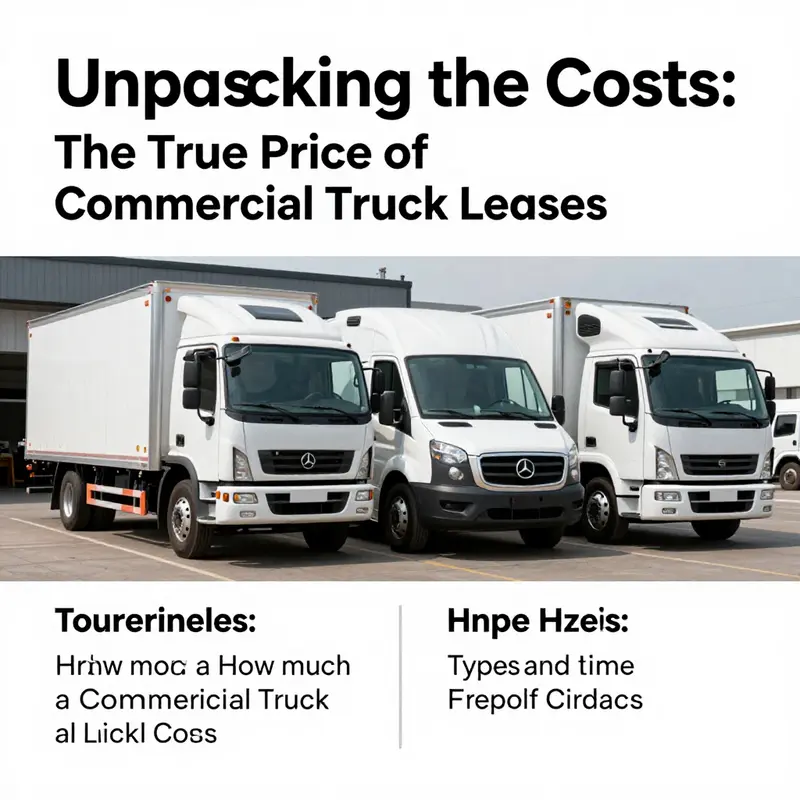
Leasing a commercial truck is more than a negotiation for a monthly payment. It is a designed mechanism to align capital discipline with the operational tempo of a trucking business. The overall cost to lease hinges on a constellation of moving parts, from the basic choice between a box, a refrigerated van, or a flatbed, to the subtle terms tucked into the fine print. The price you pay each month is only the surface of what your fleet will actually cost over the life of the agreement. On the low end, a new or nearly new truck often lands in the range of roughly one thousand five hundred to three thousand five hundred dollars per month, depending on the truck type, features, and term. Used trucks can be cheaper to lease in monthly terms, sometimes starting around eight hundred to two thousand dollars a month, but mileage, age, and overall condition quickly tilt that balance. When planning a lease, business owners quickly discover that insurance, maintenance, fuel, and potential fees for excess mileage or early termination can dramatically shift the total cost of ownership, even if the headline monthly payment looks manageable. The math becomes more intricate once regional pricing differences and the terms offered by different lessors enter the equation, underscoring the importance of shopping with both a clear budget and a thorough understanding of the contract’s long tail.
To understand why costs diverge so widely, it helps to frame the lease through the lens of three core decision points: the type of lease, the age and condition of the truck, and the length of the commitment. The two broad lease archetypes, operating leases and finance or capital leases, define not only who bears maintenance responsibilities but also how ownership and future purchase options are handled. An operating lease typically runs from a year to about five years, with lower monthly payments and no transfer of ownership unless the lessee negotiates a buyout option at the end. In many cases, the lessee enjoys reduced risk for maintenance inputs during the term and can return the asset with limited exposure to market fluctuations at lease end. A finance lease, by contrast, often extends longer, sometimes up to seven years, with higher monthly payments that reflect the implicit financing of the asset. The lessee may have an option to purchase the truck at the end, and maintenance responsibilities frequently shift toward the lessee throughout the term. Importantly, the choice between these paths is rarely cosmetic. It touches cash flow, tax treatment, risk management, and even the strategic flexibility of the fleet.
The type of truck itself matters as a price driver. Different bodies—box trucks, refrigerated vans, flatbeds, or specialized equipment—carry distinct values and depreciation profiles in the eyes of financiers. A newer model with advanced driver-assistance systems, telematics, and improved fuel efficiency will command higher lease rates, reflecting both its current value and lower expected maintenance costs over the term. Conversely, an older unit with higher mileage may reduce the monthly obligation, but the potential for unplanned downtime and repair bills can erode those savings quickly. Moreover, the condition of a used vehicle, including prior maintenance history and mileage, becomes an important determinant of this price. The impact of technology should not be underestimated. Modern safety features and an integrated telematics suite may yield long-term savings through reduced incident costs and better route optimization, and lessors often price these advantages into the upfront rent. In practice, the balance between upfront price and long-term reliability guides many fleet managers toward a carefully calibrated blend of cost and risk.
Beyond the type and age of the truck, the term length and mileage provisions are central to what you ultimately pay. Operating leases with shorter terms tend to carry lower monthly payments, yet they often come with tighter mileage caps. The fine print may constrain annual and total mileage, and excess mileage charges can accumulate at a rate that eclipses any initial saving from a lower monthly figure. Long-term finance leases spread the cost of the asset over a longer horizon, which can make the monthly burden steadier but sometimes higher overall if the end-of-term options are misaligned with the business’s future needs. In addition, many leases carry wear-and-tear assessments and return conditions that can surprise a fleet if the vehicle has endured tougher usage or harsher operating environments than anticipated. These fees, though sometimes buried in the back pages of the contract, quietly accumulate as a portion of the total cost and must be anticipated within the budgeting process.
Insurance is another nontrivial piece of the cost puzzle. Leasing companies typically require comprehensive coverage that mirrors the replacement value of the asset and protects the lender’s interest. The cost of that insurance is rarely obvious in the headline monthly payment. It varies with factors such as driver experience, region, cargo type, and the truck’s value class. For businesses with larger fleets, arranging a program that optimizes both the premium and the deductible can meaningfully affect the monthly cost, especially when combined with a maintenance plan that reduces unexpected repair expenditures. Fuel costs, though not a lease charge per se, interact with the lease economics through mileage and efficiency. Many leases incorporate fuel surcharges or credit-based adjustments tied to price fluctuations, which can either cushion or amplify the impact of rising or falling fuel prices during the term. Understanding how these surcharges are calculated and when they apply is essential for a realistic forecast of ongoing expenses.
The question of mileage is especially salient in freight operations, where workloads vary with seasonality and market demand. Leases often impose mileage caps, and surpassing those limits incurs per-mile penalties that can quickly erode any perceived savings from a lower base rent. From a budgeting standpoint, the trade-off is clear: higher mileage allowances translate into higher monthly payments, but they reduce the risk of punitive charges if the business scales up or experiences unexpected demand surges. Wear-and-tear provisions add another layer, detailing what the lessor considers normal use and what constitutes excessive wear. Returning a vehicle that shows more than ordinary wear can trigger charges that feel disproportionate to the original savings on the monthly lease, particularly if maintenance history is inconsistent or incomplete.
The regional market environment also shapes lease pricing. Local labor costs, insurance rates, taxes, and the density of lessors competing in a given area all interact to push monthly payments in different directions. Some regions may show a higher propensity toward longer-term financing because lenders are more comfortable with a predictable revenue stream, while others may favor operating leases as a way to keep fleets nimble in markets with fluctuating demand. For buyers, this means that acquiring multiple quotes and comparing not just the stated monthly figure but the entire cost of ownership across the lease term is vital. The most economical option in one region or for one truck type can become less favorable when the same terms are applied to another context with a different risk profile and set of constraints.
The broader market dynamics matter, too. Signals from the industry indicate that pricing envelopes shift as supply and demand for capable equipment change. In some periods, excess capacity in the trucking market insights become a lever for negotiating better terms, as lessors compete for a finite pool of lessees. Conversely, when demand strengthens or new compliance costs arise, prices may drift upward. This kind of market intelligence matters because it translates into smarter timing for when to sign a lease and how aggressively to push for concessions such as maintenance inclusions, fixed-rate terms, or mileage allowances that align with anticipated utilization. For readers seeking to anchor their decisions in broader industry data, the latest leasing trends report from the industry association offers a benchmark against which to compare individual offers and projections. For a sense of how market signals are influencing pricing and negotiations today, many fleet operators also watch the patterns seen in regional quotes and in the pricing of analogous equipment baskets across the market. When the plan involves a growing fleet, the decision to lease rather than buy enters the realm of strategic leverage, not just a budget line item; it allows the business to preserve capital for core operations while maintaining a scalable asset base aligned with workload realities.
To bring these ideas into a practical frame, consider how an operator might approach the budgeting process. Start with a target monthly payment based on the type of truck and the expected term. Then layer in insurance estimates, maintenance plans, and anticipated fuel costs or surcharges. Add a cushion for potential mileage overages and wear-and-tear charges. Finally, evaluate the end-of-term scenario: will the business want to renew, purchase, or return the asset? The answer to this question often drives the overall attractiveness of the lease. If the business foresees rapid expansion or contraction, an operating lease may offer flexibility without the long-term commitment, while a finance lease could be appealing for a company seeking eventual ownership and a clearer depreciation pathway for tax or accounting purposes. The key is to build a holistic model that captures not only the headline monthly cost but also the near-term cash flow impacts and the long-tail commitments behind the agreement.
Within this framework, the specifics of how a lease is structured can become the deciding factor between a plan that strengthens the business and one that leaves the fleet financially strained. For instance, negotiating a higher mileage allowance in exchange for a modest uptick in the monthly payment can be sensible if the operation expects to scale its miles. Alternatively, selecting a maintenance-inclusive package may reduce uncertain maintenance costs and provide predictable uptime, an advantage in service-sensitive operations where downtime carries a tangible cost. The decision to pursue a newer, more technologically equipped unit versus a less expensive, older model also comes with a risk-reward calculus: the former promises higher reliability and potential efficiency gains, but at a higher base cost that must be justified by anticipated reductions in downtime and fuel usage. In many cases, the optimal path is a hybrid approach that combines prudent upfront pricing with a carefully managed back-end strategy, such as a planned renewal cycle, a monitored maintenance schedule, and a transparent end-of-lease plan.
The practical takeaway is straightforward: there is no one-size-fits-all number when you are calculating a commercial truck lease. The best path is a disciplined process that identifies the true cost of ownership over the life of the lease, not just the monthly rent. This means looking beyond the sticker price to understand how the asset will perform for your routes, your drivers, and your maintenance ecosystem. It means asking pointed questions about who handles maintenance, what happens if you exceed mileage, and what the end-of-term options really entail. It means using market intelligence to time your decision and to inform your negotiation posture. It also means recognizing that the leased asset is part of a larger operational system. A well-structured lease can support a more stable service offering, improved uptime, and more predictable cash flow, while a poorly chosen arrangement can become a source of recurring friction and unexpected costs. In short, the economics of a truck lease are not a single number but a balance of price, risk, and flexibility that needs to be tuned to the business’s pace and priorities.
For readers who want to explore industry-wide benchmarks in more detail and see how pricing has trended over time, there is a broader resource that provides current context for lease pricing, terms, and incentives across the sector. As you weigh specific offers, consider also reviewing the external benchmarks to calibrate your expectations and your negotiation strategy. And if you are surveying the market for a better sense of how supply dynamics and capacity signals are affecting terms, note that market intelligence pieces frequently highlight shifts in availability and the implications for lease pricing, which can help you time renewals and negotiations more effectively. In the end, the goal is to arrive at a lease arrangement that aligns with your operational needs and your financial plan, rather than letting a monthly payment dictate your fleet strategy. If you would like a concise snapshot of market signals and their effect on pricing, you can explore the insights from the excess capacity in the trucking market insights, which offers a concise read on how capacity, demand, and competition are shaping terms today.
Excess capacity in the trucking market insights
For broader benchmarking and the latest data on leasing trends, the American Trucking Associations Leasing Trends Report provides a rigorous industry-wide context that can help anchor your pricing expectations and negotiation strategy. See the external resource for a deeper dive into the trends shaping lease pricing across carriers and fleets of different sizes.
Cracking the Lease Code: How Model, Terms, and Miles Shape the Real Cost of Leasing a Commercial Truck
The monthly figure a fleet manager pays to lease a commercial truck is not a single, static price. It is a living number that grows from a cluster of decisions, each with its own ripple effect. To truly understand how much a lease costs, you must read the equation as a whole, not as a standalone line item. The most visible piece—the monthly payment—sits at the center, but it is negotiated from the edges: the choice of truck model, the length of the lease, anticipated usage, and the scope of services bundled with the lease all push and pull on that center value. When you step back, the lease becomes a framework for budgeting, risk management, and cash flow, rather than a simple monthly debit that arrives with the calendar. This perspective matters because the cost of leasing a truck is highly sensitive to the specific ways a business plans to use it, the durability of the asset, and the appetite for predictability versus flexibility in maintenance and risk.
The truck model you choose sets the baseline for cost in two ways. First, the vehicle’s market value and depreciation trajectory determine the lender’s assessment of risk. A newer, technologically advanced model embodies greater residual value; it promises more reliability and potential fuel efficiency; yet it commands a higher upfront value, which in turn elevates the monthly lease payment. Second, the inherent complexity of the truck’s systems—telematics, advanced safety features, or refrigeration units—adds to both the cost of the asset and the cost of servicing it under a lease. A box truck that carries parcels through urban routes may be valued differently by a lessor than a refrigerated van designed for time-sensitive food distribution. Even within a single model family, subtle differences in trim, engine specifications, or optional safety packages can tip the scales by hundreds of dollars per month. For operators eyeing growth, a longer horizon may justify choosing a newer model that reduces maintenance surprises and downtime, but the monthly bill will reflect that advantage, and the total cost of ownership over the term will push higher in the early years before the depreciation curve levels out.
Lease agreement length interacts with that baseline in a predictable, if sometimes counterintuitive, way. A longer term can drain the monthly payment through amortization, spreading the asset’s cost over more months. The logic is simple: longer leases reduce the monthly burden by extending the repayment of the asset’s value. However, lower monthly payments often carry the trade-off of higher overall costs by the end of the term, especially if residual value assumptions prove optimistic or the lessee’s future needs shift. The longer the commitment, the more difficult it becomes to adapt to changes in demand, fleet composition, or technology. If a business experiences rapid scale-up or contraction, that rigidity can translate into opportunity costs or penalties when exiting early. For fleets that expect to upgrade in a few years anyway, a longer lease can be a prudent bet; for others, a shorter term with flexible options may offer more resilience, even if the monthly figure is higher.
Usage levels—the miles a truck is expected to cover in a given period—are a critical driver of cost, yet they are also among the most misunderstood levers. Leasing contracts often incorporate mileage allowances, with overage charges that can be steep. A high-mileage operator may face higher per-month payments to offset the risk of accelerated wear and the increased likelihood of maintenance events; or the contract may impose strict maintenance standards tied to the mileage tier. Either way, the cost is not purely tied to distance driven but to the predictability of that distance. High usage increases the probability of mechanical stress on the drivetrain, tires, and ancillary systems. It also elevates the importance of proactive maintenance programs, which some leases bundle as a service tier. When a lease includes comprehensive maintenance and roadside assistance, the monthly payment reflects the insurer’s and the lessor’s assurance that the truck will perform and be recoverable should a breakdown occur. The predictable nature of those services can, in turn, reduce downtime and cash flow volatility for the operator, making the higher monthly cost a reasonable trade-off for budget stability.
The degree to which a lease includes ancillary services—maintenance, insurance, and roadside assistance—convert scattered costs into a single, predictable monthly charge. A lease that bundles these services offers operational clarity. The expense is higher, but the operator is insulated from sudden, variable costs that can compound over time. The trade-off is not merely a price versus coverage decision; it is a decision about control. With bundled services, you gain predictability and easier budgeting. You reduce the risk of unexpected repair bills that can disrupt routes, erode margins, or force a costly capital expenditure later. The risk profile of your business changes with the bundle. If your fleet operates in regions with harsher climates, where maintenance needs spike during certain seasons, a bundled service plan can deliver peace of mind. If your routes are predictable and the maintenance history is strong, a lighter service package may suffice. The point is not to assume that more services always equal better value, but to recognize that the value is in the predictability and the risk transfer between the operator and the lessor.
Insurance costs, regulatory compliance, and taxes sit alongside the core lease factors to shape the true monthly outlay. Insurance premiums are highly variable, driven by driver safety records, cargo types, routes, and the driver’s work history. A truck leased with a higher insurance rider to accommodate specialized cargo or higher liability exposure will push the monthly payment higher, while a more conservative, lower-risk profile can ease that burden. Regulatory compliance costs—emissions standards, safety inspections, and any jurisdictional fees attached to operations in specific regions—may add to costs in small but meaningful ways. Taxes and licensing are typically baked into the owner’s costs but can influence the lease price indirectly through the lessee’s ability to negotiate favorable terms during the financing decision. The moral here is practical: a low monthly lease number can mask the real depth of cost when the operating environment requires frequent inspections, stringent safety baselines, or cargo-specific coverage. A thoughtful operator audits not just the sticker price but the ancillary commitments that accompany the lease, including who shoulders the maintenance, who carries the insurance, and how flexible the termination or mileage clauses are if demand patterns shift.
The market context matters as well. Seasoned operators understand that vehicle type and the broader economic backdrop influence lease rates. A box truck may command a different level of interest than a refrigerated unit or a flatbed, depending on demand, typical routes, and the pace of equipment turnover within the market. In periods of tight capacity, lesors may tighten terms, raise rates, or push for shorter terms with higher upfront costs; during periods of slack capacity, the opposite may occur, with more favorable terms and longer commitments. For someone evaluating a lease, it is not enough to compare the monthly payments in isolation. You must compare the entire terms package—miles, service inclusions, maintenance covenants, insurance requirements, exit penalties, and the residual value assumption. Only then can you level the playing field across competing offers and models and decide which combination best aligns with your cash flow, service commitments, and growth trajectory.
The case of entry strategies—such as choosing different vehicle types for a market like food service in emerging regions—illustrates how the planning horizon shapes the lease cost. In some contexts, the first investment is not a flagship tractor-trailer but a compact, cart-style food truck that serves as the initial foray into a growing business. These compact vehicles minimize upfront leasing costs and allow an operator to test demand before committing to more expensive, fully equipped units. The choice of vehicle type here acts as a bridge between capital constraints and market testing. It is a pragmatic approach to balance the desire for scale with the reality of consumer demand and operational viability. In regions with evolving regulatory and logistical landscapes, this careful stepwise approach helps reduce the risk of over-investment before market signals confirm fit. A cart-style option might not be the final long-term fleet, but it can dramatically accelerate the learning curve and provide a clearer path to a more robust lease structure later on.
From a budgeting perspective, the practical takeaway is to model leases as dynamic instruments. Start with the model’s baseline cost, then layer in the impact of term length, mileage allowances, and service inclusions. Create scenarios that reflect best-case and worst-case maintenance costs, insurance premiums, and fuel-related variables that are not included in the lease price but will influence total operating expenses. Forecast the ability to absorb occasional spikes in maintenance or unexpected downtime. In many cases, a higher monthly payment that brings predictable maintenance and a tighter risk profile can be financially preferable to a lower payment that exposes the operator to greater volatility. This is especially true when a company’s routes are mission-critical and downtime translates to direct revenue loss.
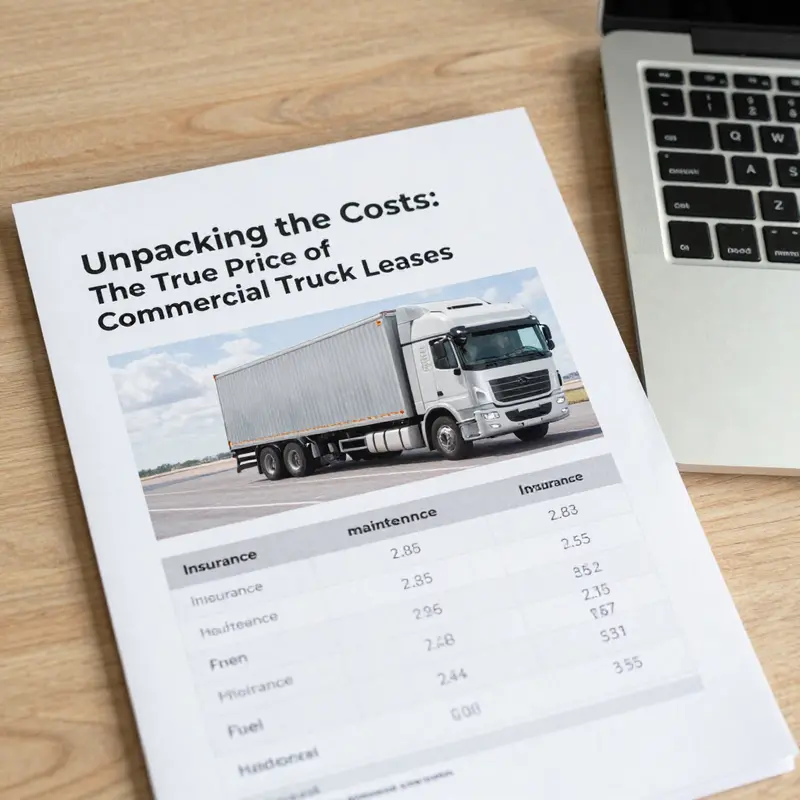
To illustrate the broader landscape, it helps to anchor these considerations in typical ranges. Across many markets, a new or near-new commercial truck lease often lands in the ballpark of roughly $1,500 to $3,500 per month, depending on the truck class, the technological gear included, and the lease’s structure. Used trucks tend to be more affordable, with monthly figures commonly in the neighborhood of $800 to $2,000, though mileage, wear, and refurbishment needs can shift that range. It is essential to remember that insurance, maintenance, fuel, and potential fees for early termination or excess mileage are not included in the base lease price. They can substantially tilt the monthly burden when added together. A cautious operator builds a budget that anticipates these variable costs, reflecting both the reliability concrete plans offer and the potential for deviation when the market shifts, routes change, or maintenance becomes more frequent.
The human factor—the operator’s risk tolerance, maintenance philosophy, and service-partner preferences—also channels into the final figure. Some fleets prefer turnkey solutions, where the lessor assumes a broad umbrella of services and the operator pays a single, predictable sum each month. Others choose a leaner model, paying lower monthly dues but bearing more responsibility for maintenance planning, scheduling, and parts procurement. Neither approach is universally superior; each aligns with different business models, risk profiles, and operational cultures. The skill with which a manager negotiates the terms can tilt the balance further. Negotiation is not merely about chasing the lowest monthly payment but about securing a contract that minimizes hidden costs, reduces downtime, and protects against diverse scenarios—unexpected spikes in fuel costs, regional maintenance bottlenecks, or regulatory shifts that could alter the asset’s value or the lease’s economics.
For readers seeking a grounded example of how these factors congeal in practice, consider the broader market context and the stories that emerge from fleet operators facing real decisions. A business weighing proximity to supplier hubs, the reliability of service networks, and the availability of parts will naturally lean toward certain makes and service bundles. They will also pay attention to the residual value assumptions that underlie the lease’s final reckoning. If the market moves against those assumptions, the operator could confront higher end-of-term charges or higher fees should they extend or exit the lease early. Conversely, a well-timed purchase where residual values are robust can yield a lower overall cost of ownership, even if the monthly payments are slightly elevated initially.
In the end, leasing a commercial truck is less about a single number and more about the harmony between your fleet’s mission, your financial discipline, and the reliability you need on the road. The decision to lease hinges on the balance of risk and reward—how much risk you’re willing to assume about maintenance, downtime, and market fluctuations, and how much you value the certainty of a predictable monthly expense. The right lease, tailored to your anticipated usage and supported by a plan for maintenance and service, can transform the operating economics of a fleet. The wrong one can lock you into rigidity, expensive surprises, and a misalignment between route schedules and asset availability. As you compare offers, keep the layers in view: model, term, usage, and bundled services—and always measure them against your real-world needs, not just the headline monthly amount. For deeper context on how market capacity can influence these decisions, see excess-capacity-in-the-trucking-market-insights.
External resource: For a more detailed breakdown of the cost structure behind truck leases and a closer look at what drives the monthly numbers beyond the sticker price, see Fleetio’s exploration of lease costs at https://www.fleetio.com/blog/lease-a-truck-cost. This resource helps frame how individual lease terms translate into real-world budgeting and highlights the importance of evaluating total cost of ownership rather than focusing solely on the monthly payment.
null
null
Final thoughts
In summary, understanding the costs associated with leasing a commercial truck is paramount for companies involved in logistics, construction, and delivery services. By familiarizing yourself with the types of trucks available, the factors influencing lease rates, and the additional expenses to consider, businesses can create accurate budgets that enhance operational efficiency and financial performance. As the trucking industry continues to evolve, staying informed will empower owners and procurement teams to make strategic leasing decisions that align with their growing needs.