
The George Washington Bridge (GWB) stands as a vital artery for commercial transport between New Jersey and New York City. However, for logistics and freight company owners, construction procurement teams, and small business owners operating their delivery fleets, understanding the specific regulations governing commercial truck crossings is crucial. This article delves into essential guidelines that dictate the use of the GWB by commercial trucks. Each chapter will explore regulations, time restrictions, weight and height limits, safety considerations, and the broader implications of these restrictions on traffic and transportation, allowing you to navigate this essential route efficiently and responsibly.
Navigating the Westbound Window: Crossing the George Washington Bridge Under Contemporary Truck Regulations
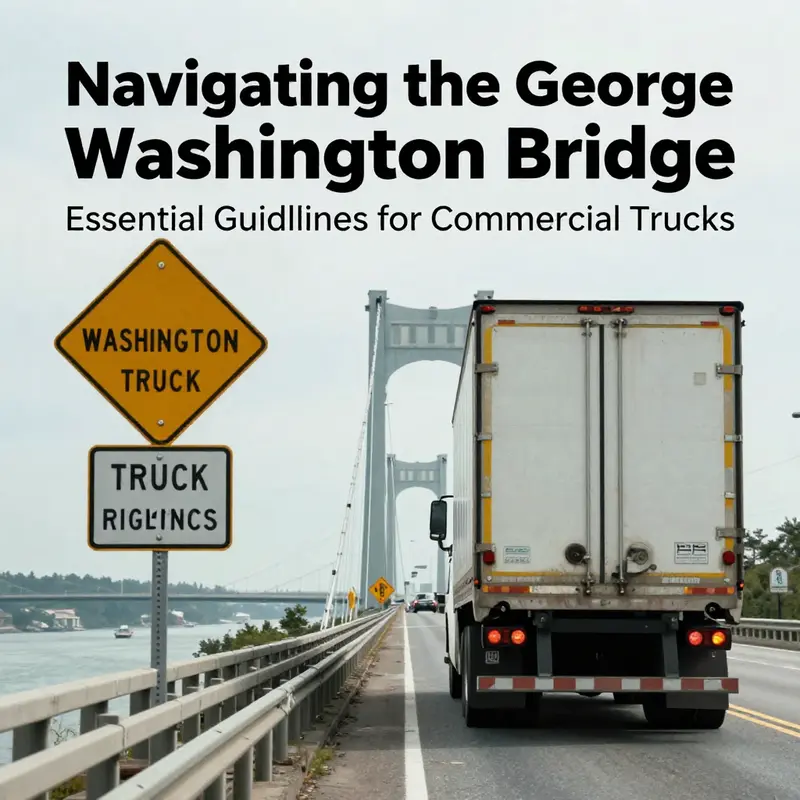
The George Washington Bridge sits at the entry point to Manhattan as a vital freight artery, shaping how late-evening and pre-dawn shipments move from New Jersey to New York City.
In this chapter, the rules governing truck access spell out a clear, time-bound regime. A designated westbound lane exists, with availability tied to the hour and direction, allowing freight movements only during a narrow overnight window. Outside that window, heavy vehicles face restrictions designed to preserve safety and passenger flow.
Two layers of constraint operate in tandem: a time-of-day restriction and physical constraints. The overnight westbound window is paired with height and weight limits that must be respected at load planning and equipment selection. The standard height limit on the GW Bridge is 13 feet 6 inches (4.11 meters), and single-axle weights are capped by safety rules. These factors drive trailer configuration choices, route planning, and the sequencing of departures from New Jersey.
Beyond the bridge itself, regulatory considerations extend to entering New York City via certain tunnels and the broader freight rules that shape when and how trucks may approach Manhattan. The Holland Tunnel, for example, is generally avoided for heavy commercial traffic due to safety advisories, reinforcing the GW Bridge as a primary gateway when the overnight window is available.
For operators, the practical takeaway is to synchronize departures, permits, and load securement with the bridge’s schedule, and to stay current on any temporary restrictions or maintenance advisories issued by the Port Authority. With disciplined planning, crossing the GW Bridge can be reliable and cost-effective for compliant fleets.
Hours Before the Load Clears: Navigating Time Restrictions for Commercial Truck Crossings at the George Washington Bridge
The George Washington Bridge sits like a steel thread weaving New Jersey’s industrial corridors to the heart of Manhattan. It is a vital artery for commerce, yet every mile of crossing comes with rules that constrain when a truck can move and how much weight or height can be carried. The story of crossing the GW Bridge is not simply about distance or speed; it is about timing, geometry, and the deliberate design of urban mobility. For the fleet manager, the driver, and the dispatcher, the clock is a co-pilot. Every decision hinges on when a vehicle can legally cross, how much load it can bear, and whether the route chosen will actually keep shipments on schedule. In the dim hours after midnight and before dawn, when the city’s pulse slows, commercial trucks often find a window to pass. But those windows are precise, well defined, and enforced with a combination of signage, lane assignments, and clearance checks that remind every traveler that safety and efficiency depend on adherence to time-based limits.
Across the literature and official notices, the central idea is simple: crossing a bridge that serves millions of passengers requires a careful balance. On the GW Bridge, this balance translates into specific operating hours for commercial vehicles and explicit constraints on physical dimensions and weight. The precise time window and the conditions attached to it shape not just daily routes but the strategic planning that underpins supply chains. The enforcement of time limits is not a mere formality. It is an operational discipline designed to reduce conflicts with peak-hour traffic, to maintain reliable express lanes for non-commercial traffic, and to preserve the structural and dynamic integrity of the bridge under heavy, ongoing use. The practical effect for drivers is clear: plan your crossing around the permitted hours, and respect the restrictions, or risk delays, penalties, or the need to reroute at significant cost.
Navigating these rules begins with the clock and the calendar. The official information available on oversize and heavy-vehicle crossings paints a careful picture of when large vehicles can traverse the GW Bridge. In the current framework, commercial vehicles are permitted to cross only during a designated time window. As drivers consult the schedule, the guidance becomes a compass for daily operations. The time window is not arbitrary; it is the product of safety considerations, traffic-management objectives, and the bridge’s capacity to accommodate a mix of vehicle types without compromising the experience of other road users. The logic behind a restricted crossing period is straightforward: when passenger traffic and peak commuter flows dominate the corridor, the bridge must not become a bottleneck for heavy freight. The solution is not simply to widen the operating hours but to concentrate the movement of the largest, heaviest loads into a window where traffic patterns are predictable and where the physical infrastructure can manage the dynamics created by slow accelerations, frequent braking, and occasional congestion that accompany heavy vehicles.
The numbers matter, and they are not merely trivia. The bridge imposes height and weight constraints that translate into real-world decisions long before a truck rolls toward the toll plaza. A maximum height of 13 feet 6 inches (4.11 meters) defines the envelope for an operator’s equipment configuration and any auxiliary equipment attached to the trailer. The height constraint interacts with routing choices, as a vehicle encountering an overheight clearance would immediately require a detour. The weight restriction—such as a limit related to single-axle loads—affects not only the route a truck can take but also how fleets allocate payload across multiple journeys. For managers, this means that every shipment must be scrutinized for compatibility with the bridge’s structural and clearance constraints. It is not enough to know a shipment’s total weight; the distribution of weight across axles and the lateral stability of the vehicle at highway speeds must fit within the bridge’s design parameters. These considerations shape how trailers are loaded, how power units are paired with trailers, and how equipment is chosen for a given assignment.
To a driver, the practical implications are immediate. The window defines when a truck can be scheduled to depart from the origin and when it must arrive at the destination without violating the crossing rules. The logistics team must plan for a time-sensitive crossing in the late evening or early morning hours, ensuring that the driver has access to the designated truck lane within the allowed interval. In some cases, there may be a dedicated lane or a runway-like path for these vehicles, designed to streamline traffic flow and minimize friction with passenger cars. The presence of a truck lane is not just a convenience; it is a safety and efficiency feature that recognizes the distinct behavior of heavy vehicles. With their longer stopping distances, reduced visibility in certain conditions, and different acceleration profiles, large trucks require a different treatment than the cars that populate the daytime commute. The bridge design, the lane assignments, and the time restrictions are an integrated system dedicated to keeping the crossing predictable and safe for all.
Given the fluid dynamics of city streets and the complexity of cross-state coordination, drivers and planners must stay informed about any changes to the rules. The official sources, whether they come from bridge authorities or transportation departments, are the first line of defense against misrouting and costly delays. This is not merely about compliance; it is about reliability. When shipments depend on precise timing, any deviation can cascade into missed deadlines, increased detention times, and penalties that could erode margins. The discipline of timing becomes a competitive advantage for fleet operators who can synchronize their operations with the bridge’s constraints. In practice, this means pre-trip checks, route rehearsals, and contingency plans that acknowledge the possibility of temporary changes caused by construction, weather, or maintenance. For example, if a maintenance project or an incident reduces the available crossing capacity during the typical window, planners should have an alternate plan ready. The best teams build this into their daily routines, treating the crossing window as a fixed feature of the operating environment rather than a variable risk that must be mitigated after the fact.
The broader conversation around time-based crossing restrictions intersects with the ongoing debates about border and connector infrastructure. In this context, industry conversations emphasize how to balance the mobility needs of freight with the safety and efficiency requirements of urban transportation networks. These conversations are not abstract; they translate into practical workflows that affect scheduling, budgeting, and asset utilization. A fleet manager may ask whether the window could be widened, whether additional lanes could be opened during certain periods, or whether alternative routes could absorb some of the freight activity during peak times. Each question triggers a cascade of operational decisions—from how to prepare for a crossing to how to coordinate with customers awaiting delivery windows. And because these decisions happen within a broader ecosystem of regulations, it is essential to anchor them to current official guidance. In other words, the crossing timetable is not a standalone rule but a component of a living system that demands vigilance and proactive management.
In keeping with that responsibility, drivers often turn to trusted resources to confirm the schedule before embarking. The process involves more than a glance at a calendar; it requires a fresh check of the official postings, the traffic hotlines, and any advisories that might affect the crossing. The cautionary principle is simple: never assume a window will be the same from week to week. Construction schedules, emergency closures, or policy updates can alter the available time, height clearance, or axle-load allowances. For many truck operators, the habit is to verify the crossing status at the start of each shift and to plan the route with flexibility. A well-structured plan will include a primary crossing during the permitted window, with a fallback route or an alternative time slot if the schedule shifts. This approach reduces the risk of arriving at the bridge only to discover a closure or a late opening that forces an unscheduled detour through congested arterials. The human element—driver alertness, dispatcher communication, and real-time information—remains critical in translating the written rules into smooth, predictable movements across the Hudson.
One way to anchor this practice in a broader professional conversation is to consult industry resources that focus on the practicalities of crossing restrictions and cross-border logistics. A particular resource cluster discusses the realities of bridging barriers and how fleets navigate complex regulatory landscapes. The dialogue within these resources emphasizes not only the rules themselves but the lived experience of carriers that move goods across diverse regulatory environments. It is not unusual to see cross-references to other jurisdictions where similar time windows exist, or to find case studies that illustrate how shipments were re-timed, rerouted, or re-sequenced to maintain service levels. For practitioners, the takeaway is to embed time-awareness into the core of routing and scheduling processes. The goal is to maintain reliability even when the clock or the weather throws a wrench into the plan.
From a storytelling perspective, the GW Bridge crossing window becomes more than a policy note; it is a lens into how modern freight moves through a dense metropolitan fabric. It invites us to consider the choreography of a logistical system that must respect safety, capacity, and passenger mobility while still enabling critical freight flows. The driver who operates within the window does not merely cross a river; they manage a supply chain node, a time-based constraint, and a relationship with customers who depend on predictable delivery times. Their professionalism lies in reading the signs, interpreting the rules, and executing with precision. The dispatcher’s role is to convert that professionalism into a plan that minimizes risk and maximizes on-time performance. The bridge administrator’s mandate—safety first, efficiency second, but always with due respect to the movement needs of commerce—binds these roles together in a shared responsibility to keep goods moving through one of the most bustling urban corridors in the country.
For readers who want to explore these constraints more deeply, an industry-oriented discussion thread offers a window into the broader debate about crossing limits and border-barrier policies. You can explore a related conversation here: Bridging Border Barriers — Meeting Insights. This resource provides context on how companies and regulatory bodies think about the balance between infrastructure capacity and freight demand, a balance that ultimately touches the schedules, routes, and decisions surrounding the GW Bridge crossing. It is a reminder that the story of time restrictions is part of a larger narrative about how freight moves through urban gateways and how policy, technology, and human judgment converge to keep that movement reliable.
As a closing thought for practitioners, the path forward is not simply to push the clock open wider or to demand more permissive rules. Instead, it is to cultivate disciplined timing, rigorous planning, and clear communication. The bridge’s rules exist to preserve safety and flow, but the success of a shipment depends on how well the team navigates those rules. The most resilient fleets are those that integrate the crossing window into daily planning tools, continuously verify schedules, and maintain open lines of communication with customers and regulators. In that sense, the GW Bridge time restrictions become less a constraint and more a known variable—one that, when managed well, becomes a predictable part of the journey from barn to delivery dock. The result is not merely compliance; it is the ability to deliver with consistency, even when the clock dictates careful pacing across one of the nation’s most demanding urban corridors.
External resource for up-to-date details: https://www.nysba.ny.gov/oversize-vehicles
null
null
Crossing the GW Bridge After Hours: Safety, Compliance, and the Tightrope of Truck Travel
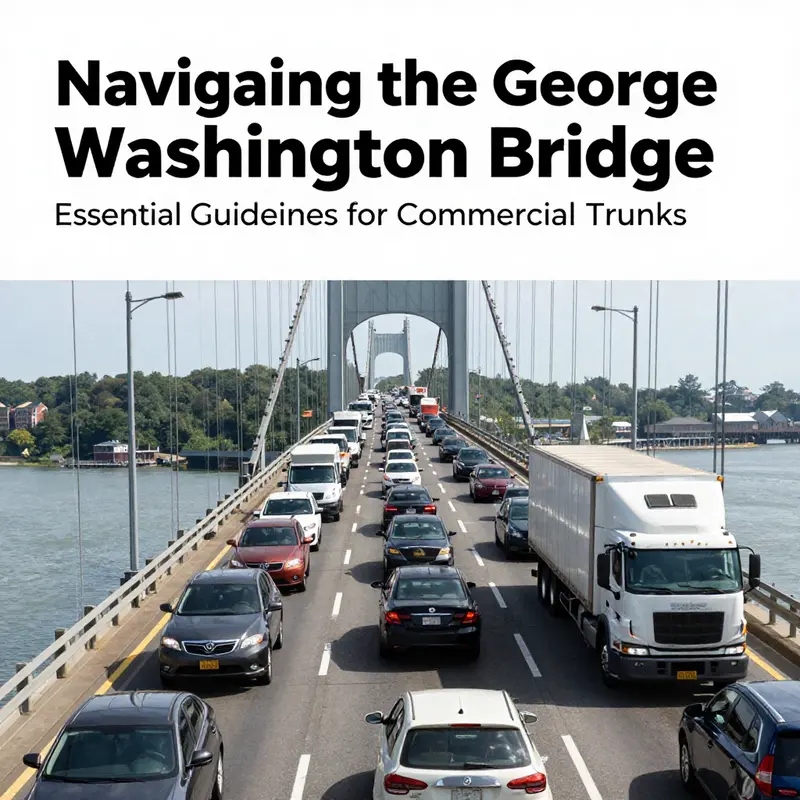
The George Washington Bridge sits as a colossal gateway between Fort Lee, New Jersey, and the heart of Manhattan. For a commercial truck, it represents a vital corridor for time-sensitive deliveries and cross-region logistics, but it is not a pass that can be casually claimed. The gatekeeping is not about restricting commerce for its own sake; it is about preserving structural integrity, smoothing traffic patterns that carry hundreds of thousands of travelers daily, and aligning heavy-vehicle movement with the bridge’s capacity during the hours when the system can absorb it most effectively. The practical answer to whether a commercial truck can cross the GW Bridge is yes, but with a disciplined set of constraints that are as much about timing as tonnage, as much about geography as about compliance. The route is not simply a matter of launching into the westbound span from New Jersey to New York City; it is a choreography of hours, weights, heights, and vigilance designed to minimize risk while keeping the broader transportation network moving. This is especially true for operators who must coordinate with the bridge’s unique operational window and the layered regulatory framework that governs interstate trucking in this corridor. The bridge’s operational reality, and the safety culture that supports it, hinge on a combination of precise adherence to restrictions and a constant, anticipatory approach to risk in a high-stakes urban environment.
From a high-level safety lens, the GW Bridge represents a constrained mobility problem: limited vertical clearance, a fixed weight envelope, lane discipline in a dense urban setting, and a set of rules that shift with time and infrastructure needs. The most salient constraint for commercial trucks is the dedicated truck lane, a lane allocation that exists to accommodate large vehicles during a specific window: 10:00 PM to 5:00 AM daily, with trucks permitted to traverse the bridge in the westbound direction only. Outside this window, the bridge closes the lane to commercial vehicles, which is a policy designed to reduce conflicts with heavy daytime traffic and pedestrians, and to maintain a smoother flow for passenger vehicles during the hours when congestion peaks. For drivers and fleet operators, this means that planning begins long before the ignition of the engine. It means consulting real-time advisories, confirming vehicle readiness, and aligning schedules with the clock that governs the bridge.
The enforcement of timing is not arbitrary. It reflects a broad calculus that balances safety with efficiency. Height and weight restrictions—such as a maximum vehicle height of 13 feet 6 inches (4.11 meters) and a single-axle weight limit around 27 tons (54,000 pounds)—are not mere numbers on a sign. They encode structural realities about the bridge’s cantilevered steel, its suspension components, and the way dynamic loads interact with the wind, road flex, and the complex traffic matrix that flows into and out of the river crossing. A truck that approaches the GW Bridge with even a subtle over-height configuration or an axle group that pushes beyond weight limits triggers a cascade of operational responses: rerouting, delays, and, in some cases, a decision to set the delivery plan on a different course. The practical implication for drivers is to verify, before departure, that the truck meets all dimensional and weight constraints. The verification is not merely for compliance; it is a central safety practice that preserves the bridge’s long-term integrity and the safety of everyone who uses the crossing.
Beyond the physical constraints, compliance with broader regulations forms the backbone of any safe crossing. Commercial operators must align with federal and state regulations governing vehicle size, weight, and cargo securement. These rules are not optional add-ons but the baseline for safe operation on any major structure, and on a bridge as sensitive as the GW, deviation is not tolerated. A well-planned trip starts with a meticulous pre-trip inspection, a practice that echoes standard safety guidelines across the industry. The tires must be in good condition, the brakes must function reliably, lights and reflectors must be visible, and critical systems—steering, suspension, steering gear—must be checked for signs of wear that could compromise control on a narrow, urban bridge deck. Mirrors, too, play a starring role. The GW Bridge demands acute spatial awareness as traffic merges, lanes tighten, and cross-traffic patterns change with every shift of the traffic signal or road sign. Piloting a heavy vehicle through these conditions requires a driver to scan mirrors frequently, to anticipate blind spots, and to maintain a buffer that can absorb the jerks and accelerations typical of urban bridges.
One of the most important notes for safety and compliance is the way operators approach the bridge’s lane usage during the permitted hours. The designated truck lane is not a mere courtesy lane; it is a safety corridor designed to contain heavy-vehicle movement in a controlled fashion during the nocturnal hours when road users are fewer and the risk profile shifts. Crossing in the westbound direction from New Jersey to Manhattan, under the cover of darkness, introduces a different set of visual and operational challenges. The driver must maintain vigilance for the guidance signs that indicate lane usage, speed limits, and any work zones or temporary routing changes that may appear due to maintenance cycles or emergency conditions. In the nighttime window, visibility can be compromised by weather, glare from city lights, and the cumulative fatigue that can creep into long-haul operations. It is precisely because these risks exist that the after-hours crossing policy is in place, with its emphasis on steady speeds, cautious lane changes, and strict adherence to the lane itself.
The procedural discipline for a safe GW Bridge crossing includes real-time awareness of restrictions and the capacity to adapt if conditions change. Real-time information sources matter for drivers who must stay ahead of construction zones, lane closures, or incidents that can redirect traffic into the bridge’s approach lanes. The Port Authority, which oversees the bridge’s operations, maintains a channel of communication and a stream of advisories that drivers should monitor. For anyone operating in or through New York City and its surrounding boroughs, the Truck Smart guidance from the city’s transportation authority offers a complementary perspective on route planning, driver training, and vehicle maintenance. The guidance emphasizes not only the mechanical readiness of the vehicle but also the cognitive readiness of the driver: scanning mirrors frequently, verifying that crossover mirrors remain clear, and maintaining situational awareness of the escalation ladder that leads from a routine crossing to an incident response. The message is clear: safety is a continuous practice, not a one-off checklist.
In daily practice, that means planning is not an afterthought. Trip planning becomes an essential function of logistics management, particularly for trucks that must synchronize departure windows with the 10:00 PM to 5:00 AM crossing rule. Dispatch and driver schedules must reflect the bridge’s limits, ensuring that departures from New Jersey are timed so that the vehicle arrives on the westbound approach during the authorized hours. It also means that any revised plan—perhaps a delay caused by weather, road construction, or a late delivery window—needs a new risk assessment. A late arrival that pushes into the daylight window could trigger a need to reroute or to switch to a different crossing that does not impose the same restrictions. The strain in this process is real: it tests the communication between drivers, dispatchers, fleet managers, and the agencies that regulate and operate the crossing. It also reveals how critical it is for operators to stay current with guidelines and to be prepared to adjust routes with minimal disruption to the downstream supply chain.
To maintain safety on the GW Bridge, the human factor remains central. The best practice is not simply to know the rules but to internalize the underlying safety philosophy: minimize speed differentials, plan for ample stopping distance, and anticipate the possible need to brake gently and early for sharp curves or decelerations as told by the traffic signs. This is particularly important in a bridge environment where roads can narrow and the deck may present transient slickness in wet or icy conditions. The recommended approach is to treat every bridge crossing as a high-stakes maneuver that requires the same degree of attention you would give to a city street with high pedestrian activity, but with the added weight of a multi-ton vehicle and the consequences of a misstep. In practical terms, drivers should maintain predictable behavior in the traffic stream, use turn signals to communicate intent well ahead of changes in lanes, and keep a following distance that allows for smooth deceleration without triggering chain-reaction braking downstream. These habits, reinforced by pre-trip checks and a disciplined adherence to posted restrictions, are the quiet safeguards that enable reliable, safe crossing during the permitted window.
The social and logistical implications of GW Bridge crossings also deserve a moment of attention. For some fleets, a nocturnal schedule is a strategic choice—providing a window for higher accuracy in delivery windows and a chance to navigate around daytime congestion. For others, the nocturnal constraint is a practical burden, requiring mode-specific planning and a robust backup plan for when the schedule cannot be met. In either case, the bridge acts as a decision node in a larger network: a single crossing can ripple through the day’s operations, affecting on-time performance, fuel consumption, and even driver fatigue management. Operators who routinely work within the GW corridor learn to balance these factors with the same rigor they apply to maintaining tire tread, brake pressure, and light functionality. Safety, in this sense, is not a single action but a culture of continuous readiness—a habit of seeing the crossing as a shared space that demands mutual respect among all road users and relentless attention to the rules that govern the bridge’s operation.
For readers seeking a practical anchor, the authority resources remain the most reliable compass. The Port Authority’s official truck-traffic information page provides the up-to-date guidelines, restrictions, and advisories necessary to stay compliant and safe. As you study the crossing rules, you may also discover how real-time updates interact with your trip planning, helping you to avoid delays and reduce the risk of last-minute changes that could jeopardize safety or schedule integrity. And for those who want to see how other border and bridging experiences shape policy, the broader conversations around infrastructure barriers and crossing policies offer a broader context that informs smarter planning and safer execution across the corridor. As with any complex urban crossing, the GW Bridge invites a continuous dialogue between regulation, engineering, and human judgment. It rewards those who prepare thoroughly, listen to the guidance, and operate with a respect for the weight that every truck carries, not only on its axles but in the lives and livelihoods dependent on the safe execution of each crossing.
To connect this discussion with broader industry perspectives, consider a perspective on bridging and border policy that sheds light on how these constraints are evolving in the trucking world. Bridging Border Barriers Meeting Insights examines the kinds of decisions, policy adjustments, and collaborative approaches that shape how long-haul corridors regulate heavy vehicle movement in shared spaces. It offers a lens into how stakeholders balance safety, efficiency, and economic need across dense urban environments. You can explore this discussion here: Bridging Border Barriers Meeting Insights.
In sum, a commercial truck can cross the GW Bridge, but only under a careful, rules-based framework that prioritizes safety and flow. The nocturnal truck lane, the height and weight restrictions, and the broad regulatory environment together create a predictable system that, when followed, minimizes risk for the driver, other road users, and the bridge itself. Operators who master this system—by adhering to pre-trip inspections, maintaining clear communication with dispatch, planning for real-time conditions, and keeping a steady, cautious driving technique—can navigate the GW Gateway with confidence. For those who also want to verify current advisories and any temporary changes, the Port Authority’s official truck-traffic page remains the go-to resource, offering the most reliable, up-to-date information in a clear, accessible format. The GW Bridge, in this sense, is not merely a barrier to be conquered but a shared space that rewards planning, discipline, and an unwavering commitment to safety at the heart of every mile driven on its approach and its span.
External resource: Port Authority truck traffic information
Rerouting the Artery: Freight, Flow, and the George Washington Bridge Under Truck Restrictions
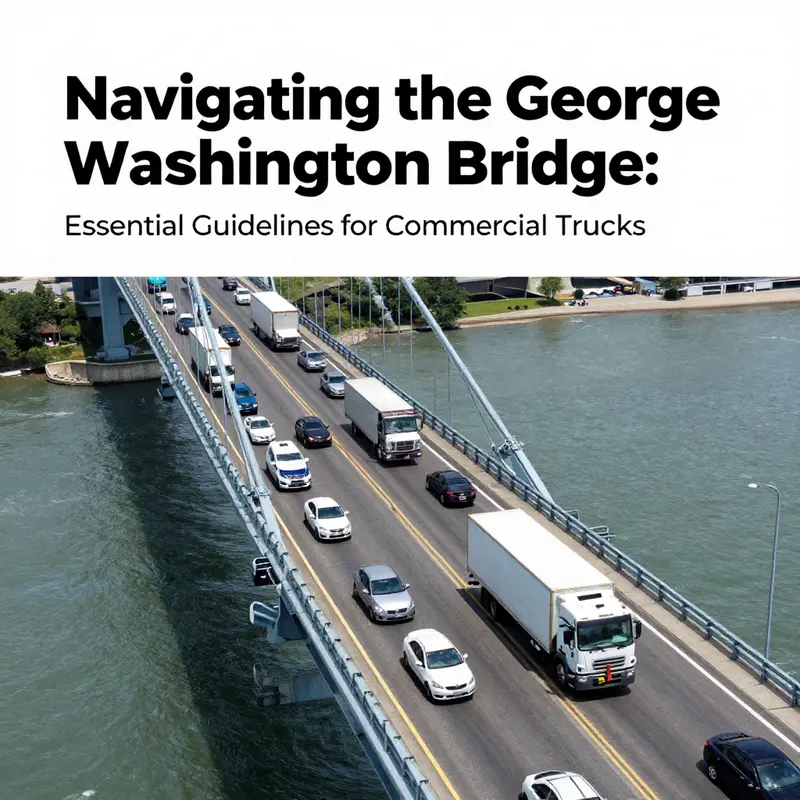
Across the Hudson, the George Washington Bridge sits as more than a spectacular span; it is a critical freight artery whose operation shapes the rhythm of regional logistics. The bridge links Fort Lee in New Jersey with Manhattan, and its role in moving goods is amplified by the staggered realities of urban traffic. The current restrictions on commercial trucks—most notably a designated truck lane that operates only from 10:00 PM to 5:00 AM in the westbound direction, from New Jersey to New York City—reframe how shippers, carriers, and drivers plan their routes and schedules. During the daytime, commercial trucks are barred from crossing the GW Bridge, a policy driven by safety concerns, the need to reduce congestion during peak hours, and the imperative to preserve smooth flow for passenger vehicles. In practice, these time-based rules compress freight movements into a narrow overnight window, compelling a precise alignment of capacity, demand, and the physical constraints of the bridge itself. What seems like a simple schedule is in fact a complex orchestration that ripples through supply chains, urban emissions, and the cost structure of freight transport.
As enforcement tightens on other corridors, notably with a recent push on overweight trucks along the Brooklyn-Queens Expressway, the GW Bridge is receiving more attention as an alternative path for heavy loads. The logic is straightforward: when one corridor tightens, traffic science and logistics math push more vehicles toward the routes that remain open. The BQE crackdown aims to protect road surfaces and improve safety, but it also alters the calculus for shippers who must meet tight delivery windows and maintain service levels. Heavy trucks, with schedules already stretched by urban congestion and tight transit times, may be nudged toward the GW Bridge’s overnight lane. The consequence can be a shift in traffic patterns that stresses a structure already designed to manage high volumes not only of freight but of urban commuters and regional traffic. In other words, restrictions that protect the bridge’s integrity and neighborhood livability can, paradoxically, concentrate risk elsewhere, especially if the overnight lane becomes more heavily used than anticipated.
The operational specifications of the GW Bridge matter as much as the policy intentions behind them. The bridge imposes a height clearance cap of 13 feet 6 inches (4.11 meters). That ceiling, modest by modern intermodal standards, eliminates a portion of taller trailer configurations and some specialized equipment from crossing without detour or adjustment. The weight considerations—notably a 27-ton (54,000 pounds) limit for single-axle loads—demand careful route planning for fleets that rely on heavy, but efficient, axle-load distributions. These physical limits are not abstract numbers; they translate into decisions about trailer configurations, the choice of equipment for different lanes, and the timing of loading and unloading to fit within the permitted hours. Carriers may opt for trailers with optimizing load plans to stay within axle and gross-weight constraints, preserving the ability to use the gateway during the allowed window. And while the overnight lane provides a crucial link, it also concentrates activity into a relatively narrow period, raising the stakes for drivers and dispatchers who must synchronize departure times, port or warehouse release windows, and the peculiarities of holiday or weekend scheduling when traffic idiosyncrasies shift.
The supply chain implications of these constraints extend beyond the bridge itself. The GW Bridge is not a stand-alone obstacle; it sits within a tapestry of routes, ports, rail corridors, and highway segments that collectively determine time-to-delivery metrics across the Northeast. If the BQE crackdown diverts more heavy traffic toward the GW Bridge, the overnight lane could experience heightened variability. Congestion within the limits of the overnight time window can lead to downstream delays, missed appointment times, and a cascading effect where storage costs accumulate at shippers’ facilities or distribution centers. In urban corridors, where the cost of dwell time is high, even minor schedule slippage translates into measurable increases in cycle times and operating expenses. For businesses, the result may be a need to revise forecasting models, adjust lead times, and revisit the planning horizon for peak-season shipments or weather-related disruptions when the clock runs against a congested midnight schedule.
These dynamics intersect with broader market trends that already shape trucking economics. The overnight restriction on GW Bridge crossings is one variable among many—fuel prices, driver availability, and equipment utilization—all of which influence the cost per mile and the willingness of firms to push into tight delivery windows. One way to frame this is to consider how shifting freight patterns interact with trailer demand and fleet utilization. When a corridor like the GW Bridge absorbs more traffic during a restricted window, fleets may seek to optimize the use of their equipment by balancing backhaul opportunities, diversifying lane mixes, and prioritizing agreements with facilities that can accept later or earlier inbound shipments. The result is a more sophisticated equilibrium where carriers trade off speed against reliability, price against policy risk, and the logarithm of capacity against the friction of restricted access.
From a planning perspective, the situation invites a suite of mitigation ideas that are as practical as they are strategic. Dynamic traffic management emerges as a core concept: real-time monitoring of roadway performance, adaptive routing guidance, and flexible gate scheduling at entrances to minimize the chance that a heavy truck sits idle in a bottleneck while waiting for the overnight lane to open. If authorities can deploy digital signage and proactive routing advisories that help drivers time their approach to the GW Bridge more efficiently, the system can absorb variability with less churn. Beyond real-time responses, there is room for longer-horizon policy alignment. Off-peak delivery programs could be expanded, making better use of the overnight lane while reducing daytime congestion across the metropolitan area. In the same vein, an increased emphasis on intermodal solutions—moving a portion of freight by rail during the heaviest segments of the supply chain—could progressively ease pressure on road corridors and limit the reliance on any single crossing during restricted hours.
Enforcement and compliance also feature prominently in the calculus. Strengthening adherence to established truck restrictions at the GW Bridge, particularly during peak times or in routes that feed into the bridge, can help prevent spillover effects that worsen congestion. When enforcement is precise and predictable, carriers gain clarity about permissible routes and timing, which in turn supports better planning at the cargo level. This is not a call for punitive action alone; it is a push for transparent, enforceable rules that align public safety and infrastructure preservation with the practical needs of a dynamic freight economy. In this context, technology plays a pivotal role. Weigh-in-motion sensors, height-detection systems, automated permit verification, and data-sharing among ports, carriers, and highway agencies can create a smoother, more accountable flow of goods across the river.
The chapter’s discussion would be incomplete without acknowledging the broader economic signals that influence how firms respond to GW Bridge restrictions. The trucking sector has been wrestling with shifts in demand, capacity, and pricing. The revelations from recent analyses of trucking trends—such as those centered on the economic forces shaping trailer orders and equipment utilization—underscore that the fleet landscape is continually evolving. For readers seeking a more granular view of these market dynamics, a useful lens is the discussion of trucking economic trends affecting trailer orders, which can be explored in depth through industry analyses that track how order volumes, lead times, and financing conditions change the composition and timing of equipment purchases. This deeper dive helps explain why some operators might adjust their route portfolios or diversify their inland corridor choices in response to GW Bridge constraints. trucking economic trends affecting trailer orders.
Even with the best planning, the GW Bridge will continue to function as a chokepoint that demands ongoing attention from policymakers, planners, and industry. The overnight lane is a pragmatic compromise that acknowledges the bridge’s significance while seeking to limit its disruption to urban life. The long-term health of the corridor will rely on a triad of approaches: precise enforcement that minimizes unnecessary detours, smart traffic management that reduces queuing, and investment in alternatives that diversify the freight network’s backbone. Rail intermodal capacity, expanded off-peak delivery programs, and continued improvements to other major freight routes can collectively reduce the risk that a single crossing defines the pace of regional commerce. In short, the GW Bridge remains indispensable, but its constraints require a coordinated response that marries policy with practice, ensuring that the drive to safeguard urban livability does not come at the cost of efficiency in the supply chain.
For readers seeking to explore broader implications and related policy considerations, consider official guidance and ongoing updates from regional transportation authorities, which provide critical context for how restrictions are implemented, adjusted, and communicated to the trucking community. The exact current status can change with construction, maintenance, or temporary safety needs, so practitioners often cross-reference official channels with industry analysis to chart the best route forward. For official, up-to-date guidance on remaining GW Bridge restrictions and related routes, see the NYC Department of Transportation overview. https://www.nyc.gov/site/dot/index.page
Final thoughts
Understanding the regulations governing commercial truck access across the George Washington Bridge is imperative for ensuring compliance and optimizing transportation logistics. By adhering to designated crossing hours, weight and height limits, and prioritizing safety, logistics and freight managers, construction procurement teams, and small business owners can navigate this critical route effectively. Being informed about these restrictions not only enhances operational efficiency but contributes to overall traffic safety and flow. Taking the time to familiarize yourself with these guidelines is essential for the successful integration of your company’s transportation strategy.