
Commercial truck financing rates play a pivotal role in the operational efficiency and profitability for logistics companies, construction industries, and small business delivery fleets. Understanding these rates is essential for procurement teams and business owners alike, as fluctuating interest rates can significantly impact total expenses and cash flow management. This article delves into the intricacies of commercial truck financing, breaking it down into comprehensible segments, starting with an overview of what influences these rates. We will explore how your credit history affects your financing options, compare rates across different lenders, and provide valuable strategies to secure favorable financing terms, equipping readers to make informed decisions that enhance their financial outcomes.
How Commercial Truck Financing Rates Are Set — Key Drivers and Practical Steps to Lower Your Cost
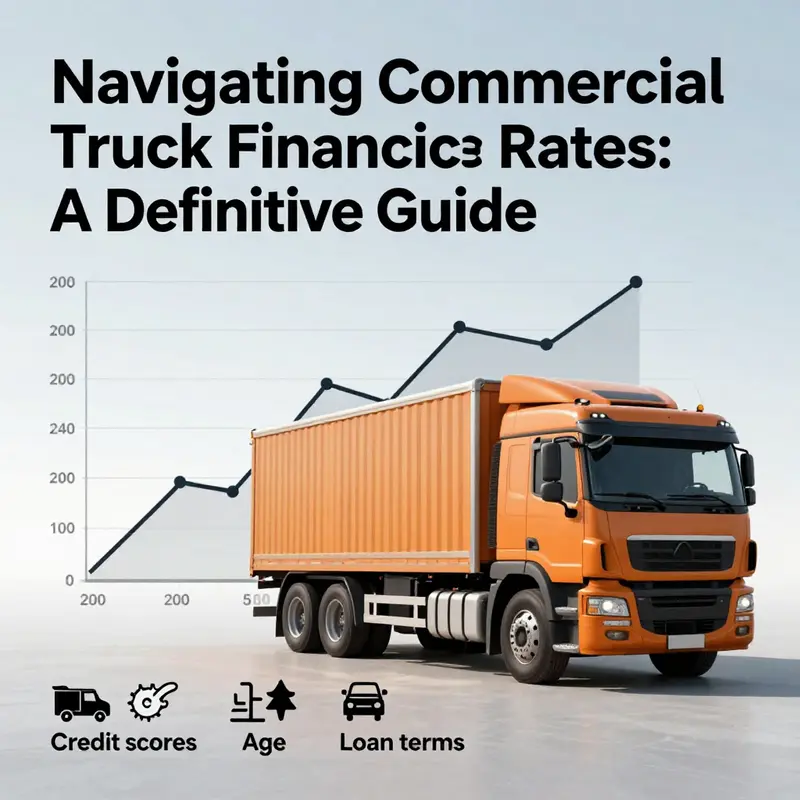
Understanding what drives commercial truck financing rates is essential for anyone buying or refinancing a truck. Lenders price loans by weighing risks, and those risks flow from the borrower, the vehicle, the loan structure, and the wider economy. Interest rates for commercial truck loans can span a wide range — as of early 2026 roughly 6% to 35% or more — because the mix of risks and protections varies sharply from one deal to another. This chapter explains the main determinants of those rates and gives practical steps to lower your borrowing cost while balancing cash flow and operational needs.
Creditworthiness is the most straightforward and powerful driver of rate differences. Lenders assess a borrower’s credit history, business financials, and repayment capacity. Strong personal and business credit histories tell lenders that payments are likely to arrive on time, so they justify lower rates. When credit scores or business histories are weak, lenders raise rates—or require larger down payments and stricter covenants—to cover the higher probability of default. Even within good-credit categories, the lender’s assessment of recent payment performance, debt levels, and the stability of cash flow affects the exact rate offered.
The truck itself matters just as much. Newer trucks retain more predictable value, have lower repair costs initially, and often come with warranties. That reduces lender risk and leads to better rates. Older trucks, high-mileage units, or vehicles with unproven maintenance histories appear riskier. Lenders worry about mechanical failures, reduced resale value, and longer recovery times in repossession events. As a result, loans on older equipment often carry higher interest or shorter amortization schedules. The truck purpose matters too: heavy long‑haul tractors face different wear patterns and residual values than local delivery units. Lenders price rates to reflect those differences.
Loan term and structure shape both the monthly payment and the rate. Shorter terms usually have lower interest rates but higher monthly payments. Longer-term loans reduce monthly cash outlay but increase total interest paid and often come with higher rates because lenders bear risk for a longer period. Balloon payments, seasonal payment options, and deferred-payment plans can improve short-term cash flow. But lenders offset those conveniences with higher rates or fees. Down payments and trade-in value also affect pricing. Larger down payments reduce the loan-to-value ratio and typically lower rates. Conversely, zero-down promotions frequently carry higher interest to compensate the lender’s greater exposure.
Not all lenders are the same. Traditional banks, credit unions, captive finance arms, and specialized truck lenders each have distinct risk appetites and pricing models. Banks often offer competitive rates to well-qualified borrowers, but they require extensive documentation and tend to avoid higher-risk deals. Credit unions can be a good fit for smaller operations with solid member histories. Specialized truck lenders understand industry cycles and equipment specifics, and they may be more flexible on vehicle age and borrower experience. Rates vary across these channels, so shopping around is crucial.
Lenders’ internal risk assessment frameworks matter in subtle ways. Underwriting metrics include repayment capacity, collateral value, business tenure, and even industry concentration. Some lenders use automated scoring systems that emphasize credit score and cash flow ratios. Others evaluate management experience and maintenance programs more qualitatively. The result: two lenders reviewing the same application might offer quite different rates. Building relationships with lenders who understand trucking improves odds of receiving competitive offers tuned to real risk, not just to automated thresholds.
The macroeconomic environment is another major determinant. Central bank interest rate policy affects the cost of funds for lenders. Tight monetary policy pushes rates up, while easing can lower borrowing costs. But the transmission to commercial truck financing is not immediate or uniform. Lenders’ funding mixes, portfolio targets, and risk appetites all mediate how quickly market rates change for borrowers. In periods of economic stress, lenders also tighten underwriting standards and widen credit spreads, making rates higher for a given credit profile.
Market conditions in the trucking industry feed back into rate decisions. Freight demand, capacity levels, and equipment supply affect cash flow predictability and resale values. For example, when trailer orders or truck deliveries surge, used-vehicle supply may tighten, supporting residual values and potentially improving financing terms. Conversely, excess capacity can depress margins and used-truck prices, increasing lender risk and rates. Understanding these sector dynamics helps you time purchases and negotiate terms. For more on how trailer orders and capacity shifts affect carrier margins, see this analysis on trailer orders impact truckload margins.
Promotional offers and special products are common in the market. Lenders sometimes advertise zero down, deferred payments, or introductory low rates. These can be helpful if structured properly. But they often come with trade-offs: higher long-term rates, added fees, or restrictive covenants. Evaluate offers by calculating the total cost of credit, not just the headline rate. Consider amortization schedules, service fees, and potential penalties for early repayment. A modestly higher annual percentage rate with lower fees can be cheaper than a low-rate promotion with heavy fees later.
Beyond headline rates, the loan’s amortization affects effective financing cost. Faster amortization reduces interest paid over the loan but raises monthly requirements. Slower amortization lowers payments but increases total interest and the lender’s exposure. Residual or balloon structures can be attractive for managing cash flow while preserving credit capacity. However, they introduce future refinancing risk. If the residual is significant, you may face refinancing at higher rates later. Budget for that possibility, especially if market cycles are uncertain.
Documentation and preparation make a measurable difference. Lenders prefer complete, verifiable financial statements, tax returns, and maintenance records. A clean, organized file speeds underwriting and reduces perceived risk. Prepare a clear business plan if you are a new entrant. Show how the truck will be deployed, expected revenue per load, and maintenance schedules. Demonstrate contingency plans for downtime. Small investments in presentation and recordkeeping can nudge a lender toward a better rate.
There are practical steps to lower your rate. Improve credit scores over time by reducing outstanding debts, resolving collections, and maintaining timely payments. Increase down payment to lower loan-to-value ratio. Choose newer or certified trucks with documented maintenance and warranties. Shop multiple lenders and obtain competing offers. Consider credit unions and specialty lenders who know the industry. Build relationships and show stable cash flow to negotiate spreads and fees. Where possible, align loan maturity with the equipment life and cash flow cycles to avoid refinancing risk.
Risk mitigation reduces lender concerns and can lower rates. Robust insurance, extended warranties, and preventive maintenance programs are signals that you manage operating risk. Lenders appreciate active risk management because it reduces the probability of mechanical breakdowns and preserves collateral value. Likewise, keeping contingency reserves on the balance sheet shows preparedness for slow freight periods or unexpected repairs.
For buyers weighing leasing versus buying, financing rates interact with tax, cash flow, and operational goals. Leasing can offer lower upfront cash needs and predictable expenses, but it often includes embedded financing costs and Mileage or wear limits. Direct loans build equity and may be tax-advantaged in certain cases. Compare total costs after tax, depreciation, and residual values. The right choice depends on your business structure, projected usage, and appetite for asset ownership.
Finally, timing and market awareness are important. Monitor interest rate trends and equipment cycles. If freight demand and residual values are improving, you may secure better rates for new trucks. If credit markets tighten, consider locking attractive terms or accelerating purchases when justified by cash flow. Use online comparison tools to benchmark offers, and revisit financing when economic conditions change. A proactive approach often yields better outcomes than waiting until refinancing needs force rushed decisions.
Understanding how lenders set commercial truck financing rates helps you negotiate smarter. The rate you pay reflects a mosaic of credit strength, vehicle quality, loan design, lender type, and macro conditions. By preparing thorough documentation, improving credit, choosing appropriate equipment, and shopping strategically, you can reduce your interest cost substantially. Always evaluate the whole deal — rate, fees, amortization, and flexibility — to choose the option that aligns with operational reality and long-term goals.
For current benchmark numbers and further context on semi-truck financing rates, see this industry overview from Bankrate: https://www.bankrate.com
Credit History as a Compass: Navigating Commercial Truck Financing Rates for Your Fleet
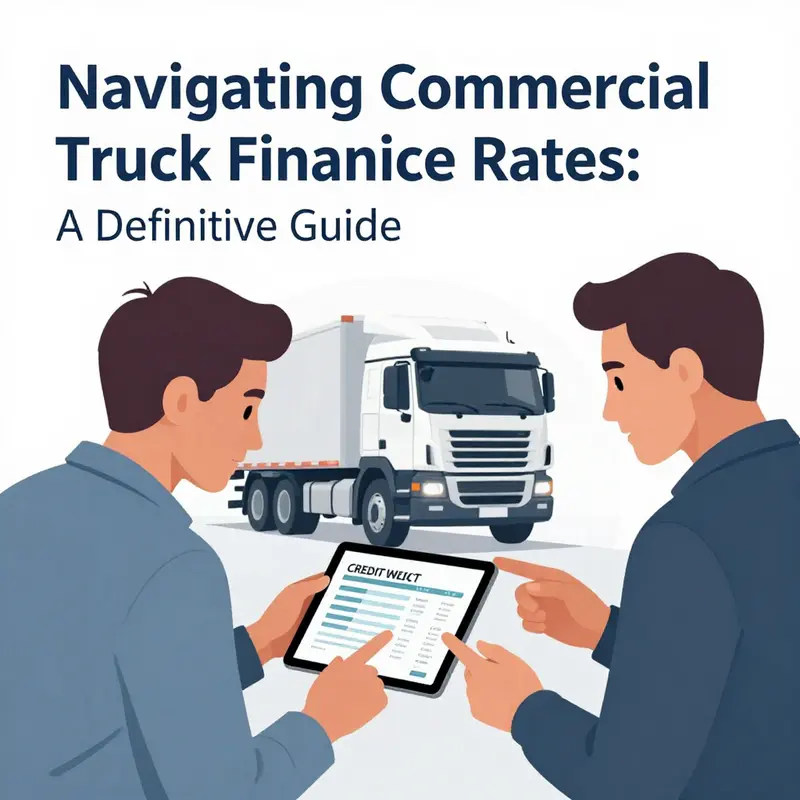
Every decision to finance a commercial truck sits on a tangle of numbers, but one factor stands as a steady compass: your credit history. In the world of truck financing, how you have handled debt in the past often rides side by side with the age of the truck you want to buy, the term of the loan, the amount you can put down, and the type of lender you approach. The result is a spectrum of rates that can feel like a cliff to climb or a slope to ride, depending on whether your credit history points lenders toward a favorable risk assessment or toward a higher premium that only marginally improves your chances of approval. As of early 2026, this dynamic remains front and center for fleets of all sizes, and understanding it can save a business thousands, if not tens of thousands, over the life of a loan.
At its core, credit history is a narrative lenders read to evaluate risk. Lenders track a borrower’s score, the consistency of payments, and even how recently a loan was opened or existing debt paid down. The fewer late payments, the longer the track record of meeting obligations, and the more predictable the cash flow, the lower the perceived risk. Commercial truck loans are not simply about the price tag of a single vehicle. They are about the ongoing financial choreography of a business that relies on dependable transportation to generate revenue. A strong history signals that the operator is capable of managing cash flow, budgeting for fuel, insurance, maintenance, and the occasional unexpected repair without defaulting on the loan. In practice, that reliability translates into lower interest rates because the lender sees a lower probability of default. The result is a cycle that begins with a solid credit history and ends with affordable payments that improve profitability.
When the history is strong, borrowers often land rates in the modest range. For those financing newer equipment through reputable financial institutions, the ceiling can drift toward the lower end of the spectrum, with interest rates that hover in the single digits to about the low teens. A borrower with clean payment records and a proven business track record may access favorable terms that reduce the total cost of financing. The effect is not merely about the monthly payment; it compounds over the term of the loan. A small reduction in the rate, applied over five years or more, multiplies into thousands of dollars saved when the loan is fully paid off. Lenders interpret reliable cash flow as evidence that the business can absorb monthly payments even if fuel prices shift, maintenance costs rise, or demand tightens for a period. In other words, a strong credit history does not just unlock a rate; it unlocks predictability in a often volatile industry.
By contrast, a blemished credit history changes the calculus dramatically. Late payments, defaults, or high credit utilization paint a picture of higher risk. For lenders, higher risk warrants higher compensation. The rate premium is not a cosmetic add-on; it is the price lenders charge for taking on more uncertainty about repayment. When a borrower’s history includes missed payments or accounts in default, lenders may respond by quoting higher rates, requiring larger down payments, or insisting on shorter terms that create a stiffer monthly burden. In some cases, significant credit problems can even lead to loan denial or the need for a co-signer who can shoulder part of the risk. In the gas-and-steel economy of trucking, where margins can be thin and the capital needs are substantial, the cost of financing can become a gatekeeper—either enabling expansion or forcing a vehicle replacement to be postponed.
That dynamic is not only about a score itself but about the story behind it. A strong history often represents a history of stability: consistent orders, steady receivables, predictable maintenance schedules, and a business cadence that matches a lender’s risk appetite. A well-documented stream of cash inflows supports the case that the operator can cover not only the loan but the ongoing costs of running a fleet. When the record shows growth and responsible management, lenders see a borrower who can ride out economic slowdowns, price shocks, or a downturn in freight demand without defaulting. In practical terms, this means access to more favorable terms, more flexible down payment structures, and sometimes better combinations of rate and term that optimize the overall cost of ownership for the vehicle.
Yet the road to favorable rates is not purely about history. The age and condition of the vehicle, the loan term, the loan-to-value ratio, and even the lender’s appetite at the moment all play their part. A business with a pristine credit profile but seeking financing for an older, high-mileage truck can still encounter a tighter pricing corridor. Older vehicles carry higher risk to lenders because their resale value, reliability, and maintenance costs become more uncertain over time. The protective cushion a lower rate provides might be offset by higher depreciation expectations and increased maintenance needs. In that case, lenders look to balance the risk by not only adjusting the rate but also potentially requiring a larger down payment or a shorter amortization period. The macro effect is that the same borrower can see different outcomes depending on the age and condition of the asset being financed, even if the borrower’s credit history remains strong.
There is also a practical layer to the story: how you present your credit profile to lenders. A well-prepared package that demonstrates stable cash flow, a robust business plan, and a track record of profitability can tilt the odds in your favor, even when the credit score sits near a threshold. Lenders seek evidence that the borrower can manage debt service alongside normal operating expenses. This is where the integration of financial statements, tax documents, and a clear maintenance and utilization plan matters. A borrower’s readiness to disclose accounts receivable cycles, customer concentration, and contingency plans for fuel volatility can reassure lenders that the business will continue to perform in the face of uncertainty. In essence, the credit history becomes part of a broader narrative about the borrower’s ability to maintain operations, repay the loan, and preserve the asset value over time.
For operators weighing the decision to pursue financing, the message is clear: cultivate and protect your credit history, but do not view it as the sole determinant of success. It interacts with other variables in a way that can amplify or mitigate the affordability of a loan. If you have room to improve your credit profile, small but meaningful steps can yield outsized benefits. Correcting errors on a credit report, paying down revolving debt to lower utilization, and avoiding new debt that does not contribute to revenue generation can move you into a more favorable pricing tier. When combined with prudent asset selection and disciplined cash flow management, a good credit history becomes a powerful lever for reducing total financing costs and preserving working capital for the operation itself.
The language of the market also matters. In a period of widespread capacity expansion or tight freight markets, lenders may adjust their risk tolerance and pricing more aggressively. Conversely, during periods of high freight rates and strong demand, even borrowers with minor imperfections may secure more reasonable terms as lenders compete for business. That is why a single number cannot capture the nuance of commercial truck financing. The rate you see is the result of a negotiation between the strength of your credit history, the reliability of your business plan, the age of the truck, and the current appetite of lenders who understand how trucking markets move. The most reliable approach is to engage multiple lenders, share your full financial story, and compare the tradeoffs between rate, term, down payment, and any promotional offers that might reduce upfront costs. In this context, the choice of partner matters as much as the numbers themselves.
To connect market dynamics with day to day decisions, consider the broader picture of industry capacity. The state of capacity in the trucking market influences lenders in ways that can either lock you into a tight pricing window or open up room for negotiation. For a deeper look into how excess capacity affects lending risk and terms, you can explore insights on the topic here: Excess capacity in the trucking market insights.
Beyond the mechanics of credit history, the conversation about financing rates is also a conversation about strategy. A fleet owner can choose to pursue a loan with the shortest possible term to minimize interest, or a longer term to reduce monthly payments and preserve cash flow for operational needs. The decision often hinges on how predictable revenue is and how much cushion exists in the business plan for maintenance and fuel price volatility. In some scenarios, a higher rate paired with a longer term can produce a monthly payment that fits a lean cash flow model, while in others, securing a lower rate and a shorter term can protect the fleet from asset value erosion and reduce the risk of a future refinancing dilemma when markets shift. The crucial point is that the credit history shapes the floor of what is possible, but the optimal choice comes from aligning financing with strategic business objectives and operational realities.
The practical steps to navigate this landscape are straightforward, even if the choices feel daunting. Begin with a clear view of your current credit standing by pulling your business credit reports and evaluating any discrepancies that could inflate risk. Prepare a robust package that showcases cash flow stability, contracts in hand, and forecasted revenue streams that support debt service. When possible, compensate for perceived risk with a larger down payment or by selecting a newer truck with lower maintenance risk. The asset quality matters because even with strong credit, the collateral—your truck—must hold value and performance under typical operating conditions. A well-chosen asset can reduce perceived risk and, by extension, the rate category you face. Finally, shop broadly. The landscape of lenders for commercial vehicles is diverse, spanning traditional banks, credit unions, and specialized truck lenders who may weigh credit history differently and who can tailor terms to the realities of a trucking operation.
All of this builds toward one practical takeaway: your credit history is a powerful determinant of financing cost, but it is not a fixed ceiling. Your ability to manage debt and present a coherent, credible business case can create an opportunity to negotiate better terms, even when the starting position is not ideal. The right mix of preparation, asset choice, and lender dialogue can convert a high rate into a manageable payment and a manageable payment into long term profitability. As the market evolves, the relationship between credit history and financing becomes less about chasing a single rate and more about assembling a package that supports sustainable growth for your fleet. For readers who want to anchor these ideas to current benchmarks, keep an eye on credible resources that map the rate spectrum across scenarios and asset profiles, and remember that the best rate is the one that aligns with your balance sheet, your cash flow, and your strategic plan for expansion.
External resource: https://www.bankrate.com/loans/auto-loan/semi-truck-financing-interest-rates/
Reading the Rate Map: How Commercial Truck Financing Rates Shape Your Fleet Path
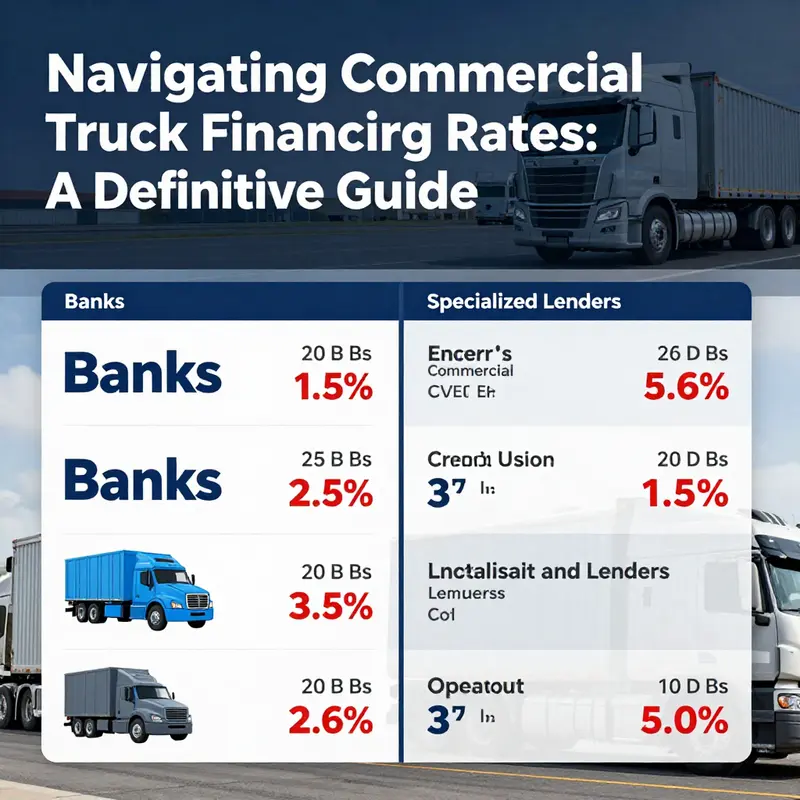
Financing a commercial truck is rarely about a single number. The rate attached to a loan is a signal that travels through a business plan, a balance sheet, and the road map of your fleet’s growth. Rates are not isolated figures; they reflect how lenders assess risk, how they price that risk, and how the asset itself stands as collateral in a market that moves with fuel prices, maintenance costs, driver availability, and depreciation. As of early 2026, the spectrum is wide. You will encounter loan rates that typically range from 6 percent to 35 percent or higher, a spread that mirrors the complexity of the trucking business and the diversity of financing products available. That breadth makes the question not just how much the rate is, but how the rate comes to be and how it should be weighed against the overall cost of ownership over the life of the equipment.
To understand why rates vary so much, it helps to start with what lenders prize when they extend capital for a truck purchase. The quality of the borrower matters just as much as the asset being financed. A well-documented business history, stable cash flow, and strong tax and financial records can tilt a lender toward the lower end of the range. In practical terms, a company with a solid, revenue-generating operation that can demonstrate consistent debt service coverage and a reasonable expansion plan is more likely to secure a competitive rate for a newer truck. At the other end of the spectrum, younger businesses with thin or irregular cash flows, weaker credit profiles, or high mileage or older equipment as collateral can face substantially higher pricing. The result is that two businesses, similar in equipment needs, can pay very different rates because one embodies a steadier, lower-risk profile while the other signals greater uncertainty to the lender.
Besides borrower quality, the age, condition, and type of the equipment itself have a direct effect on the rate. New or relatively low-mileage tractors and trailers backed by reliable maintenance histories are the most attractive collateral in a lender’s eyes. A newer asset reduces the risk of rapid depreciation and unexpected repair costs, which translates into a more favorable pricing tier. Conversely, financing older high-mileage trucks or specialized equipment carries higher risk, since the longer a truck has operated, the more durability questions arise and the more the chance of unplanned downtime. The decision is not simply about whether you need a loan at all; it is about how the specific asset you put up as collateral interacts with your business’s ability to generate consistent cash flow over the term of the loan.
Loan structure matters as well. The term length can influence both monthly payments and total interest paid. Shorter terms generally yield higher monthly commitments but lower overall interest; longer terms lower monthly payments but can increase the total cost when interest accrues over more years. Some lenders also tailor amortization schedules to the expected life of the asset or the anticipated reliability of the truck, which can shift payment patterns and risk exposure for both sides. In practice, a lender will balance term length against the predictability of your business’s revenue and the truck’s expected usable life. A fleet that expects to upgrade equipment within a few years may prefer shorter terms with a larger down payment to avoid being saddled with a high-risk residual value, while a business aiming to stretch capital for longer horizon growth might opt for longer terms paired with a robust maintenance plan.
Another important factor is how the loan is packaged. Banks, credit unions, and specialized truck lenders each bring a slightly different toolkit. Banks might offer favorable pricing for borrowers who fit their standard corporate lending profile, especially if the deal is part of a broader banking relationship. Credit unions may extend more flexible credit criteria and friendlier terms for smaller fleets or cooperative members. Specialized truck lenders, on the other hand, often invest in understanding the freight sector’s rhythms and may deliver faster approvals and more flexible structures that align with uptime and utilization metrics. Each channel has its own suite of costs beyond the stated interest rate, including origination fees, documentation charges, and in some cases, fees tied to maintaining the loan through the term. The overall economics therefore hinge on the sum of those elements as well as the rate itself.
Promotions and payment flexibilities can also color the real cost of financing. Some lenders advertise no down payment options or deferred payment periods. While appealing at first glance, such incentives do not necessarily reduce the total amount paid over the life of the loan. They may shift when and how costs are recognized, and they can come with higher interest rates or fees that quietly offset the apparent benefit. A prudent borrower looks beyond the headline rate to the annual percentage rate APR, which aggregates interest and relevant fees into a single cost measure. When the promotion ends or when a deferred payment option accrues interest, the new price of financing can be meaningfully different from the initial promotional terms.
In practice, the rate you secure is only part of the picture. A precise comparison requires looking at the full package: the nominal rate, the APR, the term, the down payment, any required collateral, and all fees that accompany the loan. A quote that looks attractive on the surface can hide expensive add-ons if you do not examine the complete cost structure. That is why careful buyers soliciting multiple quotes should extract the same information from every lender: the rate band, the APR, the term, the down payment, the expected monthly payment, any prepayment penalties, and a transparent list of all fees. With these elements in hand, a borrower can map the true cost of financing and compare how each lender prices risk against the equipment and the business plan.
Beyond the mechanics of the loan itself, the way you present your business can influence the lender’s willingness to offer favorable terms. A well-prepared package that includes a current fleet utilization report, maintenance history, drivers’ performance data, and a clear plan for leveraging the new equipment to expand capacity can help make the case that the additional debt will generate proportional incremental revenue. Conversely, a lack of documentation or a hollow growth plan can cause lenders to price risk more conservatively, nudging rates higher. Preparing a robust package is not about obligation to buy from a lender; it is about giving the lender confidence that the investment will produce dependable cash flows and that you can navigate the ups and downs of freight cycles.
As market conditions shift, lenders also keep a watchful eye on broader industry dynamics. The level of equipment utilization, the pace of new truck orders, and the health of freight demand all feed into risk assessments. In periods of excess capacity, for example, lenders may tighten underwriting or require larger down payments to compensate for softer utilization. In tight markets, competition among lenders can drive more aggressive pricing and more flexible terms, especially for borrowers with strong credit and solid business models. The interplay between market conditions and borrower characteristics means that timing can matter just as much as the rate itself. For fleets planning growth, a strategic approach to timing, equipment selection, and lender negotiation can yield meaningful savings over the life of a loan. For readers seeking a broader view of how market dynamics are shaping financing in real time, see the emerging analyses in Excess Capacity in the Trucking Market Insights.
When the decision is made to pursue financing, collecting quotes from multiple sources remains essential. The goal is not to chase the lowest number but to understand who is pricing risk best for your specific scenario. A direct lender may provide rapid decisions and straightforward terms, while a credit union may offer favorable pricing with a focus on member communities. Online platforms that aggregate offers can help you compare quickly, but they also require scrutiny to ensure you are not trading price for service quality or hidden terms. The process should be a careful balancing act: seek the lowest sustainable rate, confirm that the term aligns with your asset’s expected life and your business plan, and verify that any promotional terms are truly beneficial when the loan matures.
To translate rate into practical terms, consider a hypothetical but plausible scenario. Suppose a fleet owner with a solid five-year growth plan finances a newer tractor with a five year term. A strong credit profile and favorable debt service coverage result in a competitive rate at the lower end of the spectrum, say around 6 to 10 percent. The monthly payment might be manageable, and the total interest cost over the term would reflect the asset’s reliability and the business’s steady cash flow. In contrast, a similar buyer facing a weaker credit history or financing an older, high mileage truck could see rates in the upper part of the range, perhaps 20 percent or more, quickly inflating the monthly burden and the total cost of ownership. The difference is not just a line item on a bill; it affects every edge of the business plan, from driver wages and fuel efficiency investments to maintenance schedules and uptime guarantees.
An additional layer to consider is the choice between financing and leasing. A financing arrangement that transfers ownership at the end of the term provides depreciation and title benefits but can constrain cash flow if the payment is high. A lease, by contrast, can offer lower monthly payments and more flexibility to upgrade equipment as technology and hauling demands evolve, albeit with restrictions on usage and mileage and without equity in the asset at the end. The optimal path depends on strategic priorities: whether the focus is on uptime and expansion with eventual ownership, or on flexibility to rotate equipment in and out of the fleet as freight markets shift. In any case, the financing decision is tethered to the business model, the desired asset lifecycle, and the ability to manage cash flow under a variety of market scenarios.
For readers aiming to approach this topic with discipline, a practical takeaway is to build a simple financial model that translates rate, term, and down payment into monthly payments and total cost. Then test scenarios across your expected ranges for utilization, maintenance, fuel, and driver costs. By exposing how small adjustments in rate or term affect the bottom line, you create a decision framework that departs from gut feel and rests on quantifiable implications for your fleet’s profitability. It is also worth acknowledging that the rate you see in a quote may not be the final price. Prequalification can help you gauge the range without affecting your credit standing, while a formal application will generate a hard inquiry that lenders weigh against your existing debt load and credit history. The strategy is to optimize for the best balance of rate, term, and total cost, rather than chasing the lowest advertised figure in isolation.
Finally, for those who want a wider industry context beyond the mechanics of a single loan, exploring market analyses can be illuminating. The size and pace of freight demand, the mix of long-haul versus regional operations, and the availability of used versus new equipment all influence financing dynamics. These considerations remind us that financing rates are not a vacuum; they are the price of entry into a broader supply chain that is continually evolving. As you map your own route, keep in view not only the current rate bands but also the likely shifts in capital cost as the market matures and freight patterns adapt. For deeper market context, see the analysis on Excess Capacity in the Trucking Market Insights.
To close this chapter by tying back to the core question of what determines the rate you will pay, remember that it is a negotiation of risk, asset, and time. The rate is a lens that reflects your credit history, the truck’s age and reliability, the term you select, and the structure of the financing product itself. It is not a fixed decree but a moving part of a larger financial plan. By assembling quotes from multiple lenders, preparing robust business documentation, and testing how different terms align with your fleet strategy, you place yourself in a better position to secure terms that support sustainable growth rather than hinder it. For readers seeking current, widely aggregated benchmarks on truck loan rates, Bankrate provides ongoing updates that can help calibrate expectations as you evaluate offers across banks, credit unions, and specialized lenders. Bankrate Truck Loans.
The Rate Advantage: A Practical Guide to Securing Favorable Commercial Truck Financing
Financing a commercial truck is more than locking in a monthly payment. It is a strategic alignment of a fleet’s operating plan with the terms set by lenders, and it hinges on a delicate mix of credit signals, asset quality, loan structure, and market momentum. Rates are the most visible part of the cost, but the real question is how that rate translates into the total cost of ownership over the life of the loan. As of early 2026, interest rates on commercial truck loans can span a broad arc—from the upper single digits to well into the mid-30s, depending on the borrower’s profile, the age and condition of the equipment, the loan term, and the lender’s appetite. The challenge for buyers is not to chase a single-digit miracle, but to orchestrate a set of practices that consistently lowers the effective rate and, just as important, erodes the risk lenders associate with the loan.
Preparation is the foundation. Lenders read a lot more than a balance sheet. They assess the business’s stability, the owner’s track record, and the realistic ability to service debt under a range of conditions. A strong credit profile—both personal and business—says that the borrower is capable of managing payments, even when fuel spikes, maintenance costs, or cancellations ripple through cash flow. This means preparing documents with precision: tax returns and financial statements that reflect steady revenue, a clean debt-to-equity balance, and a detailed projection of how the new trucks will generate incremental income. A lucid business plan anchors the loan request, converting future revenue potential into a defensible repayment path. Lenders also scrutinize existing obligations; a high debt load can push rates higher by signaling greater risk, while a history of timely payments across multiple credit lines can build a favorable narrative that lowers perceived risk.
Building a credible credit story. The interplay between personal and business credit is a recurring theme in truck financing. A borrower with robust personal credit may unlock lower rates, particularly if the business has a solid operating history and clear cash flows. Conversely, startups or businesses with thin margins face higher procedural hurdles and tighter rate ranges. Even for seasoned operators, lenders look for consistency: clean years of tax returns, steady or rising revenue, and manageable leverage. To strengthen the credit story, owners should address structural weaknesses ahead of time. This could involve reducing outstanding personal guarantees where feasible, ensuring accounts receivable are current, and maintaining a prudent cash reserve that cushions short-term volatility. A recognized advantage comes from demonstrating that the new equipment is not a vanity purchase but a revenue enabler—an asset that will shorten the cycle from investment to income with reliable utilization rates.
Market knowledge as a rate lever. The price of money for trucks rises and falls with broader lending conditions and the demand for capital. savvy buyers actively scavenge price signals across multiple lenders—banks, credit unions, and specialized trucking finance companies all price risk differently. This is where the practical art of shopping comes into play. Rather than accepting a single offer, applicants should collect several quotes and compare them not only on the nominal rate but on the all-in cost: the APR, origination fees, prepayment penalties, and any maintenance or service package that might be bundled with the loan. The cheapest rate upfront can be misleading if it carries heavy fees or restrictive terms. Conversely, a slightly higher rate may come with a longer grace period for payments or a more favorable down-payment structure, ultimately reducing the total cost. At times, lenders may adjust pricing in response to market signals such as capacity constraints or rising freight volumes, which can affect the perceived risk of a given loan.
The value of a broker and the risk of over-reliance on a single channel. A specialized finance broker who understands trucking assets can be a powerful ally. They can access a broader lender network, leveraging relationships that individual buyers cannot, and can often negotiate terms that lower the effective rate. A broker’s value is most evident when the borrower’s profile sits in a gray area—neither pristine nor disqualified. Yet it remains important to couple broker support with primary diligence. Borrowers should still perform their own price checks, ask pointed questions about rate cushions and eligibility criteria, and verify every line item in the term sheet. The broker should act as an adviser, not a gatekeeper, helping the borrower navigate bureaucratic hurdles and align the loan’s structure with the business’s cash-flow realities.
Structuring the loan to reduce risk for both sides. A practical route to more favorable financing often lies in the structure of the loan rather than the rate alone. A larger down payment reduces the lender’s risk by increasing the borrower’s skin in the game and shrinking the loan-to-value ratio. In many cases, a meaningful down payment signals seriousness and creates room to negotiate a lower rate. Shorter terms can also yield better rates because they limit the lender’s exposure to long-term risk, though they increase monthly payments. The trade-off matters: a plan that preserves cash flow while delivering a lower rate can be a win, provided the business model supports quicker depreciation of the asset and a smooth maintenance plan for a newer truck. At the same time, longer terms or flexible payment schedules can be valuable when cash flow is uneven, so long as the total interest remains reasonable. Addressing residual value expectations early on—whether through maintenance reserves, warranty extensions, or service contracts—can reassure lenders that the asset will hold value and function efficiently throughout the term.
Asset quality and the heartbeat of reimbursement. The age, mileage, and condition of the truck are tangible indicators of risk that lenders weigh heavily. Newer trucks generally qualify for lower rates because they promise lower maintenance costs and longer expected service lives. Used trucks, especially high-mileage ones, can carry materially higher rates unless the buyer shows a compelling plan to mitigate risk. Buyers often secure better terms by presenting a comprehensive maintenance plan, evidence of regular inspections, and a predictable usage profile. Some lenders will factor in the truck’s resale value and lease-back potential as collateral, helping maintain favorable pricing for assets with robust residuals. In this context, a well-documented maintenance history acts as a powerful counterweight to risk signals, turning potential upcharges into an incremental advantage in negotiations.
Aligning operating strategy with financing goals. Financing cannot be abstracted from the daily rhythms of the business. Lenders want to see a coherent operating plan that links asset investment to revenue generation. If new equipment is positioned to reduce breakdowns, improve fuel efficiency, or enable higher utilization, it strengthens the case for a lower rate because it directly ties repayment capacity to improved cash flow. The plan should also account for maintenance costs, driver productivity, and downtime, with sensitivity analyses showing how the business would fare under higher fuel prices or a soft freight market. A disciplined approach to forecasting—clear assumptions, defensible scenarios, and a path to profitability—transforms financing from a requirement into a strategic tool. It reinforces the lender’s confidence that the investment will yield steady returns, which, in turn, nudges pricing downward.
Capacity signals and price responsiveness. Market dynamics matter. When capacity is abundant, lenders may push more aggressively on pricing to win competition, and some programs may offer promotional terms like lower down payments or deferred payments. Conversely, in tight capacity environments, lenders may tighten terms and push higher rates to manage risk. This volatility is not something to fear; it is a call to build a flexible financing plan that can ride the cycle. By staying vigilant to capacity indicators—industry inventories, new truck orders, and freight market reports—buyers can time refinements to their financing approach. A subtle shift in timing, such as submitting loan applications after a favorable monthly freight index or following a strong capacity release, can yield meaningful rate advantages without altering the underlying business fundamentals.
A note on the broader financing ecosystem. The conversation around truck financing is embedded in a larger ecosystem of banks, credit unions, and non-bank funding sources that serve commercial fleets. Each channel has its quirks: some prioritize cash-flow-based underwriting, others lean on collateral value or vendor relationships. Creating an informed strategy means understanding how your preferred channel evaluates risk, what covenants or financial covenants may accompany the loan, and how prepayment or renewal options are structured. It also means recognizing that a good rate today does not guarantee a favorable term on the next round of financing. A fleet that remains disciplined, diversified in lenders, and transparent with financials is better positioned to secure favorable terms in a changing environment.
Practical steps to apply these insights. Begin with a candid self-assessment of credit health, business stability, and asset quality. Gather a clean set of financials, tax returns, and a forward-looking revenue model that demonstrates the incremental cash flow from the new trucks. Reach out to multiple lenders and request structured quotes that separate rate, fees, and term. Compare apples to apples by calculating the all-in cost of each option, including the impact of a down payment and the choice of term. Engage a broker if needed, but maintain direct conversations with lenders to understand their underwriting priorities and any conditions they impose. As you negotiate, emphasize how the trucks will be deployed, the maintenance plan, and the expected utilization. Lenders reward clarity and risk management with better pricing, and the more you can mitigate concerns about reliability and cash flow, the more your rate will reflect your true risk profile rather than external noise.
A bridge to the next phase of optimization. The strategies above form a cohesive approach to achieving a favorable rate without compromising fleet performance. They invite a broader conversation about capital discipline, investment timing, and long-term fleet strategy. For readers who want to connect market signals to financing decisions, a deeper look into ongoing industry dynamics can illuminate why rates move and how to ride those movements. For a closer look at how capacity dynamics influence lending choices, you can explore excess capacity in the trucking market insights.
External perspective and further reading. To complement the practical steps outlined here, it helps to consult external analyses that synthesize rate environments, underwriting criteria, and financing options across the trucking sector. The FreightAmigo guide on securing favorable commercial truck financing rates offers a broader context, with frameworks that extend beyond a single lender or loan product. It provides additional angles on cost of capital, risk mitigation, and strategic timing that can sharpen a buyer’s negotiating posture. For readers seeking that broader lens, the guide is a valuable resource: https://www.freightamigo.com/commercial-truck-financing-rates.
Final thoughts
In evaluating commercial truck financing rates, understanding the various determinants, such as credit history and lender diversity, is essential for strategic financial planning. By capitalizing on this knowledge, logistics and construction companies, as well as small business owners, can navigate the financing landscape more effectively. Employing the right strategies enables business leaders to secure competitive rates that align with their operational needs, ultimately enhancing profitability and sustainability in their trucking operations.