
Commercial truck caps serve both functional and aesthetic roles in the logistics and transportation sector. Whether you’re managing a delivery fleet or overseeing procurement for construction and mining operations, comprehending the pricing spectrum of truck caps is crucial. This guide delves into critical factors affecting the cost of these vital accessories, including material quality, features, and customization possibilities. By the end, you’ll gain insights into the price ranges for different types of commercial truck caps, explore customization options that enhance value, and understand market trends that may impact your investment decisions. These insights will empower you to make informed choices that align with your operational priorities and budget constraints.
Beyond the Sticker: The Real Drivers Behind Commercial Truck Cap Pricing
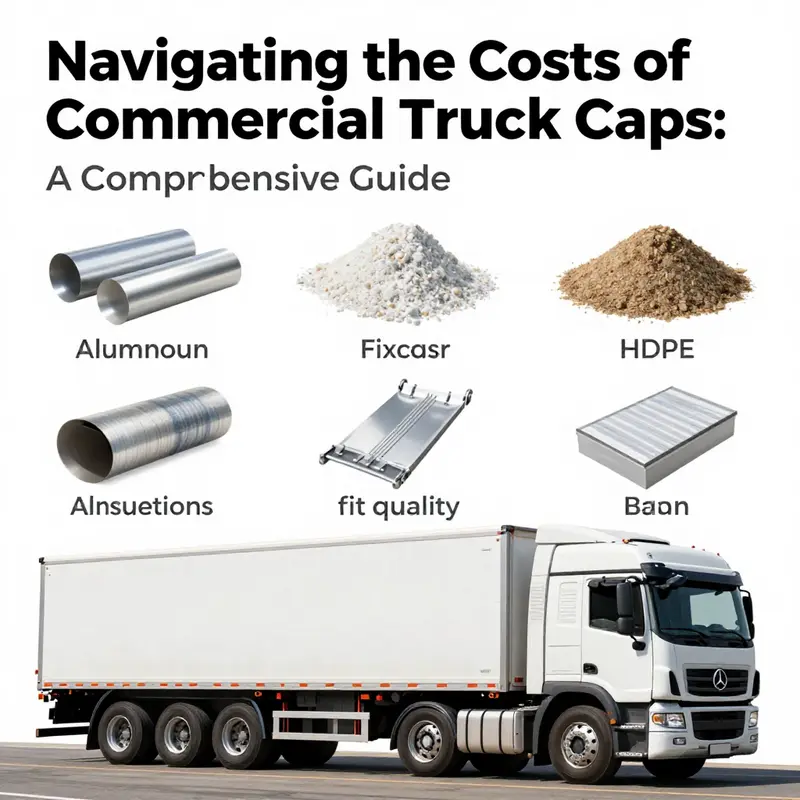
Please note: This chapter intentionally avoids naming specific product lines and brands to maintain focus on price drivers rather than endorsements. As you plan your procurement, keep in mind that the most economical choice in one dispatch cycle may not yield the best total value over the fleet’s lifetime. The alignment between a cap’s design and your organization’s operating conditions is the decisive factor that ultimately determines whether the investment pays off through reduced losses, faster workflow, and smoother compliance with safety and regulatory expectations.
How Commercial Truck Cap Prices Break Down: Materials, Features, and What Drives Cost
Understanding the true cost of a commercial truck cap requires more than a glance at a price tag. Prices span a wide spectrum because caps are built from different materials, sized for different beds, engineered for various uses, and fitted with a range of optional equipment. A clear view of what each price band buys you helps fleets, contractors, and operators choose the best value for their mission rather than chasing the lowest upfront cost.
Start at the low end and the simplest products. Basic caps and covers designed primarily for weather protection and short-term use are highly affordable. In fabric-based commercial covers, for example, standard PVC-coated tarpaulins or heavy-duty canvas options can run only a few currency units per square meter. These lightweight covers are attractive because they keep rain and dust off cargo at minimal cost. They are easy to repair, replace, and store. The tradeoffs are obvious: they offer limited security, minimal insulation, and a shorter service life under heavy use or harsh climates.
Move up a step and you reach widely used utility caps made from materials such as aluminum or basic fiberglass. These caps typically sell in the low-to-mid hundreds of dollars for many standard truck bed sizes and can reach the upper hundreds when built for larger beds or with improved finishes. These models focus on ruggedness and practicality. They lock more securely than fabric covers and shed weather well. For crews that need reliable, everyday storage for tools and materials, these caps usually represent the best balance between cost and function. They are light enough to avoid dramatically affecting fuel economy, and they are simple to fit and service.
The mid-range segment is where durability and added capability begin to justify higher prices. Caps made from high-density polyethylene (HDPE), reinforced composite panels, or thicker fiberglass fall into this band. Prices here commonly fall in a range that reflects material robustness and better factory fit. Mid-range caps offer improved resistance to UV, impact, and long-term wear. They also provide better insulation against temperature swings and can include more thoughtful storage options, such as integrated shelving or compartmentalized interiors. For field teams that value both appearance and performance, investing in a mid-range cap reduces total cost of ownership through fewer repairs and lower downtime.
At the top of the standard market, high-end commercial caps present features for specialized roles. These designs frequently include secure locking systems, integrated lighting, professionally installed electrical access, and modular configurations that support racks, shelving, or secure tool storage. For heavy-use environments, caps with reinforced frames and thicker skins deliver a longer life. Price points in this tier may reach into the low thousands because of materials, engineering, and factory labor. Operators who need to minimize theft, protect sensitive equipment, or maintain a professional fleet image will commonly find high-end caps worth the premium.
Fully customized and industry-specific caps can push costs considerably higher. When a canopy is purpose-built for emergency response, landscape operations, or a specialized utility, it may include features like built-in power systems, solar panels, motorized doors, or complex modular storage systems. Fabrication to match a specific vehicle’s contours and electrical architecture increases design and installation time, which raises cost. Custom solutions often exceed typical price caps and can land well into four-figure sums. For fleets ordering multiple vehicles, though, custom design costs can be amortized across units and yield better fleet-level value.
International pricing perspectives mirror this structure, even if the numbers use different currency units. Basic fabric covers measured per square meter may cost only a few yuan, while premium coated fabrics or specialty composite materials can command double-digit or even triple-digit yuan prices per square meter. Custom commercial-scale membrane solutions or motorized systems push per-square-meter costs higher and drive overall project prices into the thousands of yuan. The lesson is consistent: material selection and feature choices are the dominant price drivers, regardless of currency.
Several specific factors repeatedly determine where a given cap will fall on the spectrum: material quality, fit precision, feature set, brand and warranty, and installation complexity. Material quality is foundational. Aluminum often offers a compelling ratio of weight to strength and resists rust, but its thin gauges can dent. Fiberglass gives a smoother finish and better paintability but can crack under heavy impact. HDPE and composite panels resist impact and chemicals, often outperforming metal in abuse-prone settings. Fabric covers sit at the other extreme: inexpensive and light, but with predictable lifespan limits. Choosing material is a balance between durability needs and acceptable mass, especially where payload or fuel economy matters.
Fit and precision matter more than many buyers expect. An OEM-quality or vehicle-specific canopy that matches a truck’s bed contours and integrates with its electrical and mounting systems usually costs more than a universal-fit unit. That higher price buys better aerodynamics, fewer leaks, a cleaner appearance, and simpler installation. For fleets, those benefits translate to lower maintenance costs and a more professional look across a vehicle lineup. For one-off buyers, a universal cap may be cheap upfront but cost more in fitting hours and ongoing adjustments.
Features and add-ons multiply costs quickly. Lockable access hatches add complexity and security hardware. Built-in LED lighting and internal power routing require wiring and connectors. Motorized lifts, solar packages, and integrated climate control systems introduce electrical work and bespoke engineering. Each additional capability requires more design, more labor, and often more testing. The incremental cost of a high-quality locking system or electrical integration is small compared to the price of a complete motorized roof system, yet both impact procurement decisions in different ways. Buyers must prioritize which features address real operational pain points and which are merely convenient.
Brand reputation and warranty terms influence cost in two ways. Reputable manufacturers often charge more because they provide engineering documentation, longer warranties, and more reliable support. For commercial users, warranty coverage and a clear repair pathway matter. A higher-priced cap that comes with a long warranty and nationwide service options can be cheaper over three years than a bargain model requiring frequent repairs or replacement.
Installation and regional factors add final variability. Dealer installation fees, shipping costs, and local taxes can add hundreds to a purchase. In some regions, extended lead times for materials or manufacturing congestion inflate prices. Fleet buyers often negotiate better terms by bundling caps with vehicle orders or by placing larger volume purchases. Trends in trailer and vehicle markets can affect component availability, too; seeing how supplier backlogs influence delivery times gives buyers a view into potential price pressure. For discussion of market dynamics that can affect procurement timing, consult analysis on how trailer orders influence margins, which highlights broader supply-chain impacts.
Budgeting intelligently means thinking about lifecycle cost rather than just the sticker price. A cheap cap that fails early or costs more to secure might increase total cost of ownership through lost productivity. Conversely, an expensive cap with corrosion-resistant materials, reliable locks, and modular racks can pay back its premium in reduced downtime and less theft. Calculate expected service life, maintenance intervals, and the value of protected cargo to make apples-to-apples comparisons.
Another useful lens is the break-even for customization. If your operation needs a single niche feature, retrofit kits or aftermarket accessories may be a cost-effective path. If every vehicle in a fleet requires the same custom rack or power system, ordering purpose-built canopies often reduces per-unit cost and simplifies support. Large buyers benefit from volume discounts and more leverage during negotiations.
Finally, consider resale and standardization. Standardized equipment across a fleet simplifies repairs and replacement parts. It also preserves resale value because used vehicles with professional, factory-fitted canopies appeal to buyers. Custom builds that tie into vehicle electrical systems or add nonstandard fittings can reduce secondary market interest. Build for your operational lifetime with an eye toward future ownership changes.
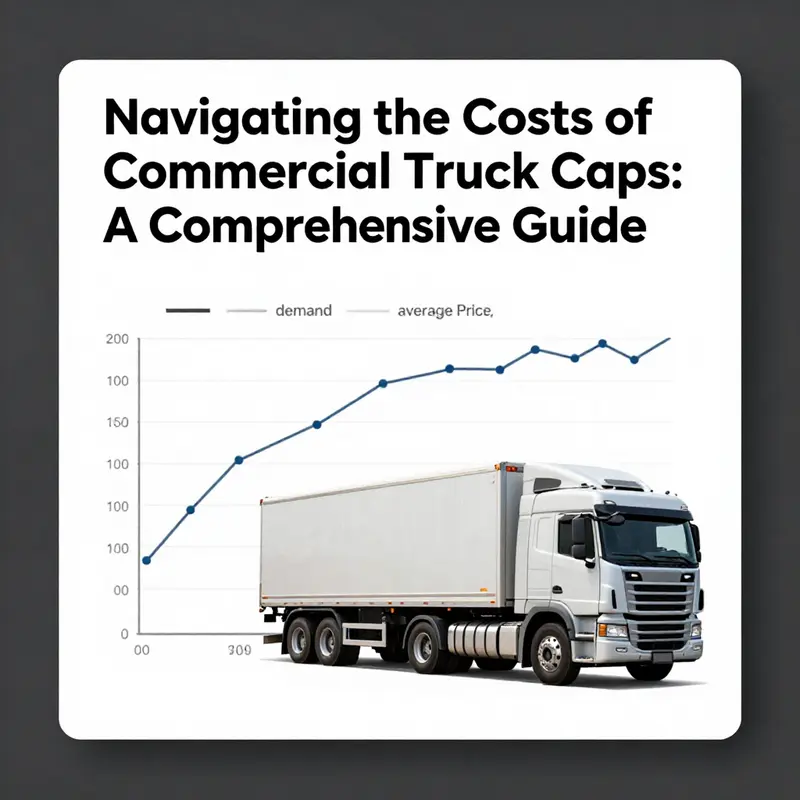
Price ranges are a map, not a mandate. At the most basic level, expect low-cost fabric or entry-level metal caps for minimal protection to cost a small fraction of high-end, custom-engineered solutions. Mid-range composite and reinforced caps are where many commercial buyers find the best value. High-end and custom units push into thousands of dollars because of advanced features and complex integration.
When you request quotes, provide clear specifications: bed size, expected payload, average climate exposure, security needs, and any electrical or modular requirements. Clarify whether you need a universal fit or a vehicle-specific canopy. Ask dealers for total installed price and for warranty terms. Compare not only initial price, but expected maintenance costs and service availability in your region. That balanced approach lets you match a cap’s price to its operational return, ensuring every dollar spent contributes directly to uptime, safety, or long-term value.
For fleet-level procurement, pay attention to market cycles and component lead times. Broader industry trends influence delivery windows and pricing for metal and composite parts. When timing and margins matter, consult industry commentary on how order patterns affect supply and pricing to better plan purchase timing.
Choosing the right commercial truck cap comes down to matching capability with need. The inexpensive options protect against weather. Mid-range caps add durability and functionality. High-end and custom solutions solve specialized problems but carry higher price tags. By understanding the factors that drive price, buyers can make informed choices that control costs while supporting operational goals.
trailer orders impact truckload margins
The Price of Custom Fit: How Customization Shapes the Costs of Commercial Truck Caps

Prices for commercial truck caps are often read as a simple line item, a sticker on a catalog page. In truth, the price a fleet manager pays reflects a longer story about needs, constraints, and the way a cap integrates with daily operations. The cap is not merely a shell; it is a modular platform that can expand storage, protect tools, improve security, and sharpen the vehicle’s efficiency profile. Because fleets vary widely in what they haul, where they work, and how they measure uptime, the price for a cap is less about a universal price point and more about the degree of customization. This means price bands that might look familiar at first glance—basic models, mid-range configurations, and high-end, feature-rich options—become a spectrum that expands whenever a buyer asks for a precise fit, branded appearance, or specialist capabilities. Across the industry, this is the hinge on which value and cost meet. A basic utility canopy can be surprisingly affordable, yet as soon as a business adds color matching, built-in storage solutions, integrated lighting, or security systems, the price curve bends upward quickly. The result is a pricing map that rewards clarity about objectives as much as it rewards engineering skill and material choice.
From a pricing perspective, standard models fall into a recognizable range. Basic aluminum or fiberglass canopies designed for weather protection and simple concealment typically sit between three hundred and eight hundred dollars. These are the units most commonly chosen by contractors and field staff who need a lightweight, weatherproof shell to keep gear out of the rain and secure from casual access. They offer essential utility without demanding a large upfront investment. More robust mid-range options, often built from durable materials such as high-density polyethylene and reinforced composites, generally land between eight hundred and fifteen hundred dollars. These options deliver better insulation, increased rigidity, and a more professional look, along with a noticeable uptick in perceived durability. The higher end of the mid-range introduces features that fleets increasingly demand—stronger locks, reinforced walls, optional interior shelving, and stronger mounting systems—while still maintaining a reasonable balance between price and performance. Finally, the upper tier encompasses high-end commercial caps that emphasize integration with the vehicle’s electrical system, weather sealing, and modular configurations. Prices here commonly range from around one thousand five hundred up to two thousand five hundred dollars, with the possibility of even higher quotes when specialized geometries, custom paint, or bespoke interiors are requested. In some cases, especially where a cap must integrate with a specific vehicle line, the quoted price can jump further, reflecting the extra engineering, testing, and warranty validation required for a precise fit.
But price is not merely a function of the cap’s shell. Material choice is a primary, visible determinant, and the decision reverberates through the entire project. Fiberglass and steel remain common stalwarts, each with its own price dynamic. Fiberglass caps tend to be lighter and offer good weather resistance, which can translate into lower installation costs and improved fuel efficiency in some fleets due to reduced drag. However, fiberglass can incur higher material costs and may require more careful handling during fabrication and installation, especially when long, complex shapes are involved. Steel caps, by contrast, bring exceptional durability and security. They tend to be heavier, which can affect fuel economy and installation labor, but they often justify themselves with longer service life and resilience in harsh environments. Aluminum caps sit somewhere in between, valued for a strong-to-weight ratio and corrosion resistance, alongside a premium feel and a clean aesthetic. HDPE and reinforced composites add another layer of price consideration. These materials typically offer excellent impact resistance and insulation properties, contributing to reduced interior temperature swings and potentially lower HVAC or interior climate-control expenses for fleets that must operate in varied climates. As a result, HDPE and composite options might command higher initial prices than basic aluminum or fiberglass but can yield favorable total-cost-of-ownership outcomes over time.
A strict, one-size-fits-all approach rarely serves a commercial fleet. The cost implications of fit are substantial. OEM-specific, vehicle-tailored caps—those designed to align with a cab’s contours, mounting points, and electrical interfaces—typically carry a premium over universal-fit models. The premium reflects the extra engineering, precise measurements, and testing required to ensure seamless integration with the truck’s cab geometry, seals, and electrical harnesses. A precise fit reduces installation time, minimizes the need for field modifications, and lowers the risk of leaks or misalignments that could compromise weather protection or security. Conversely, universal-fit options can deliver quicker turnarounds and lower upfront costs but may require on-site adjustments, trimming, or sealant work to achieve a reliable fit. These labor implications often show up in the total installed price, a reminder that the price a customer pays is not just the cap’s sticker but the sum of product cost plus the cost of getting it to work as intended on a particular vehicle.
Color matching and branding are another layer of customization that can change the final price in meaningful ways. For fleets that want their vehicles to present a cohesive, corporate appearance, color-matched paint or powder coating, as well as branded decals or etched logos, are common requests. The color-matching process adds labor and materials costs, especially when a cap must receive a factory-like finish or a multi-coat paint system designed to endure sun exposure and road grime. Branding considerations go beyond mere appearance. Logos, fleet graphics, and even subtle tonal adjustments can require specialized printing or application techniques, protective clear coats, and sometimes longer lead times. Each of these steps contributes to the bill but also carries the potential for enhancing fleet recognition, asset value, and resale appeal. In practice, the more a fleet emphasizes brand consistency, the more likely it is that customization will be priced as a value-added feature rather than a discretionary expense.
Window configurations illustrate how functional customization translates into cost. Caps can be specified with fixed windows, sliding windows, or removable panels, and each choice affects both usability and price. Fixed windows offer dependable light and visibility with minimal moving parts. Sliding windows add versatility for ventilation and easier access, but they demand more robust hardware, seals, and alignment tolerances. Removable panels maximize flexibility for oversized tool access or temporary demand spikes, yet they require high-grade latches, secure fasteners, and weatherproof sealing to avoid leaks when the panels are removed. The choice of window type also interacts with security requirements. For fleets handling high-value tools, the ability to lock and seal windows securely becomes a material consideration, sometimes tipping the balance toward higher-priced configurations that promise stronger protection and reduced risk of theft.
Beyond windows, many fleets opt for a suite of built-in features that can push the price well into the upper end of the spectrum. Roof racks, internal toolboxes, loose shelving, and integrated lighting systems expand the cap’s utility yet simultaneously add to the procurement and maintenance footprint. Lighting can range from simple LED strip runs to full-scale, weatherproof lighting with dimming controls and smart-sensing features. Roof racks introduce additional mounting hardware and load-rated structures, which must be engineered to withstand shifting loads and the vehicle’s handling dynamics. Internal shelves and dividers offer organized storage, which reduces search time and damage to tools but adds fabrication time and the cost of sturdy framing and hardware. In some configurations, panels are designed to accommodate power outlets, climate-control vents, or even solar-charging options that support off-grid operations. Each added feature not only alters the immediate price but can influence maintenance and lifecycle costs, as more complex systems may require periodic inspections, component replacements, and specialized care.
All these considerations—material selection, fit precision, color and branding, window configuration, and feature sets—translate into a straightforward question for managers weighing options: what is the expected return on investment for customization? The answer depends on how a cap is used. A fleet that moves quickly, serves multiple sites, and requires reliable weather protection with rapid tool access may justify higher upfront costs for a configuration that minimizes downtime and reduces the risk of gear loss or weather damage. A fleet with a steadier load and longer service life on each vehicle might find that a more durable cap with enhanced security features pays for itself over time through lower repair and insurance costs. In all cases, the decision rests on balancing the immediacy of the price with the long-term value delivered by the cap as a workplace, a storage system, and a visible badge of corporate identity.
Industry analyses and procurement discussions have long highlighted how customization interacts with pricing in the trucking ecosystem. Fleets that pursue tailored canopies often discover that bulk procurement pathways can lessen per-unit costs, even when customization adds to the bill. Bulk pricing structures can reduce the unit price for materials or components such as hinges, locks, or sealing gaskets, while the economies of scale in fabrication reduce labor time per unit. The trade-off, of course, is longer lead times and more complex logistics that accompany bespoke orders. This tension—between the efficiency gains of bulk buying and the strategic value of customization—drives many fleet managers to adopt hybrid approaches. They might standardize core canopy configurations for most vehicles while reserving bespoke options for specific roles or high-value assets that demand a particular balance of protection, access, and branding. The net effect is a pricing landscape that rewards careful specification and a clear understanding of how the canopy will be used in practice. A well-defined brief helps suppliers avoid misinterpretation and can shorten cycles from quote to installation, which reduces carrying costs and speeds return on investment. For further context on how customization and procurement shape trucking costs, see the industry discussion on Trailer Orders Impact Truckload Margins.
In practical terms, a business should expect a range rather than a single figure when exploring customization. A basic, weather-protective shell in a standard material might sit in the lower end of the spectrum, perhaps well under a thousand dollars, for a straightforward, universal-fit configuration. When a fleet asks for color matching, branded graphics, and simple interior shelving, those costs may climb toward the mid-range. If the customer adds features like robust locking systems, integrated LED lighting, and a roof rack with modular storage, the quote climbs again into the upper range of common configurations. And when the request becomes highly specific—customized exterior shapes to align with cab contours, climate-control integration, solar panels, multiple fixed or sliding windows, and bespoke interiors—the price can move into the carefully negotiated territory where engineering validation, testing, accelerated timelines, and extended warranties become part of the offer. The result is a spectrum that reflects a straightforward engineering calculus: more customization and better-aligned performance generally demand higher investment, but the payoff in uptime, protection, and brand presence can justify the additional cost for the right operator.
As buyers navigate this landscape, they should prepare for regional variation in pricing and the costs associated with installation and post-installation service. Quotes may fluctuate with regional labor rates, the availability of fabricators, and current promotions or financing options offered by dealers and manufacturers. The most durable approach is to request a detailed, itemized breakdown of costs and to compare the total cost of ownership across several configurations. A transparent quote should separate materials, labor, finish, and any customization-enabled warranties. Fleet managers can then assess whether a given configuration aligns with operational needs, maintenance capacity, and long-term budgeting. It is also advantageous to discuss warranty terms, service support, and the ease of obtaining spare parts, all of which affect the true price of ownership and the practical viability of a chosen canopy.
For readers seeking a real-world touchstone about online customization options and price ranges, industry marketplaces and supplier portals offer a window into how these decisions unfold in practice. A representative example shows how a capable steel canopy with sliding windows and roof rack configurations can be marketed as a versatile solution for a modern pickup. While the specific products vary by market and vehicle compatibility, the underlying pricing logic remains consistent: the more capability and precise integration a canopy offers, the higher the quoted price, and the more important it becomes to weigh the incremental benefits against the upfront expenditure. This is why many fleets negotiate not only for the cap itself but also for installation, warranty protection, and post-sale support as part of a single, integrated package.
From a strategic standpoint, the customization-to-price dynamic is likely to endure. As fleets modernize and as data-driven management grows more pervasive, the value of an integrated canopy—one that aligns with duty cycles, security needs, and branding goals—will be measured not just by the initial price tag but by the efficiency gains, protection quality, and asset integrity it delivers over the vehicle’s life. In this light, price becomes a reflection of intent: a clear statement about how a fleet wants to operate, how it wants to present itself on the road, and how it plans to protect the resources that travel with every mile. For readers who want a concise narrative linking customization to economic outcomes, the discussion around trailer orders and margins provides a useful frame Trailer Orders Impact Truckload Margins.
In closing, price, when viewed through the lens of customization, reveals itself as a dynamic negotiated outcome rather than a fixed figure. It captures material quality, fit precision, added features, branding efforts, and the practical realities of installation and maintenance. Fleets that invest in thoughtful configuration—balancing upfront cost with long-term value—typically arrive at a canopy solution that supports productivity, protects assets, and reinforces corporate identity. The next phase in this conversation examines how installation logistics, warranty ecosystems, and regional market conditions further shape the path from quote to operation, ensuring that the canopy becomes a durable, cost-efficient component of the fleet rather than a one-off expense.
External reference: https://www.alibaba.com/product-detail/4X4-Offroad-Steel-Pickup-Truck-Caps_1600779882297.html
null
null
Final thoughts
Understanding the pricing landscape of commercial truck caps is essential for logistics and procurement teams aiming to optimize their fleet operations. With a clear picture of the factors influencing prices—ranging from material quality to customization options—stakeholders can navigate the market efficiently, making choices that align financially and operationally with their organization’s goals. Observing current market trends will also provide foresight that can lead to better strategic purchasing decisions in the future. In a competitive environment, staying informed about pricing and features ensures that the investment contributes positively to overall efficiency and productivity.