
As industries such as construction, mining, and logistics evolve, the operational demand for water trucks has surged. A primary component of efficient water truck operation lies in understanding the necessity of a Commercial Driver’s License (CDL). The intricacies of licensing not only ensure regulatory compliance but also enhance safety and operational efficiency. This article explores the integral role of a CDL in operating water trucks, the regulatory standards governing these vehicles, and the implications for employment and procurement. Each chapter provides a comprehensive examination of how a CDL is vital for water truck operators and the industries they serve.
Why a Commercial Driver’s License Matters When Driving a Water Truck
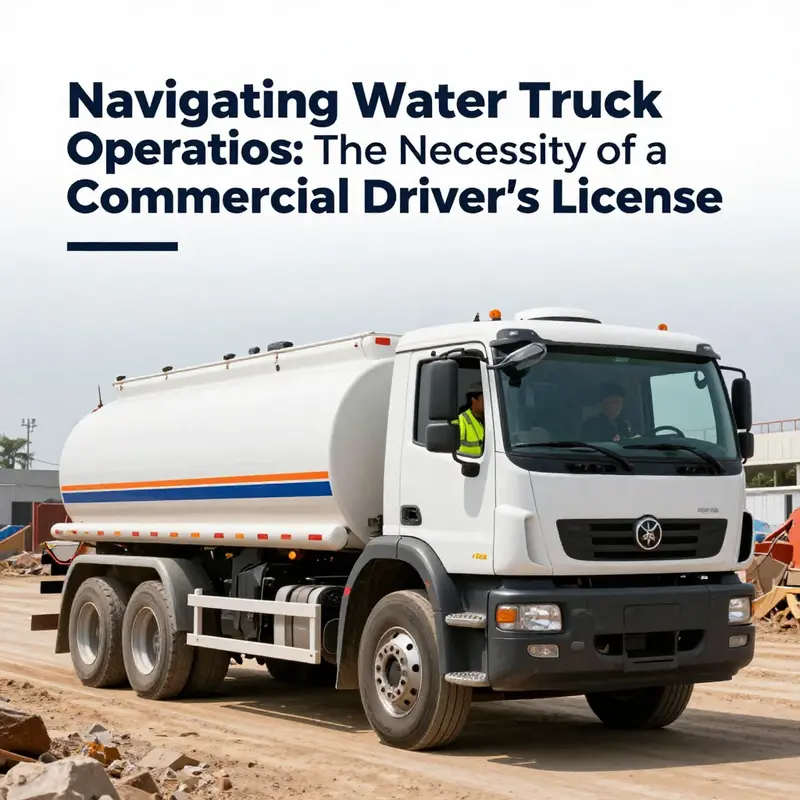
Understanding the role of a Commercial Driver’s License (CDL) when operating a water truck means recognizing how law, safety, skill, and employer expectations intersect. A water truck may look straightforward: a chassis, a tank, and a hose. In practice, it is a mobile tank system carrying thousands of pounds of liquid. That liquid changes the vehicle’s behavior in real time. The CDL exists to ensure drivers understand and can manage those changes.
A CDL is a legal gatekeeper. Federal rules create a baseline for who must hold a CDL. Any vehicle with a gross vehicle weight rating (GVWR) of 26,001 pounds or more requires a CDL to operate. A driver who tows a trailer heavier than 10,000 pounds also needs a CDL. Many water trucks fall into those categories because they carry heavy tanks and full water loads. States may add their own requirements. Driving without a required CDL risks fines, license suspension, and job loss. It also increases liability after an incident. In short, legality is the first, non-negotiable reason a CDL matters.
Beyond legality, the CDL verifies training. The CDL process tests a driver on knowledge and skills specific to commercial operation. Candidates must pass written knowledge exams and behind-the-wheel skills tests. These exams cover vehicle inspection, basic control skills, and on-road driving. They also introduce commercial vehicle safety concepts that simple passenger licenses do not address. For drivers of water trucks, that training translates into practical preparedness for challenges they encounter every shift.
Water trucks present unique handling dynamics. The liquid load shifts, creating momentum and changing the center of gravity. Those shifts make braking distances longer and steering less predictable. A sudden lane change with a partially full tank can result in violent surges. A CDL curriculum includes lessons on weight distribution and load effects. Drivers learn how to anticipate the tank’s behavior, how gradual maneuvers reduce surge, and how proper filling and baffle maintenance minimize liquid movement. Those skills reduce rollover risk and improve control under braking.
Specific endorsements and classifications matter. CDLs come in three classes. Class A covers combinations of vehicles where the towed unit exceeds 10,000 pounds. Class B covers single vehicles with GVWR of 26,001 pounds or more. Class C applies to smaller commercial vehicles designed to transport fewer than 16 passengers or carry hazardous materials. Water trucks often require Class B, but when the water truck is towing significant equipment, Class A becomes necessary. Additionally, a tanker endorsement is common where a specialized test confirms a driver understands liquid cargo behavior. A tanker endorsement, sometimes combined with other endorsements, signals deeper familiarity with tank vehicles.
Regulatory compliance goes beyond the CDL itself. Water truck drivers are usually subject to commercial motor vehicle regulations involving hours of service, drug and alcohol testing, and medical fitness. Drivers must hold a valid medical examiner’s certificate after passing a DOT physical. Employers often enroll drivers in random drug and alcohol testing pools. These rules protect public safety and ensure drivers maintain fitness for duty. For employers, a properly licensed driver helps meet insurance and contract requirements, reducing exposure to regulatory fines and civil claims.
On the job, a CDL shapes daily routines. Pre-trip inspections are more thorough for commercial drivers than for passenger car operators. A water truck driver inspects the tank mounts, baffles, hoses, valves, and chassis points. They verify that baffles are intact and that fill and discharge lines function properly. They check for leaks and confirm securement of any towed gear. The CDL skills test emphasizes these inspections, and employers expect drivers to perform them consistently. A missed sign of a failing baffle or leaking valve can escalate into a loss of control or environmental release, demonstrating how licensing and inspection culture connect.
Skill development under a CDL includes emergency response. A water truck driver may face sudden hazards: a tire failure under load, a hydraulic leak, or loss of braking power on a downhill grade. The training teaches controlled braking techniques, emergency lane selection, and recovery strategies. Handling a tank with sloshing liquid during an evasive maneuver is different from handling a dry vehicle. The CDL prepares drivers to think ahead and react in ways that reduce the chance of a crash.
Employer expectations extend the CDL’s role. Many hiring managers list a Class A CDL as a minimum for water truck roles. They may require prior tanker experience, a clean safety record, and references. Some companies provide on-the-job training to bridge the gap between a new CDL holder and a fully competent water truck operator. Others require certifications in additional areas, such as confined space awareness for certain municipal duties. For drivers aiming to build a career, the CDL is the foundation. It opens access to routes, higher pay, and stable positions in construction and municipal fleets.
Insurance and liability considerations make licensing essential. Commercial insurers rate policyholders based on driver qualifications. A driver without a required CDL, or without relevant endorsements, can void coverage. After an incident, insurers scrutinize licenses and training records. A valid CDL and a documented training record strengthen a company’s defense and reduce financial exposure. Conversely, lacking a CDL not only triggers legal penalties but can also jeopardize insurance recovery for damages or medical claims.
State rules add nuance. Some jurisdictions allow limited operation of smaller water trucks without a CDL if the GVWR falls below federal thresholds. For municipal fleets, exceptions sometimes exist for vehicles used exclusively within city limits. However, that flexibility does not mean safety can be ignored. Employers frequently require a CDL even when the law would not. Their reasoning is simple: licensed drivers are less likely to cause accidents and more likely to meet client and insurer expectations. When planning training or hiring, check both federal and state rules to ensure full compliance.
Beyond basics, the CDL influences operational practices. Proper tank filling strategies reduce surge effects. Drivers are trained to manage fill levels relative to route demands. Partial fills can be safer in some scenarios, but they also increase slosh potential. A full tank raises weight and braking distance. Drivers must balance those factors against route constraints, soil conditions on work sites, and payload limits. Those operational decisions require both technical understanding and situational judgment learned through CDL study and on-the-job experience.
Maintenance culture improves with licensed drivers. Commercial drivers learn the value of daily checks and reporting. When drivers spot worn hoses, corroded fittings, or failing baffles, they report issues before breakdowns occur. This behavior reduces downtime and prevents accidents caused by mechanical failure. Employers gain a more reliable fleet, and drivers protect their safety and that of others. Licensing institutionalizes this inspection mindset.
Career progression ties back to the CDL. Water truck operation can be an entry point into broader trucking roles. A Class B driver might move to Class A after gaining experience and additional training. Some operators expand into hauling other liquid commodities or into construction hauling where different endorsements apply. The CDL is the credential that makes mobility between roles possible. Drivers who invest in endorsements and continued learning often earn promotions and higher pay.
Training beyond the CDL adds value. Many companies provide targeted training on tank maintenance, anti-surge systems, and site-specific procedures. Drivers who pursue such training become assets for their employers. They help design safer loading procedures and advise on route planning that minimizes risk. In hazardous environments, employers may require additional certifications. For those looking for steady work, combining a CDL with specialized training creates competitive advantage.
The workforce picture is evolving. Industry trends affect the demand for licensed water truck drivers. Market cycles in construction, municipal budgets, and environmental projects determine job availability. Drivers who hold CDLs position themselves to take advantage of these cycles. For context on broader labor trends and market recovery signals in trucking, see the piece on 2024 trucking job recovery: stabilization signals hope (https://truckplusllc.com/2024-trucking-job-recovery-stabilization-signals-hope/). That overview helps explain why maintaining a CDL and staying current pays off.
Safety incidents underscore the CDL’s role. Accident reports often cite improper load management, insufficient inspections, or inadequate driver training. Tankers are particularly unforgiving when a rollover occurs. The heavy, shifting mass amplifies consequences. A trained CDL driver reduces these risks through proper technique and decision-making. Licensing reduces but does not eliminate risk. Continued vigilance, maintenance, and training are equally important.
Operational policy reflects the CDL’s significance. Companies typically create policies that require drivers to present their license and medical certificate at hire. They add provisions for periodic checks and mandate participation in safety meetings. Performance monitoring, such as telematics, often measures speed, braking, and route adherence. These systems protect assets and encourage safer driving behavior. The CDL anchors these policies by providing a baseline qualification for entry and progression.
Community and environmental considerations matter too. Water trucks often work on public projects, where municipal rules and environmental protections apply. Drivers must understand how to prevent runoff, avoid contamination, and respond to spills. While water is benign, additives or contaminants can complicate a release. A CDL-trained driver knows how to secure the scene, notify authorities, and follow spill response protocols required by employers and regulators.
In practical terms, what should a person planning to drive a water truck do? First, confirm the vehicle’s GVWR and towing needs to determine required CDL class. Second, pursue the appropriate classes and endorsements, including the tanker endorsement. Third, obtain a DOT medical certificate and enroll in random drug testing if required. Fourth, seek practical experience under a qualified mentor. Finally, document inspections and training modules to demonstrate competence and compliance.
A final reality: while some small, non-commercial water trucks can be driven without a CDL, employers and clients favor licensed operators. A CDL offers legal compliance, improved safety, and career mobility. It is the professional standard that transforms a competent driver into a trusted commercial operator. For anyone serious about water truck work, the CDL is not optional. It is the credential that turns a job into a responsible, regulated, and professional vocation.
For additional practical steps and a clear path to becoming a water truck driver, refer to this external guide: https://www.indeed.com/career-advice/finding-a-job/how-to-become-a-water-truck-driver
The Licence to Move Water: CDL Pathways, Endorsements, and Compliance for Water Truck Operations
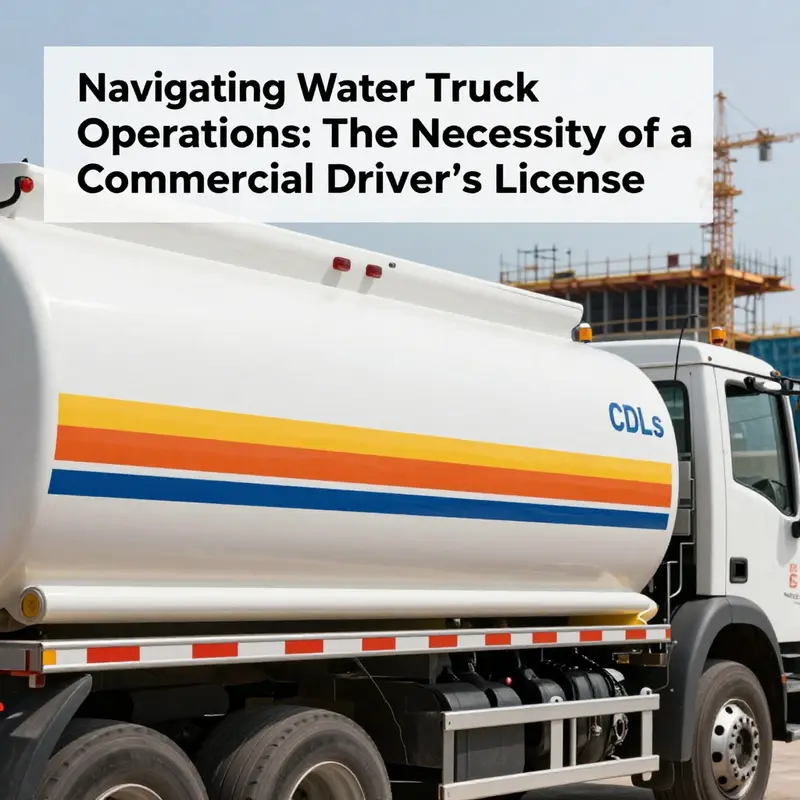
Water trucks are more than just big vehicles with large tanks. They sit at the intersection of logistics, safety, and environmental stewardship. The question of whether a commercial driver’s license (CDL) is needed to operate a water truck cannot be answered with a simple yes or no; it depends on the vehicle’s weight, configuration, and how the job is structured. Yet across most regions, the default assumption in fleets that move large volumes of liquid is that a CDL is required, often a Class A, and at a minimum, a Class B for smaller configurations. This isn’t just about following a rule; it is about ensuring that drivers have the training to control a heavy, top-heavy liquid load, understand the physics of liquid movement inside a tank, and are prepared to respond to spills, equipment failures, or sudden changes in road conditions that could destabilize a tank. In practice, the licensing framework lays the foundation for safe operation and regulatory compliance, while endorsements and additional training tailor the license to the specialized risks of liquid cargo and water-specific applications. The terrain of water truck work—dust suppression on construction sites, dust control in mining areas, irrigation support in agricultural settings, or distribution to municipalities and industrial facilities—amplifies the need for precision, not just horsepower. In those environments, the license becomes a corridor to responsible practice, a credential that signals preparedness to manage a vehicle whose handling characteristics evolve with fuel load, water temperature, and the shifting center of gravity as water moves within its own tank. The licensing equation begins with weight. Federal and state authorities set thresholds that determine whether a commercial license is required at all and, if so, which class applies. Vehicles that exceed 26,000 pounds gross vehicle weight rating (GVWR) typically require a Class A CDL, the broadest credential that covers the heaviest combinations of vehicle and trailer. For lighter water trucks, a Class B CDL might suffice, provided the vehicle’s GVWR remains below the stringent cutoff and the configuration does not demand the more expansive training that Class A entails. The practical implication is straightforward: larger loads, more complex powertrains, and a higher risk profile demand deeper training and stricter oversight. But licensing is only the doorway. Once a driver steps into the job, endorsements unlock the specific capabilities and responsibilities that come with moving liquids in bulk. The most common endorsement for water trucks is the Tanker Endorsement, which certifies that the driver understands the dynamics of liquids in tank compartments, including how liquids slosh under braking, acceleration, and turning. Sloshing is not a mere nuisance; it is a real force that can alter the vehicle’s center of gravity and affect braking distances and cornering stability. Tanker training covers payload management, proper tank inspection, safe loading and unloading practices, and the specialized checks that prevent leaks, spills, or contamination. In some contexts, fleets may require a Hazmat Endorsement if the water includes additives or if the work touches substances that are considered hazardous. While water itself is typically not hazardous, the additives used for dust suppression, treatment, or pH stabilization can bring hazmat considerations into play. In those cases, the Hazmat Endorsement adds layers of background screening, additional training on material safety data sheets (MSDS), and heightened security and handling procedures. The precise endorsement requirements and whether Hazmat is necessary depend on state law and the specifics of the job site. This is not a rigid checklist but a living framework that fleets must interpret in concert with state licensing offices and the FMCSA’s regulatory guidance. The operational standards that accompany licensing are where the daily practice of water truck work begins to take shape. Even with the right license and endorsements, the driver must operate under a comprehensive set of rules designed to safeguard people, property, and the environment. Pre-trip inspections form the frontline defense: a thorough walk-around to verify brakes, tires, lights, fluid levels, and the tank’s integrity. For a water truck, inspection efforts also focus on tank seals, containment features, and any instrumentation that monitors water temperature, pressure, and flow. A successful pre-trip inspection reduces the probability of environmental incidents, such as spills or leaks, and helps prevent mechanical failures that could strand a crew in remote locations. Beyond the pre-trip ritual, safe driving practices become a driver’s daily discipline. Adapting speed to load and road surface, maintaining ample following distances, and planning routes that avoid sharp corners, steep grades, and low-clearance obstacles are essential. Because the water inside a tank can shift with every maneuver, the driver must anticipate how body dynamics will affect steering, braking, and stability. This is not merely technique but an orientation toward risk reduction. The hours-of-service framework, established by the FMCSA, governs the rhythm of work and rest to prevent fatigue-related errors. In the water truck domain, fatigue can amplify the risk of a slip, a misjudged turn, or a delayed response to a sudden hazard. Fleets commonly structure shifts to ensure drivers have adequate rest breaks and to align with site-specific demands, whether a municipal water delivery schedule or a mining operation that runs around the clock. The combination of licensing, endorsements, and daily operating standards is designed to produce a workforce capable of meeting strict safety expectations while delivering essential services that keep communities hydrated, dust suppressed, or crops nourished. The environmental and regulatory responsibilities associated with water truck operations extend beyond the cab. In many settings, water delivery must respect local environmental regulations that govern containment and spill response. A water truck operator carries not only cargo but potential environmental risk. A missed containment plan or an inadequate spill response could trigger fines, regulatory actions, or costly cleanup. Thus, training increasingly emphasizes not just how to drive but how to respond to environmental contingencies. This training includes immediate containment steps, notification procedures, and the documentation necessary to trace source water origins, delivery points, and volumes conveyed. Keeping meticulous records supports both environmental compliance and operational accountability. The licensing framework, therefore, must be viewed as part of a broader culture of safety, rather than a static credential. Employers typically require ongoing training, periodic refreshers on regulatory changes, and demonstrations of proficiency with the vehicle’s systems. In practice, this means that the driver’s growth continues after the initial CDL license is earned. Fleet safety programs, internal audits, and periodic skill checks help ensure that drivers stay current with evolving standards, new equipment, or shifts in regulatory expectations. The result is a workforce that can adapt to different job sites, each with its own set of local rules and environmental considerations. When a driver moves from one site to another, the relevancy of the CDL class and endorsements remains, but the specific regulatory and operational practices may shift. The success of water truck operations depends on how well these drivers translate general licensing into site-specific execution. The licensing backbone supports a career path that typically begins with formal training at a commercial driver’s education program or a vocational school, followed by hands-on instruction with a qualified mentor. Prospective water truck operators often seek roles that emphasize the stability of municipal or industrial contracts, but they may also explore opportunities in construction, mining support, and agricultural applications where water distribution or dust control is essential. Each path has its own cadence of training, assessment, and compliance checks. For those who are contemplating a career in this field, the licensing conversation is not a one-time event. It’s a continuous alignment of the driver’s qualifications with the demands of the work environment. A driver might start with a Class B license for mid-sized water trucks and later upgrade to Class A as job responsibilities expand to heavier configurations, longer routes, or more complex support tasks. Endorsements often come in stages; employers may require Tanker Endorsements upfront, while Hazmat qualifications may be added later if the job includes hazardous additives. The practical implications extend to the employer side as well. Fleets invest in training resources, safety programs, and compliance systems, all of which serve to reduce the likelihood of incidents and to optimize the efficiency of water delivery operations. A compliant operator reduces risk not only for the driver but for the entire team, including site managers, equipment operators, and the communities served by the water delivery program. In keeping with the broader regulatory landscape, manufacturers and equipment producers are continually refining tank designs, braking systems, and monitoring technology to improve safety and efficiency. Industry discussions around emissions, fleet performance, and regulatory clarity influence how water trucks are built, tested, and operated. For instance, fleet operators increasingly seek clarity around how emissions regulations, vehicle technologies, and real-world operating conditions intersect with the water transport mission. These conversations underscore that the CDL decision is not a narrow technical choice but a strategic one, determining which kinds of jobs a driver can perform, which routes are feasible, and how a company can maintain compliance while meeting operational goals. The internal alignment between licensing, endorsements, and regulatory expectations is therefore central to confidence on the road and on the job site. A driver who can articulate how Tanker Endorsement affects loading procedures, braking behavior with a full tank, and spill prevention strategies demonstrates not only competence but also a commitment to stewardship in a role that touches public safety and environmental protection. In the broader market context, the water truck segment is influenced by trends in infrastructure projects, mining activity, agriculture cycles, and municipal water initiatives. When work surges, fleets may push for faster credentialing, but they cannot compromise on the integrity of licensing or the rigor of training. Conversely, slowdowns offer spaces for training and certification updates, ensuring the workforce remains ready for the next cycle of demand. The regulatory standards governing water truck operations are not static; they evolve as technologies advance, as environmental expectations shift, and as the regulatory agencies refine their guidance. The resulting dynamic creates a continuous learning path for drivers and for the fleets that hire them. This is why even as the core licensing requirements provide a clear framework, the practical reality of water truck operations rests on a blend of discipline, foresight, and adaptive safety culture. For readers seeking more structured guidance on how to pursue this path, industry guidance and job postings often emphasize CDL class expectations and endorsements as part of the job description. The emphasis is not merely on passing a test, but on building a reliable skill set that translates from classroom concepts to on-the-road judgment and site-specific procedures. The career journey is thus a blend of formal licensing, hands-on experience, and ongoing compliance discipline. As you consider your own trajectory, remember that the goal of licensing is not only to satisfy a legal requirement but to enable a safe, efficient, and responsible service that communities rely on for water supply, dust suppression, irrigation, and industrial processes. The documentation you accumulate—licenses, endorsements, training certificates, and incident-free driving records—becomes your professional reputation within the industry. It is the quiet, daily discipline of pre-trip checks, route planning, and spill response that turns a heavy tank into a well-managed resource rather than a liability. And while the regulatory framework can seem intricate, it ultimately serves a simple outcome: ensuring that those who operate water trucks are prepared to protect people, property, and the environment while delivering essential services with reliability and care. If you want to explore the regulatory nuance further and see how fleets are interpreting the rules on an ongoing basis, you can read about OEMs seeking clarity in emissions regulations, which reflects the broader trend toward aligning vehicle design, regulatory expectations, and real-world operations: OEMs seek clarity in emissions regulations. Within this chapter’s context, such discussions illustrate how licensing intersects with evolving standards and technology, reinforcing the idea that the CDL decision is a doorway to an adaptable career rather than a fixed endpoint.
External resource for further exploration on licensing pathways and professional preparation: https://www.indeed.com/career-advice/finding-a-job/how-to-become-a-water-truck-driver
Who Can Drive a Water Truck: Licenses, Qualifications, and Job Paths
Licensing, compliance, and where the jobs are
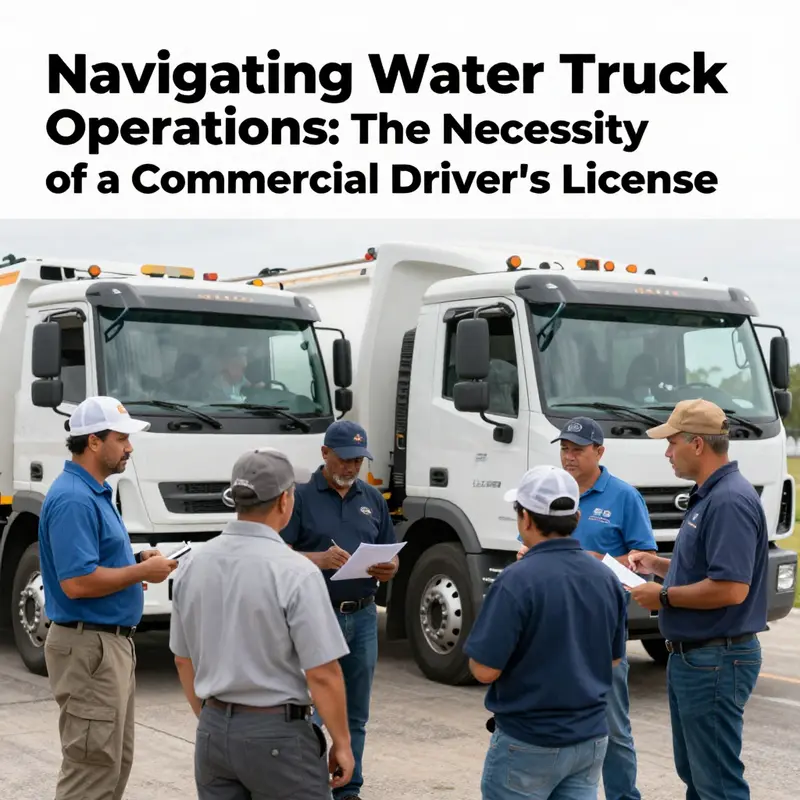
Operating a water truck sits at the intersection of commercial driving, municipal services, and construction support. These vehicles carry large volumes of liquid. Their size and payload put them squarely under commercial vehicle regulations in many places. That means a standard driver’s license is often not enough. The specific license depends on vehicle weight, local law, and the nature of the work. Understanding the mix of licensing, professional qualifications, paperwork, and market demand helps anyone considering this career make practical choices.
A clear starting point is the vehicle’s gross vehicle weight rating, or GVWR. Many jurisdictions draw licensing lines at specific GVWR thresholds. If the truck and its load stay below a certain threshold, a non-commercial license can suffice. Exceed that threshold, and a commercial credential becomes mandatory. In several regions, water trucks rated up to roughly 14 tons can be driven with a mid-level commercial license, commonly called Class B1. Vehicles that exceed about 14 tons typically require a heavier class, often termed Class B2, which covers large, heavy, and specialized work trucks. In some cases, employers may list higher classes, like A1, for articulated or combination vehicles, though standard water trucks rarely need that level.
Beyond the license category, many areas require a Road Transport Professional Qualification Certificate or a similar professional credential. This certificate is not a general driver’s permit. It demonstrates that the driver has completed formal training in traffic law, safe driving, vehicle maintenance basics, and environmental protection measures. It may also require a professional examination administered by a local transport authority. The goal is to make sure drivers of commercial vehicles understand the broader responsibilities that come with moving high-mass loads through public spaces.
Drivers must also manage vehicle documentation. Vehicle registration proves legal ownership and roadworthiness. Commercial operations often need an additional operating permit or business license when trucks serve municipal or contract purposes. Accident records and inspection logs may be required on demand. Employers typically expect drivers to know where to find and how to present these documents during inspections.
Health and fitness are practical components of qualification. Commercial drivers often face periodic medical examinations. Good vision, steady coordination, and the ability to perform basic maintenance checks are essential. Employers may require records showing no recent major traffic convictions, a clean driving history, and a minimum period free of license points. Age limits can apply, too. Some postings set upper age limits between 60 and 65, based on local retirement policies and insurance rules.
Licensing detail varies by country and region. In the United States, classes A, B, and C define commercial privileges based on vehicle type and weight. In other countries, the labels change but the principle remains: heavier vehicles require higher certification. Always verify local rules before assuming a particular license will be accepted. Local transport authority websites and official guides are the best sources for up-to-date rules. For practical steps on how to become a water truck driver, one useful guide can be found here: https://www.indeed.com/career-advice/finding-a-job/how-to-become-a-water-truck-driver
The work itself is straightforward in description but demanding in practice. Water truck tasks include street washing, dust suppression, compact site watering, and irrigation of public green spaces. Drivers may operate sprinklers, boom systems, and rear discharge valves. They often position the truck in tight urban spaces or on unstable, dusty construction sites. Maneuvering a full tank requires careful speed control and braking. Sudden turns or abrupt braking can cause water surge, affecting vehicle stability. That makes skillful driving and an understanding of load dynamics critical.
Many employers also expect basic mechanical competence. Regular checks of tires, brakes, lights, and pumps can prevent breakdowns and accidents. Drivers usually carry out pre- and post-shift inspections to log defects. Employers may provide in-house training on the truck’s specific water-handling systems. Familiarity with pump operation and basic leak diagnosis is a plus on job applications.
Employment opportunities for water truck drivers come from several sectors. Municipal governments hire drivers for public works duties such as road washing and dust control. These positions are often steady and include benefits. Private environmental services companies contract with municipalities and private clients to provide cleaning and dust suppression. Construction firms employ water trucks for site dust control. Industrial sites may hire drivers for process or dust suppression duties. Each of these sectors has a slightly different expectation for experience and physical demands.
Job postings commonly specify experience requirements. A history of three or more years driving heavy vehicles is often preferred. Recruiters look for drivers who can demonstrate safe reversing, precise positioning, and care when working near pedestrians or equipment. Many roles require working outdoors, sometimes in extreme heat or cold. Candidates should be willing to work early shifts and variable hours. Weekend or on-call duty is common for municipal services during special events or emergencies.
Compensation varies widely. Urban centers and regions with higher living costs pay more. Regional examples illustrate scale. In some cities, water truck drivers earn modest salaries reflecting local market rates. In other places, such as growing industrial hubs, pay can be significantly higher. In Foshan, China, for instance, advertised salaries range from 4,000 to 8,000 RMB per month, depending on experience and license level. These figures help illustrate regional variation rather than set expectations for other markets.
Training pathways can accelerate entry. Vocational schools and community colleges often offer commercial driving courses. These programs provide classroom instruction for rules and hands-on vehicle control. Many courses include preparation for the professional qualification certificate. On-the-job apprenticeships also exist. New drivers can begin as assistants or in support roles that allow them to learn pump operation and site protocols before taking the wheel.
Employers often value soft skills as well. Good communication helps drivers coordinate with site managers and municipal staff. Reliability and punctuality matter because many tasks are scheduled at times when dust or traffic conditions require attention. Problem-solving is useful for navigating site-specific challenges. A driver who can calmly handle equipment faults or unexpected road closures adds value beyond basic vehicle operation.
Safety is a continuous theme. Water trucks operate in environments with pedestrians, equipment, and heavy traffic. Drivers must follow strict safety protocols. That includes wearing personal protective equipment when required, using spotters during complex maneuvers, and employing traffic control measures, such as cones or signage, where necessary. Routine maintenance reduces the chance of failures that put operators and the public at risk. Employers often document safety training and expect drivers to participate in refresher courses.
Insurance and liability shape hiring and operational practices. Commercial policies for water trucks account for the vehicle’s size and the risk of damage from the cargo. Insurance can be more expensive if a driver’s record shows recent incidents. Companies therefore prefer low-risk drivers and may offer incentives for maintaining a clean record. Drivers who can provide proof of safe operation increase their chances of hire and better terms.
Regulatory monitoring can include periodic inspections. Vehicles may be checked for roadworthiness, emissions compliance, and secure cargo systems. Some municipalities require additional permits for certain operations, such as street washing that affects drainage or water use. Environmental rules can control where and when water is used, especially in drought-prone areas. Drivers should know relevant restrictions and report any regulatory updates to their supervisors.
Advancement in this field often moves through experience and certification. A driver who gains additional endorsements, such as those for towing or specialized equipment, can qualify for higher-paying roles. Supervisory positions become available for drivers who demonstrate leadership and an ability to schedule teams, maintain records, and manage client relationships. Training other drivers is another career path, especially for experienced operators with strong safety records.
Recruitment channels differ by sector. Municipal roles are typically listed on government career portals. Private companies use general job boards and industry-specific sites. Networking within local unions or driver communities helps, too. Industry reports suggest demand for skilled drivers rebounded in recent years, producing more opportunities. For a wider view of how trucking employment trends affect hiring and job stability, see this overview of recent job recovery and stabilization in the trucking sector: 2024 trucking job recovery and stabilization signals.
Practical tips for candidates improve chances of success. First, verify local licensing thresholds and obtain the correct commercial class. Second, secure any professional qualification certificates required in your area. Third, maintain a clean driving record and gather references from prior employers. Fourth, develop basic mechanical and pump-handling skills. Fifth, prepare for physical demands and variable schedules. Finally, document all training and inspections you complete.
Employers also benefit from clear hiring practices. Including precise licensing and experience requirements in job posts reduces mismatches. Offering paid training for pump and equipment operation widens the candidate pool. Clear safety protocols and documented maintenance schedules reduce downtime and improve retention. Companies that invest in driver development tend to retain more skilled operators.
Regulatory updates and market signals can change the landscape quickly. New weight limits, emissions standards, or municipal ordinances can shift what licenses and permits are required. Drivers and employers must stay informed through official transport authority announcements. Keeping training current helps ensure compliance and safety.
Water truck work combines technical skill, operational awareness, and physical effort. It offers steady employment across public and private sectors. Licensing is the gateway, and the specific credentials depend on vehicle weight and local rules. Professional certification, consistent safety practice, and a clean record open doors to stable municipal roles and contracting opportunities. For step-by-step guidance on certification and early career planning for water truck drivers, consult this practical resource: https://www.indeed.com/career-advice/finding-a-job/how-to-become-a-water-truck-driver
Final thoughts
The necessity of a Commercial Driver’s License in the operation of water trucks is underscored by regulatory mandates, safety considerations, and operational efficiency. For logistics and construction companies, understanding and adhering to licensing requirements not only protects the business from legal ramifications but also contributes to a safer working environment. As the demand for skilled water truck operators continues to grow, investing in proper licensing becomes a crucial step for business success.