
Finding the right interest rates for commercial truck loans is vital for logistics, construction, and delivery service operators. The financial landscape can be daunting, with varying rates based on lender policies, market conditions, and borrower qualifications. This article will guide you through the essential points on how to claim commercial truck interest rates effectively. We will explore ICBC’s offerings, available online platforms for rate claims, factors that influence your rates, and provide a comparative analysis of various lending options. Each chapter aims to equip you with the necessary tools to secure favorable financing terms that cater to your industry demands.
Decoding ICBC’s Commercial Truck Interest Rates: How to Claim the Best Rate for Your Fleet
In the world of commercial trucking, every percentage point can ripple through a fleet’s bottom line. Interest rates for truck loans are not a fixed treasure chest you unlock once and forget; they are living, policy-driven figures that hinge on a lender’s rules, the borrower’s profile, and the market tempo. When you set out to claim a rate for a commercial truck loan—whether to purchase a new rig, replace an aging tractor, or refinance an existing obligation—your first move should be to chase information through official channels. The landscape around ICBC, China’s largest state-backed banking group, illustrates how rate setting is meant to work in practice: the base cost of money is anchored to a benchmark set by the central bank, and individual quotes are layered on top with risk and credit considerations. The most reliable way to understand where you stand is to start from the source, then triangulate with official tools and, if needed, careful market comparisons.
ICBC’s policy framework for personal commercial vehicle loans places the base rate for the loan term in line with the People’s Bank of China’s benchmark rate for the same period and category. In other words, you should expect the rate to reflect a stable anchor rather than a generic, one-size-fits-all figure. No downward adjustment is implied in the policy; instead, banks may adjust upward based on risk assessment and customer qualifications. This distinction matters because it helps you calibrate expectations before applying, rather than chasing a magical promotional rate that may not be available to you. The actual rate a borrower ends up paying is a negotiation surface where credit history, loan size, vehicle type, and term all intersect with the bank’s current risk appetite.
For anyone weighing options, the official channels are your most reliable navigational aids. On ICBC’s official site you can locate the Personal Commercial Vehicle Loan section, which is designed to present the terms in a straightforward, up-to-date format. The site acts as a durable reference point, but a true reading of cost comes from a personalized quote—one that reflects your financial standing, the specific vehicle you intend to acquire, and the term you opt for. If you are aiming to maximize transparency, a visit to a branch near you remains invaluable. There, a loan officer can walk you through the nuances of eligibility, the documentation required, and the step-by-step process, translating policy language into a concrete, signed agreement. And because speed matters when you need to secure a fleet’s next asset, ICBC’s online application portals and mobile banking tools are positioned to deliver pre-approval estimates quickly. This combination—official policy, direct dialogue, and digital pre-approval—creates a structured pathway to claim a rate with confidence.
A practical caution accompanies any claim against the sometimes slippery surface of advertised numbers. In the broader market context, you may encounter figures such as 0.58% that circulate in some sources or promotional material. The initial research landscape notes this particular rate with a tone of caution, explaining that such a number could be a promotional offer for a short-term product or, in some cases, an error in the presented data. It is essential to verify such numbers directly through ICBC’s official channels or your local branch before you anchor a decision on them. In other words, treat any rate that seems dramatically out of line with the PBOC benchmark as suspect until corroborated by an explicit quote in your loan agreement.
The actual journey to a rate begins with understanding the key levers that drive what you will be offered. First, your credit status and history weigh heavily. Banks scrutinize your repayment record, any previous defaults or delinquencies, and the overall creditworthiness of the borrower, whether the vehicle is for personal commercial use or part of a broader business fleet. The loan amount and the down payment also shape the quote. A larger down payment tends to translate into a lower risk profile for the lender and can yield more favorable terms. Vehicle type matters as well: a cargo truck with a heavier payload or a specialized configuration may carry different risk levels than a delivery van, and the bank may respond with adjustments to the rate or the structure of the financing. The loan term is another pivotal variable. Within ICBC’s framework, loans for commercial vehicles commonly run up to three years, but trucks, particularly freight-focused models, are often capped at two years. The policy note that no extension beyond these term limits is allowed is not merely bureaucratic; it shapes the amortization schedule you will carry and, by extension, the total interest paid across the loan’s lifetime. Collateral—namely, the vehicle itself—plays a protective role for lenders and a predictable one for borrowers, because the vehicle serves as a tangible asset supporting the loan. When collateral requirements are straightforward, the path to favorable pricing can become clearer, especially for established operators with a traceable cash flow.
In practice, the rate you receive is confirmed in the lease or loan agreement after a thorough review of your profile. This is where the message of policy alignment with the benchmark becomes concrete: your stated rate will reflect the benchmark rate, adjusted for the borrower’s risk, and implemented in the formal contract. The certainty here is that you will not see a rate that drifts downward in the absence of a special promotional tool; what you are likely to see is a rate that moves in line with the central bank’s benchmark, plus a premium that reflects assessed risk. For fleet operators, this dynamic underscores the importance of presenting a robust financial story. A business with a diversified revenue stream, stable cash flow, and transparent books often earns more favorable treatment because the lender views the risk as manageable.
What does this mean for the process of claiming and locking in a rate? It means you should approach the journey with a blend of preparedness and patience. Start by visiting the ICBC Personal Loan Page, paying attention to the section dedicated to Personal Commercial Vehicle Loans. Read the current terms, the listed eligibility criteria, and the required documents. Gather your company’s financial statements, tax filings, a list of assets, and any existing debt obligations that could influence debt service calculations. Have a clear understanding of the vehicle’s specifications: the make, model, payload, expected usage, and the anticipated purchase price. All of these factors will feed into the pre-approval or the final rate offered. If you decide to push forward, you can also initiate an online pre-approval through ICBC’s portal or their mobile app. This step gives you a snapshot of estimated monthly payments at various rate points and with different terms, which can be invaluable when you’re comparing offers or briefing fleet managers.
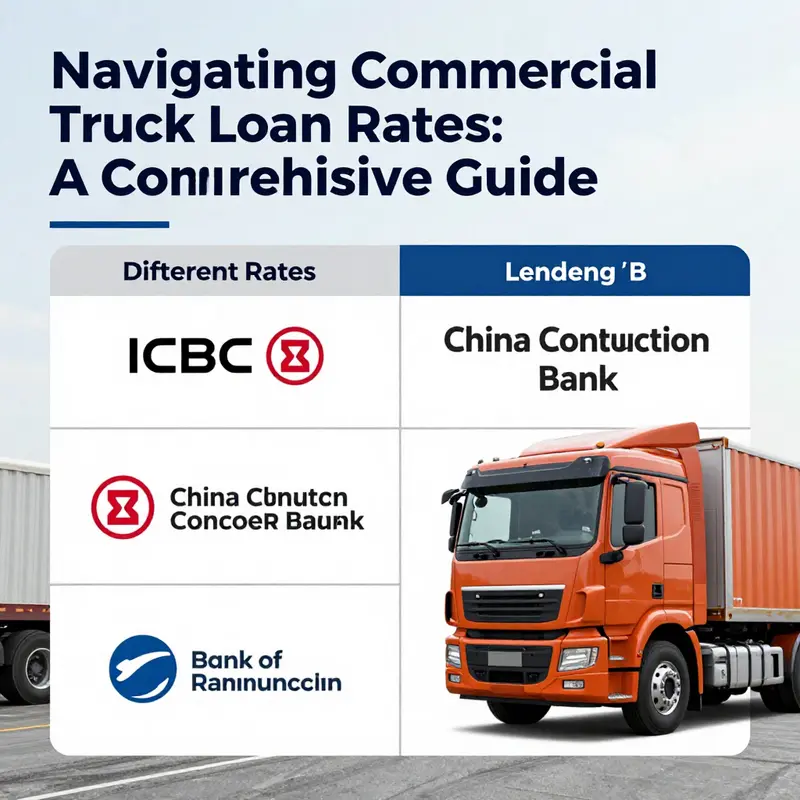
Beyond the ICBC route, it is prudent to benchmark your options against other major banks that provide commercial vehicle financing. Institutions such as China Construction Bank or Bank of Communications are commonly cited as offering competitive financing, and comparing their terms can sharpen your negotiating position. The practice of price comparison is aided by objective tools that simulate monthly payments, which helps you understand how a given rate translates into dollars per month and total interest over the life of the loan. If you use third-party calculators and comparison platforms, make sure you input the correct term length, down payment, and any applicable fees so your result matches what you would see in a formal quote.
The process of securing the best rate is not only about the numeric price but also about the total cost of borrowing. Hidden fees, mandatory insurances, and compulsory vehicle registration fees can significantly alter the overall cost, even if the headline rate looks favorable. It is critical to obtain a comprehensive disclosure package and to review it with care before signing. Reading the terms aloud in your own words, cross-checking the numbers, and ensuring that the rate shown in the contract reflects the rate you were promised during pre-approval are essential steps. This diligence reduces the risk of a disconnect between what you thought you were signing and what ends up in your signed agreement.
As you navigate the claims process, you can take advantage of direct communication channels to maintain clarity. If there are questions around eligibility or nuanced terms, a call to the official ICBC hotline can set expectations and correct misunderstandings early in the process. The combination of official policy, branch consultation, and online tools creates a robust system where you can tailor a financing solution to your fleet’s size and operational profile. If your business operates across multiple regions or requires cross-border logistics, you may also want to consider how cross-regional financing policies or currency risk factors could influence pricing and risk allocations. While ICBC’s policy framework provides a stable pricing anchor, regional practices and the borrower’s profile can inject practical variability.
For readers seeking a longer view on how macro trends influence rates and the demand for trucks and trailers, consider the broader picture of trucking economics. Trends in freight volumes, fuel costs, and fleet utilization can shift the supply of credit and the willingness of banks to price risk aggressively. Acknowledging these dynamics is important because they affect your strategy when you shop for rates. A more favorable rate today may be accompanied by slightly stricter terms or different collateral expectations, whereas a more cautious market may present a premium but longer-term stability. In this sense, rate shopping is not a one-off exercise but an ongoing conversation with lenders that aligns with your business plan and equipment lifecycle.
To weave these ideas into a practical mindset, imagine walking through a day of rate discovery. You start at the official ICBC site, where you locate the Personal Commercial Vehicle Loan page. You read through the current general framework, noting that the base rate tracks the PBOC benchmark, and you collect the list of required documents. You schedule a branch visit for a personal consultation and, in parallel, you set up a pre-approval in the online portal to capture an estimate range. You discuss your credit history with the loan officer, who may pull a credit report and evaluate your debt service coverage ratio. You present your down payment plan, the specifics of the vehicle, and any business context that paints a picture of stability rather than risk. With these inputs, ICBC can calibrate a rate that mirrors the benchmark with an appropriate risk premium, producing a formal quotation for your review. The moment you sign the loan agreement, you will see the exact numbers, the term, the monthly payment, and the total interest payable over the life of the loan. It is in this moment that the abstract policy becomes a concrete financial commitment.
If your goal is to optimize the rate further, keep a few strategies in mind. First, maintain a credible credit profile by addressing any blemishes and ensuring timely payments across all credit obligations. A larger down payment reduces the bank’s risk and often translates into a more favorable financing rate. Consider the vehicle type and anticipated utilization; selecting models with lower risk profiles for lenders can lead to incremental improvements in terms. Shorter terms, when affordable, generally increase monthly payments but can help you minimize total interest and secure a rate closer to the benchmark, particularly if the lender’s risk appetite is moderate. Conversely, if liquidity constraints demand longer terms, be prepared for slightly higher overall costs but a more manageable monthly commitment. These trade-offs are central to the decision-making process.
To summarize the practical path forward: begin with official ICBC sources to verify the current policy, signs, and constraints; use the online tools to obtain a non-binding estimate; prepare your documentation for a branch-level assessment; engage in a candid dialogue about your business case and how it mitigates risk; and finally, compare the actual quote against other major banks to ensure competitiveness. The aim is not merely to chase the lowest label but to secure a fair, transparent rate that aligns with your fleet’s utilization, cash flow, and long-term asset strategy. And while the headline figures you see online provide context, your personalized quote will crystallize the actual cost, reflecting your unique financial position and the precise vehicle and term you choose.
For anyone who wants to explore related factors that shape the broader environment of commercial trucking and financing, there is value in examining the industry’s economic trends and how they influence asset pricing and credit appetite. A related discussion, for example, considers how freight demand, trailer orders, and equipment cycles influence capital availability and pricing discipline across lenders. Insights from these pockets of analysis can sharpen your negotiating posture when you walk into a bank with a well-prepared package and a clear plan for asset utilization. If you’re looking to broaden your understanding of these macro dynamics, a useful reference is the ongoing dialogue about trucking economics and trailer orders, which contributes to the context in which lenders price risk and borrowers present their cases. You can explore this narrative in more depth at the linked piece below.
Internal link: To further connect rate decisions with industry dynamics, read about the evolving trucking economics and trailer orders at this resource: Trucking Economic Trends Affecting Trailer Orders.
External resource: For a direct, official source on ICBC’s commercial vehicle loan terms, see the ICBC Personal Commercial Vehicle Loan page. This page provides the current policy framework and the official channel for applying and obtaining personalized quotes: ICBC Personal Commercial Vehicle Loan — Official Page.
Claiming Commercial Truck Rates Online: Platforms, Proof, and Practical Steps
Online channels are now the first stop for many fleets and owner-operators seeking commercial truck loan interest rates. The range of options is wide: official bank portals, aggregator sites that compare offers, dedicated fintech applications, and mobile banking tools that let you initiate pre-approval. Each platform plays a different role. Some provide fast indicative quotes; others enable full applications and contract signing. Understanding what each platform can — and cannot — deliver helps you claim accurate rates and avoid surprises when the formal offer arrives.
Begin by treating online platforms as information gateways rather than final authorities. Lenders must comply with central bank benchmarks and internal credit policies. That means the rate you see on an aggregator may be a headline figure or an estimate based on limited input. When a platform promises an unusually low figure, view it as conditional. Rates on commercial vehicle loans are sensitive to borrower credit history, business cash flow, collateral, loan term, and vehicle type. Online tools that ask only for a few inputs cannot capture every nuance of a lender’s risk assessment. Use these tools to narrow choices quickly, not to finalize terms.
Official bank portals remain the most reliable online source for true pricing. Banks publish product pages that outline eligibility, typical terms, and how their pricing relates to central bank benchmarks. Many also provide calculators that translate an annual interest rate into monthly payments and total financing cost. When you find an appealing online rate, confirm it through the bank’s formal channels. A quick call, a secure message within the bank’s online portal, or a branch visit will reveal whether the online rate is promotional, conditional, or guaranteed. If the bank offers a mobile app with loan management features, it often shows real-time status updates after you submit supporting documents, making the entire claim process transparent and traceable.
Aggregator platforms and brokerage-style sites help you compare. These platforms let you enter loan amount, term, and a few business details, then return matching offers. Their value is speed and breadth. However, aggregators differ in how they display rates. Some show nominal annual rates; others present effective annual rates or monthly repayment estimates. Compare like with like. Confirm whether the displayed figures include fees, insurance, or mandatory product add-ons. Aggregators can also route your application automatically to participating lenders, shortening the time between quote and pre-approval. Use them to assemble a short list of lenders and to gather documentation checklists used by each institution.
Fintech lenders and specialized commercial vehicle financing apps are increasingly common. They usually provide fast pre-approval decisions by integrating alternative credit signals and automated underwriting. This can benefit small fleets with solid payment histories but limited traditional credit documentation. Yet fintech underwriters may price credit differently, applying risk-adjusted margins that vary from bank pricing. If a fintech platform produces a competitive rate, verify the terms and ask how that rate was calculated. Some platforms present a promotional figure for marketing; the actual agreement may include higher margins or shorter fixed-rate periods.
Mobile banking apps deserve special attention. Many primary lenders let registered business customers start an application, upload vehicle documentation, and receive conditional pricing through a secure channel. These apps frequently incorporate personal authentication, which speeds identity verification and reduces document handling. When claiming a rate through an app, keep screenshots or saved confirmations of the rate and the timestamp. Digital footprints matter when a quoted online figure differs from the final loan contract. If a discrepancy arises, the saved record can clarify whether the advertised rate applied to your application.
Accuracy depends on inputs and verification steps. Online calculators and pre-approval forms require consistent data. Enter the same loan term, down payment, and collateral details across platforms to get comparable outputs. If one platform assumes a larger down payment or a shorter maturity, its quoted rate or payment will look better even though it is not directly comparable. Pay attention to the effective interest rate and the inclusion of non-interest costs. Many online summaries highlight the headline rate but hide arrangement fees, service charges, or mandatory insurance that shift the real cost higher.
Regulatory anchors shape the upper and lower bounds of advertised rates. In some markets, lenders must reference a central bank benchmark when publishing commercial vehicle loan rates. That creates a predictable baseline. However, banks may apply upward margins based on their internal risk frameworks. If a platform displays an exceptionally low rate, verify whether it reflects a benchmark-only reference, a limited-time promotional product, or an error. When in doubt, consult the lender’s official site or submit a formal request for rate confirmation.
Document readiness influences the rate you can claim online. Prepare financial statements, tax returns, business registration, and proof of vehicle value before starting any online application. When platforms allow document upload, provide clear, legible files sized within limits. Missing or unclear documents often push a conditional online quote into a higher formal offer. Some lenders increase margins when they lack complete evidence of revenue stability or when the vehicle to be financed is specialized and carries resale uncertainty.
Negotiate when you claim a rate online. Many online quotes are starting points. Use the online pre-approval or quote as leverage in negotiations. If a lender’s portal shows a rate within a range, ask a loan officer or relationship manager whether better pricing exists for stronger collateral or shorter decision windows. When working through aggregator platforms, request that the intermediary present competing quotes side-by-side in writing. Negotiation channels vary: secure messages in a bank app, an email thread, or a recorded phone conversation. Always save the exchange and ask for formal confirmation if the lender agrees to adjust pricing.
Watch for promotional traps. An enticing rate tied to strict conditions occurs often. Promotions might require rapid disbursement, a large down payment, or supplementary banking products. Online platforms may highlight the promotional number prominently but bury the conditions in fine print. Before accepting any online offer, check whether the rate applies for an initial fixed period only, and whether it resets later. Document the exact conditions and the timeline for rate changes.
Ensure platform credibility before submitting sensitive data. Confirm secure connections (look for HTTPS and platform security seals). Prefer platforms that clearly identify participating lenders and provide a way to authenticate quoted figures directly with the lender. Reviews and regulatory registration information help assess credibility. Platforms that promise instant, guaranteed final rates without human verification are a red flag. Reliable sites display a path to escalation, such as contact numbers, a relationship manager, or a query ticket system.
Use the online-to-offline pathway when needed. For complex deals, begin online and finish in person. Many lenders will accept an online submission and then require a branch visit to finalize documentation and sign contracts. This hybrid approach preserves speed and ensures legal and regulatory compliance. If your rate was quoted online, bring a printed or saved copy to the branch and request written confirmation before signing.
When comparing platforms, evaluate total time from quote to disbursement. Speed matters for fleet operators facing time-sensitive deliveries or seasonal demand. Some platforms are optimized for rapid decisions but charge a premium. Others take longer but provide better pricing. Factor in the operational cost of waiting, and use online platforms that align with your timetable.
Keep records of every online interaction. Save screenshots, emails, and reference numbers. These records serve as proof if a discrepancy emerges between an online quote and the final loan contract. Platforms that issue unique quote identifiers or time-stamped pre-approvals add clarity to the process. If a quoted rate vanishes at underwriting, you can present the saved evidence and request a review.
Finally, monitor market signals that influence online advertised rates. Broader industry trends, such as fluctuations in trailer orders and freight margins, affect lenders’ appetite and pricing. Understanding these dynamics helps you interpret online quotes and choose the right time to apply. For context on market pressures, consult analyses of trailer orders and freight margins to see how demand swings influence financing conditions.
For practical next steps, start with a focused comparison on reputable aggregator platforms. Use consistent inputs and gather two or three pre-approval quotes. Confirm the top-choice rate directly through the lender’s secure online portal or customer service. Save all confirmations, then, if necessary, complete the application through the lender’s mobile app or schedule a branch visit to finalize paperwork. If you need a snapshot of how industry demand affects lending, review commentary on how trailer orders impact fleet margins, which helps place lender risk appetite in context: how trailer orders affect truckload margins.
As a reference point for official online information, consult the lender’s primary portal for the most current published terms and conditions: https://www.icbc.com.cn
The Real Drivers Behind Commercial Truck Interest Rates: Reading, Verifying, and Negotiating the Right Price
Understanding the real drivers behind commercial truck interest rates is essential for fleets and independent operators who plan capital purchases. Rates do not exist in isolation. They mirror a blend of policy signals, risk assessments, lender margins, and market volatility. When you ask where to claim or check rates, you are not simply after a number. You are seeking a price that fits your business plan, cash flow, and vehicle usage. This chapter explores the forces that shape price and outlines a practical path to finding and comparing offers without falling prey to myths or misprints. A grounded approach can save thousands over the life of a loan and keep the fleet solvent through cycles of demand.
At the core, the baseline is set by the central bank through benchmark rates for different terms. Lenders typically calibrate their pricing around that baseline and adjust with a spread that reflects risk. There is rarely a downward adjustment below the baseline, except in rare promotional windows or special programs with tight eligibility. More often, the margin rises when the lender perceives higher risk due to weak credit history, thinner cash flow, or uncertain collateral. In this sense, the final quoted rate is not a single number but a composite that combines the policy baseline with the lender’s risk view and the customer’s qualifications. Understanding this helps you frame negotiations and avoid chasing an implausible low rate that does not exist in your profile.
To claim or check rates, use a structured approach that starts with official channels. The official site usually houses the current terms in a clearly labeled loan section. A branch visit can yield a personalized quote tailored to your credit profile, the type of truck, and the intended use. Customer service lines can explain eligibility, required documents, and how the rate is computed. An online application portal often provides a pre-approval view of estimated rates, followed by a formal underwriting review. Preparing ahead with accurate financial statements and vehicle data speeds up the process and reduces back and forth. Informed questions at the outset also help you differentiate between baseline pricing and add-on costs that inflate the total loan expense.
- Official Website for current terms
- Branch Visit for personalized quote
- Customer Service for eligibility and calculation method
- Online Application Portal for pre-approval estimates
Note the existence of promotional figures such as 0.58 percent. Such numbers are atypical and usually tied to limited-term products, specific asset classes, regional promotions, or even errors in advertising. They rarely reflect sustainable pricing for a standard commercial truck loan. Always verify through official channels and request a full quote that includes the annual percentage rate, any fees, and the total cost over the term. If a number seems unusually favorable, treat it as a red flag and probe for restrictions that may apply after a short period or after a local approval. The risk of misinterpretation increases when customers rely on screenshots or third-party reposts rather than direct bank channels.
Several core factors determine the rate you ultimately pay. The first is credit quality. A higher score generally signals lower risk and expands the range of acceptable terms. The second is the truck itself. A brand-new heavy equipment unit typically carries less maintenance risk than a used vocational unit, which can translate into lower pricing. The third is the loan term. Longer durations increase total interest and may push up the rate as lenders account for ongoing risk. The fourth is the borrower’s business experience and financial stability. A company with a steady revenue history, resilient cash flow, and disciplined debt management presents a lower risk profile. The fifth is macro market conditions, including the central bank stance and inflation, which establish the environment in which all lenders operate. Finally, collateral and down payment matter; the more security you provide, the better the pricing tends to be.
Credit score and history function as navigational beacons for lenders. A score in the upper ranges signals reliable repayment behavior and responsible financial management. A robust payment history, a wide mix of credit activity, and a record of meeting obligations on time help negotiations. Conversely, a weak score or recent delinquencies trigger higher margins, stricter covenants, or larger down payments. In addition to the numeric score, lenders examine the depth and recency of negative marks and the overall health of the business relationship, such as supplier trust and past loan performance. A transparent and well-documented credit profile remains the most consistent path to favorable pricing across lenders.
The truck type also shapes the rate story. Financing a new, heavy-spec tractor intended for long-haul routes is evaluated differently from a used regional delivery truck with higher mile age. New units retain value and have fewer unknown maintenance costs, so lenders often reward them with lower rates. Used units carry higher residual risk and possible maintenance surprises, which can raise the price or require a larger down payment. The impact grows when the used asset has high mileage, serious wear, or uncertain service history. Each lender weighs the asset’s expected life, maintenance needs, and resale prospects when pricing the loan.
Loan term length is a second lever. The longer the term, the more interest accrues, which can lead to a higher total cost even if the monthly payment looks comfortable. Lenders see longer exposures as a greater chance that conditions change or that the asset owner faces operational disruption. Shorter terms reduce total interest but raise monthly payments and tighten cash flow. The choice depends on the vehicle’s economic life, maintenance schedule, and the business’s revenue cycle. In practices across regions, term constraints vary by vehicle class and regulatory environment, so align the loan horizon with the asset’s expected functional life and the business’s planning horizon.
Business experience and financial stability shape the lender’s risk appetite. A firm with several years of revenue, documented cash flow, and clear growth plans signals resilience. Lenders want to see a plan for maintenance, fuel, insurance, and end-of-lease expectations. A robust debt service coverage ratio, where available, demonstrates the company’s ability to meet debt obligations even during downturns. While younger or rapidly expanding businesses can receive financing, the terms may reflect the perceived risk with higher rates or additional conditions. The objective is to show the lender that the enterprise can sustain payments under varying conditions and that the owner will manage fluctuations in freight demand with disciplined budgeting and contingency planning.
Market conditions thread through every loan decision. When macroeconomic indicators point to tighter liquidity or higher baseline rates, lenders adjust margins accordingly. Rates drift with the central bank’s policy stance, inflation expectations, and the credit market’s volatility. Even regional factors such as fuel prices, trucking demand cycles, and port congestion can influence pricing by altering revenue stability for the borrower. For some borrowers, even a small improvement in fundamentals can translate into meaningful rate reductions, while a softening economy can push pricing higher. The timing of your purchase relative to policy moves matters and underscores the value of staying engaged with official rate announcements and lender communications.
Collateral and down payment size play a practical role. A larger down payment reduces financing risk and usually lowers the rate or improves terms. Providing additional collateral or guarantees can tilt pricing in your favor. If the vehicle is the sole collateral, the lender closely analyzes its market value, depreciation trajectory, and resale prospects. A well-maintained asset, backed by good maintenance records and clear ownership, tends to smooth the underwriting process and can unlock better pricing. This is a straightforward lever you can control through prudent capital planning and asset management.
When comparing offers, consider more than the headline rate. Request the annual percentage rate, total loan cost, and a transparent breakdown of fees. Review insurance requirements, registration, taxes, and any prepayment penalties. Some agreements include add-ons such as extended service agreements or gap coverage; understand their value and how they affect the overall cost. A clear quote enables you to calculate true monthly payments and total cost over the term. If a quote looks unusually advantageous, interrogate potential hidden conditions or penalties for early payoff or late payments. A disciplined comparison reduces the risk of surprises after signing.
To improve your chances of a favorable rate, start by strengthening the business’s financial health. Improve payment history, trim high-interest debt, and optimize cash flow so lenders see stable, predictable performance. Prepare a detailed business plan that outlines revenue streams, maintenance schedules, fuel efficiency strategies, and contingency plans. In parallel, gather vehicle specifications and replacement timelines to support collateral value. A well-documented application reduces underwriting uncertainty and can unlock better pricing. Seek pre-approval where possible to gauge terms before negotiating with suppliers or dealers. Consider the interplay of down payment and term: a larger down payment and a shorter term often yield lower rates, while keeping more working capital available for operations might justify a lighter upfront investment.
Readers tracking fleet economics will find it helpful to consider how demand signals translate into lender risk perceptions. Recent analyses of trailer orders, for instance, have highlighted shifts in freight margins and payment risk across fleets. See this discussion here Trailer orders impact truckload margins. This broader context reminds us that financing is not just a price game but a planning tool that aligns capital with market dynamics.
It is essential to confirm numbers through official channels and to compare multiple offers. The baseline remains the central bank rate for the term; the actual price adds the lender margin and any fees. Do not rely on promotional posters or rumor, and read the contract carefully before signing. The rate you secure should reflect the business’s current strength and its future prospects, along with the vehicle’s expected life and maintenance profile. By combining careful preparation with methodical comparison, you can position your application to achieve a fair and predictable financing cost for a commercial fleet.
For broader context on current semi truck financing rates, see Bankrate’s overview at https://www.bankrate.com/loans/semi-truck-financing-interest-rates/.
Claiming Clarity: Tracing and Comparing Commercial Truck Interest Rates in a Shifting Financing Landscape
Interest rates on commercial truck financing sit at the intersection of policy, risk, and market dynamics. For operators and fleets trying to forecast costs, the path to a precise rate is not a straight line, and the destination can vary depending on where you start. The essential truth is simple and practical: rates are not fixed in a vacuum. They reflect a lender’s assessment of your creditworthiness, the specifics of the loan, and the prevailing conditions in the financial markets at the moment you apply. The goal of this chapter is to map that landscape plainly so you can claim the most accurate rates available and decide with confidence how to structure a deal that matches your business needs.
To begin, it helps to picture the rate as a moving target anchored to a benchmark in your jurisdiction. In a country where the central bank sets a base rate for different loan terms, lenders typically tie their advertised terms to that benchmark. The influence of the central benchmark should be understood as the core, while the actual quote you receive will still depend on risk calculations and customer qualifications. In practice, this means two things for a prospective borrower. First, you should expect the rate to align with the general term structure set by the central bank for the period you choose. Second, you should anticipate minor adjustments up or down, based on factors like your credit history, down payment, collateral, and the specific characteristics of the vehicle you intend to purchase.
The practical implication is that you must verify rates through official channels to avoid misreads or misprints. In this context, the most reliable approach is to consult the lender’s official materials—whether on their personal loan or commercial vehicle loan pages—rather than relying on third-party summaries or promotional leaflets that may not reflect current terms. When you use official channels, you typically receive one of two clear outcomes. You get a firm quote for your particular loan scenario, or you’re offered a pre-approval that provides a realistic rate range and terms you can anticipate once a full application is completed. Either way, the rate you’re shown originates from the lender’s calculation framework, which includes the base benchmark and the lender’s own risk calculus.
In a large, diversified banking system, the official terms you read on a lender’s site will often resemble a standard framework. For a commercial fleet purchase in a market with a strong regulatory backdrop, you may see language that describes the rate as being tied to the central bank’s benchmark for the same term, and that any downward adjustment is restricted or disallowed by policy. Some markets also note that the rate can be slightly higher depending on risk assessment and customer qualifications. Those statements matter because they set expectations about what you can control and what you cannot. You cannot change the central bank’s benchmark; what you can influence are the variables that lenders use to decide the risk premium attached to your loan.
One unexpected pitfall in this arena is promotional or promotional-like quotes that appear to deviate from the baseline structure. In practice, you will encounter rates that traders and brokers might label as “advertised” or “promotional” values. Often, these rates are either short-term, tied to a specific product line, or indicative of a limited-time incentive. They can also reflect a misprint or a miscommunication between the marketing copy and the lending policy. The essential counsel here is to treat any rate that looks too good to be true as a red flag and to verify through the lender’s official channels. The caution is not merely about skepticism; it is about protecting your cash flow and ensuring you do not lock in a rate that cannot be sustained through the life of the loan. In the current climate, the widely observed baseline suggests that extremely low single-digit percents as a standard rate are unusual for long-term truck financing, particularly for used equipment or longer terms.
Where to claim or check rates is as important as the rates themselves. Start with the lender’s official website, where the specific product category for commercial or business vehicle loans will present the terms in clear language. This is the most reliable starting point, because it reflects what the lender will use in a formal application. If you want to move quickly, you can leverage the online application portal or pre-approval tools that many large institutions provide. These tools are designed to estimate rates and bring you into the process without committing you to a contract. You may also discover estimated payment figures that help you compare scenarios; while not final, they are a practical way to screen lenders before you talk to a human underwriter. Do not overlook the value of calling the lender’s official customer service line. A direct conversation can answer policy questions—whether a particular rate is still current, what specific eligibility criteria apply, and what documents are required to qualify for your targeted term and vehicle type.
Visiting a branch in person often remains the most reliable way to receive a personalized quote based on your exact situation. Branch staff can walk you through credit criteria, collateral requirements, and any vehicle-specific conditions that might influence the rate. If you have a preferred bank in mind or you want to compare a few options simultaneously, asking for a formal, written quote is wise. This removes ambiguity and provides a reference point if you later decide to adjust the loan amount, down payment, or term. For many applicants, the branch experience also clarifies how the lender handles risk in practice, including how they assess vehicle type, down payment, or the presence of collateral. The bottom line is that you should insist on a written quote you can compare alongside other lenders.
To speed up the process, many lenders now offer an online pre-approval or pre-qualification flow. This can yield a preliminary rate range and identify potential issues early, such as missing documentation or a need for additional down payment. It is crucial to remember that pre-approvals are not guarantees. They reflect a provisional assessment based on limited information and may change after a full credit check and documentation review. Still, a pre-approval is a powerful tool for narrowing the field and preventing surprises when you submit a full application.
Beyond the mechanics of obtaining a rate quote, there is the broader question of how rate differentials arise in commercial truck financing. The most immediate driver, after the central-bank benchmark, is the borrower’s credit strength. A borrower with a robust credit history, a healthy debt-service coverage ratio, and a substantial down payment will typically secure a more favorable rate. The down payment acts like a cushion for the lender; the larger the down payment, the lower the risk of default relative to the loan’s exposure. In practical terms, a 20 percent down payment can translate into a noticeably lower rate or, at minimum, a lower monthly payment when combined with a favorable term.
The nature of the vehicle is another decisive factor. New trucks generally carry lower risk than used trucks because they offer better resale value and fewer maintenance uncertainties at the outset. For operators who plan to run a tight schedule with high uptime, the peace of mind associated with a new vehicle can be worth a higher upfront cost if it translates into a lower interest rate or more favorable terms. Conversely, used trucks require more careful underwriting and can command higher rates, especially if they show significant wear, higher mileage, or uncertain maintenance histories. The loan term itself also matters. Shorter terms are typically cheaper per month because the lender recovers principal more quickly and has less exposure to price or value fluctuations. Long-term loans, while reducing monthly payments, carry higher overall costs and higher, sometimes double-digit, interest rates, especially if the vehicle’s resale value is uncertain.
Another differentiator is the presence of collateral and the structure of the loan. In secured transactions where the truck itself serves as the collateral, lenders often price risk more conservatively, particularly in markets with volatile freight cycles or fluctuating demand for equipment. If the borrower offers additional collateral or a more substantial overall financial package, there can be room for a more favorable rate. Conversely, unsecured financing or lending with loose collateral protections tends to command higher rates due to the increased perceived risk.
What about practical strategies to maximize your chances of landing a favorable rate? The approach is straightforward yet requires discipline. First, shop around. Do not settle for the first approval you receive; obtain pre-approvals from multiple lenders to establish a competitive baseline. The comparative exercise is not merely about the rate itself; it includes the terms, fees, prepayment penalties, and any requirement for insurance or mandatory registration. A rate quote that appears attractive in isolation may be offset by higher fees or onerous terms later in the contract. Second, optimize your credit profile before applying. A longer track record of timely payments, prudent credit utilization, and consistent income documentation can push your profile toward the favorable end of the spectrum. Where possible, reduce the loan-to-value ratio with a larger down payment. Lenders appreciate reduced risk exposure and may reward it with a better rate.
Third, tailor the loan term to your cash-flow realities. If your plan is to operate for a fixed number of years with a clear maintenance schedule, a shorter term may save money in interest and leave you with more predictable payments. If your operation requires a lower monthly cadence to preserve cash flow, a slightly longer term could be viable, but be mindful of the higher total interest cost. Fourth, consider the vehicle’s role in your fleet strategy. If you rely on standardization across multiple rigs, negotiating a fleet-wide program with one or two trusted lenders can yield efficiency gains, bulk-downpayment opportunities, and more favorable rates across all units. Finally, leverage tools that help you compare offers side by side. Many lenders publish calculators, and third-party platforms exist to simulate monthly payments under different interest rates and terms. The point is not to chase the lowest initial figure alone but to balance rate, term, and fees into a sustainable total cost of financing over the life of the vehicle.
In the current market, the Bankrate analysis provides a useful frame of reference for new-truck financing. It indicates that while averages can hover in the single-digit to low double-digit ranges, the reality for individual borrowers varies widely depending on the specifics of their financial profile and the terms chosen. The same source underscores the importance of shopping around and seeking pre-approval from multiple lenders to identify the most favorable financing mix. This broader market picture helps set expectations and reduces the risk of being blindsided by industry headlines that emphasize extremes or outlier promotions. The takeaway is clear: rates exist on a spectrum, and your job is to position yourself toward the favorable portion of that spectrum through preparation, transparency, and a diligent search.
As you chart your path toward securing a rate, you may also find it helpful to connect with the wider ecosystem of information that touches trucking finance. For instance, sector-specific trends—such as shifts in trailer orders, freight demand, or capital availability—can subtly influence how lenders price risk and what kinds of programs they promote. A good way to stay attuned to these dynamics is to explore analyses that connect financing terms with market conditions. You can read about current trends shaping the financing climate for trailers and trucks in industry discussions that examine economic trends and regulatory developments affecting capital allocation in trucking.
Internal linking note: to explore how broader economic trends shape financing options and the decisions fleets make, you can review analyses focused on trucking economic trends affecting trailer orders. This resource provides context for how the demand cycle interacts with available credit and lender risk appetites, which in turn affects the rates you are offered. See here: Trucking economic trends affecting trailer orders.
From a practical standpoint, one should always review the full loan terms before signing anything. This means looking beyond the headline rate to the total cost of financing, fees, insurance requirements, and any mandatory registration procedures. Fees, such as origination, documentation, and prepayment penalties, can materially alter the effective rate and monthly payments. In some cases, lenders bundle these costs into the rate itself, which can be a convenient simplification for budgeting but can obscure the real cost over the term. A careful comparison will include a side-by-side tally of all charges and a projected total cost over the life of the loan. In the real world, even small differences in the annual percentage rate, when compounded over a few years, can translate into thousands of dollars in extra interest.
To sum up, locating and claiming the most accurate commercial truck interest rates requires a blend of disciplined verification and strategic shopping. Begin with the lender’s official materials to confirm how the rate is set and whether the term is aligned with the central-bank benchmark. Use online pre-approvals to gauge your likely range, then gather firm quotes from several reputable lenders to compare total costs, including all fees and terms. Improve your credit profile and consider larger down payments to tilt the odds toward more favorable pricing. Finally, keep an eye on broader market signals that can influence lender risk appetites, such as shifts in demand, regulatory developments, or changes in capital availability across fleet segments. In a market where rates oscillate with policy and market conditions, the disciplined borrower who verifies, compares, and plans ahead will be best positioned to secure a financing arrangement that supports growth while preserving the bottom line.
External resource: What Are Current Semi-truck Financing Interest Rates? Bankrate. https://www.bankrate.com/loans/truck-loans/semi-truck-financing-interest-rates/
Final thoughts
Understanding where and how to claim the best commercial truck interest rates is crucial for making informed financing decisions. By leveraging resources such as ICBC and online platforms, along with an awareness of the factors that affect your rates, business owners in logistics, construction, and delivery services can navigate the loan application process effectively. Additionally, knowing the comparative offers available ensures that you secure the most favorable terms, maximizing your business’s financial health and operational efficiency.