
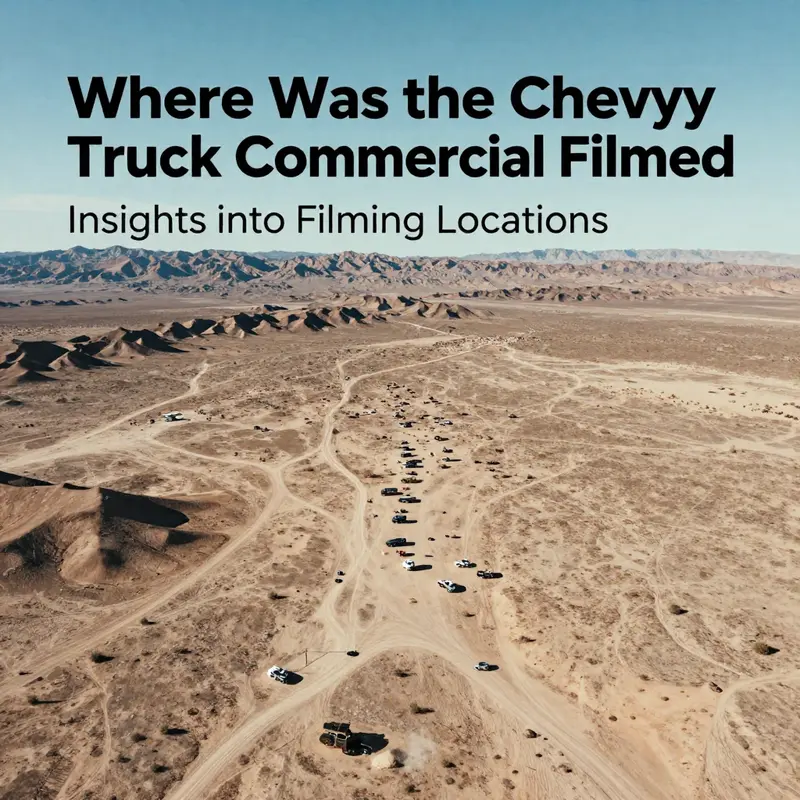
The filming of the 2023 Chevrolet truck commercial in the Mojave Desert provides insights that are pertinent to logistics and construction-minded enterprises. This article delves into the specifics of the filming location, emphasizing its rugged terrain perfect for showcasing the Chevy Silverado EV’s capabilities. We’ll explore the characteristics of the Mojave Desert as an ideal shooting site, detail the technical aspects involved in the filming, examine the economic impact on California, and address the geopolitical considerations surrounding commercial shoots in desert landscapes. Each chapter will contribute to a deeper understanding of how these elements intertwine to create effective advertisement narratives.
null
null
The Mojave Desert as Stage and Symbol: Filming the Automaker’s Electric Pickup Ad
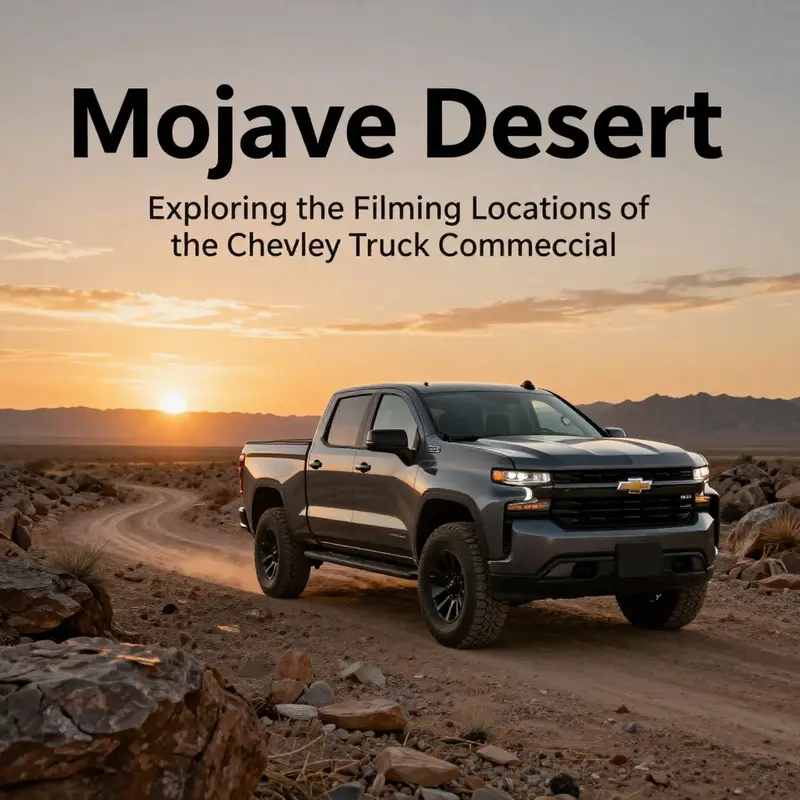
The Mojave Desert has long held a dual identity in the realm of visual storytelling. It is at once a stage and a canvas, a place where the eye can rest on vast, unbroken horizons and where the mind is invited to imagine what lies beyond. In the advertising realm, the desert offers more than scenic drama; it personifies the rugged, independent spirit that marketing campaigns aim to align with a truck that promises power, resilience, and efficiency. When the automaker chose this landscape to shoot the latest electric pickup commercial, the choice resonated on multiple levels. It signaled a brand narrative anchored in endurance and capability, while also acknowledging the broader, ongoing dialogue about energy use, mobility, and sustainability that ripples through modern manufacturing and design. The desert, with its stark beauty and harsh climate, becomes a co-creator in the story it helps tell, shaping both the visual language of the spot and the underlying messages about performance in demanding environments.
The spectacle of the Mojave’s open spaces is inseparable from the way light behaves there. Daybreak and dusk wash the terrain in a quiet, almost cinematic glow that makes metal look more alive and tires feel tethered to the land in a way that artificial sets rarely convey. The desert’s light is a test of materials and engineering as much as a backdrop for emotion. In a campaign built around an electric pickup, the vehicle’s powertrain takes on a different cadence under these conditions. The absence of nearby traffic and the long, clean sightlines push the audience to focus on the vehicle’s silhouette against a horizon that seems to promise both freedom and responsibility. The desert becomes a reminder that capability does not exist in a vacuum; it requires engineering that respects the environment while delivering performance that can redefine a consumer’s sense of what a pickup can do.
Filming in this region, particularly near Barstow and Victorville, also underscores the logistical choreography behind such productions. Remote terrain translates into tight schedules and careful safety planning. The crew works with long days, shifting light, and the practical realities of wind and dust, all while maintaining the integrity of the shot list and the campaign’s dramatic tempo. The Mojave’s expansive terrain allows for sequences that move from endless asphalt-like ribbons into rugged, off-road sections where suspension travel, traction, and energy efficiency can be contrasted with the glare of a sun-baked dust plume. These moments, captured in a way that feels unpolished and authentic, are the emotional core of the narrative: a vehicle that advances with quiet confidence through terrain that demands respect. The choice of location also communicates a brand attribute without saying a word—that the truck is designed to perform in extreme spaces, not merely to exist within them on a showroom floor or a studio backdrop.
Beyond the immediate visuals, the desert operates as a symbol of a broader energy conversation. While solar farms and electric mobility feature prominently in industry discourse, the Mojave’s desertscape serves a subtler purpose in this advertising context. It represents the untamed environment that vehicles are built to conquer, the expansive space where renewable energy projects proliferate, and the intersection where innovation happens in real time. The region’s role as a real-world hub for sustainable initiatives adds a layer of credibility to the commercial’s message. It suggests a future in which high-performance machines can be powered efficiently while leaving a smaller ecological imprint, a narrative that resonates with viewers who are increasingly attentive to how products are designed, produced, and used in the world.
That layered symbolism is reinforced by the landscape’s physical truths. The desert’s weather patterns, its dust and wind, and its heat all demand engineering that can withstand conditions that would challenge any vehicle. The electric pickup, in this context, is not merely a consumer good but a demonstration of how modern powertrains can deliver dependable performance in environments where fuel economy and reliability are equally scrutinized. The emphasis on durability and energy management is not just about meeting consumer expectations; it is about proving a philosophy of design that prioritizes resilience, efficiency, and adaptability. In such a setting, storytelling becomes a form of experiential evidence. The audience sees, hears, and feels the vehicle navigate rough terrain and long stretches of remote road, then infers that if it can handle the Mojave with poise, it can handle the daily grind of work and life in any climate.
Within this narrative, the desert also acts as a subtle mirror for industry dynamics. Advertising in the trucking and broader transportation space increasingly hinges on telling a story that blends capability with responsibility. The campaign’s choice to stage the vehicle in a place where solar energy and wind power projects exist side by side with raw, untamed terrain hints at a broader truth about modern logistics and manufacturing: efficiency is not a single attribute but an ecosystem. The same landscapes that hold the promise of clean energy infrastructure also demand the kind of performance from modern vehicles that keeps goods moving, people safe, and ecosystems intact. In this sense, the Mojave becomes a living case study in how the energy transition and the push for stronger, smarter trucks can co-evolve, each shaping the other in ways that feel organic rather than manufactured.
For industry observers, the decision to shoot in this particular desert region provides more than a picturesque backdrop. It offers a tacit nod to a set of market conditions that affect how campaigns are conceived and produced. The industry’s conversations around capacity, scheduling, and cost—topics that surface in discussions about trucking and logistics—find a quieter but no less relevant echo in the desert. A practical consideration, such as the need to coordinate with limited access roads or to manage heat-related equipment performance, intersects with the creative goals of the ad. The result is a campaign that looks effortless in its unfolding, even as it rests on a meticulously planned balance between artful direction and logistical discipline. In short, the Mojave is not just a place; it is a partner in the storytelling process, lending credibility, texture, and a sense of scale that the audience intuitively understands.
The chapter’s broader arc turns on a simple truth: landscapes that appear remote and austere paradoxically invite a close, almost intimate engagement with technology. The stark scenery makes the audience lean in, noticing small details—the way tire tread scuffs the dust, the cadence of the engine’s power, the way the vehicle’s stance changes as the terrain rises and falls. It is in those micro-moments that the campaign reinforces what the product stands for: high capability coupled with disciplined energy use. The desert is both a proving ground and a stage for storytelling that invites viewers to imagine their own journeys, whether for work, adventure, or a continued dialogue about how mobility fits into a sustainable future. The Mojave keeps the camera honest, and in doing so, it keeps the audience honest as well, inviting them to fill in the rest of the story with their own aspirations.
In considering how this location choice maps onto the wider advertising ecosystem, it is useful to think about the ongoing shifts in the industry. Campaigns are increasingly crafted to be earned through a combination of spectacle and authenticity. The Mojave-adventure frame operates as a compact, powerful narrative device: it sells a feeling of capability without resorting to overstatement. The desert’s austere environment mirrors the often understated elegance of modern engineering—where success is less about flash and more about the quiet reliability that comes from thoughtful design, rigorous testing, and eye-for-detail execution. This alignment between environment and engineering helps ensure that the commercial resonates not only with viewers who crave excitement but also with those who value sustainability and practicality in equal measure. The desert thus functions as both a literal and figurative proving ground for an era of mobility that is more deliberate, more efficient, and more connected to the world it serves.
For readers inclined to explore how industry perspectives frame the relationship between capacity, production, and creative output in trucking and logistics, the discussion around excess capacity in the trucking market insights offers a useful lens. It helps situate the ad’s production choices within a larger conversation about how campaigns scale, how messages balance ambition with feasibility, and how brands calibrate their storytelling to reflect real-world conditions. excess capacity in the trucking market insights.
As the scene in the Mojave fades to a closing shot, the desert’s influence lingers. It has shaped more than just visuals; it has shaped expectations about what a modern electric pickup can be when tested against the environment’s unforgiving standards. It has also reminded viewers that the move toward sustainable mobility is not a retreat from power or performance but a recalibration of how those attributes are defined and demonstrated. The desert’s quiet vastness leaves room for the product to speak through action rather than advertisement, through durability measured in miles and through energy management that makes a difference between a single journey and a longer, more sustainable path forward. In this sense, the Mojave’s role in the campaign extends beyond location to become a narrative about how the future of mobility is being written—one remote road, one precise shot, one deliberate choice of setting at a time.
External context helps complete the picture. For a broader portrait of the Mojave’s environmental and cultural landscape, see National Geographic’s exploration of the desert’s environment and its place in the broader conversation about sustainable innovation and energy projects: https://www.nationalgeographic.com/environment/article/mojave-desert
null
null
Economic Ripples from a California Desert Shoot: How a Major Pickup Ad Filming Shaped Local Commerce
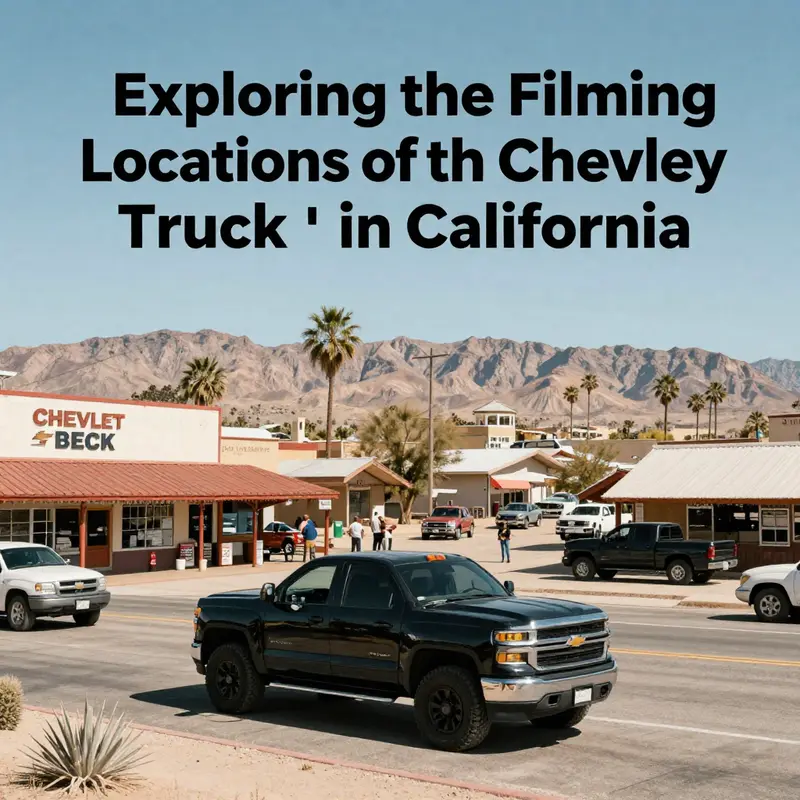
The Mojave Desert, with its vast arcs of sand and rock, has long offered more than dramatic scenery. It is a landscape that makes media engineers dream of bold visual narratives and brands hungry for authenticity. When a major pickup-ad shoot settled near Barstow and Victorville, the region did more than host a crew for a few weeks. It became a temporary hub of economic activity that rippled through hotels, eateries, service businesses, and the countless small decisions that keep a location moving from dawn to dusk. The narrative of this shoot begins with logistics and ends with a reminder that the value of a filming location can be measured in more than the minutes of screen time it yields. It lives in the steady hum of nearby gas stations, the quick turnover of rental equipment, the meals consumed by a crew that rarely stops to notice the scenery they chase, and the tax receipts that eventually find their way into local budgets. In places like the High Desert, where the land itself is a calendar of sunrises and winds, the economics of production unfold as a quiet, almost invisible series of transactions that collectively tilt a small economy toward heightened activity for a season.
From the moment a production team selects a desert site, they set in motion a chain of spending that local communities feel in real time. First come permits and location fees, charged by municipalities and regional land managers. These fees, though modest in individual amounts, accumulate quickly when a shoot spans multiple days and must coordinate with road closures, safety protocols, and environmental considerations. Then there are the film crews themselves—camera operators, grip departments, lighting technicians, safety coordinators, and a cadre of assistants who travel with the production or rotate in from regional hubs. Each person brings a paycheck that translates into grocery runs, quick shopping at nearby stores, and meals that support a broad ecosystem of restaurants and cafes. Even a temporary housing surge—hotels, motels, and RV parks filled with crew members—produces a measurable lift in occupancy rates during the peak filming window. The effect is most visible not in a single ledger line but in a mosaic of spending that local accountants and chambers of commerce track as a pattern, a pattern that signals stronger demand for services during the production timeframe and a return to baseline afterward.
The desert’s physical demands also shape the expense profile of the production. Remote locations require generators, fuel, and logistics support that would be unnecessary in more urban settings. The need for off-road and all-terrain vehicles to navigate rugged terrain translates into procurement activity for rental fleets and maintenance services. Catering becomes a daily logistical ballet, balancing the long hours and the sometimes extreme conditions that accompany remote shooting. The catering crew learns the rhythms of a desert schedule; they time deliveries to align with sunrise shoots and the midafternoon heat, and they tailor menus to keep a diverse crew energized through physically demanding work. This operational choreography pulls in a web of local suppliers—from water hauling and waste management to equipment repair shops—creating a temporary but meaningful uplift for businesses that rely on consistent, year-round demand.
The geographic choice—an expansive desert landscape on the doorstep of Southern California’s economic engine—was not just about aesthetics. It leveraged a regional ecosystem already accustomed to film production and the unique complexities of outdoor shoots. California, as a state, has developed a network of permitting offices, postproduction facilities, and experienced crews who can mobilize quickly. This readiness translates into predictable timelines and reliable contingency planning, factors that reduce delays and keep the budget on track. For communities around Barstow and Victorville, the presence of a film crew can become a catalyst for broader visibility. Local media coverage, tours for residents, and the occasional public event connected to the production can attract curious visitors who might later choose to explore the desert’s broader offerings—historic routes, scenic byways, and other natural attractions. The ripple effect is not solely monetary; it also creates a sense of place and an elevated profile for a once-familiar corner of the state.
In contexts like these, the economic footprint is often measured through multipliers: the initial cash injected into the local economy multiplies as workers spend on housing, groceries, and transportation, and as vendors engage with one another to meet the production’s needs. The size of the impact depends on several variables: the duration of the shoot, the scale of the crew, the extent of the location’s accessibility, and how aggressively the production engages with local suppliers. When a project travels into a desert environment, the practicalities of supply chains become even more critical. Portable restrooms, waste disposal, emergency services, and on-site safety operations must be arranged in advance, each with its own niche of local suppliers. The necessity of dependable logistics can drive short-term demand for specialized service firms, which often need to hire temporary staff of their own to handle the surge. In a region where the economic structure includes a mix of tourism, transportation, and light manufacturing, a shooting schedule can nudge a few more dollars into the hands of people who live there year-round, thereby supporting a modest but meaningful uptick in consumer activity across a handful of local districts.
Even when the direct, line-item accounting for a single production is elusive in public datasets, the surrounding environment offers a useful lens into how such shoots interact with broader market forces. The trucking and freight segments that move gear, props, and support equipment are integral to the efficiency of location work. The availability of trucks, drivers, and support services influences the rhythm of a shoot just as much as light or weather. In industry analyses of freight markets, periods of excess capacity can coexist with peaks in production activity, a dynamic that affects pricing, scheduling, and reliability. The interplay between a production’s demand for on-time deliveries and the trucking market’s capacity can determine whether a crew can secure gear without incident or be left waiting for a driver to arrive with an essential piece of equipment. This is the kind of operational nuance that underpins the broader economic narrative of a shoot. It also ties the activity back to the larger commerce ecosystem that moves goods, services, and experiences across the region and beyond. Excess capacity in the trucking market insights offers a contextual reminder that even temporary surges in demand must be understood within a broader supply chain landscape. For a desert shoot in California, the efficiency of those freight components can influence everything from schedule adherence to the final quality of the production and its ability to wrap on time and within budget.
The location choice also interacts with policy and investment climates that shape economic outcomes over longer cycles. California’s commitment to electrification and advanced mobility has fostered an infrastructure environment that can attract production teams seeking modern, reliable power, charging facilities, and a logistics network tuned to sustainability and resilience. When a desert shoot unfolds in such a setting, it contributes to a broader narrative about how the state balances conservation, growth, and innovation. While the direct economic ledger for a single filming event may not be published in public summaries, the cumulative effect is felt in the way local economies adapt to episodic booms in activity, the way service providers calibrate staffing and inventory, and the way civic leaders measure the payoff of temporary, high-profile events that bring attention to a region’s capabilities and potential.
For communities near Barstow and Victorville, the memory of stacked production trucks, the clatter of camera dollies, and the rhythm of crew meals can become part of a collective story about the region’s role within a dynamic industry. The desert, long a symbol of endurance and isolation, becomes in this sense a proving ground for cooperation, logistics, and the ability to transform a momentary surge of presence into lasting, incremental benefits. It is a reminder that filming is as much about the people and places that staff the event as it is about the moments captured on the screen. And while data on the precise economic impact of this particular shoot may be sparse in official records, the pattern aligns with known dynamics: a temporary influx of skilled labor, a network of local suppliers, and a ripple that spreads through hospitality, retail, and services, leaving a modest but tangible imprint on a regional economy that often relies on mobility, possibility, and the meeting point of industry and landscape.
Deserts, Permits, and Diplomacy: Tracing the Footprint of a Rugged Truck Commercial in the American Desert
The Mojave Desert, with its relentless sun, sweeping horizons, and dust-choked air, has long served as a stage for visuals that demand a sense of endurance and unyielding capability. When a rugged pickup truck was filmed for a national campaign, the desert offered more than dramatic scenery; it provided a proving ground where the vehicle’s performance could be read in the language of heat, sand, and distance. The choice of a remote, expansive landscape near Barstow and Victorville underscored a strategic balance between cinematic impact and practical realities. Yet behind the sweeping shots of tire tracks sealing the sand, there lies a dense matrix of geopolitical considerations that shape every decision from location scouting to postproduction. Filmmakers operate in a space where environmental constraints intersect with sovereignty, cultural stewardship, and the evolving governance of airspace, land use, and cross-border sensitivity. The Mojave shoot, then, becomes a case study in how desert cinema negotiates not only light and texture but also law, consent, and diplomacy, all in service of a narrative about resilience and capability on the most demanding stage the landscape can provide.
Desert landscapes are, by their very nature, border zones in the broadest sense. They sit at the edges of political imagination—edges of where nations, tribes, and communities lay claim to space, resources, and representation. In the American Southwest, the desert is not merely a backdrop but a complex social and legal environment shaped by historic boundary-making, land rights, and resource governance. For a shoot situated in the Mojave, the prime concern is not only securing permits but ensuring that the strategy for access respects the layered jurisdictions that regulate deserts—federal lands managed by agencies such as the Bureau of Land Management, state and local authorities, and, crucially, the communities whose histories and livelihoods intersect with the landscape. This is not a matter of choosing a pretty location; it is a process of mapping authority, obligation, and accountability across multiple scales. The production team must translate a visually compelling plan into a compliant one, a translation that begins with a rigorous permitting process and extends into ongoing coordination with land managers, local law enforcement, and emergency services. In the Mojave, where the scenery is breathtaking but the terrain unforgiving, even a relatively modest shoot requires a mosaic of permissions that acknowledges the desert’s role as a shared resource rather than a free stage for commercial spectacle.
Cultural sensitivity represents another axis of geopolitics that often travels in the opposite direction of speed and efficiency. Desert images carry powerful symbolic weights—desolation, resilience, and a connection to the raw power of nature. When shoots unfold in lands that are home to Indigenous peoples or intersect with long-standing cultural territories, brands and production teams must approach with humility and consultation. The risk is not only reputational but ethical: imagery that seems to exoticize or misrepresent local cultures can provoke criticism, undermining the intended narrative of capability and authenticity. Even background silhouettes and rolling dust can carry cultural significance when the audience reads them through layers of history and contemporary stewardship. In practice, this means engaging with communities early, listening to concerns about sacred sites, land access, and the ways in which the desert is valued beyond its utility for storytelling. The Mojave shoot illustrates how cultural contextualization can coexist with ambitious production goals; it requires a willingness to adjust the schedule, reroute scenes, or reframe visuals in ways that honor local dignity while preserving the campaign’s dramatic arc. The result is a more nuanced representation of the desert—one that avoids reductive stereotypes and acknowledges that the landscape carries a living presence for those who have long cared for it.
The legal and regulatory ecosystem surrounding filming in desert spaces adds another layer of complexity. The desert hides a network of rules governing where and when cameras may operate, how drones may fly, and what sorts of vehicles may traverse particular trails or corridors. Permitting regimes typically involve federal land managers, which in the American context means navigating procedures designed to protect ecological integrity, cultural resources, and public safety. Environmental compliance becomes a baseline expectation; the presence of endangered species, sensitive habitats, or protected desert tortoise habitat can trigger additional studies and mitigation measures. Even where the land is public, standard practice requires a detailed plan for road closures or traffic control, a robust insurance package, and advance coordination with nearby communities and law enforcement. For a production executing high-speed driving maneuvers, tight coordination with local authorities and clear contingency planning about weather, flash flooding risk, and dust management are not optional extras but integral components of risk management. The Mojave setting, with its microclimates and occasional seismic dust storms, reinforces that a compelling image is inseparable from a rigorous operational framework.
Beyond the ground, the airspace above desert shoots presents its own geopolitical considerations. The use of drones and other aerial capture technologies has accelerated the ability to secure sweeping, cinematic views, but it also raises questions about security, sovereignty, and restrictions in sensitive areas. Airspace regulations—whether at the federal level or local overlays—require adherence to flight plans, line-of-sight operations, and, in some cases, temporary flight restrictions. In desert corridors where military and test-range activities are ongoing, the risk of incidental incursions into restricted zones or miscommunication with air traffic authorities can disrupt even well-planned shoots. The tension between high-tech production workflows and national security imperatives is a real-world reminder that the desert is a shared space, governed by multiple authorities with different priorities.
The practical response to these coordinates of risk is a structured approach to risk assessment that aligns creative ambition with legal and ethical obligations. Before stepping into the field, collaborators conduct geographical mapping to understand terrain challenges—how the sand shifts, how the light changes with time of day, and how access routes affect crew safety. A comprehensive legal compliance review follows, cataloging permits, insurances, and any local ordinances that could affect road closures or public access. Importantly, engagement with local governments and communities forms the heart of the process, transforming a shoot from a one-off visual event into a collaborative initiative that can deliver benefits to the region beyond the campaign’s duration. This approach also invites adaptive storytelling: scenes can be staged to minimize disruption to sensitive areas while preserving the emotional resonance of the desert’s grandeur. The result is a balance where the campaign’s kinetic energy thrives without compromising the desert’s ecological and cultural fabric.
The Mojave shoot also resonates with a broader discourse about how American desert landscapes are deployed in visual culture. The research themes gathered in the literature emphasize that desert imagery operates as a replicable visual language—one that travels across borders and markets, shaping audiences’ expectations of place and power. The act of production, then, is not merely about capturing a vehicle in motion; it is about negotiating the power dynamics embedded in the image and the logistics that make it legible to viewers around the world. This perspective reframes the desert as a site where aesthetics, governance, and global circulation intersect. It reminds us that the decision to shoot in a desert space carries political weight, including how the resulting imagery will be read in audiences unfamiliar with the terrain or its people. In practical terms, this means producers must plan for the possibility that certain frames or scripts may be deemed culturally insensitive or geopolitically loaded by international audiences. The aim is not censorship but responsible storytelling that respects the desert’s complexities while delivering the visceral impact that makes a vehicle’s capabilities tangible on screen. For further depth on these themes, the article Tracking Across the American Desert examines how desert landscapes function as mediating spaces in which power, representation, and logistics cohere to shape how imagery travels beyond national borders. See the discussion in the Journal of Visual Culture for a broader theoretical grounding that informs production decisions in desert environments: Read the Full Article at https://www.tandfonline.com/doi/full/10.1080/09669939.2023.2257431.
No single factor determines whether a desert shoot can proceed smoothly. Rather, it is the integration of historical, cultural, legal, and technological considerations that creates a resilient production strategy. In the Mojave case, the proximity to Barstow and Victorville offered logistical conveniences—moderate desert traffic, accessible highways, and a network of service providers—while simultaneously demanding detailed coordination with county authorities and land managers to minimize environmental impact and human disruption. The resulting campaign narrative is thus not only about the truck’s off-road prowess but about a well-orchestrated alignment between cinema and sovereignty. As audiences respond to the final imagery, they may sense a compelling story of endurance and capability, yet what remains behind it is a careful choreography of permissions, respect for the land, and an acknowledgement that filming in the desert is, at its core, a diplomatic act as much as a creative one. This awareness helps explain why the shot list often evolves in the field—from alternate locations to adjusted timing in the heat of the day—to protect both people and place without diluting the visual ambition that drew the crew to the desert in the first place.
In weaving together the practicalities of permits and the ethics of representation, the Mojave shoot illustrates a broader principle for future desert productions: the most memorable images arise when the process of making them models a responsible relationship with place. The desert is not simply a canvas; it is a living system with memory, boundaries, and rights that deserve careful regard. When that respect is present, the resulting narrative can convey strength and resilience in a way that feels authentic rather than performative. In this sense, the filmic footprint left on the Mojave is as important as the imprint of tire tracks on the sand—and both are best understood as parts of a larger conversation about how the industry captures motion and meaning in landscapes that matter to many different communities.
Internal link for industry context: for practitioners interested in how cross-border regulatory issues shape field operations, see the TCAs Cross-Border Regulatory Issues Event. TCAs Cross-Border Regulatory Issues Event.
External reference for theoretical framing: Tracking Across the American Desert, Journal of Visual Culture. Read the Full Article at https://www.tandfonline.com/doi/full/10.1080/09669939.2023.2257431.
Final thoughts
The 2023 Chevy Truck commercial filmed in the Mojave Desert is more than a visual display of rugged terrain; it illustrates the synergy between powerful vehicles and challenging environments. Understanding the filming location’s significance helps logistics and procurement teams appreciate how effective advertising captures the essence of strength and reliability. The Mojave’s unique characteristics, coupled with economic implications and geopolitical realities, present a comprehensive view of the nuanced factors behind commercial filming decisions. Each element underscores the importance of location in branding strategies, particularly for industries reliant on durability and performance. Such insights can inform how businesses market their products and services in competitive fields.