
Verifying a commercial truck’s Vehicle Identification Number (VIN) is crucial for logistics, procurement, and fleet management professionals. This vital process helps confirm vehicle identity, ownership, and history, safeguarding investments in commercial fleets. In the logistics and freight industries, where compliance and safety are paramount, thorough VIN checks ensure that all vehicles meet legal and safety standards. This article systematically explores four essential methods to effectively verify a truck’s VIN: 1) Physical Inspection Methods, 2) Verification Through Official Documents, 3) Using Online Tools and APIs for History, and 4) Consulting Authorized Dealers and DMVs. Each chapter delves into practical steps and expert tips, empowering you with the knowledge needed to navigate the complexities of VIN verification with confidence.
Seeing the VIN in Plain Sight: A Practical, Ground-Level Guide to Physically Inspecting Commercial Truck VINs
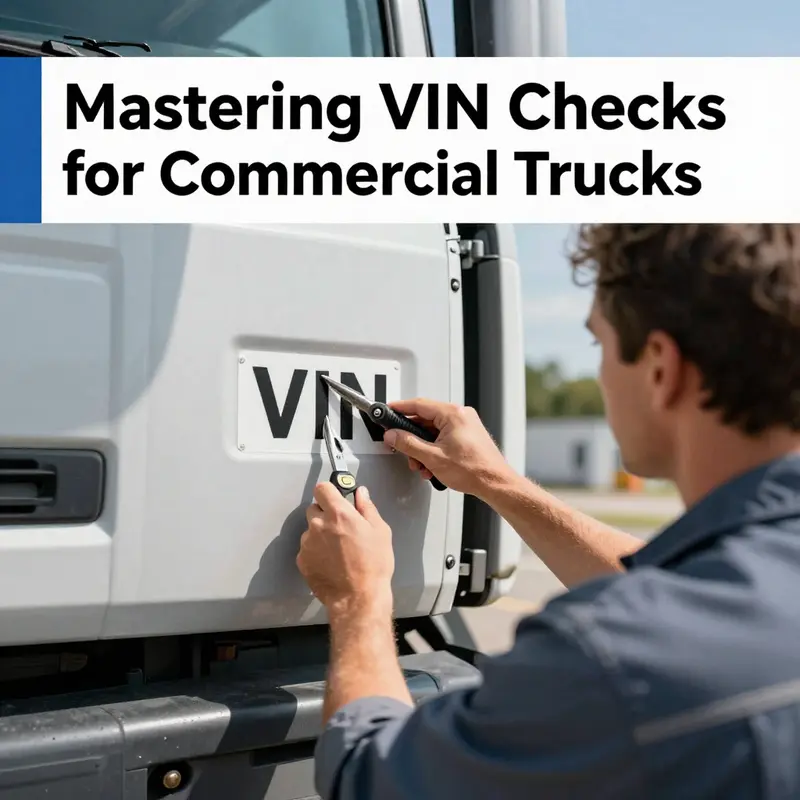
The Vehicle Identification Number is more than a string of letters and digits. It is the vehicle’s life passport, a traceable thread through manufacture, ownership, service, and, when needed, legal inquiry. In the world of commercial trucking, where fleet assets roll through many hands and across jurisdictions, relying on paperwork alone can miss subtle discrepancies that have big consequences later. A careful physical inspection of the VIN complements records checks and helps separate authentic history from confusion or, in worse cases, tampering. The VIN remains the anchor point you can confirm with your own eyes before you move into deeper verification steps. A practical, hands-on approach begins with knowing where to look and how to read what you find, because the same 17-character code stamped or labeled in multiple places can be a small map to the truck’s broader story.
The first stop is usually the most accessible: the windshield. On most commercial trucks, the VIN is printed on a metal plate or label affixed to the lower left corner of the driver’s side of the windshield. When you stand outside the cab and look through the glass, the character sequence should be clearly visible. This location is standard across many makes and models because it provides easy external visibility for quick identification during inspections, loading, or when the vehicle is parked in a yard. If you’re in a tight lot or the windshield is obscured by glare, you can turn your attention to the door jamb, specifically the driver’s side B-pillar. There, a metal plate or sticker is commonly attached to the frame and contains the VIN along with additional details such as the model year and the manufacturer. The door jamb is the backup location that mirrors the information on the windshield, and the redundancy helps ensure you can confirm the VIN even if one site has been damaged or obscured by weather, dirt, or past repairs.
As you move from the cab’s interior to the vehicle’s skeleton, the frame itself becomes a crucial source of truth. On heavier-duty equipment, the VIN is often stamped directly into the frame rail or on a cross-member near the center of the vehicle. This stamping is not decorative; it is part of the vehicle’s structural identity and is designed to endure through many years of service. The frame location is especially important when you’re assessing a used truck or a unit with a complex history involving repairs and replacements. A VIN found on the frame should match the VIN on the windshield plate and the door jamb plate, and it should also align with the numbers on the vehicle registration documents. If any of these sources diverge, take it as a red flag and proceed with caution rather than assuming a simple clerical error.
In some operating conditions or with older machinery, the VIN can appear in less obvious places. A few trucks may have the VIN stamped on the engine block or tucked under a hood latch area. These engine-area marks can be harder to read and harder to access without lifting or tilting components, so approach with a flashlight and a clean cloth to wipe away dust and grime. While the engine stamp is a legitimate indicator of identity, it is not the same as the Vehicle Identification Number that governs title, registration, and the vehicle’s official history. When you do find an engine stamp, compare it to the frame and windshield numbers. Consistency across these sources reduces the risk of overlooking a mislabel or a swapped component. It’s worth noting that the practice of stamping on the engine is less common for newer or well-maintained fleets, but it remains a useful cross-check in older equipment or specialized applications.
There are practical reasons for performing checks in this order: external, then internal, then structural. Reading the VIN on the windshield while you stand outside prevents you from climbing into the cab or crawling beneath the truck before you’ve seen the primary identifier. Confirming the VIN on the door jamb while you are next to the frame provides a reliable cross-check in the same moment. Inspecting the frame itself adds a third layer of verification, particularly for trucks with significant mileage, heavy-duty use, or known history of body or frame work. In all cases, the goal is to ensure you are looking at a single, intact 17-character sequence that aligns across locations. A stray character, such as confusing the letter O with the number 0 or I with 1, can create a cascade of misinterpretations. The prosaic but important reminder is simple: look carefully, and if something seems off, pause and re-check rather than assuming a clerical slip.
Beyond the obvious markings, the physical VIN should also be consistent with the truck’s documentation. The 17-character code found on the windshield, the door jamb plate, and the frame should correspond to the VIN listed on the vehicle’s registration or title, as well as to the insurance policy information and any active service records. When you find a mismatch, you are not just facing paperwork; you are looking at the potential for tampering, mislabeling, or even identity theft. In the regulated world of commercial vehicles, that inconsistency is a signal to stop and verify. It may require coordinating with the seller, the owner, or the fleet manager to obtain clean, official records, and it could necessitate a request for a formal VIN verification through the appropriate authorities. It is not enough to see a plausible VIN; you must confirm that every source of identity agrees.
The inspection does not stop at identification. In practice, a thorough physical check also includes a quick internal verification of the VIN’s legibility. Are the characters evenly spaced? Are there any engravings that appear to be altered, smudged, or re-stamped? Irregularities in engraving depth or alignment can be telltale signs of tampering, especially in vehicles that have claimed a long service life or undergone frame repairs. If you notice suspicious markings, take careful photographs from multiple angles and document the exact locations of each VIN you encounter. This documentation becomes part of your due diligence when you later compare to official records or when you report concerns to the appropriate authorities.
To connect the physical with the procedural, it is useful to keep in mind that many fleets maintain multiple identifiers for a single machine. In addition to the primary vehicle VIN, there may be an engine serial number or other component identifiers for the engine, transmission, or axles. These numbers serve different purposes and are not interchangeable with the vehicle’s VIN, but they can provide valuable cross-checks in cases where the history of a truck is fragmented or when repairs have replaced major components. When you encounter an engine serial number, reserve it as a supplementary data point rather than the sole basis for identity. The safest practice is to primary-verify the 17-character VIN across the three common locations—the windshield, the door jamb, and the frame—and then consult the vehicle’s official paperwork to confirm correlation with registration, title, and insurance records.
In the field, the human factor matters as much as the stamps and labels. A clean, well-lit environment—a daytime lot with a simple, flat surface—makes the search much easier. A handheld flashlight can reveal faint engravings that might be indiscernible in ambient light. For vehicles that have spent decades on the road, some plates can become obscured by rust, grime, or paint over time. In such cases, gentle cleaning with a non-abrasive cloth and a mild solvent may reveal markings that were invisible at first glance; never scrub aggressively, as that could damage stamps or plates and complicate the verification process. If, after careful inspection, you still cannot locate a VIN in any expected location, you should not assume absence. Instead, pause and request assistance from an authority or a more experienced technician who can guide you through alternative verifications that comply with safety and regulatory requirements.
The practical logic of the physical VIN check flows into a broader assessment framework. You are not merely confirming a number; you are cross-reading a vehicle’s identity against its service life. The moment you observe a consistent VIN across the windshield and the door jamb, and you can trace that same number to the chassis stamping, you gain a high degree of confidence that the truck you are examining is the genuine article. That confidence becomes even stronger once you cross-reference the VIN with the vehicle’s registration, insurance documentation, and maintenance logs. When inconsistencies surface—such as a VIN that changes between documents or that appears different on the frame than on the label—you have a solid reason to document, pause, and escalate the inquiry. This careful approach protects fleets from purchasing or operating vehicles with unclear or compromised history and helps maintain the integrity of used-truck markets and regulatory compliance alike.
As with any field procedure, consistency is the ultimate ally. The steps described—locating the VIN on the windshield, verifying it on the door jamb, and checking for a stamped frame number—form a triangle of identity you can rely on before you proceed with deeper history checks. The ultimate objective is a seamless match between physical markings and official records. If you can achieve that alignment, you have established a robust baseline for trust, which facilitates everything from routine maintenance planning to regulatory reporting and fleet management. In the broader sense, this is a safeguard that protects not only buyers and lenders but also drivers and operators who rely on the integrity of the vehicle they depend upon each day.
For readers who want to deepen their understanding beyond the hands-on checks, professional guidance and regulatory references can provide a rigorous foundation. The practical, hands-on approach described here naturally leads to official records review, but the on-the-ground VIN stamps remain the most immediate, universally accessible first-line verification. Keeping this approach consistent across inspections, whether you are evaluating a single used truck or conducting routine checks for a large fleet, helps create a stable baseline for vehicle identity. It is this stability that underpins trust in the lifecycle of a commercial truck—from manufacture to maintenance, purchase to resale, and every mile in between. Finally, when a discrepancy appears, treat it as a prompt for a structured inquiry rather than a cause for panic. Open documentation, careful measurement, and transparent communication with the relevant parties will typically steer you toward resolution without unnecessary delays.
For those seeking formal, regulatory context to complement the hands-on method, consult the official guidance that governs commercial vehicle inspections and identification practices. This reference provides a regulatory framework that supports the practical steps outlined above and clarifies how VIN verification interacts with compliance, safety, and accountability. By integrating the tactile checks with the documented standards, you reinforce the reliability of your findings and strengthen your toolkit for evaluating any commercial truck in your care. As you move forward in your chapters, the next layers of verification—such as leveraging vehicle history databases or cross-border regulatory verifications—will build on the solid foundation you establish through careful physical inspection. The interplay between what you can see directly on the vehicle and what you can confirm in official records is what ultimately ensures you understand a truck’s true identity before making critical decisions about its use, value, or provenance. For formal verification and regulatory context, consult the Commercial Vehicle Inspection Manual, Version 2.0: https://www.transportation.gov/sites/default/files/documents/commercial-vehicle-inspection-manual-v2-0.pdf.
The VIN You Can Trust: Verifying a Commercial Truck’s Identity Through Official Documents and Beyond
Verifying a commercial truck’s identity is more than a cursory glance at a metal plate or a glance at a sale price. In a business where compliance, uptime, and risk management hinge on precise equipment records, the Vehicle Identification Number (VIN) serves as the definitive fingerprint. It is the single source of truth that ties a truck to its history, specifications, ownership, and legal status. When fleets are expanding, operators are auditing assets, or buyers are evaluating a potential purchase, the accuracy of the VIN underpins everything from insurance coverage to maintenance scheduling and regulatory compliance. This is why, in practice, the most trustworthy method for confirming a commercial truck’s VIN is through the official documentation tied to the vehicle. The registration certificate, often referred to as the Green Book or Registration Certificate in local parlance, is the primary document that carries the complete 17-digit VIN. This document is issued by the local traffic management department and represents the legally recognized record of identity for the vehicle. Its authority comes from its role in establishing who owns the truck, where it was registered, and how it is registered to operate within the jurisdiction. In the realm of fleet management and used-truck transactions, this is not a mere bureaucratic formality—this is the baseline of legitimacy. The VIN on the registration certificate is not a placeholder or a theoretical number. It is the number that the state or province uses to track the vehicle’s legal existence, to issue license plates, and to anchor all subsequent filings in the system. When a seller presents a certificate, or when a buyer requests copies of these documents during a due diligence phase, what arrives is your most reliable signal that the truck you are dealing with is the one described in the paperwork. It is the anchor that keeps every other verification from drifting into the realm of doubt. Yet the weight of this document is only as strong as the process that produced it and the outcomes of subsequent cross-checks with other official records. In other words, the registration certificate provides the backbone for VIN verification, but the verification process does not end there. The best practice in real-world operations is to cross-reference the VIN on the registration certificate with other official documents attached to the vehicle and with the physical vehicle itself. A coherent approach uses multiple touchpoints to confirm identity rather than relying on a single source. The Motor Vehicle Inspection Certificate, which is often required for annual or periodic inspections, is another authoritative document that should align with the VIN found on the registration certificate. The front page of the inspection certificate typically lists the VIN in the same 17-character format. A mismatch between the VIN on the inspection certificate and the VIN on the registration certificate can indicate a clerical error, a potential mix-up during vehicle re-registration, or more serious issues such as improper titling or unauthorized changes to the vehicle’s identity. For this reason, the practice of cross-checking VINs across documents is not simply prudent—it is essential for maintaining legal compliance and operational integrity. Insurance policies also contribute a critical verification layer. The vehicle information section of an insurance policy usually lists the VIN. Even in digital copies, the VIN should be legible and match the numbers on the registration and the inspection certificate. Insurance documents tie the vehicle to a risk profile, a coverage period, and a policy number—elements that, when aligned with the VIN, reinforce confidence that you are protecting the correct asset. The convergence of these documents is what makes verification robust. When you combine the registration certificate with the inspection certificate and the insurance policy, you are creating a triangulation of records. The probability that all three records would perfectly align by coincidence is vanishingly small. This triangulation is particularly important in scenarios involving high-value assets, such as commercial tractors or heavy-duty haul units, where even minor discrepancies can cascade into legal disputes, insurance disputes, or compliance challenges. For fleet managers and buyers, the discipline of cross-referencing is a practical safeguard against a range of problems—from simple clerical errors to more complex issues like fraudulent VIN substitutions during sales or undisclosed changes to a vehicle’s configuration. In the course of due diligence, the aim is not merely to confirm that a 17-digit VIN exists on a page; it is to confirm that the VIN is the correct identifier for the exact vehicle in question and that the vehicle’s records reflect a consistent history. The registration certificate carries the most weight in this regard because it is the official record of identity that the legal system recognizes. If there is any doubt about the VIN, or if the vehicle’s status seems ambiguous, the prudent course of action is to seek confirmation directly from the issuing authority. This typically means visiting or contacting the local vehicle administration office, where staff can access official vehicle files and verify whether the VIN on the registration certificate corresponds to the vehicle presented for inspection. This is not a process built on guesswork. It relies on verified data housed in government databases that track ownership transfers, title status, and registration history. The importance of relying on official records is reinforced by the fact that VINs are used to pull critical data about a truck’s past—title history, lien status, and regulatory compliance checks among them. When a fleet manager considers a vehicle purchase, a thorough VIN-based audit can reveal whether the truck has any open liens, whether ownership has changed hands multiple times, or whether the vehicle has undergone any modifications that would affect its classification or license requirements. These are details that surfaces from the central records rather than from a seller’s account, and they are precisely the kinds of details that determine the true cost of ownership and the risk profile of the asset. It is also worth noting that in some jurisdictions, the same 17-character VIN is cross-checked against manufacturing records to confirm that the vehicle’s configuration (engine type, transmission, axle arrangement) matches the documented specification. This cross-check, while technical, is a natural extension of the official-record approach because discrepancies in configuration can imply post-sale alterations or even counterfeit documentation. In practice, the workflow for verification becomes a disciplined sequence: first, obtain the registration certificate and confirm the VIN printed there; then, compare it to the VIN on the bill of sale and the insurance certificate; next, examine the Motor Vehicle Inspection Certificate for alignment; and finally, if there is any ambiguity, request a direct verification from the issuing authority. This layered approach reduces risk and helps ensure compliance with national or regional regulatory frameworks that govern vehicle ownership and operation. While the core message remains that official documents carry the highest reliability, it is useful to acknowledge that modern vehicle history tools and APIs can supplement this process. For many fleet operators, a secondary check against digital records can provide additional context about manufacturing date, model year, and chassis details. However, a note of caution is warranted: these tools should not replace primary verification against official documents. They can be used to support and corroborate the information found on the registration certificate, provided that the user understands the source and limitations of the data. The strongest case for relying on official documents is grounded in legitimacy. When a vehicle is checked against government-issued records, the risk of misrepresentation is significantly reduced, and the path to resolving any discrepancies is clearer and legally supported. This is particularly important during regulated transactions, such as those occurring at the point of sale, during title transfers, or when vehicles are brought into different jurisdictions. In such contexts, the VIN functions as a universal reference number that ties the asset to legal ownership and to the record of compliance with safety and emissions standards. The practical takeaways are straightforward for anyone responsible for fleet integrity: make the registration certificate your starting point, ensure the VIN there is complete and legible, and then verify this VIN against other official documents and, when possible, with the issuing authority. Treat this as a due-diligence ritual rather than a one-off check. The cost of doing it right is minimal compared with the potential consequences of accepting a misidentified asset. For operators who have to move quickly, the discipline of quick checks through official documents can be balanced with a broader verification strategy. In fast-moving markets, you may rely on the documentation you have at hand, but you should also have a plan to obtain official confirmation in a timely manner should any red flag appear. It is not uncommon for legitimate deals to encounter last-minute questions about VIN consistency. In those moments, a straightforward request for copies of the registration certificate, the latest Motor Vehicle Inspection Certificate, and the current insurance policy can illuminate the truth swiftly. If your due diligence uncovers a mismatch, pause the transaction and escalate to the appropriate authorities. A prudent business operation treats VIN verification as a risk-control measure rather than a mere formality. The sentences above are designed to illuminate why official documents bear the weight they do while acknowledging that supplementary sources can enrich the verification process when used judiciously. For practitioners seeking a broader perspective on regulatory contexts and cross-border considerations, discussion and case studies from industry forums and regulatory events can provide valuable insight into how VIN verification practices evolve when trucks move across borders and through different regulatory regimes. See for instance the content around cross-border regulatory issues that shape how VIN data flows across jurisdictions. TCAS Cross-Border Regulatory Issues Event.
TCAS Cross-Border Regulatory Issues Event
As a final note, the importance of the official VIN cannot be overstated. It is the anchor that ensures a truck’s identity remains intact from the moment it leaves the factory floor to the day it operates on a highway, whether in domestic service or in cross-border corridors. When you pair the registration certificate with inspection records and insurance documentation, you create a cross-check framework that protects you, your fleet, and your customers. And when there is any doubt about the VIN, seek official confirmation directly from the issuing authority. In a sector where paperwork often travels as quickly as the vehicle itself, the reliability of that paperwork is what separates trustworthy transactions from costly missteps. External resources can broaden your understanding, especially as regulatory landscapes shift and new digital records become more prevalent. For a broader data perspective on VIN verification and vehicle history, you may consult external digital references, such as the following resource that discusses VIN data usage and cross-border considerations: https://mp.weixin.qq.com/s?_biz=MzUxNjY5MzEwNg==&mid=2247483650&idx=1&sn=9b3c1d8f3e4a6c3d1a8b9c3e2f0c8a4f&chksm=3d4c1e3b6a3b872d1a7e99c3b5e48f7a1d0d5b0e9c1f1c2c1a8b3c9d2e8f3a1b2c3d&scene=21#wechatredirect
Reading the VIN’s History: Verifying a Commercial Truck Through Online Tools, APIs, and Paper Trails
A commercial truck carries its own biography in a string of letters and numbers—the Vehicle Identification Number, or VIN. It is not merely a serial code but a compact dossier that ties together the truck’s origin, its journey through ownership, and its history of use. When you set out to check a commercial truck’s VIN, you are not simply confirming a label; you are assembling a verified narrative that informs risk, value, and compliance. The process blends hands-on observation with digital tools and documentary corroboration. Taken together, these elements create a robust picture of what you are considering purchasing, leasing, or deploying in a fleet. A careful VIN check is both an insurance policy and a practical framework for decision-making, enabling you to avoid common pitfalls such as hidden damage, inconsistent mileage claims, or disputed title status. The path to a reliable VIN assessment is never a single step; it is a sequence that begins with seeing the vehicle up close and ends with a consolidated history drawn from official sources, trusted databases, and, where appropriate, professional networks that understand the nuances of heavy-duty equipment.
To begin, a thorough physical inspection is the foundation. In commercial trucks, the VIN is stamped or engraved in several accessible places, a redundancy that reflects the importance of verification across different stages of the vehicle’s life. The windshield frame on the driver’s side often bears a metal plate with the 17-character VIN visible from outside the cab. This is the location most people first check, because it is quick and usually legible. Still, a second VIN plate is commonly found on the driver’s side door post, or B-pillar, where the label may also include manufacturing date and curb weight. Inside the cab, the dashboard or instrument panel can reveal the VIN through the glass, a reminder that a careful observer can corroborate external markings with interior records. For heavy-duty vehicles, a more distinctive marker appears on the frame rail or I-beam cross-member near the center of the vehicle. This location is less obvious to the casual observer, but it is a crucial anchor for fleets that perform chassis-level audits or for vehicles that have experienced repairs where external VIN plates may have been compromised. In some instances, the VIN can be found toward the rear of the truck, on the bumper or tailgate; however, this is less common and should be treated as a secondary cross-check rather than a primary source. A meticulous physical scan reduces the risk of proceeding with an incorrect VIN that could derail an entire due diligence process.
Once the VIN has been confirmed on the vehicle, the next horizon is the official paperwork that travels with the truck. Documentation provides a backbone for verification because it ties the physical unit to its legal and financial history. The registration or title certificate, for instance, lists the VIN prominently on the front page. If a bill of sale or purchase invoice is available, it should also carry the VIN, linking the written record to the physical asset. Insurance policies—whether paper or digital—typically present the VIN within the vehicle information section, reinforcing the cross-reference with the plates and labels observed on the truck itself. Maintenance records or service logs offer another layer of corroboration. They may reference the VIN as a reference point for wear patterns, component replacements, and recalls. When these documents align with the VIN seen on the vehicle, the risk of a title mix-up or identity mismatch drops dramatically. If any discrepancy appears between the VIN on the vehicle and the VIN in the paperwork, pause the process and escalate to a supervisor or a regulatory authority. Mismatches are not merely clerical annoyances; they can indicate a broader history of ownership changes or mechanical interventions that require careful scrutiny.
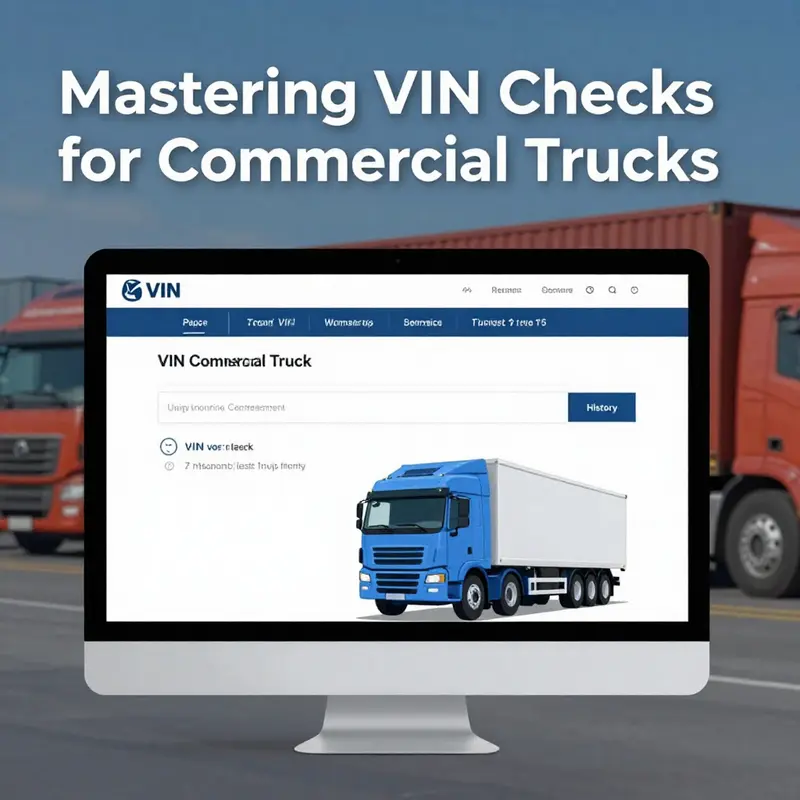
Beyond the pin-by-pin confirmation of identity, the real value in a VIN check comes from accessing data that describe what happened to the truck over time. This is where online tools and APIs extend the reach far beyond what is visible in the windshield or on the title. A number of data services provide VIN-based insights that range from basic configuration to full history reports. The most trusted starting point is the official government VIN lookup tool. It is designed to deliver a core set of verified facts—make, model, year, and manufacturer details—directly from public records. While it is not a substitute for a comprehensive history, its accuracy and legitimacy provide a solid baseline for further investigation. This tool serves as a legitimacy check: if the VIN fails to produce expected manufacturer details, that discrepancy can signal red flags that warrant deeper inquiry before any financial commitment.
For a more granular picture, third-party history reports can be valuable. These services aggregate data from a broad spectrum of sources, including title records, accident histories, and ownership changes. They are notably helpful if you need to understand whether a truck has a clean title, whether it has been involved in significant incidents, or how many owners have held the vehicle since manufacture. Because these reports compile data from disparate sources, they can reveal trends that are not evident from a single document. The caveat is that these services usually require a fee, and the breadth of information can vary between providers. The reliability of a history report therefore rests on the quality of the underlying data and on how recently the report was generated. When you purchase or rely on a history report, you should treat it as a piece of the puzzle rather than the final verdict. The best practice is to cross-reference the report against the official documents and the results of the VIN lookups from authoritative sources.
In addition to public and third-party feeds, modern checks increasingly use application programming interfaces, or APIs, to bring real-time data directly into fleet-management software, purchasing platforms, or risk-assessment workflows. VIN API services offer developers and fleet operators the ability to validate a VIN and retrieve a structured payload that includes brand, model year, production date, engine specifications, and chassis details. This is especially valuable for fleet managers who need to automate checks as part of procurement, maintenance planning, or insurance underwriting. The advantage of APIs is not simply speed; it is the consistency of data integration. An API can be integrated into a customer’s internal systems to flag anomalies when a VIN record diverges from expected configurations or previously stored histories. Operators can design automated alerts for events such as unexpected mileage, recalls, or changes in ownership, enabling proactive risk management rather than reactive problem-solving.
When incorporating online tools and APIs into the VIN verification workflow, it is essential to maintain critical guardrails. First, understand the scope of each data source. Government VIN lookups generally provide core identity facts and some light details but are not a substitute for a full history. Third-party and API-based services can supplement those details with historical records and technical specifics, but you should verify the provenance and update frequency of the data they present. Second, consider geographic and regulatory context. Some data channels are stronger in certain regions or markets, and regulatory environments can influence how records are kept and reported. In cross-border transactions, for example, regulatory checks gain additional importance because ownership, registration, and lien positions may be handled differently across jurisdictions. To keep this point front and center, you can explore cross-border regulatory considerations through dedicated industry discussions and case studies such as the TCAS cross-border regulatory issues event, which offers practical insights into compliance challenges and due-diligence processes in cross-border trucking. You can follow this thread here: TCAS cross-border regulatory issues event.
A practical approach to using tools and data is to assemble a check-list that aligns with your risk tolerance and objective. Start with a physical VIN confirmation, then pull the official registration and title data to match against the numbers on the vehicle. Next, consult the government VIN tool to confirm base identity details. After that, obtain one or more history or recall records to understand prior incidents and the vehicle’s stewardship. If your organization relies on automation, design API-driven checks that validate VIN–data consistency across your internal systems and flag any divergence for human review. Finally, complete the process with a dealer or DMV confirmation when the purchase involves legal transfers or when you need formal proof of identity, which often matters for title transfers, registrations, and financing arrangements.
The social and regulatory stakes of a VIN check extend beyond the immediate transaction. In a market where vehicles circulate through fleets, leases, and independent owners, the ability to demonstrate due diligence can influence financing terms, resale value, and insurance costs. The data you assemble—characters on a plate, the paperwork in a folder, and the reports generated by digital tools—collectively reduce uncertainty and support informed decision-making. The back-and-forth between tangible inspection, official records, and digital histories mirrors the way a modern fleet operates: through layers of verification that, together, create a credible narrative about the asset.
For readers who want a concrete starting point, remember that the best checks blend speed with accuracy. For a quick baseline, verify the 17-character VIN on the windshield frame, the B-pillar tag, and the dashboard label, and then cross-check those numbers against the registration certificate and the insurance policy. For depth, pull the basic information from a government VIN lookup tool, then augment it with a full vehicle history report and a chassis- or engine-specific data pull through an API service. If you can, involve an authorized dealer or the local vehicle administration office to obtain official confirmation that aligns with the buyer’s due-diligence requirements. Across all steps, maintain a disciplined record of every source, date of inquiry, and the results of each check so you have a clear audit trail should questions arise later in the process.
In closing, the VIN carries a powerful story, but its truth is confirmed only through cross-checks that span physical verification, documentation, and digital history. This triangulation—hands-on inspection, paper trails, and data-driven insights—offers the most reliable protection against misrepresentation and misclassification. It also supports smoother negotiations, clearer risk assessment, and better strategic planning for fleets that depend on dependable, traceable equipment. The path to a thorough VIN verification is not a single shortcut; it is a deliberate, multi-layered practice that honors the vehicle’s history and protects the interests of buyers, sellers, and operators alike. For readers who want to ground their approach in a practical reference point, keep the government VIN decoder tool handy as a trustworthy baseline, and supplement it with history data to form a complete picture of the truck’s past and its future potential. Official resources, private data partners, and internal verification routines together create a sturdy framework for due diligence in commercial truck acquisitions and fleet management.
External reference to an authoritative resource: the National Highway Traffic Safety Administration’s VIN decoder tool provides a reliable starting point for identity verification and basic vehicle attributes. Access it here: https://vincheck.nhtsa.dot.gov/.
Verified VIN Checks: Working with Authorized Dealers and Motor Vehicle Departments
Trusted verification starts with the people who hold the official records. When you need to confirm a commercial truck’s Vehicle Identification Number, consulting authorized dealers and your local motor vehicle department is the most reliable route. These institutions have access to original manufacturer files and legally maintained records. They can confirm whether the 17-character VIN is authentic, whether it matches the vehicle’s build, and whether any title flags or ownership issues exist. This chapter walks through what to expect when you go to a dealer or DMV, what documents to bring, and how to interpret the information you receive.
Begin by treating the VIN as the truck’s fingerprint. Have the full 17-character VIN written down exactly. Double-check characters that are easy to misread, like the letter I versus the number 1, and the letter O versus the number 0. If you are not with the vehicle, ask the seller to provide a clear photo of the VIN plate in the windshield frame and the door jamb. If you can inspect the truck in person, compare the VIN plate on the dashboard to the stamp on the frame or firewall. Dealers and motor vehicle officials will expect you to present the VIN in the correct format before they proceed.
Authorized dealerships operate with direct access to manufacturer databases. This access is their advantage. A dealer can pull up the truck’s build sheet and production records. They can verify engine and transmission specs. They can also reveal warranty history and recall notices tied to the VIN. When you approach a dealership, ask specifically for any service bulletins, recall history, and original specification documents. Request written confirmation of what they find. Insist on a printed or emailed report that lists the VIN and the exact findings. This gives you a tangible record to compare with other sources.
Dealership staff can also help validate authenticity. They know common signs of VIN tampering. If a VIN plate looks re-stamped or is not secured correctly, a trained technician may spot irregularities. Ask a technician to inspect the frame for evidence of rework or repainting around the VIN area. For heavy trucks, the main frame rail is a critical location. Confirm that the VIN visible on the chassis matches the VIN on the door plate and the dashboard plate. If there are mismatches, the dealer can advise next steps and may recommend a formal inspection.
Keep expectations realistic. Dealers will provide accurate manufacturer information, but they are bound by privacy and policy. They may not disclose detailed ownership histories or title brands. For that, you need the motor vehicle department. Think of the dealer as the source for build and service verification, and the DMV as the source for legal and title verification.
Visiting the motor vehicle department gives you access to official records. DMVs maintain registration histories, title brands, and ownership transfers tied to each VIN. They can confirm whether a truck is currently registered, whether it has a salvage brand, or whether there are outstanding liens. If title history is crucial to your purchase decision, the DMV is the place to get it.
Access to DMV records is controlled. Typically, the registered owner and legally authorized parties can request the full record. Some states allow third-party requests with a signed release from the owner. Be prepared to show proof of identity and to provide a reason for your request. Many DMV offices will require you to complete a request form and pay a nominal fee. Check your state’s specific procedures online before you visit. If you are representing a business, bring your company documentation and any power-of-attorney forms. Doing this reduces delays and avoids multiple trips.
When you request information at the DMV, remember that some details may be restricted due to privacy laws. You may receive registration and title status but not full owner contact information. If you need the name of previous owners for lien searches or fraud investigations, ask about the correct legal channel to request that data. The DMV staff can often direct you to the appropriate records office or explain what documentation you will need to gain access.
Authorization and privacy matter. Never attempt to coerce or misrepresent your relationship to the vehicle. Unauthorized requests can lead to denial of service, fines, or worse. If you are purchasing a truck through a broker or dealer, ask the seller to request any DMV documents on your behalf and to provide copies. For business purchases, create a paper trail. A signed bill of sale and written authorization can be sufficient for the DMV to release some information to your representative.
Costs and timing vary between dealers and DMVs. Dealers may provide basic VIN checks at no charge, or they may charge for detailed reports. Expect DMV services to involve small fees for copies of title or registration histories. Turnaround can be immediate for printed records, or several business days if it requires a formal records search. When time is critical, ask about expedited options.
Use the dealer and DMV checks together. Start with the dealership to confirm build and service history. Then move to the DMV to verify title, registration status, and liens. Comparing both sources helps you spot discrepancies. For example, if the dealer reports consistent manufacturer service entries, but the DMV record shows a salvage title or multiple transfers in one year, those facts together suggest deeper issues. Ask for explanations and supporting documents before you commit to purchase.
Watch for common red flags. Discrepancies between VIN locations are the most obvious sign of trouble. Missing VIN plates, irregular rivets, or mismatched fonts may indicate tampering. A dealer may point out that a VIN label appears replaced or that rivets are not original. The DMV record may show a title brand like “salvage” or “rebuilt”. Multiple titles in a short period can indicate repeated repairs or problems. If either party raises concerns, request a professional inspection by an independent mechanic or law enforcement vehicle inspection unit.
If you find evidence of tampering or conflicting records, act decisively. Do not finalize a purchase until questions are resolved. Ask the seller for a clear chain of ownership and supporting paperwork. Request that liens be satisfied and removed in writing. If the seller cannot provide clean title or plausible explanations, walk away. Dealers can often assist with lien checks. The DMV can coordinate lien releases and provide certified title information when necessary.
Dealers and DMVs can also help with recall and safety issues. The manufacturer database accessible to dealers will list any open recalls for the VIN. Dealers frequently have the authorization to schedule recall repairs at no cost. The DMV can confirm whether a vehicle with open safety recalls has been flagged in state records. If recall repair history is relevant to the truck’s operational safety, prioritize clearing those issues before purchase.
Document everything. When you receive reports from a dealer or a DMV, keep signed copies. Note the name and badge or ID number of the DMV agent and the name of the dealership representative who assisted you. These details matter if you need to escalate a dispute. A clear paper trail helps when resolving title problems, lien conflicts, or fraud claims.
Finally, consider professional help when stakes are high. For large commercial purchases, hire a transportation attorney or a title specialist to verify documents and review reports. An inspector experienced with heavy trucks can uncover hidden damage or evidence of tampering. This extra layer of scrutiny often pays for itself by preventing costly mistakes.
For additional context on cross-border and regulatory concerns that often affect commercial truck transactions, consult resources that discuss border and regulatory meetings and outcomes, such as this briefing on bridging border barriers: bridging border barriers meeting insights.
For a clear overview of official VIN guidance and definitions, refer to the federal VIN information resource below. It explains VIN structure and links to additional official documentation. https://www.dmv.org/vin/vehicle-identification-number.php
Final thoughts
In conclusion, verifying a commercial truck’s VIN is essential for ensuring compliance, safety, and legitimacy in logistics and fleet management. Each verification method discussed—whether through physical inspection, checking official documents, utilizing online tools, or consulting authorized dealers—offers significant benefits. By understanding and implementing these VIN verification techniques, logistics and procurement professionals can mitigate risks associated with vehicle purchases and ensure their fleets maintain high standards of safety and legality. Ultimately, thorough VIN checks safeguard investments and contribute to the overall effectiveness of transportation operations.