
In an effective procurement strategy for logistics and delivery services, understanding commercial truck insurance costs is crucial. With the rising prices of premiums, particularly in states like Florida, logistics and freight company owners, construction and mining procurement teams, and small business owners with delivery fleets find themselves grappling with the implications on their operational budgets. This article seeks to delineate the commercial truck insurance landscape in 2023 by analyzing state-by-state costs, examining Florida as a case study for high premiums, identifying key influencing factors, and ultimately aiding in the quest for the cheapest commercial truck insurance available.
Mapping the Cost Landscape: What 2023 State Premiums Reveal About Commercial Truck Insurance
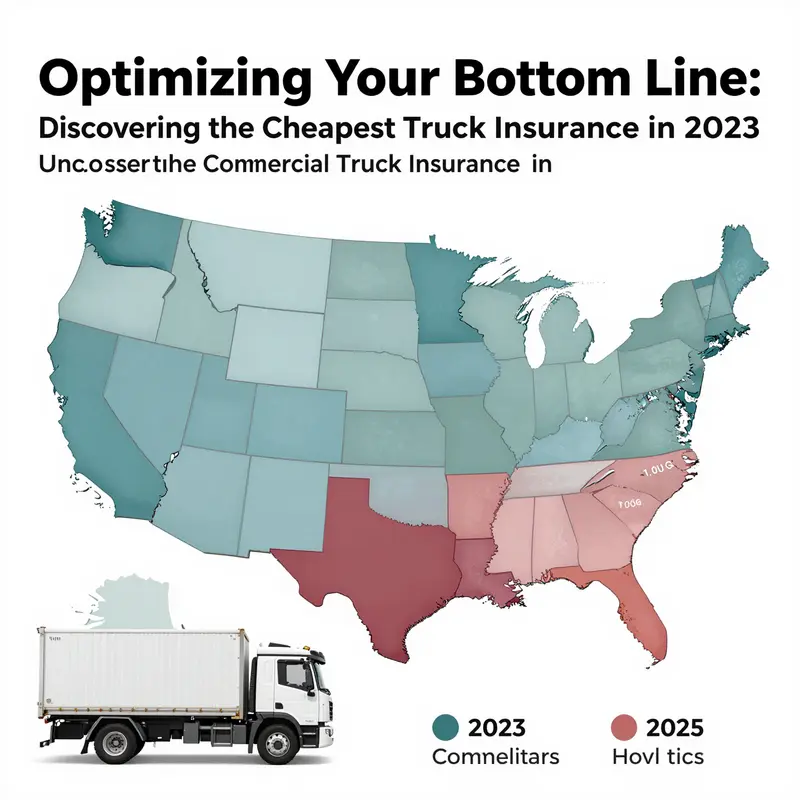
The question of which state offers the cheapest commercial truck insurance in 2023 is more complex than a single bottom-line number. Insurance costs for fleets do not move in a straight line across the map; they bend and shift with how states manage risk, how often trucks share the road, and how litigious or regulated the environment happens to be. In 2023, premium data collected by state across heavy-truck coverage showed striking disparities. The broader, fleet-level lens reveals a landscape where a handful of states register much higher averages due to the mix of factors that determine risk, while others appear comparatively affordable because their risk profiles, operating environments, and policy structures align differently with what insurers model as probable losses. What follows is a narrative that threads together the numbers, the underpinnings of those numbers, and the practical implications for fleets trying to minimize cost without compromising safety or coverage quality.
To begin, the dataset paints a picture of regional variation not simply as a matter of geography but as a reflection of how risk and exposure accumulate in different environments. California emerges as a particularly costly environment for commercial truck coverage. Reported averages hover around seven thousand eight hundred dollars per year in this state, a figure that sits well above the national median for many fleets. Several intertwined drivers lift California’s premiums: dense urban corridors produce a higher density of traffic incidents and complex liability scenarios; the legal climate often translates into higher claim costs and a higher likelihood of settlements; and the regulatory regime, with its stringently enforced safety and equipment standards, adds layers of compliance that, in aggregate, heighten the expected cost of coverage. The combination of heavy traffic, proximity to ports and logistics hubs, and higher exposure to multi-vehicle scenarios tends to add layers of risk that insurers quantify through higher premiums.
New York presents a parallel story of elevated costs, with averages in the same seven-figure relative range when viewed through the lens of annual premiums. Urban density and the intricacies of city driving—congested streets, municipal permits, frequent loading and unloading in tight spaces, and the sheer volume of liability exposure—create a demanding underwriting environment. The premiums for fleets operating in New York reflect this: the concentration of risk in metropolitan corridors translates into more frequent claims and more costly settlements, which in turn shape actuarial models used for pricing. Yet even with high absolute figures, New York’s premium dynamics invite a nuanced interpretation: fleets might find that the marginal cost of risk increases sharply when operations are concentrated in the most congested urban zones but may level off with more distributed operations across upstate regions or specialized routes that avoid the densest urban centers.
Texas, a behemoth in its own right with vast logistics networks and a growing freight market, shows an average premium around six thousand two hundred dollars annually. The state’s expansive geography and robust trucking activity create a broad spectrum of risk profiles. On one end, corridors that funnel freight through busy urban gateways can buoy premium levels due to traffic, urban enforcement, and the potential for more frequent incidents. On the other end, more desolate routes or regions with lower accident frequencies can temper overall costs for fleets operating in those areas. Texas demonstrates how scale and diversity of operation can produce a mixed bag of pricing signals: a fleet that operates primarily along trunk lines might face different price pressures than one that concentrates on shorter regional runs with different exposure patterns.
Meanwhile, North Dakota’s average premium—around five thousand one hundred dollars—stands out as comparatively more affordable within the sample of states highlighted in the 2023 dataset. Several factors help explain this relative affordability. The population density is much lower, traffic volumes are more dispersed, and there are fewer reported accidents on a per-mile basis in many parts of the state. In that sense, risk exposures are lower on the accident and congestion fronts. The climate, while severe in winter months, does not inherently inflate liability or cargo risk the way crowded urban corridors can. In short, the operating environment in North Dakota—fewer urban intersections, longer travel distances with less curbside interaction, and a lower collision frequency—translates into a pricing landscape that, when averaged across fleets, appears more favorable. That said, the cost advantage in North Dakota can be context-specific. A fleet that expands its operations to include more urbanized or cross-border routes, or one that concentrates its activity in a state with different regulatory demands or insurance markets, may see premiums move upward. The lesson is not that North Dakota is universally cheap for every fleet, but that geography interacts with fleet profile to shape baseline pricing.
These four states—California, New York, Texas, and North Dakota—offer a concise snapshot of how geography, traffic patterns, and risk ecosystems translate into premiums. They illuminate the core drivers at play: population density and urban structure push up risk and costs; regulatory and legal environments influence the cost of claims and settlements; and the distribution and nature of freight activity—permitted routes, cargo types, and typical operating hours—shape exposure. A broader, national view would reveal further nuances: coastal states with port activity tend to present higher risk in certain segments, while interior states with long-haul corridors can accumulate exposure differently, often with a mix of high-mileage operations and lower urban risk. The deeper takeaway is that premium levels are not random; they are disciplined reflections of measurable risk attributes that insurers price with actuarial precision.
In discussing the question of the cheapest state, it is critical to acknowledge how the data sources and coverage definitions color the answer. The 2023 figures cited here come from a state-by-state premium comparison with a focus on heavy-truck coverage that includes liability, physical damage, cargo, and related endorsements. This is not the same as a single, all-encompassing metric for “commercial auto insurance” that might be reported in other studies or contexts. The earlier overview from broader commercial auto data cited Florida as the state with the highest average premium in that broader category, with Florida at about $1,497 per year and California and Texas following close behind in the lower thousand-dollar range. Those numbers reflect a different scope—likely policy-level averages across a wider set of commercial auto lines, possibly with smaller fleets or different coverage layers. The upshot is that the cheapest state in the strict sense of heavy-truck coverage can differ from the cheapest state in a broader commercial auto sense. When fleets examine cost, they must align the data with their own operating footprint, their cargo mix, their typical routes, and their preferred policy structure.
That nuance matters because the economics of coverage hinge on how risk is distributed across a fleet’s operations. A company running long-haul routes through multiple states may experience a different premium profile than a regional operator concentrated in a single state with fewer miles per truck and a comparatively controlled risk environment. Premiums are not merely a function of a state’s name or its overall risk narrative; they are a scorecard built from miles traveled, accident history, cargo types, driver quality programs, vehicle age, maintenance discipline, and the presence of risk controls such as telematics and safety training. In practice, fleet managers who seek to manage insurance costs effectively must look beyond headline state averages and drill into the components of their own exposure.
Within that frame, the internal networking of policy design begins to matter as much as geography. When a fleet can implement robust risk management programs—driver coaching, advanced telematics, maintenance protocols, and proactive safety cultures—premium costs respond, often in the form of lower deductibles, improved loss ratios, and favorable underwriting decisions. Insurers price not only the state, but also the specific risk profile of the fleet. That is why two fleets operating in the same state can see different premium outcomes if one has a stronger safety record or a more sophisticated risk control program. Conversely, a fleet with high mileage on high-risk corridors—even if confined to a single state—may see premium inflation that outpaces state-average trends.
Operational strategy thus intersects with insurance economics in meaningful ways. For fleets with multi-state operations, the question becomes how to structure coverage to balance cost and protection across the geographic spread. Some operators pursue tiered or multi-policy structures that segment risk by operation type or route, while others consolidate policies for administrative simplicity and potentially improved loss experience. The optimal approach often hinges on a combination of actual risk, baseline premium signals, and a willingness to invest in risk-reduction measures that insurers reward with more favorable pricing. In this context, the previously cited state-level examples serve as anchors rather than final verdicts. They illustrate the spectrum of baseline conditions, while the ultimate cost outcome remains contingent on fleet-specific risk management and operating patterns.
For readers seeking to compare against official baselines, the National Association of Insurance Commissioners (NAIC) maintains a comprehensive reference that aggregates state-by-state commercial auto rate information. While the chapter’s focus centers on the operational implications of the data, the NAIC resource offers a broader, regulatory-supported view that can help fleets benchmark their experiences against a standardized framework. This external resource can provide context for how states price risk at a macro level and how those macro trends relate to the more granular experience of individual fleets. NAIC Insurance Rates by State.
The practical takeaway for fleet operators is not to chase a single cheapest state, but to pursue a pricing strategy that aligns with the specific risk profile and geographic footprint of the business. If a fleet operates heavily in a high-risk urban corridor, the premium signal is likely to reflect that exposure, regardless of any single state’s overall affordability. Conversely, fleets that can optimize routes, reduce high-risk interventions, and demonstrate a strong safety culture may unlock better pricing even in more expensive states. The data from 2023 underscores that the cost of insurance is a function of probability and consequences: the likelihood of accidents, cargo losses, and liability claims, and the severity of those losses when they occur. The policy design, safety investments, and operational discipline then determine how much of that risk is transferred to the insurer and at what price.
The chapter’s broader narrative remains consistent with the idea that insurance costs are a systemic reflection of how goods move and how people on the road interact with those movements. As the trucking industry continues to evolve—with shifts in freight demand, regulatory expectations, and technologies that improve safety and efficiency—premium dynamics will respond accordingly. Fleets that stay informed about the state-by-state landscape while actively managing risk through training, maintenance, and technology will be better positioned to navigate the price signals that 2023’s data reveal. The conversation about cheapest states thus becomes part of a larger dialogue about risk-aware growth and prudent capital allocation in fleet operations. In the end, the most valuable insight is not which state is cheapest, but how to translate state-level signals into a durable, cost-conscious, and compliant insurance strategy that sustains reliable service across the network.
To further explore how regulatory environments and cross-border considerations shape risk and pricing, readers can engage with industry-focused discussions such as the TCAS cross-border regulatory issues event, which offers context on how regulatory differences across borders and states influence risk exposure and coverage decisions. cross-border regulatory issues event.
For those seeking a formal, nationwide data baseline, the NAIC resource remains a key referenced point in the literature on state-by-state rate dynamics. It provides a formal aggregator view that complements the fleet-level narratives discussed here and helps frame decisions within the broader regulatory and market landscape. NAIC Insurance Rates by State.
The Price of Protection: Florida’s Insurance Ecosystem and the Quest for the Cheapest Commercial Truck Coverage in 2023
Florida, in the landscape of commercial trucking, stands out not because its fleets are uniquely riskier in every sense, but because the state’s insurance environment amplifies risk in a way that ripples through every policy and premium. When exploring which state offers the cheapest commercial truck insurance in 2023, Florida functions as a cautionary case study: a lens that reveals how regulatory design, fraud dynamics, traffic patterns, weather risks, and litigation culture all conspire to push up costs. It also foregrounds why any search for the “cheapest state” must be anchored in a careful reading of local risk, regulatory structures, and market discipline. The Florida story is not simply one of high numbers; it is a narrative about how policy design and operational realities intersect to shape affordability for fleets, independent owner-operators, and regional carriers alike.
At the heart of Florida’s premium profile is its no-fault auto insurance regime, which mandates Personal Injury Protection (PIP) coverage for all drivers. This framework was intended to speed medical payments and reduce litigation time by shifting medical expense responsibility away from fault-based disputes. In practice, though, it has evolved into a material driver of claims costs for commercial insurers. PIP, in a dense and highly trafficked state, creates a broad exposure: a single accident can trigger a cascade of medical billing, rehabilitation costs, and potential subrogation complexity. The cost of these medical elements is not evenly distributed. Urban hubs with high population density, such as Miami and Orlando, experience higher claim frequencies and larger per-claim costs, which in turn feed into premium calculations for fleets operating in those markets.
A 2023 report from the Coalition Against Insurance Fraud places a sharp number on one of the state’s structural vulnerabilities: PIP-related fraud costs Florida’s insurers upward of one billion dollars annually. Staged accidents, fraudulent billing schemes, and inflated medical treatment claims all play a role. The statestill face fraud hotspots rooted in urban networks where medical providers and claim processes intersect with high traffic and rapid claim submission cycles. This fraud overlay does not only affect the mega-claims; it lifts the overall claims cost curve, which carriers must recoup through higher premiums across the board. For commercial fleets, this means that even well-organized safety programs and efficient loss control can be offset by industry-wide claims inflation that originates in a relatively small but pernicious portion of the market.
The geography of risk in Florida compounds these financial pressures. The state’s extensive coastline and tourism-driven traffic patterns translate into unique exposure scenarios: dense midday congestion, seasonal surges in vehicle miles, and a mix of urban arterials and rural connectors that test driver performance and vehicle resilience in varied ways. Severe weather events, from tropical storms to sudden downpours, add another layer of volatility to loss experience. For fleets, variability in weather-driven events means more weather-related incidents and more complex claims negotiations when incidents occur. The result is a premium calculus that factors not only the cost of medical and liability claims but also the operational disruption and potential downtime costs that accompany weather and congestion. When these elements are combined with the legal environment that tends to be favorable to plaintiffs in many injury-related lawsuits, the anticipated cost of insurance climbs further. Settlement dynamics and litigation cost intensity influence the reserve requirements insurers carry and the premiums they set, particularly for commercial lines where the loss exposure is multi-vehicle and long-tailed relative to other property and casualty lines.
All of this shapes Florida’s reputation as a high-cost environment for commercial trucking insurance. But it is important to see this not as an isolated anomaly but as a case that illuminates the broader mechanics of cost formation in 2023. Insurance pricing for fleets is not a single number that can be read off a chart and applied uniformly. It is a living calculation that sits at the intersection of regulatory design, market behavior, and the real-world risk profile of fleets operating in a given state. In Florida, the political and regulatory framework around no-fault, the documented fraud dynamics, the traffic density, and the weather risk profile all reinforce one another. The premium story in this state demonstrates how structural risk, if not offset by strong loss-control incentives or reform, tends to elevate the price of protection for commercial operators.
For fleet managers and risk officers, the practical implications are clear: premium costs in a high-risk state like Florida require a multifaceted response that prioritizes risk reduction as a driver of affordability. The levers are not merely price shopping or selecting a single carrier that happens to have a better volume discount. They are about aligning driving practices with the realities of the environment, investing in preventive systems, and coordinating with insurers on strategies that can demonstrably reduce losses. In such a framework, comprehensive safety programs, disciplined driver training, and proactive maintenance take on added importance. A fleet that can demonstrate reduced exposure—by keeping speeds reasonable in high-traffic corridors, using telematics to monitor risky maneuvers, and ensuring robust incident response protocols—can begin to bend the cost curve even when the underlying market frequency remains elevated.
The pricing puzzle in Florida is also a reminder that price signals in insurance markets are sometimes stubborn hinges rather than straight lines. The no-fault structure and the fraud environment magnify the variability in pricing across carriers. The same fleet can see markedly different quotes from different insurers not because of a single policy design decision but because each carrier’s pricing model weighs risk indicators, fraud risk, and loss experience in subtly different ways. The effect is a marketplace where premium differentials can persist across the state’s regions and across fleet profiles. For a buyer seeking to identify the cheapest option, the lesson is not to trust a single source but to engage in a structured, defensible comparison that accounts for the full spectrum of risk and cost drivers, including the hidden costs that may come with disputes, claim processing, and potential litigation exposure.
There is value in examining how the market adapts in response to these structural pressures. Some insurers seek to differentiate themselves not just on price but on coverage architecture and service design. They may emphasize features like safer-driver incentives, enhanced loss-control resources, and more favorable claim-handling timelines as competitive differentiators. Yet in Florida, even these improvements must negotiate the same spiraling baseline costs created by PIP-related claims and litigation dynamics. The result is a pricing ecosystem where the cheapest policy is not simply the cheapest sticker price; it is a policy that aligns premium cost with actual risk and with the insurer’s ability to manage that risk effectively through preventive and mitigative measures.
What does this mean for the broader question of which state offers the cheapest commercial truck insurance in 2023? The short answer is that Florida’s story demonstrates why a straightforward price comparison across states can be misleading. The cheapest state, if it can be identified at all in a single snapshot, depends on the precise mix of factors—regulatory design, fraud prevalence, traffic exposure, climate volatility, and the strength of loss-control offerings available to fleets. The lack of an authoritative, comprehensive state-by-state ranking in the given research overview does not undermine this point; it underscores the need to interpret any such ranking with a careful eye toward local cost drivers. The Florida case invites risk professionals to ask not only what a state’s average premium is but what contributes to that premium and what levers exist to offset it.
In the search for cost-effective coverage, fleets may consider looking beyond price alone and toward the broader market dynamics that influence premiums. An accessible angle is to consider market efficiency and capacity in the trucking insurance space. In markets where there is excess capacity or vigorous competition, carriers may compete on price, service quality, and policy design in ways that gradually compress premiums without sacrificing coverage. Conversely, in markets where capacity is tighter and claims experience is more contentious, price competition can be tempered by a higher baseline risk, leading to premium levels that persist even as fleets adopt best practices. To gain a practical sense of these dynamics, practitioners can consult sector-focused analyses that discuss how capacity and competition influence pricing in the trucking insurance landscape. In this context, the notion of “excess capacity in the trucking market” becomes particularly relevant as a lens to interpret premium movements and to identify corridors where competitive pricing might be more attainable. See the discussion of excess capacity in the trucking market insights for a broader frame on how market balance can shape insurance costs across regions. https://truckplusllc.com/excess-capacity-in-the-trucking-market-insights/
Beyond the structural and market considerations, another layer worth acknowledging is the data gap that surrounds state-by-state pricing. The initial research overview notes that while Florida shows the highest average premium, and California and Texas follow with sizable figures, the data do not provide a clear map of the cheapest states. In practical terms, this means readers should exercise caution when extrapolating a national conclusion from a few high-profile states. The cheapest state could be a matter of where a fleet operates most heavily, the mix of vehicle types in the fleet, and the specific risk-management practices a company employs. It could also reflect differences in regulatory emphasis on preventive safety, insurer pricing philosophies, and the availability of premium-reducing options like bundled coverage, risk pools, or alternative risk transfer arrangements. The takeaway is not only about which state resides at the bottom of the cost chart but about understanding the local determinants that render any given state more or less affordable for commercial trucking.
Within this frame, the Florida example helps anchor a practical approach to analyzing cost in 2023. When comparing states or seeking the cheapest option, a fleet should consider: the regulatory environment, especially how no-fault schemes and PIP provisions affect medical-related claim costs; the depth of fraud risk and the corresponding claims inflation; traffic density and weather risk as built into loss expectations; and the legal climate around settlements, which can color the severity and duration of claims handling. Assessed together, these factors offer a more robust guide to affordability than a simple average premium figure. They also highlight why a fleet’s own risk profile and loss history matter as much as, if not more than, the state label attached to a policy.
The Florida case thus becomes a composite lesson for the broader article. It demonstrates that the cheapest state is not necessarily the one with the lowest number on a single chart. It is the state in which the fleet’s risk management framework aligns with the market’s pricing logic, where the carrier recognizes a fleet’s legitimate risk while rewarding demonstrable safety performance. In 2023, when fleets pursued efficiency and cost discipline in a volatile environment, Florida’s price signals underscored the need to couple premium shopping with aggressive loss prevention. They underscored the idea that the cheapest coverage is not a pure price but a balance between price, value, and the capacity to manage and reduce risk over time.
As readers move forward, they should carry this integrated view into the next chapters. The broader research landscape continues to illuminate the diversity of state-level premium experiences, and this chapter’s focus on Florida sets the stage for a deeper understanding of how regulatory design and market dynamics shape affordability. It invites fleets to translate high-level insights into concrete risk-management actions, from driver training and safety protocols to maintenance practices and incident response planning. It also invites a careful, data-informed approach to comparing states—one that recognizes the limits of averages and the importance of context, coverage specifics, and the quality of loss control programs. In doing so, readers can better discern not just where premiums come down, but how to position a fleet to benefit from the kinds of market conditions that yield sustainable, long-run affordability.
For readers who want to explore broader market dynamics, the linked resource on excess capacity in the trucking market offers a complementary perspective. It helps explain how market balance affects pricing and why price alone cannot capture the full value or risk of a policy in a high-exposure environment like Florida. The discussion emphasizes that price signals are part of a larger system of risk management, policy design, and carrier practices that together determine what a fleet actually pays for protection. By weaving together these threads, the chapter frames a more nuanced answer to the central question: what state has the cheapest commercial truck insurance in 2023? It points toward a conclusion that the answer depends as much on local risk management and market structure as on any single catalog of state premiums.
External reading can deepen this understanding. For a broader analysis of Florida’s premium dynamics and the regulatory and fraud-related factors that shape them, see the external resource that consolidates why Florida car insurance costs can be so high and how these drivers scale into commercial contexts. This external perspective complements the Florida case study and helps situate fleet decisions within a more complete view of state-by-state risk and price in 2023.
In sum, Florida’s premium landscape illuminates the core truth behind the question of cheapest state: affordability in commercial truck insurance is a function of risk, regulation, market structure, and the effectiveness of a fleet’s risk-reduction program. The state with the lowest premiums, if it can be definitively named, will be the one where all these factors align to produce lower expected losses, lower fraud-induced cost drift, and a competitive, capable insurance market that rewards prudent risk management rather than merely discounting price. The Florida case does more than illustrate a high-cost outlier; it clarifies the dynamics that any strong answer to the “which state is cheapest” question must address, and it invites readers to approach insurance as a strategic element of fleet operations rather than a fixed budget line fixed by geography alone.
External resource: Why Is Florida Car Insurance So High? Key Factors Explained. https://www.quote.com/blog/florida-car-insurance-high/
Decoding the State-by-State Puzzle: The Factors that Lift or Lower Commercial Truck Insurance Premiums in 2023

Across states, commercial truck insurance premiums in 2023 varied due to a complex mix of regulation, exposure, and market dynamics. Rather than a single cheapest state, the landscape shows pockets of favorable pricing that depend on route structure, cargo mix, and safety performance. Data can mislead if treated only as headline averages, because the cheapest state for one fleet, cargo type, and coverage level may not be the cheapest for another. The key is to understand the drivers behind pricing and how they interact with each operator’s footprint.\n\nRegulatory landscape and compliance costs shape price trajectories. Some states impose stricter safety requirements, higher inspection cadence, or advanced electronic logging mandates that raise operating costs and perceived risk. In regions with rigorous mandates, insurers may price higher to cover the added exposure, while states with lighter regulatory burdens tend to offer a more favorable backdrop for pricing, all else equal.\n\nTraffic density and accident rates exert a persistent influence on risk assessment. States with dense urban corridors and multi-modal hubs see more urban collisions and property damage claims, which can elevate premiums. Rural states may enjoy lower claim frequencies but face longer trip lengths and exposure to different risk profiles, such as fatigue and maintenance issues on long-haul routes.\n\nWeather and road conditions add another layer. Harsh winter climates increase maintenance costs and weather-related claim risk, while hurricane, flood, or wildfire zones push exposure to specific routes and cargo types. Seasonal patterns also matter, as insurers adjust pricing in response to forecasted risk windows.\n\nLocal risk profiles and historical claims history color pricing. States with higher prior claim activity or theft rates can see higher baseline risk assessments that persist across underwriting cycles. Conversely, states with stable or improving loss histories may enjoy relatively lower premiums, conditional on other factors like fleet safety programs and coverage choices.\n\nDriver demographics and labor markets influence risk pools. Regions with driver shortages can see younger or less experienced operators in the fleet, raising risk; alternatively, states with training standards and safety incentives can cultivate more experienced crews and dampen risk over time.\n\nThe type of vehicle and usage patterns, including cargo type and route structure, matter. States that anchor major freight corridors or intermodal hubs experience higher truck activity and exposure, which can push premiums higher. The regulatory constraints around certain cargoes and the operational complexity of routes are also priced into the coverage.\n\nMarket competition and capacity shape price dynamics. In more competitive markets, carriers may compete on price and endorsements, whereas in tighter markets the lack of competition can widen price differentials. Capacity cycles, claims experience, and the regional economy influence how aggressively insurers price coverage and what terms they offer.\n\nState-funded programs and legal environment also influence pricing trajectories. Tort reform, caps on damages, and public policy choices can affect liability costs and overall premium levels. These factors interact with availability of insurance capacity and the breadth of optional coverages.\n\nPractical implications for fleets operating across multiple states. When routing decisions span jurisdictions, the composite risk picture changes with each state. A plan that optimizes safety performance in one state may not translate to another, so a portfolio approach to coverage—aligning liability, physical damage, and cargo protections with geographic risk—can help manage cost without sacrificing protection.\n\nData sources and cautions. Data sources that compile state-level claims history, regulatory updates, and market participation provide more reliable context than national averages. In the United States, NAIC materials and state insurance departments offer policy guidelines and market insights that help explain price trajectories across jurisdictions.
The Hidden Costs and Calculated Bets: Unraveling the Cheapest Commercial Truck Insurance in 2023

In closing, the search for the cheapest commercial truck insurance in 2023 is best understood as a calibrated balance among three forces: price, protection, and performance. The highest premiums in certain states reflect structural risk factors that stakeholders must acknowledge and manage. The absence of a definitive cheapest state in the data reminds us that location is only one piece of the equation. The smartest fleets treat insurance not as a fixed cost to be minimized but as a strategic tool that, when used wisely, amplifies safety, reliability, and financial stability. The evidence from 2023 supports a disciplined approach: prioritize comprehensive coverage where the risk is highest; use data-driven discounts to reward safe operations; structure policies to optimize price without weakening protection; seek group rates where possible; and re-evaluate regularly so that shifts in driving patterns, maintenance costs, and regulatory expectations do not outpace the capacity to manage risk. The goal is value, not velocity. The cheapest price tag may be enticing in the short term, but the fleet that earns real savings does so by weaving together robust coverage, smart technology adoption, and proactive risk management. For readers who want to frame their own search within a broader market context, the Insurance Information Institute offers extensive industry perspectives on how insurance costs are evaluated and priced across commercial trucking. See https://www.iii.org for additional data-driven context on risk, pricing dynamics, and industry trends. This external reference complements the internal insights and anchors the discussion in a wider understanding of how the market evolves in response to risk, regulation, and technology.
Final thoughts
The journey through understanding commercial truck insurance in 2023 reveals the complexities of cost variances across states. While high premiums in states like Florida stand out, the quest for identifying the cheapest options continues. Engaging with insurance providers, considering geographical influences, and staying informed on regulatory changes will empower company leaders to make strategic choices. This understanding not only aids in budget optimization but also strengthens operational resilience in a competitive market.