
In today’s fast-evolving transportation landscape, managing commercial truck operations efficiently is paramount. One critical aspect that often gets overlooked is the timely update of your vehicle’s registration details, especially the address. For Logistics & Freight Company Owners, Construction & Mining Enterprise Procurement Teams, and Small Business Owners with Delivery Fleets, ensuring that your NY State commercial truck’s address is current is not just a formality—it’s a legal obligation and crucial for operational effectiveness. This guide unpacks the step-by-step process for changing your commercial truck’s address online through the NY DMV, clarifies the significance of keeping this information updated, navigates the online system, addresses common issues you may encounter, and underscores the legal responsibilities tied to this task. Equip yourself with the knowledge to streamline your updates and maintain compliance in an ever-demanding industry.
Invisible on the Road, Crucial in the Registry: Updating a New York State Commercial Truck’s Address Online
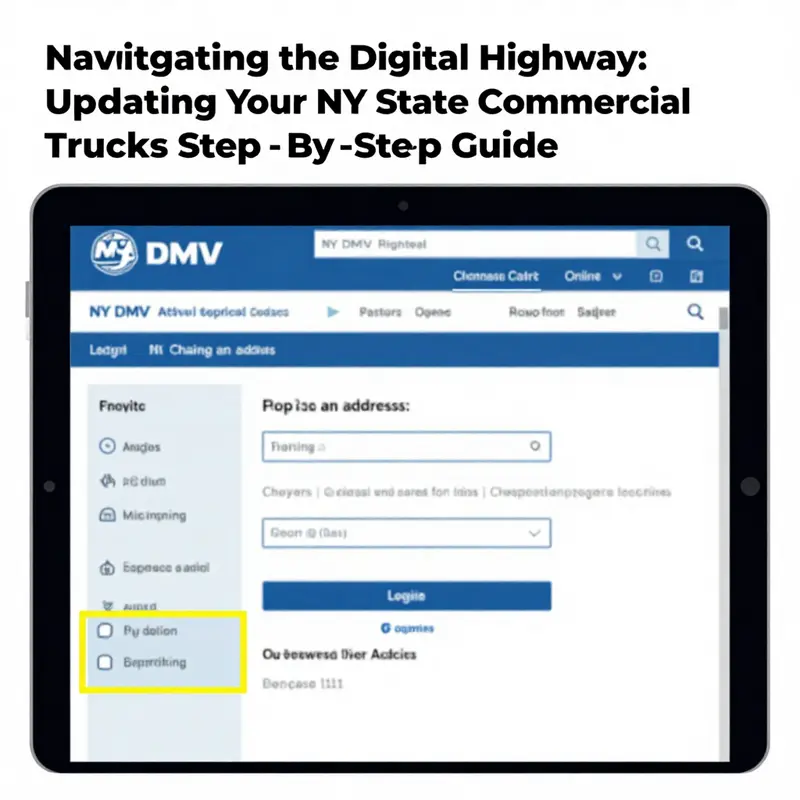
Keeping a commercial fleet compliant starts with the basics: accurate records. An address that doesn’t reflect where a vehicle truly resides can ripple through renewal notices, compliance documents, and even notices from enforcement agencies. In New York, where the DMV manages registrations for commercial trucks as part of a broader network of fleets, the address you have on file is more than a mailing line; it’s a key reference that ties your business to the state’s regulatory framework. When a truck’s base of operations moves, whether across town or across a county line, updating the address promptly helps ensure that registrations, plates, and notices arrive where your team expects them. This chapter follows one practical path to make that update online, a path designed to minimize downtime and reduce the risk of missed deadlines.
First comes access. The NY DMV requires you to use a MyDMV account to change your address online. If you don’t already have one, you’ll be guided through creating a profile on the official DMV site. The process hinges on your Customer ID, or CID, which is the credential that links licensing records to you and to any vehicles you own or manage. For someone steering a commercial fleet, the CID is a central key. Once you’ve registered or logged in, you’re ready to move into the address-change workflow. This initial step is simple in theory but critical in practice because the CID is used to verify your identity and to tie the request to the right fleet or vehicle record.
Next, navigate to the Change My Address service. Within the DMV dashboard, you’ll locate the DMV Services area and select the option that reads Change My Address. The online system is structured to verify that the person initiating the change is authorized to do so, and that the new address corresponds to the records already held by the DMV. The emphasis here is accuracy: entering the correct street number, suite or unit, city, state, and ZIP code matters as much as any other data point on your sheet. If your operation runs from a commercial base of operations that uses a different mailing address for paperwork, you’ll want to capture both the mailing address and the physical address so that notices reach the right people at the right time.
With the service opened, you’ll be asked to fill in the new address details. The online form prompts you to confirm that the new information reflects where the operation truly operates from, and that any corporate or business name tied to the vehicle registration is accurately reflected in the field where required. The system also prompts you to review the contact information tied to the account, because the DMV may send confirmations and notices to the mailing address on file or to the email address associated with your MyDMV account. Small mismatches — a missing apartment number, a changed street direction, or a zip code update not saved — can trigger delays or additional verification steps. Take the time to double-check every field before submitting.
After you’ve entered the new address, the next step is submission and confirmation. The DMV’s online process is designed to process the update electronically, and you’ll receive on-screen confirmation that the address change has been recorded. In many cases you’ll also receive an email summary or a printable receipt for your records. The official response is usually prompt, but the exact timing can vary based on system loads and the scale of the change. For a fleet manager, a printed or digital copy can be kept with the vehicle’s registration packet and used as a point of reference during audits or inspections. The critical outcome is that the DMV’s records will reflect the new address and begin to route mail accordingly.
Legal and practical implications abound when a truck’s address is not current. New York law requires notification within 10 days of moving. That window is short enough to require discipline in every fleet, especially when multiple vehicles share a central address but are registered under different titles or owner entities. The address on file impacts not just registration renewal notices but reminders related to compliance documentation, hazmat endorsements, or permit renewals that fleets may rely on to stay in service. A late update can disrupt the flow of essential communications, increasing the risk of missed deadlines, late fees, or even lapses in coverage for insurance certificates or fleet compliance reporting. Consider how a single mislabeled line in a database can cascade into operational delays or regulatory headaches that affect the bottom line.
Opting for the online path is typically faster than mailing MV-232 forms, but both avenues exist. The mail option can be preferable in certain circumstances, such as when your fleet maintains paper records at a centralized hub or when a physical signature is required for internal controls. The online platform, however, streamlines verification and reduces the back-and-forth that can bog down the update process. Fleet managers often appreciate the digital trail: timestamps, confirmations, and potential follow-up prompts that guide a user through any post-submission steps. If you’re updating multiple vehicles, you may notice that the MyDMV interface allows you to handle several changes in a single session, which can save time and minimize disruption to daily operations.
Beyond the mechanics of submitting an address change, there is value in aligning the address across all records tied to the truck. The business address that appears on registrations should be consistent with the address where notices are actually received, whether that is a dispatch center, a corporate office, or a remote terminal where the vehicle is based. If you operate out of a shared facility, ensure the address you provide is the one recognized by the DMV for vehicle-related correspondence. You may also want to coordinate updates with other administrators in the organization — those who handle registrations in different states or regions, those who manage insurance, or those who coordinate inspections. A cohesive update plan reduces the risk that a notice will go missing in the shuffle of file cabinets, email folders, and postal mail.
For fleets aiming to understand the broader regulatory landscape while performing routine changes, there is value in reviewing the wider context of how emissions and compliance rules intersect with record-keeping. For example, industry stakeholders continually seek clarity on how evolving emissions regulations affect fleet data management. oems-seek-clarity-in-emissions-regulations This kind of background reinforces why accurate address data matters: it ensures that when regulators or partners reach out, your team has a precise point of contact and location to respond from. Fleet managers who stay on top of address maintenance are better positioned to demonstrate diligence during audits and when coordinating with authorities on issues that touch multiple regulatory domains. Ultimately, the online change process is part of a broader culture of proactive record-keeping that keeps trucks moving and documents in order.
For the most current steps and official guidance, always refer to the official NY DMV website. The online address-change service is designed to be straightforward, but it exists within a larger ecosystem of state rules and timelines that can shift. When in doubt, cross-check the online instructions with your internal fleet policy and, if needed, consult your compliance team to ensure that the update is reflected across all relevant systems and platforms. The key is to keep a clear record of when you updated, who approved the change, and how the new address will be used for future correspondence, billing, and renewal notices. By integrating this practice into routine fleet management, drivers and managers can reduce unnecessary downtime and keep regulatory obligations aligned with daily operations. For more information, consult the official NY DMV page and keep your fleet’s contact data precise and current.
https://dmv.ny.gov/online-services/change-your-address
Tracking Every Mile: The Critical Practice of Updating Your NY State Commercial Truck Address Online
Every long-haul journey begins with accurate data, and in trucking, the address on file for a commercial vehicle is more than a line on a form. It is the conduit for almost every critical document that keeps a truck on the road—registration renewals, compliance notices, and notices that spell out safety and regulatory requirements. In New York State, where the regulatory web is tightly woven with programmatic notices and fee schedules, an outdated address is not a minor nuisance. It disrupts communications, delays renewals, and can ripple through a carrier’s operational timeline. For the modern fleet, the best defense against miscommunication is a proactive, online address update that syncs the vehicle’s records with the actual place of business or operation. This is not just about mail delivery, though that matters; it is about the integrity of the vehicle’s documentation, the certainty of compliance, and the ability to respond promptly to any notices that the DMV, IRP, or local authorities may issue. The state’s system is designed to handle these updates securely and efficiently, provided the user follows the correct online path and verifies identity as required. The shift to digital processing has transformed what used to be a paper-heavy process into a streamlined, almost instantaneous change that travels through the same electronic channels that handle registrations, suspensions, and compliance checks. In a world where delays can translate into penalties or downtime, having a current address is a form of risk management that every fleet can afford to adopt. And because commercial operations tend to rely on accurate address data across multiple jurisdictions, keeping the NY records up to date helps preserve consistency with apportioned registrations and the broader regulatory framework that governs trucking across state lines. In short, it is about reliability, accountability, and staying ahead of the clock that governs renewal notices and compliance deadlines. The importance of address accuracy extends beyond mere mail routing; it ties directly into the heart of how the state tracks ownership, operation, and accountability for commercial vehicles. USPS forwarding is valuable for daily mail, but it does not bridge the gap to the DMV’s separate databases. A change of address filed with the Postal Service does not automatically propagate to the DMV’s records, so a separate notification is required. For operators who navigate the maze of IRP with apportioned plates, ensuring that the principal place of business and the operating address align across all registrations is essential. A mismatched address can complicate audits and lead to mismatches in renewal reminders, tax assessments, and compliance documentation. The public-facing benefits of keeping the address current are clear: fewer missed notices, more predictable renewal timelines, and a smoother path through regulatory checks. The DMV’s online gateway exists to make this straightforward while preserving security and identity verification, an important safeguard in a sector where fleet changes and ownership transfers happen routinely. This is a place where the digital and physical realities of trucking intersect: the right address on file can mean the difference between receiving an important notice on time and missing it entirely, with consequences that extend from the cab to the company’s bottom line. In addition to these regulatory considerations, accurate records support broader transportation-system efficiency in the state. When address data are current, work zones, safety initiatives, and infrastructure projects—areas of intense focus for city and state transportation authorities—can be communicated to the right operators without delay. The public record remains more trustworthy, and that credibility pays off in smoother permit processes and better coordination with enforcement and compliance programs. For fleet managers and independent operators alike, the operational utility of a timely online update cannot be understated. The online route is clearly preferable to mailing forms, as it reduces processing time and minimizes the chance of lost or misrouted paperwork. The steps are designed to be intuitive on the DMV’s official platform, and they rely on identity verification to prevent unauthorized changes. The process begins with accessing a secure portal that is part of the state’s DMV framework and requires credentials tied to the vehicle’s registration records. As with many modern government services, the system uses your Customer ID, which appears on critical documents such as driver licenses and vehicle registrations. Having that ID at hand streamlines the experience, but even without it, the portal provides guidance to recover access or verify your information through alternative means. Once you are inside the online service, you navigate to the change of address option under the Services menu. There, you will encounter a structured form that asks for the new residence address and ZIP code. The form is designed to verify your identity through multiple data points, which helps protect against fraudulent changes while keeping the process smooth for legitimate operators. You review the information for accuracy, knowing that the DMV will record the update electronically and reflect it across the vehicle’s records. Upon submission, the system confirms the change and provides a processing log you can reference. In practice, most online updates are completed quickly, and you can expect notices tied to your vehicle to begin routing to the new address without the delays that often accompany mail-based filings. It is worth noting that the state’s rules require notification within a specific window after moving. In New York, timely action matters for both personal drivers and commercial operators, but for fleets the clock is particularly critical because renewal notices and compliance documents depend on having the current address on file. The 10-day rule is not merely ceremonial; it is a practical deadline that prompts operators to address any changes with urgency to avoid gaps in coverage or oversight. For those who prefer a paper trail, the DMV does offer a mail-in alternative using a specific form, but the online option is widely acknowledged as faster, more reliable, and easier to track. When a carrier operates across multiple jurisdictions or maintains apportioned plates under programs that link registrations to the operations’ principal place of business, consistency across all records becomes even more important. An outdated address can complicate audits and delay communications that verify compliance with safety and performance standards. It can also affect the timely receipt of notices related to vehicle inspections, registration renewals, or changes in regulation that may affect a fleet’s operating authority. The practical implications extend to the day-to-day management of a fleet. Dispatch teams rely on timely notices to plan maintenance windows, renewals, and regulatory reporting. If those notices are delayed, the fleet might be forced into last-minute rushes or, worse, miss a statutory deadline. The online system’s ability to route correspondence to the correct address helps keep maintenance schedules aligned with the regulatory calendar and reduces the chance that a vehicle will fall out of compliance while awaiting paperwork. In this sense, updating an address online is not a one-off administrative chore; it is an ongoing act of governance that underpins safe, legal, and efficient operation. For operators who manage multiple vehicles, the address update becomes part of a larger discipline: ensuring that the fleet’s legal footprint matches its operational footprint across states and regions. This fidelity supports transparent record-keeping, facilitates audits, and reduces the likelihood that any notice will fall through the cracks. It is also a reminder that while the DMV’s online tools are a strong first line of defense, they are part of a broader ecosystem. The International Registration Plan and other registration frameworks require careful alignment of addresses to avoid disputes and delays when moving between jurisdictions. Keeping the NY record synchronized with business addresses helps reduce the friction caused by inter-state operations. To make the connection tangible for readers, consider the practical workflow: you log in to the DMV’s official portal, locate the Change Your Address service, and complete the form with your new residence details. The system’s verification steps are designed to confirm your identity and prevent improper changes, a safeguard that protects everyone in the fleet. After you submit, you receive confirmation, and the new address becomes the official contact point for all future communications. While the actual steps are straightforward, the implications are sizeable. An updated address ensures that renewal notices, compliance documents, and regulatory correspondences land where they should, forming a continuous thread from the DMV to the fleet manager’s desk. It also reinforces the integrity of the state’s transportation network by making sure that records reflect the true geography of operations. If you want to explore broader regulatory context or stay informed about industry dynamics that affect fleet planning, you can read about market conditions and their impact on equipment, capacity, and scheduling in related industry analyses. Some readers may find it informative to check this piece on capacity trends for further perspective: Excess Capacity in the Trucking Market—Insights. For those who prefer to verify the official process directly, the primary source remains the state’s DMV portal, which provides the latest, authority-backed guidance. The official site is the best reference for the most current instructions and any updates to the online services. External resource: https://dmv.ny.gov/.
Updating the Fleet’s Address: A Seamless Walkthrough of New York’s Online DMV Process for Commercial Trucks
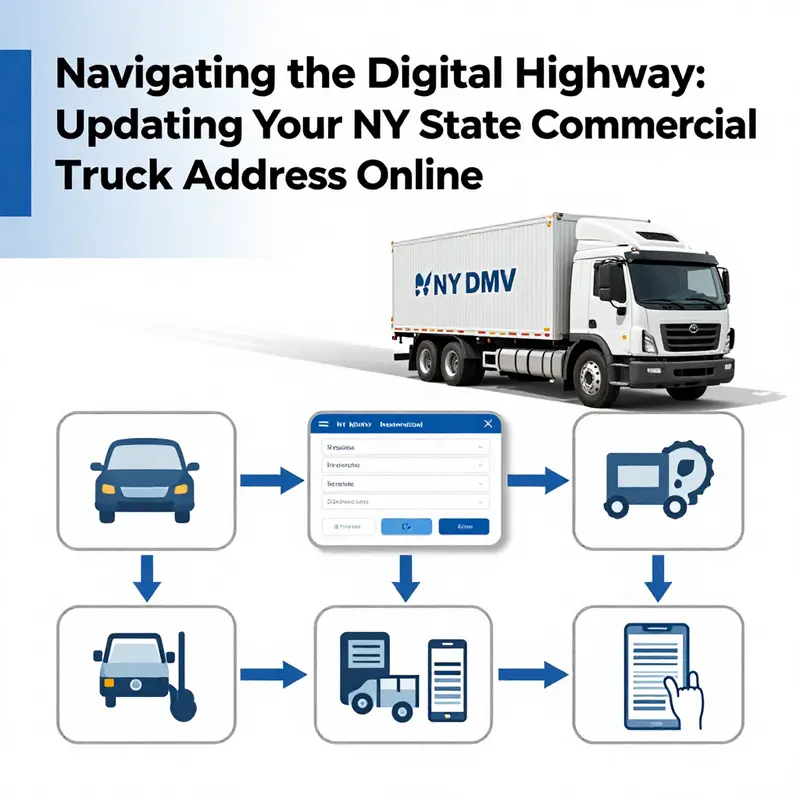
In the steady rhythm of a trucking operation, a single detail can ripple through every renewal and notice: the address on the vehicle’s registration. For a commercial truck operating in New York, keeping that address current is a legal obligation that ensures documents land in the right hands. The good news is that the state offers an online path to update a registration address, but the steps can vary depending on whether you’re updating a vehicle record, a driver credential, or both. This walkthrough focuses on the online process for a fleet while noting where in-person steps may be required for CDL or driver-record changes.\n\nThe process typically starts by accessing the DMV’s online account portal. Create or sign in, and use the account to reach the registration services for the fleet. The address associated with the registration is the one that will receive renewal notices and official communications. Have on hand your Customer ID and any record identifiers so you can link the session to the correct vehicle or fleet profile.\n\nNext, locate the address-change function within the portal. The system will verify your identity and confirm you’re editing the right record. Choose the vehicle or fleet record you intend to update. The online interface is designed for routine changes and for updating multiple registrations when needed; it will indicate if a change cannot be completed online and might require an in-person visit.\n\nEnter the new address details on the form with precision. Update the mailing address and, if applicable, the physical location. If your operation uses different addresses for business correspondence and physical operations, reflect both where the system allows. After submission, the system typically provides an immediate confirmation, and the updated address should appear in the vehicle’s record for renewal notices and compliance communications.\n\nLegal considerations: New York requires timely updates; many operators find the online path fastest, but changes to driver licenses or permits may require separate steps or in-person verification. If there is any mismatch between CDL details and vehicle records, follow the DMV guidance to align those records, which may involve separate processes or visits.\n\nFor fleets that handle multiple registrations or operate across jurisdictions, it can be helpful to keep a compliance log with confirmation numbers and reference IDs. If online processing isn’t suitable for a particular situation, the DMV offers a paper form MV-232 for mail-based updates, though this path is slower. The key is to maintain a single source of truth for addresses and to review registration details periodically to avoid misdirected notices.\n\nExternal considerations: while the online workflow focuses on efficiency, it sits within a broader regulatory environment. The state’s official resources remain the best source for current instructions, and industry updates can provide context for cross-border or cross-jurisdiction changes. For readers seeking more background, official NY DMV materials are the authoritative reference, and the online path is designed to speed updates while preserving accuracy. For special cases involving CDL updates or multi-vehicle fleets, plan for additional steps or a DMV visit if required. External resources can supplement the process and help keep fleets aligned with changing rules.
Troubleshooting Online Address Changes for NY State Commercial Trucks: A Practical Guide to Keeping Your Fleet’s Records Accurate and Compliant
When a fleet moves its base of operations, the administrative tasks that follow can feel like a maze. Yet in New York, keeping the street address current on the state’s records is more than a matter of paperwork. It is a matter of timely notices for registrations, renewals, and compliance documents that fleets depend on to stay legal and on the road. The online pathway offered by the state’s DMV portal has the potential to simplify this work, but it also presents a set of predictable friction points. Understanding these issues—and knowing how to navigate them—can save time, reduce costly delays, and prevent mismatches between a business’s internal records and what the DMV has on file. At its core, the process is straightforward: you log into the official MyDMV system, access the Change Your Address service, fill out the required form, review the data, and submit. If you do this correctly and your registration is eligible for online updates, the DMV processes the change electronically and confirms the update. But prior to pressing submit, it helps to have a clear mental map of the potential stumbling blocks and the practical steps to overcome them.
First, the MyDMV account is a gatekeeper. Without a valid MyDMV account, you cannot access the online address-change service for a commercial truck. The DMV requires that you sign up using your NYS driver license, permit, or non‑driver ID to reach online address-change capabilities. This prerequisite matters because fleets often assume they can bypass account creation when they are managing multiple vehicles. The reality is that one account is typically tied to the primary owner or administrator who can authorize changes for vehicles registered in the company. If you are new to the system, take a few quiet minutes to create the account, gather the CID you will be asked for, and confirm that your login details and security questions are working. If you already have a MyDMV account, a quick login and a careful return to the address-change service usually reveals a clean path to the form. In both cases, the moment you proceed to Change Your Address, you are confirming identity and linking the request to the correct fleet’s records. The process relies on the CID, the customer identification number that is often found on your driver’s license, non-driver ID, or vehicle registration. This CID becomes the thread that ties your online request to the right record in the DMV’s system, so keep it handy but secure.
Second, eligibility is a more nuanced gate than it appears at first glance. The DMV explicitly notes that not all registrations are eligible for online updates. Some statuses, such as non-renewable or non-transferable registrations, may be blocked from online changes. In practice, this means a fleet manager who has moved the address of a vehicle in a particular program or with a special registration status may confront an online barrier even when other vehicles in the same fleet update smoothly. Before attempting the online change, it pays to verify the registration status. If the system flags the record as ineligible, the path forward is often to use the mail option or to visit a DMV office. This reality underscores an important discipline in fleet management: always cross-check the status of the specific vehicle’s registration before you begin the online process. With multiple vehicles, it is wise to perform a quick audit of the fleet’s records to identify any items that may be outside the online workflow and plan the appropriate channel for each.
Third, human and technical friction can interrupt an otherwise simple transaction. The most common technical issues are slow page loads, session timeouts, and occasional submission errors. In many cases, these problems stem from the user’s browser environment rather than the data itself. The DMV’s guidance suggests using a supported web browser and clearing the cache to ensure that the session remains responsive and current. If you encounter a stall, the simplest remedy is often to refresh, re-enter the service, and proceed with the data once more. If the problem persists, the DMV encourages waiting and trying again later or turning to an in-person visit as a reliable alternative. For fleets operating on tight renewal calendars, this is a meaningful contingency: keep the online option as the default, but have a backup plan to ensure that critical notices arrive on time.
Beyond the individual record, there is a broader discipline of synchronization. For businesses managing a fleet, address changes ripple through internal systems—from accounting and service scheduling to compliance tracking and regulatory reporting. A mismatch between a company’s internal address and the DMV’s database can create confusion, delays in renewals, and even notices that fail to reach the correct location. The prudent step is to implement a cross-check practice: after submitting an address change online, confirm that the update has propagated across internal records and that every vehicle record reflects the new address. This is not merely a matter of aesthetics; it is a compliance hygiene practice. When departments share systems or when a single fleet manages vehicles across multiple yards, a centralized governance point helps prevent scattered updates that create conflicting data. Assigning an administrator or a small team to oversee address changes can dramatically reduce the risk of misalignment. It is also worth adopting a simple confirmation routine, such as a DMZ‑style checklist that marks the date of change, the CID used, and the updated address for each vehicle. In this way, a change becomes part of an auditable trail rather than a one-off entry that can get lost in the noise of daily operations.
The practical experience of changing an address online for a commercial truck hinges on balancing speed with accuracy. The online path’s primary advantage is obvious: speed. The moment you submit the corrected address, the DMV processes the update electronically, and you can reduce the lag that characterizes mail-based changes. However, speed cannot outpace accuracy. A small typographical error in street name, unit number, or city can lead to misrouting of critical documents and additional follow-up time. Precision matters, especially when dealing with a fleet where multiple vehicles share similar or related registrations. To minimize errors, take a deliberate pause before submission. Read back the address exactly as it appears in the business’s official records, confirm the physical and mailing addresses if they differ, and validate the format required by the DMV database. In practice, many fleets maintain a single master copy of the address and use it as the source of truth across all vehicles. When the address is entered in the MyDMV form, making sure that the same format is used across all records helps prevent post-change discrepancies from cropping up in renewal notices or compliance documents.
The storyline of online address changes also intersects with the broader regulatory environment. Rules can shift with new legislation or administrative updates, and a fleet that keeps up with these variations tends to navigate the process with less friction. For readers seeking a bridge into the wider regulatory conversation that informs how online changes are handled, a useful touchpoint is the discussion around cross‑border and interjurisdictional considerations that shape how fleets coordinate regulatory updates across systems. For a deeper dive into that conversation, consider exploring Bridging Border Barriers meeting insights. This internal resource prompts readers to think beyond a single portal and to consider how regulatory clarity and interagency communication influence daily fleet operations. The linked discussion provides a broader frame for the kind of careful planning that supports consistent data across internal and external records. Bridging Border Barriers insights.
All of this points to a practical operating rhythm. Establish a routine that begins with confirming the fleet’s address data in internal records, especially for any corporate address changes or new yard locations. Then prepare the CID and the MyDMV login for the online step. If online eligibility is verified, proceed to the Change Your Address service, complete the form with careful attention to the fields that map most directly to the DMV’s own data schema, and review the entries before submission. After submission, keep a record of the confirmation or any reference number provided by the system. Use this as the anchor for any post-change verification or correspondence with DMV support if needed. If the record is flagged as ineligible or if you encounter a persistent technical glitch, switch to the mail option using form MV-232, or arrange an in-person visit. The mail route does not always deliver quicker than the online path, but it does provide a formal channel that can be tracked and filed in a manner consistent with a company’s records-management practices.
In closing, the path to a successful online address update for a New York State commercial truck lives in disciplined preparation, careful verification, and aligned internal processes. The online option is a powerful tool for fleets that maintain clean, synchronized data across departments and are comfortable navigating the MyDMV system. It rewards thoroughness: the more you verify and document—CID, registration status, internal address records, and the exact wording of the street address—the smoother the update proceeding will be. And when technical hiccups arise, patience paired with practical workarounds—clearing the cache, using a supported browser, and keeping a fallback plan in mind—keeps the operation moving. For readers who want to connect this practical guidance with official, up-to-date procedures, the state’s own address-change portal remains the definitive resource, and the general principle holds across all online interactions with the DMV: accuracy, timely action, and a clear paper trail keep a fleet compliant and on the road.
External resource: https://www.ny.gov/services/update-my-address
Keeping the Fleet in Sync: Mastering the NY Online Address Update for Commercial Trucks
When a truck in your fleet changes its base of operation or the principal address for your business shifts, the ripple effects extend far beyond a mailbox swap. In New York State, where commercial operations intersect with strict licensing, registration, and compliance timelines, keeping the DMV records accurate is not a courtesy—it is a legal obligation. The address on file with the Department of Motor Vehicles matters because it determines where notices about registration renewals, compliance reminders, and other important correspondence will arrive. For operators who manage multiple vehicles or a single tractor-trailer, the online path to updating that address is designed to be swift and secure, yet it also requires attention to detail and a basic understanding of the steps involved. The process centers on the NY DMV’s official online portal, a system built to verify your identity and prevent unauthorized changes. The key is to approach it with a clear plan, a reliable CID in hand, and a willingness to follow the digital steps through to completion. A practical way to frame this is to imagine you are aligning every legal document with the truck’s current operate location so that every notice, every renewal, and every compliance document lands in the right place, on time. This alignment is not just about catching up with a move; it is about preserving the integrity of the fleet’s regulatory standing and ensuring that critical administrative tasks never lag behind operational reality. The first thing to recognize is that the responsibility for updating an address falls on the owner or operator who holds the NY driver license, learner permit, or non-driver ID tied to the commercial vehicle. If your operation is registered in New York, the rule applies to you, even if your fleet crosses borders or operates in multiple jurisdictions. The legal impetus is straightforward: notify the DMV within 10 days of moving, and do so with accuracy to avoid friction later when renewal notices or compliance documents are due. In an industry where timeliness can affect scheduling, insurance rates, and regulatory compliance, the speed advantage of the online option becomes more than a convenience—it is a strategic capability. The online route begins with a MyDMV account, a portal that serves as the gateway to a spectrum of DMV services. If you already have a MyDMV account, you will sign in using credentials you have established previously. If you do not, you will need to create one. The process of creation is simple yet important: you will be asked to provide identifying information, and you will need your Customer ID (CID). The CID is a critical piece of the identity verification process and is typically found on your driver’s license, non-driver ID, or vehicle registration. Having this number ready helps speed the transition from dormant records to updated details. In practice, the CID is the anchor that connects your personal identity to the business vehicle records you intend to update. Once access is established, you navigate to the Change Your Address service. The NY DMV site places this option under Services, a logical grouping meant to guide users through the steps without ambiguity. The online form itself is deliberate in its design: it asks for the new address, the date of the move, and some corroborating information to verify who is requesting the change. The verification layer may pull from the CID and other details you previously supplied, which helps prevent misdirection of sensitive information. As you fill out the form, take a moment to review each line. A common source of delays is a mismatch between the address you list for the vehicle and the address on related records. For a commercial operation, consistency matters across registrations, license documentation, and insurance certificates. The system is built to confirm alignment between the new address and your existing identity data. When you submit the request, the DMV processes it electronically, and you typically receive confirmation once the change is accepted. The transparency of this process is a feature that many operators appreciate: you are not waiting for a paper form to travel through interoffice mail or to be mailed back and forth for verification. The electronic processing reduces the time between initiating the change and the DMV updating the official records, which means fewer scheduling headaches for fleets that are coordinating renewals, inspections, and regulatory deadlines. It is tempting to think that updating the address is a one-off event, but for commercial operators, it is part of ongoing compliance discipline. If a move is permanent, which is the usual scenario for commercial trucks changing hubs, terminals, or shop locations, ensuring the new address is reflected on the registration and the notices that accompany it is essential. This is not merely a legalistic obligation; it is a practical safeguard. If notices that contain critical information about inspections, plate renewals, or compliance reporting are sent to an old address, the fleet could unexpectedly miss deadlines, incur penalties, or undergo administrative delays that ripple into daily operations. The online option is faster and more convenient than mailing MV-232 forms, but it carries with it the expectation that the information you provide is accurate and up-to-date. A misstep at the data entry stage—such as a missing apartment number, a misspelled street, or an outdated ZIP code—can lead to the DMV flagging your request or denying the change until the discrepancies are resolved. For fleets that manage multiple vehicles, the challenge is ensuring that a single address change reflects correctly across all associated records. In the online environment, this generally means confirming that the address you provide aligns with the address on the CID and with any business registration details that the DMV has on file for your entity. The goal is to create a consistent profile across the DMV’s systems, your insurance documentation, and your fleet management records. It is worthwhile to acknowledge the alternative: while the online service is the recommended path for speed and convenience, New York State law recognizes a mail option using form MV-232 for those who may prefer or require a paper process. However, the paper route inherently introduces delays, potential misrouting, and additional steps such as mailing and waiting for processing times. For a commercial vehicle, where the address affects critical communications, the online path is the practical default. Beyond the mechanics of the form and the steps, there is a broader layer worth considering. The address you maintain on DMV records is also a reflection of where your operations are centered, how you coordinate dispatch and compliance, and how you maintain relationships with contractors, suppliers, and border authorities. In a climate where regulatory expectations continue to evolve—emissions standards, safety requirements, and cross-border coordination all influence how fleets operate—the “where” of your business is as important as the “how.” To stay current, some operators find it useful to periodically review not only the address on file but also how it interfaces with other regulatory channels. A practical touchpoint is to acquaint yourself with related regulatory developments that may influence address-related communications, such as cross-border regulatory issues that touch trucking operations. For context and additional perspective on how regulatory landscapes interact with daily trucking, consider exploring resources from industry programs that address cross-border compliance and information sharing. TCAS Cross-Border Regulatory Issues Event. While this chapter centers on NY DMV procedures, a broader awareness of how regulatory environments change can help you anticipate future updates to address records and related notices. In keeping with best practices, always verify the latest guidance on the official NY DMV site. The page at dmv.ny.gov is the authority on address changes, and it provides the most accurate, up-to-date instructions tailored to your specific situation. The online workflow described here aligns with the state’s emphasis on secure, timely, and verifiable updates. As a final reminder, ensure you review the details you enter before submitting. The system may offer a confirmation screen or a receipt that you should save, either as a digital copy or a printout. Keeping a record of the confirmation helps resolve any potential later questions or discrepancies about the change. And since the 10-day notification window is a hard requirement in most circumstances, acting promptly is wise. If any part of your entity’s information needs correction beyond the address—such as updating a contact email, phone number, or other identifiers—you can often perform those adjustments within the same MyDMV portal, reducing the need to navigate multiple separate processes. In sum, the online address update for a New York State commercial truck is a purpose-built service that prioritizes security, speed, and accuracy. It recognizes the unique obligations tied to commercial fleets, including the timely receipt of renewal notices and compliance documentation. The CID, as a core component of identity verification, ensures that the person requesting changes has legitimate authority to do so. By approaching the process with careful preparation—collecting CID details, verifying your address line by line, and submitting through the official Change Your Address service—you protect your fleet against administrative delays and regulatory missteps. For the most authoritative guidance, visit the official NY DMV page and follow the online steps exactly as described. Keeping your fleet in sync with the DMV’s records is not only a legal obligation; it is a practical discipline that supports smooth operations, reliable scheduling, and continued compliance across the lifecycle of commercial trucking. External resource: https://dmv.ny.gov
Final thoughts
Updating the address for your NY State commercial truck is not just a matter of regulatory compliance; it is an essential practice that safeguards your business’s operational efficiency and legal standing. By utilizing the online platform provided by the NY DMV, you can streamline this process, avoid penalties, and ensure that you receive timely communications related to your vehicle’s registration. By following the guide detailed in this article, you are well-equipped to navigate potential issues and fulfill your legal obligations efficiently. Staying proactive in managing your commercial vehicle’s information paves the way for smoother operations and a successful business.