
For food truck operators, understanding the amount of commercial general liability (CGL) insurance required is crucial for business sustainability and legal compliance. The insurance landscape can be influenced by multiple factors including location, event frequency, and the types of menu offerings provided. Ensuring adequate coverage starts with a benchmark of at least $1 million, which is often stipulated by city regulations and event organizers. Furthermore, the evolving nature of high-risk situations and the need for tailored coverage solutions present additional layers of complexity. Each chapter will delve into these aspects, providing a comprehensive outlook on how food trucks can navigate the insurance landscape effectively.
Coverage Without Gaps: How Much CGL Insurance Food Trucks Really Need Across Locations and Scenarios
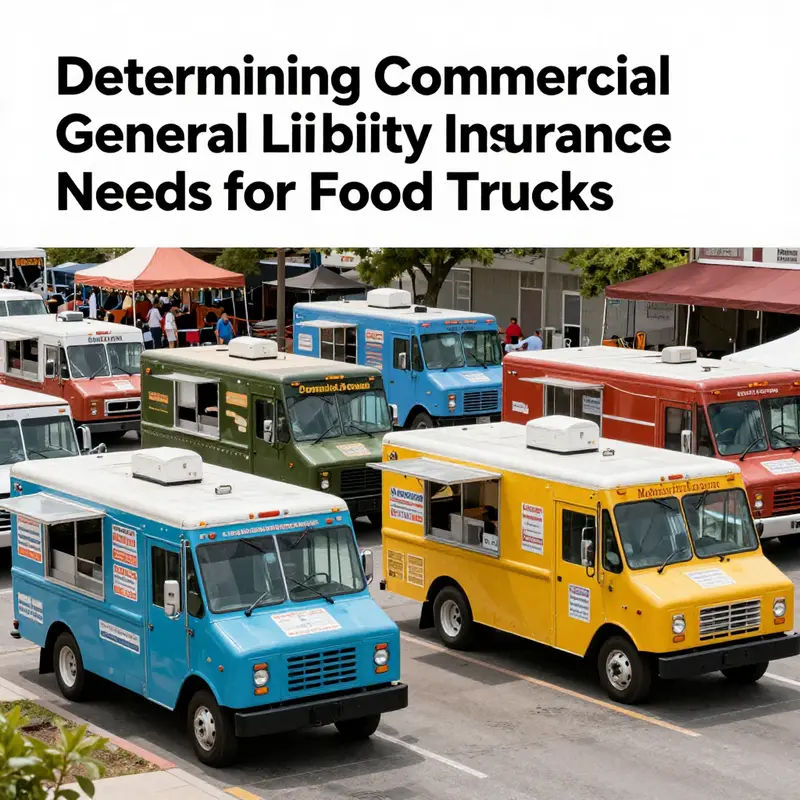
The life of a modern food truck is a continuous negotiation between speed, flavor, and safety. Operators chase busy schedules, negotiate with event planners, and adapt menus to shifting tastes and regulations. In the middle of this rhythm lies a governing constant: the protection that a commercial general liability (CGL) policy provides when things go wrong. The general rule of thumb—often cited by venues, organizers, and insurers alike—is a starting point around one million dollars in coverage. This benchmark is not a universal ceiling but a practical baseline that covers the most common liabilities: a customer who slips on an uneven surface or trips over a cord, a claim arising from foodborne illness, or a mishap that damages a rented booth or neighboring equipment. Yet the price of safety is never universal. It shifts with location, event type, menu complexity, and whether the truck operates solo or under a lease, franchise, or other intermediary arrangement. The decision about how much coverage to carry is less a single number than a forward-looking exposure assessment that accounts for where you operate and how you do business.
Location matters more than most operators expect. In densely populated urban hubs, the streets and sidewalks become stages for risk. The foot traffic is tremendous, but so are the potential triggers for claims: crowded lines that lead to jostling or disputes, the proximity to schools or public parks with special permit considerations, and the sheer volume of temporary structures and utilities in any given festival or market. In these environments, the recommended coverage often expands toward one million to two million dollars per occurrence. The logic is straightforward: more people, more moving parts, and a greater chance that a single incident could lead to medical costs, legal fees, and settlements that exceed a lower policy limit. A higher limit also aligns with stricter permit requirements and elevated expectations from organizers who want to minimize risk exposure on their sites. When the truck parks next to a stage, near a playground, or within a corridor of high foot traffic, the margin for error tightens. In such contexts, operators should think beyond the basics and consider whether endorsements or a higher per-occurrence limit would better protect the business’s bottom line.
Rural communities and smaller towns present a different, often counterintuitive, calculus. They typically experience lower day-to-day customer volumes and fewer regulatory hurdles. A CGL in the range of five hundred thousand to one million dollars may be appropriate for standard day-to-day operations in these settings. The caveat is event-driven exposure. Food trucks frequently participate in fairs, farmers’ markets, and charity fundraisers where crowds surge for a day or a weekend. In those moments, the risk profile can resemble urban environments—the presence of large groups, makeshift dining spaces, and the potential for accidental damage to temporary structures. The takeaway is clear: location is a spectrum, not a fixed category. A truck that normally operates in a quiet street corner could face a spike in risk if it signs on to a major weekend festival, justifying a higher liability limit or a targeted endorsements strategy for those events. The challenge is to anticipate those spikes and reflect them in the policy language, rather than wait for a claim to force the adjustment.
Endorsements are the quiet workhorses of a well-tailored CGL program. They extend protection beyond the core liability coverage to address specific exposures that arise from foodservice operations. Product liability, for instance, covers claims arising from the safety or quality of the food itself—an important consideration for any kitchen turning out dozens of menu items with potential allergen concerns or contamination worries. Depending on the menu and how the business communicates with customers, this endorsement can be a prudent addition. Allender theories aside, the practical effect is protection against claims that could exceed the basic incident limit because they are tied to the product rather than to an isolated accident on the event site. For a mobile operation, an endorsement for food contamination or spoilage might also be relevant, especially if a truck handles high-risk items or stores ingredients in shared spaces during multi-day events. And because food trucks often operate in partnership with event hosts, many policies include an “additional insured” endorsement. This provision makes organizers or landlords a named insured under the policy, which helps streamline access to indemnities and reduces friction when disputes arise over site responsibilities. The right mix of endorsements can meaningfully shape the scope and cost of coverage while ensuring protective layers align with how, where, and for whom you work.
But endorsements do not exist in a vacuum. The structure of the business—the model, the menu, and the operating environment—interacts with the policy to shape risk. A mobile catering model, for instance, introduces different exposures than a standalone vending setup. Mobile operations often involve frequent relocation, variable power sources, and shared equipment at pop-up sites. These factors can influence not only the design of the insurance program but also the underwriting questions that emerge during a quote. Menu choices add another layer of nuance. Hot, oil-heavy preparations carry burn and fire risks, while raw or cold items concentrate concerns around cross-contamination and allergen management. Each risk vector translates into analytic considerations for a broker or underwriter who can translate operational realities into policy language. Similarly, whether the truck operates as an independent entity, under a franchise, or within a broader catering organization can alter liability dynamics. Franchise relationships, for example, may introduce standardized contractual expectations that affect coverage limits, endorsements, and the role of the insurer as a partner to multiple operating units.
With these factors in mind, planning coverage becomes a conversations-based process rather than a checkbox exercise. A prudent operator begins by cataloging the places where the truck will most frequently operate: the city blocks, the suburban markets, the festival grounds, the university campuses, and any private venues where the truck is invited to serve. Each site carries its own regulatory environment and risk profile. Some sites may require proof of CGL coverage with specific limits and endorsements as a condition of participation. Others may leave the decision to the operator but still expect a certain standard of risk management on site. Gathering this information before renewing or purchasing a policy helps ensure that the numbers you land on—whether it’s a $500,000 cushion or a $2 million ceiling—are not decided in a vacuum but reflect real-world exposure. It also makes it easier to explain the rationale to lenders, partners, or event organizers who require specific coverage terms as part of agreements.
In practice, many operators find that a layered approach works best. The base layer—a per-occurrence limit that reflects the most common incident class—serves as the anchor for everyday operations. A separate umbrella or excess liability layer can sit above the primary policy to provide higher limits for extraordinary events or atypical claims. For large festivals or venues with alcohol service, an umbrella may offer a cost-efficient way to extend protection without multiplying base premiums across every event. Food trucks that handle large volumes at high-energy gatherings often discover that a higher limit, combined with targeted endorsements, offers a smoother risk management profile than chasing multiple small adjustments that only partially cover the scenario at hand. The dollars and sense of it come down to the balance between predictable exposure and worst-case scenarios. The goal is to avoid a single incident transforming ordinary operations into a defense-length legal battle or a costly settlement that jeopardizes the business’s viability.
The process of determining the right level of CGL coverage is deeply local, yet the need for clarity is universal. Your risk profile depends on where you operate, how often you park your truck in a single location, what you serve, and how you interact with customers. It also depends on the agreements you sign with venues, organizers, and landlords that increasingly expect or require certain levels of liability protection. A straightforward rule—start with one million dollars and adjust based on local conditions and the scale of events you attend—still holds as a practical compass. But the navigation does not stop there. You will benefit from a conversation with an insurance broker who specializes in mobile food service or small business risk. A seasoned broker can translate a detailed site list, a map of events for the year, and a menu inventory into a tailored coverage plan that aligns with both risk appetite and financial realities. This partnership helps ensure that your policy is not a generic fit but a precise instrument that protects people, property, and profits.
As you refine your policy, consider the broader market context and how it can indirectly influence your coverage strategy. Market dynamics affect the availability and cost of limits, the flexibility of endorsements, and the ease with which organizers will accept proof of insurance. The same external pressures that shape event planning, such as changes in attendance trends or capacity constraints at venues, can modulate your exposure during peak seasons. For deeper market context, see Excess capacity insights. While the trucking sector is not identical to street-level food service, the underlying principle is transferable: when demand surges and supply tightens, risk management becomes more valuable, not less. A well-structured CGL program, paired with vigilant site practices and reliable contracts, helps maintain continuity even as the operating environment becomes more complex.
Finally, keep in mind that your insurance needs evolve. A year with a string of small daily operations may look different from a year with a few crowded festival weekends and a few high-profile private events. Your exposure grows or contracts with the scale of operations, and the best way to adapt is to maintain a proactive, ongoing dialogue with your broker. This conversation should review not only the numbers but the actual experiences: any near-misses, customer complaints, or equipment mishaps, and a review of whether current endorsements are truly addressing the hazards you face. The insurance conversation, ideally, becomes a routine part of your annual planning cycle, just as important as updating your menu or renegotiating a lease. In this way, coverage does not feel like a static requirement but a live, protective framework that travels with the truck and grows with your business. For a broader primer on liability protection for small businesses, you can consult general resources that outline the core concepts and common pitfalls. Nolo’s General Liability Insurance for Small Businesses.
Beyond the Baseline: How Event Frequency and Menu Complexity Shape Food Truck CGL Needs
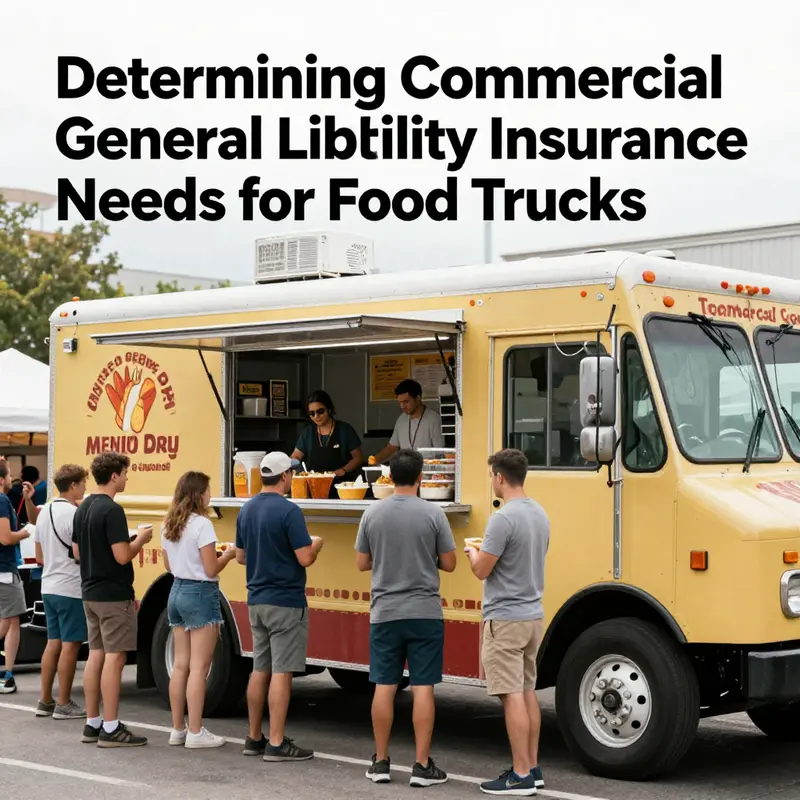
A mobile kitchen on wheels moves through streets, fairs, and festivals, and with it rides a complex web of risk. The question of how much commercial general liability (CGL) insurance a food truck needs cannot be answered with a single number or a one-size-fits-all rule. It must be tuned to the realities of the operation—the rhythm of events it attends, the variety and risk profile of the menu, and the environments in which it serves customers. Yet within that complexity there is a logical baseline: most operators start with a general liability limit of about one million dollars. This figure is not a mere convention; it reflects a pragmatic boundary that many venues, municipalities, and event organizers use when screening vendors. They want a policy that can cover common, plausible claims—slips and falls from crowded sidewalks or slick festival grounds, foodborne illness concerns tied to a specific dish, or property damage caused by equipment in a rented booth or a misadventure with a portable fryer. The baseline is a practical starting point, not an absolute ceiling, and it invites the thoughtful question of how far beyond it a truck should go.
What determines stepping up from the baseline is often the interplay between how frequently the truck operates and how complex and high-risk its menu happens to be. Event frequency matters because each engagement is a new exposure to people, equipment, and environments that can produce claims. A truck that appears at multiple events every week experiences more pedestrians, longer hours of operation, and tighter interaction with crowds. Each of these factors can elevate the likelihood of an incident—whether a customer trips over a cord, a prop or piece of equipment collapses, or a fire or burn incident necessitates medical or legal response. The risk profile of frequent appearances also expands when events occur in settings with higher attendance, durable tents and booths, and heavier foot traffic. In practice, insurers look at the aggregate exposure created by a schedule that resembles a small-to-mid-size festival calendar rather than a single weekend pop-up. The result is a tendency to recommend higher coverage limits—often $1 million or more—as part of a policy strategy that aligns protection with exposure.
Menu offerings, perhaps more than almost any other factor, shape the risk calculus behind CGL needs. A truck that serves straightforward fare—hot dogs, simple burgers, pre-assembled items with predictable preparation steps—tends to present a more contained risk profile. Even so, the very nature of public food service introduces inherent liability concerns. But when the menu grows to include complex, high-risk items—raw seafood, rare or undercooked meats, or allergen-heavy dishes such as nut-based products—the likelihood of adverse outcomes rises. Foodborne illness claims, allergic reactions, and cross-contact concerns create additional layers of potential liability. A gourmet burger truck that offers customizable toppings, sauces with multiple ingredients, and a kitchen setup designed to handle precise temperatures faces a broader and more nuanced set of risk events than a vendor selling packaged snacks. In such cases, insurers will typically scrutinize preparation processes, cross-contamination controls, sourcing practices, and the ability of staff to execute proper food handling at scale. The choice to heighten CGL limits then becomes less a matter of preference and more a risk-management decision tied to the real-world consequences of a tainted meal, a mistaken allergen declaration, or a procedural misstep in a busy service window.
These considerations—frequency and menu risk—intersect in meaningful ways. A truck that operates at many events but maintains a simple, well-controlled menu can still face substantial exposure if those events are high-traffic and in venues with strict safety protocols. Conversely, a truck with a more complex menu may protect itself with rigorous prep standards, but it still may warrant higher limits if its event footprint includes large festivals where the sheer scale of attendance multiplies potential claims. Insurance premiums reflect this balance between exposure and protective measures, and a policy that is calibrated to an operator’s specific risk profile tends to deliver more predictable protection and more stable budgeting. The takeaway is not to chase the highest possible limit in every case, but to align the chosen limit with verified risk indicators—frequency of events, crowd density, menu risk, and the operational controls in place to mitigate those risks.
In addition to the base limit, most operators will encounter endorsements or add-ons that expand coverage to gaps that commonly appear in mobile food operations. Product liability, for instance, can be a critical addition for vendors whose menu features house-made sauces, dressings, or components that could cause harm if contaminated or mislabeled. While the core CGL policy covers many third-party claims, product-specific claims sometimes require separate or enhanced coverage to address recall scenarios, cross-contact issues, or food poisoning allegations tied to a particular dish. The value of these endorsements goes beyond mere policy language; they reflect a proactive stance on risk management—recognizing that a single event, a single plate, or a single allergen error can trigger a cascade of legal and medical costs that are not always fully contained within standard liability limits.
The practical way to approach coverage begins with a candid risk assessment. An agent who specializes in mobile food service can help map the operation’s risk profile, looking at where the truck operates, what it serves, how it sources ingredients, and how staff are trained and supervised. They will examine the geographic footprint—city, county, or state regulations that may influence required limits—and the specifics of event contracts. If a truck participates in large outdoor festivals, private corporate events, or venues that serve alcohol, those circumstances often imply higher risk and more stringent requirements. Alcohol service, in particular, can introduce a range of claims from intoxication consequences to interactions with other vendors and crowd control issues. In such situations, it is not uncommon to see $2 million or higher limits, additional product liability coverage, and specialized endorsements that address alcohol service, security, and incident response. The point is not to assume risk until it proves costly, but to preemptively align coverage with clearly identified exposures and the operational practices designed to mitigate them.
From a budgeting standpoint, any decision about CGL limits should be anchored in a thoughtful cost-benefit analysis. Higher limits carry higher premiums, yet they also offer broader financial protection and greater credibility with venues and event organizers. The incremental cost of increasing limits can be justified by the scale of operations and the potential cost of a claim should the worst happen. For trucks operating on tight margins, the math can be particularly consequential. But the decision should be grounded in documented risk factors rather than fear of a hypothetical worst-case scenario. That means maintaining thorough food safety protocols, enforcing cord management and walkways, securing equipment to reduce the chance of tip-overs, and training staff to respond appropriately to accidents or spoiled food concerns. It also means maintaining up-to-date licenses, health department approvals, and compliance with local ordinances that vary from one jurisdiction to another. A well-documented safety program has the added benefit of supporting a stronger relationship with underwriters, who want to see that an operator has not only reactive coverage but proactive risk reduction in place.
All of this points toward a practical, principle-based approach to determining CGL needs. Start with the baseline that many venues require—around $1 million—and then adjust based on the scope of events and the risk profile of the menu and service model. A truck that operates at a higher frequency of events or that offers high-risk items would be wise to consider higher limits. Even for trucks with simpler menus, frequent attendance at events with dense crowds may justify additional coverage to address the heightened probability of third-party injuries or property damage. The final decision should come after a careful discussion with an insurance professional who understands the nuances of mobile food operations and who can translate a business’s schedule, menu complexity, and risk controls into an appropriate coverage level. In practice, this means reviewing certificates of insurance from venues to understand what they require, evaluating the cost implications of different limits, and ensuring that endorsements and policy language align with the realities of the operation. It also means recognizing that the right coverage is a moving target as the business evolves—new menus, new event formats, or expansion into new markets can each shift the risk landscape and justify reevaluating minimums and add-ons.
For operators who navigate cross-border or multi-jurisdictional events, there is an additional layer of complexity. Regulatory nuances, arrayed permits, and diverse safety standards can subtly influence both risk and the cost of protection. A helpful resource that touches on these considerations in event contexts discusses how regulatory frameworks can shape insurance decisions and risk-transfer strategies across borders. This broader perspective reinforces the core message: insurance for a food truck is not a fixed sum but a dynamic policy built around the truck’s operational pattern and risk tolerance. To gain practical insight into how these factors may apply to cross-border event planning, consider exploring the cross-border regulatory issues for events resource, which provides guidance on aligning risk management with multi-jurisdictional requirements. For a ready reference to a wide range of risk considerations in the trucking and mobile-service space, many operators also find it valuable to consult risk-management literature that connects event frequency to exposure levels and the need for tailored endorsements.
In sum, the amount of CGL a food truck needs is not a fixed number but a function of how often you operate and how risky your menu is. The baseline of around $1 million remains a strong starting point because it aligns with common external requirements and provides a solid cushion for the most frequent, plausible claims. But frequency and menu risk are live inputs that should drive adjustments. A truck that runs dozens of events per month and features a high-complexity menu with allergen considerations and specialty sauces should expect a higher limit and possibly enhanced product liability coverage. A vendor with a lean, simple menu that schedules a handful of community markets may justify the baseline or a modest uplift, provided it implements solid safety controls. The ultimate objective is to secure coverage that is proportionate to actual exposure, supported by a risk-management program that reduces that exposure where possible. An experienced agent can help translate these principles into a policy that is financially sustainable and robust enough to withstand the real-world stress of mobile food operations.
For readers seeking a deeper dive into cost considerations and coverage benchmarks, you can consult Insurance.com’s discussion of food truck insurance costs, which provides context on typical premium ranges, factors that influence pricing, and how carriers assess risk in mobile food operations. This resource can help you benchmark your own planning and talk more confidently with insurers about the right level of protection for your unique operation. If your operation touches cross-border events or arrangements that require coordination across jurisdictions, you may also want to explore the cross-border regulatory issues resource mentioned earlier to understand how local rules intersect with insurance requirements and event contracts.
Internal link note: for operators contemplating multi-jurisdictional event planning, a practical primer on cross-border regulatory issues for events can be a valuable companion as you assess risk-transfer needs across different venues. Consider reviewing that resource to better align your insurance decisions with expected regulatory expectations and to anticipate any gaps that may appear when events span multiple regulatory environments.
External reference for further reading on costs and coverage structure: https://www.insurance.com/insurance-articles/food-truck-insurance-cost/
Beyond the Baseline: How Much CGL Insurance Do Food Trucks Need in High-Risk Environments
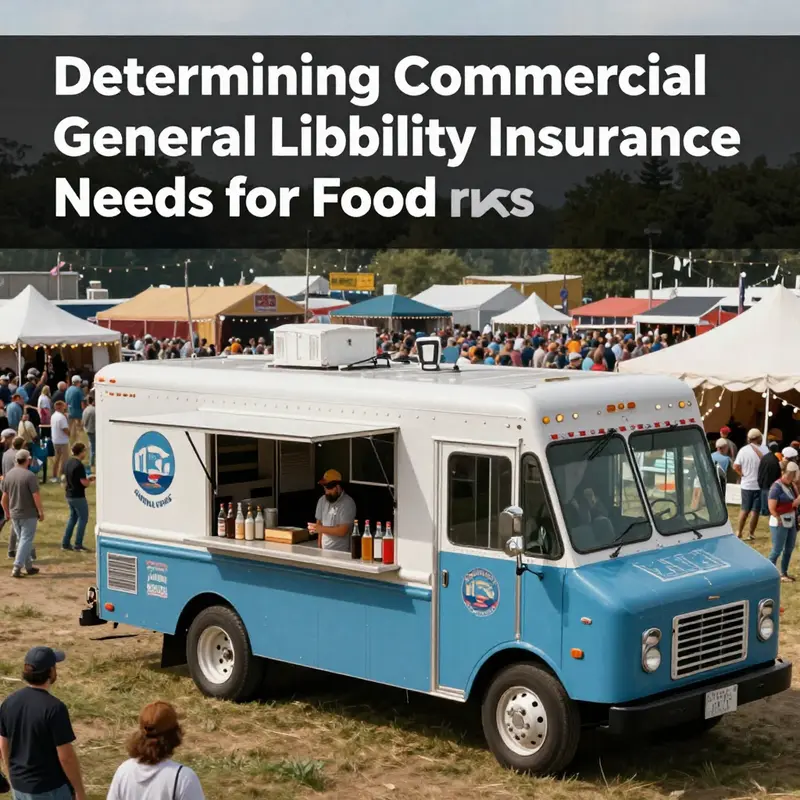
Insurance decisions for a food truck operate more like a careful recipe than a one-size-fits-all prescription. The question, how much commercial general liability (CGL) coverage is enough, becomes especially nuanced when you step into high-risk environments. A baseline of one million dollars in general liability coverage has become the industry’s de facto starting point. It’s a practical threshold that many cities, venues, and event organizers use as a minimum, and it often aligns with what most small food-service operations can reasonably secure and reasonably expect to need. But in the real world, risk is not uniform. It shifts with what you serve, where you operate, how often you roll into crowded events, and whether your operation includes alcohol or other high-risk components. The straight answer is that one million dollars may be enough for routine street vending in low-ambiguity environments, but it can fall short when the situation elevates your exposure due to crowd density, the type of service, or the stakes of a potential claim. In high-risk settings, the prudent approach looks less like a fixed number and more like a dynamic risk tolerance that factors in the specifics of each venue, contract, and operational footprint.
To understand why, consider the kinds of claims that can arise in a bustling food truck scenario. A customer could slip on a cord or spill sauce near the service line, leading to a knee- or back-injury. A hot dish or beverage could cause burns to a patron or bystander, especially when the crowd is dense and movement is unpredictable. A claim for foodborne illness, though less common than the sensational headlines imply, can still be a costly affair, particularly if it involves a large event where many guests could be affected. Then there’s the potential for property damage—booths, tents, or rented fixtures can suffer dings and dents, or even more serious damage in congested spaces where maneuvering a trailer or cart is a daily challenge. In high-risk settings, the sheer volume of attendees compounds the risk of a claim simply by virtue of numbers. You’re not just protecting against a single injury; you’re protecting against a wave of incidents that could overwhelm a modest liability limit.
The decision framework for high-risk environments begins with an honest assessment of exposure. Location matters profoundly. In densely populated urban cores, where pedestrian traffic is relentless and parking is often tight, the probability of property damage or bodily injury climbs. Large festivals, parades, or career fairs that draw thousands can transform a routine serving situation into a high-stakes environment where even a minor incident has the potential to generate substantial legal costs and settlements. If your truck sits near a busy sidewalk or a congested loading zone, the risk of trip-and-fall injuries or equipment-related accidents increases because both staff and customers are navigating tighter spaces and more dynamic crowds. The frequency and scale of events matter as well. Regular participation in frequent, high-attendance events escalates cumulative exposure over time. Even if each single incident seems modest, the volume of potential claims can be significant and can drive up premium expectations and the likelihood of conflicts with venues about coverage limits.
Another critical axis is the nature of the menu and service. Serving hot, spicy, or heavily loaded dishes increases burn risk for guests and staff, while high-volume beverage service, especially if alcohol is involved, compounds risk. Alcohol service can trigger stricter contract requirements and higher limits because governing bodies and venues often insist on larger coverage to mitigate the added liability. The way you operate matters as well. A kitchen that relies on long extension cords, multiple electrical outlets, and tight service queues can inadvertently create slip hazards or electrical risks. The more your operational footprint depends on external infrastructure—outdoor generators, street corners, or shared spaces—the more potential points of failure you introduce. In high-risk scenarios, it is not uncommon for venues to require not only higher CGL limits but also specific endorsements tailored to food-service operations, such as product liability coverage for food-related claims, or even a blanket additional insured status to ensure broader protection under the event organizer’s policy.
With that landscape in mind, many seasoned operators adopt a tiered approach to limits rather than a single fixed figure. The baseline of one million dollars remains a sensible starting point for everyday operations, but the answer in high-risk contexts often leans toward two million or more. This is not a universal mandate, but a frequently prudent choice when the operational environment features dense crowds, large-scale festivals, or business practices that introduce elevated risk, such as serving alcohol or handling high-risk foods. In these settings, a higher limit can mean the difference between absorbing a single costly claim and facing multiple, simultaneous claims that can overwhelm a smaller policy. The decision to pursue higher limits is shaped by several factors: the venue’s requirements, the contractual obligations you accept, and the formal risk tolerance you set for your business. A helpful reminder here is that many venues and event organizers do routinely require higher limits, and some may insist that you carry umbrella or excess liability coverage that goes beyond your primary CGL. The umbrella becomes particularly valuable when a single incident triggers a large settlement or multiple claimants share the cost of a single accident.
The insurance landscape is also about how well your policy aligns with the realities of your operation. Endorsements add layers of protection that straight CGL limits may not fully capture. Consider product liability endorsements if your menu includes prepared foods that could be implicated in a health incident, or environmental endorsements if you operate in spaces where waste management or runoff could present liability concerns. An umbrella or excess liability policy works as a backstop, ensuring that a catastrophic claim or a string of claims does not exhaust your primary limit and leave you exposed. In high-risk settings, this backstop can be essential, particularly for operators who frequently participate in large outdoor events or who maintain a robust emergency response and risk management program. The practical upshot is that the right mix of primary CGL limits, endorsements, and umbrella protection should be tailored to your specific exposure profile, not simply copied from a generic checklist.
To make this tailoring concrete, many operators turn to experienced brokers who specialize in mobile food service or small-business insurance. An expert can help you quantify exposure using your location footprint, event calendar, and the characteristics of your menu. They can also interpret contract requirements, which often spell out minimum liability limits as a condition of participation, and translate these obligations into a policy with appropriate endorsements. A broker can also help you model worst-case scenarios, run through hypothetical claims, and compare how a two-million-dollar limit with a product liability endorsement and umbrella coverage would function economically over a typical year. The calculation is not abstract. It translates into monthly premiums, out-of-pocket risk exposure, and the resilience of your business when the unexpected happens. The intention is not to overinsure for fear of a claim but to build a resilient barrier that aligns risk with your financial reality and your operational ambitions.
The practical takeaway for operators entering high-risk environments is to start with a baseline that is widely recognized but be prepared to elevate. If your business plan includes frequent participation in large events, serving alcohol, or operating in areas with higher litigation rates, you should expect to negotiate higher limits and to seek endorsements that address your actual risk profile. The process begins with an honest self-assessment: how much money would it take to cover defense costs, medical expenses, and settlements if a single incident escalated into a formal claim? How would multiple claims affected by a single event be managed? How do your contracts with venues structure indemnities and requirements for coverage? These questions guide you toward a protective rectangle of coverage that belongs to your business and not just to the risk appetite of a broker or an insurer.
In closing, the amount of CGL insurance a food truck needs in high-risk situations is not a static target but a function of context. The baseline of one million dollars remains a reasonable starting point, yet the path beyond that baseline is shaped by your operating environment. Dense urban venues, massive public events, alcohol service, and regions with aggressive claim activity all push the need toward higher limits, supplemented by endorsements and umbrella protection. The right coverage is a balance—between realistic risk exposure and prudent financial planning. It requires dialogue with a qualified broker who understands mobile food service, careful review of venue contracts, and a disciplined approach to risk management that runs through training, safety protocols, and informed decision-making about where and how you operate. When this balance is struck, you’re not simply purchasing protection; you’re investing in the continuity and credibility of your business as it moves through crowded streets, festival grounds, and other high-stakes environments. To further considerations about navigating regulatory and event-related complexities in this space, you can explore insights on cross-border regulatory issues at trucking events. Cross-border regulatory issues at trucking events.
For a broader, legally anchored perspective on food truck insurance and risk management, see the detailed guidance provided by Nolo, which offers a comprehensive view of liability coverage recommendations based on risk level and operational context: https://www.nolo.com/legal-encyclopedia/food-truck-business-insurance-34865.html
Tailored Shields on Wheels: How Insurance Pros Determine the Right CGL for Food Trucks
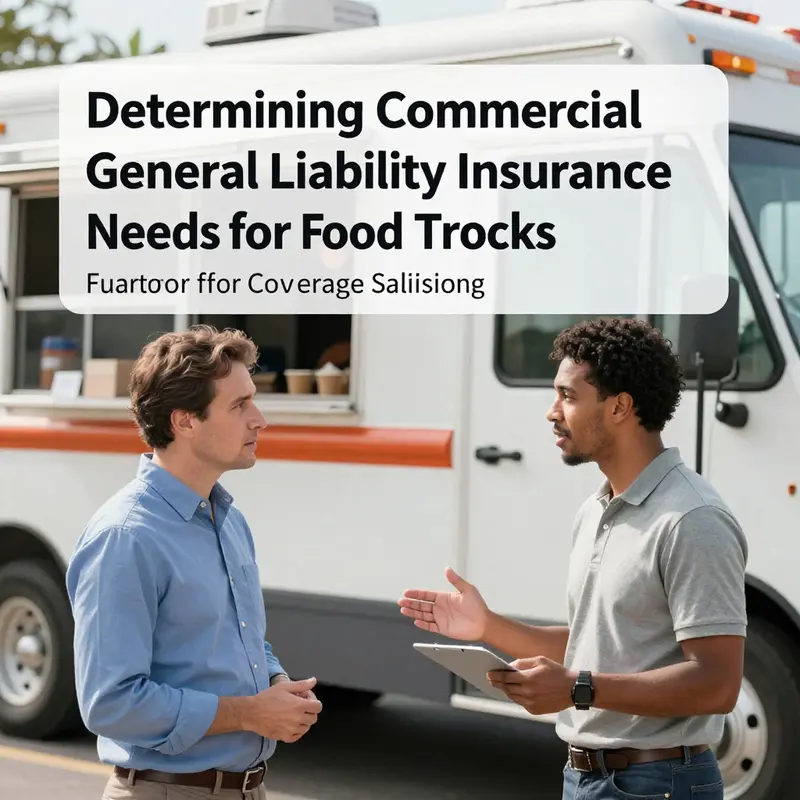
When a food truck rolls into a neighborhood, the risks are palpable as the sizzling oil. The core truth is that no single number captures the full scope of liability for mobile operations. This is where consulting experts matter. Insurance professionals who specialize in small business and mobile vendors do more than quote a price; they perform a risk assessment that mirrors the truck’s daily reality. They map street level hazards a cart encounters—from crowded festival streets to a quiet neighborhood corner—and translate those hazards into concrete coverage limits. The outcome is not a one size fits all policy but a tailored shield aligned with operations. The starting point often centers on a baseline in many markets of roughly one million dollars per occurrence with two million dollars in aggregate. This framework is recognized by venues, event organizers, and municipal requirements. It provides a sturdy baseline for common claims in mobile food service, such as slips and burns, allergic reactions, or damage to rented spaces or equipment. Yet the baseline is not a ceiling. For a truck that operates at large events or in venues with unique risk profiles, higher limits may be prudent. Some operators may need two million per occurrence or more to secure permission to park, operate, or serve in certain locations. The decision rests on a careful calculation of exposure and an understanding of the event ecosystem in which the truck moves daily.\n\nA knowledgeable broker or risk advisor begins by identifying core exposure points that matter for a specific truck. Frequency of operations is one pivot. A truck that appears at markets every weekend and makes occasional forays into fundraising fairs faces different cumulative exposure than one that serves daily across multiple cities. The number of customers served daily shapes risk because more interactions mean more chances for a slip, a burn, or cross contact. The types of food served also matter; some offerings carry higher allergen or foodborne illness risk, and this nuance can shift the risk calculus. Geographic location—city, county, state—adds another layer. Different jurisdictions have distinct regulations, inspection regimes, and fault standards that influence liability expectations and insurance requirements. A seasoned advisor will ensure that these geographic nuances are reflected in the recommended limits and endorsements.\n\nBeyond math of limits lies the conversation about endorsements and coverage components that sit on top of the general liability core. Product liability is a common addition for food service because it covers claims tied to the food itself—claims that can arise from contamination, improper handling, or labeling issues. While product liability may be a separate policy in some arrangements, many CGL policies for mobile vendors include or offer endorsements to cover these risks. Likewise, property damage arising from the vehicle or its equipment is an exposure that deserves attention. A collision or accidental contact with a booth or display can trigger a claim for property damage, and the policy must have terms that respond to those incidents. The risk assessment should also consider whether endorsements are needed for operational realities such as temporary structures, power cords, or equipment that could interact with customers in unexpected ways. Each endorsement aligns the policy with what the truck actually does, rather than what a generic policy assumes.\n\nA practical way to picture the discussion is a decision tree that a broker walks with the operator. Start with the occurrence limit and aggregate limit. The occurrence limit is the amount the policy will pay for a single incident, while the aggregate limit covers all claims within the policy term. If a single incident could plausibly generate medical costs, property repairs, and defense expenses that approach the baseline, a higher per incident limit becomes reasonable. The aggregate limit is equally important because a season of incidents can exhaust a lower cap quickly, leaving the business exposed for subsequent events. The decision to raise either limit should be supported by data—past incident history, event sizes, and the truck’s track record at comparable venues. The broker’s role is to balance protection with price. Informed operators understand this balance and view coverage as a strategic investment in stability rather than a regulatory checkbox.\n\nAnother layer in the expert led assessment concerns how risk grows with the size and diversity of operations. A truck that moves across several neighborhoods during a week may encounter varied risk landscapes: high foot traffic markets, nighttime venues, or family friendly fairs. Each setting carries distinct probabilities of claims and thus different cost profiles for defense and settlement. Even within the same city, a festival with thousands of attendees presents a markedly different risk picture than a school fundraiser. This dynamic is why experts emphasize scenario planning—imagining plausible incidents and evaluating the resulting potential costs. The goal is to arrive at a policy framework that can absorb those costs without crippling cash flow. For some operators, that might mean sticking to the solid baseline of one million per occurrence and two million aggregate, while others may opt for higher cushions in anticipation of high-risk days, like alcohol service at select events or large-scale public gatherings.\n\nA prudent consultant also keeps a careful eye on the broader regulatory landscape and the operational lifecycle of the business. CGL coverage is not a static shield; it should evolve as the business grows, expands into new jurisdictions, or shifts its event portfolio. The National Association of Insurance Commissioners NAIC provides a framework that encourages periodic reviews of coverages to ensure they still align with risk. As the business scales or changes—whether by adding new menu items with unique risk profiles or expanding to different regions—the coverage plan should be revisited with the same rigor as the original assessment. The idea is not to over insure but to maintain a protective layer that remains responsive to shifting exposure. An informed operator will schedule regular conversations with a trusted broker, treating the insurance arrangement as a living part of the business strategy rather than a one-time formality.\n\nThe human element in these conversations matters just as much as the numbers. Insurance discussions are not merely about premium costs; they are about clarity of responsibility when things go wrong. A well structured policy outlines who pays for defense costs, settlements, and medical claims, and it delineates how risk is allocated between the policyholder and any additional insured parties, such as event organizers or property owners. The clarity reduces friction when a claim arises and speeds the path to resolution. A good broker can translate technical policy language into practical business facing implications, helping the operator understand not just the how much but also the how of coverage. This is particularly important for operators new to the scene, who may underestimate how quickly costs can accumulate in a claim involving multiple parties or a major incident. The negotiation with insurers, the selection of endorsements, and the tailoring of limits all become exercises in risk management rather than mere price shopping.\n\nFor operators contemplating cross-border or multi jurisdictional settings, the complexity grows. Legal standards, fault apportionment, and even the definition of what constitutes a covered incident can vary across borders or states. In these contexts, the role of the expert becomes even more critical. The advisor will ask pointed questions about where the truck operates, the kinds of events, and the regulatory requirements of each location. They will also consider how different venues classify risk and what minimums they require. This is where the internal knowledge of event ecosystems becomes invaluable and where a robust, customized coverage plan can make the difference between seamless operation and costly interruptions. If you operate in environments where cross-border participation or multi jurisdictional events are a factor, a dedicated risk discussion with your broker is non negotiable. For additional context on cross border event considerations, you can explore resources that discuss how these regulatory issues unfold in practice at different venues.\n\nAs operators approach this process, they should also think about ongoing risk control measures that complement insurance. A strong risk management stance can reduce the likelihood of incidents and therefore influence the premium and the viability of higher limits. Practical steps include staff training on safe food handling and allergen awareness, clear signage to direct customer flow and reduce crowding near hot equipment, and robust procedures for responding to emergencies. Maintaining vendor agreements that specify responsibilities in the event of a claim can also streamline claims handling. From a business perspective, investing in preventative controls often yields measurable returns in the form of lower claim frequency and more favorable renewal terms. The interplay between risk control and coverage is not a tension but a cooperative relationship—the better the controls, the more precisely the policy can be tuned to fit needs without overextending the premium budget.\n\nUltimately, the recommended coverage levels are a product of disciplined risk assessment, informed negotiation, and thoughtful consideration of operational realities. Experts advise starting with a credible baseline—roughly one million dollars per occurrence and two million dollars in aggregate—and then adjusting upward or downward as the truck exposure dictates. This approach respects both the variability inherent in mobile food service and the economic realities of running a small business. It also aligns with the practical demands of venues and events, which frequently require firms to demonstrate meaningful liability protection before permitting operation. The process rewards preparedness, not presumption, and it places a premium on conversations with specialists who understand the unique risk landscape of food trucks on busy streets and at bustling events. As the field evolves with new challenges and changing event atmospheres, the principle remains steady: tailor your liability protection to your operations, and let your coverage be a proactive partner in your business growth and resilience. The most durable policies emerge when experience, data, and foresight converge in a plan that is as nimble as the truck itself.\n\nExternal resource: For authoritative information on commercial general liability insurance and recommended coverage levels for food trucks, visit the National Association of Insurance Commissioners at https://www.naic.org. If you are navigating cross-border event considerations, you may also find relevant insights in industry discussions that examine policy implications for events and mobile vendors, such as cross-border regulatory issues at events.
Final thoughts
Navigating the complexities of commercial general liability insurance is paramount for food trucks aiming to mitigate risks and comply with regulations. From understanding location-based requirements to identifying factors tied to event frequency and menu offerings, ensuring adequate coverage is essential. Furthermore, consulting with experts reinforces the notion that tailored solutions can provide the optimal protection required in high-risk situations. By prioritizing their insurance needs, food truck owners can secure their operations and focus on serving their communities.