
Parking a commercial truck on a residential street is a nuanced challenge that logistics and construction companies face regularly. Understanding the local laws, community impact, legal implications, and exploring alternative parking solutions is crucial for businesses reliant on freight transport and delivery. This article will dissect the pertinent regulations and their effects on community dynamics, address the legal ramifications of non-compliance, and present viable alternatives for truck parking, providing a clear roadmap for industry professionals to navigate these complicated waters.
Where Commercial Trucks Can Park on Residential Streets: Rules, Risks, and Practical Steps
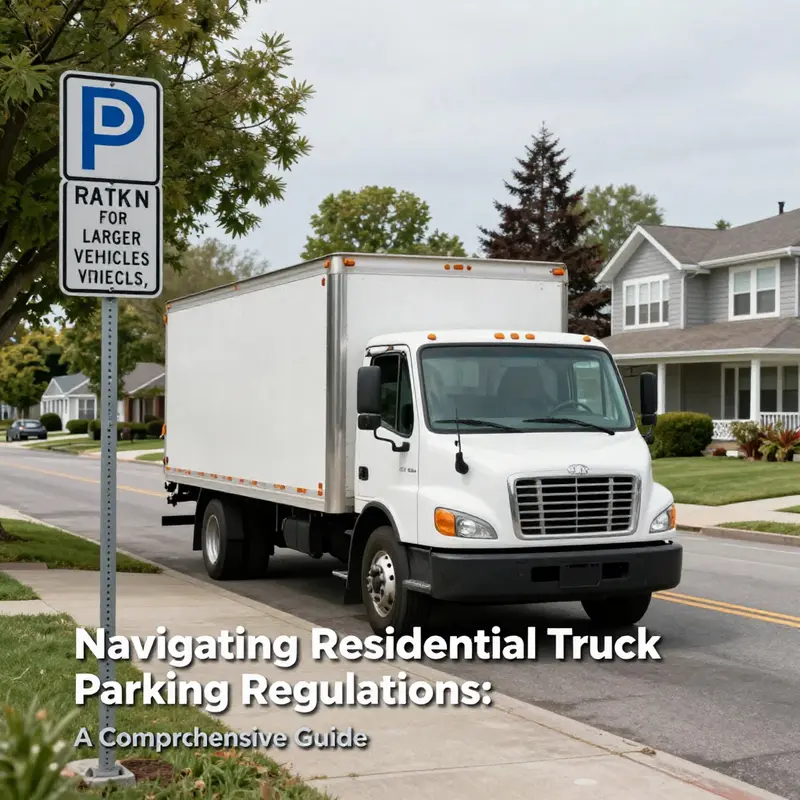
Understanding local limits and practical steps for parking commercial trucks on residential streets
Whether you’re a driver, a fleet manager, or a resident, knowing whether a commercial truck may legally park on a residential street requires local knowledge and practical judgement. Rules vary widely across municipalities. There is no single federal law that decides this. Instead, towns, cities, and counties set rules to balance public safety, neighborhood character, and the needs of commerce. That means where you can park often depends on three things: the vehicle’s size or weight, the time and duration of parking, and whether a permit or special authorization is required.
Many local governments ban overnight parking of commercial trucks. Municipalities commonly target vehicles with a gross vehicle weight rating above 10,000 pounds. The concern is simple. Large trucks cause noise, can block sight lines, and make streets feel less safe for children and pedestrians. Narrow residential roads, older sewer and pavement structures, and limited turning radii also influence local decisions. Cities weigh these infrastructure and quality-of-life concerns when they write ordinances.
Time restrictions are another common tool. A city might allow daytime parking for deliveries, service calls, or short-term stops. Nighttime parking, particularly between defined hours such as 10:00 PM and 7:00 AM, is often prohibited. These limits reduce noise and minimize long-term storage of commercial equipment in residential neighborhoods. Time windows also give enforcement officers a clear way to identify violations.
Many places require permits for commercial vehicles to park in residential zones. Permits can be temporary or ongoing. A truck making a delivery may need a short-term loading permit. A contractor parked overnight while working on a home may need a work permit. Some municipalities offer residential parking permits for certain commercial vehicles belonging to residents who live on the street. Permit systems allow cities to balance legitimate needs against the broader community interest.
Size and weight limits protect infrastructure and safety. Local laws frequently bar trucks exceeding a set length, axle load, or overall weight. These restrictions are especially strict on narrow streets, cul-de-sacs, and roads with low bridges. A tractor-trailer rarely will be allowed to park on a typical residential block, while a smaller box truck may be treated differently. Check your local code to find the exact thresholds.
Enforcement varies. Typical penalties include fines, tickets, and towing. Repeat offenders risk larger penalties and may face vehicle immobilization. Some cities place greater emphasis on education first, issuing warnings to drivers who may be unaware of the rules. Others take a stricter stance where repeated complaints from residents have prompted heavy enforcement.
Exceptions exist and matter. Emergency vehicles, utility trucks performing authorized work, and government vehicles are usually exempt. Delivery trucks actively unloading often receive temporary exemptions. Loading and unloading privileges typically apply for short durations. Duration limits vary, so drivers should record arrival and departure times when making frequent stops.
Homeowners associations and private streets add another layer. HOAs can write rules stricter than municipal law. A homeowners association can ban commercial vehicle parking within a subdivision. Private streets under HOA control may be governed by covenants that prohibit truck parking entirely. Drivers and fleet managers must check HOA rules in addition to municipal ordinances.
When a dispute arises, residents have options. They can contact local parking enforcement, the police non-emergency line, or their municipal code enforcement office. Many cities provide online portals to report parking violations and upload photos. Repeated problems may spur a neighborhood petition for a change in enforcement or a new ordinance. Local elected officials and neighborhood associations also influence policy by raising safety or quality-of-life concerns.
For drivers and fleet operators, planning reduces risk. Map allowed parking areas in advance. Use designated commercial parking lots when possible. If a residential delivery requires longer parking, secure a temporary permit when available. Carry documentation showing active delivery or service work. Clear signage on the vehicle that indicates the nature of the stop can help if a citation is issued.
Insurance and liability are practical concerns. Parking a heavy truck on a weak curb or narrow street raises liability risks. Damage to underground utilities, curbs, or private driveways can lead to financial responsibility for repairs. Drivers should avoid parking where commercial weight may harm the street or property. If a truck blocks a driveway or sidewalk, the driver may be cited and held liable for any consequences, especially if the obstruction prevents emergency access.
Local planning and zoning shape truck parking policy. Streets classified as residential collector or arterial will have different rules. Arterials and collectors often permit commercial traffic, while local neighborhood streets may not. When a municipality revises its comprehensive plan, it may change street classifications and reshape parking rules. This means truck parking policies can change over time as cities grow and traffic patterns evolve.
Special events and seasonal variations also matter. Some cities impose temporary no-parking rules during events, festivals, or snow-clearing operations. During certain months, weight limits may be enforced more strictly to protect road surfaces during thaw. Drivers should watch municipal notices and temporary signage that can override normal parking permissions.
A few jurisdictions use designated commercial vehicle parking zones. These can be municipal lots or curbside designations created to keep neighborhood streets clear. When such zones are available, they reduce conflicts. Employers and dispatchers should identify these options and include them in routing plans.
Understanding signage and posted restrictions is crucial. Municipal signs override assumptions. If a sign prohibits commercial vehicles or sets time limits, obey it. Where signage is ambiguous, err on the side of caution and seek clarification from local authorities.
If you receive a ticket or towing, there is usually an appeal process. Appeals typically go to a municipal hearing examiner or parking violations bureau. Keep documentation: delivery logs, permit paperwork, time-stamped photos, and witness statements. A clear record can reduce or overturn penalties in many cases.
Education helps reduce conflicts. Drivers who understand the reasons behind restrictions can better comply. Fleet managers who train drivers on municipal rules reduce fines and improve community relations. Residents who learn about legitimate delivery and service needs can better distinguish between necessary short-term parking and long-term storage.
Technological tools can help. Routing software increasingly factors in local restrictions, advising drivers on streets where commercial parking is banned. Digital permit systems allow immediate authorization in some cities. Use these tools to avoid violations and reduce time spent searching for legal parking.
Commercial parking disputes often reveal broader transportation tensions. Cities want to support local commerce while protecting neighborhoods. Fleet operators need practical access to customers. Effective policy balances these needs. Where municipalities engage with carriers and residents, they often design flexible permit systems and targeted enforcement. Where engagement is absent, ad hoc enforcement and neighbor complaints drive outcomes.
For practical next steps: check your city or county municipal code first. Call the local department of transportation or parking authority for clarifications. If an HOA governs the street, consult its rules. If you manage a fleet, embed local parking rules into routing and training. Drivers should carry proof of active work and take time-stamped photos when parking in borderline situations.
Where to look for authoritative local rules: municipal codes, parking authority pages, and city traffic department resources. For example, the City of Los Angeles publishes specific municipal code sections that address commercial vehicle parking, including time-based prohibitions and permitted exceptions. For precise rules applying to Los Angeles, refer to the city’s parking regulations here: https://www.lacity.org/urban-renewal/la-municipal-code/chapter-57-parking-regulations/section-57-04-prohibited-parking-commercial-vehicles
Finally, for context on how market dynamics influence parking demand, see relevant industry analysis on market trends and capacity. Fleet sizing, idle time, and delivery patterns affect where trucks appear on residential streets. For further reading on how capacity pressures shape parking and routing, consult this market insights piece: market insights on excess capacity in the trucking market.
Adapting to local rules and practicing thoughtful parking keeps businesses moving and neighborhoods livable. Compliance, communication, and careful planning prevent most conflicts before they start.
Streetside Freight and Neighborhood Life: How Parking Commercial Trucks Reshape Residential Streets
The question of whether a commercial truck can legitimately share a residential street with passenger cars is more than a legal curiosity. It sits at the intersection of local ordinances, street design, and the lived experiences of neighbors who may never have signed up to be part of a freight corridor. The broad answer is nuanced: many municipalities restrict or prohibit parking large commercial vehicles on residential streets, especially for extended periods or overnight. The specifics vary by jurisdiction, but the pattern is clear. Regulations often hinge on the size or weight of the vehicle, thresholds like GVWR or vehicle length, and the intended use of the space—parking by the curb, loading and unloading, or waiting for a designated space. Some places require permits or special authorization. Others impose time windows when parking is permissible, if at all, and establish penalties for noncompliance, including fines and towing. In dense urban cores, enforcement is stricter, reflecting safety concerns, traffic flow, and the desire to preserve neighborhood character. Even in suburban settings, where streets were never engineered to accommodate a parade of tractor-trailers, the same questions arise: where should these vehicles sit, how long can they stay, and what responsibilities do owners and operators bear to the broader community?
This chapter weaves together the threads of policy, economics, environmental health, and social life to illuminate why this topic matters well beyond the mechanics of parking rules. The focus is not simply on compliance checklists but on how parking practices shape opportunities for local commerce, air quality, road maintenance, and shared trust between residents and local government. It is a story of trade-offs, where the benefits of freight access and service continuity must be weighed against the costs to neighbor peace, street safety, and neighborhood aesthetics. The narrative is grounded in research that highlights three dimensions—economic, environmental, and social—that interact in meaningful ways when commercial trucks occupy space in residential areas.
From an economic vantage point, the presence of commercial truck parking can stimulate nearby activity in mixed-use districts. Parking facilities associated with freight operations can create jobs connected to maintenance, security, and facility management. In places where parking is constrained, the ability for drivers to rest, refuel, or wait near job sites can reduce long-distance travel time and support more reliable delivery timetables. In turn, nearby service providers—food, retail, and repair services—may see upticks in customers as drivers stop for meals, short breaks, or routine maintenance. Yet this potential upside must be balanced against the realities of street capacity and the opportunity costs of blocking curb space that residents need for everyday use. A careful accounting of cost and benefit reveals that the economic story is not purely about jobs or business spillovers; it is about how a community organizes space to serve both residents and freight operations in ways that are efficient and fair.
The environmental dimension is particularly salient when trucks loiter on residential streets, idling while drivers search for parking, make pickups, or wait for a gate or dock to become available. Idling is not a trivial nuisance; it is a source of emissions that can degrade local air quality, especially for people living in proximity to freight corridors. Particulate matter and nitrogen oxides are among the pollutants that have drawn attention in recent environmental health research. In neighborhoods near busy freight routes, researchers have documented elevated exposure to pollutants, with disproportionate impacts on disadvantaged communities that already bear higher baseline risk for respiratory and cardiovascular conditions. The California AB 617 program, which focused attention on communities most affected by air pollution, underscored how the cumulative stress of aging equipment, idling, and the constant search for parking can intensify environmental justice concerns. The lesson is that parking decisions reverberate through the air people breathe every day, not just the formal rules of a permit desk. When policymakers design curb spaces or truck parking corridors, they are implicitly shaping exposure to pollutants and the distribution of health risks across neighborhoods.
Socially, the impact of large trucks appearing on quiet streets goes beyond noise or visual aesthetics. The arrival and persistence of heavy vehicles alter the texture of daily life. Residents report changes in traffic patterns as neighborhood streets absorb truck routes that were never intended for heavy vehicle flow. This can strain infrastructure—the roads, sidewalks, and curbs endure different wear patterns, and intersections designed for smaller vehicles must accommodate larger turning radii or slower speeds. The presence of big rigs can also affect safety perceptions, particularly for children, pedestrians, and cyclists who share the same space. The social dynamics extend to trust and governance: when truck parking becomes a visible and persistent feature of a neighborhood, residents may seek more robust engagement with local authorities, want clear, predictable rules, and demand transparent processes for siting or restricting parking. In some cases, communities famously describe a sense of loss in their neighborhood identity—the street no longer feels like a place built for everyday living, but rather a logistics node with all the accompanying noise, traffic, and visual intrusion. Conversely, for communities that see the street as a living artery of commerce, carefully managed truck parking can be framed as a means to support essential services and local businesses, provided it is implemented with sensitivity to the surrounding environment.
A concrete illustration of these tensions emerges from California’s AB 617 program, which studied the health and community dynamics of disadvantaged neighborhoods affected by trucking activity. The findings highlighted that truck idling and the search for parking are not neutral actions; they contribute to higher pollution exposure and can erode trust between residents and local governance when decisions about parking facilities are perceived as top-down or misaligned with community needs. The report paints a nuanced picture: economic benefits from more efficient truck operations exist alongside significant environmental and social costs. The challenge for planners and policymakers is to reconcile these competing interests through targeted, participatory approaches that align freight efficiency with community well-being. The broader takeaway is not that parking or truck access should be categorically restricted, but that parking policies must be designed with an integrated view of local air quality, street safety, and neighborhood vitality. For those seeking a deeper empirical grounding, the California ARB study provides a rigorous framework for understanding the real-world consequences of truck idling and parking on disadvantaged communities. See the detailed study for a thorough treatment of the empirical relationships and policy implications.
What emerges from this synthesis is a core insight: streetside parking for commercial trucks cannot be divorced from the fabric of the neighborhoods in which it occurs. It is a decision about how a city allocates space, how it values ongoing freight service, and how it protects the health and livelihoods of residents. The decision space includes not only the legality of parking but the design of the curb, the availability of off-street parking and staging areas, the timing of permissible parking, and the enforcement regime that shapes behavior. It also includes the more subtle, yet equally important, sense of place. A street line full of oversized vehicles can alter the perceived character of a community, transforming a quiet residential area into a place where the ordinary rhythms of life are interrupted by the irregular pulses of maneuvering trucks. This is not merely an aesthetic concern; it relates to property values, resident satisfaction, and the willingness of communities to support future infrastructure projects that involve freight movements.
In thinking through policy responses, several threads emerge as essential for balancing needs. First, there is the value of specificity. Vague restrictions invite ambiguous enforcement and create opportunities for noncompliance. Clear size and weight limits, explicit time windows, and predictable permit requirements reduce disputes and help residents understand when and where trucks may park. Second, there is the importance of targeting. Rather than universal bans that push trucks into new neighborhoods, many cities benefit from targeted curb management that designates specific truck parking zones or corridors away from dense residential blocks while preserving critical access near service centers. Third, the role of enforcement should be constructive rather than punitive. Reasonable fines paired with robust education for drivers and operators—or a permit-based system with a straightforward application process—can improve compliance without creating adversarial relationships with the trucking community. Fourth, community engagement is non-negotiable. Before changes go into effect, residents should have a voice in siting decisions, with clear information about expected traffic patterns, health impacts, and remedies if problems arise. Pilot programs with built-in monitoring and evaluation can help communities test assumptions, measure air quality outcomes, and adjust policies in light of observed results.
The environmental justice frame included in AB 617 offers a valuable lens for evaluating parking policies as well. It asks not only what is allowed on the street but who bears the burden when it is not allowed or when it is allowed in a way that concentrates exposure in already vulnerable areas. This perspective encourages municipalities to prioritize improvements near sensitive receptors—schools, clinics, parks—and to couple curb-space decisions with broader commitments to air quality improvement, truck emissions reductions, and community-health investments. In practice, that means pairing parking policies with other freight-related strategies, such as routes designed to minimize exposure in residential zones, the deployment of cleaner technologies where feasible, and the provision of alternatives for truck drivers that reduce idling time. It also includes transparent metrics for evaluating equity outcomes, so that communities can see how policies change both air quality and social well-being over time.
One practical implication of these insights is the potential to reimagine the curb as a managed resource rather than a free-for-all. When the curb is treated as a shared asset with defined roles—loading zones, bus stops, resident parking, and freight staging areas—cities can avoid the all-too-common conflict between freight access and neighborhood livability. This requires a coherent planning framework that links land use, transportation, and environmental health. It also invites creative solutions, such as staggered loading times that align with off-peak traffic periods, or the strategic use of time-limited permits that encourage drivers to minimize idle time and seek off-street alternatives when feasible. In addition, technology-enabled management—real-time curb-space data, digital permit systems, and tracking of idle periods—can help administrators steer behavior toward more efficient, health-conscious outcomes without sacrificing the essential service that trucks provide.
Within this larger policy design space, the idea of targeted, context-aware parking solutions gains traction. A neighborhood with a dense, aging population and a history of poor air quality can justify stricter controls and more aggressive mitigation measures. In contrast, a district with robust commercial activity but lower residential density might tolerate more flexible arrangements if they are coupled with improved air quality monitoring and access to cleaner technologies. The diversity of urban forms means there is no one-size-fits-all rule. The most successful strategies are those that acknowledge local conditions, involve stakeholders in the decision-making process, and commit to continuous learning through data and community feedback. And they avoid dogmatic stances that rigidly favor either freight access or neighborhood preservation. Instead, they pursue a balanced path that recognizes the legitimate needs of businesses to deliver goods while protecting residents’ health, safety, and sense of place.
A final note on the narrative of parking commercial trucks on residential streets is the potential role of alternative facilities. When feasible, off-street truck parking or long-term staging areas can relieve pressure on curb spaces and reduce the frictions described above. These facilities, if sited thoughtfully, can support freight operations without compromising residential quality of life. The challenge lies in financing, zoning, and coordinating among multiple partners—public agencies, private operators, and local communities. Even where off-street options are not immediately available, the pursuit of smarter curb management, targeted zoning, and robust community engagement can yield meaningful improvements. Importantly, this chapter does not prescribe a universal stance but rather a framework for thinking about how parking policy interacts with the social and environmental fabric of a neighborhood. It invites readers to see curb space not simply as a line on a map but as a living resource that reflects the values a community chooses to defend.
For readers seeking deeper context on how these dynamics play out in real-world policy and science, the following discussion of emissions regulation challenges provides a bridge between local curb management and broader regulatory clarity. Industry conversations about rules and compliance increasingly emphasize the need for clear, consistent standards across jurisdictions. A concise overview of this regulatory landscape can be found in discussions about emissions regulations, which highlight the ongoing effort to harmonize environmental goals with the practical realities of freight movement. See the linked piece on OEMs seeking clarity in emissions regulations for more on how the industry is striving to harmonize standards with on-the-ground operations. OEMS seek clarity in emissions regulations.
Ultimately, the question of whether a commercial truck can park on a residential street cannot be answered in isolation from the broader goals a community assigns to its streets. It is a question about the kind of neighborhood people want to live in and the responsibilities they are willing to undertake to sustain that environment. When parking policies align with health, safety, economic vitality, and civic trust, streets can function as genuine shared spaces—not only for residents and their routines but also for the essential movements that keep a region’s economy humming. The most resilient and equitable approaches will be those that integrate curb management with environmental justice considerations, engage communities early and often, and remain adaptable as conditions change. They will also recognize that street space is finite and valuable, and that the pursuit of freight efficiency must not eclipse the public health and quality of life at the heart of residential life.
External resource: For a detailed exploration of how truck idling and search-for-parking behaviors affect disadvantaged communities, see the California Air Resources Board study at https://www.arb.ca.gov/pdf/research/ab617/truck-idling-and-parking-study.pdf.
Home Turf, Heavy Wheels: Navigating the Legal Ground of Parking a Commercial Truck on a Residential Street
The question of whether a commercial truck can be parked on a residential street often lands on the kitchen table of a homeowner, a business owner, or a driver who is simply trying to balance work needs with neighbors’ quiet and safety. It is not a question that invites a single, universal answer because the answer shifts with the border lines of local law. In many communities, the space directly outside a home is legally reserved for private passenger vehicles, deliveries, and emergencies, not for long-term staging of large, heavy vehicles. This means that a delivery van, a box truck, or a tractor-trailer parked for extended periods on a quiet street may soon collide with a municipal code that treats such parking as a violation. The practical consequence is not merely a ticket; it can be towing or impoundment, depending on how aggressively a city enforces its ordinances, how the vehicle is classified, and whether the operator has taken any steps to comply with local rules.
The core of the legal landscape rests on local ordinances and zoning laws. Residential zones, especially those designated primarily for single-family dwellings, often include explicit language about which vehicles may park on the street and for how long. The concern is not merely about space but about the potential for safety hazards. Large commercial vehicles can create sightline problems at intersections, block driveways, and generate noise or vibration that intrudes on neighbors’ quality of life. In practice, this means that many residential neighborhoods tighten the leash on heavy vehicles by defining what counts as a permissible parking vehicle and by curbing overnight or long-term parking. The rules may be framed in terms of vehicle size, weight, or overall length, as well as in terms of GVWR—gross vehicle weight rating—or other specifications that distinguish a commercial truck from a private passenger car.
Penalties for violations reflect the aim of these rules: to preserve the residential character of neighborhoods and to maintain safe, navigable streets. Fines are common, but so are towing or impoundment, particularly when a vehicle is blocking a sidewalk, a driveway, or a lane used by emergency services. In many municipalities, the severity of penalties escalates if a vehicle poses an immediate safety threat or if there is repeated noncompliance. The scale of consequences varies, but the pattern is consistent: local rules are designed not just to regulate where a vehicle can be parked, but to protect pedestrians, cyclists, and other drivers who share narrow residential streets, often without the infrastructure to accommodate oversized trucks.
The practical gravity of these rules can be illustrated by looking at a few well-known urban practices. In some major cities, parking large commercial vehicles on residential streets without a permit is illegal. New York City, for example, enforces strict rules on commercial vehicle parking in residential zones, with permits playing a central role in determining what can be parked and for how long. Los Angeles offers a parallel example through its municipal code, where certain parking scenarios require permits and noncompliance can trigger substantial fines. Chicago, too, has a framework that seeks to prevent the intrusion of heavy vehicles into the fabric of residential blocks. While these examples come from large urban centers, they illuminate a broader principle: local enforcement is often the decisive factor in whether a truck can legally occupy street space in a neighborhood setting.
The rationale behind stringent residential parking rules is straightforward. Cities want to preserve the character of neighborhoods, ensure visibility at critical junctions, and maintain the road surface and infrastructure for the full spectrum of residents and their daily needs. Large trucks contribute more burden than a typical car: their size can squeeze space, their weight can affect pavement in different ways, and their operations can generate noise and movement patterns that residents may find disruptive. These concerns are not merely aesthetic; they are about safety, accessibility, and the ability of a neighborhood to function as a place where families live and children play.
Facing these realities, compliance becomes a two-step process rather than a single decision. First, a truck operator must determine whether the local jurisdiction treats the specific vehicle as a “commercial vehicle” under the applicable code. Definitions vary, but they commonly hinge on characteristics such as vehicle length, weight, or declared use. A box truck used for a small business, a delivery van, or a semi-truck connected to a trailer may all fall under a category that triggers additional restrictions. Second, even if a vehicle is technically permitted in some contexts, there may be restrictions on when and for how long it may be parked on a street: overnight limits, daytime restrictions, or total time limits within a rolling 24-hour period. The question of permits becomes central here. Some cities require a temporary permit for a vehicle to park on a residential street during a work window; others ban it outright without a permit. For residents and fleet operators alike, obtaining clarity from the city’s Department of Transportation or Parking Authority is a critical step toward staying on the right side of the law.
Understanding the local picture often begins with a careful reading of the municipal code. Codes are the formal rulebooks that spell out definitions, exemptions, and penalties. They tell you what counts as a prohibited parking scenario, what exceptions exist, and how to apply for the right to park under special circumstances. Because codes are regularly updated in response to traffic patterns, safety concerns, and neighborhood feedback, it is important to consult the most current version. In addition, enforcement practices can differ between a city’s core and its outlying districts, meaning that even within the same jurisdiction, a truck parked on a street could be treated differently depending on exact location, time, and the presence of signs or metered limits.
For those who want to anchor their understanding in a concrete example, the city-level guidance matters. Consider how a typical residential block might be evaluated: is there a sign prohibiting overnight parking by large vehicles? Is the truck’s length exceeding the allowable limit for curbside parking in that block? Are there time restrictions that permit a short, day-time loading window but bar longer stays? Each of these questions points to the fundamental reality that local conditions, not national standards, govern the outcome. The enforcement environment—how aggressively officers patrol, how often rules are cited, and what penalties are attached—can also influence decisions about whether to park on the street, even when some exemptions appear to exist on paper.
The path to compliance is practical and proactive. Start with a direct inquiry to your city’s official channels. Use municipal codes as your map, and carry a concise explanation of the truck’s dimensions, weight, and purpose when you call or visit a city office. In some cases, a formal permit is a straightforward path to lawful parking for a defined period. In others, the path may involve designating alternative spaces for heavy vehicles, such as off-street lots or loading zones that are specifically intended for commercial fleet operations. Where a driveway or property line offers space, owners may still face constraints if the vehicle intrudes into public rights of way or obstructs sidewalks. A courteous, well-documented approach—explaining business needs, delivery schedules, and the anticipated duration of the parking—can facilitate a clearer, faster resolution with local authorities.
The discussion around compliance would be incomplete without acknowledging how broader regulatory trends shape local enforcement. National and industry-wide shifts in how authorities view emissions, fleet compliance, and even vehicle standards can influence municipal interpretations of what constitutes lawful parking. For instance, as OEMs pursue clearer standards around emissions and fleet management, local governments may adjust their enforcement strategies to reflect these evolving expectations. To gain a broader sense of these regulatory dynamics, readers can consider the evolving landscape described by experts monitoring emissions regulations and fleet compliance. OEMs seek clarity in emissions regulations, a topic that resonates with municipal regulators who must translate federal and state requirements into local rules for parking, loading, and operation. See OEMs seek clarity in emissions regulations for a broader perspective on how regulatory clarity elsewhere informs local practice.
Of course, the most practical path is to assume that residential streets are not a default staging area for large commercial vehicles. If a business depends on truck movement and curbside presence, the best practice is to explore formal options first. This often means requesting a permit, identifying nearby off-street parking or loading zones, or arranging for deliveries to occur during hours when the street is less congested and when local rules are more permissive. In many cases, a negotiated schedule with neighbors and a city permit can turn a potentially contentious situation into a predictable routine. The aim is not to micromanage a vehicle’s every minute but to ensure that necessary operations do not disrupt the fabric of a neighborhood or create risks for other road users.
For residents who may have a driveway long enough to accommodate a truck, there can still be subtle traps. Some codes tolerate parking on private property but ban it in a manner that causes outward spillover onto the street—either by blocking a curb ramp, reducing access to a sidewalk, or creating a traffic pinch point. Others may allow an extended stay in driveways only if the vehicle is entirely contained within private property boundaries and does not protrude into the public right of way. The difference between a permitted private parking arrangement and a violation often falls to the details: how much of the vehicle intrudes into public space, whether it creates a hazard during winter snow removal, and how often the vehicle is repositioned. In this context, even a well-intentioned effort to park in front of one’s own home can trigger a citation if the property layout intersects with a public safety concern or a city-wide parking plan.
The practical takeaway for readers, then, is to treat the parking of large commercial vehicles on residential streets as a regulated activity requiring due diligence. Start with questions about what counts as a commercial vehicle in your jurisdiction, how long you can park, whether temporary permits exist, and what mitigation steps might be necessary if your business requires occasional street parking for short windows. When in doubt, reach out to the local DOT or Parking Authority, ask for written guidance, and document the conversation. The better prepared you are, the easier it is to align your operational needs with the rules that keep neighborhoods safe and functional.
In sum, the legal implications of parking a commercial truck on a residential street are a reminder that even necessary work can collide with the civil architecture of a community. The rules, though sometimes complex, exist to balance private needs with public safety and neighborhood integrity. By knowing how the local code defines commercial parking, what permits or exceptions exist, and how enforcement is carried out, you can navigate the gray areas with confidence rather than fear. And if the regulatory landscape continues to shift as broader emissions and fleet-management concerns evolve, the path toward compliance becomes not just a matter of checking boxes but of participating in a shared conversation about how a city supports both commerce and everyday life on its streets. For readers who want to explore these regulatory currents more deeply, the broader discussion surrounding emissions regulations and fleet clarity is a valuable companion piece to the specifics of street parking. See the linked resource above for a broader regulatory context, and take the time to review your own municipality’s code and permit options. Finally, when assessing your options, remember that the practical and legal route that preserves safety, neighborhood character, and lawful operation will ultimately support smoother logistics for your business and a more harmonious relationship with the community you call home. For a concrete example of local restrictions, see Los Angeles Municipal Code – Section 57.02.
Practical Alternatives to Keeping Commercial Trucks Off Residential Streets
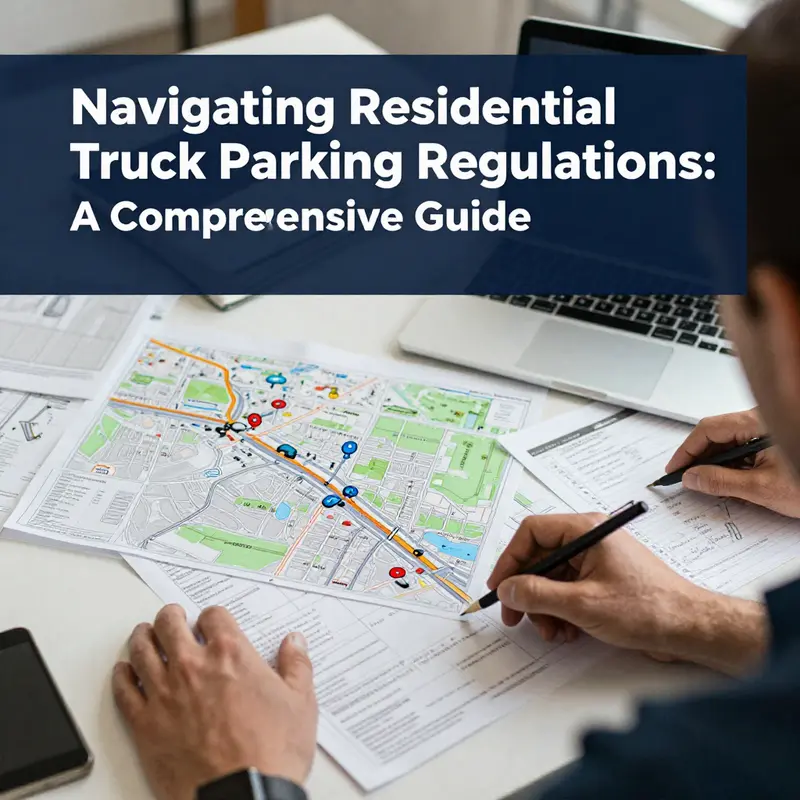
Practical Alternatives to Keeping Commercial Trucks Off Residential Streets
When commercial trucks crowd residential streets they create safety risks, wear on pavement, and friction between residents and businesses. Cities that successfully reduce truck parking in neighborhoods do more than enforce restrictions; they provide realistic, accessible options that move vehicles to appropriate locations and keep goods moving smoothly. This chapter outlines alternatives that work together: targeted curb management, off-street facilities, time-sharing arrangements, micromobility for last-mile delivery, and smart parking systems. Each approach reduces the pressure on residential blocks while protecting commerce and public space.
Designated commercial loading zones are the most direct way to separate truck activity from homes. A well-designed loading zone sits where businesses and delivery routes concentrate, with clear signage, properly sized curb cuts, and time limits to ensure turnover. Good zones are close enough to destinations to be useful, but placed and signed to prevent spillover into quiet streets. When planners designate these locations, they consider truck turning radii, sightlines for pedestrians, and the frequency of deliveries at different times of day. Time-limited loading stalls curb the temptation for drivers to park for long shifts and keep spots available for short-term needs. In busy corridors, a cluster of loading areas documented with simple maps reduces driver confusion and illegal curb use.
Off-street parking facilities and logistics hubs are a second, complementary step. Cities and private operators can convert underused lots, industrial yards, or portions of large commercial properties into centralized parking and staging areas. A logistics hub allows multiple vehicles to park, consolidate loads, or transfer goods to smaller trucks or bikes for final delivery. These hubs are especially effective where industrial land is scarce and demand is high. Locating hubs near a town’s freight corridors, highway access, or transit nodes minimizes deadhead miles and opens space in neighborhoods. Policies that encourage shared use of industrial property during off-hours can unlock space without large capital investment. Where urban cores lack suitable land, nearby fringe areas can host hubs with efficient shuttle or micro-distribution links into dense neighborhoods.
Time-shared and flexible parking models make existing assets work harder. Many buildings and lots are underused for significant parts of the day. Offices, parking garages, and retail lots can host commercial vehicles during off-peak hours if rules and contracts allow. Municipal programs that register and mediate these arrangements remove friction. For example, an office garage with low evening use can become a staging area for overnight delivery vans. Flexible permits that reflect actual use—such as nightly access versus daytime loading—protect residents while providing predictable options for drivers. These models benefit from insurance and liability frameworks that give property owners confidence to open their lots. Coordinated scheduling platforms make it simple for carriers to reserve spots and for lot owners to track income and availability.
Public transit and micro-mobility integration addresses the problem from the other end: shrink the size of vehicles entering residential streets. In dense areas, electric cargo bikes, cargo scooters, and small vans can replace larger trucks for last-mile deliveries. These options reduce noise, curb impact, and the need for large curb spaces. Local governments can support this shift through incentives, designated micro-distribution points, and infrastructure like curbside pads sized for bicycles and small vans. Where permitted, transit facilities can host micro-distribution points so goods transfer from regional trucks to smaller vehicles near the destination. Integrating micro-mobility reduces the number of large trucks looking for parking in residential zones and speeds deliveries in congested areas.
Smart parking management systems tie the physical options together using real-time data. A digital platform that inventories loading zones, off-street capacity, and curb availability gives dispatchers and drivers a single source of truth. Smart systems use sensors, reservation tools, and dynamic pricing to encourage efficient use. When drivers can see where authorized parking exists and reserve a bay, they are less likely to park illegally. For municipalities, data from these systems helps refine zoning and adjust supply. Smart management also enables enforcement to be fair and targeted: tickets and tows become a last resort because alternatives are visible and accessible.
Effectively moving truck parking off residential streets requires policy incentives and enforcement that are aligned with practical alternatives. Restrictions without alternatives push drivers into noncompliance. A balanced approach couples parking limits with immediate, affordable, and predictable options. Permit programs that tier access—temporary permits for tradespeople, contract-based access for frequent carriers, and designated permits for local businesses—help match supply to need. Financial incentives such as reduced rates for off-peak parking or tax credits for businesses that host shared parking can accelerate adoption.
Community engagement and clear communication are critical. Residents need to understand where trucks will be relocated and how changes will affect traffic and safety. Businesses and carriers need straightforward rules and reliable options so they can plan routes without risking penalties. Publicly available maps and scheduling tools build trust. Pilot programs that test loading zones, shared lots, and micro-distribution points produce valuable data and give stakeholders a chance to provide input before permanent changes are made.
Design details matter. Loading zones must be physically designed to discourage misuse by passenger vehicles. Painted stalls, raised curbs, and loading signage that lists permitted vehicle sizes and times reduce ambiguity. Off-street lots should feature lighting, security, and easy access to main roads. Micro-distribution points should be sheltered and accessible to cyclists and small vans. Smart systems must be user-friendly for drivers who may not be tech-savvy and must work across carrier fleets.
Cost is often cited as a barrier, but creative funding models exist. Public-private partnerships can spread capital expenses for hubs and smart systems. Revenues from curb pricing and paid loading zones can be reinvested in parking infrastructure. Grants and freight-specific transportation funds can underwrite pilot programs. In many cases, the avoided costs—reduced congestion, lower accident rates, less pavement deterioration, and fewer emergency responses—justify investment. Smaller cities can start with low-cost pilots: temporarily reassign curb space during certain hours, test a shared parking agreement with a local business, or subsidize a micro-delivery fleet for a year.
Operational practice matters as much as infrastructure. Routing and scheduling that prioritize off-peak delivery windows reduce the need for curbside truck presence during busy times. Consolidation strategies—such as arranging single pickups and drop-offs rather than multiple small visits—cut parking demand. Education for carriers on local rules and available facilities shortens the learning curve and reduces conflict. Municipalities can publish concise driver guides and maintain a simple reservation system. When a carrier knows where to park legally and how much it will cost, compliance rises.
Finally, success depends on layered solutions rather than a single silver bullet. A city could install loading zones but still see trucks in neighborhoods if there are no off-street alternatives or if permit policies are confusing. Conversely, plentiful off-street parking without curb management may not relieve residential streets. The most resilient strategies combine designated loading areas, logistics hubs, time-shared parking, micro-mobility for last-mile service, and smart management systems—all supported by clear rules and community buy-in. When cities align infrastructure, incentives, and technology, they preserve neighborhood quality of life while keeping commerce efficient.
For practical examples, municipal case studies show how targeted loading zones and shared facilities work in busy corridors. One such example is the loading zone strategy implemented along mixed-use avenues where concentrated demand made curb space scarce. These efforts show that clear signage, enforcement tied to alternatives, and communication campaigns produce predictable results (see: https://www.nyc.gov/site/dcp/planning/development-planning/7th-ave-8th-ave-39th-st-66th-st.page).
Where local stakeholders want to explore cost-effective options for their communities, starting small makes sense. Pilot a single off-street lot as a shared hub. Convert one block to designated loading stalls and monitor usage. Encourage businesses to trial off-peak deliveries in exchange for discounted permit fees. Pair pilots with a simple data-gathering plan so lessons are measured objectively. Over time, incremental wins compound into a system that keeps commercial trucks where they belong—on commercial corridors and in designated facilities—not parked on residential streets.
Final thoughts
In an increasingly complex urban landscape, navigating the parking of commercial trucks on residential streets requires diligence and understanding. By being informed about the local regulations, recognizing the impact of truck parking on communities, and complying with legal standards, logistics and construction professionals can maintain positive relationships with residents and avoid costly penalties. Moreover, embracing alternative parking solutions will enhance operational efficiency while respecting neighborhood dynamics, paving the way for sustainable and lawful business practices.