
Understanding the intricacies of parking regulations is crucial for logistics and freight companies, construction enterprises, and small businesses with delivery fleets. Loading zones are specifically designated to facilitate the efficient movement of goods, but the rules surrounding their use can be complex. This article explores whether commercial trucks can park in loading zones, the legal implications they face if they do, and the safety concerns involved. Each chapter will provide clarity on how to navigate these regulations effectively and avoid potential penalties.
The Right of Way Dilemma: Why Commercial Trucks Generally Cannot Park in Loading Zones—and What It Means for Delivery Efficiency
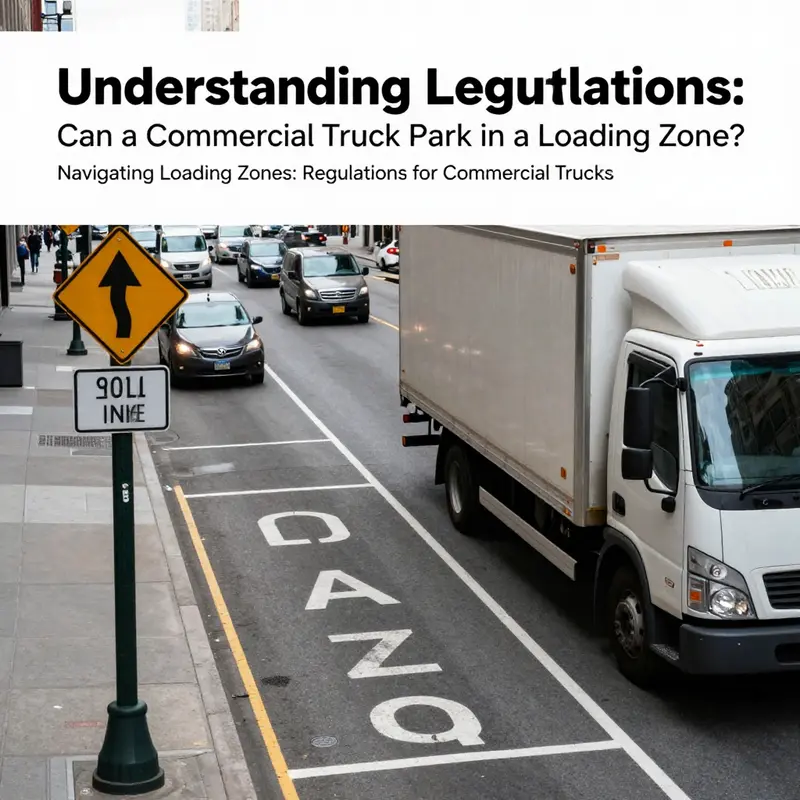
On a city street lined with glass facades and busy sidewalks, the curb becomes a living budget line for how goods move through a neighborhood. The loading zone is one of those budget lines: a narrow strip of asphalt set aside for the quick hug and release of cargo, a few minutes of patient maneuvers, a driver stepping out to supervise the handoff, and a forklift eager to drift into the last yard before the street swallows the next wave of traffic. This is the ideal; the reality, of course, is messier. The loading zone exists for short term loading and unloading, and it is designed for passenger cars and small delivery vans. Its function is practical, safety oriented, and intensely local. It is not, in most cases, a space for the largest vehicles on the road, for the trucks that carry products from coast to coast or from distribution center to storefront before dawn. The reason is not simply weight or size in isolation, but the cumulative effect a large truck has on a busy curb: the long stop, the wheel angle that narrows the lane, the shadow it casts on crosswalks, and the way the vehicle can block access for emergency vehicles, buses, or neighbors who need to park, pull out, or pull in at a moment’s notice.\n\nRegulations governing loading zones sit squarely in the realm of local codes and ordinances rather than federal law. This matters because the exact rules can vary from city to city, sometimes block to block, and even from one side of the street to the other. In practical terms, this means that what is illegal in one municipality might be allowed in another, at least under very specific conditions. The common thread is that the zones are intended for quick, supervised loading or unloading by smaller vehicles or passenger cars. The vehicle types typically permitted include passenger cars and small delivery vans, whereas heavy commercial trucks—often defined by a minimum gross vehicle weight rating—are ordinarily prohibited. The very act of parking a large truck in a loading zone, even for a moment, triggers a cascade of enforcement concerns: it can obstruct the flow of traffic, impede other curbside uses, and undermine the primary purpose of the lane, which is to facilitate efficient and safe micro-movements of people and goods.\n\nFor drivers and fleet managers, this is more than a legal footnote. It is a fundamental constraint that shapes every aspect of urban logistics. When a truck sits in a loading zone, it is not simply sitting still; it is altering the geometry of a street. It reduces the usable lane width, complicates the turn movements for other large vehicles, and often forces vehicles to maneuver around it in ways that create minor yet cumulative safety hazards. In highly congested urban cores, those disruptions can ripple through blocks, slowing down not just the immediate pickup or drop-off but the entire sequence of deliveries that rely on the same curb ecosystem. The practical implication is straightforward: loading zones are not a spare parking lane for commercial fleets, and attempting to treat them as such invites penalties and operational risk.\n\nThe legal framework behind this practice is instructive. Municipal codes define what is permitted and what is not, and they often set explicit thresholds that distinguish passenger vehicles from commercial trucks. A common demarcation point relates to vehicle weight or size, with many jurisdictions flagging trucks over a certain GVWR as prohibited in loading zones. In places with very high enforcement, the rules become nearly rigid: the zone is designed for short duration, with the driver remaining with the vehicle during loading or unloading. Time limits are common—five, ten, or fifteen minutes are typical—yet these windows are only meaningful if the vehicle and driver conform to the intent of the zone. The driver must be present and actively engaged in the loading process; leaving a truck unattended turns the curb into a potentially hazardous and legally questionable space.\n\nEnforcement in major cities demonstrates both the seriousness and the variability of the policy. In cities with high pedestrian density and thin curb lines, authorities are particularly vigilant about curb space. A commercial vehicle parked in a loading zone can trigger a citation, towing, or additional penalties, depending on local ordinances. The owner or operator may be held responsible for the citation, even if the specific driver is not present at the wheel. Repeated violations can escalate fines and can lead to storage charges or towing, adding nontrivial costs to an already tight delivery window. These penalties are not just monetary. They can also impact a carrier’s operating license credibility in the eyes of city regulators and property managers who depend on predictable curbside access for their tenants and customers.\n\nThe landscape is not wholly bleak, however. There are defined exceptions where commercial vehicles may legally participate in curbside activity under controlled conditions. Some cities operate delivery programs that carve out limited permissions for trucks to use loading zones as part of a broader curbside management strategy. These programs often entail pre-approval, specific time windows, or geographic zones where curbspace is reserved for commercial use during off-peak hours or under certain performance criteria. In some areas, overnight deliveries may be permitted in loading zones, reflecting a strategic balancing of demand and capacity when streets are quietest. Emergency situations also create a narrow path for temporary exceptions, when official authorization is granted and the intent is clearly to preserve life and property.\n\nWhat does this mean for fleets and drivers who must plan routes in dense urban environments? It means that compliance is not a mere checkbox; it is an operational discipline. Fleets must build certainty into their schedules by verifying local rules before rolling onto a curb. The best practice is vigilance: know the signs, read the posted hours, and confirm whether a step of the delivery can be accomplished at a dock, a freight hub, or a dedicated loading zone intended for trucks. The risk of a violation or tow is not simply a matter of paying a fine; it can disrupt a delivery timetable, trigger lost time, and require the fleet to absorb the additional cost of re-routing or rescheduling, sometimes with adverse downstream effects on customer service levels.\n\nThe reality of urban curb management also intersects with the broader market dynamics of trucking. When times get tight and space scarce, carriers and drivers tend to optimize for the most predictable and repeatable movements. The calm and mechanical precision of a scheduled dock handoff is preferred to the uncertainty of a curbside stop that could be deemed unlawful at any moment. In this sense, loading zones become a microcosm of a larger supply chain principle: predictability reduces risk. If a driver anticipates a zone to be off limits or heavily policed, the natural inference is to select an alternative loading point that is legally appropriate, protected by signage, and supported by the property owner or building management. This is not simply a matter of compliance; it is a fundamental strategy to protect delivery reliability and maintain a consistent service level for customers who are counting on timely shipments.\n\nThe internal calculus for a carrier often includes a quick assessment of whether the zone in question is part of a regulated program or a standard curbside rule. If the latter, the driver knows that the time-limited window, the requirement for active loading, and the prohibition on unattended parking all apply in full. If the former, there may be a formal process to access the zone and a specific schedule that must be adhered to. In either case, the driver must be prepared to adjust plans on the fly. The modern delivery ecosystem rewards flexibility and fast decision making, but it does not reward noncompliance. A small deviation from the rule can cascade into a backlog of penalties or a safety incident, undermining not only the current shipment but the operational integrity of the entire route.\n\nTo broaden the context, it helps to think about the broader infrastructure that supports curbside loading. Not every building presents a loading dock. In many dense urban neighborhoods, the preferred approach is to stage goods at a nearby dock or a private loading area and then shuttle them to the final destination with smaller, more maneuverable vehicles. This model aligns with the concept of freight hubs and designated truck loading zones that accommodate larger volumes of goods and allow for more efficient handoffs. The curb, in these scenarios, becomes an extension of the off-street logistics system rather than an on-street staging ground for heavy commercial vehicles. The mismatch between the curb’s purpose and the needs of large trucks is a practical symptom of how urban space is allocated and regulated.\n\nThe driver’s perspective also matters here. A professional operator understands the risk calculus behind curbside parking. The decision to park in a loading zone is not just a question of legality; it is a calculation about time, safety, and the potential consequences if enforcement arrives while the vehicle is in a moment of vulnerability. The driver must consider whether a quick handoff can be achieved within the allowed time while remaining in clear view of the vehicle. The risk of a ticket or tow is weighed against the potential delay of searching for alternative parking or docking options. In many cases, the prudent course is to avoid the zone entirely and await a proper loading dock or a designated truck-only loading zone, even if that entails a few minutes of additional travel or a minor detour. The consequences of a decision to park in a loading zone, while it might seem expedient in the moment, can be expensive and disruptive in the larger scheme of a multi-stop route.\n\nAs part of the professionalization of curbside logistics, fleet managers increasingly recognize the need to align their operations with local enforcement patterns and municipal planning. The best practice is proactive: before a route is finalized, check the local codes, confirm permitted vehicle types, and identify any special programs that may apply to the area. In practice, this often means coordinating with building management, property owners, and local authorities to confirm whether a zone is truly a no-go for trucks or if there is a sanctioned pathway for curbside activity. It also means integrating curb compliance into the routing software and telematics platforms used by the fleet. When the route planner’s algorithm knows that a zone is off limits to trucks, it will avoid that zone or flag it for manual review, ensuring that the dispatcher does not gamble with a curb that could instantly become a high-cost violation.\n\nThe topic also intersects with evolving urban logistics programs that attempt to reconcile street space with the demands of modern commerce. Some cities have experimented with limited truck access zones, dynamic curb pricing, or express curb lanes reserved during certain periods for freight activity. In others, special zones or time-based allowances have been introduced to support essential deliveries in high-demand corridors. The essential idea behind these initiatives is balance: curb space must serve multiple purposes, including resident mobility, safety, and commerce. For carriers, the practical implication is that a loading zone is rarely a written permit of permanent use. It is a negotiated space, contingent on time, vehicle type, and the specific policies of the jurisdiction.\n\nThis negotiation is where the concept of windows of opportunity comes into sharper relief. For example, in some urban areas, the same block that prohibits a truck during peak hours may offer a small, clearly posted time window for deliveries by larger vehicles during off-peak times. In other places, blunt prohibitions persist, and even an operator who is technically within the allowed vehicle class finds that a zone is still not a viable option due to conflicting parked cars, pedestrian flows, or transit vehicles relying on the same curb space. The net effect is that urban curbside logistics demand a careful, well-researched approach that respects the letter of the law while preserving the ability to move goods at a predictable pace. In short, compliance is not a barrier to efficiency; it is a foundational element of reliability.\n\nIf there is a single thread to hold onto, it is this: loading zones exist to deliver goods quickly and safely to pedestrians and other street users, not to serve as a curbside parking lot for large commercial trucks. The weight, length, and operational footprint of these vehicles make their presence in a loading zone more disruptive than convenient. The penalties for improper use are designed not only to punish but to deter behavior that could undermine street safety and public space management. The practical outcome for a state of affairs where curb spaces are finite and demand is rising is a stronger case for alternative strategies. When a zone is not appropriate for a truck, the most reliable choice is to use a dock, a private loading area, or a designated truck loading zone that is built into the logistics network for the delivery, not a transit route.\n\nIn the broader context of industry trends, the decisions around curbside parking and loading zones are not isolated. They ripple into planning horizons, fleet composition, and the timing of deliveries. Fleets monitor indicators such as trailer orders, airtime for route fixes, and the rate at which new curbside controls are introduced in their markets. The interplay between demand for quick deliveries and the physical realities of street design creates a dynamic that is both challenging and manageable with the right processes. For readers who want to explore how these macro trends influence practical operations, consider the discussion of trucking economic trends affecting trailer orders, which offers a deeper look into how market conditions shape the capacity to adapt curbside practices to real-world constraints trucking-economic-trends-affecting-trailer-orders.\n\nThe bottom line for this chapter is a call for disciplined judgment rather than opportunistic use of street space. A loading zone is a tool to support a smooth, safe exchange of goods in a busy urban environment. It is not a parking space reserved for the convenience of a single shipment or a single fleet. When fleets embrace this distinction, they can design routes, time windows, and handoff points that minimize risk and maximize reliability. They can also foster cooperation with property owners and local authorities that seek curbspace balance among competing needs. This is how the urban supply chain remains resilient: by investing in clarity, compliance, and coordination, not by bending the curb to fit a single operational moment. As readers move forward in this exploration, they will see how practical alternatives—dock access, freight hubs, and well-structured scheduling—become the preferred path for moving goods through the city in a way that respects the rules, protects safety, and preserves service levels across the network.\n\nFor those who want a concrete sense of where to begin, the answer lies in local regulation review and routing discipline. Start with the local ordinance and posted signage, and ask the building manager about any approved loading areas or shared dock access. Confirm whether there is a city program that allows trucks to access loading zones during specified periods and, if so, what the steps are to participate. Keep a buffer in the schedule for roadside contingencies, and always plan a fallback to a dock or freight hub. Finally, build a culture of accountability: drivers, dispatchers, and managers all bear responsibility for curbside behavior. A single violation can disrupt a route and invite penalties that extend beyond the immediate stop. The curb is a shared resource, and treating it as such—not as a private staging area—rests at the heart of compliant, efficient urban freight.\n\nExternal resources and official guidance can provide the grounding needed to align operations with the law. For authoritative guidelines on loading zones, refer to the U.S. Department of Transportation’s official guidance, which outlines the intent, limits, and enforcement considerations across jurisdictions.
Legal Boundaries in the Loading Zone: Why Commercial Trucks Are Usually Barred and What That Means for Everyday Deliveries
The curb is a thin line between mobility and friction, a place where the flow of people, cars, and goods must be choreographed with precision. In this choreography, loading zones stand as brief, carefully demarcated pauses, intended to facilitate quick pickups and drop-offs without interrupting through traffic or blocking access. They are not general parking spaces; they are tools of urban logistics designed for rapid activity, not for long rests. For commercial fleets, that distinction matters as soon as a truck approaches the curb. The vehicle’s size, weight, and purpose collide with a rule set that favors nimble exchanges over long waiting, and the consequences of crossing that line are both legal and practical. In most jurisdictions, the law does not treat a loading zone as a free-access stall for large commercial trucks. Instead, it guards those few precious minutes for passenger cars, small delivery vans, or similarly sized vehicles that can perform loading or unloading quickly and move on. The result is a complex balance between the needs of urban commerce and the rights of other road users who depend on accessible curb space. To unpack what this balance means in real terms, it helps to start with a careful definition of what loading zones are designed to accomplish and who they are intended to serve. Loading zones are areas reserved near the curb for the short-term pause necessary to transfer goods or people from a vehicle to a building or back again. They are intentionally time-limited. Signage, markings, and municipal codes all point to a narrow use window: a truck (or any vehicle) may stop only for a brief period and only while the driver remains present to complete the transaction. The goal is not to offer a staging area for fleet parking but to allow an efficient exchange that minimizes disruption to traffic flow and extends safe access for pedestrians and other riders. The complexity of this practice becomes apparent when one considers the typical trucking operation. A commercial truck, especially those in the heavier segments with a gross vehicle weight rating well above 10,000 pounds, is built for endurance, not for curbside quickness. The wheelbase and turning radius, the need for space to swing a trailer, and the duration of the unloading process all conspire to create a gap between the zone’s intent and the vehicle’s behavior. In cities with dense streets, that gap is not merely a nuisance; it is a potential safety hazard and a violation of local regulations that carry real penalties. The legal restrictions governing loading zones are usually framed in local municipal codes rather than in overarching federal law. This distinction matters, because it means the rules can vary significantly from city to city, reflecting unique urban layouts, pedestrian atmospheres, and modes of commerce. The codes commonly spell out two essential elements: who may use the space, and for how long. Permitted vehicles are typically passenger cars, small delivery vans, and occasionally non-commercial vehicles. Prohibited vehicles often include commercial trucks exceeding a specified weight threshold or those designed for heavy hauling. Some jurisdictions draw a bright line at GVWR figures that many fleets recognize as a practical threshold. The rule is not merely about vehicle type; it is about the function of the vehicle while it sits in the zone. A truck that arrives to deliver a mountain of goods and then idles through a long process risks blocking the lane for other vehicles and pedestrians. The time limits, commonly five to fifteen minutes, reflect that logic: a brief, predictable period to load or unload while the driver remains present. When a driver steps away, or when the vehicle remains parked beyond the allotted time, the area ceases to function as intended and becomes a hazard in the eyes of law enforcement, property owners, or municipal traffic management programs. The enforcement landscape is straightforward in principle and varied in practice. Local agencies rely on signage and curb markings to communicate the rules, and officers or parking enforcement personnel are tasked with ensuring compliance. The penalties are proportionate to the disruption and the risk. A typical violation can carry fines ranging from the modest to the significant, with higher fines possible for repeat offenses. In some jurisdictions, the stigma of a loading zone violation can escalate quickly: towing or storage fees can compound the immediate fine, and repeated violations may trigger escalating penalties or license-related consequences for the company. A notable aspect of enforcement is its reach: in many places, the citation may be issued to the vehicle owner or operator, even if the specific driver was not behind the wheel when the violation occurred. This principle underscores the shared responsibility of fleet management and individual drivers and underscores the necessity for clear internal procedures that align parking decisions with local law. The practical implications extend beyond the price of a ticket. The risk of towing, storage charges, or even suspended parking privileges in a neighborhood can disrupt supply chains and affect the reliability of service. For a commercial operation, the consequences ripple through dispatch planning, warehouse coordination, and customer expectations. When a fleet contemplates curbside loading near a busy intersection or a storefront with heavy foot traffic, the calculus must include not only the costs of parking law violations but also the reputational and operational costs of disrupted deliveries. In some cities, the rules are explicit about exceptions, though they remain narrowly circumscribed. A city-approved delivery program can grant limited, supervised access to loading zones for qualified vehicles. The best-known example is a program that introduces designated zones with specific delivery windows, enabling certain trucks to perform synchronized loading under a controlled framework. Even within these exceptions, trucks are not granted blanket permission to park; instead, they operate under a tightly regulated schedule that aligns with public safety and efficient curb usage. There are also instances when commercial vehicles may temporarily use loading zones for emergency purposes or with official authorization. These allowances, while real, operate on a concession basis and require documentation, prior coordination, or rapid communication with authorities. The practical effect is that a truck cannot treat loading zones as a general staging area for any extended period. For fleet operators and drivers, this is a matter of process as much as legality. It is tempting to view loading zones as convenient parking alternatives, but the urban design behind them emphasizes performance, safety, and accessibility. The reality is that the benefit of rapid loading is outweighed by the need to preserve curb space for a broad range of users. That is why many cities have pursued more nuanced approaches to curb management. Some have explored pilot programs that reallocate curb lanes for a mix of freight and passenger use during specific hours, or that create temporary loading zones when demand peaks. Others have introduced digital permitting and enforcement mechanisms to better coordinate deliveries with demand. In all these efforts, the guiding principle is clear: the loading zone belongs to the cadence of the street and to the pace of pedestrians and transit. It is not a private staging area for a heavy vehicle’s long wait. From a fleet-management perspective, translating these rules into practice begins with anticipating curb needs before a route is planned. Dispatchers who understand the local landscape can route trucks toward appropriate loading zones or toward alternative loading facilities, such as freight hubs or dedicated dock areas, that are designed for sustained activity. This reduces the temptation to stretch a loading window into a prolonged hold, which would violate the spirit and letter of the local regulations. It also encourages better utilization of space for other operators who rely on curb access to serve customers and communities. Best practices emerge from a combination of regulatory awareness and practical discipline. First, always verify local municipal regulations before attempting to park in or near a loading zone. What seems obvious in one city can be sharply different in another. A quick check of posted signs, vehicle- and time-limit signage, and any on-street notices can save a fleet from a costly misstep. Second, seek designated commercial loading zones or freight hubs when possible. These dedicated spaces are constructed with the needs of larger vehicles in mind and often provide more reliable access for longer-than-average loading activities, while still maintaining traffic safety and pedestrian access. Third, coordinate with property owners and building managers when a dock or curb space is essential. In some urban settings, property-specific arrangements can unlock a limited, permitted use for a truck, but only when supported by formal agreements and clear display of permits or placards. Fourth, avoid blocking access to loading zones—never double-park or stage a vehicle in a manner that restricts pedestrian crossings or obstructs truck maneuvering. Even a momentary obstruction can lead to penalties and a ripple effect of delayed deliveries. This is a reminder that compliance is not just about avoiding fines; it is about preserving predictable service levels for customers and maintaining safe conditions for pedestrians and other road users. The broader regulatory landscape also intersects with emerging urban logistics initiatives. For instance, some cities have experimented with delivery programs designed to limit curb usage during peak hours or to encourage off-street or off-peak deliveries. These programs aim to balance the demands of commerce with the rights of residents to move freely through city streets. In this context, a driver might encounter an overnight or early-morning delivery window in which commercial vehicles are permitted to stop briefly in loading zones under strict supervision. The presence of such programs does not erase the fundamental rule that loading zones are not free parking spaces for all commercial vehicles; rather, they provide a framework in which controlled exceptions can exist without compromising safety or accessibility. For readers seeking a deeper sense of how these issues play out beyond the everyday, consider the broader regulatory conversation that accompanies cross-border and multi-jurisdictional trucking operations. Understanding the interplay between national guidelines, regional codes, and city-level restrictions helps explain why a single practice—parking a commercial truck in a loading zone—can carry disproportionately high stakes. It is not simply a matter of personal conduct or bad timing; it is a question of public space governance and the responsibilities that come with operating a fleet in a shared urban environment. To connect this discussion to the larger arc of this article, the regulatory question about loading zones sits at the intersection of safety, efficiency, and accountability. The practice a driver chooses in the moment can echo through a fleet’s compliance culture and influence how municipal authorities design curb-use policies in the future. It is, in short, a microcosm of the ongoing negotiation between the demands of commerce and the public interest in safe, accessible streets. For a broader look at how regulatory complexity shapes cross-border and domestic trucking operations, this topic sits beside other threads in the regulatory tapestry. The takeaway is not simply a rule to memorize, but a framework for thinking about how curbs, docks, and corridors are managed in a dynamic urban economy. When planning routes and preparing for deliveries, drivers and fleet managers would do well to treat loading zones as what they are meant to be: a narrowly scoped tool that enables quick, legitimate exchanges rather than a default parking option for heavy vehicles. This mindset supports safer streets, cleaner relationships with municipal authorities, and more reliable service for customers who depend on timely, predictable deliveries. As cities continue to evolve in their approach to curb space, the core principle remains stable: legality and safety must guide every curbside decision, and the loading zone’s primary function is to facilitate efficient short-term activity, not to accommodate long-term parking for commercial trucks. If readers want a concise gateway into how these concepts operate across borders and jurisdictions where rules diverge and converge, they can explore broader discussions of regulatory complexity in trucking through related resources, such as industry forums and regulatory briefings that address cross-border and multi-jurisdictional considerations. TCAS cross-border regulatory issues event. The implication is clear: the moment a commercial truck seeks to exploit a loading zone for anything beyond a quick exchange, the risk of fines, towing, and compliance costs rises, and the broader goal of keeping curb spaces available for all users becomes harder to achieve. The chapter ends not with a cliffhanger about a clever workaround, but with a practical commitment to doing the right thing on the street: plan, park in the right place, and respect the zone designated for brief, lawful activity. The urban curb should be treated as a shared resource that supports efficient commerce while protecting pedestrian safety and neighborhood livability. That shared responsibility rests on the shoulders of operators who choose to align their routines with local rules, equipment less invasive than a violation, and a culture of discipline that recognizes the loading zone’s true purpose. External resource: For official guidance on restricted parking zones and related rules, see the City of New York Department of Transportation. https://www.nyc.gov/site/dot/index.page
Curbside Consequences: The Hard Reality of Parking a Commercial Truck in a Loading Zone
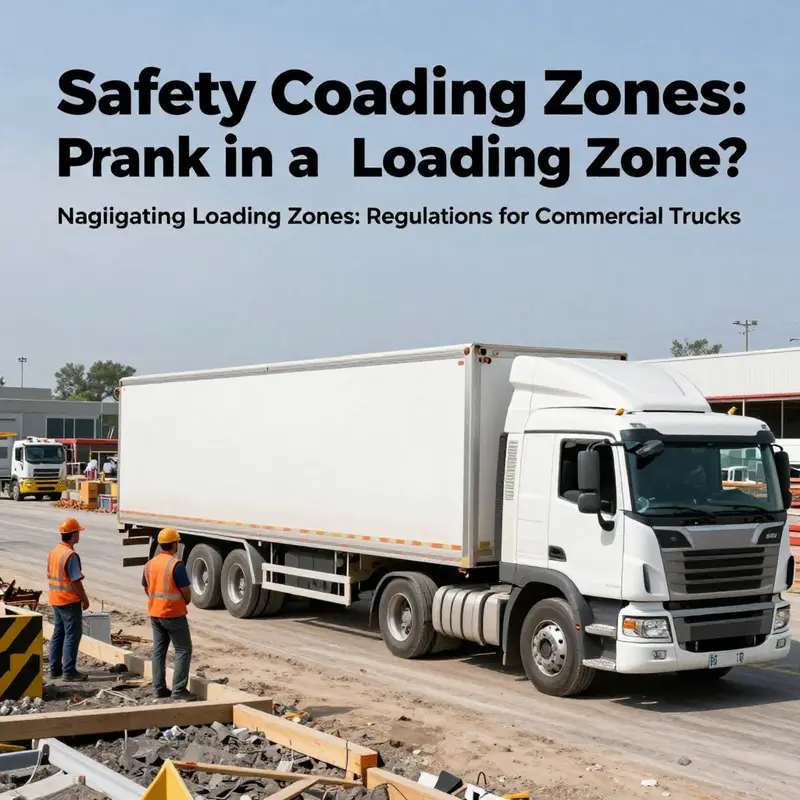
Every city seems to design its streets with a single conspicuous promise: curb space should move people and goods efficiently, safely, and predictably. Loading zones sit at the heart of that promise. They are built to facilitate rapid loading and unloading for passenger cars and small delivery vans, not the large, heavy, and long-duration needs of commercial trucks. The instinct to bypass these zones can be strong when drivers face tight schedules, crowded streets, or a sudden loading demand. Yet the regulatory logic behind loading zones is not an arbitrary preference; it is a carefully engineered balance between accessibility, safety, and traffic flow. For a commercial truck, parking in a loading zone, even for a moment, can ripple outward—from traffic backlogs and blocked crosswalks to frustrated pedestrians and stressed local enforcement. The practical reality is that a loading zone is a shared asset in a dense urban ecosystem, and its primary design purpose is short-term relief for smaller vehicles, not a staging area for heavy freight. The real-world implication of that design choice becomes clear when you examine the rules, penalties, and safety considerations that govern curbside space. In most jurisdictions, the letter of the law is explicit: commercial trucks should not park in loading zones unless a specific exemption applies. The consequences of non-compliance are equally explicit: fines, towing, and potential disruption to a carrier’s operations. In other words, the curb is a limited resource, and misusing it is a policy violation with tangible cost and risk. This is not merely a bureaucratic concern; it is a safety and efficiency issue with everyday implications for drivers, fleet managers, and the communities they serve.
The general rule is straightforward: loading zones are intended for the short-term parking of vehicles that facilitate loading or unloading. This generally means passenger cars, compact delivery vans, or other non-commercial vehicles. Large commercial trucks—especially those above certain weight thresholds or with length and height that complicate navigation—are typically prohibited from using these zones. Local ordinances codify these prohibitions and vary in their specifics, but the core principle persists across most major cities and many smaller municipalities. The differences sometimes appear subtle on a map or a sign, yet they matter profoundly in practice. A zone that might permit a few minutes for curbside pickup on a quiet residential street becomes a no-go for a regional carrier in a busy commercial corridor. Because local codes are the enforcement backbone of these rules, understanding them means recognizing that there is no universal federal mandate that authorizes trucks to park in loading zones. Instead, each jurisdiction wields its own authority to decide who can stand in or near a loading zone, for how long, and under what conditions. This is not a matter of opinion or interpretation; it is a question of legal compliance, neighborly responsibility, and public safety.
The size, weight, and operational needs of commercial trucks render them inherently misaligned with the typical constraints of loading zones. A truck that weighs tens of thousands of pounds, with a length that stretches beyond the space between two parked cars, requires more maneuvering room than a standard curbside stop allows. Turn radii, door swing, and the risk of hitting adjacent parked vehicles are more than theoretical concerns; they translate into tangible hazards. When a large truck occupies a loading zone, even for a brief moment, the visibility around the truck is compromised. A driver may not see a pedestrian stepping off the curb or a bicyclist weaving through traffic, and a cone or barrier near the zone is no guarantee of safety if the truck backs out with limited line-of-sight. The realities of urban driving—pedestrian density, multi-use sidewalks, street furniture, and frequent pedestrian crossings—amplify the risk. The consequence is a higher probability of accidents, near misses, and injury, especially in dense neighborhoods where curb space is consumed by buses, rideshare vehicles, or construction activity. These safety considerations are not abstract; they shape why loading zones exist in the first place and why they must be respected by all users.
Enforcement is the practical enforcement of this safety calculus. Municipalities rely on a combination of signage, curb paint, and on-street enforcement to maintain order. In this ecosystem, a truck parked in a loading zone is a visible violation, and the consequences can be swift. In many places, fines for parking a commercial vehicle in a loading zone start in the modest range but can escalate quickly with repeat violations. It is not uncommon to see penalties that begin around the local baseline and rise with each subsequent offense, sometimes accompanied by towing fees and storage charges if the vehicle is removed. The driver who is behind the wheel may face a ticket, but the responsibility often extends to the operator or owner of the vehicle. A fleet’s compliance program must therefore address not only the street-level risk but also the financial and operational impact of citations, penalties, and possible vehicle removal. The enforcement picture varies by city. Some municipalities have even more aggressive rules against accepting any permit-based allowances for trucks, directing commercial fleets to use dedicated loading docks or off-street facilities. In places like major metropolitan areas, the DOTs emphasize the prohibition against non-compliant trucks, while sometimes offering limited, very specific permit-based allowances for certain delivery programs or at particular times. This layered approach aims to preserve curb access for smaller vehicles while safeguarding public safety and maintain efficient traffic flow.
There are, of course, exceptions, or at least narrowly defined allowances, that can blur the line between a hard rule and a regulated exception. In some jurisdictions, a city-approved delivery program may create a limited, authorized exception for certain commercial trucks. For example, there can be designated “Green Delivery Zones” or similar arrangements that permit commercial vehicles to use curb space during scheduled windows. These programs are not universal and typically apply only to specific routes, doors, or times, with clear criteria for eligibility and active enforcement when not used as intended. The existence of such programs demonstrates that loading zones can play a practical role for freight delivery without compromising safety or traffic operations, but they are not a free pass for all trucks at all times. A driver or fleet manager who relies on an exemption must remain vigilant for changes in policy, signage, and any plan for lane reconfiguration or street work that could affect the availability of the exemption. Another kind of exception arises when a vehicle is temporarily stopped for authorized emergency purposes or when official authorization is granted for a particular delivery operation. It is critical to note that even during such moments, the scope of the exception is precisely defined, time-bound, and require active oversight by competent authorities. The bottom line is that exemptions exist, but they do not create a broad license to park a commercial truck in a loading zone. They simply acknowledge that, under controlled circumstances, a short, well-justified stop can be permissible without compromising safety or the integrity of curbside operations.
Best practices for avoiding trouble are straightforward, but they require disciplined execution. First, always verify local regulations before parking. This means reading the signage at the curb, understanding any painted markings, and recognizing the posted time limits for that specific loading zone. The rules can be as specific as “no trucks” or as nuanced as “only for passenger vehicles and small delivery vans.” Even when a zone appears to be underutilized or temporarily clear, the risk of a citation remains if the vehicle is not within permitted parameters. The safe and prudent approach is to use designated commercial truck loading zones when available or to route to off-street loading areas like freight hubs or dock facilities. These off-street options are designed to accommodate larger vehicles, offering more space for maneuvering, easier access to docks, and often a more predictable loading/unloading window. For many fleets, this is the simplest, most reliable path to compliance and uptime. A practical piece of guidance is the habit of planning routes with a pre-identified curbside alternative in case a loading zone is temporarily unavailable due to construction, events, or other road dynamic changes.
From a safety designer’s perspective, the risk profile of parking a truck in a loading zone is shaped by several interacting factors. The vehicle’s size and weight are primary, but the surrounding environment intensifies the risk. The street geometry—how narrow the curb lane is, whether a bicycle lane runs adjacent to the loading zone, the presence of light poles and signage, and the level of pedestrian activity—matters as much as the truck’s dimensions. A truck occupying space in a busy zone can push other vehicles into adjacent lanes, prompting a cascade of actions that increase potential for collisions. Pedestrian risk is not limited to crosswalks; people may step onto the curb, guided by the sounds of a large vehicle reversing or idling nearby. The risk to other motorists increases when a truck’s size makes it difficult to navigate around parked vehicles or to exit the zone safely. These safety considerations underline why regulators place a premium on time limits and presence requirements during loading. They are not a mere courtesy; they are the guardrails that keep curbside activity predictable for all road users.
The regulatory landscape is not uniform, even within a single country. Local municipal codes govern loading zones, which means there is considerable variation in what is allowed, how it is enforced, and what penalties accompany violations. The absence of a federal mandate governing day-to-day curbside practices places the onus squarely on city planners and traffic enforcement agencies to set and enforce rules that align with local traffic patterns and safety priorities. This decentralized approach can lead to a patchwork where a truck that is perfectly within the rules in one district may face penalties just a few blocks away. The practical implication for fleets is that a one-size-fits-all policy is untenable. Instead, smooth compliance hinges on a culture of local literacy—drivers who can read the street, interpret the signage, and understand the permit landscape in the areas they operate. The consequences of ignorance are not merely financial; they can disrupt schedules, degrade service reliability, and invite reputational risk for carriers that travel repeatedly into zones with strict enforcement.
To place the considerations in a broader industry context, one can observe how the freight ecosystem evolves in response to curbside constraints. When loading zones are strictly regulated, a ripple effect touches every part of the operation. Shippers and carriers must coordinate tighter delivery windows, reduce dwell times, and optimize routing to avoid tailbacks. In turn, this can affect trailer utilization, driver hours, and the overall health of the supply chain. The tension between curbside safety and practical freight movement is not easily resolved; it requires ongoing collaboration among city officials, trucking associations, and the fleets that physically move goods through urban cores. Industry analyses that explore how macro factors—like changes in demand, capacity, or trailer orders—interact with regulatory constraints help illuminate the margin for error that fleets must manage when a loading zone sits at the intersection of policy and pavement. Trailer Orders Impact Truckload Margins illustrates, in a broader sense, how supply chain decisions reverberate through the day-to-day realities of freight movement. While the link points to a different facet of the business, the underlying lesson remains relevant: operational decisions are never isolated from the regulatory and safety contexts in which trucks operate.
From a practical operations standpoint, the decision tree around curbside stops begins with signage and ends with signage. Drivers should verify, before they park, that the zone is indeed available for the vehicle type and purpose. If there is any ambiguity about whether a commercial truck can legally stop in the zone, the safest course is to avoid the space and seek an alternative. That decision may involve rerouting to a dedicated loading dock, which, in turn, can simplify the loading process, reduce the risk of a citation, and improve overall service reliability. Fleet managers can enhance compliance by building proactive safety checks into driver briefings and digital dispatch notes. A simple checklist—confirm zone type, confirm time limits, confirm driver presence requirement, confirm alternative parking—can prevent a costly misstep. Training should emphasize not only the letter of the rule but also the spirit behind it: curb space exists to keep traffic moving and pedestrians safe. When drivers understand the why behind the rule, adherence becomes less about fear of punishment and more about shared responsibility for public safety and efficient commerce.
In considering the broader implications, it is important to acknowledge the realities that fleets face every day. Urban deliveries arrive at varying times, sometimes in high volumes, with the possibility of a lane closure, a street fair, or a maintenance project that narrows roads and compresses curb space. The most resilient fleets design flexibility into their operating models. They lean on robust pre-planning, invest in off-street loading capacity, and cultivate strong relationships with warehouse partners who can provide dock access when curb access is constrained. This approach is not a luxury; it is an operational requirement in many dense markets. While the frustration of delays can tempt drivers to take risks, disciplined planning yields a more reliable service profile and reduces the likelihood of penalties and disruption to delivery windows.
The bottom line with loading zones is that they are not a free parking solution for commercial trucks. They are a carefully allocated public resource, guarded by rules that exist to protect safe, steady mobility for everyone who uses city streets. The penalties for transgression—fines, towing, storage costs, and increased scrutiny from enforcement agencies—are real and can extend beyond the immediate incident to broader fleet performance metrics. The exceptions, where available, require explicit authorization and strict adherence to conditions. The safer, more effective approach is to align operations with off-street loading facilities, plan for variability in curb availability, and maintain a culture of local regulatory literacy across the driver and management teams. In this way, the industry can respect the curb while continuing to move goods with the efficiency that urban economies depend on.
For those who want a practical, real-world reference to these dynamics, it is worth looking at how recent industry research frames the broader freight environment in relation to loading practices. While that research travels through different focal points, the thread remains consistent: curbside regulations are a component of a larger system designed to maintain order, safety, and predictability in busy streets. When fleets recognize that loading zones serve a purpose beyond a momentary stop, they can build operations that minimize risk and maximize reliability. The inevitable takeaway is clear: if the zone is not clearly designated for a commercial truck, do not use it. The risk is not simply a fine; it is a disruption to service and a potential safety incident that could put the public at risk. In urban freight planning, the priority is clear—curbside spaces must be managed to balance the needs of all users, with safety as the guiding principle. This alignment of policy, practice, and principle helps ensure that loading zones fulfill their intended role without becoming a source of contention and danger.
External resource for regulatory specifics and current municipal practices can deepen understanding of how loading zones function in major cities. For those seeking an authoritative overview of curbside loading rules and enforcement practices, the New York City Department of Transportation offers detailed guidance on who may use loading zones, permitted activities, and the penalties for violations. This resource complements the broader discussion by grounding it in a concrete urban framework and highlighting how one densely populated city manages curb space to support both freight and pedestrian safety.
In the end, the question of whether a commercial truck can park in a loading zone does not have a simple yes or no answer. It hinges on local law, the exact configuration of the zone, the permitted vehicles and time limits, and the presence of any official authorization. The safest path is to assume the zone is not available for a truck, plan alternative arrangements, and treat curbside space as a shared, time-bound resource that must be respected by all. In this way, fleets reduce risk, maintain service reliability, and contribute to safer, more efficient urban streets for everyone who uses them. The discipline of curbside compliance is not a burden; it is an operational discipline that underpins modern freight movement and urban living alike.
External resource: https://www.nyc.gov/site/dot/services/loading-zones.page
Final thoughts
The nuances of parking regulations within loading zones are critical for the seamless operation of logistics, construction, and delivery services. By understanding the regulations, legal implications, and safety concerns associated with parking, businesses can avoid unnecessary fines and ensure compliance. It’s essential for company owners and procurement teams to analyze their local laws and adapt their strategies to optimize their operations while adhering to all regulations.