
Maryland has specific regulations governing the use of left lanes by commercial trucks, crucial for logistics, construction, and delivery operations. Comprehending these rules is paramount to ensuring compliance, enhancing road safety, and optimizing traffic flow. In the chapters that follow, we will investigate the legal framework surrounding left lane restrictions, examine the implications for safety, analyze the effects on traffic congestion, and detail how enforcement is conducted, providing a robust understanding essential for company owners and fleet managers to navigate these regulations effectively.
Left Lane Boundaries: Maryland’s Commercial Truck Lane Rules and the Art of Safe Overtaking
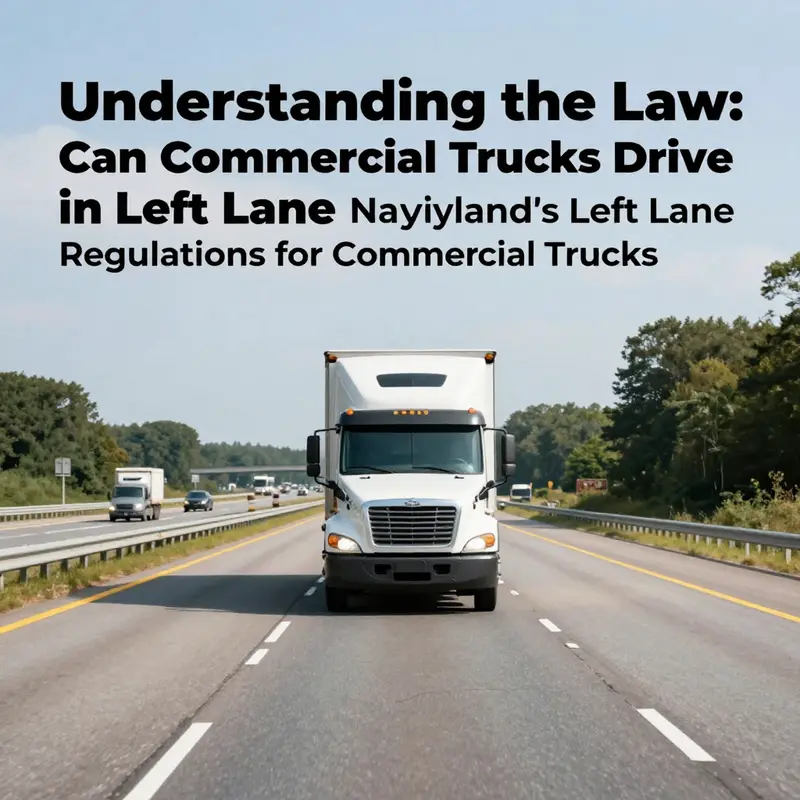
On Maryland highways, the lane you occupy is more than a preference; it’s a matter of safety, traffic flow, and regulatory clarity. The state has carved out a specific rule for commercial trucks that mirrors a broader national pattern: the far left lane is a passing lane, not a general-purpose lane for heavy vehicles. This policy is particularly relevant to trucks with a gross vehicle weight rating (GVWR) of 10,001 pounds or more, which are the vehicles most often involved in multi-lane traffic scenarios on major corridors. In practice, when three or more lanes are moving in the same direction, the leftmost lane should be used for overtaking and should be vacated promptly after the maneuver completes. The goal is to keep the left lane free for faster traffic and for vehicles that are actively passing, thereby reducing weaving, sudden braking, and the kinds of disruptive lane changes that can cascade into more serious incidents. This rule is not a mere suggestion; it is a traffic discipline intended to improve predictability on the road for passenger vehicles, commercial trucks, and emergency services alike.
To understand why this matters, picture a typical Maryland highway with three or more lanes in a given direction during peak travel. A tractor-trailer cruising in the far left lane without actively passing slows the flow for vehicles that may be attempting to move more quickly or prepare for a merge. The left lane becomes a bottleneck, and the resulting pressure manifests in frequent braking and lane-change maneuvers by following drivers. For fleet operators and individual drivers alike, the practical takeaway is simple: respect the left lane as a space for passing, not for prolonged occupancy. This distinction has direct implications for fuel efficiency, tire wear, and driver fatigue—factors that matter just as much as compliance with the letter of the law.
The regulatory text that most truckers need to recall is explicit: trucks with GVWR of 10,001 pounds or more must not operate in the far left lane when three or more lanes in the same direction are available, unless they are actively passing a vehicle. The phrase “unless they are passing” is critical. It means the left lane is permissible for the act of overtaking, but not for cruising. Once the pass occurs, the law, and the practical safety logic behind it, urges a return to the right-hand lanes. That normative behavior helps reduce unnecessary obstruction in the left lane and preserves it for faster vehicles and passing traffic. Enforcement personnel—ranging from the Maryland Transportation Authority to local police—treat violations seriously, especially when the truck’s left-lane presence is perceived as deliberate slowing or blocking. In many cases, penalties reflect not only the act of occupying the lane but the broader impact on traffic disruption and safety. A driver who lingers in the left lane without a legitimate passing purpose creates a risk profile that law enforcement takes seriously, and penalties can be assessed accordingly.
This framework also acknowledges exceptions that can arise in real-world driving. Not every stretch of Maryland roadway has three lanes in the same direction. In two-lane segments or on roads with fewer than three lanes, the left lane rules may not apply in the same way. The practical upshot is that truck drivers must stay attentive to lane configuration as they travel. When traffic conditions demand, such as during heavy merging or congestion that reduces lane availability, the right-lane discipline remains the default. The emphasis is on predictable behavior that other drivers can anticipate. In this sense, Maryland’s left-lane policy becomes less about micromanaging every mile and more about promoting consistent lane discipline across the network. The risk of fines is real, but the bigger incentive is the reduction of secondary crashes and near-miss incidents that frequently arise from drivers trying to force their way into or out of the left lane in heavy traffic.
For operators, the question often moves beyond mere compliance and into planning and policy. A fleet manager evaluating routes in Maryland will want to consider the typical lane configurations of the corridors most used by their equipment. If a route routinely features three or more lanes in the same direction, the driver training program should stress the importance of lane discipline in the leftmost position. Drivers should be trained to identify scenarios where they can safely execute a pass and then smoothly re-enter the right lanes. This reduces the chance of impeding faster traffic and helps maintain a smoother overall flow on the highway. Training programs can include scenario-based coaching, using real-world traffic data to illustrate how a left-lane hold can ripple into longer travel times and heightened risk for all road users. The goal is not to punish but to cultivate a culture of safety and efficiency that benefits the entire transportation ecosystem.
Another layer of practicality concerns interactions with other roadway users. For example, if a slower vehicle is impeded by the presence of a heavy truck in the left lane, the nearby drivers may respond with abrupt lane changes or speeding up to pass on the right, behaviors that can trigger cascading instability. The Maryland approach to lane usage aims to minimize these dynamics by ensuring that the left lane remains available primarily for passing. When a truck does need to move left to allow a merge, or to complete a pass, the action should be deliberate, with sufficient signaling, lane clearance, and a clear exit back to the right. Modern trucks, with their longer stopping distances and slower acceleration than many passenger vehicles, require extra caution during such maneuvers. Fleet operators should reinforce this through speed governance, proper following distances, and the right-of-way norms that apply on multi-lane roadways.
The nuance of Maryland’s left-lane rule becomes particularly important in the context of enforcement and penalties. A truck that is observed lingering in the left lane without passing can be cited for impeding traffic or for violating lane-use restrictions, with penalties that escalate in cases where the behavior creates a hazardous situation. This is not a mere tax on time; it is a public safety measure. The rule aligns with the broader objective of reducing weaving, abrupt braking, and the kind of sudden lane changes that disproportionately affect trucks due to their size and momentum. In turn, this supports safer road sharing between heavy commercial vehicles and passenger cars, motorcyclists, and bicyclists alike. The enforcement landscape in Maryland reflects a balance between educating drivers and imposing penalties when necessary to protect the traveling public.
For individual truckers, the practical takeaway may be expressed in a few simple best practices. Always plan to use the left lane only for passing and return to the right once the pass is complete. Maintain a consistent speed and avoid tailgating, which can lead to aggressive lane changes by the vehicles behind you. Use mirrors and signaling well in advance of any lane change, particularly when the left lane is open for overtaking a slower vehicle ahead. If you encounter traffic that requires you to remain in the left lane longer than a pass, reassess your route or your speed to align with the flow of traffic in a safer way. In a state where regulations can evolve with traffic patterns, the most reliable source remains the official MDOT MVA guidance. The Maryland Department of Transportation’s resources are kept up to date, reflecting changes in statutes or administrative policies that could affect how the left lane rule is interpreted on particular highways or under specific traffic conditions. In addition to the formal rule, drivers should stay attuned to any posted signs that clarify lane-use restrictions in construction zones or during special traffic management operations, where the left-lane policy could be temporarily adjusted to accommodate detours or lane merges.
To situate this topic more broadly, there is value in seeing how Maryland’s approach fits into the wider regulatory landscape that governs commercial vehicle operations in the region. For fleet operators, engaging with the broader regulatory ecosystem helps ensure compliance not only with lane-use rules but with related mandates on safe driving practices, coach-driver training, and hours-of-service practices. Acknowledging this wider context also helps when coordinating cross-border movements or adapting to evolving emissions and safety standards that affect roadway operations. As part of this broader conversation, you can explore related insights in discussions about cross-border regulatory issues and how they shape highway safety and enforcement priorities across jurisdictions.
For readers seeking formal language and authoritative guidance, the MDOT MVA remains the definitive source for Maryland’s lane-use rules and commercial-vehicle regulations. The official content clarifies who must comply, under what roadway configurations, and what the consequences may be for noncompliance. While the practical implications for fleets are clear, the underlying logic is rooted in a simple safety principle: keep the leftmost lane clear for passing and for traffic that can safely use it at higher speeds. Drivers should not view these rules as a bureaucratic hurdle but as a framework that supports smoother traffic, fewer crashes, and safer highways for everyone who shares the road. When operators invest in training, route planning, and vigilant on-road practices aligned with this framework, they contribute to a safer and more predictable travel experience for their drivers and for the traveling public.
As with many topics in transportation policy, the specifics can vary by road type, current traffic conditions, and local enforcement priorities. Yet the central thesis remains stable: Maryland’s left-lane rule for trucks is a targeted, practical measure designed to optimize traffic flow and minimize conflicts between heavy vehicles and other road users. For fleets, this translates into actionable discipline—train drivers to treat the left lane as a passing lane, equip them with the awareness to recognize when a pass is appropriate, and empower them to return promptly to the right. For readers who want to delve deeper, consult the Maryland Department of Transportation’s official resources and keep an eye on any updates from the MDOT MVA. The interplay between law, safety, and everyday driving behavior is ongoing, and staying informed is the best safeguard for both compliance and road safety.
External resources:
- Maryland Department of Transportation – Commercial Vehicle Regulations: https://www.maryland.gov/transportation/vehicle-regulations/commercial-vehicles
The Left Lane Prohibition for Maryland Trucks: Rationale, Rules, and Real-World Effects
The Maryland policy on left-lane usage by trucks is designed to balance efficiency and safety on multi-lane highways. When three or more lanes are available in the same direction, heavy trucks (GVWR 10,001 pounds and up) are generally prohibited from using the far left lane except while actively passing another vehicle. This rule helps faster vehicles pass more predictably and reduces lane-change conflicts and speed differentials that can lead to rear-end crashes.
In practice, fleets and drivers plan lane choices as a part of trip planning, ensuring overtakes occur in the appropriate lane and that right turns or exits are anticipated with ample space to move out of the left lane when needed. The prohibition is designed to be enforced with common-sense exceptions: a truck may briefly use the left lane to complete a passing maneuver, and it should vacate the left lane promptly when not actively passing or preparing to exit.
The safety rationale rests on reducing overtaking hazards, minimizing large blind spots, and decreasing abrupt lane changes by heavy vehicles. By keeping trucks in the right lanes, Maryland aims to create a smoother flow, better predictability, and improved response times for emergencies and incidents. Enforcement emphasizes consistent lane discipline and safety alongside other highway safeguards.
Operationally, driver training, dispatch planning, and route design integrate the rule to limit unnecessary left-lane occupancy. For carriers with cross-border operations, the Maryland policy fits into a broader framework of national and state safety standards that emphasize predictable behavior, orderly merging, and cooperation among all highway users.
In sum, the left-lane prohibition for trucks is not merely a technical restriction but a policy choice intended to maintain steady traffic progression, reduce conflicts during overtaking, and support safer highway operations for everyone.
Passing, Pace, and Policy: The Roadmap of Maryland’s Left-Lane Rules for Commercial Trucks
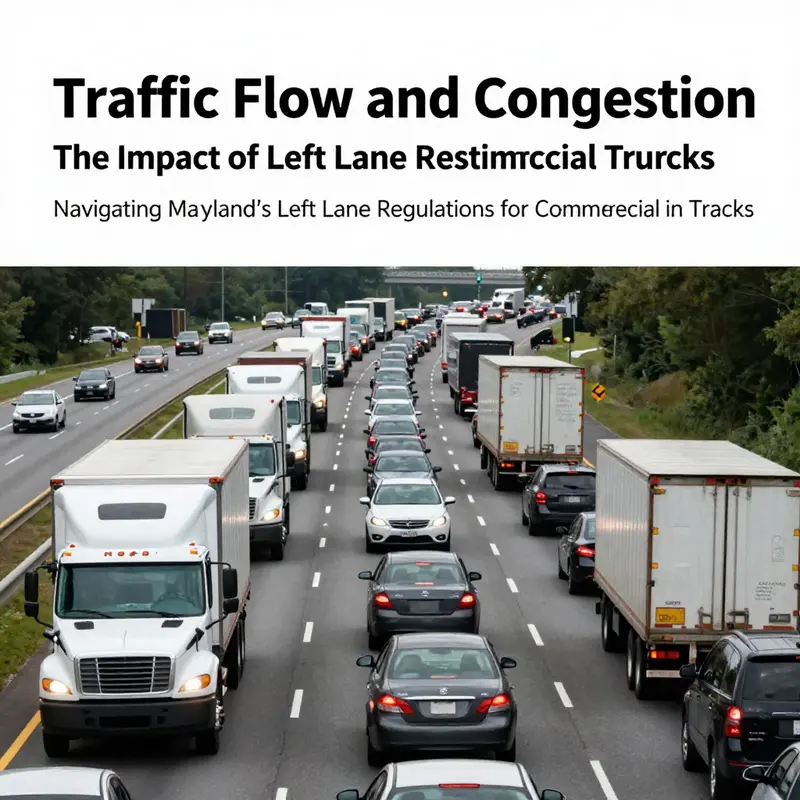
On busy Maryland highways with three or more lanes traveling in the same direction, the far left lane is typically the domain of faster traffic and overtaking. Maryland’s regulation for commercial trucks with a gross vehicle weight rating (GVWR) of 10,001 pounds or more emphasizes that these vehicles should not linger in the leftmost lane unless they are actively passing another vehicle. It is a nuanced rule, not a blanket ban, designed to keep the left lane open for those who need it to maintain steady flows and safe passing opportunities. The intent is straightforward and practical: preserve the left lane for faster-moving cars and for the occasional truck that must move left to pass, while preventing large vehicles from becoming a bottleneck in the very lane people expect to use for overtaking. This policy sits within a broader framework of traffic management that seeks to minimize congestion and reduce the risk of crashes on multi-lane highways. For operators and drivers navigating Maryland’s roadways, the rule becomes a lived element of trip planning and real-time decision-making rather than a distant legal footnote. It nudges behavior toward predictability and steadier progression, qualities that reduce the friction points that often turn highway miles into high-stress segments of a journey.
The rule’s logic rests on a clear picture of how traffic behaves when lanes are unevenly utilized. Heavy trucks, by virtue of their size, mass, and handling characteristics, require more space to merge and pass. When such trucks occupy the left lane for extended stretches, the vehicles behind them—mostly passenger cars and light trucks that can accelerate and maneuver more nimbly—face a cascade of lane-change attempts, abrupt braking, and widened gaps. The resulting weaving and speed differentials tend to propagate downstream, producing variability in travel times and elevating the risk of collisions during lane transitions. Maryland’s approach treats the left lane as a limited resource that should be allocated sparingly and used efficiently. The practical effect is a smoother flow for the majority of road users, a reduction in sudden braking, and fewer opportunities for rear-end incidents triggered by erratic lane behavior.
The research tape that informs these policies points to measurable gains in throughput when trucks constrained in the left lane resume a quicker, repeatable pattern of passing and returning to the right. When large vehicles are required to complete a pass promptly and re-establish their position in the right lanes, faster cars gain the opportunity to advance without relentless obstruction. This frees up the left lane for genuine overtaking and helps maintain a more consistent traffic rhythm. The gains are especially evident during peak commuting periods, when even small improvements in lane discipline translate into meaningful reductions in travel-time variability for a broad mix of road users. While Maryland-specific corridor characteristics do shape the magnitude of these improvements, the overarching message is consistent: limiting prolonged left-lane occupation by heavy trucks supports smoother, safer, and more reliable travel for everyone on the highway. In this light, the policy is less about police behavior and more about engineering and operations—how the road is designed to perform under load and how drivers adapt to that design in real time.
Beyond the lane itself, the broader conversation around speed management and traffic harmonization often appears in regional planning discussions. Some jurisdictions experiment with differential speed limits to address how trucks and cars interact on long, multi-lane stretches. The logic is to soften the speed gap between heavy vehicles and passenger cars, thereby reducing the potential for traffic waves and stop-and-go cycles that can magnify congestion. This is not a universal prescription; it is one of several tools that engineers and policymakers deploy in concert with lane restrictions, signage, and enforcement to shape highway performance. For fleets, this means forward planning around segments where the speed differential is more pronounced or where overtaking opportunities are less forgiving. It also underscores the importance of well-maintained equipment, so trucks can pass safely and promptly when the opportunity arises, without lingering in a lane that is meant to serve overtaking rather than cruising.
From the driver’s seat, the practical implications of Maryland’s rule are straightforward but not trivial. Compliance reduces the likelihood of fines and the risk of accidents arising from slow-moving trucks in the left lane. It supports safer operations by reducing abrupt lane changes behind large vehicles and by creating more predictable gaps for following cars. For dispatchers and fleet managers, the rule translates into smarter route selection and more disciplined traffic-avoidance strategies. Operators may prefer corridors with clearly marked three-lane configurations, ample merging space, and consistent signage that clarifies when passing is permitted and when it is time to return to the right. The discipline of staying out of the left lane unless passing contributes to steadier speeds, fewer inefficiencies, and lower variability in arrival times for customers and consignors alike. Over time, these dynamics help reduce the overall stress and risk associated with long-haul journeys through a state whose roadways are an essential artery for regional commerce.
Enforcement, of course, plays a significant role in how effectively the policy translates from statute to everyday behavior. The left-lane restriction is designed to incentivize compliant driving, not to police every mile traveled in the left lane. When violators are cited, the reminders are not merely punitive; they reinforce the principle that traffic flow benefits emerge from predictable lane usage and timely maneuvering. In parallel, roadway design supports the policy with clear lane markings, visible signage, and well-placed merge opportunities that help drivers identify safe passing windows. In some contexts, truck operators are permitted to use the left lane when actively passing or when traffic conditions temporarily necessitate it, but the default expectation is that trucks will quickly complete passes and rejoin the right-hand lanes. The alignment of enforcement, engineering, and education is essential to ensuring that the policy yields the intended improvements in safety and efficiency across Maryland’s highway network.
The topic also sits within a broader regulatory ecosystem that shapes how fleets operate across state lines and national borders. Industry discussions and regulatory analyses frequently surface at events focused on cross-border compliance and harmonization. For readers seeking a lens into how these conversations unfold, the topic is sometimes featured at gatherings such as the TCAs cross-border regulatory issues event. This framing helps operators see Maryland’s rule not as an isolated quirk but as part of a continental effort to balance efficiency with safety as freight moves through multiple jurisdictions. The practical takeaway for carriers is a reminder to monitor both state-specific rules and regional guidelines so routes that traverse more than one state do not become traps for misinterpretation or inadvertent violations. The Maryland left-lane rule thus becomes a reference point in a larger, dynamic system where law, engineering, and on-the-road behavior continually adapt to changing traffic realities. It also invites ongoing dialogue about how best to synchronize truck operations with the tempo of modern highway networks across borders.
As the summer heat swells or winter storms tighten the highway grip, the relevance of these rules becomes even clearer. The left-lane policy is more than a line in the traffic code; it is a statement about how a corridor should perform when the traffic mix favors frequent overtaking and rapid lane changes. It recognizes that trucking is a backbone of state commerce, yet it also acknowledges that the same trucks can impede the flow if left unchecked. The challenge, then, is to strike a balance between efficient passage and safe coexistence on the nation’s highways. Maryland’s approach—restricting prolonged left-lane occupancy by large commercial vehicles and emphasizing timely passing—embeds this balance directly into everyday driving. For readers evaluating specific routes, the rule signals how to tailor trip planning, how to respond to congestion, and how to interpret lane markings when the road ahead becomes a theatre of speed differentials and strategic overtaking. Ultimately, the policy demonstrates that even long-established modes of freight movement can benefit from thoughtful, data-informed adjustments that yield tangible improvements in safety, reliability, and overall road experience for every user.
For those who want to dig deeper into the state’s official stance, corroborating resources lay out the exact language and enforcement expectations of the truck left-lane rule and related traffic rules. The official Maryland resource provides the authoritative frame for these practices and serves as a practical reference for fleets as they map routes and schedules through the state’s highway system. External reference: https://www.maryland.gov/traffic-rules/truck-lane-restrictions
Left Lane Discipline in Maryland: Enforcement, Technology, and the Quest for Safer, Smoother Highways
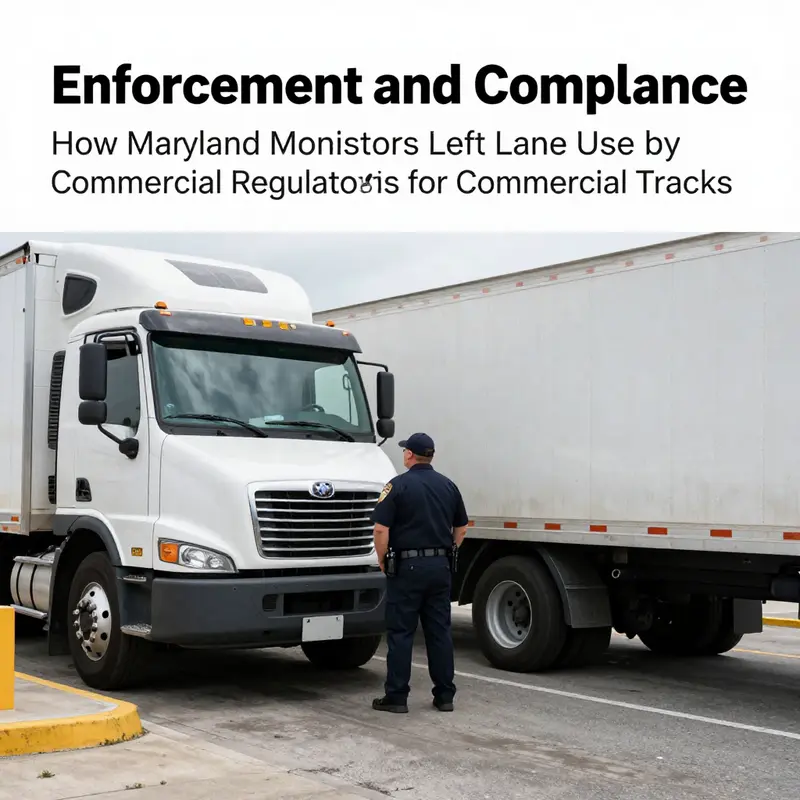
On Maryland’s highways, the leftmost lane is not a perpetual express lane for all heavy traffic. It is a lane that traffic engineers and law enforcement intend to be used for passing, not for cruising. The regulation surrounding commercial trucks—those with a GVWR of 10,001 pounds or more—reflects a broader goal: to elevate safety and maintain steady traffic flow when three or more lanes move in the same direction. In practical terms, this means that a heavy truck should not linger in the far left lane unless it is actively overtaking. The rule is simple in its wording, but its implications reach far into how trucking companies plan routes, how drivers operate their machines, and how Maryland marshals compliance on some of the state’s busiest corridors, including I-95 and I-295.
The core policy rests on a straightforward principle: the left lane is primarily a passing lane, a design choice meant to reduce bottlenecks and minimize the risk of slower-moving trucks impeding faster vehicles. When three or more lanes carry traffic in the same direction, a heavy truck should stay right except for the brief moments it takes to overtake. This requirement aligns with many other jurisdictions that treat the left lane as a tool for flow management rather than a default travel lane for large vehicles. Yet there is nuance in how this rule is applied. For example, the moment a truck completes a pass, the operator should re-enter the right-hand lanes when safe. Prolonged occupancy in the left lane by a heavy vehicle is discouraged precisely because it can hamper speed differentials, complicate merging, and invite abrupt braking and lane changes that escalate risk for nearby motorists.
The Maryland Department of Transportation’s enforcement framework reflects a blend of expectation and evidence. At the street level, patrol officers—most prominently the Maryland State Police—conduct regular visibility patrols that focus on improper lane usage by large trucks. These patrols are not random, but targeted, focusing on known hot spots during peak travel times and along corridors where incidents and near-misses have historically been higher. A driver found operating in the left lane without a justifiable reason—such as overtaking or preparing to exit in the near term—can be stopped and issued a citation. The stark message is that left-lane misuse is not a victimless or minor infraction; it is a behavior pattern that can ripple through traffic stability and safety.
But Maryland’s approach to enforcement is not solely about the human officer on the shoulder. The state has leaned into technology to bolster compliance. Overhead cameras, paired with radar-based speed and lane-detection systems, create a layered capability to monitor real-time traffic dynamics. These automated tools collect data that helps identify when a truck occupies the left lane for longer than the brief overtaking window requires. The footage and data provide law enforcement with robust, repeatable evidence that supports citations and, in some cases, more formal proceedings. This integration of automated systems with officer observations helps level the playing field: drivers who might rely on subjective judgments or quick lane changes are reminded that the law is documented, timestamped, and verifiable.
The enforcement narrative in Maryland is also a story about public understanding and cultural expectations on the road. State campaigns and messaging emphasize that the left lane is a resource that must be managed with discipline, not commandeered for convenience. For drivers who operate trucks, this means adjusting habits across long hauls. The rules encourage operators to plan passes with a clear window for changing lanes back to the right, to avoid lingering in the left lane when there is no immediate benefit in sight. When a truck must overtake, it should do so promptly, then return to the right as soon as it is safe to do so. This is not simply a legal requirement; it is a driver’s duty to other road users who share the highway.
Evidence collection in Maryland’s enforcement regime serves a dual purpose. It supports the immediate goal of removing unsafe behavior from the roadway while also contributing to the longer-term objective of behavioral change. When drivers observe a tangible consequence for improper left-lane use, the incentive to adjust behavior grows stronger. The presence of cameras and sensors calibrated to detect lane position and speed provides a deterrent that complements the more immediate, human form of enforcement. This synergy between human judgment and technological capability helps reduce the likelihood that left-lane violations will go unaddressed, particularly on major arteries like I-95 and I-295 where the volume and speed of traffic can magnify risk.
Public awareness efforts in Maryland also address the human factors that underlie lane discipline. Educational materials target truck drivers but extend to fleet managers and dispatchers who plan routes and schedule deliveries. The goal is to cultivate a professional norm: left-lane discipline is part of driving a large commercial vehicle, not a separate, optional practice. This cultural shift supports compliance by aligning individual behavior with the expectations embedded in law and regulation. In this sense, enforcement and education work in concert; patrols and cameras catch violations, while ongoing campaigns reinforce what those violations imply for safety and efficiency on the highway.
For truck operators facing a left-lane citation, Maryland’s framework also acknowledges the legal realities of navigating interstate and intrastate routes. In practice, this means understanding the nuance that the left lane can be used briefly for overtaking but cannot be treated as a permanent travel lane. When disputes arise, drivers have recourse to legal counsel familiar with Maryland traffic law. A seasoned traffic attorney can help interpret the evidence, assess whether the citation was supported by adequate state policy, and, if appropriate, mount a defense or negotiate a reduction in penalties. This dimension of enforcement—where the law, evidence, and representation intersect—highlights the seriousness with which Maryland treats lane discipline for commercial traffic.
From a broader industry perspective, the left-lane rule sits within a continuum of regulatory and safety considerations that shape how fleets operate in Maryland and beyond. While the specifics of each case may differ, the underlying dynamics—traffic flow, vehicle performance, and driver behavior—are shared across jurisdictions. Industry observers often frame these dynamics within the larger context of regulatory clarity and operating margins, recognizing that compliance is not mere compliance for its own sake; it is a pathway to predictable travel times, fewer incidents, and safer roadways for all users. For those tracking industry trends, discussions about capacity, utilization, and regulatory expectations provide important context for how fleets design their routes, schedule rest stops, and train drivers for high-demand corridors. See for instance the broader discourse on capacity and industry adjustments in insights such as Excess capacity in the trucking market insights.
The enforcement and compliance regime Maryland has built around left-lane use is thus a careful balance. It rests on clear rules, visible enforcement, supportive technology, and continuous public education. It recognizes that the left lane is a limited resource on crowded highways and that large trucks, by their very nature, present different risks and challenges than passenger vehicles. By ensuring that trucks utilize the left lane only for its intended purpose—passing and brief overtaking—Maryland aims to maintain smoother traffic flow, reduce bottlenecks, and lower the likelihood of sudden lane changes that can escalate into more serious crashes. The practical effect on daily driving is a predictable rhythm: a truck approaches to pass, completes the maneuver quickly, and returns to the right. For drivers who share the road, the outcome is a more stable, less unpredictable travel experience on corridors that carry substantial freight and commuter traffic alike.
This chapter’s arc—enforcement, technology, public awareness, and legal navigation—maps onto the broader chapter of understanding can commercial trucks drive in the left lane Maryland. It is not a simple yes-or-no question but a nuanced system designed to promote safety without unduly hampering commerce. The rules demand vigilance and professionalism from truck operators, while the enforcement regime demands consistency from law enforcement and clarity from the public safety communications that help drivers internalize the expectations. In the end, the aim is a road environment where large trucks can perform essential logistical tasks with minimal disruption to other travelers and with a transparency that makes the rule’s rationale clear to all.
For readers seeking a bridge between this specific Maryland framework and the wider industry conversation, consider how the left-lane discipline intersects with broader regulatory trends and fleet management priorities. As fleets optimize routes and schedules, the left-lane rule becomes a factor in risk assessment and incident prevention. The driver’s task expands beyond navigation and fuel efficiency to include lane discipline as a core element of safety competency. And as technology evolves, enforcement may become even more precise, marrying real-time lane-detection data with predictive analytics to anticipate and deter violations before they occur. Such a trajectory underscores the continuous contract among policymakers, law enforcement, fleet operators, and the traveling public: a commitment to safety, efficiency, and accountability on America’s busiest highways.
External resource: https://www.maryland.gov/transportation/traffic-safety
Internal reference for industry context: Excess capacity in the trucking market insights
Final thoughts
Understanding and adhering to Maryland’s left lane regulations for commercial trucks is crucial for ensuring safety and optimizing traffic flow on the state’s roadways. By navigating these restrictions effectively, logistics and procurement professionals can enhance their operational efficiency while contributing to overall road safety. Compliance not only mitigates the risks associated with accidents but also streamlines traffic, benefiting all road users.