
In the bustling landscape of California’s business environment, particularly for logistics, construction, and small businesses with delivery fleets, understanding commercial plate regulations for pickup trucks is not just a requirement; it’s an integral aspect of operational efficiency. The regulations governing these vehicles can significantly impact daily operations, from compliance costs to the legality of transporting goods. Failure to adhere to these rules could mean costly fines or operational setbacks, disrupting both revenue flows and customer satisfaction. With California’s unique regulatory framework, which encompasses various local ordinances and state laws, it’s essential for business owners to navigate these waters with precision. Moreover, the classification of pickup trucks-whether they require a commercial plate or not-may vary depending on usage, weight, and design, adding another layer of complexity to compliance strategies. Understanding these regulations allows business owners to not only streamline their logistics and procurement processes but also to leverage their vehicle fleet effectively for competitive advantage. For those eager to minimize disruptions and maximize productivity, mastering commercial plate regulations is paramount. Learn more about the implications of trailer orders on truckload margins and ensure you are fully equipped to handle the unique challenges that face your industry today.
Definition of Commercial Plates in California
In California, commercial plates are specialized vehicle registration plates issued to vehicles primarily utilized for business purposes. According to the California Department of Motor Vehicles (DMV), these plates are primarily assigned to trucks, vans, and other commercial vehicles that exceed certain weight limits or are specifically engaged in commercial activities. This regulation aims to categorize vehicles used for commercial purposes, ensuring they comply with state laws and safety standards.
Why Are Commercial Plates Required?
Commercial plates serve multiple essential functions:
- Identification of Business Use: Vehicles with commercial plates are easily identifiable as those utilized for business activities. This designation aids in tax collection and compliance with regulations.
- Weight Limits and Additional Regulations: Trucks that exceed specified weight limits are subject to particular laws, including weight fees and compliance with safety regulations tailored for commercial driving. Having commercial plates ensures that these vehicles meet all necessary requirements.
- Insurance and Liability: Businesses are often subject to different insurance requirements than individual vehicle owners. Commercial plates help insurers assess risks and offer correct coverage tailored to the vehicle’s intended use.
Particularly for small business owners with delivery fleets or logistics and freight companies, the necessity for commercial plates is multifaceted. Not only do these plates facilitate regulatory compliance, but they also provide a legal framework that protects the business in case of accidents or legal disputes. Moreover, they prevent potential legal issues arising from using a vehicle that does not meet commercial vehicle specifications.
Given the significance of these plates, understanding their requirements can substantially benefit businesses operating in fields such as construction and mining. Such industries typically rely heavily on pickup trucks and larger vehicles that fall within the commercial realm, highlighting the importance of having the appropriate registration to avoid penalties.
For a more in-depth understanding of vehicle compliance and registration, you can learn more about the California DMV.
In conclusion, commercial plates in California signify a vehicle’s classification as a commercial asset, ensuring adherence to state laws and providing necessary legal protections for businesses.
Comparison of Commercial Plate Requirements for Pickup Trucks, Sedans, and Vans in California
The table below summarizes the specific requirements for commercial plates in California for pickup trucks compared to sedans and vans. This information is crucial for logistics and procurement teams aiming to comply with vehicle registration laws.
| Vehicle Type | Weight Limit | Registration Process | Fees | Purpose of Use |
|---|---|---|---|---|
| Pickup Trucks | Up to 10,000 lbs | Complete application with DMV | Varies by weight | Commercial use, delivery, farm vehicle |
| Sedans | Up to 6,000 lbs | Complete application with DMV | Varies by weight | For-hire passengers (e.g., taxis, rideshare) |
| Vans | Up to 10,000 lbs | Complete application with DMV | Varies by weight | Commercial use, transporting goods |
For more detailed information regarding the commercial vehicle registration process, you can check the California DMV website. This resource outlines the necessary steps and criteria for different vehicles, including the weights and purposes involved in registration.
Additionally, understanding these requirements can help businesses in various sectors navigate their fleet needs more effectively. Whether you’re in logistics, construction, or services, ensuring compliance with state regulations is essential for smooth operations
Also, learn about how trailer orders impact truckload margins to optimize your service delivery.
Laws Governing Commercial Vehicle Licensing and Registration in California for Pickup Trucks
In California, the regulations for commercial vehicle licensing and registration are essential for ensuring that businesses and individuals comply with state laws. While pickup trucks are often perceived as personal vehicles, many fall under commercial classifications, particularly when used for business purposes. This section elucidates the critical laws and requirements for licensing and registering pickup trucks as commercial vehicles.
Licensing Requirements
In California, any vehicle used for commercial purposes, including pickup trucks that carry goods, equipment, or passengers for profit, must be properly licensed. The California Department of Motor Vehicles (DMV) stipulates several crucial steps:
- Commercial Driver’s License (CDL): If the pickup truck is used to transport individuals or goods weighing above a specific threshold (generally over 26,000 pounds), the driver may need a CDL. For smaller pickups, a regular driver’s license is typically sufficient.
- Business Registration: Businesses using pickup trucks for commercial purposes must register their business with the Secretary of State, which often includes obtaining a Federal Employer Identification Number (EIN).
Registration Process
To legally operate a pickup truck as a commercial vehicle, the following steps are generally required:
- Obtain the Necessary Documentation: This includes proof of ownership, proof of business registration, and any required inspection certificates.
- Fill out the Application: Applicants must complete the Application for Title or Registration (Form REG 343) and indicate that the vehicle will be used for commercial purposes.
- Pay Registration Fees: Registration fees for commercial vehicles differ from personal vehicles and can be influenced by the vehicle’s weight, type, and the county of registration. It’s critical to review these fees to avoid unexpected costs.
- Receive the Commercial Plates: Once the registration is processed, the vehicle will be issued commercial license plates. These plates usually indicate the vehicle’s classification for business use.
Importance of Compliance
Understanding and complying with these laws is crucial for avoiding penalties. In California, failure to register a pickup truck as a commercial vehicle when it is used for business can result in hefty fines and legal repercussions. Vehicle owners should regularly consult the California DMV for the most current regulations and fees, ensuring they meet all necessary standards.
For a comprehensive overview of commercial vehicle laws in California, you can visit California Commercial Vehicle Laws. This resource offers detailed insights into licensing, registration processes, and compliance requirements.
In conclusion, whether you are a small business owner or a procurement manager in logistics, ensuring your pickup trucks are properly licensed and registered is paramount for operational integrity and legal compliance in California.
Common Misconceptions About Commercial Plates for Pickup Trucks
Small business owners often encounter numerous misunderstandings regarding commercial plates for pickup trucks, particularly in California where regulations can be stringent. Here are some prevalent misconceptions:
-
All Pickup Trucks Have Commercial Plates: Many owners mistakenly believe that every pickup truck is required to have commercial plates. In reality, whether a truck needs commercial registration depends on its use; if it’s used strictly for personal purposes, commercial plates may not be necessary.
-
Weight is Solely Determinative: Some owners assume that a truck’s weight alone dictates its classification as a commercial vehicle. While weight is a factor, the primary consideration is how the vehicle is used. Trucks used for business activities typically require commercial plates, but personal use trucks do not.
-
Higher Fees Across the Board: Many small business owners fear that all pickup trucks will face increased registration fees due to commercial classification. However, the fees depend on the specific use and whether the truck qualifies as a commercial vehicle based on California’s regulations.
-
Modification Exemptions are Clear-cut: It is common to think that modifications like camper shells exempt a truck from needing commercial plates. However, if the primary use of the vehicle remains commercial after such modifications, it still requires commercial registration.
-
Statewide Regulations are Uniform: Some believe that all counties in California have the same regulations regarding commercial plates. In truth, local laws and interpretations can vary significantly, leading to confusion on the specific requirements.
-
Personal Insurance Suffices for Commercial Use: Small business owners might also think that their personal auto insurance covers commercial activities. This can be a trap; most personal policies do not cover business-related usage, which necessitates seeking a commercial auto insurance policy appropriate for the vehicle’s use.
-
All Fleets Must Register as Commercial: Finally, the assumption that every truck in a fleet must have commercial registration is misleading. Each truck’s classification should be evaluated based on its individual use case rather than the fleet status alone.
Understanding these misconceptions can help small business owners make informed decisions regarding their vehicle registrations and ensure compliance with state regulations. For more information on how vehicle classification and regulations affect your business, learn more about registration requirements here or check the California DMV for guidelines.
Do All Pickup Trucks Have a Commercial Plate in CA?
In California, not all pickup trucks are required to have commercial plates. The designation largely depends on the primary use of the vehicle. For those operating in a commercial capacity-expressly for business-related purposes, like transporting goods for a logistics, freight, or construction company-commercial plates are necessary. This requirement ensures compliance with state regulations and standards intended for commercial vehicles.
Importance of Proper Vehicle Registration
A pivotal aspect of owning and operating any commercial vehicle, including pickup trucks, is the necessity of proper registration. According to experts, “Failure to comply with the legal requirements for vehicle registration can result in penalties, fines, or even vehicle confiscation. Understanding registration protocols is essential for vehicle owners to avoid legal complications.” This insight emphasizes the importance of adhering to registration laws, which serve not only to maintain order on the roads but also to ensure safety standards and tax compliance.
Additional Considerations
- Compliance with Emission Standards: Commercial vehicles must meet specific emissions standards before they can be registered.
- Insurance Requirements: Commercial vehicles often require different insurance compared to personal vehicles. This insurance helps protect both the vehicle owner and other road users.
- Local Regulations: Cities or counties may impose additional requirements, which can vary widely.
For company owners engaged in logistics or construction, ensuring that your pickup trucks are correctly registered is crucial for operational integrity. Missteps in this area can have substantial legal and financial repercussions.
For more information on the regulatory landscape affecting commercial vehicles, you can learn more about registration compliance. Additionally, understanding the nuances of vehicle registration can help mitigate risks and enhance safety, which is vital for businesses operating on public roads.
In summary, while not all pickup trucks in California require commercial plates, understanding when they do is essential for compliance and operational success.
Consequences of Mislabeling Vehicles as Commercial Trucks
Mislabeling pickup trucks as non-commercial vehicles can lead to serious consequences for companies operating in California. The labeling of a vehicle has significant implications for legality, liability, and operational costs. Below are the potential repercussions for companies that fail to correctly label their vehicles as commercial:
Legal Repercussions
-
Fines and Penalties: Misclassification can result in hefty fines from the California Department of Motor Vehicles (DMV). While specific figures regarding penalties for mislabeling as commercial trucks remain elusive, general penalties for vehicle registration infractions can accumulate quickly. Companies can face late registration fees or penalties for failure to comply with the appropriate vehicle classifications. For more details, refer to the California DMV.
-
Increased Liability: Companies may face increased liability in the event of an accident involving misclassified vehicles. If a vehicle labeled as personal is involved in an incident while being used for commercial purposes, insurance coverage could be denied. This could expose the company to significant financial liabilities, including lawsuits resulting from damages or injuries.
-
Compliance Audit Risks: Mislabeling poses a risk of compliance audits by regulatory bodies. Companies may be subject to investigations if discrepancies arise between a vehicle’s registration and its identified use. An audit could uncover further regulatory violations, which may lead to additional sanctions.
Operational Impacts
-
Insurance Issues: Insurers rely on accurate vehicle classification for determining premiums and coverage scopes. Incidents involving misclassified vehicles could lead to increased premiums or a complete denial of coverage for the involved vehicles, as insurance policies typically require precise information regarding a vehicle’s intended use.
-
Operational Inefficiencies: Companies may experience inefficiencies when they face unexpected costs due to mislabeling issues-ranging from increased insurance payments to legal fees associated with defending against regulatory actions. Also, operational downtime due to compliance rectifications can negatively impact service delivery and profitability.
-
Reputational Damage: Repeated incidents of mislabeling can harm a company’s reputation. Stakeholders, including suppliers and customers, may lose confidence in a business that has demonstrated compliance negligence.
Proper classification of pickup trucks is crucial for legal, financial, and operational integrity. For businesses seeking sustainable compliance with California’s vehicle regulations, ensuring accurate representation of their fleet is not only a legal obligation but also a strategic necessity. Learn more about the consequences of regulatory non-compliance and its effects on operational success here.
Steps to Obtain a Commercial Plate for a Pickup Truck in California
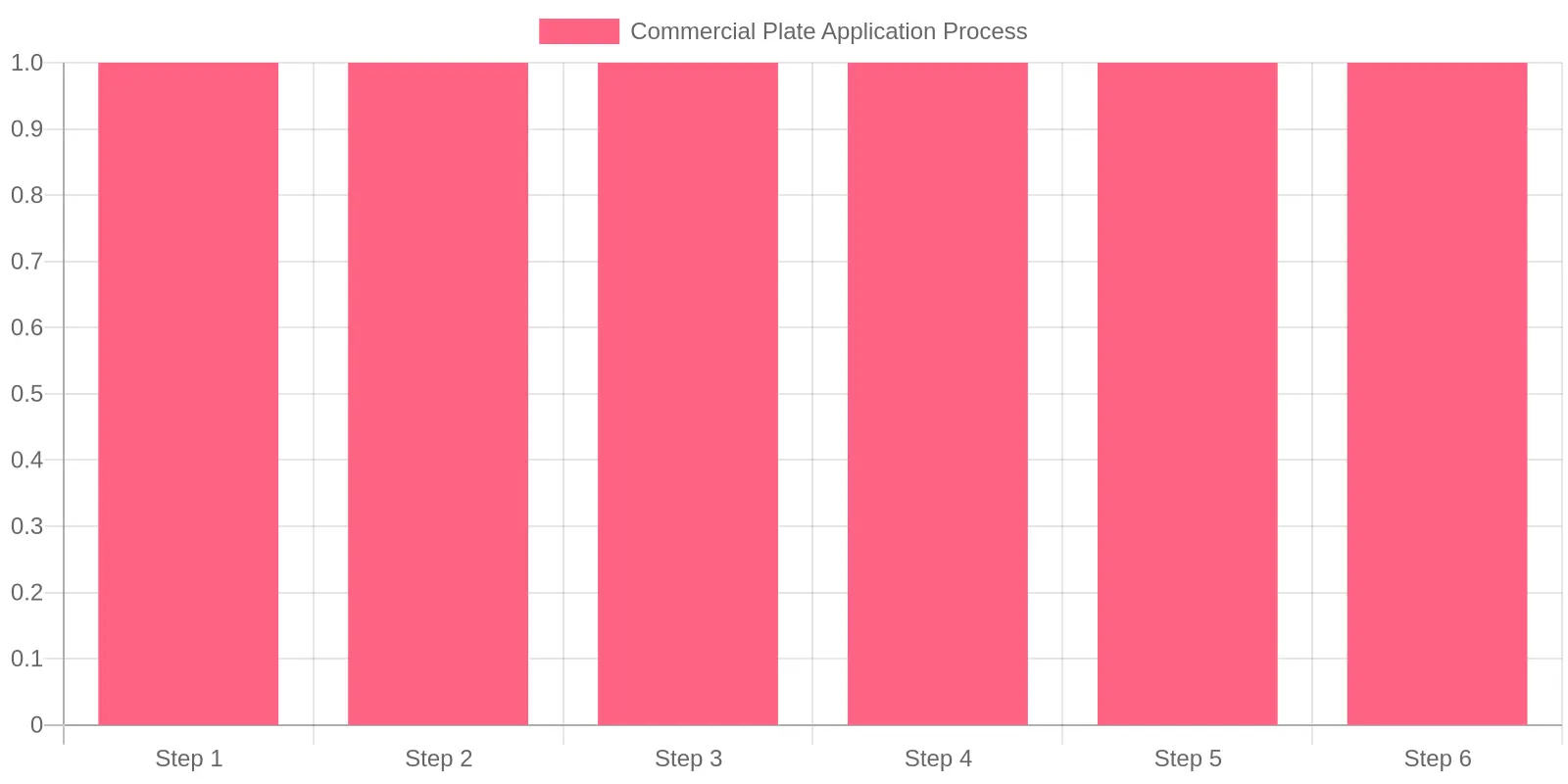
The process of obtaining a commercial plate for a pickup truck in California is straightforward but requires careful attention to detail. Below is a chart that outlines the essential steps you must follow:
Steps:
- Determine eligibility for a commercial plate
- Gather necessary documentation, such as proof of business and vehicle information.
- Complete the Application for Title or Registration (Form REG 343).
- Submit application to the local DMV.
- Pay applicable fees.
- Receive and display the commercial plate.
For additional information on the logistics industry and regulations, you can learn more about trucking economic trends or read about regulatory updates.
Conclusion and Call to Action
Understanding the commercial plate requirements for pickup trucks in California is crucial for business owners in the logistics and construction sectors. As we’ve discussed, not all pickups automatically qualify for commercial registration; it often hinges on their specific configuration and usage. For instance, pickup trucks with a closed bed or permanent camper shell typically need commercial or combination plates, as underscored by California law. Learn more about commercial registration requirements.
The benefits of securing commercial plates are substantial. Not only do they ensure compliance with regulations, but they also unlock financial advantages such as potential tax deductions and reduced registration fees. Moreover, the correct designation simplifies vehicle management for businesses operating multiple trucks, allowing for smoother administrative processing. A thorough understanding of these benefits can significantly impact the bottom line for small business owners and procurement teams alike. For more insights into commercial vs. passenger registration, check out this detailed comparison.
At Summit Fairings, we recognize the evolving needs of your fleet. Our high-quality products are designed to meet the rigorous standards of commercial vehicles while enhancing safety and efficiency in your operations. We invite you to explore our offerings and discover how Summit Fairings can elevate your fleet to the next level. Connect with us today!