
Purchasing a commercial truck is a significant investment that can greatly impact your business operations, whether you’re in logistics, construction, or running a small delivery fleet. Understanding the nuances of selecting the right vehicle is essential for ensuring your investment yields long-term value. This guide will walk you through critical components of this process, including how to define your needs based on cargo types, the pros and cons of new versus used trucks, essential inspection tips to avoid costly mistakes, and the financing and registration requirements necessary to operate legally. By the end, you will be equipped with the knowledge to make an informed decision that aligns with your business objectives.
From Load to Lane: Defining Your Truck Purchase by Cargo Type and Route
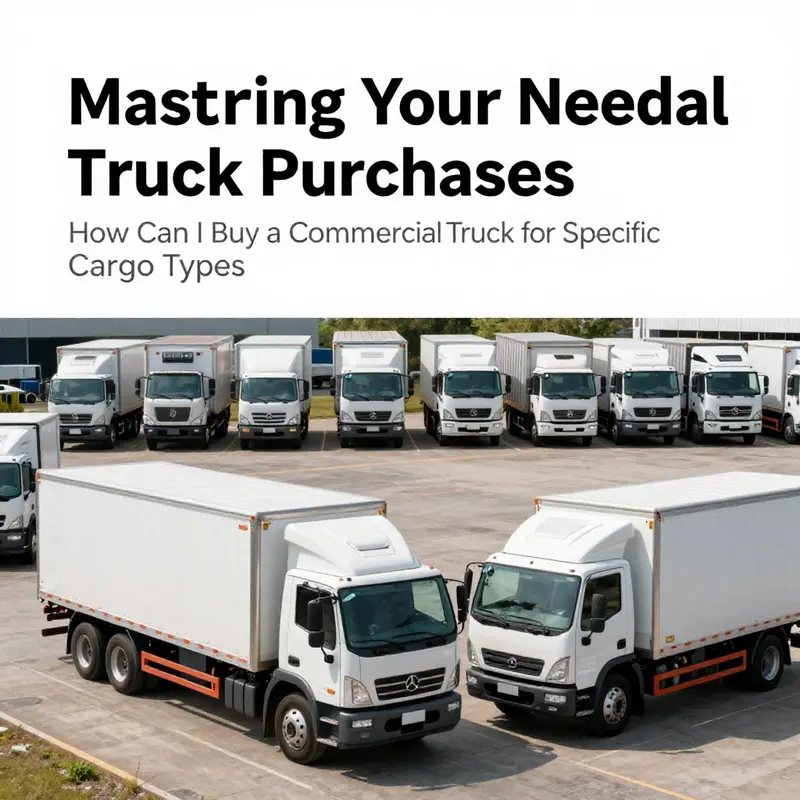
Defining your needs when buying a commercial truck starts with a practical, almost culinary, clarity about what you intend to carry, where you will travel, and under what conditions your operation must function. The right vehicle is not the one with the loudest engine or the newest paint; it is the truck that aligns with the exact nature of your freight, the streets and highways you’ll frequent, and the financial realities of running a fleet. This mindset—matching capability to the specifics of your cargo and mission—transforms a large capital decision into a strategic choice that shapes reliability, compliance, and profitability for years to come. As you begin this journey, you can picture your loads as the scaffolding around which every dimension of the truck must be built: the cargo type sets the temperature, protection, and floor strength; the route dictates power, efficiency, and emissions; and the regulatory environment fixes the bounds within which your vehicle must operate. When you see the decision this way, the steps that follow become a precise, ordered process rather than a series of generalized guesses.
The cargo itself is the most compelling guide. Perishable goods demand a climate-controlled environment that maintains exact temperatures and humidity levels. In practical terms, that means a refrigerated or reefer box with a reliable temperature control system, sealed integrity to prevent air exchange, and monitoring capabilities that can alert you to deviations in real time. The goal is not just to keep goods cold; it is to prevent spoilage, preserve quality, and deliver products that meet food safety or regulatory standards. For dairy, meat, fresh produce, and other perishables, the truck must do more than move; it must preserve integrity from origin to delivery. This requirement steers you toward a truck configuration with robust insulation, precise temperature control, and dependable power sources for the refrigeration unit and associated sensors.
Dry goods, by contrast, often tolerate a broader range of environmental conditions but demand interior strength and careful load management. A dry van or box truck with reinforced floors and secure tie-down points can handle pallets, cartons, and bulkier shipments. The emphasis shifts from temperature management to the endurance of the cargo area under vibration, friction, and weight. When the payload includes heavy equipment, machinery, or construction materials, you may lean toward a deeper or taller box with extra structural support and upgraded floor construction. In these cases, the interior geometry—the height above the floor, the width between walls, and the location of anchor points—becomes a foundational consideration because it determines how efficiently you can secure loads and how safely you can maneuver with a full trailer.
For freight that demands heightened security and strict control over the environment—think high-value electronics or pharmaceutical products—the investment in advanced monitoring becomes a business necessity. You might look for truck configurations that support continuous data transmission of temperature, humidity, and location, plus tamper-evident seals and robust telematics. This is not a luxury but a compliance and loss-prevention investment. When your cargo has a narrow margin for error, the vehicle you choose should be capable of providing real-time visibility to your operations, enabling proactive responses to any anomaly in the transport chain. The capability gap between a basic trailer and a fully instrumented fleet can be the difference between a successful delivery and a costly disruption.
Beyond the cargo itself, the route and usage profile are equally decisive. Local short-haul operations emphasize quick turnarounds, maneuverability in urban environments, and lower average speeds. Long-haul interstates demand higher power reserves, fuel efficiency over hundreds of miles, and a chassis that can sustain comfort and reliability across days on the road. Regional routes sit somewhere in between, often requiring a balance of payload capability and efficiency. Each profile interacts with the vehicle’s engine options, transmission choices, tire configurations, and aerodynamic enhancements. The vehicle that best suits a local route may be uneconomical on a long-haul schedule, and vice versa. The trick is to translate a given route pattern into concrete specifications: engine horsepower and torque bands that avoid overkill while ensuring reliable start-stop performance; axle configurations that support the anticipated gross vehicle weight and maintain legal compliance across jurisdictions; and suspensions that preserve cargo integrity on varied road surfaces.
Payload capacity and dimensional constraints are the practical levers you adjust next. A truck’s payload rating determines how much your cargo weighs in addition to the vehicle’s own weight. If you miscalculate, you risk overloading, which is unsafe and illegal, and you can also undermine fuel economy and maintenance costs. The cab and wheelbase affect not only comfort and accessibility but also the gross vehicle weight rating (GVWR) and how a load translates into actual on-road performance. The unit you purchase should accommodate your typical payload with a comfortable safety margin. For example, a regional operation with high volume of pallets and heavy boxes will need a chassis and suspension tuned to support frequent loading and unloading, while a courier service focusing on lighter, high-turnover shipments prioritizes a different balance of payload capability and nimbleness.
The choice between a new or a used truck becomes a question of risk, certainty, and cash flow. A new truck offers warranties, the最新 safety features, and the assurance of up-to-date fuel efficiency technologies, but at a higher upfront price. A used truck can deliver immediate cost savings but requires careful scrutiny to avoid hidden maintenance costs. Regardless of age, the decision should rest on a disciplined inspection and validation approach. A well-planned pre-purchase inspection uncovers potential issues with the chassis, structural integrity, and drivetrain that could erode long-term value. Here the guidance you apply to your cargo and route translates into the level of due diligence you perform: a perishable-focused reefer should warrant extra attention to the refrigeration system’s performance history, while a heavy-haul configuration used for long trips requires a more thorough check of the frame, axles, and braking system.
A critical dimension of the selection is the GVWR and axle configuration. These specifications govern not only the truck’s ability to legally carry your payload but also how it behaves on highways and in loading yards. GVWR sets the maximum weight of the vehicle when loaded, including the weight of the truck itself. Axle configuration—whether it is a single-axle, tandem, or triple-rack arrangement—modulates load distribution, braking efficiency, and traction. For heavy or dense cargo, a higher GVWR and appropriate axle setup ensure stability, braking performance, and compliance with bridge and weight limits on different stretches of highway. The precise tuning of these numbers becomes a practical algebra: more weight capacity often means more fuel burn and potentially higher maintenance costs, but it also reduces the risk of penalties for under-specification and the opportunities for efficient loading practices.
As you weigh new versus used, you should anchor your choice to total cost of ownership, not just the sticker price. A newer model may offer better fuel economy, lower maintenance risk, and stronger resale value, yet you must account for depreciation, financing terms, insurance premiums, and the cost of any required upgrades to meet your cargo standards. A used vehicle invites a more immediate price advantage, but the cost of unexpected repairs or component replacements can quietly erode savings if you are not rigorous about inspection, documentation, and maintenance history. In either scenario, establishing a baseline for maintenance practices is essential. A reliable maintenance pathway includes routine checks on tires, brakes, steering components, and electrical systems, plus scheduled servicing of the engine and refrigeration unit where applicable. For perishable cargo, you might add more frequent checks of temperature sensors and insulation integrity to ensure the cargo area remains consistently conditioned during every leg of a route.
Documentation and legal compliance form the backbone of a smooth acquisition process. Before you purchase, verify the title status, ensure the VIN matches across all documents, and collect a complete history report if you are buying used. If you are purchasing on behalf of a business, you will likely need to present corporate registration details, tax IDs, and proof of insurance as part of the transaction. The registration and licensing step will vary by jurisdiction, but the core requirement remains the same: the vehicle must be legally operable and properly insured for commercial use. You should also consider whether your operation will benefit from specialized regulatory compliance features, such as particular seals, tamper-evident mechanisms, or telemetry data streams that align with industry standards for your cargo type. This is where a thoughtful assessment of your cargo’s requirements, your route structure, and your risk tolerance coalesces into a clear checklist that guides the purchase decision.
The path from definition to purchase also involves access to financing, which is a common route for many buyers. Many dealers offer financing options tailored to commercial needs, but it pays to compare terms, interest rates, down payments, and the speed with which approvals can be obtained. Your business’s financial profile and the anticipated life of the truck should drive decisions about down payments and loan terms. You may also explore whether certain incentives, warranties, or maintenance plans are bundled with the purchase, and how those economics affect your long-term cost of ownership. These financing considerations are not abstract; they directly influence your capability to maintain service levels, absorb maintenance costs, and respond to fluctuations in freight demand. A prudent buyer analyzes not only the initial cost but also how the vehicle’s performance under your cargo regime translates into predictable margins over several years.
Once you have these technical and financial dimensions aligned, the actual procurement process begins to move with clarity. You will need to verify the ship-to or pickup arrangements, arrange for a thorough vehicle history review, and ensure a robust pre-purchase inspection is scheduled before finalizing any agreement. A pre-purchase inspection, or PPI, performed by a qualified mechanic can detect hidden issues that would otherwise surprise you after you take the keys. This is especially important when you are evaluating used trucks, where signs of frame corrosion, rust around critical joints, or leaked fluids can reveal long-term maintenance burdens. The inspection should cover exterior and interior aspects, the engine bay, the transmission, suspension components, brakes, and the undercarriage. For cargo types that demand precise environmental control, the PPI should also test the refrigeration unit, insulation integrity, and the reliability of temperature sensors and alarms. In short, the PPI is your safeguard against paying for an asset that undermines safety, efficiency, or compliance downstream.
As you near the final decision, imagine your future operations: the way the truck will move from dock to distribution center, the cadence of loading and unloading, and the rhythm of long days on the highway. Your choice should feel less like a single purchase and more like the cornerstone of a dependable logistics pipeline. This is where the cargo-focused approach comes full circle. The vehicle you select must be capable of delivering the kind of service your customers expect while remaining financially sustainable in the face of fuel price volatility, maintenance costs, and shifting demand. Balancing up-front investment with long-run operating costs becomes an exercise in risk management and strategic planning. A well-matched truck does not merely carry freight; it carries the confidence of a business that can meet commitments, manage variations in weight and route, and sustain reliability across the life of the asset. When your cargo type, route profile, and payload requirements are in clear focus, the remaining steps—financing, title transfer, insurance, and registration—are a procedural cadence that seals what has already become a rational, data-informed decision about your transportation backbone.
The practical payoff of this cargo-centric approach is not theoretical. It translates into fewer frayed schedules, reduced spoilage or damage, better fuel efficiency on the routes you actually drive, and a more predictable maintenance budget. The alignment between cargo needs and vehicle specifications narrows the field to a smaller set of viable configurations, and that, in turn, reduces the time and complexity of the purchasing process. It also helps you negotiate smarter with dealers and financing partners, because you can present a grounded business case anchored in your actual freight, your typical routes, and your compliance requirements. For many buyers, this is the decisive edge—the ability to translate freight realities into a truck that performs consistently, complies with the law, and supports a sustainable operating plan.
As you continue through the decision-making journey, you will likely encounter industry insights and market dynamics that can refine your choices. For example, understanding how trailer orders impact truckload margins can help you align capacity with demand and avoid over-investment in equipment that sits idle during slower periods. This nuanced view of capacity planning ties directly back to your cargo strategy and is worth exploring as you narrow down your specifications and narrow your supplier options. Trailer orders impact truckload margins.
In the end, the right truck for your cargo type is the one that best harmonizes the physical demands of your loads with the economic realities of your business. It is the vehicle that can carry your products safely and efficiently from origin to destination while staying within regulatory bounds and keeping maintenance costs predictable. When you can tell a clear story about your cargo, your routes, and your payloads, you position yourself not just to purchase a truck but to invest in a reliable, scalable platform for your trucking operations. And as you move from decision to delivery, remember that the vehicle you choose is the backbone of your service quality, your compliance posture, and your ability to meet customer expectations across the miles ahead. For readers seeking a deeper technical primer on vehicle configurations and pricing structures, a detailed guide on 18-wheeler prices and composition offers additional context and technical nuance to support this cargo-driven decision framework: Truckin 18-Wheeler Guide.
New vs. Used: Matching Purchase Price to Total Cost and Operational Needs
Balancing New vs. Used: Choosing a Truck That Fits Your Budget and Business Needs
Choosing between a new and a used commercial truck is one of the most consequential financial decisions a buyer makes. The sticker price matters, but it is only one component of the picture. What determines long-term affordability is the truck’s total cost of ownership (TCO): purchase price, fuel, maintenance, downtime, insurance, financing, resale value, and regulatory compliance. This chapter walks through how to weigh short-term savings against long-term expenses so you can pick a truck that suits both your cash flow and operational demands.
Start by quantifying how you will use the truck. Are you running short, predictable city routes with many stops? Do you need a rig for regional deliveries with moderate loads? Or will you be in long-haul, high-mileage service? Use patterns determine priorities. High-mileage operations favor fuel efficiency and reliability. Low-mileage, stop-and-go work emphasizes maneuverability and cargo access. Once you map use, estimate annual miles or hours and average load. Multiply those figures over the ownership horizon you expect, typically three to seven years for small fleets and five to ten for owner-operators. Those estimates let you translate per-mile costs into a figure you can compare across new and used options.
Next, compare upfront cost to predictable expenses. New trucks require larger down payments and higher monthly payments. They also carry manufacturer warranties that reduce repair risk for the first few years. Warranties can cover drivetrain, emissions components, and sometimes scheduled maintenance. Newer trucks also tend to deliver better fuel efficiency and include modern driver-assistance features that can reduce accident risk and improve fuel economy. Those advantages lower operating costs and often improve uptime because unscheduled repairs are rarer.
Used trucks present a lower initial outlay. That frees capital for other investments, like additional equipment, staff, or marketing. But lower purchase price can come with higher variability. Older engines are typically less fuel efficient. Wear on critical systems like the transmission, suspension, and brakes increases the odds of repairs. A seemingly low-priced used vehicle can become costly after multiple component failures. To manage that risk, insist on a thorough pre-purchase inspection (PPI) by a qualified commercial mechanic. A PPI should include engine diagnostics, transmission assessment, frame inspection, and checks for past structural repairs. Request maintenance records and a vehicle history report. Where possible, verify engine hours and service intervals. Those records help forecast near-term expenses and identify a reliable used option.
Factor in emissions compliance early. Some jurisdictions ban older engines or require retrofit devices for particulate and NOx control. If your routes cross state or national borders, verify emissions standards along those corridors. Newer trucks will often meet the most recent standards and avoid retrofit costs. For many buyers, the certainty of compliance with current and forthcoming rules offsets part of the higher purchase price. For more on regulatory trends and their impact on buying decisions, see the discussion on emissions clarity and industry guidance.
Insurance and financing are another area where new and used vehicles diverge. Insurance premiums for new trucks can be higher because replacement value is greater. Yet insurers may offer discounts for advanced safety systems and telematics. Lenders may provide attractive terms for new units through manufacturer finance programs and promotional rates. For used trucks, banks and specialty lenders may require higher down payments or shorter terms. Shop multiple lenders and compare total financed cost, not just the monthly payment. A longer loan reduces monthly pressure, but it increases interest paid over the life of the loan. Consider lease or hire-purchase structures as alternatives. Leasing can preserve working capital and may include maintenance in the lease agreement, but it limits ownership benefits like depreciation deductions.
Maintenance planning is a practical differentiator. New trucks lower maintenance frequency in the early years, and warranty parts reduce out-of-pocket costs. With used trucks, build a maintenance reserve. Estimate annual repair and preventive service costs based on vehicle age and historical data. If possible, buy from sellers who provide recent maintenance records and a short-term service warranty. Certified pre-owned programs offered by established sellers can bridge the gap between new and used by including reconditioning and limited warranties. These programs often cost more than a private-party used purchase but reduce post-sale surprises.
Resale value affects TCO in two ways. First, better resale preserves capital, lowering the effective cost of ownership. Second, predictable residuals can make financing or leasing cheaper. New trucks see the steepest depreciation in the first few years, but their residuals remain favorable when models are in demand. Used trucks offer a smaller absolute depreciation hit, but their residuals are harder to predict because of maintenance history and market cycles. If resale planning is part of your strategy, track the demand for the truck type and monitor market trends. Economic cycles, capacity shifts, and regulatory changes can push residuals up or down quickly.
Operational reliability is a business continuity issue. Unplanned downtime costs more than parts and labor. It disrupts schedules, triggers penalty fees, and can damage customer relationships. Newer vehicles typically deliver higher uptime. But a well-maintained used truck can be reliable. The key is documentary evidence: maintenance logs, repair invoices, and operator reports. When buying used from a fleet seller, ask about replacement timelines and component life cycles. Larger fleet sellers often rotate vehicles before critical systems fail, which can yield high-quality used options.
Fuel strategy matters. Fuel is often the largest variable operating cost for medium and heavy commercial trucks. Newer engines and driveline technologies yield real savings at highway speeds. Aerodynamic packages, low rolling resistance tires, and optimized gear ratios all contribute to better miles per gallon. But those gains must be calculated against price premium. Compute payback periods for fuel-saving features: estimate annual fuel consumption under your duty cycle, apply expected improvement percentages, and compare the annual savings to the incremental purchase cost.
Negotiation tips differ depending on whether you buy new or used. For new trucks, ask for incentives that lower total cost rather than cosmetic add-ons. Request extended warranty terms, free scheduled maintenance for a defined period, or favorable finance rates. For used purchases, demand a detailed PPI report and negotiate repairs or price adjustments for discovered issues. When buying from online marketplaces or auctions, verify the seller’s reputation and buyer protections before transferring funds.
Tax and accounting considerations also influence the decision. New truck purchases often qualify for larger capital allowances and accelerated depreciation in some tax regimes. That can reduce taxable income and improve cash flow in the acquisition year. Consult your accountant about immediate expensing rules, lease treatment, and VAT or sales tax implications. For businesses, registering the truck under the right entity impacts insurance and liability management.
Finally, plan for lifecycle management. Decide on an ownership horizon and an exit strategy. Will you keep the truck until major overhaul costs arise, or will you rotate it sooner to maintain efficiency? Establish thresholds for retirement, such as mileage, age, or escalating maintenance costs. Track per-mile operating costs monthly. A rising trend signals it may be time to replace the vehicle.
Choosing between new and used is rarely binary. Many operators find a blended approach works best: invest in a new, high-utilization truck where downtime and fuel savings justify the premium, and use high-quality used trucks for lower-mileage or backup roles. Always run numbers based on your actual duty cycle, not on industry averages. Base decisions on documented vehicle history, rigorous inspections, and realistic forecasts for maintenance, fuel, insurance, and regulatory costs. That way, the truck you buy will fit both your budget and your business needs.
For further reading on how emissions regulations and industry guidance affect truck purchasing strategies, see OEMs seek clarity in emissions regulations: https://truckplusllc.com/oems-seek-clarity-in-emissions-regulations/.
Additional inventory and marketplace choices can be viewed here: https://www.ebay.com/b/Commercial-Trucks/190855/bn_190855
The Inspection-First Road: How to Buy a Reliable Commercial Truck Without Hidden Risks
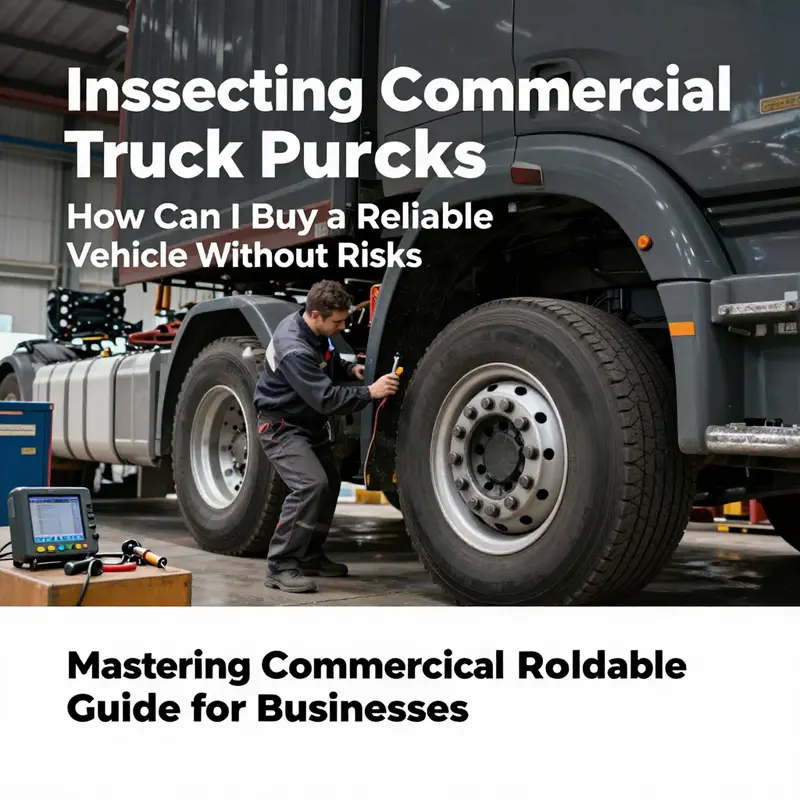
Buying a commercial truck is more than a purchase; it is a careful negotiation with risk, reliability, and long-term operating costs. The path to a sound investment begins long before you sign on the dotted line. It starts with a clear understanding of your needs, a disciplined approach to sourcing, and a rigorous, methodical inspection that can reveal what others might miss. When you commit to an inspection-first mindset, you create a map that guides you through the market’s noise toward a vehicle that will support your business for years rather than weeks. In practice, this means balancing practical criteria with a calm skepticism about bargains that look too good to be true and pairing them with a structured examination that blends visual checks, mechanical testing, and documentary verification. The result is a truck that not only fits your cargo and route but also survives the inevitable wear of daily operation without surprising failures that derail schedules and profits. The journey begins with market clarity and ends with a signed title, a valid registration, and a vehicle you can rely on with reasonable certainty.
Understanding the market and choosing reputable sources is the first hinge. The used commercial vehicle market can be complex and uneven, with inventory that spans a wide range of ages, configurations, and maintenance histories. To minimize risk, prioritize sources that offer transparency, standardized data, and some form of after-sale assurance. Authorized dealers or established platforms that specialize in commercial vehicles typically deliver more consistent histories and clearer maintenance records than private parties. A careful buyer avoids deals that lack verifiable history and mechanics’ notes, especially when the price seems unusually attractive. These cautions are not about paranoia; they are about aligning your purchase with the realities of ongoing maintenance, parts availability, and the ever-present possibility of hidden problems under a fresh coat of paint. If you want a quick read on market dynamics, you can explore insights on capacity trends in the trucking sector, which influence pricing, availability, and financing terms. This is not a sales pitch for any particular marketplace, but a reminder that the broader market context shapes every offer you receive.
Searching for a truck should then be grounded in a straightforward evaluation framework. The goal is to assemble a handful of candidates that meet your core requirements without overfitting to a single truck’s charm. Before you look at a single vehicle, lay out your payload needs, route patterns, and typical miles per year. How much weight must the truck carry? Do you need a refrigerated box, a dry cargo box, a flatbed, or a specialized chassis? Will you operate mainly locally, regionally, or over long hauls? What emissions standards are required in your jurisdiction, and how important is fuel efficiency to your total cost of ownership? These questions help you avoid the trap of chasing features that won’t pay off in your specific operation. They also clarify the importance of engine torque, transmission type, axle configuration, and gross vehicle weight rating in the decision process. Once you have a clear picture, a few candidate trucks, and their documents, the real work of due diligence begins.
A crucial element of due diligence lies in the visible signs and the unseen history they hint at. Begin with a detailed visual inspection that looks past first impressions. Exterior condition offers clues about how well the truck has been cared for and whether it has endured rough handling. Inconsistent paint thickness or mismatched colors can signal repairs after a collision or a repaint that concealed frame damage. Check for uneven panel gaps, which might indicate a misaligned frame or body repair. The windshield should be a true OEM piece, and any cracks or chips in critical glass demand caution, since replacement costs compound over time if the integrity of the windshield or other glass is compromised in ways that affect safety systems. Tires deserve equal attention. Look for unusual wear patterns, cracks from aging, or inconsistent tread depths across axles, and confirm proper inflation and load ratings. The undercarriage often tells the most honest story of a truck’s life. A lift or a service ramp helps reveal rust, corrosion, rusty brake lines, or exhaust system issues that aren’t visible from the ground. Listen for rust around frame rails or welds, and take note of any signs that a vehicle has undergone rough repair work or patching in critical areas of the chassis. These are not mere cosmetic concerns; they can foretell structural issues that escalate with time.
Inside the cab, the controls and electronics illuminate the truck’s day-to-day life. Check that all lights and gauges respond correctly, and test the locks, windows, ventilation, and HVAC systems. The reliability of ABS and other traction and stability features is essential when you consider the road duties you expect to perform. Even seemingly minor items like a worn seat or a creaky steering column may signal neglected maintenance that could become costly to repair and inconvenient to address during busy seasons. The test drive is the most telling part of the examination. A true evaluation should include a thorough run on varied road conditions, with attention paid to acceleration, deceleration, braking behavior, steering alignment, and ride quality. Listen for unusual noises—knocking, ticking, grinding, or metallic sounds can disclose mechanical fatigue that is emerging but not yet obvious. The way the truck shifts gears under load, the smoothness of the clutch operation if the truck is manual, and the way the vehicle handles wind gusts or road imperfections can all give you a sense of the truck’s overall health. Vibration, pulling to one side, or an inconsistent response to steering inputs should raise questions that you want answered by a professional.
This is where the decision tree often splits between a vehicle that is a solid risk and one that is a solid bet. A pre-purchase inspection (PPI) conducted by a qualified mechanic is a powerful tool for lowering risk, especially for high-mileage trucks or units with uncertain histories. A PPI can reveal wear patterns that aren’t obvious in everyday use and identify issues that require immediate attention or future investment. It also provides you with a professional assessment you can leverage in negotiations, helping you understand whether a price reflects the truck’s condition or masks latent liabilities. If you are buying from a source that offers certified pre-owned options or a basic warranty on certain systems, read the terms carefully. Warranties often exclude components that wear out with use or limit coverage to specific miles or periods. Even with a warranty, you should consider the total cost of ownership and the likelihood of out-of-pocket repairs given the truck’s age and usage.
Beyond the mechanical and aesthetic checks, you must validate the paperwork with the same rigor you apply to the engine. A clean title without liens is essential. The VIN should correspond to the documentation, and you should verify that no undisclosed salvage or flood history exists. In modern practice, this often involves a trip to the local DMV or equivalent authority, along with an official vehicle history report from a trusted provider. Maintenance records are another strong indicator of responsible ownership. A well-documented history shows regular servicing, timely repairs, and the proactive replacement of wear-prone parts. When a seller presents an immaculate maintenance log that aligns with the truck’s mileage and usage, you gain confidence in its care history. Conversely, gaps in service records or inconsistent entries should prompt a deeper inquiry into the vehicle’s true condition. You should also confirm that the vehicle can be registered in your state or country and that any required emissions or compliance documentation is in order. For business buyers, additional documents such as proof of business license, tax identification, and insurance coverage become part of the due diligence process. The aim is to confirm that every link in the chain—from title to registration to insurance—will hold up under audit and in the face of an inspection from regulatory authorities.
A decision to purchase should also consider the broader context and risk management strategies. If you decide to proceed after a thorough inspection, you will typically move into the financing phase. Financing for commercial trucks often involves terms tied to business income or revenue streams rather than personal credit alone. Compare loan terms, interest rates, and down payment requirements across lenders who understand commercial vehicle financing. Some buyers benefit from dealer financing arrangements that align with the sale, but it remains essential to compare conditions and total cost of capital. Once financing is secured, registration with the appropriate authority and commercial auto insurance become operational steps. Commercial auto insurance is not optional for freight operations; it is a legal requirement in many jurisdictions and a prudent shield against the risks of road transport. Insurance costs hinge on the truck type, the intended routes, the driver roster, and the business’s driving history. A careful buyer anticipates these ongoing costs as part of the total cost of ownership, not as an afterthought.
Finalize the transaction with clarity and care. Ensure all signatures are in place, titles are transferred correctly, and any shipping or delivery arrangements are documented, particularly if the truck is being purchased online or from a distant location. The sale should include any agreed-upon adjustments, be they for outstanding repairs, post-purchase service commitments, or included spare parts. If the sale occurs across borders or through a cross-border transaction, additional compliance steps apply, including inspections and registrations that satisfy local and national regulations. Throughout this process, keep a careful record of every document and communication. A well-organized file will serve as a reference if questions arise after you take possession of the truck and it becomes part of your daily operations.
To connect this careful inspection with practical market awareness, consider using resources that help you interpret market signals while maintaining discipline about what to buy and when. A solid rule is to treat any offer that seems to overpromise as a red flag unless you can verify every claim with data and documentation. The best buyers blend a rigorous inspection with a measured approach to negotiation. Price is important, but the true value lies in a truck’s condition, its maintenance history, and its alignment with your operating plan. If you are evaluating multiple units, keep a simple comparison framework that focuses on the most consequential factors: payload capability, engine and transmission health, brake systems, insulation and sealing in the cargo area (if applicable), and the presence of any aftermarket modifications that could complicate maintenance or affect reliability. Your goal is to arrive at a decision that balances initial cost with long-term costs, such as fuel efficiency, repair frequency, and downtime for maintenance. When you are confident in the truck’s condition and the documentation checks out, you can proceed with a clear conscience and a well-supported offer. A careful buyer who follows this inspection-first approach reduces the likelihood of ending up with a vehicle that drains cash through hidden problems or unexpected downtime.
Finally, integrate the inspection into a broader decision framework by reflecting on the vehicle’s fit with your business’s strategic plans. A truck that perfectly suits today’s needs but lacks scalability or compatibility with potential future routes can become a bottleneck. Conversely, a truck that is a touch overqualified for your current tasks may pay dividends in reliability and resale value as your routes evolve. The optimal choice is a balance—one that safeguards current operations while leaving room to grow. In that sense, the inspection is not a one-off hurdle but a continued practice. A well-documented inspection record, a clean bill of health, and a clear path to registration and insurance create a solid foundation for reliable service and predictable costs. If you apply this approach consistently, you can navigate the market with confidence and avoid the common traps that catch buyers off guard. And as you build experience, you’ll become adept at spotting patterns of wear, maintenance priorities, and the subtle signals that distinguish a durable asset from a fragile promise.
As you move from inspection to ownership, consider how this disciplined process interacts with broader industry dynamics. For instance, market shifts such as rising or falling demand for certain trailer configurations or changes in regulatory standards can affect the long-term value of a given truck. Understanding these dynamics helps you time purchases to maximize value and minimize risk, even as you stay focused on the specifics of the unit at hand. In the end, the goal remains simple: buy a reliable vehicle that can carry your cargo safely and efficiently, with a maintenance history you can trust and a documentation trail that stands up to scrutiny. The inspection-first approach is how you achieve that goal without risking costly surprises after the sale. And by keeping the process disciplined, you preserve flexibility to adapt to evolving business needs, routes, and compliance requirements while protecting your bottom line.
Note: For broader market context and further reading on industry dynamics, you can explore a perspective on market capacity and how it shapes buying conditions. This external resource can provide useful background without steering you toward any particular seller or platform. External resource: https://www.zhihu.com/question/607892457
From Credit Checks to Title Transfers: A Practical Path to Legally and Affordably Buying a Commercial Truck
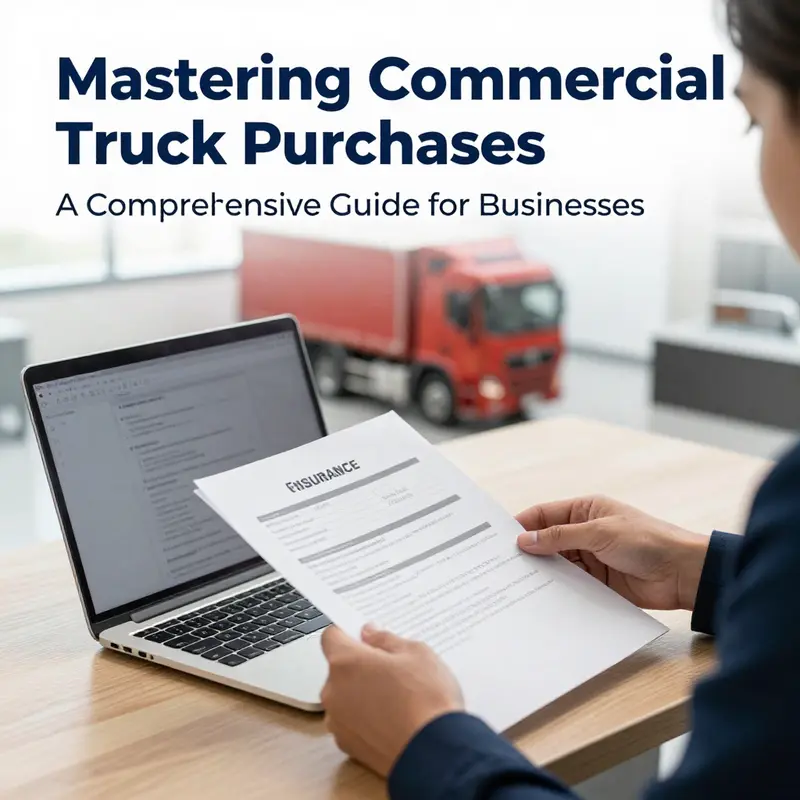
Buying a commercial truck is a holistic endeavor that blends finance, compliance, and long-term planning. The moment you decide to push the ignition and hit the road with a new or used workhorse, you are entering a process where the numbers you generate on paper determine the options you actually have on the ground. Financing and registration are not afterthoughts or bureaucratic hurdles; they are the frame that shapes what you can afford, how you will use the vehicle, and how smoothly you will operate within the legal and regulatory landscape. When done thoughtfully, financing and registration become a seamless continuation of the same strategic thinking you applied when you defined your core needs—the kind of cargo you carry, the routes you serve, and the miles you plan to log. The goal is a legal, affordable, and reliable purchase that supports sustainable business growth rather than siphoning capital away in interest, penalties, or compliance headaches.
To begin, you must first measure your creditworthiness with a clear-eyed view of your business finances. Your credit score matters, but so does the strength of your business financials. Lenders increasingly look for evidence that the business can sustain debt service without compromising cash flow for fuel, maintenance, insurance, and unexpected repairs. If you’re a sole proprietor, your personal credit can carry weight; if you operate as a corporation or LLC, lenders will scrutinize the business credit profile, the longevity of revenue, and the consistency of profit margins. Take stock of your current score, your recent payment history, and any outstanding obligations that could affect a new loan. If the score isn’t where you want it to be, take concrete steps to raise it: clear up erroneous reports, reduce high-interest debt, and avoid new, nonessential borrowings. In parallel, assemble the business documents you’ll need. Tax returns, financial statements, cash-flow projections, bank statements, and a clear description of the business model help lenders see not just a one-time purchase, but the ongoing capacity to repay.
Once credit is assessed, the next decision revolves around the type of financing that fits your operation. Term loans provide predictable payments over a set period, which appealingly mirrors a stable budgeting process. Equipment financing, on the other hand, often leverages the truck itself as collateral and can come with structured terms tailored to equipment lifecycles. Equipment financing can be attractive when you want to preserve working capital or align payments with the truck’s service life and depreciation profile. Both options have merits, and the right choice depends on your cash flow projections, how quickly you plan to scale, and the relative importance of ownership versus leasing flexibility. It’s prudent to model scenarios with and without a large down payment, and to factor in the total cost of ownership beyond the sticker price. Maintenance reserves, insurance costs, and fuel efficiency all influence the bottom line as the loan runs its course. A careful budget becomes your compass, guiding loan terms, monthly payments, and the plausible horizon for trade-ins or upgrades.
A practical budget is more than a monthly payment; it’s a holistic plan for the truck’s entire life cycle. Start with the monthly payment you can afford without straining operating cash flow. Then layer in all other recurring costs: commercial auto insurance, tires and maintenance, fuel, licensing, and regulatory fees. The phrase total cost of ownership (TCO) isn’t optional jargon here; it’s a discipline. TCO forces you to consider the downstream effects of the purchase on your profitability. For example, a slightly higher monthly payment on a more fuel-efficient model can pay for itself through lower fuel costs over time. Conversely, selecting a low upfront price truck with poor reliability may enlarge maintenance bills and cause more downtime, negating any short-term savings. This is where scenario planning becomes invaluable. Build models that reflect typical routes, payloads, and service levels. Consider peak seasons and potential downtimes. A conservative approach—accounting for a few months of lean demand—will help prevent a cash squeeze when interest accrues and invoices pile up.
With a budget in place, you can begin the more technical side of financing: lender landscape and qualification. Lenders fall along a spectrum from traditional banks to credit unions and specialized commercial finance companies. Banks can offer robust underwriting and structured terms, but they may require stronger cash flow, longer business history, and stricter collateral covenants. Credit unions often provide competitive rates and more flexible terms to local businesses, especially those that are members or have a longer association with the community. Specialized equipment lenders understand the nuances of vehicle finance, including depreciation schedules and residual values at the end of the term. The key is not to chase the lowest quote in a vacuum but to identify lenders that offer terms aligned with your business cycle, maintenance expectations, and growth trajectory. Before you apply, seek pre-qualification or pre-approval. A soft pull helps you understand likely rates and terms without committing to a hard inquiry that could temporarily dent credit scores. Having pre-approval in hand also strengthens your negotiating position when you circle back to a dealer or seller, because it signals seriousness and readiness.
As you narrow the field, you’ll prepare a robust packet of documents that many lenders will request up front. These typically include business formation documents, tax identification number, proof of insurance, and a detailed description of how the truck will be used. Personal and business tax returns for a specified period, balance sheets, and cash-flow statements are commonly requested. If your business is newer, lenders may work with more conservative projections or rely on the truck as a primary source of collateral. You may also be asked for a personal guarantee or a pledge of additional collateral. It’s essential to anticipate these requests and present a clean, well-organized file. A neat, thorough package reduces the back-and-forth and speeds up the underwriting process. You should also be ready to discuss your expected routes, average cargo weight, and maintenance plan, because lenders want to see that the operation is thoughtfully planned rather than opportunistic.
Beyond the numbers, there is the regulatory horizon to consider. Financing a commercial truck is not only about borrowing money; it is about committing to a path that satisfies compliance obligations. In many jurisdictions, financing is accompanied by a lien on the vehicle. The lien is a legal claim the lender holds until the loan is paid off. This is not inherently a deterrent—it is a standard framework that protects both parties by ensuring the asset can be recovered if debt payments lapse. Understanding how a lien affects ownership rights helps prevent surprises at registration and title transfer. You will work closely with the lender to ensure the purchase agreement clearly states the lender’s interest and the conditions under which title will transfer to you at payoff. As you prepare to register, you’ll need to assemble the usual ownership documents but with the added dimension that a lien will be filed with the appropriate motor vehicle department or equivalent registry. The process resembles any other vehicle title transfer, yet the financial layer adds complexity that requires careful attention to the paperwork, timing, and local rules.
Registration is the bridge between financing and lawful operation. Once financing is in place or even while the loan is being finalized, you should begin preparing for registration so that you can move quickly from purchase to road-ready. Registration typically requires proof of ownership or lien documentation, proof of insurance, and payment of registration fees. In most jurisdictions, the vehicle must be insured with a commercial policy that meets legal minimums and, depending on usage, may require additional coverage for cargo or general liability. The precise steps vary by state or country, but the rhythm is familiar: secure insurance, confirm the lien details with the lender, complete the title transfer or lien release when payoff occurs, and present the registration application with the appropriate supporting documents. A critical part of this stage is ensuring that the VIN on the paperwork matches the VIN on the truck and that there are no outstanding recalls or structural concerns that could complicate registration or insurance pricing.
Insurance for a commercial truck is not a luxury; it is a prerequisite. The policy must cover the specific risks associated with trucking, including liability for bodily injury and property damage, cargo coverage if you’re transporting goods, and physical damage to the vehicle itself. Rates are influenced by several factors: driver history, driving routes, fleet exposure, the security of cargo, and the maintenance program you commit to. A disciplined maintenance regimen can positively affect premiums, as well-maintained trucks are less prone to breakdowns and accidents. Inventory of spare parts, telematics adoption, and safety training programs can also influence pricing. It’s wise to discuss coverage options with a broker who understands commercial fleets, or to work with a lender who can guide you toward insurers who are accustomed to financing and registration workflows. Keep in mind that insurance is not a one-size-fits-all item; you may require tailored coverage for different routes, seasons, or cargo types. A well-structured policy that aligns with your operations will protect both the business and the financing arrangement, reducing the risk of coverage gaps that could derail the purchase or increase costs later.
Documentation plays a central role throughout financing and registration. A clean bill of sale, a clear title, and accurate VIN verification are the backbone of a seamless transfer. You’ll want to ensure any seller-provided documents align with the lender’s records and with the DMV or equivalent authority’s requirements. When buying a used truck, a vehicle history report is a wise safeguard against hidden issues such as frame damage, flood history, or previous accidents that could complicate insurance or resale value. A pre-purchase inspection by a qualified mechanic remains one of the most valuable steps to avoid costly surprises after the purchase. It provides a professional assessment of the truck’s condition, identifies upcoming maintenance needs, and gives you a quantified sense of the potential hidden costs tied to a specific unit. While some buyers may rely on the seller’s disclosures, a PPI acts as a protective measure that can influence price negotiations and loan terms.
As you navigate the-financing-and-registration continuum, remember that every decision interacts with others. A higher down payment reduces loan risk and can unlock better interest rates, but it also tightens your immediate liquidity. Shorter terms reduce total interest but increase monthly payments, which may strain cash flow during slower months. Longer terms ease monthly obligations but increase total interest paid and can complicate resale planning. A careful, data-driven approach helps you strike the right balance for your business. It is also wise to keep a contingency fund for the truck’s early months—fuel price swings, maintenance demands, and minor regulatory changes can all influence cash flow in the first year on the road. In short, financing and registration are not isolated steps but a coordinated strategy designed to deliver a compliant, reliable asset that serves as a platform for growth rather than a pain point in your balance sheet.
If you want a broader, more practical walkthrough that complements these considerations, you can consult external guidance that delves into the nuances of semi-truck financing, including lender criteria, typical timelines, and case studies. This resource provides a structured pathway from initial credit checks to securing a lender and completing the legal registrations. It offers actionable insights that can help you prepare, compare offers, and close with confidence. For a detailed step-by-step on semi-truck financing, see Bankrate’s guide: https://www.bankrate.com/loans/semi-truck-financing/.
In the end, the road to legal and affordable truck ownership is paved with preparation, clarity, and disciplined financial planning. Your success hinges on understanding how financing terms align with your business timetable, how registration formalities synchronize with your lender’s requirements, and how insurance and maintenance plans support dependable, compliant operations. The pursuit of a commercial truck is a long game, a strategic investment in capability that should strengthen, not strain, your ability to serve customers, meet schedules, and grow your enterprise. With a robust budget, clear loan structure, and a proactive approach to registration and risk management, you can move from inquiry to ignition with confidence, knowing you have chosen a truck that not only meets current needs but also travels a path toward sustainable expansion. The chapters of this journey—defining needs, choosing new or used, selecting a seller, inspecting candidates, verifying documentation, financing, and finally registering—form a cohesive narrative that keeps the business at the center. Finances and filings do not merely accompany the purchase; they shape the feasibility, speed, and reliability of your operations, turning a potentially overwhelming process into a disciplined, manageable sequence that leads to on-time deliveries, happier customers, and a stronger bottom line.
Final thoughts
Making an informed purchase of a commercial truck involves a comprehensive understanding of your specific business needs, financial capabilities, and legal obligations. By clearly defining your requirements, weighing the benefits of new versus used options, undertaking diligent inspections, and ensuring proper financing and registration, you can pave the way for an investment that supports your operational goals effectively. This guide serves to empower logistics, construction, and delivery professionals to approach their truck purchases with confidence, ensuring they select vehicles that will contribute to their business success for years to come.