
GMC truck commercials have long been noted for their rugged appeal and dynamic imagery, capturing the essence of strength and reliability in their vehicles. However, the portrayal of models, particularly a recurring blond figure, has led to considerable curiosity and confusion. This article examines the identity of this blond model, explores the misconceptions linking her to Chevrolet, and assesses the broader implications of using such characters in automotive advertising. By understanding these elements, logistics and procurement professionals, as well as small business owners managing delivery fleets, can gain insights into branding strategies that effectively resonate with target audiences.
The Evolving Blonde Face on GMC Truck Campaigns
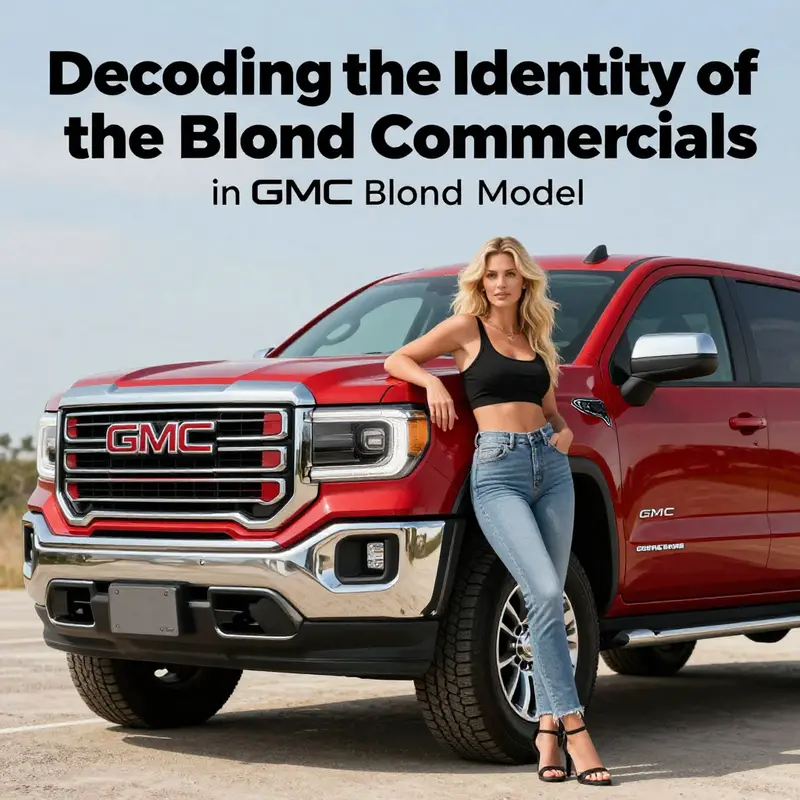
The question of who appears in GMC truck advertising is less about a single fixed face and more about a flexible on screen presence that can travel across terrains and stories. From 2018 to 2022, casting aimed for a relatable, capable energy rather than a one dimensional glamour. A performer with improv training can deliver natural reactions, guiding viewers through rugged landscapes and everyday moments alike. The result is a throughline that feels familiar across spots while allowing the setting to shift from trailheads to family road trips without breaking the sense of credibility. In this approach the model functions as a human guide who anchors the vehicle’s capabilities in real world possibility, rather than a static emblem. This strategy also reflects industry realities of budget, schedule, and the desire for longevity in an on screen presence.
Light on the Line: Unraveling the Blond Model Myth in GMC and Chevrolet Trucks
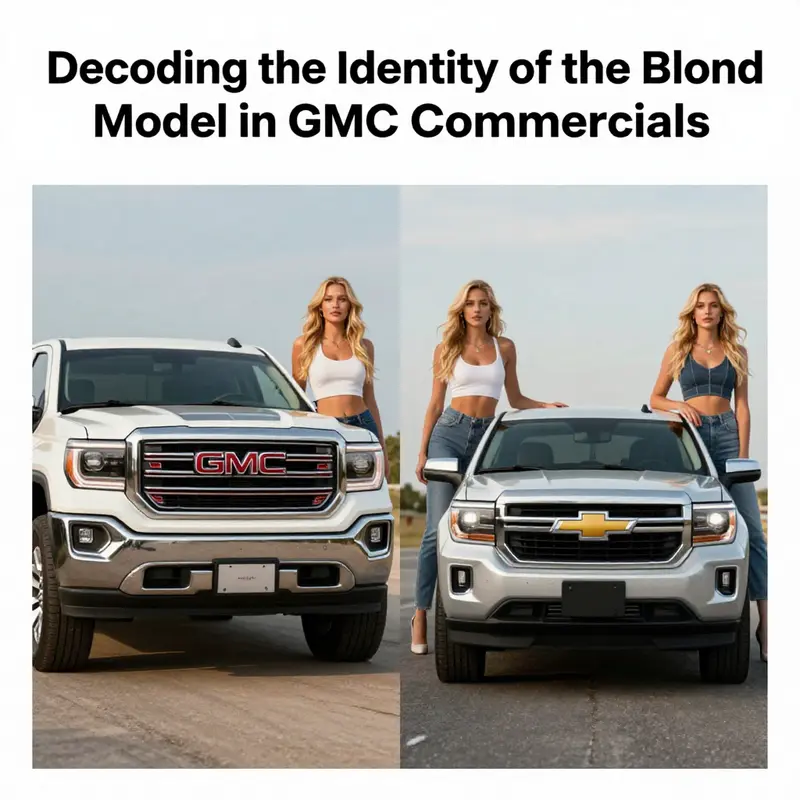
When readers or viewers ask who the blond model is in a GMC truck commercial, the instinct is to search for a single, fixed face who anchors the brand’s identity. The question, however, points to a larger issue in modern automotive advertising: the tendency to search for a convenient emblem or a recurring face when brands actually rely on a broader set of messages, aesthetics, and product strengths. In the case of General Motors’ truck lineup, there is no official, ongoing blond model associated with GMC or Chevrolet. The idea persists because marketing memory often compresses a mosaic of campaigns, images, and moments into a single shorthand. And in this case, that shorthand tends to be “the blond model” as if a single, enduring persona travels across services, campaigns, and model years like a badge. Yet the reality is more prosaic and more revealing about how these brands position themselves than the myth suggests. The truth is that neither GMC nor Chevrolet maintains a standing blond-in-chief for its truck advertising. The brands have shifted their emphasis toward performance, luxury, utility, and lifestyle storytelling rather than cultivating one constant face in their official campaigns. In practice, a glossy truck spot might feature a performative sense of dexterity, a nod to rugged capability, or a cinematic lifestyle vignette, but not a single, door-stepping ambassador who becomes the brand’s universal silhouette.
This chapter uses the broader confusion as a lens to examine how GMC and Chevrolet, two brands under the same corporate umbrella, navigate shared engineering roots while staking distinct identities in the consumer market. It is easy to conflate high-end trims with a brand’s essence, especially when the visual language of a truck—the bright chrome, the clean lines, the premium interiors—can feel like a signifier of a particular lifestyle. That visual language, however, is not a person but a design vocabulary that communicates value, capability, and experience. When one encounters the idea of a blond model, it is helpful to recalibrate: there is no fixed personality in the GM family cast that remains constant across campaigns. What persists is a strategic alignment: GMC as the purveyor of premium, rugged refinement through its Denali line, Chevrolet as the maker of high-capability, accessible luxury through trims like Silverado High Country. These are not mere marketing labels but signals about what each brand wants to convey to a buyer contemplating a heavy-duty purchase or a daily workhorse.
To understand where the blond myth might originate, it helps to map the landscape of GM’s branding architecture. GMC’s Denali is widely recognized as the company’s flagship luxury-leaning trim. It promises interior craftsmanship, quiet cabins, attention to surface quality, and a sense of elevated living atop a capable chassis. The Denali badge is designed to evoke exclusivity, not necessarily a single model or a recurring face in ads. It is a badge that travels with different body styles and engine options, signaling a consistent promise of premium experience across a family of vehicles. Chevrolet’s Silverado, by contrast, offers its own premium expression with the Silverado High Country. The High Country is positioned to rival Denali in terms of luxury touches and technology, even though it wears a different name and branding script. The two trims live in the same family of platforms and often share components, yet they speak to different consumer expectations: Denali speaks a language of refined luxury, while High Country speaks a language of rugged elegance with a touch of sophistication.
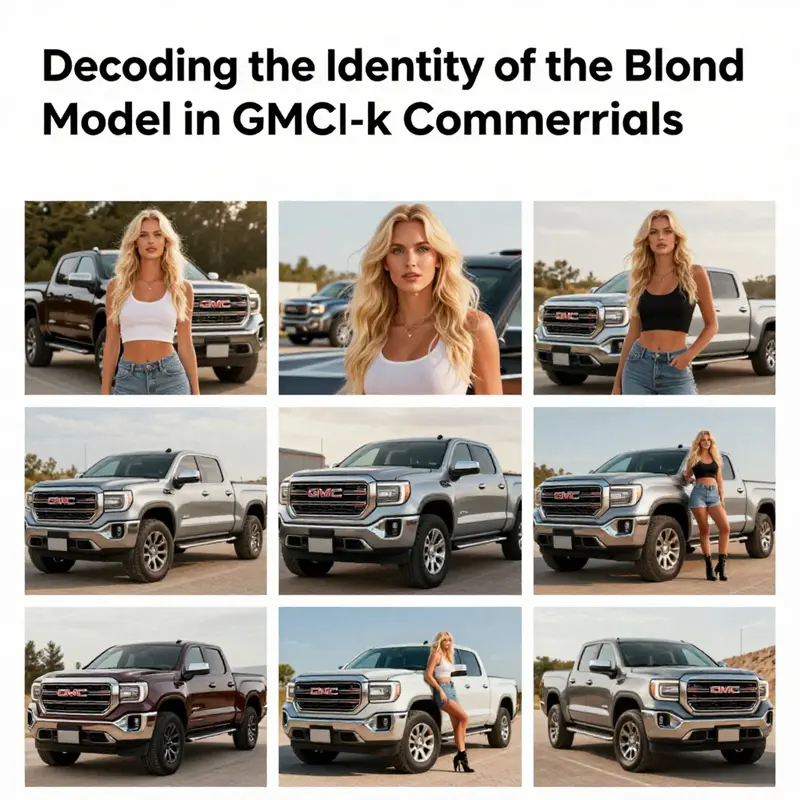
When the public perceives a blond model in a GM truck commercial, the misperception often arises from a few cues that are easy to misread. A highly polished interior, a white or light-hued exterior palette, or a scene in which a character embodies confidence and modernity can feel like the mark of a signature face. But those cues are features of a production design strategy, not a contractual arrangement with a fixed model. The advertising ecosystem thrives on repetition and recognizable cues—color palettes, wardrobe silhouettes, and cinematic pacing—that help audiences remember a brand’s emotional profile long after the screen fades. A blond aesthetic, if it appears, is more likely about light, tone, and aspirational mood rather than a defined, recurring brand representative. In the absence of a single official blond model, what audiences see is a collage: a blend of product shots, lifestyle vignettes, and human moments that collectively reinforce the vehicle’s value proposition.
The confusion is further intensified by industry memory of a different brand’s famous blond image. In popular culture, there has been lingering recognition of a bright, confident spokesperson associated with a different GM division in the past, a memory that can float into conversations about GMC and Chevrolet when people recall a certain vibe from a previous era. The important distinction remains: that blond archetype belongs to a separate brand line, most notably associated with Chevrolet in a specific, widely circulated campaign from earlier in the decade. It is a reminder that cross-brand recollection is not the same as cross-brand identity. GMC’s current advertising science is built around a more nuanced framework. It emphasizes the craft of the vehicle, the engineering details, the premium material experience, and the lifestyle of capability rather than the presence of a single, fixed spokesperson. In short, the blond is less a character and more a thread in a wider fabric of brand storytelling.
What this means for the consumer is that the search for a blond model is less about who is in the frame and more about how the frame is built. It is about seeking the throughline that ties a vehicle to a lifestyle, a capability to a promise, and a brand to a sensory expectation. A Denali at the top of the GMC ladder signals the pinnacle of refinement—quiet cabins with meticulous trim, adaptive tech, and a sense of assurance that comes with luxury branding. A Silverado High Country at the top of the Chevrolet ladder signals a companion narrative: power, durability, and a certain elegance that is not showy but earned through top-tier features, premium materials, and a design that ages with a measured confidence. If one steps back from the impulse to identify a single figure, the logic becomes clearer: branding lives in the architecture of experience, not in the face of a model. The blond myth fades into the background when the audience and the market respond to a coherent, consistent set of signals about what the vehicle is and what it stands for.
The distinction between Denali and High Country is not merely a trivia point. It reveals how GM as a corporate family negotiates its brand equity across divisions that share engineering DNA but choose divergent emotional languages. Denali is designed to be the aspirational end of the GMC spectrum, where luxury is inseparable from functionality. It invites buyers to imagine a life in which premium materials, quiet ride, and sophisticated technology quietly elevate everyday use into a refined ritual. Silverado High Country, meanwhile, is built to speak to buyers who want top-tier comfort and capability without surrendering the core utility that makes a pickup a tool for work and a companion for everyday life. The High Country’s design cues—distinct grilles, carefully curated interiors, and technology suites that feel approachable—are crafted to feel premium yet practical. The result is a pair of campaigns that compete on a shared platform but run on distinct brand narratives. In that tension, the idea of a single blond model dissolves, replaced by a more legible map of why and how people choose one badge over the other.
This is not to say the advertising world is immune to the resonance of a familiar face. Face-based marketing has historically been a powerful shortcut for audiences to latch onto a brand in a crowded market. The industry often leans on recognizable personas to anchor complex messages in a way that can feel intimate or memorable. Yet the GM approach to the Denali and High Country campaigns remains more about what the product represents than about who represents it. The decision to foreground certain luxury cues—windshield glare catching the chrome, the hush of a cabin, the tactile warmth of leather—instead of repeating a face, is a choice consistent with a broader shift toward experiential branding. The aim is not to fix a face, but to fix the sense of what the vehicle promises when the consumer sits behind the wheel, touches the materials, and experiences the ride. In practice, this means ads that emphasize ride quality, interior quiet, tech liturgy, and the sheer presence of the vehicle in action—towing, cruising, loading, maneuvering through urban and off-road environments—rather than meditating on a single star’s image.
For readers trying to discern where the blond myth comes from, a useful approach is to trace a few concrete cues in the campaigns themselves. The Denali badge, with its quiet luxury promise, tends to appear in campaigns that highlight refinement, careful detailing, and a serene user experience. The Silverado High Country, while sharing underlying platforms with GMC’s products, leans into a different aesthetic: it couples luxury with muscularity, illustrating that premium can be practical and robust at the same time. When viewers notice a light color palette or a bright interior mood, it is often a design choice aimed at readability on screen and the evocation of a premium user journey. These cues can be misread as a personification by a model, but they are, in truth, an orchestration of materials, lighting, and narrative tempo designed to transfer emotion from screen to buyer’s imagination.
The practical upshot for readers and consumers is that the marketing world’s complexity often gets distilled into simple, memorable elements—an emblem, a badge, a color, a vibe. The blond image is one such myth because it points to a desire for a single identity in a world where multiple identities coexist. GM’s channel strategy, including dealer conversations, broadcast media, and digital campaigns, supports a mosaic of expressions rather than a single leading character. A consumer who seeks to understand “what is the blond model for GMC or Chevrolet?” should instead focus on how Denali and High Country position themselves within the broader pickup ecosystem. The Denali’s appeal is subtle luxury—an aspirational upgrade that does not demand attention through a face but through a set of experiential signals: quiet, refined, and premium. The High Country’s appeal is rugged refinement—an assurance that the vehicle will perform at the intersection of capability and comfort, with a touch of elevated design to soften the edges of a hard-working machine. When seen through this lens, the blond myth recedes as a marketing artifact and reveals itself as a misread of branding signals.
The broader implication for industry watchers, journalists, and enthusiasts is that a brand’s face, whether blond or otherwise, is less important than the resonance of its product language. For GMC and Chevrolet, that resonance is built on a balance of capability, interior quality, and design simplicity that makes the vehicle feel confident and reliable. It is a reminder that in the realm of automotive advertising, the most authoritative storyteller is often the product itself—the way it moves, the way it sounds, the way the interior makes a user feel in everyday life. The question of a blond model thus becomes a metaphor for how audiences look for legibility and consistency in brand storytelling. When the brand signals align with the consumer’s sense of value and lifestyle, the need for a recurring person behind the camera diminishes. The face can fade into the background, and the vehicle’s character emerges as the true protagonist of the story.
In the same breath, it is worth acknowledging how cross-brand memory might influence perception. The Chevrolet Camaro advertising narrative from earlier years—often cited in discussions of a blond, fashion-forward spokesperson—serves as a cultural touchstone for some readers. That memory belongs to a different product line with its own narrative arc and target audience. It is not a template for GMC or Chevrolet trucks in general. The Camaro’s storytelling environment—nostalgic, pop-cultural, and sometimes irreverent—does not map neatly onto the GMC Denali or Silverado High Country campaigns, which anchor their messaging in different consumer needs: luxury, reliability, capability, and modern technology. Recognizing this helps readers avoid conflating a separate brand’s iconic moment with the current truck advertising portfolio. It clarifies that the blond model myth is not an accurate finger on the pulse of GM’s truck marketing. Rather, it is a footnote in the broader saga of how premium trims and utility-first workhorses are framed in a shared corporate family.
The practical takeaway for industry observers is that when evaluating whether a particular model is associated with a brand, one should consider the entire ecosystem of product lines, trim levels, and marketing narratives that surround the item in question. The Denali and High Country relationships illustrate how two brands under one corporate umbrella can pursue distinct emotional economies while sharing engineering DNA. The former invites the buyer to step into a world of quiet luxury and refined detail; the latter invites a buyer to enjoy premium comfort with the assurance of rugged performance. The absence of a fixed blond model becomes a case study in disciplined branding: it shows how a company can cultivate a suite of signals that are robust across campaigns and still feel fresh to different audiences. And it reminds readers that the face behind a campaign is less important than the chain of design decisions, product performance, and experiential outcomes that define a vehicle’s everyday value.
As this inquiry into the blond myth closes, one can appreciate how contemporary automotive marketing demands an integrative reading. The story is not about a single image but about a continuum where product architecture, trim strategy, interior artistry, and exterior language converge to create a recognizable but adaptable brand experience. The Denali and High Country narratives demonstrate that premium branding in trucks is not tied to a single face but to a consistent, evolving promise of what the vehicle can deliver across real-life contexts: the quiet luxury of a refined ride, the dependable strength of a capable chassis, and the subtle but meaningful details that elevate daily use into a moment of elevated living. The blond model, in this sense, is a phantom that highlights the importance of looking beyond first impressions to understand how a brand truly positions its most important assets: the vehicles themselves and the human experiences they enable.
For readers who want to see how this plays out in a broader industry context, consider how ancillary topics—such as supply chain dynamics, pricing power, and consumer expectations—inform the way premium trims are marketed and perceived. The story is not simply about who stands in front of the camera but about how the camera, the lighting, the sound, and the surrounding narrative are orchestrated to create credibility and desire. As the market continues to evolve, the blond myth is likely to fade as a dominant frame and give way to a more nuanced understanding of how premium capabilities and refined design are communicated to a diverse audience across multiple channels.
Internal link for deeper context: readers interested in how campaign signals intersect with broader industry dynamics can explore related topics through this discussion of the trucking market and margins, for example in the piece on trailer orders impact truckload margins. This reference helps ground the branding conversation in the realities of logistics, supply chains, and the commercial pressures that shape vehicle sales and consumer expectations. By connecting branding questions to the practical economics of the trucking world, the chapter reinforces the idea that what a customer ultimately pays for is not just an image but a bundle of performance, reliability, and total cost of ownership that grows clearer with every mile driven.
External resource for further reading: for a rigorous comparison of the high-end GM trucks that underpins the Denali vs High Country dialogue, see an expert analysis that lays out strengths, compromises, and design philosophy across the two premium lines. The detailed evaluation can be found here: https://www.motortrend.com/cars/gmc-denali-vs-chevrolet-silverado-high-country/ . The article situates Denali and Silverado High Country within a shared engineering backbone while tracing how each brand interprets luxury and capability for its target buyers, offering a useful counterpoint to the blond-model myth by reinforcing that branding decisions are anchored in product strategy rather than in a single figure. The synthesis of this external perspective with the internal discussion helps readers understand how marketing narratives evolve in lockstep with product development, dealer experiences, and consumer expectations across the broader pickup segment.
null
null
Final thoughts
The portrayal of models in automotive advertising is not merely aesthetic; it plays a crucial role in shaping brand identity and consumer perceptions. While the blond model in GMC truck commercials may not hold the same iconic status as her Chevrolet counterpart, understanding the nuances of their representation can significantly impact marketing strategies within the logistics and construction sectors. As these industries evolve, leveraging recognizable and effective branding will be essential in resonating with target audiences, ultimately driving sales and enhancing brand loyalty.