
Biogas trucks represent a significant shift towards sustainability in commercial transport, capitalizing on renewable energy derived from organic waste. This technology, centered around biomethane, offers the potential to reduce operational costs, enhance fleet sustainability, and contribute positively to environmental objectives. In this article, we delve into the multifaceted aspects of biogas trucks’ commercial viability. Chapter one lays the technological groundwork for understanding biomethane’s role in transportation. The second chapter conducts a thorough economic analysis, evaluating costs, revenues, and overall profitability in diverse operational contexts. Chapter three addresses the geopolitical factors influencing biogas adoption, while the fourth chapter assesses the environmental impacts associated with biogas truck operations. Finally, we conclude with societal acceptance trends and outline what the future holds for biogas technology in the logistics and transportation sectors.
From Biomethane to the Road: Tech Foundations Behind Biogas Truck Viability
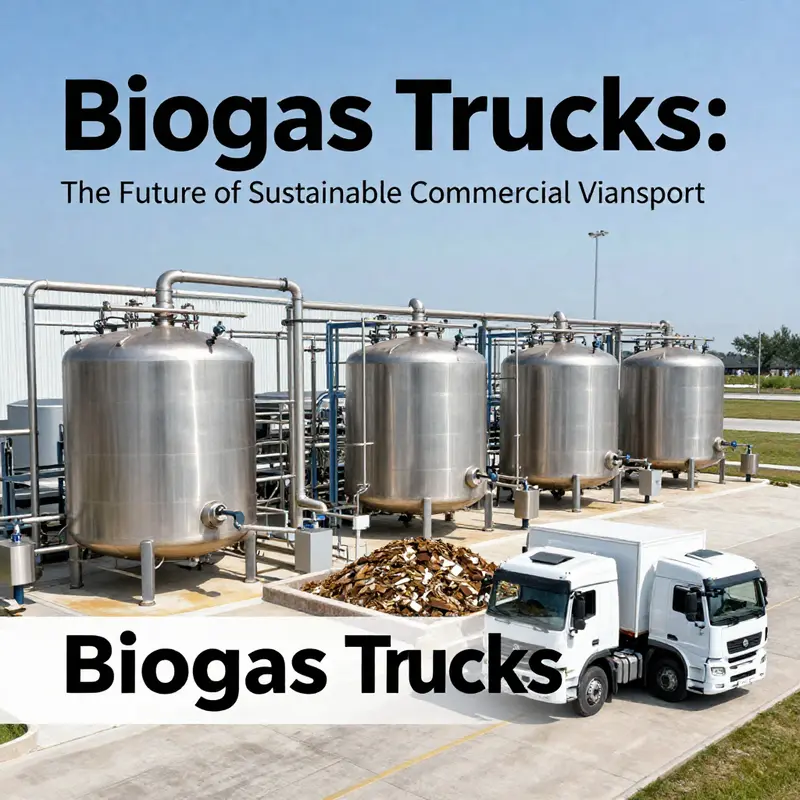
Biogas trucks sit at the intersection of waste management, energy policy, and logistics. Their commercial viability is not a single invention or market dynamic, but a bundle of interlocking technologies that allow organic residues to become reliable, low-emission road transport. At the heart is biomethane, the upgraded form of biogas that can enter existing natural gas fueling networks. The journey from raw biogas to vehicle fuel hinges on purification, quality assurance, and end-use adaptation that must be robust across regions while remaining economical. When these pieces align, biogas trucks can compete on total cost of operation, resilience of supply, and compatibility with fleet structures and fueling infrastructure.
The gas itself begins as methane with impurities such as carbon dioxide, hydrogen sulfide, moisture, siloxanes, and trace organics. If unchecked, these impurities damage engines and aftertreatment systems. Upgrading uses chemical scrubbing, pressure swing adsorption (PSA), and membrane separation, often in hybrids to optimize performance and capital cost. The goal is typically methane content above 97% with low CO2 and minimal contaminants, compatible with existing NGV fueling standards.
Upstream production—from anaerobic digestion and landfill gas recovery to co-digestion—must be managed for uptime and predictable supply. Advanced controls monitor gas composition, flow, and feedstock quality, enabling stable methane output and manageable impurity profiles. This reliability supports fleet planning, route optimization, and maintenance scheduling, while helping bridge waste-stream volatility with long-term fuel economics.
Vehicle-side advances include improved storage systems, lighter materials, and engines designed for high methane quality. Telemetry and real-time monitoring improve uptime and enable predictive maintenance, lowering operating costs and increasing reliability. Scale effects emerge when biomethane supply reaches regional volumes, growing fueling networks, service ecosystems, and policy incentives that enhance the business case. Biogas also offers a feedstock advantage that is often less sensitive to energy price swings, adding resilience to the fleet procurement strategy.
Policy, collaboration, and clear regulation further strengthen deployment. When incentives align with feedstock availability and robust upgrading, the return on invested capital can become competitive with diesel and other renewables. This alignment is reinforced by industry roadmaps and practical field data that translate laboratory purification capabilities into cost-justified, field-ready solutions.
Biogas Trucks: Viability Costs Incentives and Revenue
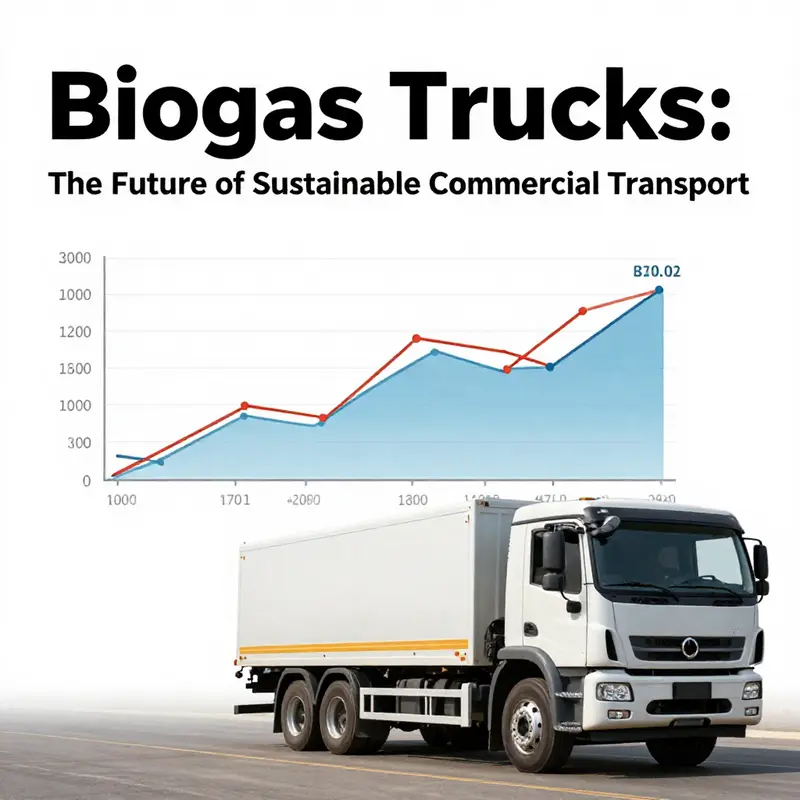
Biogas trucks sit at the intersection of waste management policy and trucking economics. The question of commercial viability depends on multiple levers including feedstock costs upgrading efficiency capital costs and policy incentives. Upgrading biogas to vehicle grade biomethane enables use in natural gas vehicles with existing infrastructure and maintenance networks. In practice digesters generate biogas from organic waste and upgrading removes impurities while raising methane content to meet fuel standards. The economics hinge on the cost of upgrading the gas the price of natural gas based fuels and any incentives or credits available. In many regions biomethane can approach price parity with conventional fuels when feedstock is favorable and capital costs are managed well. Policy design matters a lot. Carbon pricing renewable fuel mandates and subsidies can compress the cost gap and improve demand. Without stable policy support the premium for biomethane can be a hurdle for fleets with tight margins. Revenue can come from multiple streams beyond fuel savings. Heat and electricity co generation from upgrading plants adds potential income and power purchase agreements can further improve economics. Carbon credit markets add another layer of potential revenue especially where emissions reductions are recognized. Regional dynamics vary with maturity and policy clarity driving investment decisions. Long term viability improves with predictable incentives and diversified revenue streams that monetize the full value chain around biogas. The bottom line is that biogas trucks can be commercially viable when feedstock supply is reliable upgrading efficiency is high and policy support is stable. Fleets should plan for a multi year horizon and design with flexibility such as modular upgrading plants and contracts that balance biomethane and byproduct revenues. For readers seeking more detail a peer reviewed source on the techno economics of biogas upgrading can offer a rigorous framework for assessing long run profitability in different policy environments.
Borders, Policy, and Biomethane: The Geopolitics of Viable Biogas Truck Fleets
For practitioners considering expansion, geopolitics is not a distant abstraction but a practical factor that informs risk budgeting and program design. The viability of biogas trucks rests on a trifecta: feedstock certainty, cost-effective upgrading, and a policy environment that rewards low-carbon mobility. When these align, fleets can achieve competitive total costs of operation while delivering environmental and social benefits through waste valorization. When policy risk remains elevated or feedstock flows show volatility, developers can hedge by locking long-term feedstock contracts, diversifying input sources, and aligning with regional authorities to predefine routes and fuel corridors. In short, the geostrategic context shapes both risk and opportunity, indicating where and when a biogas truck fleet makes economic sense and how rapidly it can scale. While the literature may not isolate geopolitics as a distinct predictor for success, the real-world performance of fleets in reform-minded regions underscores a common truth: the viability of biomethane transportation is inseparable from how governments, markets, and communities choose to govern waste, energy, and mobility across borders.
From Waste to Wheel: The Environmental Realities and Commercial Viability of Biogas Trucks
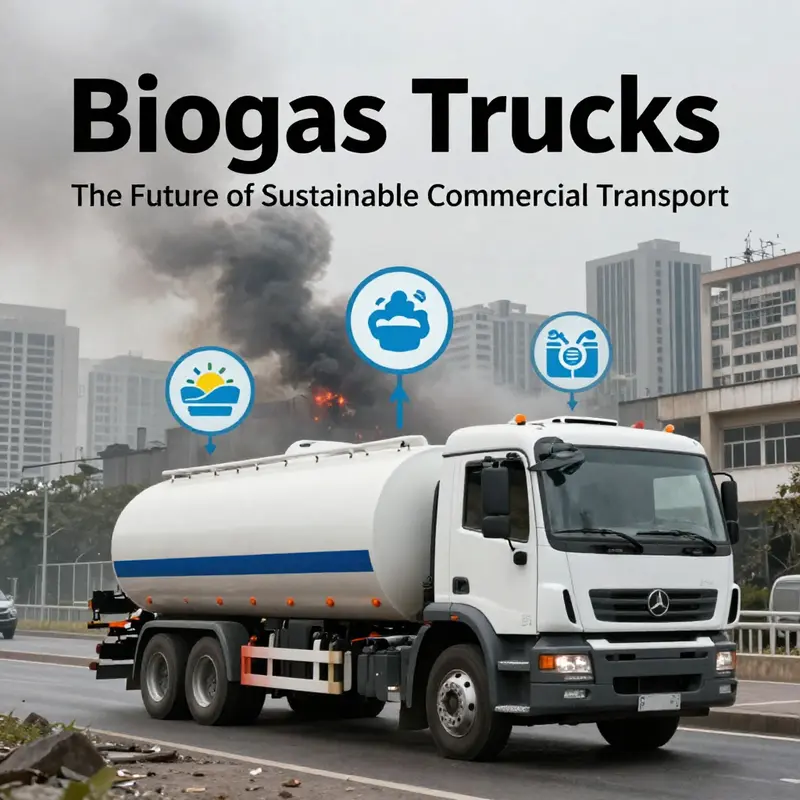
Biogas trucks sit at the intersection of waste valorization and decarbonization, offering a practical path for fleets that must meet tightening climate commitments while continuing to move goods and services. The core idea is straightforward: convert organic waste into a clean fuel, then burn that fuel in engines designed for natural gas vehicles. The environmental promise hinges on upgrading biogas to biomethane by removing impurities such as carbon dioxide and hydrogen sulfide, so the resulting gas meets the quality standards needed for NGVs. When this purified gas enters the pipeline of conventional natural gas vehicles, it leverages existing refueling infrastructure and vehicle technology. In this sense, biogas is not merely a substitute but a plug-in solution that aligns waste management with transport decarbonization. The environmental calculus, however, is nuanced and requires tracing the life cycle from feedstock to tailpipe, not just the act of combustion in the engine.
A striking finding from life cycle perspectives is the potential for compressed biomethane used in heavy-duty services—think garbage and municipal collection fleets—to deliver greenhouse gas (GHG) emission reductions ranging from 55% to 75% compared with conventional compressed natural gas. This differential is meaningful in a sector where decarbonization has been stubbornly incremental. It signals that biomass-derived fuels can shift the climate balance on routes that are inherently gas-fluent, provided every stage of the chain is managed with rigor. Yet this optimism relies on eliminating or sharply curbing two critical leak points: methane slip during upgrading and methane releases across the production and storage phases. Methane, even in small concentrations, carries a strong heat-trapping capacity, so the net climate benefit depends on robust containment and efficient processing. The same careful accounting applies to direct pollutant emissions such as NOx and ammonia, which are not only air quality concerns but potential climate signals themselves when emitted in substantial quantities during biogas production, storage, or combustion.
The environmental profile therefore hinges on the management of feedstock and the operation of the digester system. The source mix of organics matters: residues from agriculture, food waste, and even sewage sludge are common feedstocks, each with its own sustainability and emissions footprint. In some regions, the sustainability question becomes more acute. For instance, palm oil mill effluent has been cited as a feedstock in certain locales, highlighting how regional feedstock portfolios can shape outcomes. If feedstock sources are not responsibly sourced, the environmental advantage can erode—making it essential to enforce sustainable sourcing, minimize nutrient and ammonia emissions from digestate storage, and optimize digestion to reduce energy input for heating and processing. Life cycle assessments illuminate hotspots along the chain, and they consistently show that environmental performance improves when a system is designed and operated with a cradle-to-grave mindset: responsible feedstock sourcing, efficient digester operation, and stringent emission controls throughout the value chain.
The environmental conversation is inseparable from the economics of biogas fleets. Because many biogas feedstocks come from waste streams, the input costs can be lower than those of fossil fuels or synthetic alternatives, which often depend on volatile commodity markets. This feedstock economics helps fleets weather price swings and can improve total cost of ownership when upgraded gas meets vehicle specifications and refueling infrastructure is accessible. In practice, some regions have paired waste management strategies with public incentives to offset upfront capital costs for upgrading facilities and building biogas fueling capabilities. When coupled with efficient upgrading technologies that minimize energy input and maximize gas purity, these conditions tilt the economic balance toward viability. The story of commercial uptake, therefore, is as much about policy, logistics, and the economics of waste as it is about engine technology.
But the path to scale is not without obstacles. A consistent supply of feedstock remains a delicate balance: farmers, waste managers, and municipalities must coordinate to ensure steady flows that match fleet utilization. Upfront infrastructure investment—digestion systems, upgrading units, and fueling stations—presents a financial hurdle for some fleets and regions, especially where access to capital is constrained or where policy support is episodic. Regional policy variations compound the challenge: incentives, mandates, and support mechanisms differ across borders and states, which can slow cross-regional fleet deployment. Yet, despite these frictions, credible demonstrations exist across Sweden, Germany, and parts of the United States where biogas-powered fleets are operational. These deployments underscore a practical cost-benefit reality: when feedstock is reliably available, upgrading is efficient, and fleets can leverage existing NGV refueling networks, biogas becomes a credible, decarbonizing option rather than a specialized niche.
An essential piece of the narrative is the interface with policy and regulatory clarity. Emissions regulations and the evolving standards for biogas upgrading and biomethane quality create a roadmap for fleet operators and equipment manufacturers. The literature consistently highlights that policy clarity reduces risk, encouraging investment in upgrading capacity and fleet conversion. In practice, fleets that align with evolving standards and exploit incentives tied to waste reduction and clean energy can accelerate the pace of adoption. For fleet operators, the decision to invest hinges on a confluence of feedstock certainty, the reliability of upgrading processes, and access to refueling infrastructure that supports efficient operation at scale. The environmental upside remains a central lever in this equation, but its realization depends on meticulous management of feedstock sourcing, digestion efficiency, and leak prevention across the system.
As a consequence, biogas trucks present a compelling case for commercial viability when the environmental and economic dimensions reinforce each other. The environmental benefits—substantial GHG reductions and better air quality—are most robust when methane leaks are controlled, digestate management is optimized, and NOx and NH3 emissions are mitigated through robust operational practices. The economic proposition strengthens when feedstock is low-cost or free and when upgrading processes and fueling infrastructure are designed to integrate smoothly with existing NGV ecosystems. The regional success stories—where public and private stakeholders coordinate to harvest waste streams into transportation fuel—illustrate a practical blueprint for scaling. They show that the environmental advantages are not merely theoretical but are achievable realities, with measurable improvements in emissions profiles and community air quality alongside demonstrable cost savings and revenue opportunities from waste streams. In this sense, the environmental viability of biogas trucks is not a hurdle to profitability; it is a core contributor to it, provided the full value chain is managed with discipline.
For readers seeking a deeper dive into the regulatory and technical dimensions shaping this space, the industry discussion around emissions regulations remains a critical anchor. See discussion on emissions regulation clarity for OEMs for broader context on how policy signals are steering investment and deployment. External contexts, such as global analyses from leading energy and climate organizations, reinforce that biomethane and its role in heavy transport are part of a credible decarbonization pathway when emission control, feedstock integrity, and efficient upgrading are maintained. The environmental argument thus aligns with a strategic commercial logic: viable, scalable, and increasingly standard as part of a diversified fuel mix for fleets.
External resource: https://www.irena.org
null
null
Final thoughts
The viability of biogas trucks in commercial transport is established through rigorous examination across technology, economics, geopolitical support, environmental impacts, and social acceptance. As logistics and freight sectors increasingly prioritize sustainability, biogas offers an innovative solution that aligns both with economic objectives and environmental necessities. For business owners and stakeholders in the transportation industry, exploring biogas trucks is not just an opportunity but a strategic move towards future-proofing their operations in a rapidly evolving market.