
Selecting the right commercial truck is crucial for logistics and freight companies, construction firms, and small business owners with delivery fleets. The dynamic needs of the transportation sector require a careful assessment of efficiency, capacity, green alternatives, and technology. This article provides an in-depth analysis of the best trucks available today across different use cases, ensuring that decision-makers can find a vehicle that aligns with their operational demands. Each chapter explores leading options, such as the JAC H5 Pro LNG for cost-effective long-hauls, the BYD T5DM for sustainable logistics, the FAW Hongqi M3 for maximum payloads, and the Chevrolet Silverado 1500 for technology and comfort, setting the stage for a comprehensive understanding of the best commercial truck to buy.
Best Long-Haul Truck to Buy for Efficiency: Reassessing the LNG Long-Haul Tractor and the Data Behind the Promise
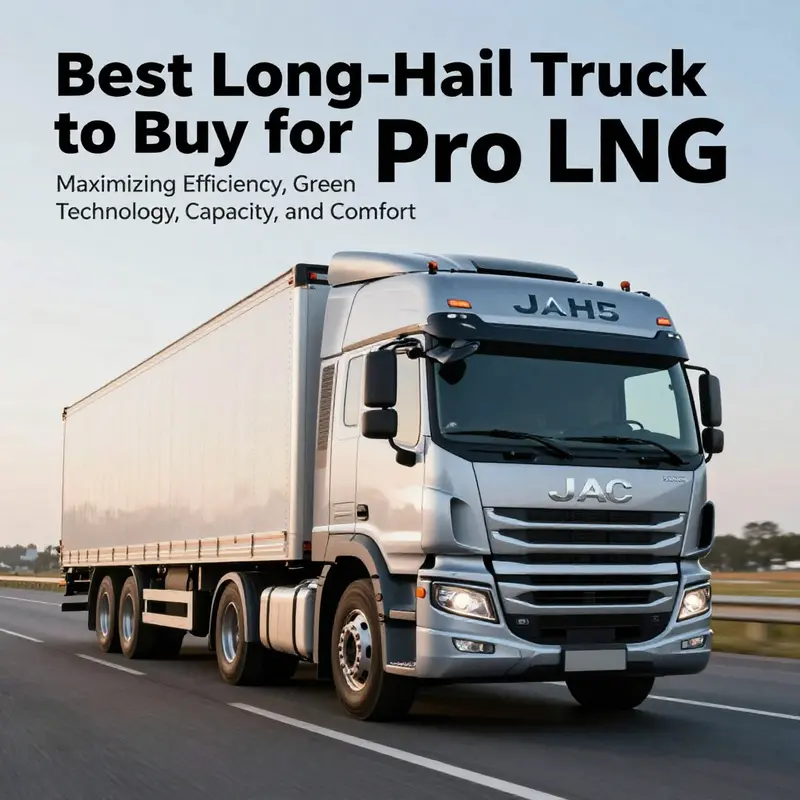
When readers ask which truck is truly the best buy for long-haul efficiency, the answer cannot rest on a single metric or a single model name. Market analyses in early 2026 consistently show that the best choice depends on the driver’s route, cargo mix, and how a fleet weighs fuel costs against payload and uptime. In the long-haul segment, a class of LNG-powered tractors has repeatedly surfaced as the efficiency leader, delivering extraordinary fuel economy while offering range that sustains productivity on high-mileage corridors. Yet within the same reports, a shift in emphasis is evident: the exact model line matters less than how the powertrain, fuel strategy, and chassis design cohere to a fleet’s operating profile. The result is a nuanced, almost bespoke decision framework where the best choice is the one that aligns with your specific miles, margins, and maintenance capacity.
The LNG-powered long-haul tractor that dominates the efficiency conversation is defined by a blend of low fuel consumption, extended range, and a careful balance of weight and cargo volume. In practical terms, operators are quoted a combined fuel consumption rate near 16 to 17 kilograms per 100 kilometers. That figure translates into meaningful cost savings across thousands of kilometers each month. The same platforms emphasize a remarkably extended range, with standard tank configurations delivering upwards of 2,400 kilometers on a single fill, and the option to add a second 550-liter tank—creating a 550+550 liter configuration that furthers uptime by reducing refueling frequency on non-milk-run routes. It is a design choice that reflects a fundamental principle of long-haul efficiency: fewer stops at the pump mean more time moving freight, more miles logged per shift, and, consequently, higher utilization of the driver’s hours and the equipment’s uptime.
Crucially, the data do not just spotlight fuel savings in isolation. They paint a complete picture of performance, combining engine efficiency, chassis weight, and payload capacity—because every kilogram saved on fuel can be offset by the weight of LNG tanks, while the ability to carry more cargo per trip can compensate for added tank mass. In these analyses, the chassis weight of the LNG long-haul tractor is cited as low as about 5.8 tons, a figure that matters because it holds payload potential steady even as the truck runs on a different fuel. With a maximum cargo box length approaching 9.8 meters and cargo volume that exceeds 70 cubic meters, there is a clear, quantifiable connection between the efficiency of the powertrain and the revenue opportunity of larger, volumetric payloads. The math is straightforward: more cargo space per kilometer translates into more revenue per kilometer, provided the rate structures and efficiency remain favorable.
Engine variety within the LNG long-haul family further reinforces the case for efficiency. A robust 320-horsepower option and a 280-horsepower alternative are paired with smooth transmissions that reduce driveline losses and contribute to predictable, stable performance across grades and terrains. The result is a platform that not only consumes less fuel per hundred kilometers but also accelerates and climbs with confidence, reducing the time lost to fatigue or congestion and preserving uptime across a fleet’s most demanding corridors. In practice, this combination of low specific fuel consumption and reliable endurance helps fleets convert every mile into a meaningful return, especially on routes where time and volume converge to determine profitability.
This nuanced picture stands in contrast to simplified marketing slogans that promise an inherent “best” truck for every operation. The market’s reality is that the most cost-effective long-haul solution is tightly coupled to the nature of the miles traveled. For fleets that log high mileages on intercity runs with constant high-speed cruise, the LNG long-haul tractor’s efficiency can yield substantial annual savings in fuel expense—savings that compound as miles accumulate. In one widely cited frame, the efficiency advantage yields tens of thousands of dollars in annual fuel savings for operations with high utilization—though the exact figure depends on local fuel prices, maintenance costs, and the frequency of long stretches between refueling opportunities. The takeaway is not that a single model dominates, but that the LNG long-haul strategy, when matched to the right route structure, consistently outperforms traditional diesel equivalents in fuel economy while preserving the reliability and range needed for express delivery and cold-chain logistics.
One of the most compelling parts of the analysis is the emphasis on range in conjunction with refueling logistics. A 2,400-kilometer capability with a dual-tank option means fewer planned stops and less operational fragmentation. In the time-sensitive world of express delivery, where every minute matters, that reduction in downtime translates into more cycles of cargo movement per day, a clearer path to meeting tight service levels, and a stronger billable utilization of both driver hours and vehicle assets. Yet the data also caution that the payload impact must be considered. Although LNG tanks add mass, the overall design of the long-haul platform in question allows for maximum cargo volume and governs the relationship between load and range. When a fleet measures revenue per kilometer by volume, the ability to exceed 70 cubic meters of cargo space becomes a direct lever on profitability. In scenarios where the customer pays by weight and by distance, the trade-off between weight, range, and payload becomes a strategic forecast rather than a quick calculation.
In the literature, there is also a reminder about how these efficiency metrics interact with broader regulatory and market dynamics. Emissions regulations, fuel taxation, and incentives for alternative fuels reshape the economics of LNG adoption. The trajectory of regulatory clarity for OEMs and customers alike frequently appears in discussions about whether LNG solutions will be favored in a given market. For readers following the policy angle, this is an important piece of the decision puzzle. It is worth noting that discussions about emissions regulations and how original equipment manufacturers approach LNG adoption are ongoing. For a concise framing of those regulatory discussions and how they might influence fleet adoption, see the dialogue around emissions regulations and OEMs seeking clarity in that space. OEMs seek clarity in emissions regulations.
The narrative here does not pretend that LNG long-haul traction is the only route to efficiency. The market is rich with options tailored to different needs. If the priority is green logistics and urban-to-suburban reach with plug-in flexibility, other platforms may take the lead. If the focus is sheer payload and volumetric efficiency for regional or intra-regional shipments, there are conventional designs that maximize box volume and internal cargo capacity. Still, for fleets whose core mission is long-haul efficiency—defined as the most miles per liter of fuel, the highest uptime, and the most consistent mass-market economics—the LNG long-haul tractor emerges as a compelling option. The hallmark is an integrated package: low consumption per 100 kilometers, an extended, adaptable range, a lightweight chassis that preserves payload capacity, and a cargo area that can deliver volume-based revenue advantages that easily outweigh the heft of additional LNG storage.
Users contemplating a move into LNG-powered long-haul traction should embrace a disciplined approach to evaluation. Start with real-world routing: how many kilometers do your trailers cover between top customers, and what is the typical stopping pattern for fuel and rest? Then map the fuel savings against the incremental weight and the possible impact on payload. Consider the adaptability of the tank configuration: is a second tank feasible in your corridors, and does the maintenance ecosystem support LNG fueling and cold-chain reliability without compromising uptime? And always examine the broader ecosystem—the availability of LNG fueling stations along critical corridors, the reliability of supply, and the total cost of ownership across a typical contract life. These factors, layered together, reveal that the best long-haul efficiency choice is not a universal champion but a precise fit for the patterns of each fleet’s operation.
For readers who want to explore the regulatory and ecosystem context more deeply, there is an external resource that outlines LNG as a vehicle fuel and its broader implications for transport policy and fuel infrastructure. This resource provides practical background on fueling economics and the comparative efficiency of LNG-based powertrains in long-haul applications: https://afdc.energy.gov/fuels/lng.html. Understanding these externalities helps fleets gauge not just the immediate operating costs but the strategic feasibility of LNG adoption over the typical life of a long-haul tractor. In parallel, the industry conversation continues to evolve, with ongoing updates to maintenance practices, supplier ecosystems, and the total-cost-of-ownership calculus that ultimately defines which long-haul platform earns the label of “best” for a given fleet.
In sum, the best long-haul truck for efficiency is not a monolithic answer but a disciplined match between a truck’s LNG powertrain, its range architecture, and a fleet’s miles-and-cargo profile. The data point toward LNG-powered long-haul tractors as the efficiency champions for high-mileage routes with significant volume opportunities. The precise choice should be driven by route structure, fueling infrastructure, and the revenue calculus tied to payload. The friction between fuel cost savings and payload weight is real, but when the configuration is aligned with the operator’s typical corridor, the efficiency premium becomes a durable competitive advantage that can redefine what is financially achievable on the road. And as the industry continues to refine regulatory clarity, fuel availability, and maintenance networks, the case for LNG long-haul efficiency only strengthens, inviting more fleets to test the thesis on their own terms.
Internal link reference note: The discussion above aligns with ongoing industry conversations around emissions policy and OEM strategy. For readers tracking how policy clarity influences equipment choices, see the detailed piece on OEMs seeking clarity in emissions regulations. OEMs seek clarity in emissions regulations.
Green Logistics in Practice: The BYD T5DM and Urban Delivery Decarbonization
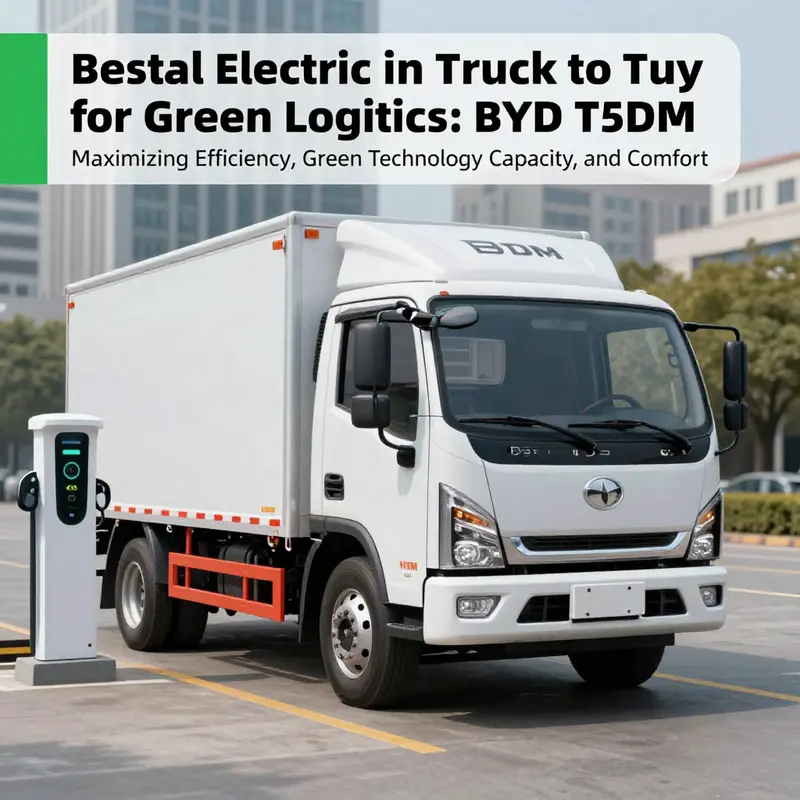
The BYD T5DM stands out as a practical pathway to greener urban delivery. As a plug-in hybrid light truck, it blends a substantial battery with a flexible powertrain to support frequent starts and stops in dense city streets while keeping operating costs competitive. The 55.39 kWh capacity enables meaningful electric driving in core urban routes, reducing tailpipe emissions and fuel cost volatility, with a traditional combustion engine available for longer legs or heavier payloads. The result is a vehicle that can maintain service levels, protect cargo quality, and lower total cost of ownership for fleets embracing decarbonization without sacrificing reliability. Beyond range, BYD emphasizes safety and urban practicality, integrating features designed to improve braking, stability, and driver confidence in mixed traffic. The refrigerated variant further broadens the T5DM’s applicability to temperature-sensitive shipments, helping fleets tighten cold-chain control while preserving efficiency. In essence, the T5DM offers a credible bridge to full electrification that fleets can deploy alongside existing diesel assets, enabling gradual modernization of urban delivery without disruptive changing of routes or schedules.
null
null
Best Medium-Duty Truck to Buy for Technology and Comfort in 2026

When fleets look beyond payload and efficiency, the cabin becomes a deciding factor. In 2026, top mid-size trucks blend robust digital ecosystems with ergonomic interiors. The leading model offers a large touchscreen, integrated Google apps, and a driver-centric cockpit designed to reduce fatigue on long days. Real-time routing, cloud-based maintenance, and seamless dispatch apps help drivers stay focused while fleets benefit from improved uptime and reduced admin time. Comfort features like supportive seats, quiet cabin, and adjustable seating contribute to driver well-being. Driver-assistance suites add confidence during complex maneuvers and mixed-surface conditions, while a balanced powertrain ensures responsive performance with a sensible fuel profile. The result is a tool that translates technology into practical productivity, rather than a collection of gadgets, and stands out as the best all-around option for technology and comfort in the mid-size class.
Final thoughts
Choosing the right commercial truck is paramount for operational efficiency, sustainability, cargo handling, and driver comfort. Trucks like the JAC H5 Pro LNG, BYD T5DM, FAW Hongqi M3, and Chevrolet Silverado 1500 stand out as excellent options tailored to different business needs. By focusing on specific requirements, such as fuel savings, environmental impact, or advanced technology, logistics and construction enterprises can significantly enhance their performance and overall profitability. Making an informed choice will ultimately lead to improved operational success.