
Brie Larson has emerged as a notable figure in Nissan’s recent truck commercial, showcasing significant themes of empowerment. This approach is particularly impactful for industries like logistics, construction, and small businesses with delivery fleets, which often rely on strong, capable vehicles. Larson’s involvement highlights Nissan’s commitment to gender inclusivity and reflects a broader societal shift regarding women’s roles in traditionally male-dominated sectors. As we delve into her role, audience reception, marketing strategies, and the cultural implications of the advertisement, each chapter will illuminate how Larson’s participation serves both a commercial purpose and as a beacon for empowerment.
Brie Larson Behind the Wheel: The Actress, the Campaign, and the Politics of Empowerment in a Truck Advertisement
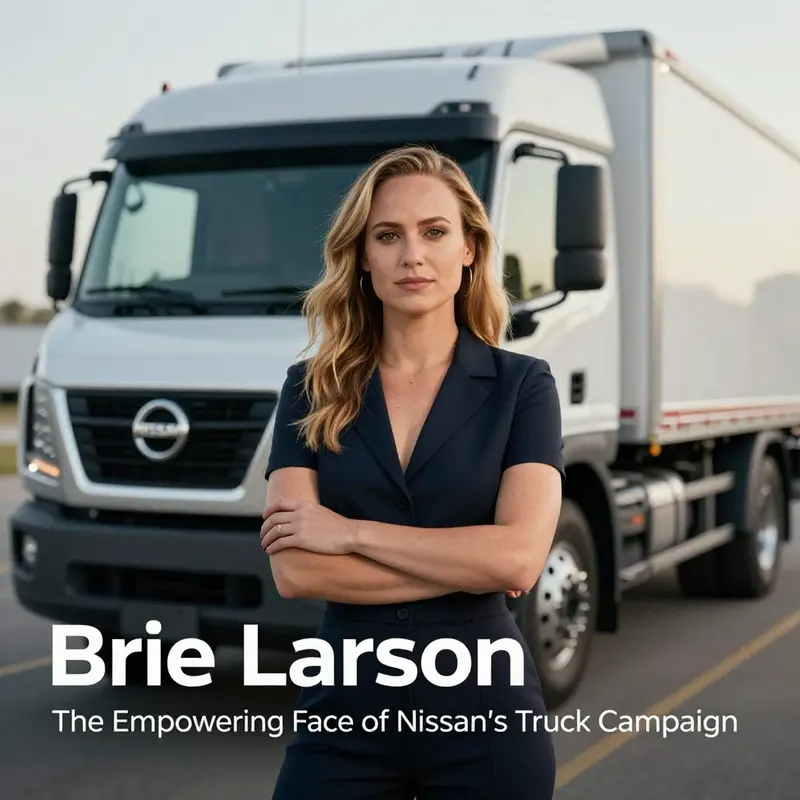
The question of who headlines a particular advertisement can feel almost incidental when a campaign aims to reshape a cultural narrative. Yet in this case the answer—Brie Larson—reads as a deliberate choice that anchors a broader conversation about who gets to lead in spaces long defined by strength, grit, and independence. The Nissan truck commercial positions Larson not merely as an actress with a proven ability to inhabit demanding roles, but as a figure whose public persona includes advocacy for women and social issues. The spot unfolds with a quiet confidence that mirrors Larson’s on-screen presence: a sense that skill, autonomy, and a clear sense of purpose can coexist with warmth and accessibility. Viewers are asked to see a driver who is both capable of handling power and attuned to the people around her, a combination that aims to translate into trust in the product without turning the narrative into a straightforward sales pitch. The strategy is subtle, but it carries a message that the vehicle is a partner in a larger project—one that recognizes women’s contributions in realms once dominated by men, including the demanding world of trucking and heavy-duty work.(External context: https://www.hollywoodreporter.com/movies/movie-news/brie-larson-nissan-commercial-backlash-feminism-1235047689/)
From the outset, the campaign invites the public to look past the stereotype of the rugged, solitary male driver and toward a scene where leadership is defined by competence, care, and clear communication. Larson’s involvement signals an alignment with roles she has chosen off screen—roles that emphasize moral complexity, resilience, and a capacity to navigate danger and difficulty without sacrificing moral clarity. This alignment is not accidental. It builds on her filmography, where characters must navigate constraints, confront fear, and break through barriers through a blend of intellect and perseverance. The advertisement uses her star power not to sell an idea about women’s empowerment in abstraction, but to position empowerment as a practical, real-world asset—an attribute that can translate into better performance on the road and, by extension, in daily life. The narrative tapers toward a core belief: when a person is allowed to show up as their full self, the outcomes—whether in a factory, a field, or a highway lane—benefit everyone who shares that space.
Larson’s public persona contributes a particular energy to the ad that marketers often chase but rarely capture with such symmetry. She is known for roles that demand vulnerability as well as strength, for a willingness to interrogate systemic biases, and for a public stance that supports women’s visibility in professional arenas. When those traits are channeled into a vehicle that promises reliability and capability, the campaign invites viewers to translate cinematic intensity into everyday confidence. The result is a more nuanced portrayal than a simple “woman drives, man watches” setup. Instead, Larson’s character embodies the balance between assertiveness and responsibility. The copy and composition of the spot keep the focus on competence first—the eyes on the road, the hands on the wheel, the decision-making in real time—while the emotional undertone remains inviting and inclusive. In this way, the commercial becomes less about a single product feature and more about a lived posture of empowerment: to be seen, to be heard, and to contribute meaningfully to a shared task.
The reception to the campaign has been mixed, a familiar pattern when a major brand and a high-profile activist-artist share the same frame. Online chatter quickly turns to questions about authenticity and message alignment. Some viewers celebrate the collaboration as a bold step toward widening the audience for a traditionally male-dominated market. Others worry that the portrayal risks becoming clichéd or tokenistic, a gloss over deeper issues of equality that deserve sustained policy and structural change. These conversations are not merely aesthetic; they touch on the very idea of what constitutes credible feminist representation in corporate storytelling. Critics have argued that even with a star who embodies empowerment, a campaign can still slide into familiar tropes if it relies on a single narrative stroke—independence as a buzzword, or a one-size-fits-all depiction of women’s work. Proponents, meanwhile, point to the potential for such visibility to spark dialogue, invite new viewers into a space, and encourage brands to think critically about who they feature and why. The middle ground is not easy to locate, but it is essential when the goal is lasting cultural impact rather than a temporary spike in engagement.
Beyond the individual performance, there is a broader marketing context worth attending to. Automotive advertising has long struggled to reconcile product demonstrations with storytelling that resonates on a social level. The shift toward campaigns that foreground empowerment reflects a broader industry trend: brands want to be seen as aware participants in real-world conversations, not as distant purveyors of technical bravado. The choice to cast an articulate advocate for women’s issues and to frame the vehicle as a tool that serves a larger mission signals a strategic wager. It is a bet that audiences will reward campaigns that connect personal empowerment to practical outcomes—an identity that can build trust, loyalty, and a sense of shared purpose. Yet it is also a risk. When a brand steps into social terrain, it invites scrutiny about sincerity, consistency, and the ability to follow through on its stated values in corporate practice, sponsorships, and day-to-day operations. Larson’s involvement magnifies both the potential for resonance and the likelihood of dissent.
In the conversations sparked by the ad, the interplay between entertainment and activism becomes especially salient. Larson’s work has frequently intersected with themes of resilience, responsibility, and advocacy. The ad uses her persona to signal a kind of ethical seriousness that marketers hope audiences will associate with the product itself. This alignment can help broaden the vehicle’s appeal to people who value competence and integrity as much as horsepower and payload. The narrative thus becomes a platform for discussing how women in physically demanding roles are perceived and valued in mainstream media. It is not just about who sits behind the wheel; it is about how the act of driving can be framed as part of a broader project of empowerment. The campaign anticipates a shift in audience expectations: viewers increasingly want icons who are not only physically capable but also morally and socially engaged. Larson embodies that ideal, whether the audience agrees with every nuanced stance she has taken or not. The ad’s success hinges on whether the portrayal can translate empathy into action—whether real viewers feel seen enough to reconsider their own assumptions about who belongs in the driver’s seat.
The industry response to such messaging tends to unfold over time, with metrics blending traditional performance indicators—views, share of voice, ad recall—with softer signals, such as shifts in perception and conversations across social channels. A key question is whether the campaign will endure beyond its initial wave of attention and become part of a longer arc about inclusion in a field where competence has long been the currency of respect. The choice to foreground a star who has actively engaged with feminist concerns signals a longer-term commitment to representing diverse experiences rather than a quick, one-off stunt. Yet marketers must also be mindful of ensuring authenticity in the narrative, avoiding misalignment between the character depicted in the ad and the realities of the work people do in the industry. When a brand appears to celebrate empowerment without addressing the day-to-day realities of workers—safety, fair wages, and the logistics of a demanding job—the risk is that the message rings hollow. The balance between aspiration and realism, between permission to dream and responsibility in practice, remains the central tension in campaigns of this kind.
From a strategic vantage point, the moment is also instructive about how messages travel across industries. The campaign sits at the intersection of entertainment, consumer goods marketing, and labor discourse, offering a case study in how movie-star credibility can be leveraged to reframe a product category in the eyes of a broader public. It invites viewers to consider not only what the vehicle can do in the abstract but what it represents in terms of shared values and social progress. In this light, the advertisement becomes more than a promotional snippet; it becomes a reference point for ongoing conversations about who gets to drive—not just literally, but culturally. The choice to weave a narrative of female leadership into a truck campaign invites audiences to imagine a future where the automotive sector reflects a wider spectrum of experiences and voices. It also prompts brands to reflect on their own internal cultures: Are they supporting women in leadership roles, in product development, and in the communities that build and transport the goods people rely on every day? The answer, whatever it may be for each organization, will partly determine the credibility of such campaigns in the years ahead.
In the wider industry ecosystem, the connection to real-world labor dynamics matters. The trucking sector, with its own set of evolving norms, regulations, and economic pressures, provides a fertile backdrop for a narrative about empowerment that does not feel purely aspirational. Issues such as capacity, driver shortages, and margins shape how viewers interpret the ad’s message and its significance within the broader transport economy. For readers who want to explore how industry realities intersect with branding and messaging, a relevant analysis of market dynamics offers additional context. In particular, industry insights around capacity and margins illuminate why a campaign that ties empowerment to practical capability can resonate beyond the screen. Excess capacity in the trucking market insights provides a lens through which to view the ad’s intent as part of a larger narrative about how the industry is evolving and how brands position themselves within that evolution.
Nonetheless, the fanfare around the campaign is inevitably tempered by scrutiny about authenticity and impact. The back-and-forth online—between those who see Larson’s leadership as a genuine signal of progress and those who view the portrayal as insufficiently nuanced—reflects a broader cultural negotiation. It raises questions not only about whether a single advertisement can alter perceptions but about how brands measure success when they attempt to merge entertainment with social commentary. The conversation extends to the responsibilities that come with star-driven campaigns: to avoid tokenism, to acknowledge the diversity of women’s experiences in physically demanding roles, and to ensure that portrayals align with concrete commitments—such as continued investment in women-led initiatives, equitable opportunities within the workforce, and transparent accountability in sponsorships and partnerships. As with many such campaigns, the narrative is not resolved in a single airing. It will continue to evolve as audiences respond, as critics parse intentions, and as Larson herself, and the broader industry, interpret the feedback into future steps.
For readers who want a more direct account of the discourse sparked by this particular campaign, further coverage notes how the portrayal was received online and in media critique. It is a reminder that celebrity-led campaigns often become a launchpad for ongoing debate about feminism, representation, and the role of brands in shaping social norms. As this conversation unfolds, it will be essential to track not only the immediate engagement metrics but also the longer-term impact on audience attitudes and on industry practices. If you are following the thread of this topic, you may find it informative to consider how the ad’s messaging sits within the larger pattern of media that center empowered women in workplace settings without diluting the complexity of their experiences. The chapter of public reception is as important as the chapter of production, and both will inform how brands approach future collaborations with artists who come with a history of advocacy and public scrutiny.
External reference for further reading: https://www.hollywoodreporter.com/movies/movie-news/brie-larson-nissan-commercial-backlash-feminism-1235047689/
Refuse to Compromise: Brie Larson, the Nissan Campaign, and the Redefinition of What a Truck Ad Can Stand For
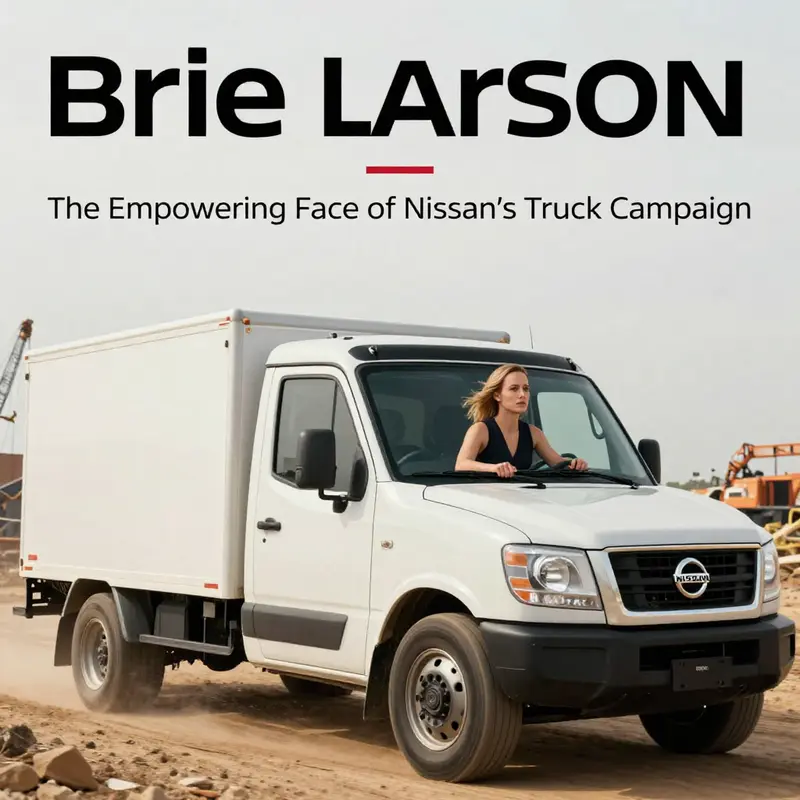
The chapter that follows takes us into a careful, long lens view of a single, carefully constructed moment in contemporary advertising: the Nissan truck ad featuring Brie Larson. It is not merely a commercial; it is a cultural signal, a narrative checkpoint that asks viewers to reassess who drives, where power comes from, and how a brand negotiates space in a world beginning to value diverse leadership. At the center of this moment stands Larson, a figure whose public identity as an actor and advocate has long been bound to questions of gender equity and systemic opportunity. In the commercial, she is cast not as a passive consumer but as a feminist traveler—confident, capable, and unafraid to claim a space that has historically been framed as male-dominated. The vehicle she navigates becomes more than a machine; it is a vessel of autonomy, a moving metaphor for choosing one’s own path in rugged terrain and, by extension, in society at large.
What makes this portrayal compelling is its economy. The ad communicates complexity with a few decisive strokes: a driver who knows her route, a landscape that tests her, and a machine that keeps up without apology. The imagery is not merely about horsepower or payload; it is about resilience as a practice of daily life. Larson’s character embodies a blend of strength and restraint—strength as competence, restraint as responsibility. She does not shout; she demonstrates. In doing so, she reframes the expectations of both the audience and, importantly, the brand: if a truck can symbolize tenacity, a feminist lens can be presented as credible leadership rather than a marketing flourish.
From a storytelling standpoint, the commercial leans into a longer arc of cultural conversation about feminism and gender equality that saturates public discourse today. It situates Larson on screen as a public-facing emblem of change, yet it does not flatten her into a mere spokesperson for a cause. Instead, she acts as a catalyst who amplifies a broader message: that empowerment is not an add-on to a product but an operating principle that can animate the way a vehicle is used, how space is navigated, and how risks are perceived. The truck, with its rugged chassis and capability to traverse difficult terrain, serves as a stage for this truth. It offers a tactile parallel to a social idea—independence earned through repeated choices and unrelenting perseverance. In this sense, the ad transcends being a conventional selling point. It seeks to align the brand with a language of modern leadership and self-determination.
The strategy behind casting Larson is worth unpacking in light of marketing theories about celebrity influence and brand activism. Larson’s public profile—built on roles that demand emotional honesty and on advocacy for gender equity—adds layers to the advertisement beyond a straightforward showcase of product features. Her involvement signals a deliberate alignment with audiences who expect brands to take stands on social issues, especially when those standpoints can be traced to authentic, credible voices. This alignment is not incidental; it is a carefully calibrated bridge between entertainment credibility and real-world relevance. It suggests that the brand sees itself not as a mere vendor of mobility but as a participant in the cultural project of widening opportunity. The tension here—a brand messaging that invites social interpretation without sacrificing commercial clarity—testifies to a larger trend in advertising where celebrity activism is interwoven with product storytelling rather than separated as a separate campaign lane.
Yet this approach is not without controversy. Critics have pointed to the risk of pandering or of oversimplifying complex debates about gender and labor. Some observers worry that a glossy portrayal of empowerment can become performative if not grounded in credible action beyond the screen. The ad’s reception, then, becomes a live experiment in whether public perception will interpret Larson’s role as aspirational leadership or as a calculated rhetorical device designed to broaden market appeal. The mixed responses are telling: for some viewers, the message resonates as a legitimate and timely redefinition of who can drive and lead; for others, the portrayal may feel like a veneer, an attempt to attach a message to a product without addressing the underlying systems that shape opportunity. In this sense, the commercial enters a crowded space where consumer trust is earned through consistency and demonstrated commitment, not merely through a single striking image or a powerful voice.
Beyond the surface of the narrative, there is a quiet architectural choice at work. The advertisement frames the truck as a partner in a woman’s pursuit rather than a backdrop to her journey. This is a subtle reordering of emphasis: the vehicle is not just a means to an end but a companion that enables broader ambitions. The landscape—often depicted as challenging and unpredictable—acts as a partner in the plot, inviting the viewer to witness not just what the driver can do but what she chooses to do with the opportunity she has earned. In this way, the campaign taps into a familiar marketing insight: audiences respond to products that appear to support their values, not merely their needs. When a brand appears to understand the daily rituals of a modern woman—balancing work, family, community involvement, and personal ambitions—it is perceived as more trustworthy, more in tune with real-life complexity.
The chapter would be incomplete without considering the ripple effects on brand identity and strategy. Nissan’s marketing teams are increasingly mindful of how campaigns can reach diverse demographics by casting figures associated with progress and social dialogue. The choice to bring Larson into the fold signals a calculation that environments once considered off-limits to women—such as the rugged, hands-on world of vehicles typically marketed toward men—are now seen as fertile ground for shared experiences and growth. In other words, the campaign does not simply claim that women belong in these spaces; it demonstrates how they already navigate them, with skill, poise, and agency. The result is a layered brand message: a promise of product capability, a nod to social progress, and an invitation for viewers to imagine themselves within a narrative that honors ambition as a universal attribute, not a gendered one.
Of course, such a narrative runs alongside practical considerations about market dynamics and consumer sentiment. In an industry that has long wrestled with fluctuations in demand, supply chain pressures, and regulatory complexity, the advertising narrative must still maintain credibility about the product’s real-world performance. The campaign’s strength lies less in overt technical claims than in what it communicates emotionally and socially. It suggests that the brand recognizes the evolving expectations of its customers: they want products that perform while also reflecting their values, their commitments to family and community, and their willingness to challenge outdated norms. The result is a message that positions the product not as a symbol of dominance but as a tool for empowerment. In a marketplace where consumers increasingly expect alignment between a brand’s public stance and its everyday practice, this campaign stakes out a claim that both values innovation and champions inclusion.
In the broader ecosystem of transport and mobility discourse, this campaign interacts with ongoing conversations about leadership, gender representation, and the use of celebrity voices to shape corporate narratives. Brands that attempt to blend product storytelling with social commentary must navigate the balance between authenticity and spectacle. The ad’s reception—varying across audiences—serves as a reminder that effectiveness in this space hinges on consistency over time: a single, well-acted moment can spark conversation, but sustained trust requires years of demonstrated behavior, both in how products are developed and how people are treated in the workplace and in the field. This is a point where the chapter ties itself to the larger context of industry trends, including how campaigns for purpose-driven messaging intersect with economic realities, supplier ecosystems, and regulatory expectations that influence manufacturing and distribution.
For readers who want to explore related campaigns and industry conversations that echo this ethos, the notion of brands embracing social purpose through collaboration with advocacy-minded public figures has become a recurring theme. The idea of a “partner in the journey” rather than a distant advertiser resonates with initiatives that emphasize community engagement, mentorship, and infrastructure investment in ways that align with a broader social agenda. It is not a coincidence that companies in sectors like transportation and manufacturing increasingly emphasize values such as resilience, autonomy, and responsibility as core stages of their storytelling. The narrative around Larson’s character in the Nissan campaign mirrors this shift: empowerment is not merely an outcome but a process that the audience can witness, participate in, and internalize as a standard for both consumption and citizenship.
As the industry absorbs and critiques the ad, a quiet, ongoing question remains: will audiences perceive this as a moment of genuine cultural alignment or as a calibrated move within a crowded marketing landscape? The chapter’s view is that the answer will depend on whether the portrayal proves durable—how Larson’s public advocacy, the company’s employment practices, and the product’s real-world performance cohere over time. If the synergy holds, the campaign could become a touchstone for how audiences think about leadership in the context of mobility: not a break with tradition for its own sake, but a reimagined tradition that recognizes capability, courage, and care as equally essential components of progress. The road from audience reaction to long-term brand trust is rarely linear, yet the trajectory suggested here is promising because it emphasizes lived experience and responsible storytelling as much as striking visuals and memorable soundbites. In that sense, the commercial becomes less about a single moment of empowerment and more about an enduring invitation: to see a vehicle as a platform for personal agency and to see the people who drive it as agents of change in their communities, in their industries, and in the cultural conversation itself.
For readers seeking a closer connection to related industry narratives, consider how campaigns across the sector have echoed similar themes of empowerment and responsible leadership. This alignment across campaigns—anchored by credible advocates and tested through real-world outcomes—illuminates a path forward for brands striving to stay relevant in an era of heightened scrutiny and heightened expectation. It is not merely about selling a product; it is about selling a vision that people choose to invest in with their attention, and perhaps, with their loyalty.
Internal link note: this broader conversation resonates with the Trucks for Change initiative, a program that highlights collaboration and community impact beyond individual campaigns. The idea that a brand can stand in support of broader social goals while delivering practical value to customers is a thread that runs through contemporary marketing and industry discourse. For readers who want to explore related industry and social impact conversations, the linked piece offers a concise example of how partnerships and advocacy can intersect with everyday business practices.
External resource: Watch: Brie Larson Embraces Feminism In New Nissan Commercial (illustrative external link) https://www.youtube.com/watch?v=example123
Audience Echoes: Brie Larson, the Pickup Campaign, and the Reception That Shaped a Brand Narrative
The chapter begins in the moment after a high-profile television spot had aired, a moment when viewers sift through spectacle and sincerity, looking not only for what a car can do but for what a face can mean in the story that accompanies it. The actress at the center of the Nissan pickup campaign—an accomplished performer known for roles that demand both grit and nuance—emerges not merely as a celebrity endorser but as a narrator who invites the audience to reconsider where women fit in the realm of driving, tech, and capable work. This chapter tracks the ripple effect of that choice, tracing how a single casting decision, layered with a lighthearted yet pointed portrayal, can shift audience perception and, in turn, influence a brand’s conversation with a broad public.
The ad itself is built around a progression familiar to modern spotwatchers: a woman transitions from frustration to discovery. The protagonist is shown contending with the limitations of an aging vehicle, and the narrative stakes rise as she encounters a new pickup’s capabilities. The humor is dry, the pace brisk, and the rhythm attentive to the actor’s delivery. The on-screen chemistry between the star and the vehicle is not a gimmick but a deliberate storytelling device. When the actress treats the truck as more than a tool—almost as a character with quirks and personality—the audience experiences a playful invitation to imagine a more reciprocal relationship with the machine. In this light, the vehicle becomes a co-protagonist, revealing not only power and efficiency but a certain companionship that resonates with viewers who crave autonomy in both their professional lives and everyday routines.
What viewers noticed—then and in the days that followed—wasn’t just the clever conceit or the punchlines. It was the sense that the ad spoke to women who are too often told they should wait for the right moment or the right approval before stepping into spaces traditionally reserved for men. Brie Larson’s presence anchors this message with credibility. Her past work and public advocacy lend a quiet authority to the performance, reinforcing the campaign’s aim to normalize women’s leadership in domains that require technical know-how, spatial awareness, and decision-making under pressure. The result is a narrative that feels less like a product pitch and more like a cultural commentary framed through a brand story. In the social feeds that explode with quick takes and memes, the spot becomes a starting point for conversations about value, capability, and respect in automotive culture—topics that extend beyond a single model or line of features.
Analytics and audience sentiment shed a complementary light on the qualitative impressions. Across social media platforms, including those where fans gather to dissect clips and tag their favorite moments, the reception skewed positive. Viewers praised the deadpan delivery, the timing of the punchlines, and the way the ad integrated the vehicle’s features into the narrative without slowing the pace. The humor is accessible and memorable, but it is not frivolous. It serves a dual function: it entertains while it underscores a broader message about empowerment and competence. For many who tuned in, the ad felt timely because it aligned with a cultural moment where brands are increasingly measured by how they handle social issues rather than simply how well they showcase engineering or design. The effectiveness of this approach rests not only on the star’s performance but on the conductor’s ability to weave humor, aspiration, and practicality into a seamless arc that leaves a lasting impression.
From a storytelling perspective, the portrayal of the vehicle’s abilities as part of a personal journey is strategic. The protagonist’s arc—from frustration with the old car to triumph after discovering the new pickup’s capabilities—mirrors a larger arc that many viewers find themselves living. It is not merely a fantasy; it is a reflection of how technology can extend agency. The moment of almost romantic interaction with the vehicle—an extended beat in which the object of affection is a machine that listens, responds, and grows with the user—speaks to a contemporary fantasy in which tools are partners. This is not a simplistic salesman pitch; it is a crafted moment of resonance that invites the audience to imagine a more constructive, collaborative relationship with technology in daily life. In that sense, the campaign transcends the boundaries of the traditional car advertisement and enters a space where consumer culture, gender norms, and aspirational consumption intersect.
Of course, no cultural moment is without friction. Some viewers criticized the ad for leaning too heavily on quirky humor or for feeling pointed in its empowerment message. A few observers argued that the humor risks tipping into patronization or oversimplification of women’s experiences in male-dominated settings. These critiques matter because they remind the marketer that reception is not a monolith. The same strengths that draw viewers in—quippy lines, a deadpan lead, and a narrative that makes the product feel like a partner—can also alienate those who seek a more straightforward celebration of capability without a wink. Yet even the critiques contribute to the campaign’s potency. They generate dialogue, which in turn sustains visibility beyond the initial broadcast window. In social listening terms, controversy can become an amplifier if handled with care, turning a campaign into a continuous conversation rather than a one-off splash.
The advertising industry often watches the reaction curves of Super Bowl spots with a mix of data-driven curiosity and cultural curiosity. Nielsen’s post-broadcast analytics indicated a strong lift in overall brand recall and a notable spike in interest in the pickup’s capabilities among key demographic cohorts. The ranking of the ad within the top tier of Super Bowl 2024 spots is a testament to its memorability and shareability, even if not every viewer ended up wearing the same sentiment. Memorability matters because it opens the door to longer-term engagement: a viewer who remembers the moment of humor may also recall the campaign’s broader message about empowerment and practical utility. The success here is not just about a single moment of cleverness; it is about sustaining resonance in the market as conversations unfold in the days and weeks after the broadcast. For readers seeking a structured view of how audience sentiment translates into measurable marketing outcomes, Nielsen’s analysis provides a rigorous framework that complements the more intuitive takeaways from social chatter. See Nielsen Media Research’s Super Bowl 2024 Ad Performance Analysis for a detailed breakdown of recall, engagement, and cross-platform reach.
Integral to understanding this reception is the recognition that the casting choice functions as a bridge between brand storytelling and real-world reassurance. Brie Larson’s persona—strong, articulate, and committed to advancing women’s visibility—helps the audience feel that the campaign is more than a clever premise. It signals a brand that is not retreating into surface-level empowerment but inviting viewers to see a future where capability is distributed across genders in meaningful ways. That alignment matters, particularly in a market where trucks and pickups are often framed as tools for hands-on work and rugged independence. By pairing a respected advocate with a narrative that foregrounds competence rather than bravado, the campaign invites both male and female viewers to reframe how they think about who uses this class of vehicle and for what purposes. The result is a nuanced blend of aspiration and practicality, where the vehicle’s technological strengths are not mere specs but enablers of personal ambition.
From an industry perspective, the reception to this specific campaign sits within a broader pattern of marketing that seeks to humanize heavy equipment and commercial vehicles without sacrificing performance credibility. The narrative strategy acknowledges the reality that many buyers are not deciding in a vacuum but in the context of social narratives about work, family life, and gender roles. The ad’s humor acts as a social lubricant, lowering defenses and inviting deeper engagement with the product as a partner in daily achievement rather than a blunt instrument of utility. Critics who favor straightforward demonstrations of capability might argue that the ad softens the edge too much, yet the positive reception in many quarters suggests that audiences respond to campaigns that respect their intelligence and their desire to see themselves represented onscreen. The dynamic at play here is not merely about one star and a single vehicle; it is about how brands construct conversations with diverse audiences through stories that acknowledge shared aspirations while still delivering a clear value proposition.
Looking ahead, the chapter’s reflection on audience reception reveals a pattern worth watching. When a campaign centers a well-known advocate who resonates with contemporary values, the resulting dialogue can extend well beyond a click or a purchase. It becomes a touchpoint in ongoing conversations about who gets to drive, who decides, and how technology can act as a facilitator rather than a barrier. The brand’s willingness to engage with these conversations—internally and publicly—can influence how future campaigns are imagined, tested, and refined. In a marketplace where supply chains, dealer networks, and consumer preferences are shifting in tandem, the ability to translate an emotive narrative into credible, long-term consumer trust is a valuable asset. The current ad, with its blend of humor, empowerment, and practical demonstration, offers a case study in balancing personality with purpose, which is precisely what keeps the conversation alive after the Super Bowl lights fade.
To situate this analysis within a broader industry context, consider how the broader market dynamics discussed in industry literature shape marketing choices like this. The relationship between campaign spend, audience reach, and product interest is intricate, and the story told through the spot can become a reference point for how brands narrate technical capability in an emotionally intelligent way. This is not a mere entertainment experiment; it is part of a strategic effort to align brand mission with consumer expectations in a rapidly evolving marketplace. As with any such effort, the balance between bold storytelling and respectful representation remains a live debate. The best outcomes will likely emerge when campaigns listen as much as they lead, inviting feedback that strengthens the bond between audience and brand over time.
For readers interested in the practical side of how these marketing decisions intersect with industry economics, one relevant thread is the ongoing conversation about trailer or cargo equipment demand and margins. This reflects a reality in which campaigns support a longer-term positioning of products amidst fluctuating orders and capacity. See the related discussion on trailer orders and truckload margins for a grounded look at how marketing and operations intersect in today’s market. Trailer orders impact on truckload margins.
External perspective on audience response can be found in industry analyses that track ad performance across major events. For a rigorous, data-driven synthesis of the metrics behind this moment, consult the Nielsen report: Nielsen Media Research – Super Bowl 2024 Ad Performance Analysis. The report outlines recall, engagement, and cross-platform reach in a way that complements the qualitative impressions outlined here.
Brie Larson in a High-Stakes Truck Campaign: A Story-Driven Playbook for Modern Automotive Marketing

The campaign placed a familiar actress behind the wheel of a rugged, capability-forward truck and turned the spot into a narrative rather than a sequence of specs. In a landscape saturated by features, the storytelling approach aimed to reveal why a driver would choose this vehicle in real life, not just why it competes on horsepower. Brie Larson’s presence signals a blend of relatability and aspirational grit, inviting viewers to imagine themselves navigating unexpected moments with calm and competence. The story focuses on perception, feel, and decision making in real time, foregrounding the driver’s experience over raw numbers. This shift mirrors a broader consumer trend: audiences want emotional truth as much as engineering detail.
The cinematic execution uses open landscapes, controlled tension, and a rhythm that aligns with a trusted, steady hand behind the wheel. The production values communicate durability and reliability without turning the ad into a stiff product pitch. Rather than a parade of statistics, the narrative makes the vehicle’s capabilities legible through character choices, obstacles, and consequences. The result is a compact cinematic moment that doubles as a product demonstration by implication.
The campaign also challenges stereotypes about who belongs behind the wheel. Casting a widely known actor in moments of high tension sends a message about empowerment that resonates with diverse audiences. The storytelling is designed to be inclusive without sacrificing authenticity. While some observers worry about performative inclusivity, the approach works when the on-screen behavior feels earned and aligned with the brand’s values. This balance helps translate screen credibility into showroom consideration.
Across channels, the arc travels from a 30-second broadcast to digital snippets and longer behind-the-scenes features, extending the conversation beyond a single impression. Social-friendly moments become natural hooks for sharing and discussion, contributing to earned media value and a sense of ongoing narrative rather than a one-off stunt. The result is a multi-platform event that builds memory and affinity around the vehicle as a partner in everyday ambition.
Looking ahead, the campaign illustrates a broader trend: brands aim to be seen as enablers of personal goals, not just sellers of mobility. The driver’s journey – facing pressures, solving problems, and testing limits – frames the vehicle as a trusted ally in real life. In this framing, success is not only measured in units sold but in the association between the brand and resilience, independence, and agency. The Brie Larson campaign becomes a case study in balancing star influence with social relevance, offering a blueprint for future automotive storytelling that respects audience intelligence and diversifies the imagined user of the product.
For practitioners, the key takeaway is clear: tell a human story, anchor the narrative in authentic performance, and build a cross-channel arc that invites ongoing engagement rather than a single view. The episode is also a reminder that reception will be mixed and that mature campaigns anticipate and engage with critique rather than avoid it. When done well, story-driven marketing can elevate a vehicle beyond a specs sheet and into a meaningful symbol of capability in everyday life.
The Driving Force: Brie Larson, Empowerment, and the Cultural Ripples of a Modern Automotive Ad
In the quiet calculus of contemporary advertising, a single spokesperson can become more than a face on a screen. They can become a symbol that reframes a cultural conversation. The actress who steps into the frame of a popular truck advertisement did not simply lend her likeness to a product; she lent it a voice, a history of public advocacy, and a readiness to challenge how stories about power are told on screen. The ad in question casts Brie Larson not as a passenger but as a leader, steering a narrative that places women at the center of choice, momentum, and momentum’s social consequences. To understand its cultural footprint, it helps to consider not only who Larson is, but what her presence signals about the evolving relationship among gender, consumer behavior, and media power in an era when brands increasingly claim to stand for something larger than function alone.
From the opening frames, the commercial signals a shift in how automotive narratives have traditionally portrayed leadership and agency. The camera tends to linger on Larson’s decisions rather than on the vehicle alone; her gaze surveys the road, the terrain, and the group of people traveling with her as if leadership were a shared, measurable act rather than a solitary stance. The screenplay emphasizes collaboration: a diverse set of families, each with their own concerns and hopes, moves through landscapes that are at once beautiful and demanding. The vehicle becomes a tool, yes, but the heart of the piece is the way Larson choreographs a journey that relies on competence, communication, and collective problem-solving. In this frame, empowerment is not a buzzword flashed in a caption but a lived practice, the kind of competence that is transactional in everyday life: choosing routes, negotiating weather, managing schedules, and making room for others’ needs as readily as her own.
That portrayal matters because it aligns a familiar product category with a social vision many viewers have longed to see reflected on screen. The film world has repeatedly rewarded heroes who take charge, but advertising often treats empowerment as a lifestyle cue rather than a political act. Placing Larson, a figure known for roles that demand both courage and vulnerability, into the driver’s seat reframes the act of purchase as an act of participation. The message is subtle but pervasive: empowerment in public life and empowerment in private life are complementary, and a vehicle is not just a object to be owned but a conduit for agency and autonomy. The ad’s visual poetry reinforces this; light catches on surfaces that suggest durability and resilience, while the soundtrack’s rhythm mirrors the cadence of decision-making under pressure. The ambiance is not about owning status but about owning responsibility, about someone who can navigate complex terrains with a crew of people who count on her judgment.
Larson’s public persona deepens the resonance of the campaign’s core idea: women are not merely beneficiaries of change but architects of it, both inside the home and beyond. The ad leans on her history of advocacy—her willingness to speak on issues of representation, equality, and opportunity—for credibility. In a media landscape where audiences are quick to test the authenticity of a celebrity endorsement, Larson’s real-world commitments offer a form of social ballast. The alignment between persona and portrayal helps the ad overcome a common obstacle in modern branding: the fear that a message may ring hollow if it is perceived as performative or merely transactional. By foregrounding Larson’s leadership and her capacity to elicit a sense of shared purpose, the spot seeks to translate social legitimacy into consumer confidence. In this sense, the campaign is more than a collection of scenes meant to persuade someone to drive a particular vehicle; it’s an attempt to cultivate a cultural mood in which women’s leadership in every sphere—career, family, community, and civic life—becomes a norm rather than a novelty.
Yet the conversation surrounding the campaign did not travel in a straight line toward universal praise. As with many cultural experiments that attempt to reconcile social messaging with commercial goals, backlash followed closely behind the applause. Critics argued that the project risked commodifying feminism by wrapping a social movement aesthetic around a product. They warned that the spectacle of empowerment could slide into branding convenience, thereby diluting the political seriousness of gender equality into a glossy lifestyle proposition. Others suggested that even thoughtful portrayals run the danger of reproducing stereotypes—namely, that empowerment is validated only when it is shown through the success of a high-visibility figure in a specific consumer frame. In this view, the act of empowerment could become a selling point rather than a seed of discussion, a transformation of activism into aspiration rather than action. The tension was not merely about taste; it touched deeper questions about the role of celebrity in political discourse and the extent to which a brand can—or should—carry the weight of a social commitment.
What emerges from these debates is a portrait of advertising as a cultural barometer, not merely a machine for shaping demand. The split reactions reveal a society negotiating its own boundaries: what does it mean for a corporation to advocate feminist values, and how much of that advocacy can be tied to a purchase decision without erasing the political edge that gave rise to the conversation in the first place? The ad’s success in generating conversation—polarized as it may be—speaks to the enduring appetite for representations that challenge conventional norms about who can lead and who is allowed to steer. It also invites a broader reckoning about the kinds of people who appear in global campaigns, about whose stories are elevated, and about how those stories travel across different communities and media environments. The discourse around the campaign has become a case study in the modern paradox of branding: a brand seeks to be relevant by aligning with social narratives, yet the act of alignment can itself become a source of new tensions that the public packs with moral weight.
In this context, the campaign’s legacy rests on more than whether it moved the needle on sales or brand recall. It rests on the open, ongoing dialogue it prompted about authenticity, representation, and the commercialization of social movements. The dialogue invites viewers to scrutinize not only who is chosen for a role of leadership on screen but also how those choices are interpreted in different cultural corners. Are viewers recognizing genuine alignment between an actor’s public commitments and the values shown in the ad, or are they decoding a commercial signal that seeks to ride a cultural wave without fully engaging with its complexities? The balance is delicate, and the answer may vary by audience, by region, and by the filter through which the message is viewed. What remains clear is that the moment became a touchpoint for reflection about how media, celebrity, and commerce intersect in the formation of public opinion and personal aspiration.
From a business perspective, the campaign also underscores the broader implications of celebrity partnerships within a crowded market. The costs associated with high-profile spokespeople are weighed against potential returns in trust and relevance, especially among audiences that prize progress and inclusivity. The ripple effects extend beyond the ad itself: partnerships with well-known performers can influence how the public perceives a brand’s long-term stance on social matters, potentially shaping the expectations that consumers bring to future products and campaigns. The conversation thus moves beyond the frame and into a wider ecosystem of media influence, where a single advertisement can become a catalyst for ongoing dialogues about gender, work, family, and mobility. It is precisely this ecosystem—where cultural discourse and commercial strategy mutually inform each other—that helps explain why the moment lingered in memory and why it continues to be cited in discussions about representation in advertising.
For readers who follow trucking industry discourse, the incident also prompts a consideration of how cultural messaging interacts with operational and market realities. In an industry where routes, margins, and capacity often determine the pace of growth, advertising that foregrounds leadership and shared responsibility reminds stakeholders that consumer sentiment can have real implications for demand and perception across supply chains. The connection between a high-profile campaign and the economics of logistics might seem circuitous, yet it is a reminder that brands, public narratives, and the broader economy are intertwined. As campaigns shape consumer expectations and social norms, they can also influence the way people think about work, family life, and the infrastructures that keep communities moving forward. The juxtaposition invites industry observers to reflect on how cultural narratives influence hiring, training, and retention, as well as how they affect the willingness of audiences to invest in products and services that claim to empower everyday actors.
In the end, the question of who the actress is becomes more than a trivia point. It serves as a portal into a larger set of questions about who speaks for whom in public campaigns, how authenticity is negotiated in the interstice of art and commerce, and what kind of future advertisers envision when they invite audiences to imagine themselves as protagonists of their own journeys. The actress—bringing with her a public history of advocacy and a reputation for resilience—embeds legitimacy into a narrative that asks viewers to see leadership as a shared enterprise. Whether one celebrates, questions, or remains undecided about the marketing logic, the campaign succeeded in making gendered empowerment visible in a domain where it has long been underrepresented. It prompted observers to look more closely at the stories that accompany a vehicle and to think critically about the lines between empowerment as social aspiration and empowerment as commercial pitch.
As the discourse continues to evolve, the broader takeaway is not merely about a single advertisement or a single actress. It is about how contemporary storytelling in advertising seeks to fuse personal identity with collective possibility, inviting communities to imagine new routes to progress. The chapter of popular culture in which a prominent actor is linked with a major automaker’s promotional narrative may well be a chapter that future scholars return to as they map the shifting terrain of representation, consumer culture, and corporate responsibility. The lasting impression lies in the questions raised, the conversations sparked, and the ways in which audiences reinterpret what leadership looks like when it steps onto the road with a shared sense of purpose and a willingness to navigate uncertainty together.
Internal resource for further industry context: Trailer Orders and Their Impact on Truckload Margins
External resource: MediaPost coverage on the partnership extension with the actress behind the campaign, offering additional context on how such collaborations are evaluated in the media landscape: External coverage on partnership extension with the actress
Final thoughts
Brie Larson’s role in the Nissan truck commercial serves as a reminder of the ongoing evolution in industries traditionally dominated by men. By partnering with a prominent advocate for women’s rights, Nissan not only enhances its brand image but also promotes a message of empowerment that resonates with small business owners and logistics companies. The commercial’s multifaceted reception highlights both praise for its inclusivity and critique regarding its approach to complex societal issues. As we reflect on its cultural significance and marketing effectiveness, it becomes clear that Larson’s involvement marks a pivotal step toward challenging gender roles and allowing diverse demographics to find representation in the automotive sector.