
Laurel Coppock, as the face of the Toyota truck commercials, epitomizes the brand’s commitment to engaging audiences across various sectors. With a long-standing presence, her character embodies enthusiasm and trust, resonating profoundly with the target audience, which includes logistics and freight company owners, procurement teams in construction and mining industries, and small business owners managing delivery fleets. This article delves into each facet of Laurel’s role, highlighting her impact on Toyota’s advertising strategy and the evolution of the commercials. Through an in-depth exploration, we aim to illuminate her importance within the context of truck commercial actors, and by extension, the value proposition that resonates with our audience.
Behind the Wheel: Unpacking the Brand’s Truck Campaigns and the Laurel Coppock Question

The landscape of a brand’s truck campaign often reads like a study in identity. A vehicle, yes, but more importantly a persona that travels through screens and silence into the everyday imagination of the viewer. In this chapter we step into that landscape with a particular focus on the people who appear behind the wheel, delivering lines, landing a grin, or simply shaping the mood of a world where a pickup is a doorway to possibility. The broader question—who are the actors in the brand’s truck commercial—has a straightforward surface answer for some campaigns and a more intricate, layered one for others. On the surface, viewers may recognize a familiar face who seems to recur over time, appearing again and again as if to say, this is the voice of the brand on the road. In other periods, the screen becomes a revolving door, with different performers stepping into almost identical roles, giving the impression of a chorus rather than a single recurring protagonist. The truth, as research into specific campaigns reveals, often lies somewhere between a single household name and a rotating roster of talent that the brand assigns to different spots, sometimes across regions, sometimes across formats.
A useful starting point for this inquiry is the distinction between a long-running character and a serendipitous casting in a one-off advertisement. In many modern truck campaigns, a founder-like character—a receptionist, a salesman, a mechanic—turns into a recognizable figure who embodies the brand’s values. That figure might become synonymous with the company’s approach to reliability, humor, or durability, and audiences may come to anticipate the next appearance as if it were a familiar tune. Yet, when we look closely at the historical record, the line between enduring character and episodic casting can blur. A single campaign year may feature a well-known performer who returns for subsequent spots, while earlier installments rely on actors who disappear from the public consciousness as quickly as they appeared on screen. The pattern matters because it informs how audiences remember a brand’s truck campaigns and how researchers trace the careers of the people who contribute to those memories.
The chapter’s focal point centers on a widely discussed claim about one particular performer—an actress who became emblematic of a specific era in the brand’s advertising. The research raises an important caveat: the actor most closely associated with a well-known receptionist role in later years—an energetic presence behind the counter who greets customers with bright enthusiasm—does not appear in relation to the 2011 version of the brand’s truck commercial in the way some summaries suggest. In movie-like fashion, the marketing record shows that the 2011 spot, as listed in the major industry database, credits Tim Sabatino and Steve Young as the principal cast members. There is, in that entry, no confirmation of Laurel Coppock’s involvement in that particular advertisement. That detail matters, not as a curiosity, but as a reminder of how digital archives can diverge from public memory and how a single character’s popularity can eclipse the actual archival footprint of a given year’s production.
This is not a dismissal of Coppock’s ongoing contribution to the brand’s broader advertising ecosystem. In fact, the research points toward a long arc in which Coppock appears in a series of commercials beginning in 2012. Her character—an upbeat and insistent sales floor receptionist—emerges as a recognizable fixture in the brand’s advertising campaigns across a span of years. The distinction between her presence and the 2011 advert’s credited cast underscores a larger truth about how campaigns evolve. A character can become the brand’s most visible ambassador while still occupying only a portion of a campaign’s timeline, with other actors filling other roles or lending their energy to different scenes. Coppock’s later prominence does not rewrite the cast list of the earlier spot; instead, it expands the brand’s storytelling map by adding a familiar face that viewers can trust as a touchstone to the company’s values of enthusiasm, accessibility, and reliability.
From a marketing perspective, the question of who appears in a truck advertisement intersects with production logistics, regional casting, and the strategic timing of releases. In one period, the brand might lean on known television performers to attract broad audiences, while in another period it may seek fresh faces to convey a sense of newness or to align with a new product feature. The 2011 data, which point to Sabatino and Young, suggests a leaner core cast for that era, perhaps reflecting a transitional phase in the brand’s creative approach or the constraints of the production schedule. The absence of Coppock in that specific listing invites a careful distinction between what audiences perceive and what the official credits confirm. It also invites curiosity about the archival sources researchers consult. When the public memory leans toward a single, enduring figure, it can obscure the complexities of the production process, including the roles of casting directors, agency partners, and the creative team who bring a campaign to life.
To navigate these complexities, the chapter treats the cast as a living network rather than a static lineup. In the backstage view, casting is seldom a single moment of decision. It is a series of choices—who reads, who fits the tone, who can deliver lines with the right mix of humor and gravity, who can convey the brand’s promise in a way that translates across locales and media formats. This network model aligns with how modern campaigns often unfold: a core group of performers remains constant across several spots, while specialists come in for particular scenes that require a specific mood or attribute, such as a gravelly voice for a rugged display of capability, or a brisk, almost caffeinated energy for moments of brisk service on a sales floor. The result is a mosaic, not a mono portrait. In this mosaic, Coppock’s later recognition as a recurring figure does not erase the earlier mosaic’s edges; it adds new color and texture to the overall picture.
The narrative here also invites reflection on how viewers engage with the brand’s advertising beyond the immediate moment of a commercial. When a face becomes familiar, it can shape the audience’s expectations and even influence the perception of a product’s practicality and personality. Yet this perception is not a guarantee of consistent representation across every release. Audiences may encounter a familiar smile or a familiar tempo in a sales pitch, only to discover that the underlying cast has shifted. The dynamic mirrors a broader truth about media production: visibility on screen is not a simple tally of who appeared in which spot; it is a function of how campaigns are scheduled, how long the creative runs, and how the production companies and agencies chart their resources across multiple years.
In situating Coppock within this broader casting landscape, we can also consider the broader ecosystem that sustains these campaigns. The maintenance of a recognizable on-screen persona often depends on a sustained collaboration with the brand’s creative partners, including the advertising agency, the casting director, and the network of actors who may share the stage across various spots. When Coppock’s name does surface in connection with the brand’s factory-floor energy, it tends to come with a recognition that her portrayal struck a chord with audiences who value approachable, high-energy service. The variability in the 2011 cast record, however, serves as a reminder that the public face of a brand’s truck storytelling is an evolving tapestry. Actors enter and leave, while the brand’s message remains a throughline that travels on, like a truck down a familiar road but through different neighborhoods, with different passengers and different scenery.
For readers who want to explore industry context beyond the immediate cast lists, a related thread worth following is how trailer and fleet dynamics influence promotional timing and messaging. The production environment of truck advertising is deeply connected to broader market conditions, including capacity, demand cycles, and the rhythms of sales and service that keep fleets on the road. A practical way to situate this chapter within those broader currents is to consult industry analyses that discuss trailer orders, margins, and the impact of capital cycles on marketing bravura. See this discussion on how trailer orders shape truckload margins for a sense of the economic frame that can inform why certain campaign moves occur when they do. Trailer orders impact truckload margins.
The question of which actor appears when remains a fascinating puzzle not because it reshapes the brand’s identity in a single moment, but because it reveals how advertising creates a constellation of voices rather than a single loud speaker. Coppock’s later association with the brand demonstrates how a character can become a memorable vessel for a brand’s promise, even as the cast around that character shifts with each campaign cycle. The 2011 listing, with Sabatino and Young, reminds us that a single year’s credits can diverge from later cultural memory, and the reconciliation of those records helps us understand the interplay between archival accuracy and living memory. In this sense, the actor question becomes less about naming the one person who appeared in every scene and more about tracing the evolving cast as a reflection of the brand’s ongoing negotiation with its audience, its production partners, and the broader industry climate. The newsroom of the advertising world is never closed; it remains open to new faces, new energies, and new stories ready to be told on the road.
For researchers who want to pin down specific cast credits and verify the historical record, the archival instinct is essential. Cross-referencing industry databases with official brand archives and agency records can illuminate where a particular performer fits in a campaign’s history. In the meantime, Coppock’s trajectory offers a compelling case study in how a single persona can outgrow a specific commercial while continuing to shape public perception of the brand’s truck storytelling. The conversation about who truly belongs on screen in a given year is not merely about credit lines; it is about the enduring relationship between a brand and the people who help it speak to its audience with energy, warmth, and a sense of service.
External resource: IMDb provides cast listings and production details that help triangulate the historical record for the 2011 spot, illustrating how credits can diverge from later public memory. See the broader IMDb coverage for context and cross-reference as needed.
Jan at the Front Desk: Laurel Coppock’s Enduring Charisma in a Long-Running Pickup-Truck Campaign
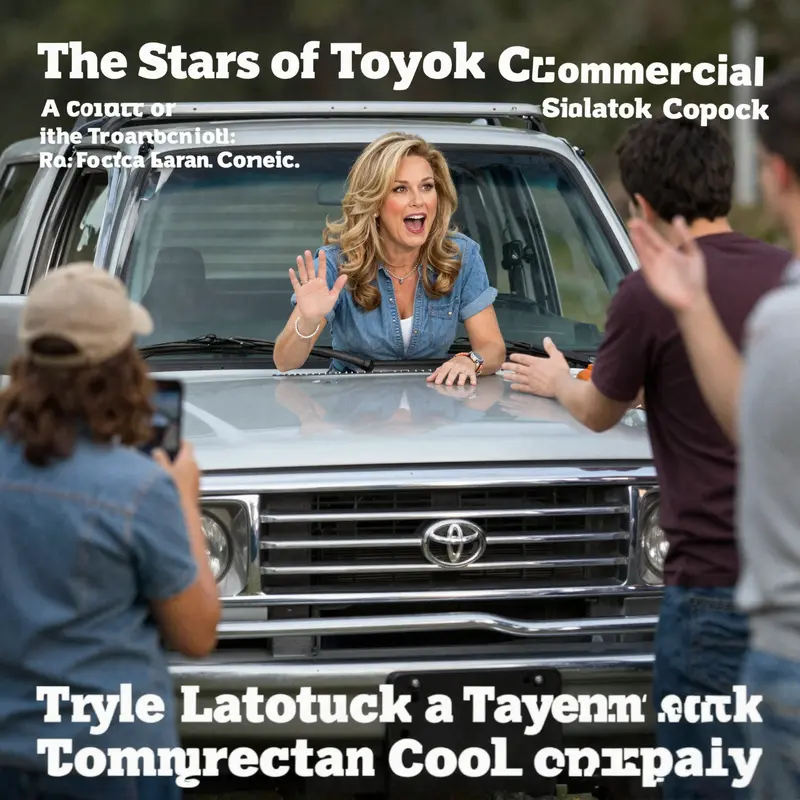
The moment a potential buyer steps into a showroom, a single character can shape the entire atmosphere of the visit. In a long-running pickup-truck campaign, that character is Jan, the enthusiastic receptionist whose bright energy sets the tone of every scene. Laurel Coppock embodies Jan with warmth, timing, and a cadence that makes a showroom feel like a welcome home rather than a hard sell. Casting a familiar face as the anchor of a campaign creates a bridge between brand storytelling and the human texture of a real dealership, where a friendly greeting can matter as much as a feature list.
Jan’s charm rests on a simple but effective formula. She radiates energy, yet that energy stays grounded in genuine attention to customers and colleagues. Her exchanges are not single gags but micro-stories that unfold against the rhythms of a busy showroom. She greets customers with a voice that signals curiosity, not pressure, and she threads humor through moments of miscommunication to defuse tension instead of escalating it.
Her dynamic with sales staff enriches the viewing experience. Jan is both a teammate and a welcoming ambassador for the dealership’s ethos, part of a small theater of everyday work life rather than a solo performance. The humor she brings is about easing decisions and highlighting comfort as much as capability, inviting viewers to imagine themselves in that space.
Over time, Jan becomes an iconic throughline across different ads and product updates. The consistency helps audiences trust the brand, because they feel they know Jan as a reliable touchstone. The facial energy and practical charm become a storytelling engine that supports the features without turning the showroom into a hard sell.
Production choices behind the commercials illuminate why a single character can carry so much weight. Coppock’s Jan offers continuity across changes in models and media formats, reinforcing a dependable brand voice across years. A returning performer lowers friction for viewers and makes information about features feel approachable rather than overwhelming.
There is also a productive tension between authenticity and performance. Coppock’s background as a performer with precise timing makes Jan feel spontaneous and genuine, even as the scenes are crafted for entertainment. This balance helps the audience connect emotionally while they consider a vehicle’s practicality and value.
In sum, Laurel Coppock’s portrayal of Jan stands as a case study in how a well-placed on-screen presence can anchor a brand’s storytelling across time. The character’s warmth, efficiency, and people-first approach model a form of advertising that invites engagement without nagging over slogans. As audiences grow to anticipate Jan’s perspective, the brand’s messaging about durability, comfort, and capability remains accessible, human, and memorable.
Relentless Roads, Relatable Faces: The Evolution of Toyota Truck Advertising with Laurel Coppock
The evolution of Toyota’s truck advertising reads like a map of how audiences have grown more discerning about who tells the brand’s story and what kind of story counts as trustworthy. Across decades, the company has anchored its campaigns in two enduring ideas: durability in the face of hard work and a humanity that makes hard work feel approachable. In this movement, one name stands out as a throughline: Laurel Coppock, whose portrayal of Jan, the energetic and ever-helpful receptionist on the dealership floor, became more than a running joke in a campaign. It became a touchstone for how viewers experience the brand’s promise. Coppock’s Jan is not just a friendly face; she is a heuristic for the brand’s philosophy—an accessible conduit through which the audience encounters competence, care, and candid humor. Her presence illustrates a broader shift in advertising: the move from hyper-polished abstractions to authentic, relatable storytelling that respects the viewer’s experience outside the showroom.
To understand this arc, it helps to begin with the older logic that predicated truck advertising on ruggedness and longevity. A vintage broadcast from the early 1990s—though often discussed in retrospective takes—invoked an image of work, grit, and enduring performance. The ad’s most lasting impression, as viewers remember it in later decades, was not a list of specs but a narrative of trust earned through endurance. The appeal was simple and powerful: the product stood up to the most demanding conditions, and that reliability translated into the buyer’s confidence to take on the next task, the next job, the next mile. It is the DNA of Toyota’s truck campaigns—designing a bond between user and vehicle that survives the rough edges of labor and weather alike. This foundational emphasis on trust would quietly inform every later campaign, even as the face of the brand evolved.
By the time Coppock stepped into the frame, the brand was balancing that history with a new demand from audiences: authenticity. The early- and mid-2010s saw brands moving away from glossy, hero-shot creative toward storytelling that felt earned and familiar. Coppock’s Jan fit neatly into that transition. She is not a distant spokesperson delivering a hard sell; she’s a real person on a real floor, helping customers navigate choices while signaling that the brand values service, reliability, and human connection as much as horsepower or payload capacity. The method is subtle but potent: a persona that embodies optimism without quick punchlines, competence without swagger, and humor without distraction. It’s a formula that invites viewers to see themselves in the moment—someone who would rely on a trusted truck to get through a tough day, without needing to perform or pretend.
Throughout this period, the brand’s messaging kept its eyes on two constants even as its tactics shifted. The first constant is dependability—the long-standing assurance that the vehicle lineup can be trusted to perform when it matters most. The second is approachability—the idea that owning or choosing the truck is not an ordeal reserved for experts but a practical, everyday decision made with clarity and a touch of humor. Coppock’s Jan personified this blend. She wasn’t merely selling a product; she was modeling a relationship between customer and brand built on clear information, patient guidance, and a shared sense that work matters and is worth supporting.
The structural shift in Toyota’s approach over time mirrors broader changes in the advertising ecosystem. In the pre-digital era, a single campaign could saturate a relatively narrow space of broadcast time, with viewers receiving the message in a fixed sequence. As digital platforms expanded, the brand began to tell stories across formats, lengths, and tones. The result was not a replacement of the old truth but an enrichment of it: the same claim—reliability that endures under pressure—could be dramatized in a short social clip, explored across a longer broadcast spot, or conveyed through a candid behind-the-scenes moment that highlighted real dealership life. Coppock’s Jan proved uniquely adaptable to this range. On screen she could anchor a broad commercial arc, but she could also become a mini-narrative through line in online content where viewers’ attention spans skew toward bite-sized, authentic moments.
This shift toward authentic storytelling matters because it mirrors changes in how people actually shop for trucks and trucks’ owners imagine themselves using them. Modern buyers are more likely to trust a brand that demonstrates competence through ordinary, relatable situations—where a receptionist’s cheerful energy is not a gimmick but a signal that the company values people as much as products. Coppock’s sustained presence helped normalize the idea that a company’s most persuasive asset is its people: the staff who greet customers, explain options, and model professional yet approachable behavior. In this sense, Jan is not a marketing trick but a living proof of the brand’s promise. The longevity of her character, which first appeared years ago, has reinforced a sense of continuity that invites loyalty across generations of buyers and drivers, the new cloud-based user who spends time researching on a tablet and the longtime fleet operator who reads industry briefs on a commute home.
Within the broader narrative, the trucking industry’s own evolution—from simple, rugged capability to a more nuanced conversation about efficiency, safety features, and total cost of ownership—finds a companion in the brand’s evolving storytelling. The campaigns subtly acknowledge that buyers weigh many factors, including maintenance support, service options, and the ongoing relationship with their dealer network. By presenting a trusted, familiar on-site helper in the showroom and in the screen, the brand projects a sense of steadiness. It is as if every ad is an invitation to consider how dependable the everyday can be when backed by the discipline of a company that has spent decades refining its approach to reliability and human connection. The result is a campaign ecosystem in which Coppock’s Jan becomes a quiet, consistent thread through the fabric of advertising history, one that remains relevant even as formats and audience expectations transform around it.
The narrative also reflects a broader industry truth: successful advertising at scale benefits from consistency anchored in evolving relevance. Toyota’s trucks are frequently depicted as capable partners in demanding work, but the campaigns increasingly show those partners in everyday scenarios—dropping a child off at school, helping a neighbor with a repair, or assisting a friend on a weekend project. This dual focus—uncompromising performance in the field and everyday usefulness off it—elevates the idea that durability is not only about endurance under load but about reliability as a daily enabler of life’s activities. Coppock’s character, with her signature warmth and candid energy, becomes the bridge that links the two realms. She makes the decision to buy feel less like a leap of faith and more like a well-informed choice grounded in real experience with a brand that has spent decades honoring that trust.
As the campaigns moved into the digital age, the brand also learned to tell stories that fit a wider array of channels without losing their core voice. Short-form videos on streaming platforms and social feeds demand a tone that is quick, clear, and magnetically human. Longer-form pieces still reward viewers with depth, but they must earn attention in a crowded feed first. Coppock’s Jan offers a model for both: she can be a character who anchors a concise spot with a confident, upbeat beat, or she can nap the narrative’s pace in a longer piece that meanders through a day in the life at a busy dealership. In every iteration, the emotional payoff rests on trust—the feeling that the audience has access to someone who speaks plainly, listens, and follows through. The campaign’s evolution shows a brand not abandoning its past but allowing it to inform new forms of communication, ensuring that the core value proposition remains legible across times and platforms.
This continuity and adaptability are what keep the brand’s truck advertising relevant in a landscape crowded with competing messages about power, luxury, and speed. Coppock’s Jan does not require an elaborate backstory to stay persuasive; her reliability and warmth are enough to sustain interest. Yet the campaigns do expand the horizon by threading in contemporary social cues—humor that respects the viewer’s competence, inclusive casting that broadens representation, and a sense that the company is listening to the road as much as it is talking about it. The evolution, then, is not a departure from the old promise but an expansion of it: an ever-wider, more inclusive yet still practical conversation about what it means to own and operate a truck in today’s world.
To see how far this approach can stretch, consider how the industry itself has adjusted to global and cross-border realities. Astraightforward message about reliability can travel farther, but it also has to contend with different regulatory and cultural contexts. The campaign’s ability to stay consistent while adapting to new markets speaks to a larger principle: brands earn trust not through flashy spectacle alone but through a steady, credible presence that viewers come to anticipate. Coppock’s role embodies that cadence. She remains recognizable, a reassuring constant in a landscape where change is constant. Her presence invites audiences to lean into the brand’s story with confidence, and that invitation is what sustains the campaign’s relevance across time, geography, and media.
For readers curious about how these shifts align with broader market movements, the conversation is not just about creative decisions but about the strategic choices that underwrite them. The decision to maintain a familiar face while expanding the storytelling toolkit reflects an understanding that reliability is a lived experience. It’s about how a company speaks to its customers when a screen is not present, when a dealer’s doors are open, or when a buyer is weighing the true cost of ownership against the lure of performance. In that frame, Coppock’s Jan helps remind audiences that the brand’s promise endures precisely because it respects the complexity of real life—the unpredictable weather, the unplanned tasks, and the steady rhythm of daily work that can still feel heroic when supported by a trustworthy partner. The evolution is not merely a chronicle of ads but a narrative about how a brand builds and preserves trust through people, through stories, and through a consistent commitment to helping customers get the job done.
Internal linking note: the industry landscape you see reflected in these campaigns is also shaped by shifts in strategy across the broader trucking and manufacturing ecosystem. For a deeper look at how producers adapt their messaging in the face of market pressures, see this overview of how trailer markets drive strategic changes in communications and campaigns: Trailer market crisis: manufacturers adapt strategies.
External resource: to glimpse the origin of the rugged, enduring narrative that informs these modern spots, watch a vintage advertisement from the early days of this advertising tradition on TikTok. It captures the spirit that later campaigns built upon: a promise of reliability that endures through time and trial. https://www.tiktok.com/@oldcommercials/video/7185643210987542530
null
null
Behind the Wheel and Behind the Camera: Laurel Coppock and the Craft of Truck Advertising
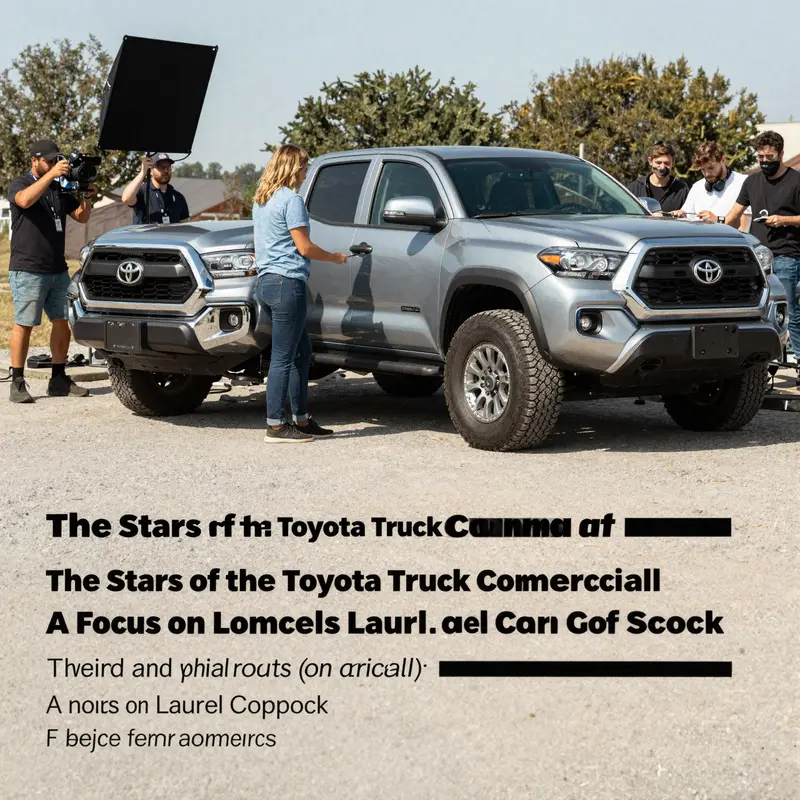
The most enduring campaigns in the automaker’s truck advertising canon hinge on a quiet truth: people connect with real moments more than polished pitches. In the middle of those moments sits a single recurring presence, a person whose face has become a kind of litmus test for authenticity. Laurel Coppock, widely known for embodying Jan—the upbeat, ever-energized receptionist on the showroom floor—has anchored this approach for years. Her character is not just a punchline or a friendly face; she is a through-line that ties a mosaic of stories together. Since 2012, Coppock’s Jan has shown up in a long-running sequence of commercials that balance humor with heart, turning everyday scenes into portraits of resilience, humor, and shared effort. The power of these spots lies less in a hard sell than in a felt sense of belonging—an atmosphere Coppock helps cultivate through both performance and the broader production choices that frame each narrative.\n\nWhat makes Coppock’s work so revealing is how it sits at the intersection of acting, directing, and production philosophy. She does not merely act in a script; she helps embody a civilization of moments—the casual shrug after a long day, the quick wink at a friend in the audience, the way a family leans into a shared journey. In this sense, Coppock’s role stretches beyond the camera. She functions as a bridge between the audience and the world the brand is trying to evoke. Her work as a creative director and producer on these campaigns endows every frame with a particular rhythm: a blend of empathy, specificity, and a respect for ordinary triumphs. The voice of Jan is not a voiceover; it is a living presence that invites viewers to lean in and invest in the story, not merely the product.\n\nThe emphasis on authenticity runs like a compass through the production process. Rather than stacking a set with studio-perfect performances, Coppock and her collaborators chase realness. They scout locations that resemble the places where real people live and work, seek out communities that can offer a texture of lived experience, and engage with individuals whose lives are already a story worth telling. This is not about staging a moment; it is about catching a moment that could have happened yesterday, or might happen tomorrow, with all the imperfect beauty that entails. The result is a slate of commercials that feel less like advertisements and more like windows into real lives under a shared horizon. In one widely praised campaign, the narrative centers on a single mother navigating long-distance travel with her children. Coppock’s team worked intimately with the family to ensure the portrayal remained truthful and respectful, a choice that elevated the campaign from cute to consequential. Viewers respond not to clever dialogue alone but to the sense that the people on screen are living, breathing humans who deserve to be seen with honesty and care.\n\nFrom the vantage point of craft, the pipeline that carries these stories from script to screen is as carefully choreographed as the performances themselves. The technical execution blends high-resolution cinematography with sound design that feels tactile and intimate. The color palette is deliberate, rarely pushing into the glossy, but always leaning toward warmth and realism. The production teams frequently collaborate with acclaimed directors, cinematographers, and composers who understand how to shape mood without overshadowing the human core of the scene. In the edit suite, every cut is weighed for its contribution to emotional momentum. Color grading is used to preserve a film-like texture rather than a glossy advertisement polish, ensuring that a moment of laughter, fatigue, or relief lands with the same weight as a product feature. These layers of craftsmanship—camera movement that mirrors a family’s rhythm, ambient sound that grounds the scene in a specific place, and a musical score that lingers just long enough to feel earned—together create a holistic experience. The aim is not to sell a truck so much as to offer a sense of shared possibility, a narrative space where viewers can imagine themselves in the scene without fear of being sold to.\n\nWithin this ecosystem, Coppock’s dual role as both creative director and producer becomes essential. Her leadership style blends listening with decisiveness, empathy with discipline. She curates the conversations that determine which real-life moments are worth translating into a spot and how those moments should unfold on screen. Her insistence on authenticity—on letting real people tell real stories—sometimes requires difficult conversations and careful negotiating with contractors, families, and local communities. Yet the payoff is clear in the end: a bank of commercials that feels earned, not manufactured, and that sustains audience trust across campaigns. The nuance she brings to the role is not merely about the performance but about guiding the entire production machine toward a consistent voice. In other words, Coppock helps define not just what is shown, but how it feels to be shown.\n\nThe broader significance of Coppock’s work becomes clearer when seen in the context of the brand’s advertising trajectory. The face of Jan offers a constant point of reference in a campaign landscape that can be prone to trend-driven shifts. By anchoring the storytelling in humane, recognizable moments, the brand communicates a steadiness that resonates with viewers who seek reliability in their own journeys. Yet this consistency does not equate to stasis. The authentic frame is continually refreshed through new locations, new families, and new everyday heroism that still remains true to the living spirit of the campaigns. Coppock’s touch—infusing scenes with warmth, humor, and a quiet sense of determination—reaffirms that the most persuasive advertisements often resemble conversations with people we already know rather than grand declarations about a product. In this sense, the artistry behind these truck spots is less about spectacle and more about the careful orchestration of ordinary triumphs, the kind that shows up in kitchens after a long drive, in farm fields that wake up before dawn, or in quiet living rooms where a veteran returns home to a familiar welcome.\n\nAs the industry continues to explore the boundaries between entertainment and advertising, Coppock’s work offers a blueprint for sustaining authenticity in a crowded market. The choice to foreground real-life experiences over scripted perfection speaks to a broader consumer appetite for honesty and connection. The camera’s gaze becomes a citizen in the room, inviting viewers to witness not just a moment of purchase, but a moment of lived experience. Coppock’s fidelity to that ideal—her ability to translate a lived narrative into a kinetic, cinematic experience—demonstrates how a single face can symbolize a brand’s values while still leaving space for the messy, unpredictable beauty of real life. In this way, she helps the audience move beyond the surface of a commercial and into the texture of a story about everyday resilience.\n\nFor readers who want to explore the wider industry context that informs this type of production, a broader look at the regulatory and technical environment offers helpful ballast. In particular, the evolving landscape of emissions considerations shapes how automakers approach storytelling about capability, responsibility, and the future of mobility. You can read more about how OEMs seek clarity in emissions regulations in this industry resource: emissions regulations landscape.\n\nUltimately, Coppock’s influence on the automaker’s truck campaigns rests on a simple but powerful idea: genuine moments, when captured with care, can become lasting cultural references. The persona of Jan is more than a character; she is a lens through which audiences see endurance, humor, and grace under pressure. The behind-the-scenes decisions—where to film, who to involve, how to frame a laugh or a sigh—are the quiet engine that keeps the narrative moving forward with integrity. This is not just about the charisma of one performer; it is about a cohesive production philosophy that treats real people as collaborators in meaningful storytelling. The result is a library of commercials that feel less like advertisements and more like small, shared experiences that happen to occur within an everyday journey. As viewers, we recognize the warmth in Coppock’s performances, the trust built by the brand’s approach to storytelling, and the sense that these moments are not manufactured but earned. That is the true craft of the campaign—and the reason the actor who anchors these spots remains so central to the conversation about who these commercials are for and why they matter.\n\nFor a deeper dive into the production philosophy behind these emotional truck spots, industry readers can consult Adweek’s behind-the-scenes feature, which offers an extended look at the collaboration, direction, and editorial choices that elevate the campaigns beyond standard product promotion: https://www.adweek.com/brand-marketing/toyota-truck-commercials-behind-the-scenes-2024/.
Final thoughts
Laurel Coppock’s portrayal of Jan in Toyota truck commercials is a crucial element in the brand’s marketing narrative. Her energetic and welcoming demeanor not only captures the essence of Toyota’s customer-focused philosophy but also establishes a strong connection with business owners in logistics, construction, and delivery sectors. By examining her influence throughout the years, we gain insights into the effective strategies used by Toyota to communicate their value propositions. The ongoing collaboration between Coppock and Toyota emphasizes the importance of relatability and engagement in advertising, resonating with a diverse audience that includes small business owners and larger enterprise procurement teams. Ultimately, Laurel Coppock’s role exemplifies the power of effective acting in driving brand loyalty and trust.