
ABS vs Fiberglass Fairings: A Material Guide for Riders and Repair Shops
Aftermarket motorcycle bodywork comes down to two materials. ABS is a thermoplastic, so it softens when you reheat it and can be reshaped or welded back into place. Fiberglass is a thermoset composite: it cures into a rigid shell and will not melt again.
The Short Version
Under sustained heat, ABS warps and sags. Fiberglass holds its shape instead, but it can crack on impact. A typical fiberglass fairing set weighs roughly 10 to 15 pounds, against about 15 to 25 pounds for a comparable ABS set, so fiberglass usually saves several pounds per bike.
A low-speed tip-over in a parking lot splits the two further. ABS flexes and often cracks at the mounting tabs, though plastic welding can repair it. Fiberglass chips and splinters along the fracture line, but it rebuilds cleanly with resin and mat.
So the short answer is this: ABS for impact tolerance and easy-to-swap panels, fiberglass for lower weight and a shell that is easy to paint and repair. Match the material to your climate, your budget, and how often you expect to lay the bike down.
ABS Fairings: Thermoplastic Performance
A fairing does more than make a bike look sharp. The material it is made from decides how well the bike survives the road, which is why ABS motorcycle fairings have become the default for a lot of riders and repair shops.
ABS stands for acrylonitrile butadiene styrene, a three-part thermoplastic. Acrylonitrile adds chemical and heat resistance, butadiene rubber delivers toughness and impact absorption, and styrene contributes a hard, glossy, easily machined surface. Blended together, they behave far more forgivingly than a brittle composite.
Injection molding is where ABS earns its keep. Molten plastic is forced into a precision steel mold, so every panel emerges with the same wall thickness, crisp mounting tabs, and consistent dimensions. A replacement left-side panel then lines up with the factory bolt holes the way the original did, with no trimming, shimming, or guesswork. That repeatability is the appeal of injection molded fairings: fitment consistency straight out of the box.
The polished mold surface leaves parts smooth and almost free of pinholes or weave texture. That paint-ready finish accepts primer, base coat, and clear with minimal prep, so a sprayer gets a predictable, high-gloss result every time.
Flexibility is the quieter advantage. Where fiberglass can crack or shatter in a parking-lot tip-over, ABS flexes and springs back, absorbing minor impacts before damage spreads. Scuffs can often be sanded and refinished rather than replaced outright, which keeps repair costs down.
Fiberglass Fairings: Thermoset Composite Performance
Fiberglass fairings are not stamped from a flat sheet of plastic. They are built up by hand, and that process is what makes them rigid. In a typical hand-lay shop, a technician drapes woven glass cloth into a mold, saturates each ply with catalyzed thermoset resin, and rolls out trapped air before the laminate cures. Stack three or four plies and you get a stiff shell in which the glass fibers act like reinforcement bar inside the resin, spreading an impact load across the whole panel instead of cracking at one stress point. The tooled surface cures as a smooth gel coat, so it accepts primer and paint with minimal prep and holds a deep gloss that resists chipping better than a bare, unpainted shell. That blend of stiffness and finishability is why fiberglass motorcycle fairings remain a favorite for riders who want a seamless, custom-painted body.
Hand-Laid vs. Molded Consistency
A hand-lay gives the maker fine control over thickness and reinforcement placement, but consistency depends on the operator: two panels pulled from the same mold can differ slightly in weight and layup. Molded parts, whether injection or compression, deliver near-identical consistency run after run, with tighter tolerances and faster output, though with far less room for localized reinforcement.
For raw strength and paint quality, hand-laid thermoset fiberglass is hard to beat. Where you need repeatable, high-volume consistency, molded construction wins. That trade-off is what helps owners and repair shops pick the right fairing for the ride and the repair.
Here is how the two materials stack up on the specs owners and shops ask about most.
ABS vs Fiberglass Fairings at a Glance
| Material | Average Weight | Heat Resistance | Flexibility | Finish Quality | Typical Cost | Repairability |
|---|---|---|---|---|---|---|
| ABS | About 18-20 lb (8-9 kg) per set | Softens near 176 F (80 C); warps in direct sun | High; flexes on impact | Good; smooth, paints easily | $150-$400 per set | Easy; plastic welding and adhesives |
| Fiberglass | About 10-15 lb (4.5-7 kg) per set | Withstands 250 F+ (120 C+) | Low; rigid, cracks under stress | Excellent; high-gloss gel-coat option | $400-$900 per set | Moderate; resin and glass-mat layup |
Heat Warp: How Each Material Reacts to Heat
Two fairings can look identical on the shelf and behave completely differently in the sun. The dividing line is chemistry: one material is a thermoplastic, the other a thermoset, and that difference decides whether a panel sags or holds its shape.
ABS: a thermoplastic that softens
ABS belongs to the thermoplastic family. Its long polymer chains are bound by relatively weak forces, so as temperatures climb toward the material’s heat deflection range, those chains begin to slide. The part loses stiffness, and sustained heat lets gravity, mounting tension, and vibration gradually pull it out of shape.
That is what ABS fairing heat warp looks like in practice: not a sudden failure, but slow creep once the panel enters its deflection band. Thin panels soften well before a headline rating suggests, so real-world tolerance is often put at roughly 80-100 C before the deformation shows.
Fiberglass: a thermoset that resists, then cracks
Fiberglass uses a cured thermoset resin, polyester or epoxy, whose chains are locked into a rigid three-dimensional network. Heat cannot make these bonds slide, so the material resists warping and holds its shape well past the point where ABS would droop.
The trade-off is brittleness. Because the resin cannot deform, mechanical stress concentrates at flaws, and the part responds by cracking or crazing instead of bending. Those hairline stress cracks spread under vibration, and unlike a softened plastic, they never heal.
Practical tolerance at a glance
| Trait | ABS (Thermoplastic) | Fiberglass (Thermoset) |
|---|---|---|
| Heat response | Softens and sags | Stays rigid |
| Typical failure | Warp, distortion | Cracks, crazing |
| Approx. deflection start | 80-100 C | 120-150 C+ |
| Under stress | Bends, sometimes recovers | Cracks permanently |
What this means
The mechanism should guide the choice more than the marketing does. Where sustained heat is routine, fiberglass resists warping but needs watching for stress cracks. Where impact flexing matters more, ABS forgives the bend but can soften over time. Knowing how each chemistry behaves under heat is the same kind of question as validating hardware in extreme conditions, and it tells you which fairing will last in your climate.
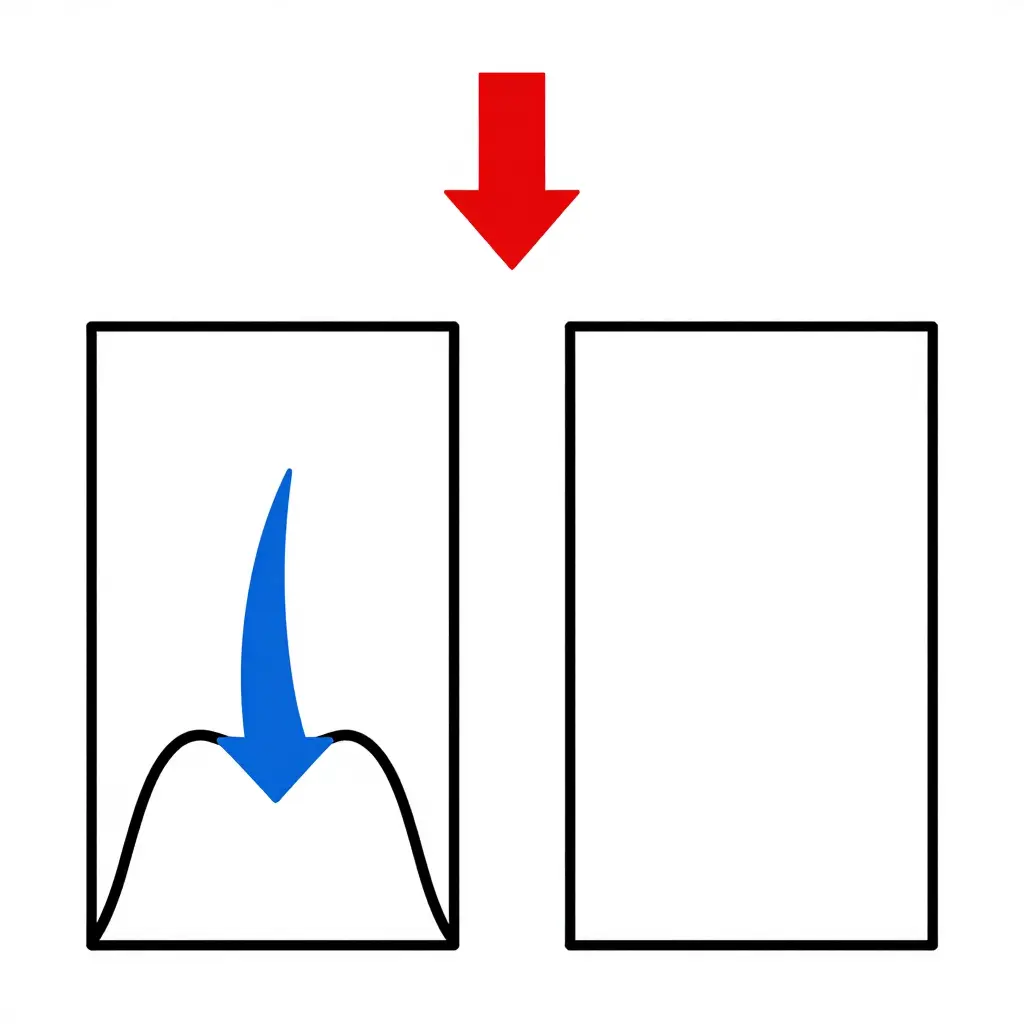
Diagram: Under identical heat load, a thermoplastic ABS-style panel on the left deflects and warps, while a thermoset fiberglass panel on the right holds its shape.
Weight: Riding Feel and Handling
Every extra pound bolted to the front of a bike fights you at the bars. Mass carried high and ahead of the steering axis resists quick direction changes, so trimming fairing weight lets the front end flick into corners with less effort and smaller inputs. That is why lightweight motorcycle fairings feel sharper the moment a rider leaves the driveway.
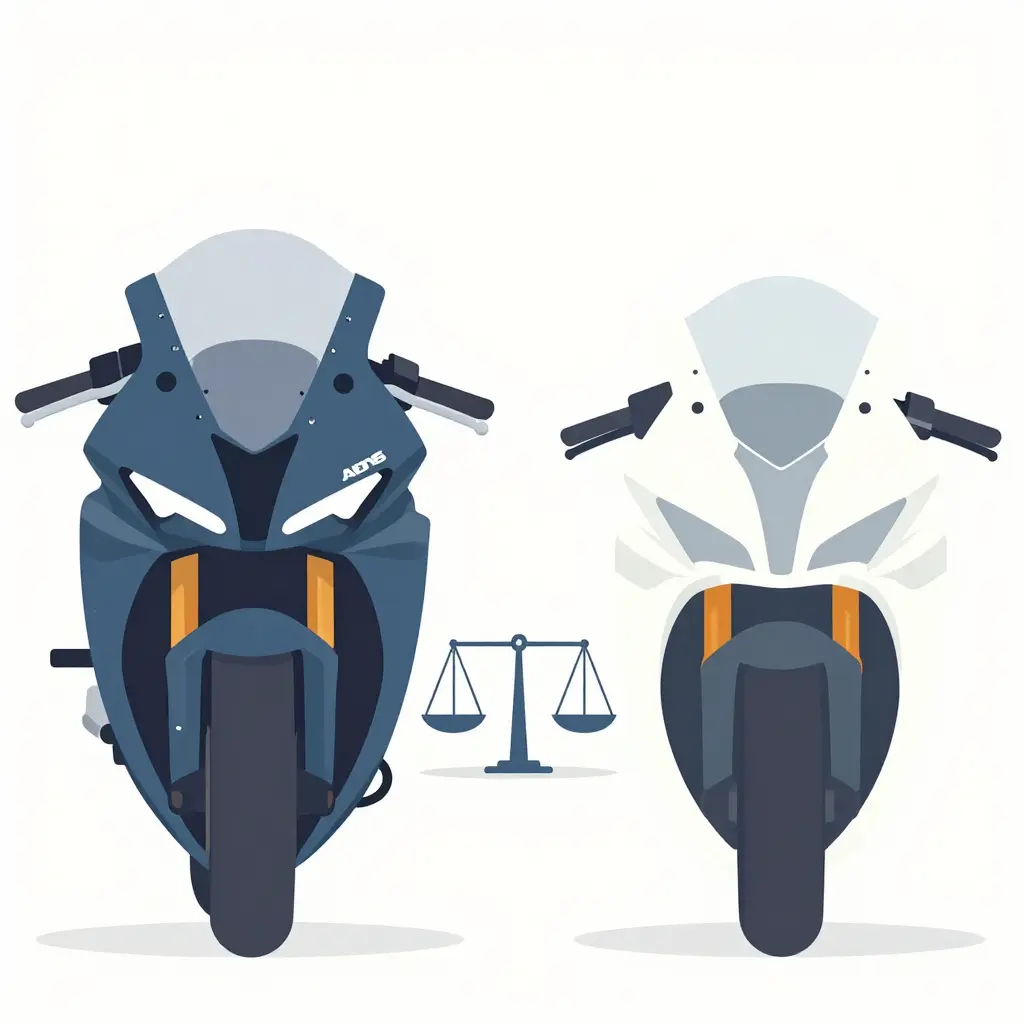
Fairing weight also dictates balance, because the bodywork sits far from the bike’s center of gravity. A heavier set tends to calm the highway ride but makes low-speed maneuvering in a parking lot feel vague and heavy. A lighter set does the opposite: eager turn-in and quicker side-to-side transitions, with a slight trade-off in wind stability.
The numbers make the trade-off concrete. A typical fiberglass fairing set for a sportbike weighs around 10 pounds (4.5 kg), while a comparable ABS plastic set usually runs about 18 pounds (8.2 kg). That is roughly a 40 to 45 percent reduction in high-mounted mass.
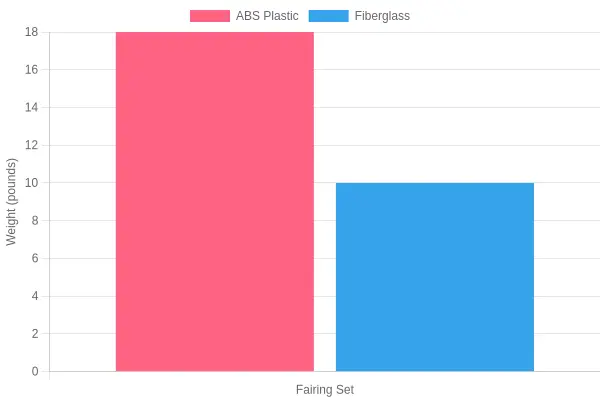
For owners chasing feel and for shops recommending upgrades, the verdict is straightforward. If ease of steering and balance matter more than the flex of a plastic shell, lightweight motorcycle fairings win on paper and on the road. Heavier ABS still has its place, but it will always ask more of the rider’s arms.
ABS vs. Fiberglass vs. OEM: The Weight Comparison
Weight is one of the most practical differences between fairing materials. It affects acceleration, handling, and how a bike behaves when you grab a fistful of brake in a corner. The chart below compares a typical full fairing set across the most common materials.

A carbon fiber set is the lightest here at roughly 4 kg, but the price tag puts it out of reach for most daily riders. Fiberglass comes in around 6.5 kg, OEM plastic close behind at 7.5 kg, and ABS, the material many aftermarket suppliers favor, tips the scale near 9 kg as the heaviest option.
That extra 1.5 to 2.5 kg may not sound like much, but it sits high on the frame, which slightly raises the center of gravity and can dull steering response. For most street riders the trade-off is invisible, but track-focused owners and shops doing performance builds often notice the difference in quick direction changes.
Keep in mind these are approximate figures. Real-world numbers shift with the number of panels in a set, paint, hardware, and whether a manufacturer adds reinforcement layers around mounting points. When you compare quotes, always ask for per-panel weights rather than a single set total.
Parking Lot Tip Over Repair: ABS Fairings
A slow tip-over in a parking lot rarely destroys a fairing; it mostly just makes it look that way. Because ABS is a thermoplastic, it can be melted, reformed, and refinished instead of replaced, and that one property turns most drop damage into a manageable weekend project.
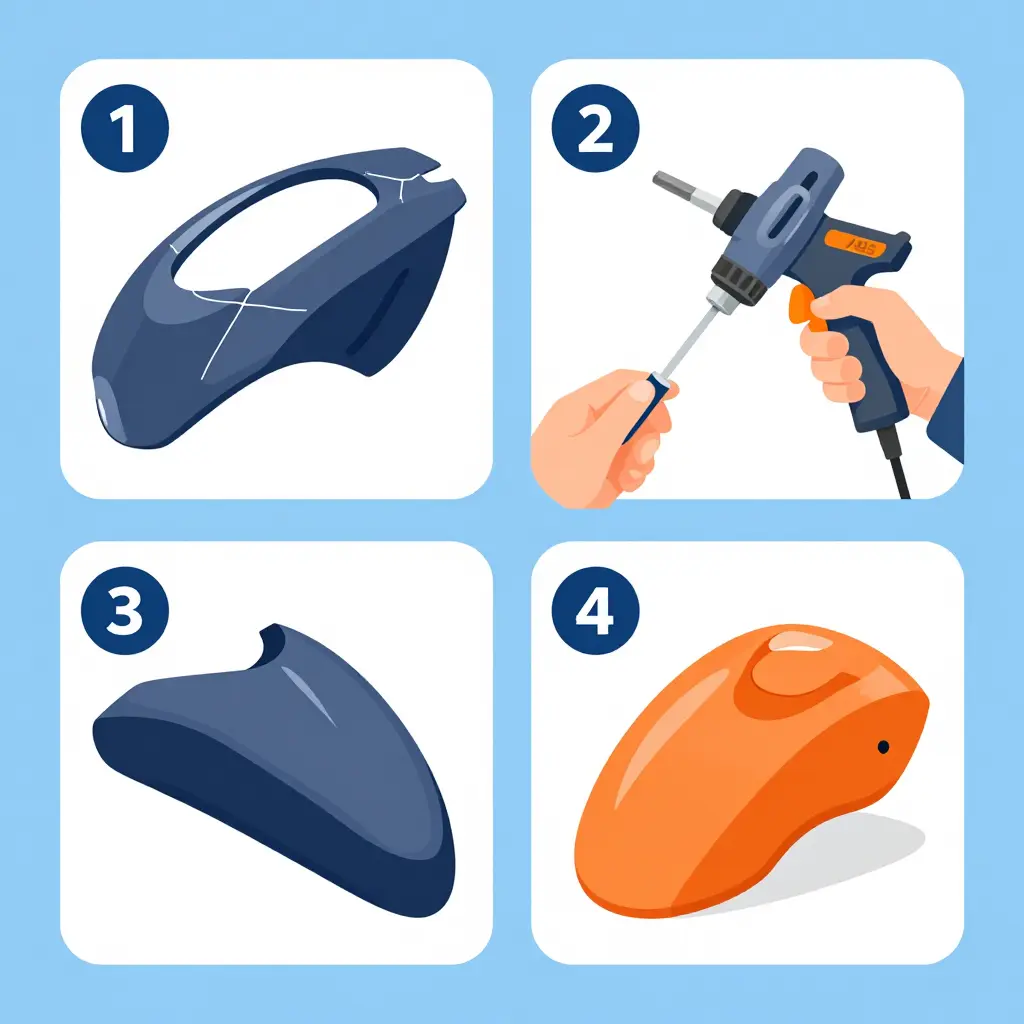
Cracks and Scuffs: Repair, Don’t Replace
Cracks and deep scuffs are the usual result of a stationary fall. When owners weigh ABS fairing repair against buying new panels, the evidence favors repair: plastic welding fuses the crack with heat and filler and restores the panel’s structural strength. After welding, sanding blends the seam and repainting hides the scar.
- Plastic welding – melts a filler rod into the crack, bonding the plastic on a molecular level.
- Sanding – feathers the repaired area until it sits flush with the surrounding surface.
- Repainting – matches color and gloss, finishing the cosmetic fix.
Reshaping Minor Deformations
Controlled heat does more than join cracks. A heat gun applied gently softens small dents, bends, and warped edges, letting you push the panel back into shape before it cools. The keyword is controlled: too much heat and the fairing sags, blisters, or burns.
Getting an ABS Fairing Back on the Road
A parking-lot tip-over is a setback, not a verdict. Weld the crack, sand the seam, repaint, and keep a careful hand on the heat gun, and an ABS fairing can go back on the road looking untouched.
Step-by-Step Tip-Over Repair Checklist
A parking-lot tip-over usually scuffs one side, snaps a mount tab, or flexes the panel out of shape. Whether your fairing is molded ABS or hand-laid fiberglass, the repair sequence follows the same broad rhythm. Work through these steps in order and you will end up with a clean, paint-ready finish instead of a patch that cracks six weeks later.
- Assess the damage. Wash the panel, then inspect for cracks, spider-webbing, and broken tabs; press gently to reveal flex cracks hiding under paint.
- Photograph and tag. Take before photos and mark each damage zone with tape so nothing gets missed while you work.
- Remove and clean the panel. Pull the fasteners, bag and label them, then wipe the surface with a wax-and-grease remover.
- Prep the surface. Scuff the repair area with 80-grit, bevel crack edges into a shallow V, and drill small stop-holes at both crack tips.
- Fill the damage. Use a flexible ABS repair compound or epoxy filler suited to your panel material, and apply it in thin layered passes rather than one thick blob.
- Sand and shape. Block-sand with 120- then 220-grit, feathering the edges until the filler sits flush with surrounding paint.
- Prime the repair. Lay down a sandable primer, let it cure, then sand with 400-grit to knock out pinholes and expose low spots.
- Paint and blend. Build color in light coats, clear-coat, then wet-sand with 1500 to 3000 grit before polishing to match the original sheen.
Notice how many of these steps hinge on knowing what your fairing is made of. ABS panels tolerate flexible fillers and gentle heat reshaping, while fiberglass responds best to epoxy resin and mat-based repairs, and mixing the two chemistries is what causes repeat cracking. Match the material, follow the order, and a repaired fairing can look factory-fresh long after the tip-over that started it all.

The repair process, simplified into five connected stages you can follow whether you’re a rider fixing a parking-lot tip-over or a shop handling heat-warped panels.
Choosing and Buying Your Fairing Set
There is no single “best” fairing material. The smart choice depends on which priority matters most to you: heat resistance during hot-weather idling, low weight for spirited riding, repairability after a parking-lot tip-over, or simply keeping the total cost down. The two dominant materials, ABS plastic and fiberglass, trade off against each other in predictable ways.
| Priority | ABS Plastic | Fiberglass |
|---|---|---|
| Heat resistance | Moderate; can soften and warp near exhaust heat | High; stays stable under sustained heat |
| Weight | Heavier (about 18-20 lb per set), with useful flex | Lighter (about 10-15 lb per set) but noticeably stiffer |
| Repairability | Easy to weld; cracked panels are also commonly replaced | Easy to sand, patch, and repaint |
| Budget | Lower upfront cost, mass-produced | Pricier for quality hand-laid parts |
If heat and stiffness rank first, fiberglass usually wins. If upfront cost leads, ABS is the practical pick, though it gives away weight to fiberglass. For repair shops, fiberglass refinishes easily and is often the friendlier material to bring back to life.
Once the material is settled, sourcing decides the rest. A leading motorcycle fairing export site stands out here, stocking more than 3,000 styles that fit almost every motorcycle model. Prices run 10-40% lower than other sites, and a six-hour question-response promise means you get real answers fast instead of waiting days for a reply, value that matters whether you are kitting out a single bike or restocking a busy shop.
Related Resources: For broader industry context, see how Volvo VNL models are tested in extreme heat, the industry push for clarity on emissions regulations, and how manufacturers adapt strategies in a shifting trailer market.
Frequently Asked Questions
Is ABS or fiberglass more heat resistant?
Fiberglass is generally the more heat-resistant material of the two. It keeps its shape at higher continuous temperatures, while ABS starts to soften at noticeably lower thresholds. In most head-to-head ABS vs fiberglass fairings comparisons, fiberglass wins on raw heat tolerance. Seeing how vehicles are stress-tested in extreme heat shows just how much temperature extremes matter.
Do ABS fairings warp in summer heat?
Yes, ABS fairings can warp in prolonged summer heat. Because ABS softens at relatively low temperatures, a fairing heat warp often appears as sagging or wavy panels after hours in direct sunlight. Parking in the shade or covering the bike greatly reduces that risk.
Are fiberglass fairings lighter?
Usually, yes. A fiberglass set often weighs less than an ABS set of the same size, because a hand-laid laminate can be built thinner than molded plastic. The saving comes with a trade-off: fiberglass is stiffer but more brittle, so it cracks rather than flexes in a hard impact.
Can a cracked fairing be repaired after a tip over?
Yes, a fairing cracked in a parking-lot tip-over can usually be repaired. Fiberglass cracks patch cleanly with resin and mat, and minor ABS damage can be fixed with plastic welding or strong adhesives. Both are routine jobs that most motorcycle repair shops handle every day.
Do ABS and fiberglass use the same paint?
Not always. ABS usually needs flexible paints or an adhesion promoter because it flexes under stress, while fiberglass accepts standard primers and urethane paints easily. Rigid paint on ABS can crack or peel over time.
The Bottom Line: ABS or Fiberglass?
The choice between ABS and fiberglass fairings comes down to what you value most. ABS wins on flexibility and on the ease of repairing the cracks and scuffs that follow a slow parking-lot tip-over. Fiberglass wins on lower weight, rigidity, and heat resistance, holding its shape better when the engine runs hot or the bike bakes in the summer sun. Neither material is universally superior; each serves different needs.
There is no perfect material, only the best fit for a particular rider or shop. If your priorities are surviving everyday mishaps and keeping repairs simple, ABS is the friendlier choice. If you want less weight, a premium finish, and dependable performance under high heat, fiberglass earns its keep.
The buying takeaway stays consistent: match the material to your real-world priorities and budget, not to marketing claims. Consider how often you ride, where you park, how hot things run, and how much you are willing to spend on repairs and replacements. Shops weighing capacity and cost against the bottom line should apply that same logic to every purchasing decision. Choose the material that keeps you riding with the least hassle, and let your priorities, not hype, set the direction.