
As logistics and construction industries grow, ensuring that your heavy vehicles like dump trucks are adequately insured becomes paramount. A-One Commercial Insurance specializes in providing comprehensive coverage solutions tailored explicitly for dump trucks. This article dives deep into the details surrounding the insurance of dump trucks, covering coverage overviews, policy types, the importance of insurance in operations, and guidance on obtaining quotes and policies. Each chapter builds upon this essential understanding, offering valuable insights to logistics and freight company owners, construction and mining enterprise procurement teams, and small business owners managing delivery fleets.
Does A-One Commercial Insurance Insure Dump Trucks? A Practical Guide to Coverage for Heavy-Duty Fleets
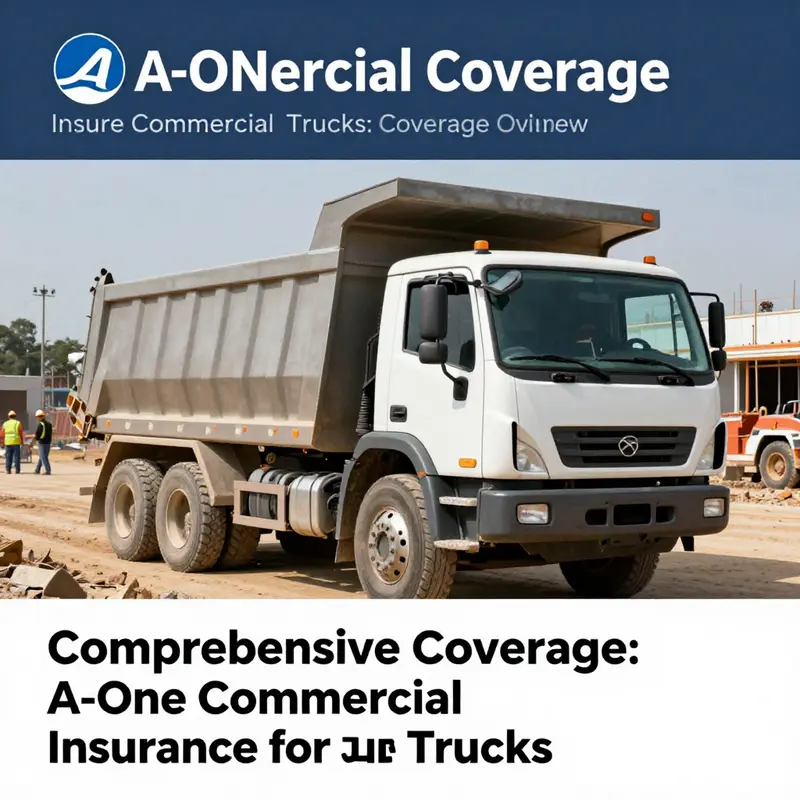
Dump trucks are more than workhorses on a job site; they are the backbone of material transport, earthmoving, and waste management. They operate in harsh environments, endure rough roads, face shifting loads, and share lanes with heavy traffic. Given these realities, the question of insurance coverage for dump trucks is not merely about meeting a regulatory checkbox. It is about building a safety net that aligns with the vehicle’s purpose, the operator’s practices, and the broader risk profile of the business. In this chapter, we explore what coverage typically looks like for dump trucks within a commercial auto program, how policies are shaped by real-world operations, and the practical considerations a fleet manager weighs when selecting protections. While the specifics can vary by insurer and by jurisdiction, there is a consistent logic: the coverage must reflect the exposure a dump truck creates—from the moment it leaves the yard to the moment it returns after a long day of payloads and site visits. A comprehensive approach recognizes the spectrum of risks involved, from the physical vulnerabilities of a heavy vehicle to the liability arising from the cargo it carries and the people who rely on it. The core idea is simple but powerful: protection should be tailored to the vehicle’s role, the operations it supports, and the business risks it represents, rather than relying on a one-size-fits-all policy. In practice, this means that the insurer’s coverage options are designed to address both common and unique hazards that come with dump truck use, and that the policy can be adjusted as circumstances change—new routes, new kinds of cargo, or a larger fleet footprint. The foundations of coverage begin with the essentials, then layer in additional protections that reflect the operational reality of heavy-haul work. At the center of any robust program is Commercial Auto Liability Insurance. This coverage is geared toward protecting the business whenever a dump truck is involved in an accident that injures people or damages property. Liability protection is not only about fulfilling legal requirements; it is about providing a cushion for the inevitable surprises of driving a vehicle of substantial size and weight in congested environments. When a site has uneven ground, tight turns, or unpaved approaches, the potential for contact with other vehicles or fixed objects increases. Liability coverage responds to those incidents by covering bodily injury and property damage claims that arise from the truck’s involvement. It is a frontline defense that supports both the firm’s financial stability and its reputation, the two elements that often determine a contractor’s ability to sustain operations after a claim. The next layer, Physical Damage Coverage, addresses the physical state of the dump truck itself. Collision coverage plays a critical role when a truck collides with another vehicle or object, paying for repairs or replacement as needed. Comprehensive coverage broadens protection to non-collision events such as theft, vandalism, fire, hail, and other covered perils. Dump trucks frequently face exposure to theft on remote sites or at unsecured yards, as well as damage from severe weather conditions that can blur the line between when a vehicle is in use and when it sits idle. Physical damage protection ensures that the machine can be repaired or replaced with minimal downtime, allowing projects to stay on track. Cargo insurance, another important component, acknowledges that many dump trucks move materials that have value beyond the truck itself. If the payload is lost, damaged, or mishandled in transit, cargo insurance steps in to cover those losses. The exact scope of cargo coverage can differ based on what is being hauled—sand, gravel, demolition debris, or specialized materials—and where those loads travel. While some fleets primarily operate within a single region, others cross state lines or navigate multiple job sites in a single day. In these cases, cargo coverage provides an extra layer of assurance that the goods carried by the dump truck are protected against common transit risks. There is also a practical consideration for businesses that empower employees to use personal vehicles for company tasks or hire third-party vehicles for project needs. Non-Owned and Hired Auto Liability extends protection when an employee uses a personal vehicle for business purposes, or when a third-party vehicle supports the operation. This is not a substitute for primary coverage on company-owned equipment, but it recognizes the blended reality of many construction and landscaping operations, where the line between owned assets and hired assets can blur as the project demands shift. For many fleets, a period where another driver operates a dump truck on a temporary basis or a subcontractor supplies a vehicle requires clear liability allocation. This coverage helps prevent gaps that could otherwise leave the business exposed to claims arising from those non-owned or hired vehicles. A further critical element for many dump truck operations is Uninsured/Underinsured Motorist Coverage. Accidents involving drivers with insufficient insurance can occur anywhere, and the cost of medical treatment, property repair, and lost productivity can be substantial. Uninsured/Underinsured Motorist Coverage is designed to bridge those gaps when the responsible party cannot fully compensate the injured party or the damaged property. In practice, this protection works as a safety net that helps the business manage residual costs after an accident, reducing the risk that an isolated incident undermines the company’s financial health. Beyond these core protections, insurers often tailor policy terms to reflect the vehicle’s specifications and the operation’s particularities. Dump trucks vary widely in engine power, payload capacity, dimensions, and the kind of terrain they regularly encounter. They may also differ in terms of how much time they spend on job sites versus on public roads, as well as how far they travel between sites. These factors influence not only premiums but also eligibility for coverage and the design of endorsements or riders. For example, an insurer may assess mileage as a factor that affects risk exposure, or evaluate the operator’s driving history and the company’s safety program. Fleet characteristics matter, too. A small, experienced crew with a strong safety record and a well-documented maintenance plan may command more favorable terms than a larger, more dispersed fleet with inconsistent records. The ability to demonstrate regular vehicle inspections, timely maintenance, and adherence to safety protocols can be a decisive factor in eligibility and pricing. It is also common for policies to offer optional endorsements that expand protection in line with the business’s needs. While these endorsements vary by insurer, they may include additional coverage for on-site injuries, environmental liability related to spills or leaks, or specialized protections during loading and unloading operations. The operational complexity of dump truck work often calls for a careful risk management approach alongside insurance. For many operators, insurance is part of a broader safety and risk program that includes driver training, fatigue management, vehicle maintenance schedules, and clear procedures for loading, unloading, and securing loads. The logic here is practical: reducing the frequency and severity of losses lowers claims frequency and, in turn, contributes to more stable and predictable insurance costs over time. It is not unusual for insurers to request evidence of a formal safety program, ongoing training, and documented maintenance histories as part of the underwriting process. The broader insurance decision is not just about the price tag attached to a policy; it is about how well the coverage fits the risk profile of the dump truck operation. A thoughtful carrier will tailor the policy to reflect the vehicle’s role on the job, the route structure it follows, the type of cargo it carries, and the safeguards the company has in place to prevent losses. This alignment matters because it affects not only the immediate protection but also the long-term viability of the fleet. Within this framework, a fleet manager might consult industry insights and historical loss data to anticipate potential cost implications. For example, trends in the trucking sector—like shifting demand for certain types of materials, changes in construction activity by season, or evolving regulatory requirements—can influence how insurance costs evolve over time. To illustrate how broad market factors relate to coverage decisions, consider the interplay between fleet utilization and risk exposure. If a company expands its operations to new regions with different road conditions or regulatory environments, the insurer may reassess risk and adjust terms accordingly. If the job mix grows to include more high-load or off-road tasks, the coverage may require additional endorsements or higher limits to maintain the same level of protection. In this sense, the insurance program for dump trucks resembles a living agreement that adapts as business realities shift. It is worth noting that the specific eligibility criteria, pricing, and policy terms vary by insurer and by jurisdiction. The general categories described here—liability, physical damage, cargo, non-owned and hired auto liability, and uninsured/underinsured motorist coverage—form the backbone of most dump truck insurance packages. The exact widths of those coverages, as well as the presence of any additional endorsements, depend on factors such as vehicle type, usage patterns, mileage, geographic footprint, and the operator’s driving history. For readers seeking concrete guidance about how a particular insurer structures these protections, it is helpful to review the provider’s official materials and to engage directly with a licensed agent who can translate policy language into practical protections aligned with your fleet’s realities. The goal is not merely to obtain coverage but to secure a coherent risk management framework tied to the company’s operations, finances, and strategic objectives. Throughout this discussion, the emphasis remains on practical applicability. When a dump truck operates every workday across multiple sites, the risk portfolio is multi-faceted. A liability claim can arise from a collision that harms pedestrians or causes property damage to nearby infrastructure. A physical damage claim can stem from a site mishap that results in major repairs or vehicle replacement. Cargo losses can affect supplier relationships and project timelines, while non-owned and hired auto liabilities recognize the shared nature of some operations. Uninsured/Underinsured Motorist protections acknowledge the reality that not all drivers on the road carry adequate coverage. A well-structured policy, then, behaves as a risk-sharing arrangement. It distributes the financial burden of adverse events across an insured business, the insurer, and, in some cases, third-party claims. It supports business continuity by enabling faster claims resolution and minimizing downtime. It also signals to clients and partners a commitment to risk management and professional stewardship. For readers who want a practical next step, the recommended approach is to engage in a candid review of fleet operations with an insurance professional who understands heavy-duty vehicle use. Provide a transparent picture of how dump trucks are deployed, the typical routes, the kinds of loads carried, and the maintenance practices in place. Prepare documentation that demonstrates driver training, safety programs, inspection routines, and incident history. With that information, an insurer can tailor a policy that balances protection with cost, ensuring the fleet remains competitive and compliant. Along the way, it can be valuable to explore external perspectives that illuminate how industry dynamics influence coverage decisions. For those who wish to explore broader market trends and practical implications for fleet strategies, a relevant resource discusses how economic and regulatory factors intersect with trailer orders and equipment utilization in trucking. This contextual backdrop can help businesses anticipate insurance needs and plan for the future. In the end, insurance for dump trucks is not a standalone requirement but a facet of broader risk management that supports project delivery, financial resilience, and stakeholder trust. A policy that reflects the vehicle’s risks, the operator’s safety culture, and the business’s growth trajectory can transform insurance from a cost center into a strategic asset. It is worth reiterating that exact policy terms and eligibility depend on the insurer and the jurisdiction. For any business evaluating coverage, the best course is to engage directly with an insurer to obtain a customized quotation that aligns with current operational realities. This approach acknowledges that while the fundamental coverage categories are consistent, the details—limits, deductibles, endorsements, and pricing—are highly specific to the question of how dump trucks are used. As you weigh options, consider how the policy supports your work cycles, maintenance discipline, and contingency planning. The result should be a coherent risk framework that protects people, property, and productivity. For those who want to connect a broader narrative to industry conversations, an internal resource exploring freight market dynamics and regulatory challenges can be a helpful companion. See the discussion on trucking economic trends affecting trailer orders for insights into how fleets calibrate risk and investment decisions in response to shifting market conditions. trucking economic trends affecting trailer orders. Finally, for readers seeking direct information about the insurer’s commercial auto offerings and coverage structure, consult official materials on commercial auto insurance. External resource: https://www.aoneinsurance.com/commercial-auto-insurance
Covering the Heavy Load: How a Commercial Insurer Safely Insures Dump Trucks and What Policy Choices Shield Your Fleet
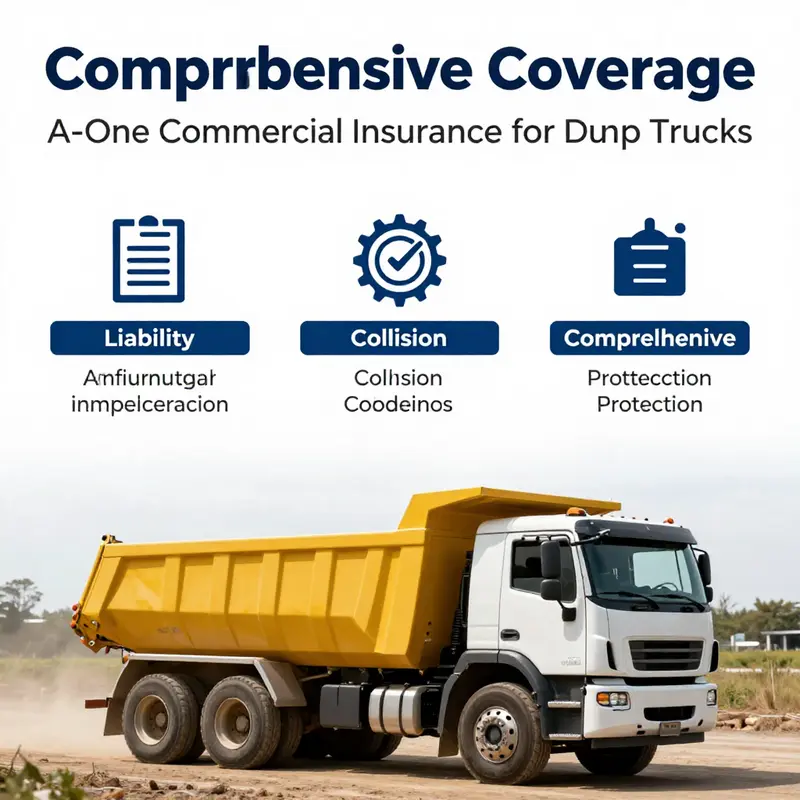
Dump trucks are more than just big vehicles that move material from A to B. They are a lifeline for construction, mining, landscaping, and roadwork, carrying loads that demand power, stability, and reliability. With that scale of operation comes a distinctive constellation of risks—from high-value equipment and congested work sites to unpredictable weather and loading conditions. For business owners whose daily output depends on the steady flow of these machines, the right insurance is not a luxury; it is a foundational element of financial resilience and project viability. A commercial insurer that specializes in heavy equipment understands that dump trucks sit at the intersection of vehicle liability and cargo exposure. Rather than relying on generic auto policies, they tailor coverage to reflect the realities of job sites, the specific cargo hauled, and the geographic footprint of the work. This approach translates into protections that begin with the core auto coverage and extend into cargo, hires, and offsite risk, all designed to respond when duties on the ground go wrong and to absorb the financial shock that can follow a single accident or cargo loss.
At the heart of coverage for a dump truck is Commercial Auto Insurance. This is the bedrock policy, engineered to address the liability and physical damage that arise from daily operation. Bodily injury and property damage liability sit at the forefront, covering claims from third parties if a dump truck collides with another vehicle, a pedestrian, or property on a work site. But the liability landscape for dump trucks is nuanced. The weight and mass of the vehicle, the often unpredictable nature of loading and unloading, and the presence of other heavy equipment nearby amplify the potential for multi-party claims and complex fault scenarios. A capable insurer designs a limit structure that reflects not only the value of the truck but also the scale of operations—fleet size, annual mileage, driver experience, and the typical routes. In practice, this core coverage is reinforced by Physical Damage protection, which includes both Collision and Comprehensive options. Collision safeguards the truck in a collision, while Comprehensive extends protection for non-collision events such as theft, fire, vandalism, falling objects, and natural hazards. For a dump truck that spends long hours on rough terrain or in remote job sites, comprehensive coverage is often as important as liability, because the vehicle’s own repair cost can be substantial, and downtime translates into project delays and lost revenue.
Beyond the core auto protections, specialized policies respond to the cargo-centric nature of dump truck work. Cargo Liability Insurance stands as a critical addition for operators hauling bulk materials like sand, gravel, soil, or debris. Even when the truck is operating under the best control, cargo damage can occur from shifting loads, improper securing, or incidents at loading or unloading points. This coverage helps cover the financial impact of material loss or damage, reducing the risk that a single shipment turns into a cash-flow crisis for a contractor or subcontractor. The flexibility of a commercial insurer is crucial here; they can tailor cargo coverage to reflect the type of cargo, its value, and the points along the transport chain, ensuring the policy aligns with actual risk rather than general assumptions.
In many workplaces, dump trucks operate with drivers who rely on their own vehicles for related tasks or who occasionally borrow equipment. For these scenarios, Non-Owned Auto Liability (NOAL) provides a safety net. It protects a business when an employee uses their personal vehicle for business-related tasks that involve dump truck operations, such as running errands to a job site, transporting tools, or picking up materials. NOAL acknowledges the reality of how work is performed on construction sites where the line between company-owned assets and employee-owned tools can blur. Similarly, Hired Auto Liability covers the risk when a business rents or leases a dump truck from another company, which is a common arrangement for meeting peak demand, handling large projects, or bridging maintenance downtime. Hired auto liability ensures the business isn’t exposed in the event of a rental vehicle accident or damage while it is under a temporary lease agreement. Together, NOAL and hired auto liability reflect a practical approach to risk management in a world where fleet needs can be fluid and project-specific.
Although the vehicle and its cargo carry most of the burden, workers on the ground—drivers, on-site supervisors, and maintenance staff—represent a separate dimension of risk. Workers’ Compensation sits alongside vehicle-specific coverage to address medical expenses, lost wages, and rehabilitation costs for employees who are injured on the job. This coverage is not limited to the truck’s operation but reflects the broader reality of a workforce that depends on these machines to fulfill contracts and keep teams employed. A well-structured package will weave together these elements into a coherent safety net, with endorsements and riders that reflect the specifics of the operation—such as the types of loads carried, the typical geographic area, and the level of driver experience on the payroll.
What makes the insurance for dump trucks particularly nuanced is the ability to customize. A specialized insurer will begin by assessing your risk profile—fleet size, vintage and condition of the vehicles, annual mileage, the nature of the cargo, sites and terrain, weather patterns, and the qualifications of your drivers. A robust underwriting process considers the maintenance regime, the frequency of inspections, and the presence of formal safety protocols. The result is a policy that evolves with the business. If you expand into new terrain, take on longer routes, or increase the rate of loading and unloading at different sites, the coverage can be adjusted to reflect those changes. The ability to align policy terms with operating realities helps prevent gaps that could otherwise show up as uncovered losses when a claim arises. In this sense, the value of working with an insurer that understands heavy equipment extends beyond premium costs to include the strategic protection of your contracts and relationships with clients who demand reliable risk management.
As with any insurance decision, the cost is influenced by a blend of factors. The premium for dump truck coverage is shaped by the vehicle’s value and age, planned annual mileage, and the breadth of covered operations. A newer, well-maintained fleet that operates in fewer high-risk environments may command lower premiums than an older fleet that traverses challenging routes with mixed weather. Driver history and safety performance play a significant role. Insurers frequently reward proactive risk management with premium credits for things like formal driver training programs, regular maintenance schedules, and the use of telematics devices that monitor speed, harsh braking, and other driving behaviors. The inclusion of cargo-specific endorsements or riders can also affect the price, reflecting the level of protection chosen for cargo loss or damage, as well as the added certainty that the cargo is properly secured and safeguarded during transit.
The underwriting and policy design also take into account the geographic scope of the work. Dump trucks that operate across multiple counties or states may require broader liability limits and more complex coordination of coverage across different jurisdictions. In some cases, cross-border operations introduce regulatory considerations that influence both premiums and policy terms. The insurer’s goal is to create a seamless coverage framework that supports the business’s project portfolio while aligning with local laws and industry standards. In practice, this means a careful balance between adequate protection and cost efficiency, where the insurer’s knowledge of construction cycles, seasonal demand, and project timelines helps shape a policy that remains affordable even as the project load grows.
From an operational perspective, risk management can be as important as the policy itself. Insurers increasingly emphasize proactive measures that reduce the likelihood and severity of losses. Regular truck maintenance, pre-shift inspections, and adherence to manufacturer-recommended service schedules help prevent breakdowns and failures on-site. Driver training programs, defensive driving courses, and clear on-site safety protocols reduce the chances of accidents and injuries. Telematics and reporting tools provide real-time feedback on driver behavior and vehicle health, enabling managers to intervene before a minor issue becomes a costly claim. Insurers may offer premium discounts or enhanced terms for fleets that demonstrate strong safety cultures and rigorous maintenance routines. In short, the best insurance for dump trucks is built on a partnership: the insurer supplies financial protection and risk-transfer mechanisms, while the operator implements controls that prevent losses and keep projects moving forward.
Regulatory dynamics also shape how coverage is priced and structured. Emissions standards, weight classifications, and mandatory safety requirements affect not only vehicle compliance but the way risk is evaluated for insurance purposes. As regulations evolve, insurers reassess exposure, refine rating models, and adjust policy language to ensure that coverage remains aligned with current obligations. To stay informed about how regulatory shifts influence coverage terms, operators can consult industry resources and regulatory updates; for example, industry discussions emphasize the need for clarity during periods of regulatory change. See the discussion on OEMs seek clarity in emissions regulations for a sense of how these shifts are influencing industry expectations and insurer workflows. OEMs seek clarity in emissions regulations
When a claim does occur, the claims process for dump truck coverage is designed to be straightforward and efficient, recognizing how valuable uptime is to construction schedules. Insurance professionals work to gather the right facts quickly—details about the accident scene, the cargo, the involved parties, and the extent of damage to the truck and any cargo. Because dump trucks often operate on work sites with varying access, the ability to coordinate with repair shops, towing services, and cargo handlers can significantly shorten vehicle downtime and restore productivity. In many policies, there are also provisions related to rental coverage or loaner vehicles if the truck is out of service for a period of time, ensuring that operations can continue while the repair work is underway. The practical outcome is a claims experience that minimizes disruption and preserves project timelines, which, in turn, helps protect the business’s bottom line.
Choosing a policy for dump trucks is more than selecting a price point. It is about choosing a partner that can grow with the business, understand the project pipeline, and adapt to changing conditions on job sites. It requires asking the right questions: What cargo will you haul most often? What distances will you cover, and what terrains will you encounter? How many drivers are on the payroll, and what is their training status? What is the age and condition of each vehicle? By mapping these realities to a tailored package, a business can secure protections that reflect actual risk rather than generic assumptions. In practice, the best outcomes come from a collaborative process where the insurer reviews the operation, proposes a layered set of coverages, and, importantly, explains how each component contributes to overall protection and resilience.
For operators who want to explore options responsibly, it helps to begin with a practitioner who specializes in heavy equipment. A consultant can compare the core policy, cargo protections, NOAL, hired auto liability, and workers’ compensation in light of the company’s specific footprint and project demands. This collaborative approach ensures that the policy aligns with client needs and that there are no unexpected gaps when a claim is filed. It also clarifies the potential trade-offs between premium cost and breadth of coverage, a balancing act that is central to sustaining a fleet through lean periods and peak seasons alike. In the end, the objective is to secure a comprehensive, transparent, and adaptable insurance framework that supports continuity of operations, protects people, and preserves the investment in the equipment and the contracts that rely on it.
External reference to further policy details and options can be found on the insurer’s official site, which provides structured information about coverage features and terms for commercial auto, cargo, NOAL, hired auto liability, and workers’ compensation.
External resource: https://www.aonecommercial.com
Insuring Dump Trucks with A-One: Protecting High-Value Haulers and Maintaining Business Continuity
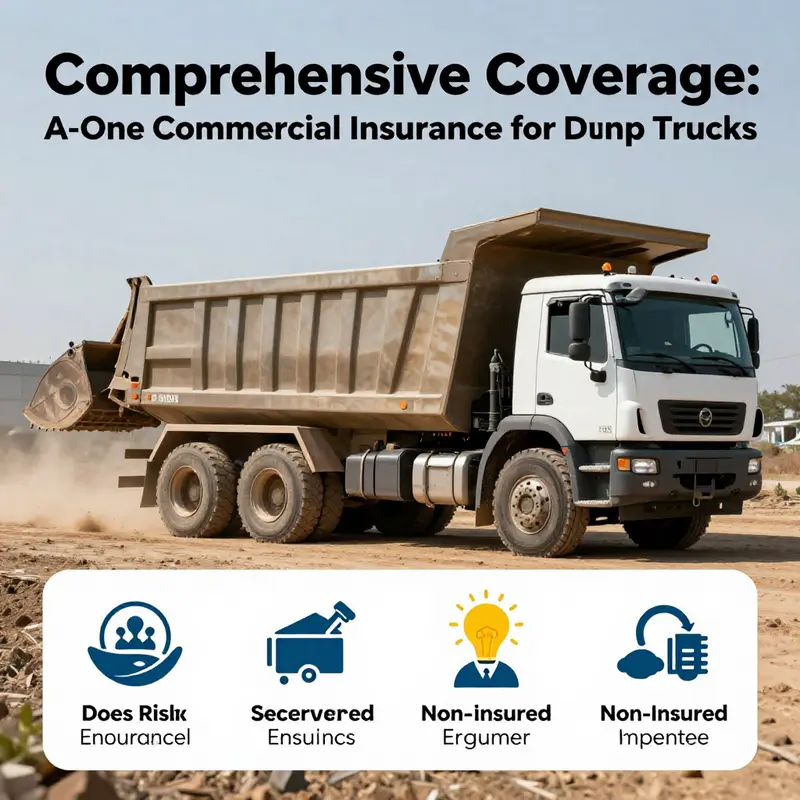
Insurance for dump trucks is more than a checkbox on a contract; it is the backbone of responsible fleet ownership and a practical tool for risk management. Dump trucks are expensive, heavy, and used in environments that multiply hazards—construction sites, quarries, public roads, and remote job sites. For businesses that rely on these vehicles, a gap in coverage can mean crippling repair bills, long downtimes, or exposure to lawsuits that threaten the whole enterprise. A-One Commercial Insurance offers policies designed for these realities, combining core protections with targeted endorsements that reflect the operational profile of dump trucks.
A comprehensive policy for a dump truck must do three things well: protect the business from third-party claims, repair or replace the vehicle after loss, and fill operational gaps that arise from unique exposures. Primary liability protection addresses the first need. When a dump truck collides with another vehicle, damages and medical claims can be substantial. Liability coverage handles bodily injury and property damage claims made against the truck owner or operator. This coverage is essential not only to satisfy legal obligations but also to prevent a single incident from wiping out a company’s cash reserves. Insurers price liability based on factors like vehicle weight, cargo type, driving territory, and the experience record of the drivers. For many operations, minimum limits are insufficient, so tailored policies with higher limits are common.
Physical damage coverage meets the second need by paying to repair or replace the truck after collision, theft, vandalism, or weather-related events. Collision coverage protects against losses from accidents, while comprehensive coverage handles other perils such as fire, theft, or storm damage. For dump trucks, the costs of parts, heavy chassis repairs, and specialized labor are high. Comprehensive physical damage protection reduces out-of-pocket repair expenses and accelerates the return of equipment to service, which preserves revenue streams and prevents project delays.
Beyond those basic pillars, practical insurance for dump trucks recognizes specialized risks. Cargo loss or damage coverage addresses the shifting, heavy loads common to dump operations. When a load spills or shifts and causes road hazards or environmental harm, cargo-focused endorsements can provide direct protection for the loss and help cover cleanup costs. Equipment breakdown coverage fills another practical gap. Dump trucks operate hydraulic systems, hoist mechanisms, and heavy-duty suspension components. Sudden mechanical failures can be costly and are often excluded from ordinary physical damage policies; an additional endorsement or mechanical breakdown policy can help manage those risks.
Operators must also account for the frequent interplay between insurance and contractual requirements. Many job sites and project owners require proof of insurance before equipment arrives on site. Certificates of insurance that show appropriate liability limits, and any required endorsements, are often prerequisites for bidding and for gaining access to work sites. Having a policy from a reputable commercial insurer demonstrates financial responsibility and reduces friction during project procurement. It also makes a business more appealing to partners and subcontractors who want assurance their projects will not be derailed by uninsured incidents.
Risk factors for dump trucks are numerous and often interrelated. On public roads, heavy loads increase stopping distances and magnify damage in collisions. On rough or uneven terrain, structural stress and tire wear accelerate. Weather introduces other threats: rain and snow create slick conditions, and floods or landslides can damage equipment or create claim scenarios involving third parties. Theft remains a real concern for high-value trucks and any attached equipment. Insurers evaluate these risks when designing and pricing policies, and they often incentivize loss-control measures. Safety programs, regular maintenance schedules, GPS telematics, and driver training can reduce premiums or unlock discounts. A well-documented safety culture shows an insurer that the insured is proactively managing exposures rather than passively accepting loss.
From a financial planning perspective, insurance contributes to business continuity. When a truck is damaged or stolen, the ability to make a timely claim and receive payment enables a company to replace or repair equipment quickly. This minimizes lost contracts, avoids missed deadlines, and keeps cash flow more predictable. Without proper coverage, businesses must absorb repair costs, potentially selling assets or taking expensive loans to remain operational. Insurance therefore serves as a stabilizing force that supports payroll, project commitments, and longer-term capital planning.
Claims handling is another critical dimension. The speed and fairness of claim resolution affect recovery time and client relationships. An insurer familiar with heavy equipment operations understands the urgency of restoring assets and the specialized repair channels required for dump trucks. This familiarity often translates into more efficient appraisal processes, better access to heavy-vehicle repair facilities, and clear communication about coverage and deductibles. When a policy includes emergency endorsements—for example, temporary replacement vehicles or expedited parts sourcing—these provisions materially reduce downtime.
Regulatory and legal compliance also shape coverage needs. In many jurisdictions, minimum liability limits for commercial vehicles are higher than for personal vehicles. Companies should confirm that their policies meet or exceed regulatory requirements for the regions in which they operate. Additionally, certain contracts may insist on specific coverages such as environmental liability, pollution cleanup, or workers’ compensation ties. Aligning insurance with regulatory and contractual demands prevents coverage disputes when an incident triggers multiple exposures.
Selecting the right policy requires understanding how premiums are calculated and what variables influence cost. Insurers assess the make and model of the truck, year and condition, primary operating locations, annual mileage, and the business’s claims history. They also consider driver qualifications, including licensing, training, and disciplinary records. Higher-risk operations—such as off-road quarry work or routes through urban areas with complex traffic—can carry higher premiums. Mitigation measures, documented maintenance histories, and robust driver programs can reduce rates over time. Insurers often work with clients to design loss-prevention plans that both lower risk and demonstrate due diligence in the event of a claim.
An often-overlooked feature is the need for tailored endorsements that reflect the specific uses of a dump truck. Roll-off capabilities, aftermarket attachments, or modifications to the dump body can affect coverage. Custom equipment, if not scheduled on the policy, might be excluded in the event of a claim. Clear inventory management and accurate schedules of equipment ensure that the policy responds as expected. Additionally, substitution-of-vehicle clauses or rental reimbursement provisions can be helpful when a truck is temporarily out of service.
Insurance also plays a role in building credibility with lenders and investors. For businesses that finance their fleets, lenders often require proof of comprehensive coverage as a condition of the loan. Adequate insurance protects the lender’s collateral and reduces the risk of default in the event of catastrophic loss. Well-insured assets improve the company’s balance sheet stability and can ease access to capital for fleet expansion or other investments.
To secure the most effective coverage, business owners should engage in a structured review of needs. This includes an inventory of all vehicles and attachments, documentation of operational territories and typical loads, and an assessment of current safety and maintenance programs. With that information, an insurer can propose a policy that addresses both standard perils and specialized risks unique to dump truck operations. Regular policy reviews—annually or when operational changes occur—prevent coverage gaps when fleets expand, routes change, or new equipment is added.
Finally, the decision to insure dump trucks through a specialist commercial insurer should weigh the value of industry knowledge. Insurers that focus on heavy equipment understand the specific challenges of dump truck operations. They can suggest appropriate limits, relevant endorsements, and practical risk-reduction steps. For many operators, that expertise translates to better-tailored coverage and smoother claims experiences.
For precise details about policy options, limits, and endorsements available for dump trucks, consult the insurer directly to review terms and get a customized quote. Additional information about coverage packages and how they address dump-truck exposures is available on their official site: https://www.aoneinsurance.com. For a broader look at how economic trends affect heavy vehicle procurement and the operational environment in which dump trucks operate, see the industry analysis on trucking economic trends affecting trailer orders.
Insuring the Heavy Load: Navigating A-One’s Dump Truck Coverage and the Straightforward Path to a Custom Quote

Dump trucks are the workhorses of construction, landscaping, and a wide range of other onsite operations. They move material, shape sites, and keep projects on schedule. With that central role comes exposure to risk—on road, on site, and in the moments when a load shifts, a wheel slips, or weather suddenly changes. In this context, insurance for dump trucks isn’t a luxury; it is a practical, essential part of keeping a business moving and financially sound. A-One Commercial Insurance sits in the space of commercial auto coverage, and it explicitly includes policies tailored for dump trucks used in varied industries. Understanding what they offer, how to obtain a quote, and what factors influence price helps fleet managers and small business owners alike approach coverage with clarity rather than guesswork. The conversation around coverage begins with the basics: the kind of vehicle you own, how you use it, and the risks you face every day behind the wheel and beneath the dump bed.
At its core, a dump truck policy through a commercial auto provider like A-One typically combines several key coverages. Liability protection stands as the baseline safeguard, covering damages or injuries you may cause to others in an accident. This is the legal floor that keeps a business compliant and shields ownership from catastrophic outlays should a third party suffer losses. In addition, physical damage coverage—comprising both collision and comprehensive protections—helps finance repair or replacement of your own vehicle after a collision, impact with an object, theft, vandalism, or other non-collision incidents. For dump trucks, the physical damage component is particularly meaningful because the equipment itself represents a substantial investment, and downtime due to repair translates into tangible cost, missed production, and potentially delayed project timelines. Beyond these core protections, cargo coverage can be essential when a dump truck carries earth, rock, gravel, or other materials. Cargo coverage provides a line of defense against loss or damage to materials in transit. And for many fleets, non-owned vehicle protection adds a strategic layer of resilience, covering situations where a vehicle is in use but not owned by the insured—such as when a contractor uses a hired truck for a specific job. In practice, these elements work together to deliver a policy that aligns with the realities of operating a dump truck within a commercial setting, where the vehicle is not just a transportation asset but a critical link in the chain that delivers value to customers and satisfies contractual obligations.
The specifics of any policy depend on multiple variables. The physical form of a typical dump truck is a heavy vehicle with a variety of stress points—axles, hydraulics, bed mechanics, and hydraulic cylinders—that can influence repair costs and downtime. A-One, like other commercial auto carriers, weighs factors such as the truck’s make, model, year, and overall maintenance condition. The vehicle’s usage matters as well: the type of work it performs, the job sites it frequents, and the geographic area of operation can all alter risk. Annual mileage, the presence of a mature maintenance program, and the driver roster are additional inputs that adjust the risk profile. The more predictable and well-managed the operation appears, the more favorable the rate and underwriting terms may be. Conversely, a fleet with a recent claim history, a high number of inexperienced drivers, or operations in high-traffic urban areas might see higher premiums or more stringent policy terms. This is where the quote process becomes a practical tool, turning a complex risk assessment into a concrete premium that reflects real-world exposure rather than a generic approximation.
For business owners evaluating insurance options, the path to a quote through A-One is designed to be straightforward while also capturing the nuanced picture of their operation. The first step is typically to visit the official site and navigate to the Commercial Auto section. There, insurers invite a structured set of inputs about the vehicle and the business context. Details such as the truck’s make, model, and year help establish the baseline repair costs and parts availability associated with the specific vehicle. The user is also prompted to describe the vehicle’s usage—whether it operates primarily at construction sites, in landscaping, or in a mix of on-road and off-road settings—and to provide estimated annual mileage. This mileage, while seemingly simple, serves as a proxy for exposure to wear and tear, theft risk, and accident probability. The process also collects information about the business type and the drivers who will operate the vehicle. These inputs collectively create a risk profile that the system translates into a customized insurance quote. The result is not a one-size-fits-all figure but a tailored premium that accounts for both the tangible asset’s value and the operational realities surrounding its use.
If the online pathway feels insufficient or you want a more personal touch, a direct connection to a licensed insurance agent is readily available. A-One’s customer service line offers access to professionals who can guide applicants through the application process, explain coverage options in plain terms, and help interpret policy terms. In practical terms, an agent can walk you through the distinctions among liability limits, physical damage components, cargo coverage, and non-owned vehicle protection. This can be particularly valuable for dump trucks, where the nature of the load being carried, the distance traveled, and job-site conditions can create nuanced liability or cargo considerations. A seasoned agent can also discuss the implications of different deductibles, loss settlement methods, and any endorsements that might enhance coverage for your specific operation. The combination of online self-service and agent-assisted options provides a flexible framework that accommodates both the do-it-yourself planner and the business that benefits from a consultative approach.
For many operators, the value of insured protection becomes most evident in the consequences of a loss. A dump truck event—whether a rollover on a rural haul, a loading zone incident at a construction site, or a theft from a yard—can trigger a cascade of costs beyond the obvious repair bills. Liability coverage helps absorb third-party damages and legal costs, while physical damage coverage keeps the vehicle recovered and back on the job faster. Cargo coverage protects the materials that are the payload of each trip, which can be substantial in terms of value and potential environmental liabilities if material is spilled or mismanaged. Non-owned vehicle protection fills a crucial gap when a job requires another truck not owned by the insured, ensuring continuity of service and predictable budgeting even when resource constraints exist. In short, the right mix of coverages recognizes the realities of dump-truck operations and the way they intersect with contract requirements, site safety rules, and the financial discipline of a business’s risk management program.
The practical takeaway for readers considering A-One’s dump truck coverage is that getting precisely what you need requires clarity about your operation. Start with the basics: identify the truck’s technical details, outline typical routes or work sites, and assemble a clear picture of driver staffing, maintenance practices, and historical claims. Then, engage with the online tool to generate a quote, and if anything feels unclear, pick up the phone to speak with a licensed agent who can translate policy language into practical terms. As you review the quote, ask questions about how deductibles affect premium, what loss settlement methods apply to your physical damage coverage, and what endorsements could be added for specific site exposures, such as on-site loading and unloading hazards or environmental liability tied to material spills.
This is also a good moment to acknowledge market dynamics that influence how insurance fits into a broader operational strategy. The trucking industry, including dump-truck operations, continues to grapple with capacity, equipment supply, and shifting regulatory expectations. Market insights emphasize that capacity can wax and wane, affecting both pricing and underwriting appetites. In this context, it is useful to consider external perspectives on how the broader sector is evolving, including discussions of excess capacity in the trucking market—insights that can shed light on why insurers price risk the way they do and how coverage offerings might adapt to changing conditions. Excess capacity in the trucking market—insights. This kind of landscape awareness helps operators calibrate expectations about renewals, coverage needs, and the potential role of endorsements that tailor protection to the job profiles most common in dump-truck work.
As you proceed, the emphasis should remain on a policy that aligns with the realities of your fleet and the demands of your contracts. Dump trucks do not operate in isolation; they connect to crews, suppliers, and customers who rely on timely and predictable service. Insurance supports that reliability by cushioning the financial impact of incidents and enabling faster recovery from setbacks. The process of obtaining a quote, then shaping a policy, is not simply about purchasing a product; it is about designing a risk management framework that fits the business’s cash flow, risk tolerance, and long-term growth plans. When you interact with A-One during this journey, you should come away with a clear sense of how each coverage component works, what each premium dollar buys, and how different scenarios—such as a minor accident near a project site or a major on-road collision—play out under the policy terms. This understanding transforms insurance from a theoretical expense into a practical tool that preserves uptime, protects assets, and sustains client commitments even under pressure.
To stay grounded while exploring these options, it helps to keep your eye on the big picture of what insurance does for a dump-truck operation. It enables you to meet contractual obligations with confidence, to comply with regulatory expectations, and to protect the livelihoods of employees who rely on steady work. It also provides a framework for risk-aware decisions about maintenance, safety programs, and driver training. A-One’s offerings, when approached with a careful view of your vehicle’s profile and your business’s risk posture, can be integrated into a broader risk management strategy that emphasizes proactive safety and prudent asset management. By combining thoughtful coverage with ongoing risk reduction efforts—such as routine maintenance checks, driver coaching, and site safety audits—you can maximize the value of insurance as a strategic business tool rather than a static line item.
As you look to the practical next steps, keep in mind that the quote process is designed to be transparent and collaborative. The online form collects the necessary inputs to tailor a quote, while a licensed agent stands ready to answer questions and optimize the policy structure for your particular operation. The goal is a protection plan that aligns with your load profiles, your travel patterns, and your project calendars. In the end, the question is not merely whether a dump truck can be insured, but how insurance supports a business’s ability to deliver on its commitments, weather unforeseen events, and stay financially sound through the life of the asset. With a clear understanding of the core coverages, the practical steps to obtain a quote, and an appreciation for the broader industry dynamics that shape pricing and terms, operators can move forward with confidence.
For readers who want to explore related industry context while they finalize their plans, one can engage with broader market insights, such as the discussion on capacity trends in the trucking sector linked above. And when you are ready to move from consideration to coverage, the official site’s Commercial Auto section will guide you through the data you need to complete the process, followed by direct support from an agent who can tailor the policy to the specifics of your dump-truck operation. As a reminder, the most accurate and up-to-date information comes directly from the insurer and its authorized representatives, and it is wise to verify any details with an official quote or discussion.
External context can also help frame the insurance conversation in practical terms related to equipment and margins in the broader market. For example, industry discussions around trailer orders and their impact on truckload margins provide insight into how equipment demand and pricing pressures intersect with risk management considerations. See: https://truckplusllc.com/trailer-orders-impact-truckload-margins/ for additional background on these dynamics. In the meantime, when you gather your data and simulate scenarios, you will be better prepared to ask the right questions and to understand the tradeoffs involved in choosing deductibles, coverage limits, and endorsements that specifically address dump-truck exposures rather than generic heavy-vehicle risk.
In sum, insuring a dump truck through A-One Commercial Insurance is not just about ticking a box on a form. It is about crafting a protective layer that reflects the realities of your work, supports timely project delivery, and stabilizes the financial underpinnings of your business. The process—starting with machine- and usage-specific inputs, moving through a collaborative quote with an insurance professional, and culminating in a policy designed to fit your operational profile—offers a thoughtful path to coverage that aligns with both immediate needs and long-term aims. As with any significant business decision, taking the time to understand the options, asking for clarifications, and anchoring decisions in both data and practical risk considerations will yield a more durable, affordable, and effective insurance solution for your dump-truck fleet.
Final thoughts
Understanding the nuances of commercial insurance for dump trucks is essential for safeguarding your operations in the logistics and construction industries. A-One Commercial Insurance offers tailored coverage solutions that address the unique risks associated with dump truck operations, providing liability, collision, and comprehensive damage coverage. By following the guidelines outlined in this article, business owners can ensure their vehicles are adequately protected and mitigate potential risks effectively. Now more than ever, securing the right insurance policy is not just an option; it is a necessity for sustained success in these competitive industries.