
As a logistics, freight, or construction enterprise owner, understanding the intricacies of your commercial insurance policy is critical for mitigating risk and ensuring operational integrity. One of the frequently overlooked topics is the ability of other individuals to drive your work truck under your policy. Whether you employ various drivers or need flexibility for authorized uses, knowing how your policy views additional drivers can protect your business from substantial liabilities. The following chapters will explore the essential aspects of commercial insurance coverage, including the importance of naming drivers, guidelines for authorized use, the risks associated with unauthorized drivers, and how to navigate policy endorsements effectively.
Guarding the Keys: Who May Drive Your Commercial Truck, How Coverage Works, and Why Liability Follows the Authorized Driver
The keys to a work truck are more than simple access; they signal who is authorized to turn the ignition, complete a route, and represent the company on the road. In a commercial auto policy, the question of who may drive your truck is not a matter of politeness or preference but a core element of how coverage is applied and how liability is assigned after an incident. The organization and clarity of driver authorization can change the outcome of a claim and the balance of costs that fall to a business when something goes wrong. Read through the policy with a careful eye, and you quickly see that coverage follows the driver only to the extent the insurer has explicitly approved that driver. This is not merely a checkbox; it is a live agreement that defines who is covered when the truck is on the clock and where that clock is ticking.
From the inside, the policy framework often rests on the concept of named insureds and named drivers, along with endorsements that broaden or restrict who may operate the vehicle. An insured business may designate certain employees as authorized drivers, provided their names appear on the policy or are added through a formal endorsement. This may require an additional premium, or a modification to the policy language, but it is a critical step. If someone who is not listed climbs behind the wheel and an accident occurs, the insurer may deny the claim, arguing that the driver was outside the scope of coverage. The potential consequence is not only a refused payout but also a cascade of liability that falls squarely on the business, potentially exposing it to substantial out-of-pocket costs and reputational damage. The risks extend beyond the crash itself; they touch every claim process, from fault determination to defense strategies and settlement negotiations. The difference between a claim paid and a claim denied often hinges on whether the driver was formally authorized.
A practical way to think about this is to picture the policy as a contract that binds the vehicle to a circle of people who are allowed to drive it while performing the work duties for which the truck exists. Those authorized drivers can include employees who regularly use the vehicle for deliveries, service calls, or client visits. However, the moment a non-employee—be it a friend, a family member, or an occasional contractor—gets behind the wheel without approval, the policy’s protections can erode. In some cases, coverage for the incident may be narrowed to the point of denial, leaving the business to absorb costs that otherwise would have been handled by insurance. The NAIC guidelines emphasize this structure, underscoring that most commercial auto policies require drivers to be named on the policy or approved through a formal endorsement. This standard is not merely bureaucratic; it is a practical shield against the ambiguity that can emerge when driving duties extend beyond a single person or a fixed group. For a broad understanding of these requirements, you can refer to official guidelines from the National Association of Insurance Commissioners at https://www.naic.org.
Policy language may also address who is allowed to drive when the truck is used for a specific job or a particular route. Some companies rely on broader provisions like “all business use” by authorized employees, while others implement tight controls that list only certain individuals by name. The distinction matters. If a supervisor asks a driver to cover an urgent shift and that person is not listed, claims handling can become thorny. The insurer may argue that the driver exceeded the scope of coverage, especially if the assignment deviates from the vehicle’s intended commercial purpose or if the driver’s qualifications or licensing become questionable during the period of operation. These considerations highlight the intersection between employment status and coverage: an employee who is acting within the scope of their job is typically covered if the policy includes them, but an employee who operates outside clear policy parameters can still create risk for the business if the assignment was not properly authorized.
Beyond payroll or personnel records, there is the concept of “non-owned” or “hired” vehicle coverage, which adds another layer of protection when vehicles not owned by the company are used for work tasks. This can be valuable for businesses that rely on employees using personal or leased vehicles for work activities or who subcontract certain tasks. The non-owned vehicle endorsement expands protection to cover those scenarios, but it is not universal. It must be explicitly added to the policy, with a defined limit of coverage and clear conditions. Without such an endorsement, the use of non-employee or non-owned vehicles can leave the business exposed. In practice, even a well-managed fleet can benefit from periodically reviewing these provisions, especially during periods of staffing changes, fleet expansion, or shifts in operational procedures. When you add a new driver—whether a full-time employee, a seasonal worker, or a contractor—update the authorized driver list promptly to maintain continued protection.
The daily reality for fleet managers and business owners is that every driver is a risk, but that risk is manageable when it is organized. Training, licensing, and ongoing verification of driving records help ensure that those behind the wheel meet the standards the policy requires. A driver who has a valid license and a clean record is not automatically guaranteed coverage if the insurer has not approved that driver; programmatic checks are essential to align operational practice with policy language. Some organizations implement formal onboarding processes that log each driver’s authorization status, license type, and training completion. These records not only help with claims but also serve as a practical tool for compliance, audits, and risk management. Clear procedures reduce the likelihood of a mismatch between who the company believes is authorized and who the insurer recognizes as authorized, which in turn lowers the chance of a claim denial through misunderstanding.
There is also a broader business context to consider. When a company experiences turnover or staffing shifts, it is common to see temporary adjustments to driving duties. A manager may default to sending a trusted employee to cover a route during a short-term vacancy. During that window, it is essential to confirm whether the temporary assignment is covered by the policy or whether a short-term endorsement is required. A failure to address this can lead to a chilling moment after an accident when the claim is evaluated. The insurer will look for evidence that the driver was listed or endorsed for the vehicle at the time of the incident, and the business may face coverage gaps. The best practice is to establish a streamlined process that flags any change in driver status, whether due to new hires, terminations, temporary assignments, or contractor arrangements, and to secure the necessary endorsements ahead of time.
Within this framework lies a practical message for every fleet operator: coverage is not automatic; it is conditional on alignment between who is authorized and who is driving when the vehicle is in use. A failure to maintain an accurate list of authorized drivers, or to secure endorsements for those drivers, can transform a routine accident into a courtroom of questions about liability and coverage. In many cases, the difference between a claim that is resolved smoothly and one that becomes a legal battleground is the thoroughness of driver authorization documentation. This is not merely a matter of paperwork; it is a disciplined approach to risk that protects both the driver and the business, ensuring that the work truck remains a work tool rather than a source of unintended exposure.
To make this concept more tangible, consider the idea of linking driver authorization to the vehicle’s use and the job’s context. If a driver uses the truck for a scheduled delivery or a service call, and is properly approved for that vehicle, the insurer’s coverage aligns with the reality of the operation. If someone without authorization lends a hand or wants to test a new route in the same vehicle, the policy language may not cover the resulting accident, and the business bears the financial burden. In the end, the insurance contract is a reflection of the company’s governance around driving. The more transparent and proactive the governance, the stronger the protection for everyone involved. For a broader sense of industry dynamics that influence how fleets manage driver availability and risk, see the Insights on Excess Capacity in the Trucking Market, which can offer useful context for when demand for drivers outpaces supply and why careful policy alignment matters: Excess Capacity in the Trucking Market — Insights.
As you review your own policy, keep a checklist in mind: who is listed as an authorized driver, what endorsements exist or are needed for non-owned or hired vehicle use, and how the policy defines the vehicle’s primary commercial purpose. Confirm that usage matches the policy’s intended scope, and make a point of clarifying any gaps before they become a claim issue. The NAIC’s guidance reinforces this approach, emphasizing that drivers must be named or endorsed to be covered under most commercial auto policies. If you are uncertain, reach out to your insurer for confirmation and request a written endorsement if necessary. The clarity you gain from this process is worth more than the momentary friction of updating records. It translates into reliable coverage, predictable costs, and the confidence to run a fleet with a clear line of sight between policy terms and day-to-day operations. For formal guidance, you can consult the National Association of Insurance Commissioners at https://www.naic.org and review the related materials that explain how commercial auto insurance handles authorized drivers, endorsements, and non-owned vehicle provisions.
Named Drivers, Real Risk: How a Commercial Policy Controls Who May Drive Your Work Truck
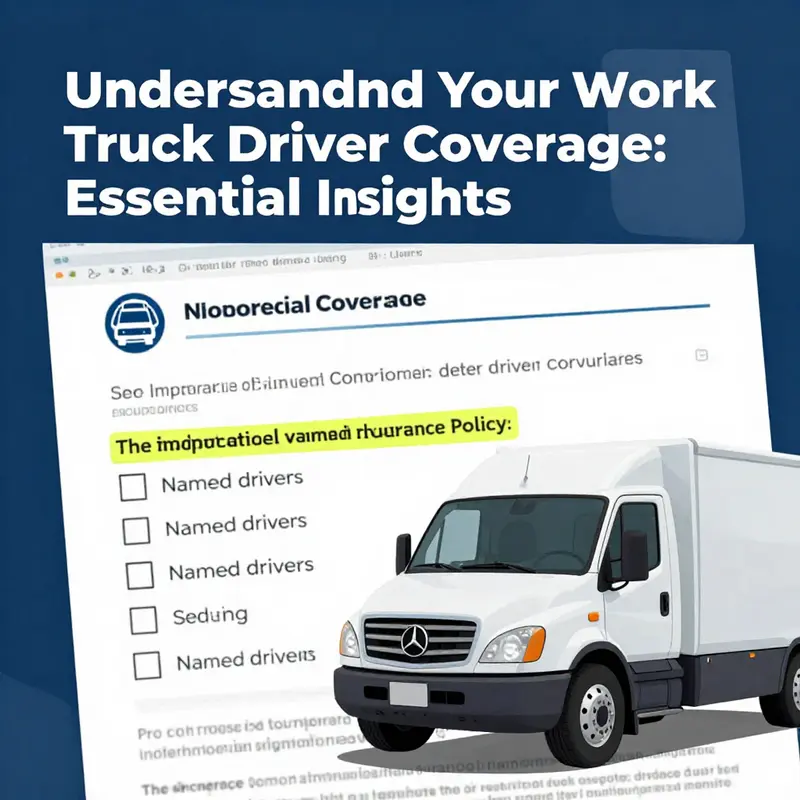
Every fleet operates on the edge between efficiency and liability, and a single driver can tilt that balance in a hurry. The question of who is allowed to drive a work truck under a commercial policy isn’t just about paperwork; it’s a core risk management decision. In practice, most commercial auto policies do not give blanket permission to everyone who might touch a wheel. They hinge on the concept of named drivers—individuals who are explicitly listed on the policy or approved through a formal endorsement. This distinction matters because it translates directly into coverage decisions when the unexpected happens. If a non-named driver ends up behind the wheel during a trip, the insurer may deny a claim, and the business could be left facing the full bill for damages, injuries, and legal costs. In the daily rhythm of a busy fleet, that risk can be tempting to ignore, especially when you know the driver and trust their skills. Yet trust has little to do with policy language and the risk profile that underwrites a premium. The policy is the contract that turns driving into a financial responsibility and, in return, defines the boundaries of coverage in every accident, breakdown, or cargo mishap.
The core mechanism that governs who may operate the vehicle rests in policy endorsements and driver designations. Commercial policies often require that all drivers be named or approved through an endorsement process. You might think of this as a risk ledger: each named driver contributes information about their driving history, experience, and training. The insurer compiles this data to assess risk and set premiums. When a driver who is not named takes the wheel, the ledger can suddenly appear unbalanced. The claim, if one arises, may be treated as outside coverage, with the resulting liability accruing to the business or owner. This is not only a financial issue but a legal one. In a worst-case scenario, an accident caused by an unlisted driver could expose the business to penalties, fines, or regulatory scrutiny that extend beyond the immediate claim.
Endorsements for additional drivers are a common feature of commercial policies. They function as formal additions that expand who is authorized to drive the insured vehicles. The process typically begins with notifying the insurer that a new driver will operate the vehicle and paying any incremental premium associated with that coverage. The endorsement then updates the policy documents, so the driver’s license status, driving history, and any relevant training records become part of the risk assessment framework. Without this formal step, even a qualified employee who routinely drives the truck can fall outside coverage. The importance of this becomes clear when you map the workflow of a typical fleet day: a field technician, a warehouse supervisor, or a route manager might each switch between roles and vehicles throughout the week. If the policy doesn’t explicitly track who is approved to drive, that flexibility can become a blind spot, one that insurers see as a gap in risk management.
There is also a critical distinction between “employment” and “coverage.” An employee may be legally authorized to operate a vehicle as part of their job duties, but insurance coverage must align with that reality. Employers bear responsibility for the actions of their drivers, but only within the scope of the policy’s coverage. If a driver acts outside that scope, the employer’s liability exposure grows. The practical implication is straightforward: make sure each driver who will operate a company vehicle is either named on the policy or explicitly approved through the endorsement process. This isn’t a mere formality; it’s a primary mechanism that defines when coverage applies and when it does not.
Vehicle use is another prong of the issue. The policy is built around the vehicle’s intended commercial purpose. Using the truck for personal errands, side jobs, or non-approved activities without proper authorization can render coverage invalid. An off-duty or misused vehicle becomes a risk not just for the driver, but for everyone the vehicle touches. In many fleets, a common misconception persists: if the driver is an employee and has access to the vehicle, coverage should automatically follow. The reality is more nuanced. If the policy specifies certain use cases or restricts personal use, deviations can trigger a policy denial or a reduced defense against claims. The NAIC, a leading source of guidance in this area, emphasizes that many commercial auto policies require drivers to be named or approved; otherwise, claims may be denied. This is a reminder that policy language is a framework for risk management, not a suggestion.
From a governance standpoint, the practical steps to keep coverage intact are simple in outline but demanding in discipline. Start with a complete inventory of everyone who operates company vehicles. Then verify their status on the policy: are they named, or do they require endorsement? Maintain a living file that tracks license status, driving history, training certificates, and any changes in role or vehicle assignments. When new drivers come on board, add them to the policy through an endorsement and, if needed, adjust premiums accordingly. Likewise, if someone leaves the job, update the policy promptly to remove their driving authorization. This is not merely administrative housekeeping. It reduces the risk of a coverage gap at the moment a claim arises and minimizes the chance that the insurer will dispute coverage due to unapproved use.
This dialogue between policy language and everyday operations also intersects with how fleets manage onboarding and ongoing driver training. A coordinated approach helps ensure that everyone who will operate a work truck understands not only the vehicle’s capabilities but the boundaries of authorized use. It builds a culture where compliance is part of daily practice rather than a quarterly checkbox. Some fleets turn to structured HR resources to support this alignment. For instance, in broader industry discussions, the Trucking HR Canada placement program benefits highlight how standardized onboarding and driver screening can support policy compliance. This kind of alignment—between human resources processes and insurance requirements—reduces the chance that a driver unknowingly falls outside coverage because they missed a formal step in the endorsement process. If a fleet is expanding or bringing on contract drivers, this integration becomes even more important, ensuring that everyone who steps behind the wheel is accounted for in the policy and treated as a named driver for risk and billing purposes.
In practical terms, the policy statement about named drivers is not a limitation meant to restrict operations but a guardrail that preserves coverage for people who are properly vetted and documented. The principle is straightforward: if you want the vehicle to be protected in the event of a fault, you must align the driving workforce with the policy’s terms. This is why many fleets invest in robust driver verification, routine training, and ongoing reviews of driver status. It’s also why you will often see a clear internal policy that any unapproved driver is prohibited from operating company vehicles, regardless of the level of trust, because the policy language itself does not know the ifs and buts of personal relationships or casual workarounds.
For fleets trying to balance flexibility with protection, a careful attention to policy terms, endorsements, and documented approvals is essential. The difference between a claim that is honored and one that is denied can hinge on whether the driver was properly named or approved. It is not a challenge of ethics or judgment but a matter of precise insurance mechanics and accountability within the organization. In the end, the goal is straightforward: keep coverage clean, keep operations efficient, and keep the fleet financially protected when the road turns unpredictable. The onus remains on the business to verify and maintain driver eligibility within the policy before any wheel turns.
To those steering fleets through the practical realities of coverage, a reminder stands clear. Review your policy terms with your insurer, confirm who is named, document endorsements, and maintain a up-to-date roster of authorized drivers. If there is doubt about a driver’s status, pause and resolve it before the vehicle leaves the lot. This is the cost of proactive risk management, and it pays back in smoother claims handling, clearer liability, and, ultimately, safer operations on the road. For fleets seeking additional guidance that bridges policy administration and driver onboarding, consider resources that focus on harmonizing human resources with insurance requirements, such as the HR Canada-driven placement programs referenced earlier. It can be a practical way to ensure your driver roster stays aligned with policy expectations and regulatory requirements across jurisdictions.
External reference for further baseline understanding: the Insurance Information Institute notes that commercial auto policies typically do not cover non-named drivers unless explicitly stated, underscoring the need for explicit driver designation in policy documents. See the broader guidance on commercial auto insurance to ground your internal processes in industry standards: https://www.iii.org/information-for-consumers/insurance-coverage/commercial-auto-insurance
null
null
Authorized Drivers and the Fine Print: How Commercial Policies Shape Who Can Drive Your Work Truck
In the world of commercial fleets, a work truck is more than a vehicle; it is a legal instrument that binds the company to a set of responsibilities, risks, and expectations. The question of whether other people can drive your work truck under a commercial policy is not a simple yes or no. It hinges on how the policy is written, who is listed as a driver, and how the vehicle is used within the scope of business operations. What many leaders discover is that coverage is as much about clarity as it is about power. The policy is, in effect, a contract that the insurer uses to determine when it will pay claims, what premiums apply, and whether the terms have been satisfied at the moment of an accident. While most commercial policies do accommodate the reality that a truck is often operated by more than one person, that flexibility comes with conditions that must be understood and managed with care.
At the core, most commercial auto policies distinguish between primary drivers and additional or authorized drivers. An employee may legitimately operate a company vehicle as part of their duties, but that authorization must be reflected in the policy through explicit naming or a formal endorsement. Without that recognition, a driver—even a licensed employee with a clean driving record—may inadvertently become a gap in coverage. In the event of a crash, the insurer could deny the claim if the operator falls outside the named or approved driver roster. The business would then bear the financial burden of damages, medical costs, and potentially legal expenses. This is not merely a theoretical risk. It is a practical consequence that has prompted many fleets to implement structured driver-management processes that align policy terms with daily routines in the yard and on the road.
Policy endorsements are the mechanism by which coverage expands to include more drivers. The typical path is straightforward: you notify the insurer, provide information about the additional driver, and pay any incremental premium that results from adding a new operator. This process is not just about paperwork; it is a risk-management decision. Each added driver carries a different exposure profile—driving history, experience with the specific vehicle type, and familiarity with the company’s safety programs. In exchange, the insurer shares liability for that driver’s actions while they are operating the vehicle within the policy framework. A well-maintained roster of authorized drivers helps ensure that coverage remains intact even as schedules shift and new hires come online.
Understanding the line between employment and coverage is essential. Employers are often exposed to liability for the actions of their drivers when those drivers are performing duties within the course and scope of employment. However, this exposure is conditional on the driver being covered under the policy at the time of an incident. If a driver operates without appropriate coverage, the insurer may treat the operation as outside the policy’s protection. The consequences extend beyond the accident itself; the business could face premium surcharges, policy cancellation, or difficulty securing coverage in the future. For fleets, this creates a compelling incentive to maintain rigorous control over who is allowed to drive, when they are allowed to drive, and under what conditions the vehicle may be used.
But the landscape is not one-and-done. Insurers often address the reality that a truck is used by more than just a single named driver through concepts such as permissive use. In many policies, permissive use allows for occasional or temporary operation by individuals who are not named as primary drivers, provided they have permission and meet basic criteria like holding a valid license and being deemed a qualified operator. Yet permissive use is not universal, and it is not universal in the same way across all insurers or jurisdictions. The difference between a permissive use allowance and a formal endorsement can determine whether a claim is paid after an incident. The nuance matters because permissive use can come with limitations, such as caps on coverage for non-listed drivers or stricter conditions for when the policy applies to a third party’s operation. This is why a company cannot rely on a general sense of “anyone with a license” when the truck is in service; it must be anchored in the policy language and the insurer’s rules.
Beyond who is driving, how the vehicle is used is equally important. The vehicle must be employed for its intended commercial purpose. Using a commercial vehicle for personal errands, weekend tasks, or non-employee use without proper authorization can jeopardize coverage just as surely as driving without proper authorization. The line between business and personal use is not just about semantics. It affects how the insurer assesses risk, whether the vehicle is being used in accordance with a safety program, and whether the driver’s actions fall within the policy’s stated exclusions or endorsements. The NAIC notes, for example, that many commercial auto policies require that all drivers be named or approved through a formal process. When a driver bypasses that process, the claim can be denied and the business left to address the ensuing damages. This illustrates how important it is for policy terms to reflect the realities of fleet operations and for fleets to consistently align day-to-day practices with those terms.
For companies that operate fleets across borders or within multiple jurisdictions, the complexity rises. State and provincial regulations intersect with policy terms, and the requirements around driver authorization can vary. The risk is not only financial but also operational: a denied claim can disrupt work, trigger investigations, or lead to disputes with customers who rely on timely delivery and safe operations. In such environments, it is prudent to treat the driver roster as a living document—regularly updated, accurately categorized, and cross-checked with the insurer’s endorsements. The practice of maintaining up-to-date driver records is not just about compliance; it is about protecting the continuity of service and the company’s reputation for reliability.
Within this framework, many fleets find value in formal driver-staffing programs and related human-resources practices that help ensure drivers meet safety standards and licensing requirements before they ever climb into a work truck. For organizations navigating cross-border operations or complex staffing needs, supported arrangements like Canada-based driver placement programs can provide structured pathways to identify, screen, and place qualified drivers in suitable roles. These programs can serve as a practical bridge between policy requirements and day-to-day staffing realities. For more on formal driver staffing approaches in Canada, see the discussion around trucking HR integration and placement programs in industry resources such as Trucking HR Canada placement program benefits. This reference underscores a broader point: effective risk management in trucking is not purely an insurance matter; it intersects with human resources, safety training, regulatory compliance, and operational discipline. The goal is not to trap drivers in red tape but to create a durable system where authorized drivers, proper endorsements, and compliant use work in concert to keep a fleet moving safely and predictably.
The practical takeaway is simple, but its implementation requires deliberate effort. Start with a clear understanding of your policy’s driver provisions. Confirm whether the coverage includes all drivers who operate the vehicle under the company’s control and whether any endorsements are required for specific individuals. Conduct an internal audit of your driver roster, licenses, and driving history. Align job roles, vehicle assignments, and daily routines with policy terms. Train managers to recognize when a driver’s eligibility or license status changes and to communicate those changes to the insurer promptly. Establish and enforce a formal process for adding new drivers, including obtaining necessary documentation, verifying qualifications, and documenting permissions to operate. Make use of endorsements when needed, and understand the premium implications so that financial planning remains accurate and transparent.
Fleets should also keep a close watch on how and when vehicles are used. If a vehicle is called upon to serve non-operational tasks or to operate in contexts outside its intended commercial purpose, it should trigger a review of coverage and a possible update to endorsements. This is not merely a compliance measure; it is a practical safeguard against claim complications. By treating coverage as a dynamic asset rather than a static shield, a company can better adapt to changes in staffing, routes, schedules, and client demands while preserving the integrity of its insurance protection.
In summary, the question of whether other people can drive your work truck under a commercial policy is answered in the affirmative—so long as those drivers are properly authorized, the vehicle is used within policy parameters, and the appropriate endorsements are in place. The policy’s language, the insurer’s rules, and the state or provincial regulations collectively determine the boundaries of coverage. The consequences of failing to observe these boundaries can be severe: denied claims, increased premiums, or even policy cancellation. Yet with careful management—maintaining up-to-date driver rosters, ensuring alignment between employment practices and coverage, and proactively engaging with insurers—you can protect your operation from both financial risk and operational disruption. The goal is to create a seamless system where authorized drivers, safety training, and regulatory compliance reinforce each other, allowing the fleet to perform its essential work with confidence.
External resource: NAIC provides authoritative guidance on how commercial auto policies handle driver authorization and coverage. See https://www.naic.org for more details.
Who Can Steer Your Work Truck Under Commercial Policy: A Practical Guide to Endorsements, Coverage, and Compliance
The question of who can drive a company’s work truck under a commercial policy is more than a curiosities exercise for risk managers. It sits at the intersection of insurance terms, everyday operations, and the practical need to keep a fleet moving. For many businesses, the simplest path is not the automatically assumed one. Coverage does not automatically extend to everyone who might take the wheel. Instead, it hinges on how the policy is written, who is listed as a driver, and whether the right endorsements are in place. Understanding these nuances helps a business avoid costly gaps when a driver change happens, a new temp enters the scene, or an employee shifts duties. It also shapes the way a company trains its people, assigns vehicles, and documents permissions. In truth, a commercial auto policy is more of a contract of risk management than a blanket license to drive. And like any contract, it requires careful attention to wording, endorsements, and the rules the insurer sets around use, exposure, and liability.
At the heart of most commercial policies is the concept of named drivers. The policy may specify who is authorized to operate the insured vehicle. If a driver is not named, they may not be covered in the event of an accident. That distinction is not a minor technicality. It translates into real-world consequences: if a non-listed driver causes an incident, the insurer could deny the claim. The business may then face out-of-pocket costs for repairs, medical expenses, and potential legal liabilities. In many cases, a denial of coverage triggers a broader exposure for the company, including potential civil liability for negligent entrustment, which occurs when an employer places an vehicle with a driver who is a poor match for the job or for the vehicle.
For businesses that rely on a flexible workforce—their own employees, seasonal help, contractors, or temporary drivers—the named-driver rule can feel restrictive. That is where endorsements come into play. A well-chosen endorsement can expand who is permitted to drive without forcing the business to name every possible driver on the policy. The most common option is the Non-Owner or Permissive Use Endorsement. This endorsement recognizes that a driver with a valid license, who has the insured’s permission, may need to operate the vehicle. It effectively broadens coverage beyond the named drivers while still maintaining a controlled and auditable framework. The policyholder typically must notify the insurer and may incur a modest premium adjustment, but the payoff is the practical ability to keep operations flowing when staffing changes or temporary workloads spike.
Another widely used tool is Hired and Non-Owned Auto Liability, or HNOA coverage. This is a separate layer of protection, designed to shield the business when cars or trucks not owned by the company are used for business purposes. HNOA is particularly relevant for fleet operations that rely on rental trucks, borrowed vehicles, or contractors’ vehicles while in the course of business. It is not a universal remedy, though. HNOA addresses liability for the vehicle’s use, not necessarily every contributing factor in a crash. Depending on the policy structure, HNOA may sit alongside the primary policy or under a broader umbrella of commercial auto protection. In practice, end users should treat endorsements as the primary mechanism to tailor coverage to actual driving patterns rather than as a vague assurance that “someone will be covered.”
Beyond endorsements, policy limits and exclusions shape every decision about who should drive. Even with permission or broader access, the insurer can impose limits based on driver history, license status, or experience. An experienced driver with a clean record is not automatically the only safe option, but the risk profile of a driver can influence premium, deductibles, and the likelihood of coverage for a particular incident. Businesses should review endorsements and driver lists with the same care they apply to fleet maintenance schedules. If a driver has a suspended license, a high-risk history, or a pattern of traffic violations, the policy may limit coverage or impose additional conditions. The goal is not to punish employees but to manage risk in a way that aligns with the policy’s terms and the company’s risk appetite.
The practical effects of these choices extend into everyday operations. A company that allows personal use of a work truck, or that permits employees to drive outside the vehicle’s intended commercial purpose, may find coverage altered or voided. The policy often requires that vehicles be used for their stated business purpose. Personal errands, commuting after-hours, or travel unrelated to the business can complicate coverage if not explicitly authorized. That is why many businesses adopt formal guidelines: who may drive, under what circumstances, and what constitutes permissible use. A written policy, reviewed with drivers and reinforced by training, helps ensure everyone understands what is permitted and what is not. The best policies also specify steps for temporary drivers, contractors, or substitutes who might not have permanent status but who still need to operate the vehicle on occasion.
Internal governance matters as well. The company’s own rules may be stricter than the insurance policy requires, and that is a prudent stance. An organization might require a minimum amount of driving experience, a background check, or a certain license level before a driver is allowed to operate a company vehicle. In practice, the insurance policy should be the baseline, while the company adds additional safeguards. This layered approach reduces the likelihood of accidental gaps between what the policy allows and what the business expects. It also makes audits and claims easier. When a driver is involved in a claim, a well-documented roster showing who was authorized, under what endorsement, and for what vehicle can speed up the adjustment and help demonstrate due diligence.
For teams that manage fleets across locations, the challenge is maintaining accurate, up-to-date records. A driver roster may be in a folder in the office, yet a policy endorsement can remain under the control of a broker or an insurer’s account manager. The mismatch creates risk. The best practice is to synchronize the driver roster with endorsements, licenses, and any changes in job duties. That means regular license verification, timely updates to endorsements, and a clear protocol for adding or removing drivers. If a driver moves from a company-owned route to a contract arrangement, or if new hires join as part of a seasonal surge, each shift should be evaluated for coverage. A policy that is quiet on these points invites last-minute scramble and the temptation to assume coverage will follow with a simple breath of “they’re a driver.” In reality, coverage is a contract that must reflect the reality of who is behind the wheel and for what purpose.
The broader regulatory and guidance landscape also matters. Industry guidelines suggest that carriers and insureds approach coverage as a living document—something that should be revisited whenever operations shift. While the specifics vary by jurisdiction and insurer, the rule of thumb remains: name drivers or obtain a robust endorsement, keep careful records, and ensure the vehicle’s use aligns with the policy’s scope. The National Association of Insurance Commissioners provides definitions and guidelines that help standardize expectations across markets. The guidance emphasizes that most commercial auto policies require drivers to be named or approved through a formal endorsement. This helps minimize disputes when a claim is filed and clarifies who may be behind the wheel at any given time. For the most accurate information based on a specific policy and state regulations, always contact the insurance provider directly. If a business is contemplating changes in driver utilization, reviewing the policy with an agent before making adjustments can prevent unintended gaps in coverage. As a practical matter, many fleets benefit from a brief internal assessment that maps drivers to vehicles, endorsements to use, and exceptions that require written waivers.
For teams seeking deeper context on the regulatory ecosystem that touches cross-border operations, an industry overview on cross-border regulatory issues can illuminate how drivers must adapt to different legal regimes when vehicles travel between jurisdictions. See the discussion on cross-border regulatory issues in trucking for a broader framing of how endorsements and policy terms translate into real-world mobility across borders. cross-border regulatory issues in trucking
In sum, yes, other people can drive your work truck under a commercial policy, but only if the policy and endorsements are aligned with who is driving, for what purpose, and under what conditions. A practical approach starts with a clear driver roster, moves through appropriate endorsements like Non-Owner/Permissive Use or HNOA, and ends with disciplined record-keeping and ongoing conversations with the insurer. It is not enough to assume coverage will follow employees simply because they have a license or because the vehicle is essential to operations. Coverage follows the contract, and the contract is most effective when it reflects the actual use, the people involved, and the risk tolerance of the business. When in doubt, the safest course is to involve the insurance professional early and to keep the policy document and endorsee list in sync with day-to-day operations. The insurance policy is not a barrier to efficiency; it is a scaffolding that enables safe, compliant, and reliable mobility for the business and its people.
External resource: For a formal framework and definitions, consult the National Association of Insurance Commissioners guidelines: https://www.naic.org
Final thoughts
In conclusion, understanding whether other individuals can drive your work truck under a commercial policy is crucial for safeguarding your business from potential liabilities. Emphasizing the importance of naming drivers, adhering to guidelines for authorized use, and recognizing the dangers posed by unauthorized drivers will help you maintain compliance and protect your assets. By navigating policy endorsements and working closely with your insurance provider, you can ensure that your operations remain secure and efficient, allowing you to focus on growing your business.