
The commercial trucking industry is undergoing a significant transition with an evolving landscape of transmission technologies. The choice between manual and automatic transmissions impacts not just vehicle performance but also operational efficiency, driver comfort, and economic viability. This article delves into the traditional reliance on manual (stick shift) transmissions, examines the rise of automated solutions, and articulates the implications for logistics companies, construction enterprises, and small delivery fleets. Each chapter will explore a specific aspect of this transition, providing a comprehensive overview that aims to guide business owners in making informed decisions that best suit their operational needs.
Beyond the Stick: How Transmission Choices Are Shaping Modern Commercial Trucks
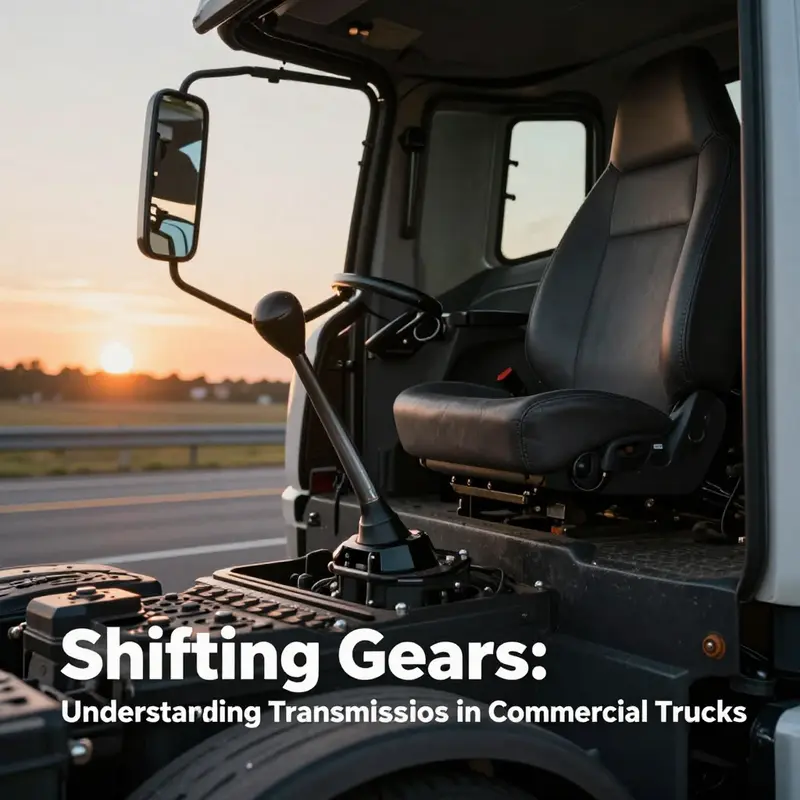
The highway hum you hear today is a soundtrack of evolving transmission technology, and it does more than move a vehicle from point A to point B. It reflects a sprawling decision matrix that fleets and drivers navigate every day. For decades, the manual transmission—often described by its “stick” control—stood as the default in many commercial trucks. It offered direct, tactile engagement with the drivetrain, a simple mechanism that rewarded those who mastered clutch timing and rough-road finesse. Yet the story is no longer a simple binary between stick shifts and automatic gearboxes. The landscape now includes automated manual transmissions, traditional automatics, and a spectrum of hybrid approaches that blend human control with computer-assisted shifting. This shift is not a fad rooted in passenger-car fashion; it is a strategic response to real-world demands—fuel economy, driver well-being, maintenance costs, and the operational realities of long-haul routes, urban delivery bunks, and worksite logistics.
Manuals still matter, and they matter in specific contexts. The appeal of a well-judged manual lies less in romance and more in control. When a truck is laden to the gills, perched on a grade, or negotiating a tight urban corner, a driver with a precise hand on the gear lever can time shifts to maintain engine torque, maximize traction, and implement engine braking exactly where it is needed. An 8-speed manual, for instance, provides a practical spread of gears that accommodates highway cruising and tight climbs without forcing the engine into a narrow rpm window. The smoothness of modern gear transitions, aided by refined synchronizers and precisely engineered gearsets, makes these shifts less jarring than they once were. For drivers who align with the rhythm of a vehicle, the manual transmission remains a familiar, reliable tool that rewards skill with efficiency and predictability, particularly in regions with robust vocational demand where rugged workhorse performance matters as much as outright speed.
But the industry’s trajectory is moving toward automation in various forms. Automated manual transmissions and fully automatic transmissions are increasingly common as fleets seek to curb fatigue on long, repetitive routes and to streamline operation across diverse driving conditions. In these systems, the clutch actuation and gear selection are controlled by a computer, tuned to optimize fuel economy, torque delivery, and shift quality. The driver’s experience may feel like that of an automatic, but the underlying logic can still respect the engine’s torque curve, the vehicle’s weight distribution, and the terrain ahead. In practice, many AMTs and automatics offer a manual mode that gives drivers the option to preselect gears when conditions demand overtaking power or precise engine braking. This hybrid functionality preserves some sense of driver agency while leveraging electronic control to deliver smoother shifts and more consistent performance under demanding workloads.
Fuel economy is a central driver of the shift away from pure manuals. Electronic control can coordinate throttle input with gear selection to minimize fuel burn across varied driving scenarios. In long-haul operations that repeatedly blend hills, descents, and steady highway cruising, the difference in efficiency between a well-tuned automatic and a carefully driven manual can be meaningful over the lifespan of a fleet. Yet this is not a universal indictment of manual gearboxes. In markets where the cost of equipment, maintenance expertise, and spare parts is a critical constraint, manuals retain a practical edge. Their mechanical simplicity translates into lower maintenance costs and easier field servicing, particularly in environments where skilled technicians or advanced diagnostic tools are scarce. This pragmatic value is not theoretical: it translates into fewer unexpected downtime events and more predictable maintenance budgets in many developing regions where reliability underpins operational viability.
Beyond the economics, there is a human dimension to the transmission choice. Driving a manual requires a trained hand, a practiced sense of when to seek torque with a precise clutch or when to ride the peak of the power band. It demands a learning curve, a professional development arc that becomes part of a driver’s identity and career progression. In vocational sectors—from utility fleets to municipal services—this specialized skill can be crucial during low-speed maneuvers, heavy-lift tasks, and intricate roadwork where control and gradual acceleration matter for safety and efficiency. Conversely, the automation trend reduces repetitive strain on drivers, which is not merely a comfort issue but a safety and retention issue across large fleets that operate around the clock. Automated systems can dampen fatigue, standardize performance across a mixed-driver workforce, and help managers meet hours-of-service constraints by reducing the cognitive load on drivers during long shifts.
The regional dimension is equally telling. In regions with rugged infrastructure or where logistical simplicity matters most, manual transmissions often endure as the practical baseline. Their lower upfront cost and straightforward maintenance can be decisive where service networks are sparse, fuel quality varies, and road conditions demand a certain resilience that a basic mechanical system can deliver. In contrast, urban or regional fleets that confront heavy stop-and-go traffic or intricate intermodal transfers frequently adopt AMTs or automatics for their smoother operation and better consistency in fluctuating conditions. This is especially advantageous when drivers are moving between challenging terrains, such as steep approaches or frequent loading and unloading, where shift logic can reduce the jolt that accompanies abrupt gear changes and can contribute to longer drivetrain life by maintaining more stable torque delivery.
Conversations about transmission choices inevitably touch on regulatory and market pressures as well. Emissions targets, fuel standards, and evolving safety requirements shape the cost-benefit calculus of each option. In a climate where policymakers push for greater efficiency and lower total cost of ownership, the ability to optimize gear selection automatically becomes a compelling argument for automated systems. At the same time, fleets must weigh the reliability and availability of maintenance expertise. In some markets, a simple manual gearbox can be easier to repair with basic tools and knowledge, a factor that translates into dependable uptime in remote or harsh operating environments. The industry’s ongoing balancing act—between control, efficiency, and reliability—drives experimentation with different configurations on different routes and for different loads. The result is a mosaic of choices rather than a single universal standard.
In this broader context, the chapter’s central claim remains clear: no, not all commercial trucks are stick shifts. The pervasiveness of manuals is not fading; rather, it is being recontextualized within a spectrum of transmission technologies. Fleets that prize driver familiarity, low capital expenditure, and straightforward maintenance will continue to value manuals for specific roles and routes. Those that aim to reduce fatigue, stabilize performance across a diversified driver pool, or squeeze incremental efficiency from every mile will gravitate toward automated solutions. Many operators will land somewhere in the middle, leveraging automated manuals with a manual override to blend the best of both worlds. This dynamic is not a sign of weakness in traditional gearboxes but a response to the evolving demands of a highly decentralized and increasingly data-driven logistics ecosystem.
In navigating this shift, fleet managers and drivers alike need access to clear information about how different transmissions behave under real-world conditions. It is not enough to know that a particular gearbox exists; the practical implications—shift feel, clutch wear, fuel economy, maintenance intervals, and the ease of training new drivers—must be understood in light of each operation’s unique profile. The industry’s ongoing exploration of transmission technology is, at its core, a search for reliability under pressure, efficiency over distance, and safety across every mile of road. As OEMs seek to balance emissions targets with performance, as routes become more diverse, and as the workforce becomes broader in experience and expectation, the transmission choice will remain a central lever in a fleet’s strategy. For readers seeking a deeper look at how the industry is navigating these pressures, consider the broader dialogue around emissions regulations and how manufacturers are adapting their transmission offerings to meet evolving standards OEMs seek clarity in emissions regulations.
External readings reinforce the practical reality that manuals still matter in commercial trucking, even as automation grows. While passenger vehicles have largely shifted to automatics, the commercial sector preserves a more nuanced balance between control, cost, and durability. The ongoing discussion highlights a professional truth: the right transmission choice is not an absolute but a fit—matching route structure, driver skill, maintenance capabilities, and financial constraints to the operational goals of a fleet. This layered approach helps explain why, on busy highways and rural supply chains alike, a manual gearbox may still be the right tool in the toolbox, while automation quietly handles the grinding, shifting, and fatigue factors that can wear crews down over time. The result is a transportation system that remains adaptable, resilient, and capable of delivering on the promise of reliable, efficient service in a world that demands more miles per gallon, fewer downtimes, and smarter, safer operation at every turn.
null
null
Shifting the Fleet: Why Not All Commercial Trucks Run on Manual Transmissions
The image of a vast highway of trucks, each one a mechanical bridge between an endless supply chain and consumer life, often evokes the stark contrast between a clutch and a gearshift—that familiar image of a manual transmission. Yet the trucking world is not bound to a single legacy trait. Not all commercial trucks run on manual transmissions, and the shifting landscape is more nuanced than a single preference. In the current era, fleets balance tradition with technology, looking for reliability, efficiency, and easier operation across a diverse set of routes, climates, and driver pools. The once-dominant manual box remains present in niche operations and certain driver communities that prize direct control and a familiar interface. But across many segments—especially long-haul and high-traffic corridors—the automatic and automated manual transmissions are becoming the standard, and the reasons for that shift are cumulative rather than arbitrary.
The debate between manual and automatic is not merely about preference. It is about how a vehicle delivers power and how a driver interacts with that power over thousands of miles, week after week. Manual transmissions give a driver tangible, tactile control over engine braking, throttle response, and the exact gear ratio that a steep grade or a tricky pass may demand. In some contexts, that control translates into a sense of mastery and a feeling of connection to the machine. Yet this same level of control comes with costs. The manual drivetrain requires constant attention, precise coordination, and repeated physical effort during frequent starts, stops, and climbs. For drivers who spend hours behind the wheel in congested corridors or across monotonous stretches, that physical and cognitive load compounds over time, contributing to fatigue and higher turnover. These dynamics aren’t merely theoretical; they shape recruitable labor pools and the economics of training, retention, and safety programs that fleets depend on to maintain reliability.
Automated options, by contrast, codify control into software and hydraulics, removing the need for a driver to operate a clutch pedal and to manually synchronize gears. Automated manual transmissions and fully automatic transmissions embody a philosophy: keep the engine in its most efficient bands, smooth the shift to minimize drivetrain wear, and reduce the cognitive load on the operator. In practice, this translates to more consistent fuel economy, steadier acceleration, smoother descents, and fewer gear-selection mistakes in hectic traffic. The result is not just a calmer ride for the driver but also a healthier life for the vehicle’s mechanical heart, as smoother shifts can reduce peak torque spikes, minimize gear whine, and extend component life in real-world service.
Fuel efficiency has been a focal point of the modernization trend. Advanced controls enable the transmission to anticipate road conditions and load, selecting gears that maximize efficiency without sacrificing performance. This integration of software logic with mechanical hardware is a keystone of what operators seek when they evaluate total cost of ownership. In practice, the gains can vary by route profile and operating habits, but industry studies have shown meaningful improvements under a range of conditions. A notable perspective from research in the energy and transportation sphere points to better fuel economy with advanced automatic systems relative to traditional manuals, particularly on mixed routes with varying speeds, loads, and grades. The impact is not uniform, but it is consistent enough to influence purchase decisions, equipment cycles, and the way fleets plan for future expansion.
Beyond raw numbers, the human element remains central. Automatic transmissions lower the barrier to entry for new drivers, enabling broader recruitment from a wider talent pool. The training footprint shrinks when the learning curve is gentler and the emphasis can shift from clutch coordination to route planning and safety protocols. In fleets that compete for drivers with specialized skills or in regions facing labor shortages, that reduced training overhead translates into faster onboarding, better retention, and more predictable capacity. In other words, automation can contribute to a smoother, more stable operation even when market conditions are volatile. This dynamic is not a rejection of manual mastery but rather an acknowledgment that the industry now has more ways to balance driver capability, safety, and uptime.
The choice between transmission types also intersects with maintenance strategies and the long arc of fleet modernization. Manual transmissions demand a certain discipline: careful clutch modulation, precise shifting under heavy load, and meticulous attention to wear patterns on the synchronizers and gears. When fleets operate at scale, these subtleties compound into maintenance scheduling, downtime, and the cost of parts and skilled labor. Automatic and automated transmissions, while not free of maintenance concerns, tend to deliver more uniform shifting behavior and predictable wear. The maintenance narratives entwine with fuel and labor costs to shape total ownership costs. In short, while a manual transmission can deliver direct, confident control in certain scenarios, automatics offer a convergence of efficiency, safety, and predictable maintenance that modern fleets find increasingly compelling.
The industry is not a monolith, and regional differences surface in choosing a transmission strategy. Long-haul operators who drive large portions of their miles across consistent highway profiles may derive more measurable benefits from automatics, especially when driver fatigue and uptime are critical. Regional and urban fleets, with frequent stops and starts, may derive different benefits. In some cases, drivers who enjoy the tactile engagement of gear work may prefer manuals for short trips or for operations in challenging terrains where the driver’s input can matter a great deal in keeping a vehicle on a hill or through a tricky segment of road. The truth is pragmatism guides decisions more often than any single romantic attachment to a particular gearbox. Operational realities—the mix of routes, the skill and turnover of the driver workforce, the availability of skilled technicians, and the total cost of ownership over the vehicle’s life—drive the adoption curve more than nostalgia or tradition.
As fleets contemplate modernization, they also consider performance in extreme conditions where the reliability of a transmission can be tested to the limit. The challenges of harsh climates, heavy loads, and irregular maintenance schedules demand resilient engineering and confident operator support. For insights into how automated systems hold up under stress, see discussions of extreme-conditions testing, which emphasize how transmission logic and hardware respond to heat, vibration, and sustained high torque. These discussions, while not brand-specific, help fleets weigh the risk of prolonged exposure to demanding environments against the benefits of automated precision. extreme-heat testing insights.
What does this mean for the every-day reality of a truck operator who wonders whether to fight with a stick or to let a computer do the steering? It means embracing a spectrum rather than a dichotomy. The manual option remains valuable for certain tasks, including climbs with a demanding torque profile or situations where a driver’s experienced gear selection can yield performance gains in real time. Yet the automated route has become the default for many fleets because it aligns with broader objectives: improving driver wellbeing, reducing variability in operation, and delivering more consistent, monitorable efficiencies across a large, dispersed workforce. The technology is not about replacing drivers; it is about equipping them with tools that match the pace of modern logistics and the scale of modern supply chains.
This shift also reframes the conversation about training, recruitment, and safety. When a fleet leans into automatics, the initial investment in training may shift toward route familiarity, safety protocols, and vehicle systems literacy rather than clutch coordination. This approach can shorten onboarding times, help newcomers gain confidence faster, and translate into more rapid ramp-up of productive capacity. It also opens opportunities to re-skill experienced drivers who want to extend their careers without the physical demands of manual shifting. The human factors—fatigue, attention, stress, and motivation—intertwine with the mechanical realities of the gearbox, and automation provides a path to mitigating some of the long-term costs associated with fatigue-driven errors or turnover.
While the notion of a single, universal transmission type for all trucks remains appealing to some, the industry’s trajectory is toward a more nuanced ecosystem. Fleets increasingly adopt a hybrid mindset: retain manuals in specialized niches while expanding automation where it makes the most sense for efficiency and reliability. This evolving ecosystem invites a broader set of decisions—from engine tuning to aftertreatment integration and from driver workload management to maintenance planning. It also signals a longer-term trend: as hardware and software co-evolve, the line between mechanical and electronic control grows blurrier, yielding powertrain architectures that optimize both performance and endurance under real-world conditions. In other words, the question is less about a binary yes or no and more about where, when, and how to deploy each option to achieve operational harmony and economic efficiency.
The broader implications for the industry relate to cost structures, fleet composition, and lifecycle planning. For many operators, automatics align with the objective of driving down daily operating costs while maintaining or improving service levels. For others, especially those with heritage fleets or particular regional needs, the manual remains a practical tool in the toolbox. The ongoing evolution means that buyers, drivers, and technicians must stay informed about the trade-offs, the training requirements, and the long-term maintenance implications of each choice. In the end, the discontinuity between manual and automatic is not a rupture in tradition but a consolidation of capabilities. Fleets build resilience by selecting the transmissions that best fit their routes, their labor markets, and their financial realities, and they do so with an eye toward simplifying operations without sacrificing performance.
For readers seeking context on industry-wide trends, recent industry resources point to growing adoption of automated options as a strategic priority that influences training, maintenance, and capital planning. The discussion is grounded in data that reflects how automation—whether in a fully automatic form or as an automated manual transmission—can contribute to reductions in fuel use, driver fatigue, and emissions in many operating profiles. In this sense, the question shifts from whether all trucks should be stick shifts to how fleets can balance the benefits of automation with the realities of their particular mission, infrastructure, and workforce. As the market continues to evolve, the conversation will naturally broaden to include not only gearboxes but the integrated powertrain ecosystems that connect engine management, transmission logic, and real-time fleet data to support safer, more efficient, and more reliable freight transport.
External resource: https://www.trucking.org/industry-trends/automatic-transmissions-in-commercial-trucks
From Clutch to Computer: The Economic Edge of Automated Transmissions in Commercial Trucking
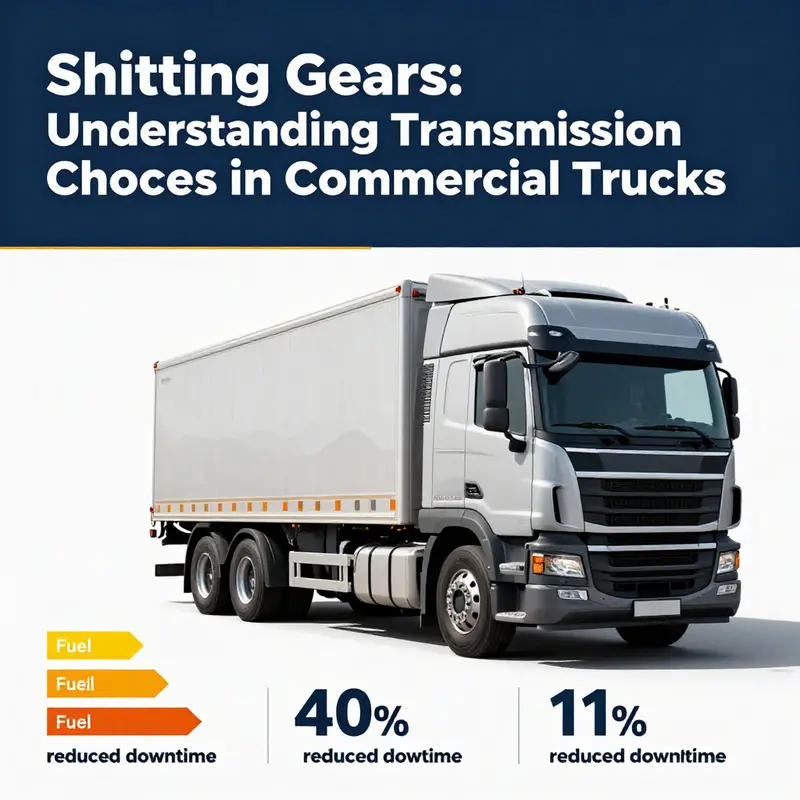
The answer to whether all commercial trucks are stick shift is no. Manuals persist in niche fleets, but today many tractors rely on automated manual transmissions (AMTs) or fully automatic transmissions. The shift is driven by labor costs, driver shortages, and the desire for consistent shifts and reduced fatigue, not just driver comfort. AMTs can also improve fuel efficiency through optimized shift points and engine torque delivery, helping lower cost per mile over large fleets. Uptime and maintenance can improve when automated systems reduce mis-shifts and wear. Safety benefits and risk management contribute to lower long-run costs through fewer incidents and downtime. While upfront capital costs are higher for automated systems, long-term savings from fuel, maintenance, and utilization often justify the investment in long-haul operations; regional fleets may vary based on routes and driver training needs. Overall, the transmission is increasingly treated as a strategic asset tied to miles, routes, labor markets, and service objectives, rather than a simple mechanical choice.
Shifting Gears, Shaping the Fleet: The Realistic Future of Transmission Technologies in Commercial Trucks
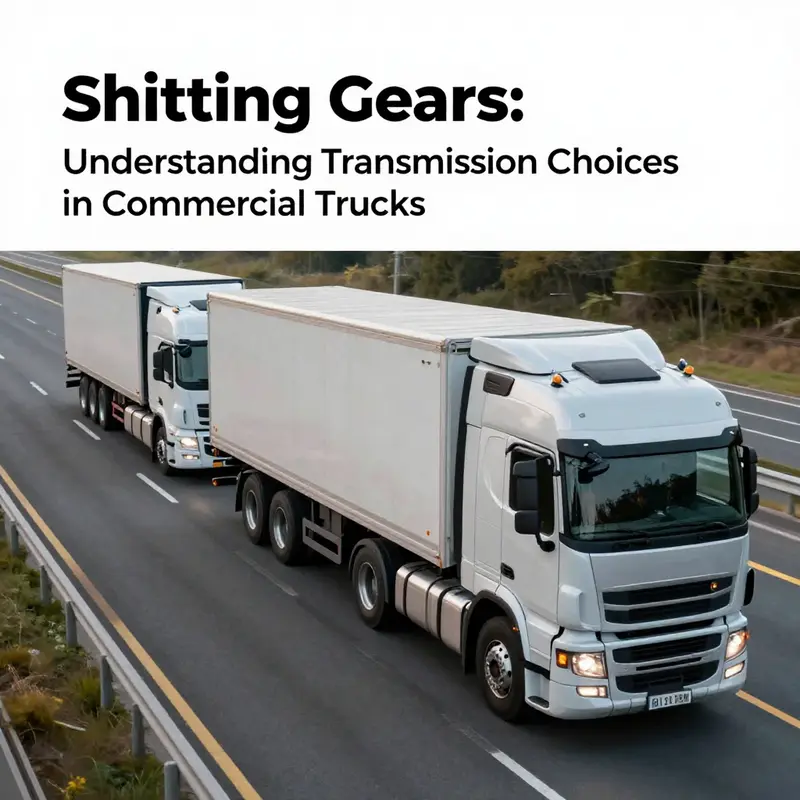
The question of whether all commercial trucks are stick shift has already grown outdated in the face of a broader shift toward automation, electrification, and smarter drivetrain design. What once looked like a simple choice between a manual lever and a pedal is now part of a larger conversation about how fleets balance reliability, efficiency, and cost in a rapidly changing logistics landscape. In this chapter, the discussion moves beyond binary labels. It follows the thread from traditional, mechanically controlled manual transmissions to automated manual transmissions, fully automatic systems, and the emerging hybrids that blend diesel power with electric drive. The result is a nuanced picture: there is no single path, and the best choice depends on the mission, the route structure, and the level of capital a fleet can responsibly invest. What remains constant is the central role of transmission technology in shaping fuel efficiency, driver workload, and uptime across the spectrum of commercial trucking.
Long-haul operations have long favored manual transmissions for a sense of direct control and perceived durability. Those advantages persist in some corners of the industry, where drivers value engine braking, torque management, and predictable performance under heavy loads. Yet the same realities that drive driver fatigue on multi-day runs—congestion, detours, and the variability of headwinds—are pushing fleets toward automation that reduces fatigue and improves consistency. Automated manual transmissions, which combine the familiar control logic of a manual with the seamlessness of an automatic, have become a practical bridge. They maintain precision in shifting while smoothing out the rhythm of long, steady hauls. In many new model configurations, the shift logic is tuned to optimize fuel economy, engine braking, and gear selection during sustained highway operation. While some operations still prefer a truly manual feel, others are migrating toward fully automated systems that operate without driver input in routine corridor travel. This evolution reflects a broader aim: to reduce total cost of ownership by lowering fuel consumption and decreasing wear on driveline components, all while preserving reliability under heavy use.
Beyond the automatic and manual dichotomy lies the emerging space of hybrid transmissions. These solutions deliberately bridge the gap between traditional diesel propulsion and electric drive, enabling fleets to capture the advantages of electrification without overhauling entire powertrain architectures. In heavy-duty applications, a hybrid transmission can coordinate a diesel engine with an electric motor to optimize torque delivery during starts and stops, as well as during grade ascent. Regenerative braking recoups energy that would otherwise be wasted in braking, rechanneling it to assist propulsion when the truck reaccelerates. The practical impact is meaningful: lower fuel consumption on routes characterized by frequent acceleration and deceleration, reduced CO2 emissions, and the potential for payload stability even as energy flows shift toward electricity. The idea of a hybrid system is not merely theoretical. Real-world testing of these architectures shows that they can deliver measurable reductions in emissions and operating costs without sacrificing payload capacity or range. In metropolitan delivery and regional-haul scenarios, hybrids can provide a smoother transition to full electrification, extending the useful life of existing fleets while infrastructure catches up with demand.
The broader push toward electrification hinges on two intertwined factors: battery technology and charging infrastructure. The drivetrain is only as effective as the ability to replenish stored energy, particularly for electric and hybrid configurations. Long-haul routes, with their expansive range requirements, demand charging networks that are reliable, widely distributed, and capable of high power, with fast charging that minimizes downtime. This logistical backbone is not yet ubiquitous, which is why the industry is pursuing a diversified portfolio of solutions rather than a single, universal answer. For short- and medium-haul operations, fully electric drivetrains can meet the demands of dense city corridors and regional deliveries where duty cycles favor frequent stops and short ranges. But for long-haul corridors that stretch across continents, hybrid systems and efficient automations offer a pragmatic transition path, preserving road speed, payload capability, and service intervals while the charging grid matures.
What makes these developments feel coherent is the way component-level advances reinforce system-level goals. More durable power electronics, higher-efficiency motors, and lighter materials reduce the mass and thermal load on the drivetrain. Advanced control software, with feedback from sensors across the vehicle, makes both hybrid and fully electric transmissions smarter. This software can optimize shifting patterns, manage thermal limits, and coordinate with regenerative braking to maximize efficiency. Lessons learned in high-demand non-road sectors, such as mining and construction, where equipment must endure extreme duty cycles, are informing on-road applications. The result is a family of drivetrains that can be tuned to specific mission profiles without sacrificing gradeability or reliability. In parallel, manufacturers are integrating energy management with vehicle dynamics data to improve route planning and maintenance scheduling, ensuring that the transmission remains aligned with real-world use.
The story is not one of a single universal solution replacing all others. Instead, it is a tapestry of technologies designed for different use cases. Short-haul urban fleets may lean toward fully electric drivetrains with automated control that reduces stop-and-go fatigue for drivers and cuts local air pollution. Regional haulers, bouncing between city distribution centers and interchange points, can benefit from hybrids that smooth energy use and keep the truck within a desirable operating window. Long-haul operators might still employ automated manual or fully automatic configurations, but with a strong preference for systems that preserve high load factors and enable efficient high-speed performance. Across these scenarios, an essential common thread is the intent to improve efficiency while maintaining reliability and driver comfort. The driving experience is increasingly harmonized with the vehicle’s energy strategy, not treated as a separate, stand-alone capability.
From a policy and market perspective, the shift toward advanced transmissions is closely tied to decarbonization targets and regulatory expectations. Authorities gaze at fleet-wide emissions footprints and look for practical pathways to cleaner freight without sacrificing service levels. This creates an incentive for fleets to adopt modern transmission technologies that can deliver measurable efficiency gains and lower emissions per mile. It also encourages manufacturers to invest in scalable architectures, so that a single platform can adapt to different markets and regulatory regimes with minimal re-engineering. The result is a more resilient supply chain in which transmission technology acts as a fulcrum—balancing performance, compliance, and total cost of ownership.
The journey toward this diversified transmission ecosystem is as much about practical feasibility as it is about engineering elegance. To illustrate how trends connect with real-world decisions, consider a fleet that is evaluating a mix of all three approaches—manual, automated manual, and full automation—across different routes. The choice for each vehicle may hinge on duty cycle, but the overall fleet strategy gains flexibility as technology options converge. A small urban delivery fleet might prioritize an electric drive with a simple, highly reliable automated transmission, while a long-haul operation might invest in a hybrid system that can run on diesel for range while supplying electric assist for efficiency. The key is not to force every truck into a single path but to align each vehicle’s transmission choice with its specific role in the network. This approach supports resilience, prevents stranded investments, and enables quicker adaptation when route structures or energy prices shift.
For readers seeking a concrete frame of reference, the current state of practice demonstrates how these technologies are being tested and deployed in real fleets. As one industry analysis highlights, the evolution toward hybrid and electric drivetrains is being shaped by cost trajectories, maintenance considerations, and the need to manage driver workload in increasingly complex traffic environments. The analysis also notes that the pace of infrastructure development will be a decisive factor in how quickly hybrids and electrics gain traction on long-haul routes. In short, the transmission landscape is expanding in capability even as the road network and charging infrastructure catch up. To explore this trajectory in more depth, see the discussion on trucking economic trends and their impact on equipment mix Trucking Economic Trends Affecting Trailer Orders.
Ultimately, the question is less about whether sticks will vanish and more about how fleets will orchestrate a mosaic of powertrains to meet mission requirements. The future of transmission technologies in commercial trucks is not a single destination but a continuum of options that can be adapted as technology, policy, and infrastructure co-evolve. In this sense, the legacy of manual transmissions persists in the sense of reliability and driver skill, but the broader industry trajectory is unmistakably toward smarter, more automated, and more energy-efficient drivetrains. As electrification advances and intelligent control becomes more affordable, the emphasis shifts from how a truck shifts gears to how a truck optimizes energy, reduces downtime, and delivers consistent performance across all segments of the freight network. The fleet of the future is not defined by a single transmission choice but by the strategic deployment of a family of transmission technologies that work together to keep goods moving efficiently, safely, and with lower environmental impact. For readers interested in the technical backbone behind these hybrid concepts, a deeper dive into hybrid transmission systems can be found through technical literature and supplier research, which provides a detailed look at the performance benefits and integration challenges of heavy-truck electrification. External resource: https://www.zf.com/en/innovation/hybrid-transmission-heavy-trucks
Final thoughts
Understanding the shift in transmission technology is critical for fleet owners and managers aiming to enhance operational efficiency and meet current industry demands. The exploration of manual versus automated transmissions reveals a clear trend toward automation, driven by enhanced fuel efficiency, reduced driver fatigue, and overall cost-effectiveness. As the trucking industry continues to evolve, adapting to these changes will be vital for any logistics or transportation business to thrive in a competitive marketplace.