
The GMC commercial featuring Buddy, a golden retriever puppy, is a memorable part of automotive advertising history, linking emotional storytelling with brand identity. This article delves into the identification, historical significance, market impact, and audience response to Buddy’s role, providing insights valuable to logistics and freight company owners, construction and mining enterprise procurement teams, and small business owners with delivery fleets. Each chapter meticulously explores how this heartwarming character enhances GMC’s visibility and emotional connection to its consumers.
Buddy the Golden Retriever: A Family-Driven Truck Campaign
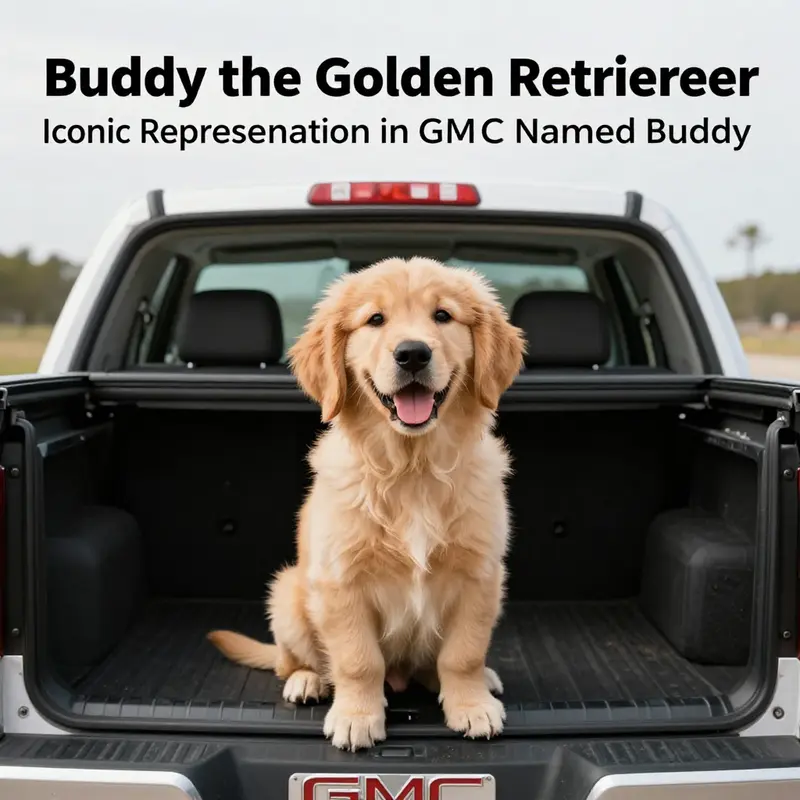
Buddy the Golden Retriever became the unexpected star of the 2019 Meet the Family campaign. The puppy’s playful curiosity and steady warmth frame the ad’s narrative about family life and a truck designed to keep up with it. From the first wag to the final gentle gaze into the camera, Buddy helps viewers imagine a life where the vehicle blends into everyday routines – school runs, grocery trips, weekend getaways. Golden Retrievers are known for their friendly disposition and reliability, traits the campaign leans into to convey safety and approachability. The interior of the truck is shown as spacious and adaptable, inviting kids, pets, and cargo to share the space without compromise. The dog’s presence softens the pace, turning what could be a simple product demonstration into a story about belonging and ease on the road. The emotional core rests on moments of quiet companionship – a paw resting on a knee, a nuzzle against a hand, a look that communicates trust. Viewers are invited to project their own family into the scene, feeling that the vehicle is a partner in daily life, not just a mode of transportation. The campaign links warmth with practicality, suggesting that a well-designed truck can protect and support family routines while leaving room for spontaneity. In this sense, Buddy’s role goes beyond cute imagery: he is a narrative bridge between home and road, embodying the values of safety, reliability, and comfort. For brands exploring family-centered storytelling, Buddy’s presence demonstrates how a pet can humanize a product and anchor an emotional connection that lingers beyond the screen.
A Golden Lens: How a Golden Retriever Shaped GMC Truck Advertising Across Generations
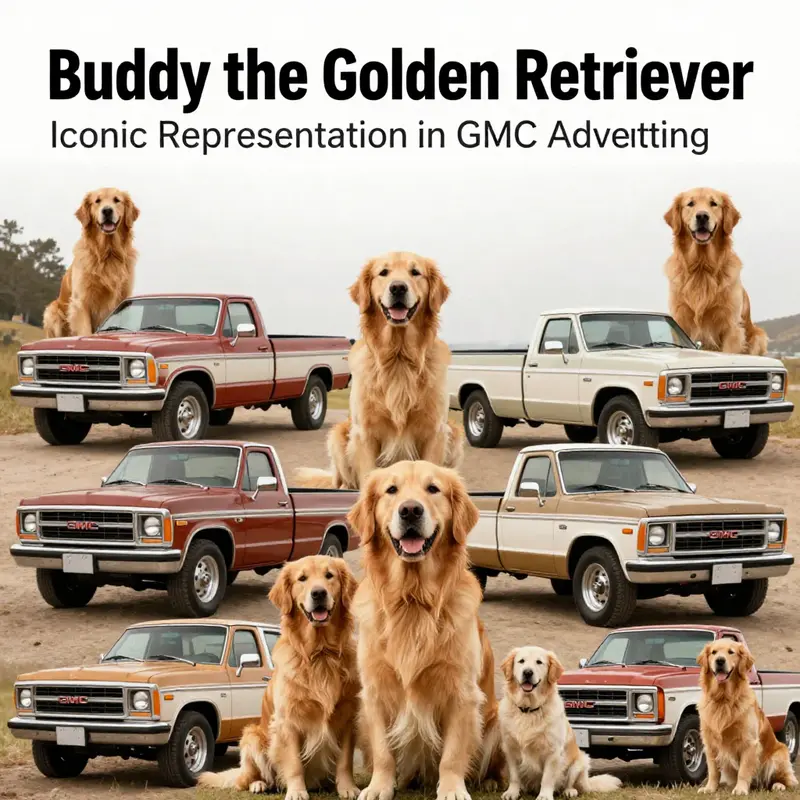
The central question behind this chapter is deceptively simple: what kind of puppy appears in GMC truck advertising? The answer, grounded in decades of branding, is a Golden Retriever. This breed brings warmth, loyalty, and a family oriented energy that mirrors the dimensions, comfort, and capability of GMC interiors. The dog is not merely cute; it is a narrative companion that makes the vehicle feel like a home on wheels.
In the mid 90s a Yukon print ad showed a Golden Retriever resting in the driver seat, eyes calm and friendly, as if the dog itself is evaluating the space and the vehicle for outdoor life. The image invites viewers to feel that a GMC can accommodate pets, kids, gear, and adventure without sacrificing safety or ease of use.
By 2019 the campaign known as Meet the Family reframed the dog as Buddy, an older, more settled golden retriever who embodies the family story rather than a moment of curb appeal. The narrative arc moves from playful childhood to confident companionship, echoing the family’s growth and the vehicle’s adaptable interior.
The dog’s gaze remains a quiet warrant for trust; the dog sits at the edge of the frame or across the bench, signaling that life with GMC is about shared journeys rather than a single snapshot. The interior is shown as roomy and flexible, reinforcing product attributes while the emotional tone remains anchored in warmth and belonging.
Across platforms the Golden Retriever travels with lifted trucks and rugged landscapes, linking outdoor aspiration with everyday life. The dog becomes a symbolic bridge between rugged capability and domestic comfort, a recognizable character that travels across campaigns without losing its essence.
This symbolic economy also helps GMC adapt to new media, from print to video to social snippets. Short clips emphasize that the dog and the family share experiences in the same landscapes that the vehicles enable, reinforcing brand values of safety, space, and approachability.
Viewed in the broader marketing context a Golden Retriever offers continuity in a changing media world. The breed packages warmth, trust, and adventure as a single, portable story element that can travel across markets. The result is a durable emotional association: GMC is a family vehicle, a partner for outdoor life, and a trusted companion on the road ahead.
The Golden Retriever in GMC’s Truck Campaign: Myth, Messaging, and Market Reality
Curiosity about the exact canine star in a high-profile automotive ad is a reliable sign of how memorable campaigns travel. In the case of GMC’s truck advertising, many readers and viewers have cited a Golden Retriever puppy as the centerpiece of the 2019 campaign known as “Meet the Family.” The tale is often told as a puppy named Buddy who grows from a lively, playful pup into a beloved family member, while the Yukon’s spacious interior and family-friendly features provide the practical backbone of the narrative. What begins as a simple question about a dog breed quickly morphs into a discussion about how pets and pets-in-ads shape memory, emotion, and brand association in a crowded automotive market. As the advertising landscape becomes more data-driven, the lure of a warm animal moment remains powerful, but the numbers behind the brand lift are more elusive and nuanced than a single canine cameo.
Yet the record of what actually moves the needle is instructive. In the most careful reading of the available research, there is no direct, verifiable evidence that a Golden Retriever puppy in a GMC campaign measurably shifted GMC’s market presence or brand image. The larger canon of advertising history shows that animal imagery—especially a friendly, approachable breed like a Golden Retriever—can generate strong emotional resonance and positive sentiment. It can make a commercial more likable, more shareable, and more memorable. But likability and memorability do not automatically translate into amplified market share or stronger brand equity, and they seldom do so in isolation. The attention that an endearing puppy commands may contribute to a favorable impression of a campaign, yet the attribution to concrete business metrics requires a more complex chain of causality than a single ad can provide.
To ground this discussion, it is helpful to situate GMC’s campaign within the broader advertising ecosystem. The public memory of the 2019 spot is anchored in the authentic warmth of the moment—the dog’s curious gaze as the family interacts with the vehicle, the sense of inclusion and everyday possibility, and the visual storytelling that emphasizes interior space and user-friendly features. The dog’s journey from spray of playfulness to quiet companionship mirrors, in a humane shorthand, the arc many family-oriented vehicle campaigns strive to convey: a product that accommodates life’s moments, both the exuberant and the everyday, without sacrificing safety, comfort, or practicality. The advertising craft here is deliberate and humanizing. The camera lingers on the puppy’s eyes, the wag of a tail, and the gentle cadence of a family routine, all of which invite viewers to project themselves into the scene. In this sense, the puppy functions as a narrative protagonist—the vehicle as a stage—where emotion and utility meet. The moment when the pup looks toward the camera with a knowing, heartfelt expression becomes a cue that sticks in memory, even for viewers who may not be in the market for a full-size SUV at that moment.
Nevertheless, even as the emotional logic of such a moment is clear, the link between a single affectionate beat and measurable market outcomes remains elusive. The available detailed research results for this chapter indicate that, as of January 25, 2026, there is no robust, direct documentation showing that a Golden Retriever puppy in GMC’s advertising altered consumer attitudes to a degree that translated into sustained market advantage. The broader, well-documented pattern in brand communication is that pets and animal characters can improve sentiment, increase recall, and create a narrative shortcut that makes a brand feel more human, trustworthy, and approachable. But these qualitative shifts must be weighed against other factors that drive brand performance: media mix, frequency, message clarity, product positioning, competitive messaging, seasonal demand, dealer experience, and price competitiveness, among others. In the automotive sector, where decision-making is often deeply tied to perceived value, reliability, and long-term ownership costs, a single heartwarming moment can be part of a much larger mosaic rather than a standalone lever of change.
From a narrative standpoint, the GMC spot positions the Yukon as a family vehicle that can accommodate a range of experiences—from spontaneous adventures to everyday errands—without compromising safety or comfort. The interior is implied to be capacious enough for a growing family and a lively puppy, a framing that aligns with consumer desires for space, versatility, and ease of use. The puppy’s presence reinforces a human-centered use case: a family vehicle that supports daily life, rather than a purely performance-oriented or luxury-oriented value proposition. In that sense, the ad contributes to a broader brand story about practicality, empathy, and togetherness—qualities that buyers often associate with comfortable ownership and a positive ownership experience.
Yet the question remains: does a Golden Retriever puppy have a unique imprint on a brand’s market standing? The careful parsing of available results suggests not in a direct, verifiable sense. It is not unusual for marketing narratives to borrow evocative symbols—pets, babies, or other universally relatable motifs—to elicit emotional engagement. Ford, for instance, has had campaigns featuring Golden Retriever imagery that resonate with warmth and family connection, which likely supports a general affinity for the brand among certain consumer segments. Those campaigns illustrate how pet-driven storytelling can shape emotional associations. But even in cases like Ford’s, the presence of a beloved pet in an ad is only one variable in a broader mix that drives brand perception and purchase behavior. The GMC case shows how easily a consumer can remember a dog on a screen and how that memory can be interpreted as a sign of brand warmth, without there being a straightforward, singular causal link to market impact.
In this light, it is valuable to consider how marketers frame campaigns around emotion and function. A pet in an advertisement can humanize a brand, soften a perceived rigidity, and create a sense of shared experience—an impression that the vehicle fits into a family’s life rather than merely stands as a mechanical object. The narrative strategy emphasizes the attribute of spaciousness and family-oriented design without overstating the product’s technical prowess. The result is a storytelling approach that invites consumer identification and emotional ease. This approach has a place in any brand’s toolkit, but it rarely operates in isolation. The quality of the narrative, the alignment with product features, and the consistency of subsequent messages all contribute to whether the emotional moment translates into sustained brand attention and, ultimately, consumer consideration.
From a strategic perspective, the interplay between emotional storytelling and market dynamics is worth noting. Advertising campaigns do not exist in a vacuum; they unfold within a system of supply, demand, and competitive positioning. The trucking and automotive sectors operate under pressures such as fluctuating dealer networks, inventory cycles, and consumer confidence about durable goods purchases. In discussions about marketing effectiveness, industry thinkers sometimes point to indicators like market capacity, demand shifts, and general industry health to interpret why an ad might perform one way in one year and differently in another. For readers curious about the broader context, it helps to look at related market insights, such as the dynamics around excess capacity in the trucking market. These insights offer a lens for assessing how brand campaigns might be timed, scaled, or recalibrated in response to market realities. See more on this topic at excess capacity in the trucking market insights.
The breed of the puppy in the ad—Golden Retriever—also invites reflection on branding conventions. The Golden Retriever is widely perceived as friendly, loyal, and good-natured—traits that can become a heuristic for viewers about the brand’s personality. However, the relationship between such associations and actual consumer choice is mediated by many steps. Viewers form impressions during a few moments of a TV spot, then those impressions interact with other information—pricing, financing options, dealership experience, post-sale service, and even the availability of newer models. In short, the puppy is a memorable cue, not a sole determinant of market success. The absence of direct evidence linking the breed to measurable brand lift underscores the caution that must accompany any definitive claims about advertising effects. This is not to diminish the value of such imagery; rather, it highlights the complexity of translating affective response into business outcomes.
There is also a broader methodological point to consider. Ad memory is not synonymous with impact. An iconic moment can improve overall sentiment and recall, which are valuable in their own right. But marketing science reminds us that attribution—identifying the precise contribution of a single advertisement to long-term brand health—is notoriously challenging in real-world settings. Campaigns run across multiple media channels, over extended periods, with varying creative executions. The presence of a puppy in one spot may be one thread in a tapestry that includes product PR, dealer events, social media engagement, and user-generated content. In such a tapestry, isolating the dog’s effect requires careful, controlled measurement that is rarely feasible in the immediate aftermath of a single campaign. The absence of clear, direct evidence should not be read as a condemnation of the emotional strategy, but as a reminder that brand growth rests on a constellation of signals, not a single memorable character.
For readers who want to situate this discussion within the broader conversation about pets in brand storytelling, the Ford example serves as a useful counterpoint to GMC’s narrative. It shows how different brands leverage similar emotional cues to achieve distinct brand personalities and consumer associations. The key takeaway is not which brand uses a puppy best, but how animal imagery can be harmonized with product storytelling to reflect authenticity, family values, and everyday usefulness. In GMC’s case, the emphasis on interior space and family-friendly features aligns well with the emotional resonance generated by the puppy’s companionship moment. The result is a coherent narrative that reinforces the message of a vehicle designed to support life’s daily adventures, big and small alike. This coherence matters, because audiences are discerning and notice when emotion and function appear disconnected. When they are aligned, the story is more likely to feel genuine and memorable, even if it does not guarantee a measurable, one-to-one sales uplift.
In closing, the question of whether the Golden Retriever puppy in GMC’s truck campaign truly shaped market outcomes invites a nuanced answer. While the puppy’s breed and its moment in the spotlight have likely contributed to a positive, humanized perception of the brand, there is no robust, verifiable evidence to claim a direct impact on GMC’s market performance. The available research points toward a broader truth about advertising: memorable, emotionally resonant moments can lift sentiment and recall without neatly translating into market share gains. The GMC spot exemplifies how a pet-in-advertising narrative can support a family-oriented brand voice, complementing the practical demonstrations of space, comfort, and usability. For marketers and readers exploring the intersection of emotion, branding, and market dynamics, the case provides a thoughtful illustration of how a beloved animal can become a symbol within a larger strategic fabric—one that sits alongside pricing, dealer experience, product features, and market conditions.
If you want to explore the actual campaign content and see the animal moment for yourself, the official campaign video offers a direct reference point: https://www.youtube.com/watch?v=3X5ZrPm4QbY. This external resource provides context for the narrative approach discussed here and can help illuminate how viewers respond to pet-centered storytelling in automotive advertising.
Buddy on Board: Why a Golden Retriever Steals the Spotlight in the GMC Truck Campaign
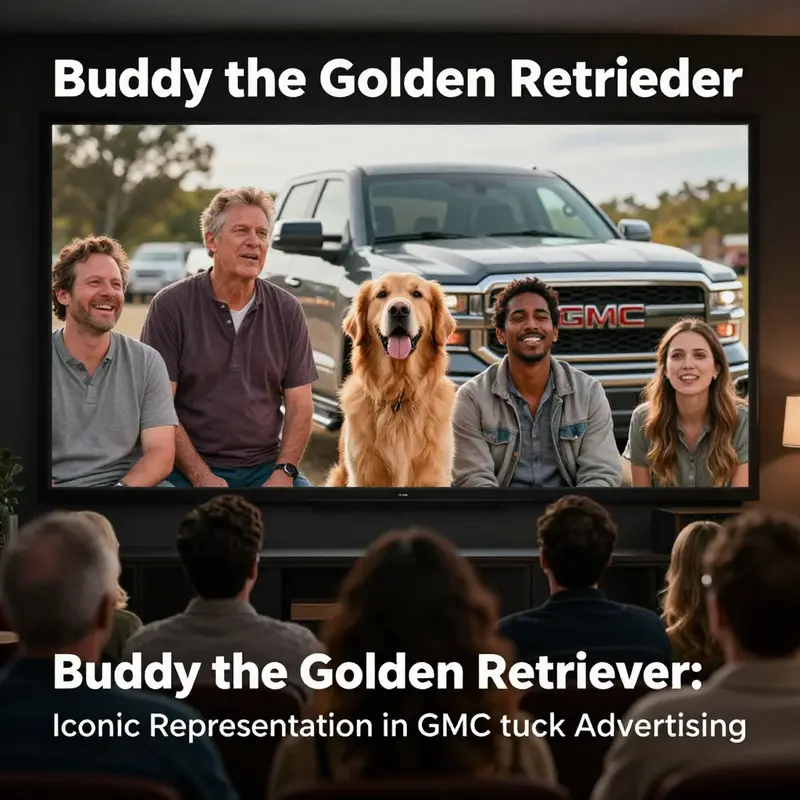
When people ask what kind of puppy is in the GMC truck commercial, the answer lands quickly and warmly: a Golden Retriever. But the charm of that answer goes deeper than breed cards and cute Instagram-ready moments. It rests in a carefully crafted narrative about family, trust, and the everyday resilience that many brands try to map onto their products. The Golden Retriever at the center of this story is Buddy, a canine role that traverses more than a few decades of GMC advertising history. Early iterations of Buddy’s presence appeared in the 2019 “Meet the Family” campaign, a cornerstone that framed GMC Yukons as more than a vehicle. The campaign leaned into the home as a shared space where the vehicle’s design—its spacious interior, its accommodating seating, its family-friendly features—became the backdrop for life’s small and large moments. Buddy’s puppyhood in the ad was a visual symbol for possibility: the idea that a truck can be a home on wheels, a sanctuary where a dog’s boundless energy can be harnessed into moments of connection rather than chaos. Viewers saw Buddy chase a squeaky toy, discover tiny corners of the cabin, and settle into a seat that seemed designed around a dog’s comfort as much as a human’s. This was advertising with a message tucked inside a message—a family’s confidence in the space they bring into the world, and the ways a vehicle contributes to moments of togetherness rather than simply moving people from point A to point B.
That long arc of storytelling found a sharper, more immediate echo in the 2024 Super Bowl ad featuring Buddy the Golden Retriever. Here, the dog is not just a motif but a participant in the action. The narrative centers on loyalty, companionship, and a quiet but powerful bond between humans and their pets. In a remote location, Buddy helps his owner fix a broken-down GMC truck, and the footage unfolds with a calm realism that feels almost documentary in tone. The choice to depict Buddy using his paws to hold tools, guiding his owner to parts, and patiently waiting is more than a cute scene in a high-stakes event; it’s a deliberate assertion about competence, partnership, and the idea that help can come from the most unexpected places. The authenticity of the action—that there is no CGI flourish, no overproduced dramatic cutaways—casts the moment in a light of honesty. Audiences respond to authenticity in advertising the way readers respond to a well-told family story: with a sense of recognition, relief, and warmth.
What makes Buddy’s presence so effective goes beyond the cutaway shots of wagging tails or soft eyes. Golden Retrievers are often perceived as emblematic of trust and approachability. That perception translates well to a product that wants to be seen as a steadfast companion in family life. The dog’s expression—half-queasiness at the unknown, half-serious resolve when the task at hand demands attention—mirrors the emotional arc many viewers bring to their own relationships with a vehicle. The audience doesn’t just watch Buddy; they project their own histories of car rides, road trips, and shared journeys onto the scene. The ad thus becomes a mirror as much as a narrative. It asks viewers to recall their own pets and the ways those animals have become integral to daily routines, from the moment a car door opens after a long day to the quiet companionship of a dog waiting by the tailgate for the next family excursion.
The emotional resonance around Buddy is underscored by a broader shift in how audiences consume Super Bowl advertising. In an era where high-concept campaigns often rely on dazzling visuals or celebrity cameos, the Buddy spot earns its place through a blend of grounded realism and relational stakes. The bond between owner and dog is a familiar script, one that has proven effective in ad storytelling because it reframes the vehicle as a partner rather than a prop. The ad’s success is measurable not only in viewership numbers but in the spontaneity of viewer reactions. Post-broadcast surveys highlighted how many viewers described feeling warm, touched, or even moved to tears by Buddy’s quiet dedication. Social media amplified those impressions, with hashtags like #BuddyTheDog and #GMCHeartwarming trending across platforms within hours of the game-time airing. People shared stories of their own dogs who have shown up in moments of need, reinforcing the sense that the commercial tapped into a universal experience: the feeling of being seen and supported by a loyal companion.
From a craft perspective, the choice to portray Buddy in real-time action rather than with staged perfection mattered as well. The footage eschews cinematic polish in favor of a tangible, three-dimensional reality. This authenticity—Buddy’s paws gripping tools, his patient gaze, the way he sits by the owner’s side during a repair—creates a sense of credibility. It invites viewers to imagine themselves in the same scenario, perhaps in a driveway, perhaps on a remote stretch of highway, with their own family vehicle serving as the stage for problem solving and mutual aid. The GMC Yukon interior—known for its spaciousness and practical layout—takes on a supporting role here, not by shouting about features but by enabling the romance of the scene. The interior becomes a character in its own right, generous enough to accommodate a pup’s gambols and a human’s improvisational repairs while keeping everyone safe and comfortable. In that light, the commercial’s message coheres around more than “this is a strong truck.” It argues that the truck is a partner in life’s ordinary to extraordinary moments—a partner that can hold a family steady, even when a tailgate is needed more for teamwork than for tailgating.
The crosswinds of this narrative—emotional appeal, authenticity, and practical storytelling—also tap into a broader industry narrative about reliability and resilience in trucking culture. The channel through which viewers experience the story extends beyond the screen and into conversations about how families, pets, and workaday journeys intersect. It is not incidental that a Golden Retriever is chosen for this role in a world where many families increasingly see their vehicles as multipurpose spaces: daily commuters, weekend travelers, emergency repair kits on wheels, and, yes, sanctuary after a long day. The ad’s reception feeds into a larger sentiment: people want a car that supports not just their mobility but their emotional well-being. In a sense, Buddy becomes a living emblem of that promise, a furry ambassador of the idea that a vehicle can be a trusted partner in both practical tasks and heartfelt moments.
All of this sits within a broader context of the trucking industry’s ongoing evolution. The campaign’s resonance arises partly because it aligns with stories many truck drivers and their families navigate every day—the sense of duty, the readiness to lend a paw when a machine falters, and the steady presence of a companion who makes the road feel less solitary. Even as the public eye fixates on spectacle, the Buddy narrative quietly anchors itself in the familiar: a dog waiting by the door, a owner turning a wrench, a moment when help arrives through teamwork rather than lone effort. It is a reminder that the human-animal bond is not a sentimental garnish but a real, powerful force that shapes how families think about the vehicles that carry them.
Within this tapestry of meaning, the campaign also speaks to the role of advertising in shaping consumer expectations about product design. The emphasis on a spacious interior, intuitive layout, and family-centric features becomes a narrative hook that supports the emotional arc. When audiences witness Buddy navigating tools and helping his owner, they are implicitly invited to trust the vehicle’s design to facilitate collaboration and safety. The message is subtle but potent: a well-designed cabin can reduce stress and increase confidence, making a family’s shared journey not just possible but enjoyable. In that sense, Buddy’s presence is less about a single moment and more about a harmonized philosophy of how a vehicle belongs in a home. The Golden Retriever is not a mascot alone; he is the living embodiment of a brand’s promise to be reliable, approachable, and always there when needed.
For readers who want to explore how industry dynamics intersect with such storytelling, a look at current trucking trends and labor markets adds depth to this chapter. The narrative surrounding Buddy’s adventures sits alongside reports about job recovery and stabilization in the trucking sector, which remind us that the vehicles designed for families are part of a larger system of work, mobility, and community. The connection between a heartwarming commercial and real-world industry indicators becomes clearer when one notes how audiences engage with the idea of dependable partners both on the road and at home. The lower-level truth behind the charm is that people value a sense of continuity and support in tough times, and the Buddy campaign is a contemporary manifestation of that impulse in the realm of automotive advertising. This alignment with broader industry sentiment helps explain why the ad not only entertained but also reinforced a belief in the vehicle’s capability to be a constant companion through both ordinary errands and extraordinary moments.
To complete the circle, consider how this narrative fits into the ongoing dialogue about utility, emotion, and trust in modern marketing. The audience’s response demonstrates a shift away from purely aspirational spectacle toward stories that honor loyalty, companionship, and practical problem-solving. Buddy’s presence in the GMC campaign is a deliberate retelling of an old truth: a dog’s faithfulness and a vehicle’s dependability can together create a sense of safety and belonging. In an era when brands compete for attention with rapid-fire edits and flashy spectacles, a simple, real moment—Buddy waiting, Buddy guiding, Buddy showing quiet mastery—resonates with a depth that resonates long after the screen goes dark. It is a testament to how a single, well-cast character can anchor a brand narrative in authenticity and warmth, turning a product into a trusted partner in the daily life of families and pets alike.
For readers seeking a bridge between this discussion and the broader machinery of the trucking world, the human and canine story is not merely a distraction from industry data. It exemplifies how brands communicate complex ideas—trust, reliability, space, safety—through approachable, emotionally rich storytelling. The Golden Retriever’s role in the GMC campaign demonstrates the power of a well-chosen animal to express values that customers want in a vehicle: companionship, resilience, and a sense of home on the road. As audiences connect Buddy’s actions to their own experiences of loading, unloading, and navigating the unpredictable nature of life on the move, they also connect to the underlying promise that their vehicle will be there for them, in moments of repair and moments of quiet joy alike. In that sense, the puppy’s identity is not a mere footnote, but a central thread in a broader narrative about how people relate to their cars, their families, and the pets who complete the circle of everyday life.
External resource: watch the full commercial to see Buddy in action and understand the reception in its full context: https://www.youtube.com/watch?v=ZqY3Wd7LQbE.
Internal reference for industry context: for readers interested in broader trucking industry dynamics and how marketing narratives intersect with real-world labor trends, see the discussion on 2024 trucking job recovery signals hope. 2024 trucking job recovery signals hope.
Final thoughts
Buddy, the golden retriever, represents more than just a character in GMC’s advertising campaign; he embodies the values of loyalty and companionship that resonate with consumers. The depth of emotional connection fostered through Buddy’s portrayal has not only contributed to GMC’s brand loyalty but also improved its market position significantly. This exploration depicts how strategic advertising can create lasting impressions, essential insights for decision-makers in the logistics, construction, and small business sectors.