
Schneider National’s integration of dash cameras into their commercial trucks marks a significant advancement in transportation safety and efficiency. This article delves into the specifics of Schneider’s implementation of these sophisticated surveillance technologies, highlighting their critical role in enhancing safety across their fleets. The examination will further explore how dash cameras positively impact operational efficiency, catering to logistics and freight companies, construction and mining enterprises, and small business owners with delivery fleets. By unpacking these elements, we aim to illustrate the comprehensive benefits that dash camera technology can provide in today’s competitive trucking industry.
Behind the Windshield: How Dash-Cam Safety Shapes Schneider’s Modern Trucking Foundation
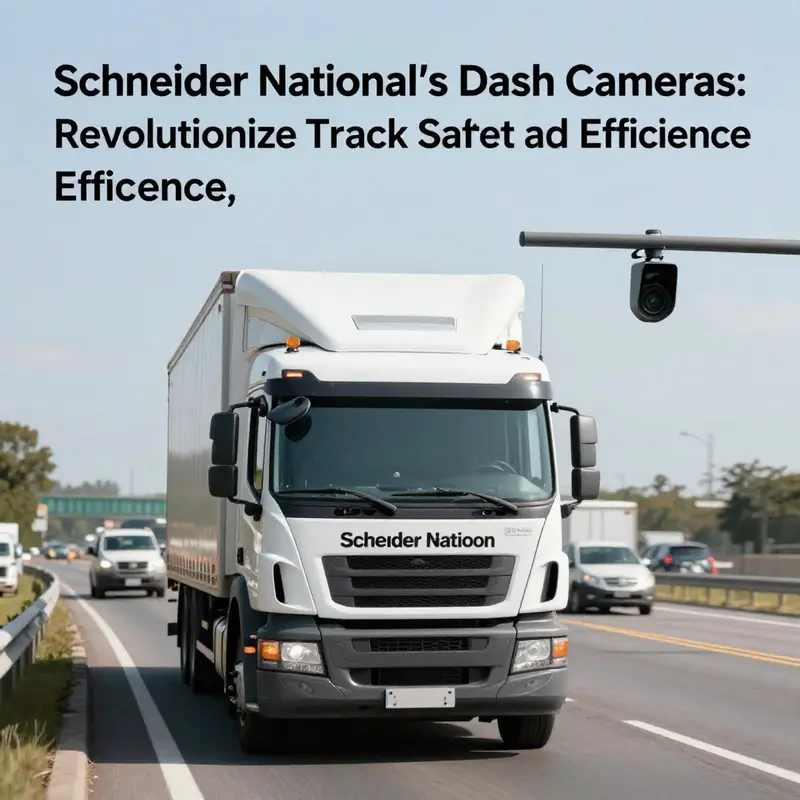
A fleet’s safety culture often travels first through the windshield. In the case of Schneider National, that culture is not a slogan but a carefully engineered system of visibility, accountability, and continuous improvement. Dash cameras, along with complementary video systems, sit at the heart of this system. They are not mere recorders of events but active tools that help drivers move with greater awareness, coaches refine technique, and fleet managers align safety with every operational decision. The result is a safety discipline that extends from the moment a driver starts a shift to the moment a load reaches its destination. In this light, Schneider’s use of dash cams becomes less a compliance checkbox and more a strategic element of safety, efficiency, and reliability in a sector where margins are tight and the road is unpredictable. The technology integrates with a broader safety mandate—one that treats visibility as a strategic asset rather than a passive statistic.
To appreciate what dash cams contribute, it helps to understand the specific visibility challenges drivers face in a big-truck context. Front and side view limitations, blind spots around trailers, and the complexity of urban maneuvers all demand additional perspectives. The technology Schneider employs elevates driver awareness beyond the human senses alone. Look-down or look-ahead perspectives capture critical moments that may be missed during a routine pre-trip or in the course of a long highway segment. The tape fairness of a calm, recorded run is not merely a safeguard; it is a training tool and a reference point that can shorten learning curves for new drivers and reinforce best practices for seasoned professionals.
What makes dash cams particularly impactful is their capacity to provide real-time and post-event insights without compromising safety on the road. In the field, drivers can benefit from instant feedback loops that reinforce safe behaviors during complex maneuvers, such as backing into a dock, navigating tight turns, or merging into busy traffic. A camera that captures the area directly in front and to the sides of the tractor-trailer creates a more complete picture of the driving environment. This enhanced visibility helps drivers anticipate hazards, maintain safer following distances, and manage the unique physics of a long vehicle with a large turning radius. It also supports better decision-making when road conditions shift—ice, rain, or construction zones demand quick, well-informed actions, and the added perspective reduces reaction time gaps that can escalate risk.
From a training and coaching standpoint, the camera system becomes a pervasive mentor that doesn’t tire or judge in real time. In practice, supervisors and safety teams review clips to identify patterns: recurring blind spots, habitual over- or under-correction during backing, or the need for smoother lane changes. The value here lies not just in pinpointing mistakes but in codifying successful responses. When a driver demonstrates a correct steering input in a tricky approach or shows precise scanning during a lane-change, those clips can be used to anchor positive reinforcement. Over time, this kind of evidence-based coaching compounds through the fleet, lifting overall performance. It is a shift from reactive incident management to proactive safety development, a transition that aligns with Schneider’s broader emphasis on continuous improvement and data-driven decision making.
The safety benefits of dash cams extend into the realm of incident review with remarkable clarity. In the event of a collision or a near-miss, a video record can clarify what happened, when, and why. The clarity is more than a matter of justice; it is a foundation for understanding root causes and preventing recurrence. For drivers, this transparency can be reassuring. Knowing that a fair, objective review can inform future practice helps sustain trust between the driver and the company. For fleet managers, it reduces the ambiguity that often accompanies post-incident narratives and supports equitable, fact-based outcomes. The tangible effect is a reduction in unnecessary blame and a clearer path to corrective action when errors occur. In a discipline where perception and reality can diverge in split seconds, video evidence brings alignment that saves both time and capital.
The statistical case for dash cams in professional trucking is reinforced by industry analysis that emphasizes the broader benefits to safety culture and claims prevention. A Transportation Safety Analyst named David Lin notes that fleet managers and independent contractors alike benefit significantly from dash cams. In commercial settings, they reduce false claims by up to 40%. That level of specificity has real implications for risk management and insurance considerations, advantages that extend beyond mere liability reduction. When a company can substantiate its narrative with verifiable footage, it strengthens credibility with customers, regulators, and partners. It also creates a consistent baseline for what constitutes safe practice, which, in turn, supports standardized training modules and performance metrics that teams across the fleet can rally around. In Schneider’s context, this translates into a practical mechanism for maintaining accountability without eroding the motivational climate that keeps drivers engaged and focused on safe operations.
The interplay between safety technology and fleet operations is most evident when dash cams work in concert with other data streams. Telemetry, route planning, and cargo-specific risk profiles all inform how a driver uses the extra visibility. The integrated approach helps operators anticipate hazards before they become incidents. For instance, when a look-down approach reveals a blind corner or an approaching intersection with limited sightlines, the driver can adjust speed and lane positioning accordingly. In turn, fleet managers receive a richer dataset that makes it easier to tailor coaching, plan safer routes, and deploy resources to where risk is greatest. This synergy demonstrates why camera systems are more than passive recorders; they are active participants in a safety ecosystem that values accurate feedback, timely intervention, and continuous optimization of protective practices.
Schneider’s adoption of dash cams is not solely a reaction to accidents; it is part of a larger strategic framework for safety governance. The system contributes to operational discipline while supporting a humane and constructive approach to driver development. Privacy considerations naturally arise in any program that records workplace activity, especially within a mobility-focused industry. Responsible implementation involves clear policies on who can access footage, how long it is retained, and how drivers can participate in the review process. When done with transparency and consent, video systems can reduce anxiety, improve morale, and foster a culture where safety is a shared responsibility rather than a punitive consequence of a mishap. The best programs balance accountability with support, using footage as a tool for learning and improvement rather than a weapon for punishment. Schneider appears to recognize this balance as essential to sustaining long-term engagement and high safety standards across a dispersed, multi-faceted workforce made up of company drivers and independent contractors alike.
In practice, the look-down camera on the tech-focused segments of Schneider’s fleet underscores a key theme: the value of perspective in complex driving tasks. This camera, which provides enhanced visibility of the front and sides of the vehicle, helps drivers manage the dynamic geometry of large rigs. When a vehicle begins a turn or backs toward a dock, the aggregated perspective from multiple cameras reduces the cognitive load on the driver and contributes to safer outcomes. It is not a gimmick but a tangible extension of a driver’s field of view, compensating for the line-of-sight limitations intrinsic to a vehicle of this size. In embedded safety practice, such perspectives translate into more deliberate decisions, slower and more controlled maneuvers, and a heightened sense of situational awareness that becomes second nature over thousands of miles of operation.
Another dimension worth emphasizing is how dash cams influence the relationship between Schneider and its driver network. Independent contractors and company drivers alike benefit from a unified safety code embodied by the camera system. When footage is used for training and coaching rather than evaluation alone, it signals trust and investment in driver growth. The availability of objective evidence to verify safe performance encourages drivers to adopt best practices and to learn from routine operations that might otherwise remain unexamined. This approach aligns with a broader industry shift toward data-informed safety programs that reward proactive behavior and continuous skill development. It also helps standardize protocols across diverse routes and job types, enabling a consistent safety experience for customers who rely on reliable, uninterrupted service even when road conditions vary from coast to coast.
Of course, no technology is perfect on its own, and a thoughtful deployment must address concerns that naturally accompany any video-based safety program. Storage capacity, data security, and the operational overhead of reviewing footage can pose real challenges if not managed with discipline. A robust governance model—clear retention timelines, role-based access, and well-defined criteria for event triggers—helps ensure that the system remains focused on safety and learning rather than surveillance for its own sake. In Schneider’s case, such governance is likely essential to sustaining trust and engagement among drivers, who must feel comfortable with the process as they navigate long-haul routes and the unpredictability of the highway. The best programs treat footage as a shared resource that fuels improvement rather than a constant reminder of scrutiny, thereby turning potential tensions into collaborative safety outcomes.
Looking to the future, the role of dash cams is likely to deepen as analytics become more sophisticated. Beyond simply recording events, modern video systems can integrate with artificial intelligence tools that detect risky behaviors, such as inconsistent scanning patterns or delayed braking in congested traffic. Predictive safety insights could emerge from longitudinal analysis, highlighting patterns that precede accidents and enabling preemptive coaching. In Schneider’s fleet, such capabilities would build on the existing strength of dash cams by turning recorded experiences into proactive risk management, aligning safety with efficiency and customer reliability. The aim would be to maintain a fleet that not only meets regulatory requirements but consistently exceeds industry safety benchmarks. In a field where compliance often lags behind practice, a forward-looking video strategy represents a meaningful leap toward sustainable, data-driven excellence.
Despite the practical benefits, it is important to recognize the broader context in which dash cams operate. The trucking sector faces a patchwork of regulations, competitive pressures, and evolving expectations from customers and insurers. The dash-cam strategy must therefore be adaptable, balancing safety gains with the realities of market dynamics. In Schneider’s case, the combination of driver-focused training, clear governance, and the disciplined use of video evidence positions the company to navigate this environment with resilience. The goal is not to micromanage but to empower drivers with better information, better coaching, and a safer road experience for everyone on board. This is the essence of a safety program that uses technology to complement human judgment, rather than replace it.
In sum, Schneider’s implementation of dash cams within its commercial-truck operations reflects a maturity in how safety technology is integrated into everyday fleet activity. The cameras provide a sharper view of the world around the vehicle, support learning and accountability, and deliver tangible reductions in false claims that can strain resources and confidence alike. The look-down camera on the tech-equipped portions of the fleet exemplifies how a strategic perspective can translate into safer, more controlled maneuvers. When combined with robust coaching, clear governance, and ongoing analysis, dash cams become a central pillar of a safety-first culture that can adapt to a changing regulatory and operational landscape. As the industry continues to evolve, Schneider’s approach offers a compelling blueprint for other carriers seeking to elevate safety without compromising on efficiency or driver engagement. External industry insights reinforce this direction, highlighting how video technology, combined with IoT and data analytics, is reshaping automotive and electrified-transport ecosystems. For broader context on this evolution, see Schneider Electric Insights: https://www.schneider-electric.com/en/insights/articles/automotive-and-electrified-transportation-iot-solutions/ .
Seeing Safety in Action: Dash Cams, Schneider National, and the Future of Fleet Vigilance

A question that sits at the intersection of safety culture, data, and operational discipline begins with a simple image: a highway, a truck, and a camera glinting from the dash, silently recording the moments that define a day on the road. For Schneider National, the answer to whether dash cameras are part of the fleet’s safety toolkit is not merely yes or no. It is a description of how vision, evidence, and continuous improvement come together to reduce risk, sharpen training, and elevate accountability across thousands of miles of highway. The transition from reliance on memory and human recount to the steadier cadence of recorded truth marks a shift in how a modern freight carrier guards against accidents, disputes, and the creeping costs of inefficiency. Dash cams, in this sense, are not just devices; they are instruments of safety philosophy—part witness, part coach, and part insurer of the fleet’s future stability.\n\nSchneider National has positioned itself as a carrier that treats safety as a systemic asset rather than a reactive metric. The company’s emphasis on technology and safety, highlighted on its Technology & Safety platforms, points to a broader strategy: make the road safer not just through rules, but through better information. In this framework, dash cameras perform several interconnected roles. First, they provide objective evidence of driving behavior and road incidents. When a maneuver goes wrong—whether during a tight backing, a crowded ramp exit, or a complex right turn around a loading dock—the footage becomes an impartial narrator that can clarify what happened, why it happened, and what could be changed to prevent a repeat. This objectivity matters not just in insurance claims, but in the fabric of driver development and safety coaching. It enables trainers and safety managers to move beyond general admonitions like “slow down” or “be more careful” to targeted, data-driven feedback that addresses concrete actions and patterns of risk.\n\nSecond, the look-down and forward-facing camera integrations, along with other video systems, broaden the field of view beyond the cab’s front windshield. These systems record the area directly in front of the vehicle and the spaces around it—the critical zones where most accidents in trucking occur. Maneuvers such as backing into a dock, executing a tight turn, or merging onto a busy highway demand a precise alignment of perception and action. When the footage shows a driver’s hands, mirror use, and head position in relation to surrounding traffic, it becomes a valuable teaching tool. It helps illustrate for drivers how minor changes in technique—like adjusting hook-up sequences during dock work or improving the approach angle on a curve—translate into measurable safety gains. The ability to review a situation from multiple angles, even when it is not captured by the driver’s own memory, is a potent form of feedback that improves learning retention and reduces the likelihood of repeated errors.\n\nBehind the scenes, dash cam data supports a more consistent safety standard across Schneider’s vast network. Quality control for safety isn’t about duplicating one hero driver’s techniques across all routes; it’s about codifying best practices, then validating them in the real world with repeatable evidence. The cameras become part of a broader ecosystem that includes driver coaching, performance analytics, and incident investigations. When a collision occurs or a near miss occurs, the footage provides a starting point for inquiry that is less prone to bias or ambiguity. Investigators can trace the sequence of events, verify whether a maneuver was executed with proper signaling and space management, and determine how telematics data—such as speed, braking intensity, and throttle input—corresponded with observed outcomes. This confluence of video and data accelerates root-cause analysis and makes corrective actions more precise and more likely to stick.\n\nThe financial incentives associated with dash cam adoption sit alongside the safety dividends. Insurance carriers increasingly recognize the value of video evidence in reducing claim frequency and severity. Pilot programs and premium discounts that reward fleets for deploying dash cams reflect a broader industry understanding: data changes behavior, and safer behavior lowers the cost of risk. For a large logistics operation like Schneider’s, these benefits multiply. A fleet that operates under a transparent, evidence-based safety program can negotiate more favorable risk profiles with insurers, and the resulting premium dynamics weave back into competitive pricing, market resilience, and the ability to offer reliable service under tighter margins. In other words, the business case for dash cams extends beyond incident reduction; it becomes a lever for overall fleet competitiveness.\n\nCrucially, dash cam technology is not static in the Schneider ecosystem. Modern video systems often incorporate features that keep safety vigilant even when a vehicle is idle. Parking mode, for instance, ensures that the camera continues to monitor temporary hazards during off-hours, when a parked truck might be subject to tailgating, vandalism, or hit-and-run events near a loading dock or a quiet street corner. Combined with GPS data and G-sensors, this functionality helps build a continuous safety narrative that covers drivers’ activities around the clock, not just during active driving. This continuity matters in a business as expansive as Schneider’s, where fleet assignments frequently span multiple shifts, regional hubs, and varied operating environments. The steady coverage reduces blind spots in risk assessment and helps safeguard assets during long stints in layovers, waiting areas, and terminal operations.\n\nThe integration of dash cams with other advanced driver assistance systems (ADAS) amplifies the protective effect of the technology. When dash cam data feeds into real-time alerts, drivers receive immediate feedback about potential hazards in their path or the behavior of nearby vehicles. This immediate feedback loop can prevent an imminent mishap before it becomes an incident, which aligns with Schneider’s overarching emphasis on proactive safety management. Yet the value of dash cams also unfolds in the realm of accountability and culture. Because video records can be reviewed by managers, safety personnel, and trained observers, drivers know that their actions are being measured against consistent, objective standards. This visibility helps level the playing field where risk is concerned: it discourages reckless behavior not by fear alone, but by a clear, shared expectation that safety is a collective responsibility.\n\nAn important aspect of this approach is how dash cam data informs training and development. Rather than relying on generic training modules or anecdotal feedback, Schneider’s safety program can anchor coaching in concrete footage from real-world scenarios. For example, a driver who repeatedly encounters near-miss situations on a particular route may benefit from targeted practice sessions that focus on spatial awareness, mirror checks, and signaling under stress. The footage makes abstract concepts tangible; it shows exactly where perception and action diverge and demonstrates the corrective steps in a way that text-based guidance cannot replicate. Over time, this evidence-based coaching tends to yield improvements that are measurable in subsequent driving performance, which in turn reinforces a culture where safety is not a peripheral concern but a clear, data-driven priority.\n\nAddressing the human side of this technology is essential. Drivers can understandably worry about privacy, surveillance, or punitive use of video data. A responsible dash cam program navigates these concerns with transparent policy, clear access controls, and well-communicated data retention practices. It emphasizes that the objective is safety improvement and fair accountability, not punitive policing. When drivers participate in the process—with opportunities to review footage, understand how data will be used, and see the benefits in shared safety metrics—the program gains trust and buy-in. This trust is critical for sustained adoption, especially across a national network with diverse regional operating norms. The most successful programs balance rigorous risk management with a respectful, collaborative approach that makes drivers feel like essential partners rather than subjects of scrutiny.\n\nSchneider’s emphasis on technology and safety also invites reflection on the broader industry context. The role of dash cams in commercial trucking has evolved from a novelty to a standard component of risk management frameworks for operators aiming to improve safety outcomes and reduce costs. Industry observers note that the combination of video evidence, GPS traces, loop recording, and parking mode models a new standard of operational discipline. In this sense, Schneider’s practice aligns with a market-wide shift toward more transparent, data-driven fleet management. The result is not merely safer roads but a more resilient logistical network that can adapt to disruptions, strengthen claims processes, and maintain service levels in a volatile environment.\n\nFor readers who want to place these developments in a broader context, it helps to consider how data-driven safety practices intersect with fleet economics and strategic risk management. Dash cams contribute to a cycle of continuous improvement: footage identifies learning opportunities, coaching translates into safer driving, and safer driving reduces claims, which in turn supports insurance programs and capital allocation toward safety enhancements. This cycle is particularly meaningful for large-scale operators who must balance rider-tight margins with the need to maintain high safety standards on every route. In practice, it means more reliable service for customers, lower risk to road users, and a demonstrable commitment to safety as an organizational core value rather than a regulatory checkbox.\n\nTo illustrate how this approach translates into concrete, day-to-day improvements, consider typical operations: a Schneider driver navigates a congested urban corridor while negotiating a tight dock approach at a warehouse. The look-down camera captures the driver’s gaze pattern, the use of side mirrors, the speed adjustments during a lane change, and the angle of approach toward the dock. The footage then becomes a training reference that helps replicate best practices across similar scenarios, ensuring consistent execution across the fleet. In another instance, a late-night delivery runs through a dimly lit section of a rural highway. The footage, combined with night-vision capabilities, yields insights into lighting, visibility, and speed management under challenging conditions. These examples illustrate how dash cams support a daily safety operating rhythm, from pre-trip planning through parking and post-trip review.\n\nThe inclusion of external perspectives helps illuminate the value proposition further. Authoritative analyses and industry commentary point to the measurable safety improvements that dash cams can bring, especially when paired with data analytics and disciplined coaching. The Insurance channel piece on dash cams, for instance, emphasizes reductions in claim frequency and severity when fleets adopt robust video monitoring. While Schneider’s own practice builds on its unique safety culture and scale, the core message is consistent: video evidence is a strategic asset that enables clearer decision-making, faster incident resolution, and more effective prevention measures. For readers exploring the literature on how dash cams affect claim outcomes, the external resource provides a grounded context that complements the Schneider example.\n\nAs the chapter closes on this reflective, data-informed lens, one can sense the ongoing evolution of safety in commercial trucking. Dash cams do not replace responsible driving; they amplify it. They do not remove risk entirely; they clarify it so it can be addressed with precision. They do not absolve the company from training and policy development; they strengthen those commitments by ensuring every decision is anchored in verifiable evidence. For Schneider National and similar operators, the path forward is not a single policy tweak but a sustained integration of video, telemetry, and human factors into the daily fabric of fleet operations. In this sense, dash cams are a catalyst for a broader safety culture—one where learning, accountability, and proactive risk management converge on the road, every mile of the way.\n\nThe practical implication of this approach is a fleet that can adapt to changing traffic patterns, evolving regulatory expectations, and the pressures of efficient service delivery. It is not simply about recording events; it is about learning faster from them and translating that learning into safer habits. The ongoing dialogue among drivers, safety teams, and insurance partners becomes a dialogue anchored in shared data, clear coaching, and a common objective: reducing harm while maintaining reliability and efficiency. In Schneider’s case, the cameras are a visible, tangible reminder that safety is a collective undertaking—one that benefits the driver, the company, and the broader community of road users.\n\nFor readers seeking a concise takeaway: dash cams are more than a safety gadget; they are a strategic component of modern fleet management. They provide objective, context-rich evidence that supports fair, timely investigations and constructive feedback. They enable constant, real-time risk awareness and long-term learning that translates into fewer accidents, lower claims, and more predictable operations. In a world where every mile counts, the vantage point offered by dash cams helps Schneider National—and the wider fleet community—keep pace with the demand for safer, smarter, and more reliable transportation.\n\nInternal link for further perspective on how market dynamics influence safety investments can be explored here: Excess Capacity in the Trucking Market – Insights. This resource offers context on how operators balance efficiency with risk management in an environment where scale and resilience are increasingly intertwined.\n\nExternal resource for broader industry validation of dash cam safety outcomes: Dash Cams Improve Performance, Safety. See https://www.insurance.com/dash-cams-improve-performance-safety/ for a detailed analysis of how video evidence translates into safer driving and more favorable risk profiles across fleets. These viewpoints reinforce Schneider National’s direction, illustrating that the tech-enabled, evidence-based approach to safety is becoming a standard expectation in the modern trucking landscape.
In the Frame: Dash-Camera Adoption in Schneider’s Trucking Fleet
Dash cameras are increasingly common in trucking and help improve safety, coaching, and operational visibility. They extend driver awareness beyond the windshield and feed data into telematics, routing, and training programs. Across the industry, fleets use forward- and side-facing cameras to document incidents, enable coaching, and support claims resolution, with measurable downstream effects on downtime and maintenance needs.
In the Schneider context, public materials differentiate between entities: Schneider National is discussed as a major carrier that may use video-based safety tools, while Schneider Electric focuses on IoT and digital platforms rather than disclosed fleet-safety hardware within its own logistics. The result is a nuanced picture: dash-camera adoption is real and valuable, but public disclosure varies by corporate arm. Ultimately, dash cameras are framing a broader safety and efficiency strategy in modern trucking, where data from video informs safer driving, better routing decisions, and more predictable performance.
Final thoughts
The implementation of dash cameras within Schneider National’s commercial truck fleets represents a strategic commitment to safety and efficiency in the transportation industry. Through advanced surveillance technology, Schneider enhances driver awareness, reduces accident rates, and optimizes operational procedures, setting a benchmark in fleet management practices. Companies in the logistics sector, construction, and small delivery businesses can look to Schneider’s model as a guiding example of how technology can elevate operations and safeguard personnel and assets effectively.