
The trucking industry is constantly changing. Weekly announcements about personnel changes significantly shape its future. These leadership transitions reflect the current health of the sector. They also introduce new strategies and innovations that can transform operations and corporate direction.
This week, Rick Mullininx announced his retirement from Great Dane in 2026. Mullininx’s career spans an impressive 45 years, and his departure marks the end of an era for the company. This development raises important questions about future leadership.
In addition, Malia Johnstone has joined TEN Canada as the new national account director. She brings a wealth of experience from the fuel distribution and transportation rental industries. Her expertise is expected to positively influence the company’s operations. Meanwhile, Adarsh Vasudev is moving from Trade Tech’s operations in India to Canada. He aims to establish a strong presence for the company in the North American market. Together, these personnel changes highlight ongoing dynamic transitions essential for the industry’s growth and adaptation.


Rick Mullininx’s Career and Retirement Announcement
Rick Mullininx, President and Chief Operating Officer of Great Dane, has announced his retirement effective December 31, 2026, after a distinguished 45-year career with the company.
Career Highlights and Contributions:
- Progression from Intern to President: Mullininx began his journey with Great Dane in 1980 as a summer intern in the Research and Development department in Savannah, Georgia. Over the years, he advanced through various engineering and manufacturing roles, culminating in his appointment as President and COO in January 2023.
- Engineering Leadership: As Executive Vice President of Engineering, Mullininx was responsible for product design, production engineering, manufacturing engineering, quality assurance, and customer service. His leadership in these areas significantly contributed to the company’s reputation for innovation and quality.
- Commitment to Safety and Quality: Under his tenure, Great Dane’s Danville manufacturing facility received the 2024 Plant Safety Award from the Truck Trailer Manufacturers Association, marking the 18th consecutive year a Great Dane plant has been honored.
- Celebration of Milestones: Mullininx played a pivotal role in commemorating Great Dane’s 125th anniversary in 2025, emphasizing the company’s legacy of innovation and leadership in the transportation industry.
- Strategic Growth Initiatives: He oversaw the appointment of key executives, such as the EVP of Strategy, to position the company for future growth and to develop long-range goals across commercial sales, service, and operations.
Reflecting on his career, Mullininx stated, “It has been the honor of my life to grow up at Great Dane. From my earliest days on the shop floor to serving as President, I have had the privilege of working with incredible people who care deeply about this company.”
As part of his transition, Mullininx will join Great Dane’s Board of Advisors and continue in his current capacity until after the successful transition of a new CEO.
Chairman Bill Crown remarked, “Rick embodies the spirit of Great Dane,” highlighting the significant mark Mullininx has left on the organization. His upcoming retirement signals the end of an era, but also promises a bright future for Great Dane.
| Name | Position | Company |
|---|---|---|
| Malia Johnstone | National Account Director | TEN Canada |
| Adarsh Vasudev | Operations Manager | Trade Tech |
Malia Johnstone’s Background and Role at TEN Canada
Malia Johnstone has a robust professional background in the trucking and transportation sector, specifically focusing on fuel distribution and transportation rental. Drawing from years of industry experience, she brings a wealth of knowledge that significantly positions her as the National Account Director at TEN Canada.
Her role involves managing major accounts, ensuring exceptional service delivery, negotiating contracts, and developing strategic relationships with key stakeholders. Malia’s expertise in fuel distribution enables her to understand the intricate supply chains involved, helping to optimize operations and improve efficiencies within TEN Canada. Additionally, her experience in transportation rental provides her with insights into fleet management and logistics solutions, making her a valuable asset in navigating the complex demands of the industry.
Malia’s leadership will likely catalyze growth initiatives as she champions client-focused approaches. By leveraging her background in transportation logistics and fuel distribution, she aims to enhance TEN Canada’s service portfolio and foster long-term partnerships with national accounts, ultimately driving the company’s success in a competitive market.
Adarsh Vasudev’s recent transition from Trade Tech’s operations in India to Canada marks a pivotal moment for the company as it seeks to establish a firm presence in the North American market. This relocation not only demonstrates Vasudev’s leadership but also signifies Trade Tech’s strategic commitment to expanding its footprint in a region that is experiencing rapid growth in the logistics and transportation sector.
By establishing operations in Canada, Trade Tech aims to enhance its market reach and operational capabilities. Canada serves as an ideal gateway for entering the broader North American market, which offers vast opportunities for collaboration, innovation, and service enhancement within the trucking industry. The significance of this transition is underscored by the urgency for companies like Trade Tech to adapt their operations to meet the evolving demands of the transportation landscape.
Vasudev’s move is not simply about expanding the company’s geographical presence; it reflects a calculated effort to leverage local resources, expertise, and talent that the Canadian market has to offer. This localization strategy is intended to improve Trade Tech’s service offerings and foster innovation, which are essential for staying competitive in a continually changing industry.
Moreover, this transition aligns with the broader trend in the logistics sector where companies are increasingly looking to diversify their operations and integrate more with regional markets to enhance resilience, improve service delivery, and satisfy client needs. Adarsh Vasudev’s leadership in this venture will be crucial in not only navigating the complexities of establishing a new operation but also in ensuring that Trade Tech remains a significant player in the trucking industry.
Conclusion
The trucking industry is experiencing pivotal shifts as leadership transitions become a regular occurrence, demonstrating the sector’s dynamic nature. The impending retirement of Rick Mullininx, who has shaped Great Dane’s trajectory over 45 years, comes as a wake-up call for the industry to embrace fresh perspectives and innovative strategies. Such changes highlight the importance of integrating new leadership adept at navigating today’s complex challenges.
As trucking companies like TEN Canada and Trade Tech bring in new leaders such as Malia Johnstone and Adarsh Vasudev, the impact of these Trucking Industry Personnel Changes is likely to reverberate throughout the sector. Each new appointment not only reflects the organization’s strategic direction but also carries the promise of enhancing operational standards and practices. This kind of fresh leadership can invigorate a company’s culture, inspire new ideas, and adapt to evolving market demands, thereby promoting resilience and growth.
Moreover, with the trucking industry standing at a crossroads of transformation fueled by technological advancements and shifting consumer expectations, these leadership changes play a crucial role in steering companies toward long-term success. As we move forward, the emphasis on embracing new talent and ideas will be vital for the industry to thrive amidst ongoing challenges and opportunities. The evolution of leadership in trucking is not just a transition; it marks the beginning of a new era that ultimately shapes the industry’s future.
Conclusion
The trucking industry is experiencing pivotal shifts as leadership transitions become a regular occurrence, demonstrating the sector’s dynamic nature. The impending retirement of Rick Mullininx, who has shaped Great Dane’s trajectory over 45 years, comes as a wake-up call for the industry to embrace fresh perspectives and innovative strategies. Such changes highlight the importance of integrating new leadership adept at navigating today’s complex challenges.
As trucking companies like TEN Canada and Trade Tech bring in new leaders such as Malia Johnstone and Adarsh Vasudev, the impact of these Trucking Industry Personnel Changes is likely to reverberate throughout the sector. Each new appointment not only reflects the organization’s strategic direction but also carries the promise of enhancing operational standards and practices. This kind of fresh leadership can invigorate a company’s culture, inspire new ideas, and adapt to evolving market demands, thereby promoting resilience and growth.
Moreover, with the trucking industry standing at a crossroads of transformation fueled by technological advancements and shifting consumer expectations, these leadership changes play a crucial role in steering companies toward long-term success.
In summary, leadership transitions deeply impact company performance by fostering innovation, enhancing adaptability, and driving operational efficiency in a competitive market.
User Adoption Data of New Technologies in Trucking
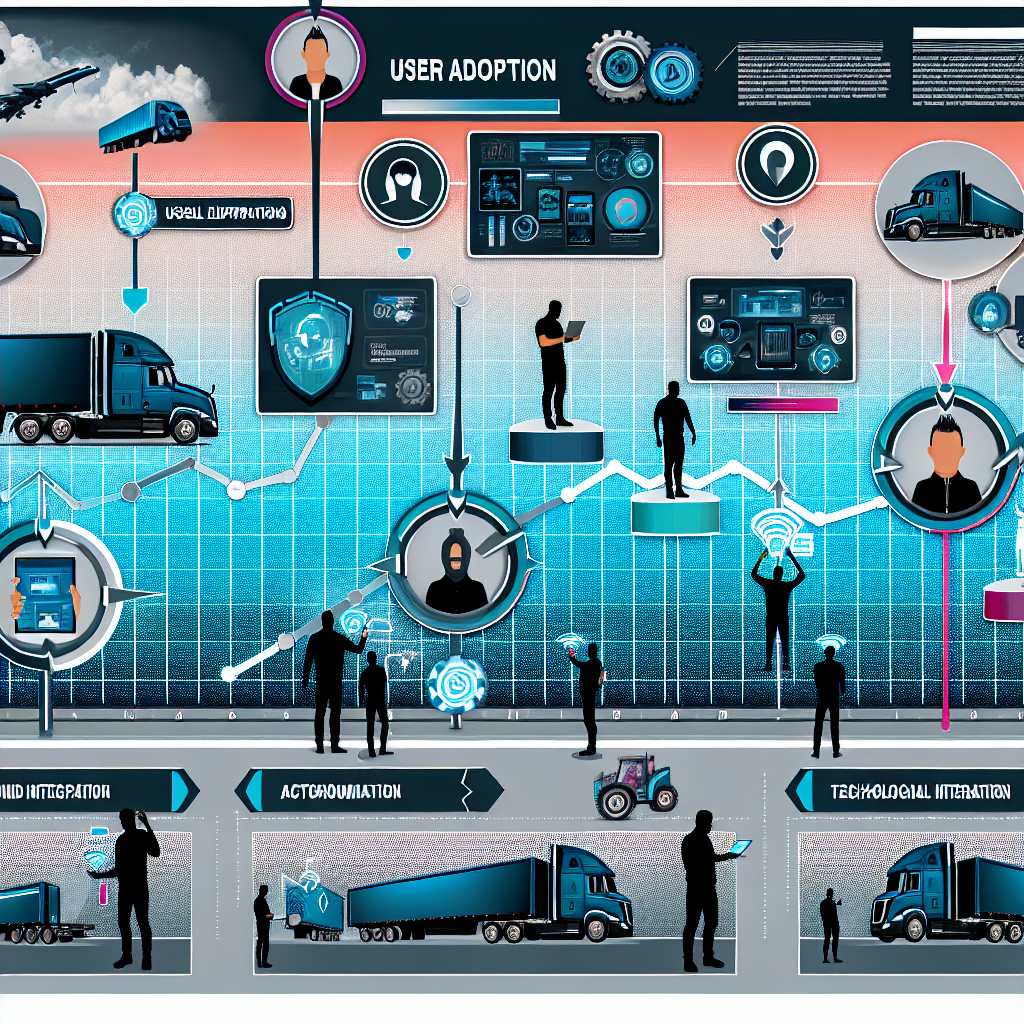
The trucking industry is at a crucial juncture as it integrates new technologies that promise to enhance efficiency and reshape workforce dynamics. Recent data reveals several significant trends in user adoption of these technologies, which often coincide with personnel changes within companies:
-
Upskilling and Reskilling Initiatives:
With the adoption of advanced technologies, trucking companies are significantly increasing their focus on upskilling their workforce.
- Approximately 65% of trucking companies have ramped up their upskilling efforts in the last two years.
- Reskilling initiatives have led to a remarkable 25% reduction in driver turnover rates.
- 52% of firms prioritize digital skills, underscoring the importance of technology fluency in today’s logistics environment.
- Notably, 45% of companies have begun utilizing virtual reality (VR) training programs to enhance learning experiences.
-
Technology Adoption Rates:
The integration of advanced technologies continues to grow rapidly among trucking firms.
- 67% of companies are adopting artificial intelligence (AI) technologies to optimize various logistical processes.
- Implementing AI in their operations has shown to reduce delivery times by an average of 15%.
- AI-driven predictive maintenance systems have been integrated into 42% of firms, significantly improving vehicle upkeep and reliability.
- Implementations of AI-based driver monitoring systems have resulted in a 22% decrease in accident rates for fleets that adopted these technologies.
- Furthermore, 78% of companies are exploring AI for driver recruitment and training processes.
-
Emergence of Autonomous Vehicles:
The rise of autonomous technology is not only revolutionizing operations but is also reshaping workforce requirements.
- Adoption rates of autonomous trucks saw an increase of 34% in 2023.
- Projections indicate that autonomous vehicles may account for 11% of freight deliveries by 2030.
- Already, this shift is leading to new upskilling demands for drivers, particularly regarding automated systems.
- However, the surge in autonomous technology raises concerns about job displacement, with studies estimating that over 2 million drivers in the US and Europe could be at risk by 2030.
-
Transition to Digital Solutions and Remote Work:
Digital transformation is paramount, with companies adopting remote tools to improve overall efficiency.
- 73% of trucking firms have incorporated digital tools for better fleet management, leading to improved operational efficiencies.
- 30% of companies have embraced remote training programs for new drivers to adapt to changing environments while maintaining operational continuity.
- Cloud-based platforms are used by 35% of logistics firms for remote fleet monitoring, signifying a broader move towards digital solutions in the industry.
These statistics illustrate the trucking industry’s proactive approach in aligning human resources with technological advancements. The emphasis on training and technology integration signifies a shift toward improved safety, efficiency, and operational excellence. However, it also underscores the necessity for strategic workforce planning and continuous learning to mitigate potential disruptions due to technology displacement.

Notable Facts About Trucking Industry Announcements This Week
In the latest trucking industry announcements dated the first week of December 2025, several key developments have emerged:
Retirements:
- Rick Mullininx, President and COO of Great Dane, has announced his retirement, effective December 31, 2026, marking the end of a 45-year career with the company.
- Daniel Richer, National Sales Manager for Tectran in Canada, is set to retire on April 30, 2025, after a decade of service.
- Srikanth Padmanabhan, EVP and President of Operations at Cummins, also confirmed his retirement in January 2025.
New Hires and Promotions:
- Malia Johnstone has been introduced as the new National Account Director at TEN Canada, leveraging her vast experience in fuel distribution.
- Robert P. France has been appointed as Executive Vice President and Chief Human Resources Officer at Great Dane.
- Geoff Stigler has been promoted to COO at National Truck Protection, overseeing key operational areas.
- Bonnie Fetch has joined Cummins as Executive Vice President and President of Operations.
Company News:
- Firebird Bulk Carriers plans to lay off 74 employees due to contract losses and increased insurance costs.
- Old Dominion Freight Line has hired 500 new employees since September 2025, anticipating growth.
- A. Duie Pyle expanded its operations with a new facility in Camp Hill, Pennsylvania, hiring 64 staff members, including drivers and technicians.
These developments illustrate the continuous evolution of leadership and strategies within the trucking industry, reflecting a dynamic workforce landscape that is adapting to current challenges.
| Technology | Adoption Rate (%) | Description |
|---|---|---|
| AI (Artificial Intelligence) | 67 | Used for optimizing logistics processes and analytics. |
| VR (Virtual Reality) | 45 | Employed for training programs in workforce development. |
| Autonomous Trucks | 34 | Increasing presence in freight delivery systems. |
| Digital Fleet Management Tools | 73 | Enhancing operational efficiencies through digital tools. |
| Remote Training Programs | 30 | Adapting to new environments for training new drivers. |
The trucking industry is undergoing significant leadership changes that impact strategic direction and overall performance. Here are some resources and statistics that provide additional context:
- Aging Workforce and Gender Disparity: According to the American Transportation Research Institute, the average age of truck drivers is now 47 years, with only 4.1% being women. This highlights the ongoing challenge to attract younger and more diverse talent in the industry.
- Driver Shortages and Retention: The trucking industry faces a current shortage of about 60,000 drivers, a figure projected to double by 2028, driven by an aging workforce and recruitment challenges.
- Shared Hardships Influence Retention: A study found that shared equipment-related challenges among employees can significantly enhance retention by fostering stronger bonds between staff and management.
- Technological Advancements Impacting Workforce: AI and autonomous technologies are reshaping the industry, with claims that these advancements require upskilling and reskilling initiatives among the workforce to keep pace with development and efficiency standards.
- Economic Challenges and Employment Trends: Reports from the Bureau of Labor Statistics highlight that post-pandemic adjustments in the trucking industry have led to a loss of around 1,900 jobs in February 2025, suggesting a return to pre-pandemic employment levels.
These studies underscore the dynamics of leadership changes affecting various aspects of the trucking industry, from recruitment and retention to technological adaptation and economic challenges.
Additionally, the following studies characterize the challenges and impacts that accompany leadership changes in the trucking sector:
- Leadership Transitions and Strategic Continuity: The departure of notable leaders can disrupt strategic continuity, necessitating effective succession planning to maintain innovation momentum.
- Influence of Leadership Styles on Logistics Innovation: Research highlights that adaptive leadership styles contribute positively to logistics innovation, especially during crises.
- Transformational Leadership and Performance: Findings indicate a strong correlation between transformational leadership in CEOs and improved firm performance, particularly regarding supply chain agility.
- Innovation Leadership in Supply Chain Efficiency: Leadership fostering innovation is crucial for enhancing efficiency in supply chain operations within the service sector.
These references collectively affirm the critical role that leadership change plays within the trucking industry, impacting its adaptation to technological advancements, workforce dynamics, and competitive strategies.