
Parking commercial trucks at home is a concern that resonates deeply among business owners in Michigan, particularly within the logistics and construction sectors. As the demand for efficient transportation and delivery continues to rise, many logistics and freight company owners, construction and mining procurement teams, and small business owners managing delivery fleets find themselves navigating the complexities of local zoning laws, regulations, and safety considerations when it comes to parking their vehicles at home.
Common questions arise, such as: What are the local ordinances regarding parking commercial vehicles at residential addresses? Are there specific permits required? How can they ensure compliance without disrupting their personal living space? Understanding these issues is pivotal, as non-compliance can lead to fines and legal complications, significantly impacting operational efficiency.
This topic is not merely a regulatory challenge; it is an essential aspect of operational strategy that can save business owners both time and money. By addressing these concerns effectively, companies can better utilize their resources while adhering to the regulations that govern parking in residential areas. For a deeper understanding of the regulatory landscape, learn more about cross-border regulatory issues.
Local Regulations for Parking Commercial Trucks at Home in Michigan
Parking commercial trucks at home in Michigan is subject to various local regulations that differ by municipality, primarily governed by zoning laws. The Michigan Department of Licensing and Regulatory Affairs (LARA) states that local municipalities have the authority to impose specific rules regarding the parking of commercial vehicles on residential property. Although state law does not explicitly prohibit it, individual cities and townships may implement their own restrictions based on zoning classifications, which can significantly impact the ability to park a commercial truck at home.
Municipal Regulations
-
Detroit: According to the City of Detroit Planning and Development Department, it is generally prohibited to park a commercial truck on residential property if the vehicle exceeds 10,000 pounds gross vehicle weight rating (GVWR) or is used for business purposes. The city’s zoning code categorizes any vehicle used for transporting goods or services as a commercial vehicle, and violations can lead to fines and towing. Notably, homeowners must also ensure that their vehicles do not obstruct public rights-of-way.
-
Wayne County: In Wayne County, which encompasses cities like Dearborn and Troy, strict zoning regulations are enforced regarding the parking of commercial vehicles. The Wayne County Zoning Board specifies that trucks with a GVWR over 8,000 lbs are not allowed to be parked on residential property for more than 24 hours unless they are actively in use for business operations. Temporary parking for loading and unloading is permitted, but long-term storage is prohibited to maintain neighborhood aesthetics and safety.
-
General Considerations: It is crucial for residents to consult their local zoning board or planning department for specific rules applicable in their area. Permits for long-term parking of commercial vehicles in residential zones are generally not available. Furthermore, home-based businesses using commercial trucks must comply with local ordinances, and parking non-operational vehicles for extended periods is typically seen as a violation of local laws (Michigan State University Extension).
Understanding these regulations is vital for logistics and small business owners to avoid fines and ensure compliant operation of their vehicles in neighborhoods.
For further insights into the trucking industry and more regulations, learn more about cross-border regulatory issues.
Table Comparing Regulations for Parking Commercial Trucks at Home in Michigan Cities
| City | Zoning Regulation | Specific Requirements |
|---|---|---|
| Detroit | Prohibits parking on residential streets or private property without permit | Permits required from Detroit Department of Transportation; conditions include time limits and vehicle weight restrictions. See more details here. |
| Grand Rapids | Generally unlawful to park trucks over 10,000 lbs without special permit | Requires zoning variance request; must not obstruct sidewalks/driveways; vehicle must be maintained. Check the city code here. |
| Ann Arbor | Requires permits for using on-street loading zones for commercial vehicles | Mandatory permits with specific rules on time limits and prohibited areas; violations may result in fines. More on their site here. |
| Flint | Prohibits parking on public streets in residential districts during restricted hours | Special permits required for loading/unloading; reactions include fines and towing. More details can be found here. |
| Kalamazoo | No overnight parking of commercial trucks in residential areas; loading zones available with permits | Specific time windows for deliveries; idling restrictions to reduce emissions; penalties for violations. Further information can be accessed here. |
Each city in Michigan has diverse regulations focusing on zoning and the impact on local communities. It’s vital for logistics and small business owners to remain compliant with local laws to avoid fines and ensure operational efficiency.
Potential Penalties for Violating Local Parking Regulations
Violating local parking regulations in Michigan can have serious ramifications for commercial truck owners. The laws are designed to ensure safety on roads and sidewalks, and non-compliance may result in varying degrees of penalties, depending on the nature of the infraction.
Fines
For common violations such as parking in restricted zones, blocking driveways, or obstructing sidewalks, fines typically range between $50 to $200. However, if the violations are more severe, such as parking on a highway shoulder or in emergency access lanes, the penalties can escalate significantly, potentially reaching $500. Local municipalities are also empowered to establish their own regulations, which may impose even stricter fines and penalties, often detailed in city ordinances.
In Detroit, for example, parking a commercial truck in prohibited areas (e.g., within 20 feet of a fire hydrant, in front of private driveways, or on sidewalks) can result in fines ranging from $100 to $500. Additionally, unauthorized overnight parking in residential zones may attract a hefty $300 penalty, and repeated violations can lead to increased fines and suspension of business permits.
Towing and Additional Consequences
When trucks are parked illegally and create a safety hazard, they may be towed at the owner’s expense. Towing fees can exceed $500, alongside storage charges until the vehicle is retrieved.
Failure to adhere to parking regulations not only leads to monetary penalties but can also affect a business’s license and operational capabilities, highlighting the importance of complying with local laws and regulations. For more detailed information about state guidelines, visit the Michigan Department of Transportation.
Head over to the Michigan Legislature for a comprehensive overview of vehicle codes.
User Testimonials on Parking Commercial Trucks at Home in Michigan
As the logistics and construction sectors continue to thrive in Michigan, many truck owners find themselves facing significant challenges when it comes to parking their commercial vehicles at home. Below, we summarize insights from recent testimonials and reports regarding these difficulties and the potential solutions.
Major Challenges Presented by Truck Owners
According to a piece published by the Detroit Free Press on July 15, 2024, truck owners have shared various challenges that arise when attempting to park large trucks at home:
- Size Constraints: Many homeowners struggle with limited garage space, making it difficult to park larger vehicles safely.
- Weight Issues: Some customers reported that the weight of their trucks caused damage to aging concrete driveways, leading to costly repairs.
- Neighborhood Regulations: A growing number of communities in Michigan have regulations against parking commercial vehicles on residential properties, putting additional pressure on truck owners.
Solutions Implemented by Truck Owners
In their quest for solutions, truck owners have adopted several creative strategies:
- Reinforcement of Foundations: Many homeowners have reinforced their driveways or garages with materials like rebar-reinforced concrete, ensuring that their parking spaces can bear the weight of heavy trucks.
- Municipal Guidelines: Some neighborhoods have begun to implement comprehensive ‘home truck parking compliance guidelines’, which recommend the installation of adjustable parking bumpers and protective mats to minimize ground damage.
Recommendations from the Michigan Department of Transportation
A blog post from the Michigan Department of Transportation (MDOT) on September 20, 2024, highlights several recommendations for truck owners:
- Retractable Parking Markers: Suggested to help define parking areas and prevent encroachment into public spaces.
- Government Support: Local governments have been encouraged to offer subsidies for homeowners looking to modify their private parking areas, which have seen early successes in decreasing illegal street parking by nearly 40%.
Financial Implications
Recent reports from WXYZ-TV detail that truck owners are also facing rising costs associated with making their homes more accommodating for truck parking. Around 60% of surveyed truck owners have spent between $5,000 and $15,000 on garage expansions and surface reinforcements. Despite the availability of low-interest government loans, many still face financial barriers. Non-profit initiatives like the ‘Truck Parking Assistance Program’ have emerged, offering free design consultations and support for low-income households, alleviating some of the burden.
Conclusion
In conclusion, while parking commercial trucks at home in Michigan presents various challenges related to space, regulations, and costs, numerous solutions and community support frameworks are being put in place to assist truck owners. By leveraging local assistance and investing in home modifications, many can navigate these obstacles effectively.
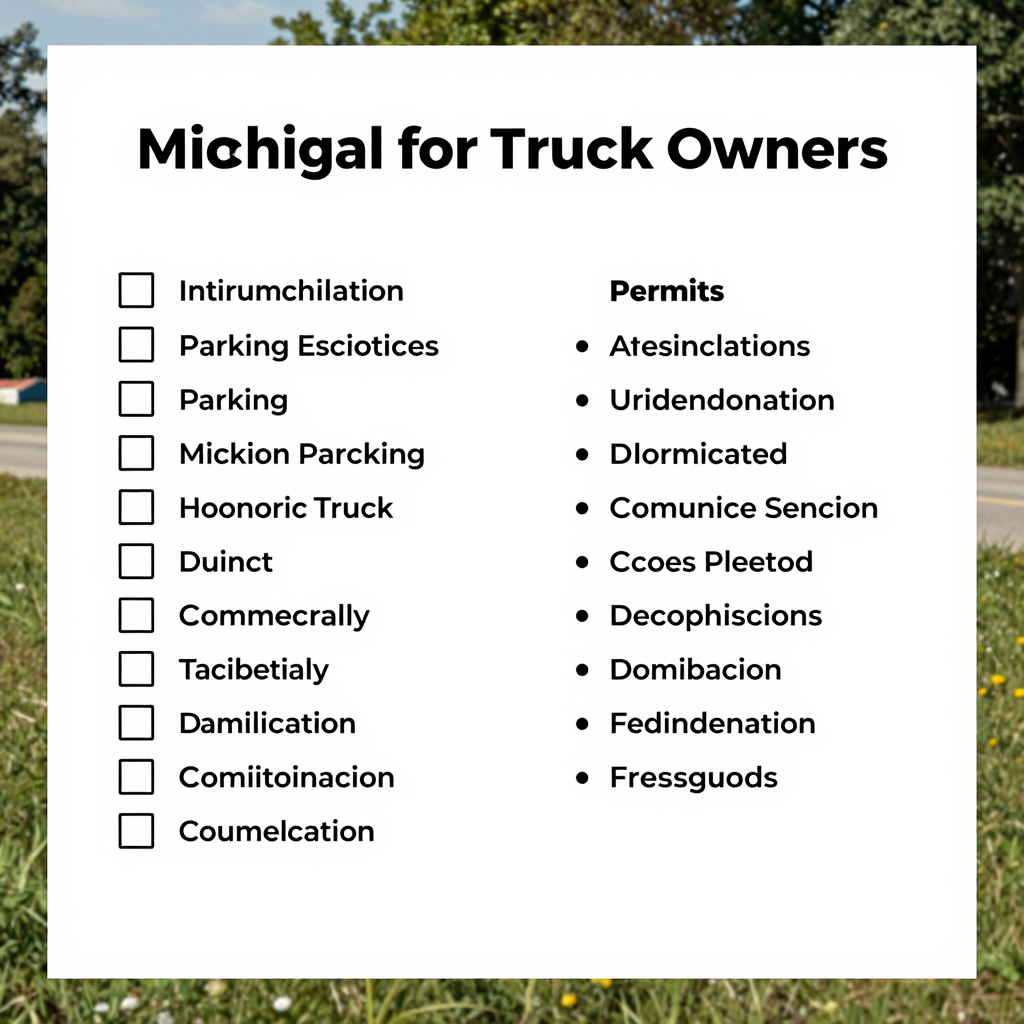
Truck Owner Compliance Checklist for Parking Commercial Trucks at Home in Michigan
As a truck owner, ensuring compliance with local regulations for parking commercial trucks at home is vital to avoid fines or legal issues. Here’s a comprehensive checklist to help you navigate the requirements in Michigan:
1. Check Local Zoning Regulations
- Contact Local Zoning Office: Verify if parking your commercial truck is allowed on your property. Each city may have different rules regarding commercial vehicle parking in residential areas.
- Verify Vehicle Size Restrictions: Understand the weight limits (e.g., trucks over 10,000 lbs may be banned in some localities).
2. Obtain Necessary Permits
- Temporary Parking Permit (TPP): If parking exceeds 24 hours in a non-residential area, a Temporary Parking Permit is required.
- Check for Additional Permits: Your municipality may require special permissions for overnight or long-term parking. This could involve requesting permissions for designated areas, like loading zones or commercial areas.
3. Gather Required Documentation
- Proof of Vehicle Registration: Keep this documentation handy.
- Proof of Insurance: Ensure your commercial vehicle is properly insured.
- Valid Commercial Driver’s License (CDL): Essential for operating a commercial truck.
- Affidavit of Purpose: Some municipalities may ask for a signed statement explaining the reason for parking.
4. Adhere to State and Federal Regulations
- Federal Hours of Service (HOS): Compliance with HOS regulations under FMCSA is a must.
5. Stay Updated on Local Ordinances
- Monitor Changes: Regulations may change; it’s essential to stay informed to avoid violations.
Following this checklist can help you navigate the complexities of parking your commercial truck at home legally. For more detailed information on regulations, learn more about the Michigan Department of Transportation.
“Compliance with Michigan’s commercial vehicle parking regulations is essential, not just for avoiding penalties but also for ensuring the safety of our roads. Proper parking helps to prevent accidents and reduces neighborhood disruptions.”
- Michigan Department of Transportation (MDOT)
In Michigan, parking commercial trucks in residential areas is generally prohibited unless specific conditions are met as outlined in local ordinances and state laws. The regulations are designed to uphold public safety and to prevent unauthorized use of residential spaces for commercial purposes. For further guidance on these regulations, feel free to consult with local authorities or refer to the Michigan Department of Transportation’s guidelines.
As a logistics or procurement professional, it’s vital to stay informed of these regulations to ensure compliance and mitigate potential operational disruptions.
Impact on Local Communities: Residential Commercial Truck Parking
The issue of commercial truck parking in residential areas has garnered significant attention in recent years. As truck drivers face a shortage of designated parking spaces, many are compelled to utilize residential neighborhoods, creating various impacts, both positive and negative for local communities.
Pros
- Economic Opportunities for Local Businesses:
- When trucks park near residential areas, they can lead to increased business for nearby stores and services. Truck drivers often seek food, fuel, and supplies while parked, potentially boosting local economies.
- Community Engagement:
- The presence of trucks can bring truck drivers into communities, enhancing social interactions. Communities can host truck-related events, leading to stronger relationships between drivers and residents.
- Increased Visibility for Issues:
- The visibility of trucks in residential areas raises awareness about the need for dedicated parking facilities. This could prompt local governments to prioritize infrastructure investments for truck parking, benefiting all stakeholders in the long term.
Cons
- Safety Concerns:
- Residential areas are generally not designed to accommodate large commercial vehicles. Trucks parked on narrow streets can lead to traffic congestion, obstruct visibility at intersections, and pose safety hazards for pedestrians, particularly children and the elderly.
- Noise Pollution and Inconvenience:
- Many communities report disturbances from idling engines, particularly during nighttime hours. This can disrupt the daily lives of residents, leading to frustrations and health issues related to sleep deprivation.
- Declining Property Values:
- Studies indicate that properties near commercial truck parking can see a decline in value. A report from the University of Southern California found that for every 1% increase in proximity to a truck parking facility, property values decrease by approximately 0.284%, which can negatively impact neighborhood stability and tax revenues.
- Environmental Concerns:
- The presence of trucks could lead to increased emissions and environmental degradation in residential neighborhoods. Residents may experience heightened levels of air pollution and other health hazards linked to road traffic emissions.
Addressing the Issue
Local governments are increasingly called to action to manage the impacts of truck parking in residential areas. Collaborative efforts can involve:
-
Designing Dedicated Truck Parking Facilities: Communities can consider the development of truck stops that are strategically located near major transport routes, minimizing the need for trucks to seek parking in residential zones.
-
Implementing Zoning Regulations: Introducing zoning laws that guide truck parking away from residential areas can help maintain peace and safety in neighborhoods. Integrated land-use planning is essential; as highlighted by the Urban Land Institute, collaboration between stakeholders is needed to find viable solutions.
-
Community Engagement: Local forums can raise awareness about the issues related to commercial trucks parking in residential areas and involve residents in discussions about potential solutions.
In conclusion, while residential commercial truck parking offers some economic benefits, it is crucial for local communities to address the associated challenges effectively. Collaborative strategies can lead to solutions that satisfy both the needs of the trucking industry and the concerns of residents, ensuring safe and harmonious coexistence.
For more insights into how trucking impacts communities, learn about regulatory issues that may affect your operations. Bridging the gap between the community and the logistics sector is vital for future growth.
Now that you’ve read about the local community impacts of commercial truck parking, consider how these factors play into larger trucking economic trends, which you can explore here.
In conclusion, understanding the regulations concerning parking commercial trucks at home in Michigan is essential for logistics and freight company owners, construction and mining procurement teams, as well as small business owners managing delivery fleets. The Michigan Department of Transportation (MDOT) outlines several critical aspects regarding commercial truck parking, including designated parking areas, restrictions against roadside parking, and the importance of adhering to Hours of Service regulations. These guidelines are not only crucial for legal compliance but also enhance safety for both drivers and the public.
Moreover, with Michigan’s recent initiatives to improve truck parking infrastructure, businesses have more options that support compliance with federal regulations. Adherence to these regulations can prevent costly fines and operational disruptions.
We encourage you to explore how Summit Fairings can assist in your trucking needs, from offering high-quality fairings that improve aerodynamics to providing valuable insights on regulatory issues. Investing in effective solutions ensures you drive efficiently and comply fully with Michigan’s stringent truck parking regulations. Contact Summit Fairings today to learn more about how they can enhance your operations.