
The critical role of commercial truck drivers is often overlooked in the logistics and transportation sectors. Responsible for the safe and timely movement of goods, these drivers fulfill many essential tasks that ensure operational efficiency and compliance with regulations. This article explores three fundamental areas of responsibility: conducting thorough inspections, managing cargo properly, and adhering to safety and compliance protocols. Each chapter will provide insights into how understanding these responsibilities can help logistics and procurement teams optimize their operations and maintain high standards within their fleets.
The Vigilant Ledger: How Inspections Shape a Commercial Truck Driver’s Responsibility
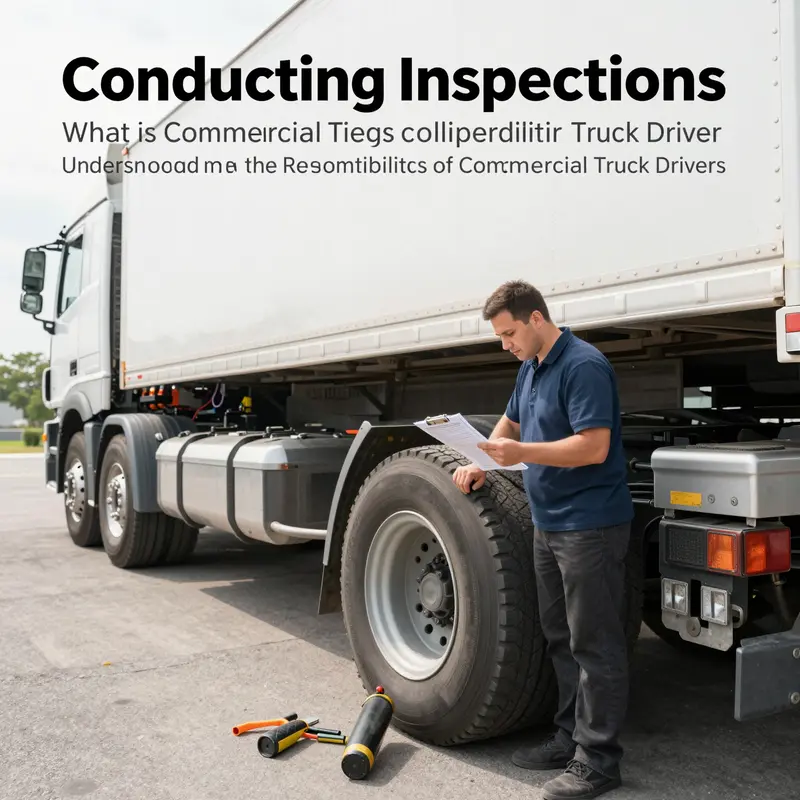
Every day on the road begins long before the first mile is logged. For a commercial truck driver, inspections are not a chore snapped on the to-do list but a central discipline that shapes every other responsibility. The practice rests on a simple premise: the road is unforgiving, and the vehicle is only as reliable as the checks that keep it from failing. In this sense, inspection becomes a daily ritual, a continuous audit that guards the safety of the driver, the integrity of the cargo, and the trust of the entire supply chain. The chapter that follows threads these checks—pre-trip, during-trip, and post-trip—not as isolated tasks but as a coherent, practiced sequence that defines a driver’s professional identity and duty to others on the road. It is a narrative of attentiveness, not reaction; a story about turning routine observations into actionable maintenance, not merely ticking boxes to stay out of trouble. The core idea is straightforward: safety is a system, and inspections are the system’s heartbeat, keeping the wheels turning smoothly and the risk of disruption or failure at bay.
The trip begins with a meticulous pre-trip inspection. Before the truck ever rolls out, the driver acts as a patient diagnostician, walking the heavy machine through its paces with method and restraint. Brakes are the most obvious focal point, but the responsibility runs deeper. The driver tests the brake system not only for stopping power but for balance and response—listening for a soft pull, feeling for a spongy pedal, or noting an unusual heat after a short drive. Steering quality matters, too. A driver checks for play in the wheel, listens for vibration, and confirms that the steering linkage and alignment are sound. Tires, the contact patches that translate power into motion, demand careful attention: inflation pressures matched to load, visible tread depth, and the absence of cuts or bulges. The integrity of lights and signals cannot be overstated. Headlights, taillights, turn signals, reflectors, and clearance lamps must illuminate and communicate clearly in a complex roadway environment where visibility is often compromised by weather, glare, or fatigue. Mirrors must offer a true, undistorted field of view, correctly adjusted and free of cracks that could distort perception. The fluid cocktail—the engine oil, coolant, brake fluid, and other essential reservoirs—must be at proper levels, clean, and free of leaks. Belts and hoses should show no signs of cracking, glazing, or seepage, preventing a cascade of failures once the rig is on the move.
As the driver completes the surface checks, attention turns to the load itself. A truck may look ready to roll, yet the absence of proper cargo securing can transform a stable shipment into a hazardous hazard within minutes. The inspector driver looks for securement devices that are intact, correctly placed, and adequate for the weight and type of cargo. Straps, chains, binders, and chock devices must meet the job’s demands, with no slack that could permit shifting during transit. The cargo’s weight distribution is a careful balancing act; overloading one axle or creating an imbalanced load can compromise stability, steerability, and braking performance. In practical terms, this means evaluating how the goods are stacked, whether pallets are snug and undamaged, and whether any fragile items are adequately cushioned and protected from movement. The pre-trip inspection, then, extends beyond mechanical vitality to include a comprehensive assessment of how the truck carries its burden from dock to dock.
The attention does not end when the truck leaves the yard. During-trip inspections require a driver to maintain an almost compatriotic vigilance. A long drive is not just a test of endurance but of situational awareness. The driver remains attentive to mechanical cues: unusual noises that may indicate worn bearings, tires rubbing on fenders, or a brake temperature that climbs higher than normal on a long descent. The vehicle’s dynamics provide a running report—the steering’s steadiness on straightaways and curves, braking performance under varying road conditions, and handling when the trailer negotiates a turn. Dash indicators play a critical role, and the driver interprets warning lights with disciplined caution. A single illuminated gauge or fault message can signal a developing issue that, if ignored, might escalate into a serious breakdown far from the nearest shop. Adverse weather, rough roads, and traffic density complicate the scene, but they also underscore the driver’s responsibility to adjust driving behavior, reduce risk, and proceed with extra caution. If a problem is identified, the prudent move is immediate safety: reduce speed, find a safe place to stop, and address the issue or report it for repair. The key is not to let a minor signal become a major incident.
A central thread in the during-trip mindset is the driver’s ongoing communication with the broader network of the supply chain. Dispatch, shippers, and receivers expect updates, but this is more than a matter of punctual reporting. It is about transparency and proactivity. When a potential defect is detected or even suspected, a driver must relay clear information—location, severity, and a plan for resolution—so the maintenance team can prepare tools, parts, or a tow if necessary. This line of communication helps preserve freight integrity and reduces the chances of cascading delays that ripple through schedules and customer commitments. The driver, in effect, becomes a moving point of reliability in a system that depends on predictability just as much as on speed. The simple act of reporting a squeak, a warning light, or a shift in steering response can steer a cargo’s journey away from risk and toward a smooth delivery.
As the shift from the open road to the rest stop or truck stop marks the end of a segment, the post-trip inspection completes the circle. At day’s end, the driver conducts a comprehensive debrief of the vehicle’s condition, comparing today’s performance with the day’s goals and with prior notes from maintenance teams. The post-trip inspection is not merely about identifying defects. It’s about creating a documented record that protects the driver, the carrier, and the customer. Not every defect will be urgent, but each deserves a documented path to repair. The discipline of recording defects—whether a leaking hose, a tire with abnormal wear, or a creaking brake component—creates a traceable history that maintenance teams use to plan service intervals, parts procurement, and even recalls in rare cases. This documentation is especially important for home time and for fleet-wide analyses. Patterns may emerge from dozens of daily reports: a truck with a recurring issue that, over weeks, reveals a systematic vulnerability in a particular component or a common wear pattern tied to a route or a trailer type. In those moments, the inspection reports become more than a compliance artifact; they become a strategic tool that improves safety, reliability, and economic efficiency.
The moral dimension of inspections is inseparable from their technical aspects. The FMCSA and state regulatory structures codify these duties into standards that govern the how and when of inspections, but the driver’s responsibility transcends compliance alone. It embodies a broader professional ethos: safety as a cooperative effort. The driver does not operate in a vacuum. He or she collaborates with maintenance professionals who interpret the data gathered from inspections, decide on repair deadlines, and execute corrective actions. The driver’s role is to observe, report, and validate. When a defect is found, the driver does not merely alert a supervisor; they participate in a decision that may involve scheduling constraints, downtime, and rerouting. This collaborative dimension—between the driver and maintenance personnel, with the carrier and with the safety regulators—transforms inspections from a private duty into a public good. It protects fellow travelers, reduces the probability of incidents on treacherous road segments, and supports the timely flow of goods that households and businesses rely on daily.
Of course, the inspection routine exists within the larger context of regulatory expectations and professional standards. The driver’s responsibility to conduct thorough inspections aligns with broader safety goals and enforcement frameworks. While every fleet may tailor its maintenance philosophy, the core obligation remains consistent: to uphold the vehicle’s safety and reliability through disciplined, repeatable checks and precise documentation. Failing to meet these duties can lead to regulatory violations and, in serious cases, more costly consequences such as out-of-service orders, fines, or heightened scrutiny that slows a carrier’s operations. The driver’s commitment to inspections feeds directly into a culture of safety that benefits everyone who shares the road—other drivers, pedestrians, and the communities that rely on the goods moved by trucks every day. In practice, this means that inspection proficiency is not a niche skill but a foundational competency for any professional driver who treats the road as a shared, fragile system that must be respected and protected.
A driver’s sense of responsibility for inspections also informs decision-making about load planning and trip execution. When a pre-trip check reveals a potential weakness in the braking system or a tire with irregular wear, the driver prioritizes safety over schedule. If necessary, the trip may be delayed to allow for a proper repair, or a different route may be selected to avoid hazardous conditions. These choices reflect a mature appreciation of risk management, where the goal is to keep the fleet moving without compromising safety or reliability. The ability to translate inspection findings into concrete actions—whether that means pulling the vehicle from service for maintenance, adjusting the load to restore balance, or delaying departure until a repair is completed—defines how a driver balances efficiency with responsibility. It also reinforces a relationship of trust with customers who depend on predictable delivery timelines and with employers who must safeguard their workforce, equipment, and reputation.
As readers contemplate the scope of this responsibility, a practical nuance emerges: inspections are not a solitary activity but a collaborative discipline that integrates with every other aspect of truck operation. The pre-trip routine sets the tone for the journey; the during-trip vigilance sustains it; the post-trip wrap-up feeds the next cycle of maintenance and readiness. The driver’s daily rhythm becomes a living embodiment of safety culture, a continuous loop in which observation, reporting, repair, and verification reinforce one another. When performed consistently, inspections become second nature, almost instinctive. The driver learns to anticipate how a small, seemingly innocuous sign—a slight tug in the steering, a whisper from the brakes, a slight difference in the vehicle’s response to a turn—can indicate a developing issue. That anticipatory skill is what makes inspections more than compliance; it makes them a strategic protection for life and property, a quiet but powerful act of responsibility that keeps commerce functioning without unnecessary disruption.
In weaving together the technical, regulatory, and ethical dimensions, the narrative of inspection moves from being a set of tasks to becoming a professional philosophy. The driver’s responsibility to conduct rigorous pre-trip, during-trip, and post-trip inspections is the backbone of safe operation and reliable service. It is a daily testament to the craft of trucking, a craft that demands humility before the machine, discipline in practice, and a steadfast commitment to the safety of strangers who share the road. For those who seek a broader understanding of how inspections connect with regulatory realities and with cross-border operations, broader discussions in industry forums and regulatory dialogues offer context and continuity. If you want to explore associated regulatory perspectives and community experiences around inspection practices, you can delve into cross-border regulatory discussions that illuminate how inspectors and drivers navigate shared requirements across regions. Cross-border regulatory issues event.
The chapter closes with a reminder that inspections are not a static checklist but a dynamic practice that evolves with technology, regulations, and on-the-ground realities. Advancements in telematics, diagnostic tools, and predictive maintenance augment the driver’s traditional senses, enabling faster identification of potential issues. Yet the human element remains indispensable: a trained eye, a careful hand, and a responsibility that extends beyond personal safety to the safety of others and the integrity of the freight system. In the end, the driver’s responsibility to conduct thorough inspections is the bedrock upon which every subsequent duty rests. It ensures that each mile driven protects lives, preserves cargo, and maintains the steady, reliable flow of goods that modern economies depend on. This is the essence of professional trucking—a vocation built on vigilance, procedure, and a steadfast commitment to safety, every time the engine fires and the road unfolds ahead.
External resource for further guidance: for official standards and enforcement guidelines that codify the inspection process in federal terms, consult the FMCSA Truck and Trailer Inspection Requirements.
Cargo, Compliance, and the Call of the Road: The Full Spectrum of a Commercial Truck Driver’s Responsibilities
A commercial truck driver operates within a demanding frame that blends technical skill, legal obligation, and real-world problem solving. The responsibilities extend far beyond steering a large vehicle from point A to point B. They encompass a continuous, almost daily orchestration of safety, efficiency, and trust that keeps supply chains moving and communities supplied. The road becomes a classroom where drivers learn to balance precision with adaptability, making decisions under pressure while maintaining a constant awareness of the people who rely on the loads they carry. In this light, the role emerges as a professional vocation rather than a simple job, one that requires discipline, judgment, and a steady commitment to standards that protect everyone on the road and in the yards that host their cargo.
Central to the driver’s remit is the safe operation of the vehicle. This safety is not an abstract ideal but a concrete practice that begins before the truck ever rolls. Drivers adhere to traffic laws, calibrate their speed to road conditions, and employ defensive driving techniques designed to reduce risk in dynamic highway environments. They cultivate a disciplined approach to visibility, following distance, and anticipation of other drivers’ blind spots, which becomes second nature with experience. The mechanical side of safety is equally critical: pre-trip inspections that scan the brakes, tires, lights, steering, and fluid levels; post-trip checks that reveal wear or leaks that could become hazards later. These routines are not chores but integral parts of the window through which a driver views the vehicle’s readiness for tomorrow’s trip. A clean, orderly cab and cargo area reflect a mindset of control and responsibility. When the interior environment is tidy and the cargo space is organized, it reduces the likelihood of missteps and speeds up the process of loading, unloading, and securing at the next stop.
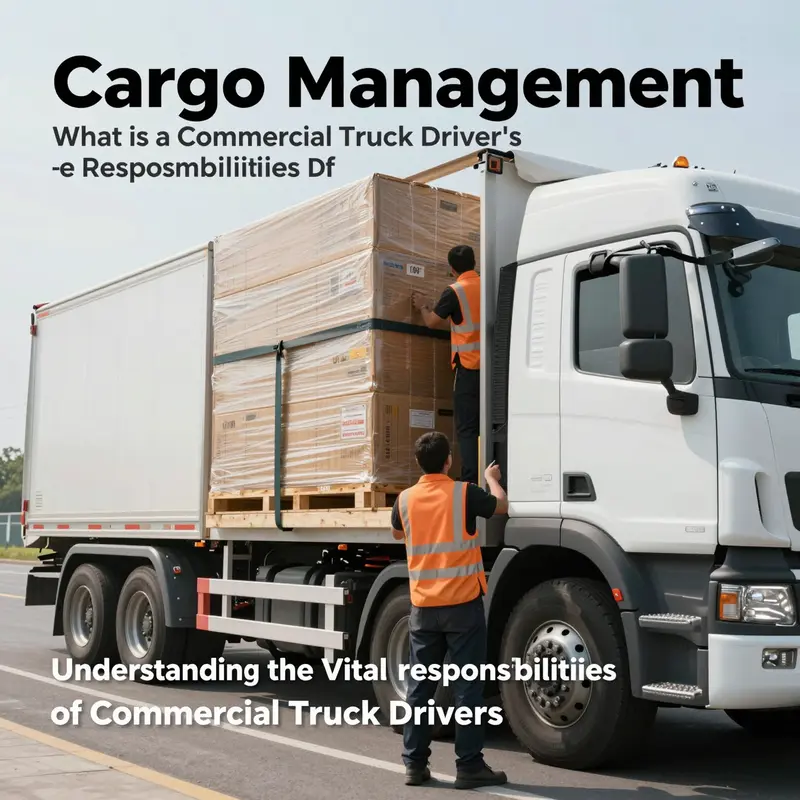
The responsibility for safety folds into the integrity and security of the cargo itself. Loading verification is a careful, almost ritual process: shipments must be arranged according to weight distribution guidelines, with emphasis on stability and axle load limits that protect the vehicle and the highway environment alike. Securing the load with appropriate restraints is not cosmetic; it is essential to prevent shifting that could alter the vehicle’s handling or cause damage to goods and equipment. The attention to prevention is complemented by a rigorous documentation habit. Drivers inspect and document the condition of cargo upon pickup and delivery, signing delivery receipts or using digital tracking systems to confirm condition and presence. Such records become crucial when questions arise about damage, loss, or misdelivery. In many operations, a driver’s notes and photos provide a transparent chronicle that supports accountability and quick resolution with shippers, receivers, and carriers. The cargo’s safety is inseparable from the driver’s sense of stewardship—each tie-down, strap, or net is a published promise that the goods will reach their destination intact and on time.
This stewardship extends into the planning and communication that form the backbone of reliable service. Route planning is a forward-looking discipline that harnesses GPS, mapping software, and real-time traffic data to chart a path that minimizes risk and meets delivery windows. The best plans anticipate congestion, weather, and road conditions, while also accounting for the realities of equipment availability, detention times, and the occasional unexpected stop that is part of the job. Effective planning does not end with a map; it requires ongoing communication with dispatchers, shippers, and receivers. Regular updates about progress, delays, or issues allow all parties to recalibrate schedules and resources, preserving trust and reducing unnecessary yard time. The record-keeping element of planning is equally essential. Hours of Service (HOS) logs, mandated by federal regulations, function as the driver’s chronicle of where they have been and how long they have been operating. Far from a bureaucratic obstacle, these logs protect drivers from fatigue and safeguard other road users by ensuring rest periods are factored into every trip. In practice, this means a driver adheres to legal limits, plans rest periods, and uses the system to communicate availability and limitations clearly to the team waiting at the next checkpoint.
The driver’s professional representation is another dimension of responsibility that often goes unseen by those who encounter truck operations only at the dock or in the lane. Professionalism encompasses more than punctuality and courteous behavior; it embodies safety protocols, accountability, and consistent performance under pressure. A driver who demonstrates reliability sets a standard for their company and earns the trust of customers and colleagues alike. Professional conduct extends to how a driver interacts with other road users, how they handle interruptions, and how they respond to unforeseen events such as severe weather, detours, or a mechanical hiccup that could cascade into delays. In this sense, the truck driver becomes an ambassador—an image of competence and care on wheels that underpins the broader reputation of the logistics ecosystem. Such professionalism is not incidental; it is cultivated through training, experience, and a clear understanding that every action on the road has consequences for people far beyond the cab.
Unexpected situations are a constant in trucking, and the test of a driver’s responsibility is how they respond rather than how they avoid difficulty. Weather can turn express routes into slower passages, requiring quick recalibration of plans and, at times, a decision to delay or reroute to protect cargo and personal safety. Mechanical breakdowns demand a calm, methodical response: initial assessment, a determination of whether the issue can be safely managed en route, and a plan to reach a service facility without compromising the load or other road users. Detours and gate closures—common reminders that the road is a living map—invite improvisation within the framework of safety and compliance. Each scenario nudges drivers toward a balance between adherence to schedules and prudent risk management. The most resilient drivers learn to keep a cool head, document changes, notify relevant parties, and adjust plans with minimal disruption to customers and markets. The goal is not to race against time but to deliver with reliability, preserving product integrity and public safety while maintaining the flow of commerce.
What does this mean across the spectrum of cargo and routes? It means that a driver’s responsibilities are not a fixed set of tasks performed once per shift; they are a continuous practice of risk assessment, precision, and communication that adapts to the cargo’s nature and the destination’s realities. The weight and balance of a load, for example, determine handling characteristics that affect braking, cornering, and stability. A driver must interpret and apply the appropriate weight distribution strategies, ensuring that each axle carries an appropriate share of the total load and that the combination of trailer and chassis remains within manufacturer and regulatory limits. The driver’s attention to load security also extends to content protection: preventing damage from shifting, moisture intrusion, or temperature fluctuations. When the cargo is sensitive to environmental changes, the driver coordinates with the consignee about monitoring equipment or the use of protective packaging to sustain product quality. These decisions are rarely solitary; they require collaboration with loaders, shippers, and receivers who, through their own expertise, contribute to a shared outcome: a safe, intact, timely delivery.
This sense of interdependence is echoed in professional networks and industry conversations. The broader transportation ecosystem depends on drivers who understand not only the “how” of a move but the “why” of each step. The driver’s role becomes a nexus where operations, safety, law, and customer service converge. It is here that the practical fiction of trucking—the idea that the job is simply about getting from origin to destination—gives way to a holistic view of the occupation as a critical link in a complex pipeline. Every loading decision, every log entry, and every communication with a dispatcher contributes to a chain of reliability that keeps goods flowing and economies functioning. Drivers who internalize this perspective are better prepared to adapt to evolving regulatory requirements, changing market pressures, and the shifting expectations of customers who depend on precise delivery scheduling and transparent, accurate reporting.
The regulatory environment is never far from daily practice. Drivers must stay current with federal and state rules governing hours of service, vehicle maintenance standards, and cargo safety requirements. These rules exist not as impediments but as guardrails that protect drivers and the public from fatigue, mechanical failure, and unreasonable risk. Compliance is reinforced by a culture of meticulous documentation and proactive risk management. A driver who tracks hours, validates duty status, maintains inspection reports, and observes weight and dimension restrictions reduces exposure to violations that can disrupt service and jeopardize safety. In practice, this means scheduling rest intelligently, choosing routes that minimize exposure to hazardous conditions, and seeking support when a plan would breach legal limits.
The interconnected nature of these responsibilities is reinforced by the broader social and environmental stakes of trucking. Responsible drivers recognize that efficient, careful operation reduces fuel use, minimizes wear on equipment, and lowers emissions. They understand that idling for extended periods wastes fuel and increases costs while contributing to environmental degradation. Consequently, good drivers optimize routing for weather and traffic, manage speed to sustain fuel efficiency, and maintain equipment in peak condition to prevent leaks, spills, and unnecessary waste. This mindset is not merely ecological; it is economic and operational, reinforcing the idea that responsibility translates into better service, lower costs, and a healthier road environment for everyone. In this sense, the driver’s duties also reflect an ethic of stewardship toward the communities and landscapes that trucks traverse daily.
The practical implications of all these responsibilities become clearest at the point of contact with customers and the yards that receive and ship cargo. The driver’s ability to communicate, negotiate, and coordinate under pressure can determine whether a delivery window is met or missed, whether a product remains undamaged, and whether a relationship with a customer remains constructive. The load’s journey—its movement through warehouses, gates, loading docks, and finally onto a distant shelf—depends on a series of precise, timely actions. The driver’s role in this journey includes keeping appointments, reporting delays with honesty and clarity, and following through on commitments with consistent performance. Such reliability builds trust across the supply chain, from the dispatcher who assigns the next trip to the receiver who inventories the goods upon arrival. The cumulative effect of these daily duties is a system that leverages human judgment and disciplined processes to deliver value in a way that is dependable and predictable for businesses that must serve customers, just in time, every day.
For readers seeking a fuller sense of how these responsibilities play out in practice, consider the broader conversations that occur within the trucking community. They often center on how to balance speed with safety, how to maintain lines of communication that keep delays from becoming problems, and how to stay compliant in a regulatory landscape that can shift with new rules and interpretations. The ongoing dialogue integrates practical lessons from road experience with formal guidelines, creating a living sense of what it means to be a professional driver in a modern logistics environment. It is a reminder that while the machinery and the routes are fixed, the human element—decision-making under pressure, ethical conduct, and daily accountability—remains the central thread that keeps the system functioning. In this way, the chapter’s exploration of cargo management hums with resonance: it is the story of responsibility in motion, where every mile serves a purpose beyond the immediate cargo and every action reflects a commitment to safe, reliable, and respectful transportation.
As a final note, this chapter anchors its practical emphasis with a nod to ongoing industry conversations. A fuller understanding of regulatory nuance and cross-border considerations can be gained from a spectrum of industry resources and events, such as the TCAS cross-border regulatory issues event, which highlights how drivers navigate complexities that arise when goods move beyond one jurisdiction into another. TCAS cross-border regulatory issues event. Such discussions remind us that the responsibilities of a commercial truck driver are not static; they evolve with technology, policy, and the ever-changing geometry of trade. The job remains anchored in a simple, enduring commitment: to move goods safely, efficiently, and with respect for the people and places that make the journey possible. For readers seeking formal grounding in regulatory standards, the U.S. Department of Transportation offers authoritative resources that illuminate the rules drivers live by every day. External readers can consult the DOT’s official site as a reference point for shifting rules, recommended practices, and official guidelines that shape the daily rhythms of trucking life: https://www.dot.gov.
Guardians of the Highway: Compliance, Safety, and the Everyday Duty of a Commercial Truck Driver
On the surface, a commercial truck driver is a person who steers a machine from one place to another. In practice, the role encompasses a steady, often demanding discipline that binds safety, law, craft, and human judgment into a single, continuous responsibility. The highway becomes a moving classroom where every mile tests a driver’s ability to balance speed with caution, efficiency with care, and ambition with restraint. This is not merely about navigating a map or delivering goods; it is about safeguarding lives, protecting cargo, and sustaining a vast chain of commerce that keeps communities fed, heated, clothed, and enabled. The duties are both technical and ethical, clearly defined by regulations and lived through daily choices that reverberate beyond the cab. In that sense, compliance and safety are not ancillary concerns but the very fabric of the job, woven through every maneuver, decision, and interaction a driver makes from dawn to nightfall and back again.
First, the legal framework that frames the work demands respect before any wheel turns. A commercial driver must hold a valid CDL appropriate for the vehicle they operate. This license is earned through rigorous testing that evaluates knowledge, decision making, and vehicle control. It is a recognition that the driver has demonstrated baseline competence to handle a specific class of vehicle, whether a large tractor and trailer, a heavy straight truck, or a delivery vehicle that requires precise handling in urban arteries. The license is not a one-and-done credential; it is a living obligation that accompanies the driver throughout their career. As regulations evolve, drivers must stay current, understanding amendments that affect vehicle maintenance standards, load securement rules, or the handling of hazardous materials when such materials are part of a route. The responsibility extends to ongoing training and periodic refreshers that refresh a driver’s awareness of the latest safety practices and regulatory expectations.
At the core of daily operations sits the Hours-of-Service framework, a system designed to prevent fatigue from eroding judgment behind the wheel. Fatigue is not merely tiredness; it is a risk multiplier that increases the likelihood of misjudgments, slow reactions, and lapses in attention. The HOS rules cap driving time and mandate rest periods, ensuring that drivers return to the road with a renewed ability to perceive hazards, anticipate changes, and respond promptly. The use of electronic logging devices, or ELDs, is the modern means by which these hours are tracked with integrity. The presence of a reliable log of duty status acts not as a punitive measure but as a safety safeguard, recording when a driver is on the move, when they have taken a required break, and when they must pause again. Adhering to HOS is not a bureaucratic formality; it is a commitment to personal health and public safety. It guides how routes are planned, how rest stops are chosen, and how dispatch decisions align with the driver’s well-being and the needs of the road.
Before any cargo moves, the truck must pass through thorough pre-trip inspections that underscore the procedural nature of competence. These inspections are not ceremonial checks but practical protectors of safety. They involve examining brakes for proper pressure and responsiveness, tires for tread depth and pressure, lights for visibility, steering for play, and fluid levels that indicate the health of the engine and cooling systems. A diligent pre-trip review may reveal a minor issue that can be corrected before it becomes a fault that impedes safety. The post-trip inspection continues this thread, serving as a feedback mechanism that identifies wear, damage, or components requiring attention before the next run. In both cases, the driver operates like a clinician for a mechanical system, listening for unusual sounds, feeling for abnormal vibrations, and watching gauges for anomalies. The habit of systematic checks reduces the chance that a minor problem becomes a major incident on a crowded interstate or a treacherous mountain grade.
Safety on the road is a composite craft that blends rule following with situational awareness. Safe driving practices demand obedience to traffic laws, a disciplined approach to speed and following distances, and the ability to adapt to changing conditions. Drivers must avoid distractions that pull attention away from the task at hand. In heavy traffic or adverse weather, the margin for error narrows, and the driver’s choices become more consequential. Defensive driving emerges as a core mindset: anticipate the actions of others, plan escape routes, and maintain a buffer that allows for sudden stops or evasive maneuvers. The use of seat belts, proper seating position, and regular micro-adjustments to mirror settings all contribute to reducing injury risk. A driver’s attitude toward weather is not passive; it is an active calculation of speed, braking, gear selection, and route choice. Snow, ice, rain, fog, or high winds each imposes a different set of constraints, and the competent driver adjusts rhythm, technique, and even the timing of a delivery to preserve safety for all road users.
Cargo securement is another pillar of the driver’s responsibilities that deserves careful attention. Loads must be secured, balanced, and distributed in accordance with weight limits and regulatory guidance. A poorly secured load can shift during transit, produce dangerous trailer sway, or compromise a vehicle’s braking and steering. The process includes selecting appropriate tie-downs, checking lashings for wear, and verifying that the cargo remains stable during dynamic driving conditions. It also entails recognizing when a load requires additional precautions, such as securing tarps, applying edge protection, or using specialized restraints for elongated or fragile items. The driver’s judgment is essential here; a balanced assessment of weight distribution and potential movement is necessary to prevent any sudden shift that could threaten the vehicle’s stability.
Beyond the tangible mechanics of operation, compliance encompasses a broad spectrum of regulations that influence daily routines. Drivers must navigate rules set by federal agencies such as the Federal Motor Carrier Safety Administration, and in many cases, state regulations intersect with national standards. This regulatory landscape covers not only vehicle maintenance and safe operation but also safe handling of hazardous materials when applicable, drug and alcohol testing protocols, and recordkeeping requirements. The aim of these rules is to create a predictable framework within which fleets and drivers operate, reducing ambiguity that can lead to unsafe practices. Understanding these rules requires more than memorized checklists; it requires a holistic awareness of how each policy interacts with a driver’s on-road decisions, route planning, and interactions with shippers, receivers, and dispatchers.
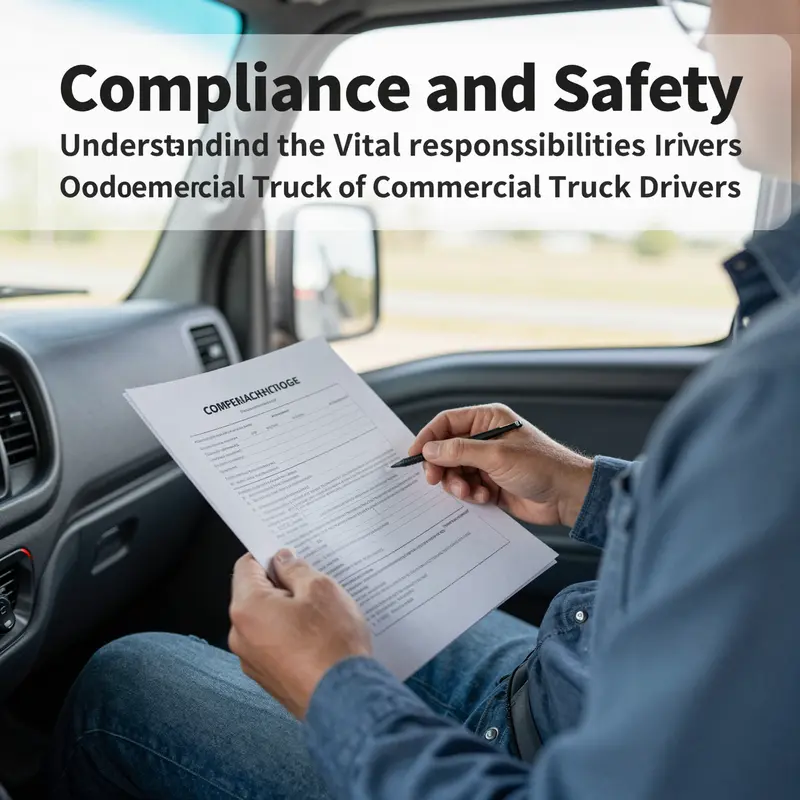
Accurate recordkeeping stands as a foundational practice. Drivers must maintain comprehensive logs of hours, vehicle inspections, and any maintenance issues encountered along the way. These records serve purposes that extend beyond compliance audits; they provide a historical account that can help identify recurring problems, calibrate scheduling, and inform safety improvements across the organization. A robust documentation habit supports accountability and transparency, ensuring that both the driver and the company can respond to inquiries with clarity and verifiable data. When records reveal fatigue patterns, maintenance needs, or recurring delays, managers can adjust staffing, route design, or maintenance plans to reduce risk and improve reliability. In this way, the simple act of logging becomes a strategic tool for safety culture and operational resilience.
Communication threads weave through every layer of the driver’s responsibilities. Dispatchers, shippers, and receivers rely on timely, accurate information to synchronize loading, routing, and delivery windows. Clear communication reduces the likelihood of misloads, missed appointments, and protracted dwell times that can cascade into overdue deliveries or unsafe parking situations. The professional conduct of a driver—courteous, patient, and precise in exchanges—supports a smoother flow of information and a safer workplace on the road. Even when plans change due to weather, regulatory delays, or detours, the driver’s ability to relay options, ask questions, and confirm details helps preserve safety margins and maintain trust across the supply chain. This communication discipline is not a soft skill; it is a critical safety tool that complements mechanical competence.
The work also carries ethical dimensions that extend to others on the road and in communities. A driver bears responsibility for respecting delivery schedules while balancing safety and compliance. This means resisting pressure to take shortcuts, refusing to operate a vehicle when fatigued, and accepting the consequences of decisions that affect public safety. It also means recognizing the broader impact of one’s work: delayed deliveries can ripple through a hospital, a grocery shelf, or a manufacturing line. Ethical driving is not abstract; it manifests in the patient approach to a tight timetables, the meticulous attention to vehicle readiness, and the willingness to adjust plans when the risk of harm is elevated. In practice, this ethical stance reinforces a culture of safety and accountability that transcends individual routes and becomes a shared value within the trucking community.
In this intricate web of duties, the driver is not a passive executor but an active steward of safety. Each mile becomes a test of judgment, each stop a chance to affirm proper procedure, and each interaction a moment to uphold professional standards. To be sure, the technology that supports trucking—ELDs, telematics, route optimization software, and maintenance monitoring—offers powerful tools. Yet those tools work best when paired with a driver who understands why rules exist and how they serve a larger purpose: reducing risk, protecting lives, and preserving the integrity of the supply chain. The most effective drivers internalize compliance as a living practice rather than a checklist to be completed. They approach their responsibilities with a sense of pride in the role they play within a complex system that relies on their vigilance and discipline every day.
For readers seeking a concise touchstone on regulatory expectations, the landscape remains dynamic. The cross-border dimension, in particular, demands attention to evolving regulatory regimes that govern movement across jurisdictions. Information about these issues is continually updated as policies shift in response to trade, security, and safety concerns. A resource that highlights these cross-border regulatory issues can be helpful for drivers whose routes cross international lines and for fleets that manage multi-country operations. cross-border regulatory issues frames the types of considerations a driver should anticipate when planning border crossings, including documentation, pacing, and compliance with varying regulatory requirements across regions. While the everyday work may unfold on a single highway or a regional corridor, the awareness of such frameworks strengthens a driver’s readiness to respond to regulatory changes with calm precision rather than hurried improvisation.
The chapter’s guidance culminates not in a set of isolated rules but in a philosophy of professional care. Each responsibility, from pre-trip inspections to post-trip reporting, from HOS compliance to cargo securing, contributes to a broader pattern of safety and reliability. The driver’s role is to sustain this pattern across the long arc of a career, recognizing that safety is an ongoing practice, not a one-time achievement. The road is a living classroom where new challenges continually emerge, and the driver remains a student and a guardian at once. In that dual identity lies the essence of what it means to be a commercial truck driver: a disciplined, vigilant, ethically oriented professional who carries a heavy load not just of freight but of responsibility for people, places, and the promise of dependable service. For those who embrace this path, compliance and safety become not burdens but the terms of a trustworthy, enduring vocation that keeps communities moving and economies thriving. The chapter ends where the reality begins—with the road ahead and a driver prepared to meet it with integrity, skill, and unwavering commitment to safety.
For readers who want to verify regulatory baselines and explore the source frameworks that undergird these responsibilities, consult the FMCSA resources. They offer authoritative guidance on vehicle maintenance, regulatory expectations for hours of service, and the rules around drug and alcohol testing, among other critical topics. Access to current rules helps ensure that daily practice aligns with the latest standards and that drivers and fleets remain in good standing while continuing to protect life and property on every mile traveled. https://www.fmcsa.dot.gov
Final thoughts
In summary, understanding the comprehensive responsibilities of commercial truck drivers—from conducting rigorous inspections to managing cargo and ensuring compliance with safety regulations—is vital for optimizing logistics operations. By investing in training, support, and resources that empower drivers to perform these tasks effectively, logistics and freight company owners can enhance safety, efficiency, and overall operational success within their fleets.