
Registering a commercial truck in Arizona is a critical process for logistics and freight company owners, construction and mining procurement teams, and small business owners with delivery fleets. With the right steps, this process ensures compliance with state regulations and operational readiness. This guide is structured into distinct chapters that cover the essential stages of registration—from obtaining a Commercial Driver’s License (CDL) to completing the Motor Vehicle Division (MVD) registration process. Understanding these steps not only simplifies the registration process but also enhances the efficiency and safety of your commercial operations.
From CDL to Road-Ready: A Comprehensive Guide to Registering Your Commercial Truck in Arizona
Launching a commercial trucking operation in Arizona begins long before the vehicle rolls onto the highway. It starts with a clear understanding of how the state’s regulatory framework shapes every step from obtaining a Commercial Driver’s License to presenting a truck that meets the rigorous safety standards required for registration. The journey is not a string of discrete tasks but a cohesive path where licensing, inspection, business structure, vehicle accountability, and permitting feedback loop into one another. The Arizona Motor Vehicle Division, along with the Arizona Department of Transportation, sets the cadence for this progression, and a firm grasp of the sequence helps owners and operators avoid delays that can ripple through a fleet’s schedule. At the heart of the process lies the CDL, a prerequisite that signals your ability to operate a commercial vehicle within the state and across state lines. In Arizona, the license you hold is more than a credential; it is your gateway to registration, insurance commitments, and the accountability that accompanies heavy-duty transport. The rules are specific enough to prevent missteps yet flexible enough to accommodate a broad range of operations, from single-truck owner-operators to established fleets. The path to obtaining a CDL unfolds with a well-defined eligibility framework. Interstate driving, which covers routes beyond Arizona, requires a driver to be at least twenty-one years old. This age threshold reflects the broader safety and liability standards that come with cross-border commerce. Intrastate driving, limited to Arizona, lowers the age bar to eighteen, recognizing the importance of regional transport while balancing risk. These age distinctions are not mere formalities; they shape how soon a vehicle can be registered if the owner plans to operate within state lines only. The licensing gatekeeping is reinforced by eligibility prerequisites that span medical fitness, driving history, and lawful work authorization for non-U.S. citizens. A CDL is not granted to someone who cannot legally work in the United States, and this requirement aligns with federal and state expectations for operators who carry passengers or freight heavy enough to demand a commercial license. The essential first step is a visit to the right regulatory address. In Arizona, the licensing portal is anchored in the state’s motor vehicle and transportation agencies, where applicants access written tests, knowledge review materials, and the practical driving tests that culminate in a CDL. The process is designed to assess both the theoretical understanding of vehicle operation and the on-road performance that demonstrates safe handling under varied conditions. As part of this licensing journey, applicants should prepare for two broad categories of assessments: knowledge tests and practical skills evaluations. The knowledge tests cover essential topics such as air brakes, combination vehicles, hazardous materials if applicable, and general vehicle inspection procedures. The practical tests cover a pre-trip inspection, basic vehicle control, and an on-road driving segment that places the applicant in situations closely mirroring real-life trucking operations. The guidance available on the official ADOT platform emphasizes the importance of accurate documentation, patient study, and a willingness to practice until each skill is second nature. Documentation for CDL applicants often includes proof of identity, residency, and, for non-citizens, work authorization documentation. The regulatory framework is clear in its expectations: you must possess a valid CDL before you even attempt to register a commercial vehicle in Arizona. Once the CDL is secured, the vehicle itself moves into the spotlight under a different but equally important set of standards. A commercial truck must pass a safety inspection conducted by an authorized inspection station. The inspection is not a mere formality. It is a comprehensive check designed to confirm compliance with federal and state safety standards. Inspectors evaluate brakes for effectiveness and reliability under various loads, verify that lights and reflectors are functioning properly, examine tires for tread depth and sidewall integrity, and confirm the presence and operability of emergency equipment. The inspection report becomes a foundational document used during registration, and it is not something a driver or owner can improvise. The safety inspection serves as both a quality control measure and a protective mechanism for the operator, other road users, and the general public. Beyond safety, the regulatory process recognizes that businesses often operate through specific legal structures. If you are conducting your trucking activity as a business entity—an LLC, a corporation, or another form of registered company—you must ensure that your business is properly registered with the Arizona Corporation Commission. The ACC online system offers a streamlined pathway to confirm your business status, enabling approvals that can be surprisingly swift. In some cases, a business can move through the initial registration phase in fifteen minutes, with formal approval taking a matter of days. This rapid processing does not override the necessity of aligning with all other statutory requirements; it simply reflects the efficiency of Arizona’s online processes when information is complete and accurate. The next horizon in the journey is registering the vehicle itself with the Arizona MVD. This step marks the official transition of ownership and responsibility from the seller or lessor to the operator who will be operating the truck within the state. The MVD registration process requires a set of core documents to prove ownership and insurability, as well as the results of the safety inspection. A valid insurance policy that explicitly covers commercial use is essential. The proof of ownership comes in the form of the vehicle title, which confirms the legal owner and the lien status if a lien exists. The registration application itself must be completed—either in person at a local MVD office or through the online portal, depending on the available services and the operator’s preference for handling paperwork. Fees are an inescapable part of the equation, and their calculation reflects several variables: vehicle weight, intended use, and whether the truck is operated intrastate or interstate. The state’s fee schedule is designed to be transparent, though it can be nuanced; heavier vehicles, for example, incur higher registration costs, and certain use cases may require additional fees for special permits. The practical difference between an ordinary vehicle registration and a commercial registration is subtle but significant. Commercial registrations are designed to align with the heightened risk and higher responsibility associated with hauling cargo, especially across longer distances, in variable terrain, or under tight scheduling requirements. It is not unusual for operators to consider a combination of registrations—the basic vehicle registration for the truck coupled with a commercial weight tax or a specific permit aligned with the operational profile—to ensure compliance while optimizing tax and licensing costs. For some operators, the path also includes a separate application to obtain a commercial vehicle permit. Not every operator will require this permit, but for those engaged in particular activities—such as certain freight operations that cross state lines, or specialized passenger transport—additional permits may be mandated through ADOT or the MVD. The regulatory nuance here is not meant to complicate life; rather, it ensures that the state can track, regulate, and audit commercial operators effectively. If your operation involves any cross-border movement, or if you intend to grow beyond simple intrastate trucking, it is prudent to plan for permit-related requirements from the outset. The practical takeaway is that CDL eligibility and vehicle registration are interdependent steps. The CDL is not simply a credential; it is a signal that you meet the basic threshold for responsible operation. The safety inspection is the tangible verification that your equipment meets performance standards. The business registration with ACC demonstrates that your enterprise is properly structured and compliant with corporate governance expectations. The vehicle registration with MVD ensures the state can confirm ownership and send the proper fees and registration status to the correct entity. When these pieces align, you are moving toward a vehicle that can legally operate on Arizona roads under the commercial designation. It is also worthwhile to recognize that this process can reveal opportunities for streamlining and efficiency. For instance, some operators find that aligning their business registration timing with vehicle inspection and registration schedules helps reduce downtime between becoming fully compliant and hitting the road. Coordinating appointments, preparing documents in advance, and understanding the payment structures for the various fees can translate into a smoother experience at the counter or on the digital portal. An overarching theme in this journey is the importance of staying current with official sources. The legal framework governing CDL eligibility, vehicle inspections, corporate registrations, and vehicle registration is subject to updates, and these updates can affect timelines and cost. Therefore, consulting the official sites—such as the Arizona Department of Transportation’s motor vehicle pages and the Arizona MVD portal—before launching into the process is a prudent step. The guidance offered by these agencies emphasizes not only the steps themselves but the rationale behind them: safety, accountability, and reliability in commercial transportation. For those who want to dive deeper into the regulatory landscape and understand how evolving standards might affect future registrations, a broader look at regulatory insights is valuable. For more on the regulatory landscape, see OEMs seek clarity in emissions regulations. This internal link provides a lens into how emissions considerations, technology shifts, and evolving standards may interact with licensing and vehicle compliance in the longer term. While this chapter centers on the concrete steps of obtaining a CDL and registering a commercial truck in Arizona, it is important to stay aware of cross-cutting factors that influence timing and strategy. The trucking environment is shaped by ongoing changes in safety technology, the adoption of advanced braking systems, evolving requirements for screening and credentialing, and the broader push toward more robust regulatory compliance across the industry. Operators who anticipate these shifts benefit from building a compliance calendar that aligns CDL renewals, medical certifications, vehicle inspections, and insurance renewals with a predictable cadence. In practice, this means setting reminders for license renewals, maintaining current insurance certificates that reflect the commercial use of the vehicle, and noting inspection windows so that a truck never arrives at a registration desk with an overdue safety examination. The Arizona MVD and ACC ecosystems are designed to accommodate this proactive approach. They provide guidance and resources that help operators coordinate multiple administrative streams without creating bottlenecks. The experience of many drivers and fleet managers underscores the value of consolidating documentation, keeping electronic copies of ownership titles and insurance policies, and retaining proof of prior inspections so that when the moment comes to register, everything is readily accessible. It is not merely about compliance; it is about reliability in service delivery. The stance that every truck owner should adopt is one of deliberate preparation. Rushing the process often leads to avoidable errors, mismatches in document names, or miscommunications at the point of service. A methodical approach—listing each required document, confirming the current status of each item, and then scheduling the corresponding appointments—reduces friction and helps keep a fleet on schedule. In the practical world of Arizona trucking, time is a critical asset. The difference between a one-day delay and a one-week delay can be measured in missed loads, rescheduled deliveries, or the cost of idling equipment. The goal is not to chase a fastest possible path, but to create a predictable workflow that aligns with the realities of vehicle maintenance cycles, insurance billing cycles, and administrative processing times indicated by the agencies. If you are starting with a single truck or a modest fleet, you will still benefit from viewing the process as a connected chain rather than a set of independent tasks. The experience of operators who have navigated this process successfully emphasizes the importance of clarity in responsibility—who will handle the CDL application, who will manage the inspection appointment, who will file with ACC if needed, and who will oversee the registration submission to MVD. When these roles are defined, the likelihood of miscommunication drops dramatically, and the probability of a smooth, timely registration increases. For anyone preparing to register a commercial truck in Arizona in the current regulatory climate, the practical guidance is straightforward: start with the CDL, verify your eligibility, and plan for the safety inspection as a non-negotiable milestone. Then align your business registration with ACC if your operation is structured as a formal business, and finally complete the MVD registration with all supporting documents and accurate fee calculations. Along the way, keep a steady eye on permitting needs that may apply to your particular operational footprint, especially if interstate movement or specialized services are part of your business model. The journey from CDL to road-ready status is as much about disciplined administration as it is about mechanical readiness. It is about showing the state and the public that your operation is prepared to carry freight or passengers with the highest standards of safety and accountability. The end state—a registered commercial truck that is legally permitted to operate within Arizona and, if applicable, across state lines—represents not only a legal milestone but a commitment to reliable logistics that a modern economy depends on. For those who want to stay connected with ongoing regulatory developments and industry context, there are broader resources that discuss how the industry is adapting to emission concerns and regulatory clarity in a broader sense. External Resource: https://www.azdot.gov/motorvehicles/.
From Roadworthiness to Registration: Mastering Arizona’s Commercial Truck Inspection Gate
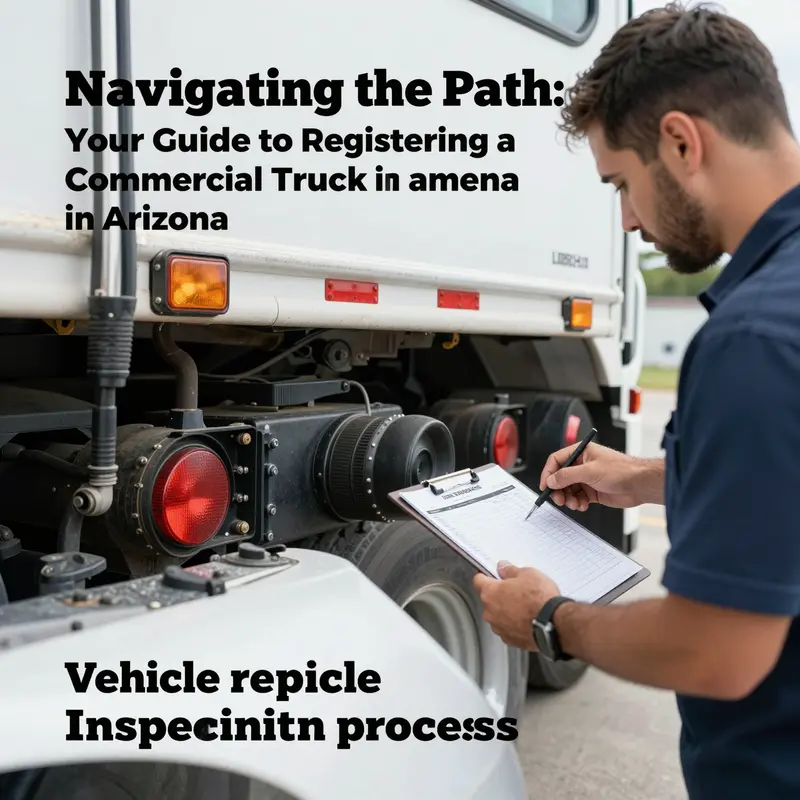
In Arizona, registering a commercial truck is more than a simple formality. It is a careful alignment of safety standards, legal requirements, and administrative steps that ensure every heavy vehicle on the road is fit for purpose. The process is grounded in the responsibilities of the Arizona Department of Transportation and the Motor Vehicle Division, which together oversee who can operate a commercial truck and under what conditions. For operators, the journey from preparing the vehicle to hitting the pavement in a legal, compliant truck begins with a clear understanding of the inspection gate. This gate is not a bureaucratic hurdle designed to slow business; it is a safeguard that protects drivers, other road users, and the communities those trucks serve. A smooth path through the inspection and registration sequence can save time, money, and headaches later on, while a misstep can trigger delays, rework of paperwork, or even a halted operation until safety standards are met.
Any discussion of Arizona registration starts with the basics: you must hold a valid commercial driver’s license to operate a commercial vehicle, and you must meet proof of ownership and insurance requirements before you can register the truck. The CDL is not just a credential but a demonstration that the driver has the skills and knowledge to handle large, heavy vehicles on real roads. For people pursuing this path, the tests include a written portion and a practical skills evaluation. The practical portion features a pre-trip inspection, a basic control skills test, and an on-road driving evaluation. Non-U.S. citizens should note that work authorization is a prerequisite for applying for a CDL. This is one of the many facets of compliance that interacts with registration, because the driver’s license status and the vehicle’s eligibility to operate as a commercial vehicle are interwoven with both safety and business considerations.
Once the CDL is secured, the vehicle itself enters the inspection stage. Arizona requires a comprehensive safety inspection for commercial trucks before they can be registered. This inspection is conducted at an authorized inspection station that is certified to assess the truck against state and federal safety standards. The inspection is designed to verify that critical systems are working correctly and that the vehicle is roadworthy. Inspectors evaluate a broad spectrum of components, with particular attention paid to every system that keeps the truck safe in operation. Brakes must perform reliably and be properly adjusted; lighting must be fully functional to ensure visibility and signaling; tires must be in good condition with adequate tread and proper inflation. The inspection also covers steering and suspension, which influence handling and stability, and it includes checks on emergency equipment so that a truck can comply with mandatory safety requirements in the event of an incident.
The scope of the inspection often extends beyond the obvious safety-critical areas. Inspectors look at how these systems interact, how wear patterns reflect usage, and whether any repairs or replacements were completed with appropriate parts and procedures. It is not unusual for a truck to pass on the major items yet reveal minor issues that should be corrected before registration. The valued takeaway is that the inspection is a snapshot of the truck’s current condition, not a guarantee for the future. That is why many operators schedule inspections with a buffer of time. If a component fails, it is not merely a matter of retrying; it becomes a matter of addressing root causes and ensuring subsequent inspections reflect a stable, roadworthy state. In Arizona, the inspection is typically valid for 12 months from the date of completion, which means that planning the registration around this validity window is essential to avoid repeating the inspection too soon or risking a lapse in compliance.
Locating an authorized inspection station is straightforward, but doing so thoughtfully can save time and avoid last-minute scrambles. The Arizona Department of Transportation and the MVD maintain lists of certified stations, and they can be found through the ADOT website or by contacting the MVD directly. When scheduling the inspection, bring along the vehicle’s title, proof of commercial insurance, and any other documentation required by the station or the MVD. The aim is to present a complete package so the inspector can complete the evaluation without repeated visits. After a successful inspection, the issuing station provides an inspection certificate that you will submit as part of the registration package. This certificate, together with the title, proof of insurance, a completed registration application, and the appropriate fees, forms the core of the documentation necessary for registration.
Submitting the inspection certificate is a critical step. Arizona’s procedure requires you to present the inspection certificate alongside other essential documents during the registration process. The registration itself is not a standalone filing; it is the culmination of several prerequisites that demonstrate both the vehicle’s safety readiness and the operator’s compliance posture. Fees for registration vary based on factors such as the truck’s weight, type of operation, and registration duration. These costs reflect the vehicle’s potential impact on road infrastructure and safety considerations, balancing affordability with the state’s need to maintain a high standard of transport safety. In many cases, operators find that a well-timed, well-documented submission reduces the chance of delays caused by missing paperwork or misaligned data.
For operators who structure their business as a formal entity, there is another layer to consider: business registration with the Arizona Corporation Commission. If you operate as an LLC, corporation, or similar entity, you should complete the business registration process before tying the vehicle to that entity’s name. ACC online portals often provide a streamlined experience, with the potential for rapid processing—sometimes within minutes—and with approval typically following in a few days. This business registration is more than paperwork; it is the legal recognition that your enterprise exists as a distinct entity that can own and register a vehicle. When the truck, the business, and the CDL are all aligned, the path to registration becomes much more straightforward and predictable, allowing fleets to move into service with confidence and with a documented governance structure that can support insurance, financing, and compliance reviews over time.
Beyond the basics of CDL, inspection, and business registration, certain operations may require additional permits. Depending on the type of commercial activity—whether you are engaged in freight transport, passenger service, or specialized hauling—state agencies may require a permit that governs the operation’s specific characteristics. The permit process is designed to ensure that the operation aligns with Arizona’s regulatory framework for commercial transportation. For this reason, it is prudent to check whether your business requires a permit through the relevant state department or the MVD, and to understand how the permit interacts with registration and ongoing compliance. Thorough due diligence at this stage helps prevent the kind of interruptions that can arise when a fleet expands and assumptions about permit requirements go untested.
Throughout this journey, it helps to maintain a consistent, organized set of records. Keep the vehicle title in a secure place, maintain an updated proof of insurance, and retain the inspection certificate in an easily accessible file. A well-organized set of documents can streamline not only the registration process but also renewals, compliance audits, and any inspections that may occur during the life of the vehicle’s operation. It is not unusual for operators to keep digital copies of essential documents as backups, while maintaining the original printed versions for official submission. This approach reduces risk and supports smoother interactions with the MVD, ACC, and other state agencies when timelines are tight and decisions must be made quickly.
Finally, it is worth recognizing that the information described here reflects current procedures and standards enforced by the Arizona MVD and ADOT. Procedures may evolve, and fees can change. Therefore, it is wise to consult the official MVD and ADOT resources when preparing for registration. For broader regulatory context that touches on cross-border operations and how regulatory changes can affect a truck’s ability to operate in a multi-state or international framework, consider exploring additional industry discussions such as the Cross-border regulatory issues event available online here: Cross-border regulatory issues event. This resource can provide context for fleets that operate across state lines or interact with federal standards while staying compliant with local registration requirements. As you finalize your plan, keep in mind that the most reliable guidance comes from the official channels. The Arizona MVD site and the state’s official pages offer the latest forms, fee schedules, and submission instructions that keep your registration compliant and current. For direct, official procedures, you can refer to the primary state portal at https://mvd.arizona.gov or the broader state vehicle agency hub accessed via https://www.azmvd.gov.
External resource for official procedures: https://mvd.arizona.gov.
From Business Formation to the Open Road: A Comprehensive Path to Registering Your Arizona Commercial Truck
Registering a commercial truck in Arizona is more than a single form or a quick trip to the counter. It is a coordinated process that begins long before the vehicle ever rolls onto the highway and extends well past the moment you receive license plates. The steps revolve around two core threads: first, establishing the legal basis for your operation as a business entity in the state, and second, ensuring the truck itself meets safety and regulatory requirements so it can be legally driven and used for commercial purposes. When you understand how these threads weave together, the path from a business idea to a licensed, road‑ready truck becomes a clear, navigable journey rather than a maze of forms and offices. In Arizona, the road map starts with your business and ends with registration through the Motor Vehicle Division (MVD), with important checks along the way that protect you, your crew, and the public. As you move through these steps, remember that rules can evolve, and the right preparation can reduce delays and help you avoid costly errors. The discipline of organization is your most consistent ally, because every document you produce or reference you rely on becomes part of a dependable trail of proof that your operation is legitimate and compliant.
The first thread of this journey is business registration. Even if you already own a sole proprietorship or operate under a DBA, the state’s rules for commercial trucking extend to the broader legal framework of your business. Arizona recognizes that a commercial truck is not just a vehicle; it is an instrument of a business that has tax, liability, and regulatory implications. Therefore, before you can title or register a truck, you should ensure that your business structure is properly formed and registered with the state. The most common structures you will encounter are limited liability companies (LLCs) and corporations. Choosing the right structure matters not only for liability protection and tax treatment but also for the administrative footprint you will bear when dealing with state agencies.
The process with the Arizona Corporation Commission (ACC) is straightforward online but demands attention to detail. You will need to select a unique business name and ensure it is not already in use. If your plan is to form an LLC, you will file Articles of Organization; for a corporation, Articles of Incorporation. The ACC’s online portal provides guidance through the filing process, and the associated fees are clearly posted. While the exact fee schedule can change, the framework remains consistent: file the appropriate formation document, meet any state‑mandated publication or notice requirements if applicable, and wait for official approval. In many cases, the online system provides confirmation quickly, and approvals can occur within a few days, sometimes faster if there are no missing elements or conflicting filings. This speed is an important advantage for operators who are eager to start transporting goods and generating revenue.
It is essential to recognize that your business registration is not merely a bureaucratic hurdle; it is a foundational element that informs subsequent steps in the truck registration process. Your business credentials will underpin insurance requirements, title and ownership documentation, and even the eligibility for certain commercial permits. Keeping your business documents organized—your formation certificate, the ACC confirmation, and any amendments—will pay dividends later when you are asked to demonstrate your business status during MVD visits, insurance inquiries, or when applying for permits that govern your routes or cargo types. The ACC process is not a barrier so much as a doorway to legitimacy, and it is wise to approach it with the same care you apply to compliance in other aspects of your operation.
Beyond the formalities of business formation, the next step centers on the operator’s qualifications. In Arizona, you must hold a valid Commercial Driver’s License (CDL) to operate a commercial truck, and this prerequisite is directly connected to your ability to register the vehicle for commercial use. The CDL is more than a credential; it is a certification that you have demonstrated the ability to handle a heavy vehicle, to perform a pre‑trip inspection, and to exercise basic control and on‑road skills under appropriate supervision and testing standards. The testing sequence typically includes a knowledge/written exam, a pre‑trip inspection, a basic vehicle control test, and a road test. If you are a non‑U.S. citizen, you must have legal work authorization. This requirement ensures that your operation can be legally staffed and that insurance and registration processes can proceed without the friction that arises from uncertain work eligibility. Your CDL is a gateway to the kind of compliance checks that will follow, especially when the vehicle itself enters the state’s safety and registration framework.
With a CDL in place and your business properly registered, attention turns to the vehicle itself. A commercial truck must pass a safety inspection conducted by an authorized inspection station. The inspection validates that the vehicle complies with federal and state safety standards, with particular attention to critical areas such as brakes, lighting, tires, emergency equipment, and the overall mechanical condition of the vehicle. The inspection report becomes a central document in the registration process. It is not merely a tick box; it is a professional record that proves the truck’s readiness for operation, its compliance with safety standards, and its fitness to bear a commercial payload on public roads. When you present the inspection results to the MVD, you are not just fulfilling a regulatory requirement; you are signaling a commitment to safety and reliability that benefits your drivers, your customers, and the communities you serve.
Insurance is another cornerstone of the registration process. A commercial truck cannot be registered without a valid insurance policy that covers commercial use. The MVD expects that your policy reflects realistic risk management for the operations you plan to undertake—whether you are transporting freight within Arizona, across state lines, or into cross‑border corridors. The specifics of the policy—limits, deductibles, and coverage types—will be scrutinized to ensure they align with the weight class, cargo type, and routes you intend to operate. Insurance documentation must be current and traceable to the vehicle itself, so it is prudent to keep a portable copy of the policy, the insurer’s contact information, and the policy number available during the registration process. A lapse or gap in coverage can delay registration and create unnecessary exposure for you and your business.
The vehicle’s ownership proof is the next essential element. Arizona requires you to provide evidence of ownership for the truck, typically a title or a bill of sale, and any lien releases if applicable. If you are transferring ownership or bringing a truck into your business, the title documents must be up to date, and any lienholder information should be clearly indicated. The vehicle identification number (VIN) is the unique identifier that the MVD uses to verify the vehicle’s identity and its registration history. Accurate VIN documentation must accompany the registration application, as mismatches can trigger delays or even rejection of the registration packet. The combination of proof of ownership, insurance, and a clean safety inspection report forms the backbone of your registration package, and any missing element can halt the process and require resubmission.
When you are ready to register the vehicle, you will typically visit an MVD office in person or use the online portal. The online path is increasingly efficient and can be a convenient starting point, especially for assembling the required information before a physical visit. The documents you will need to gather include the proof of ownership (title) or bill of sale, the insurer’s policy information, the safety inspection report, a completed registration application, and payment of the required fees. The fees themselves are not static; they vary based on factors such as the truck’s weight, its use (freight versus passenger transport), and whether the vehicle is a single vehicle or part of a larger fleet. While it is not uncommon for the cost to reflect the vehicle’s size and carrying capacity, it is important to obtain a current fee schedule so you can budget accurately and avoid surprises at the counter. The MVD’s fee framework is designed to reflect the maintenance costs, safety considerations, and regulatory oversight associated with heavier commercial vehicles—the kind of vehicle that plays a central role in moving Arizona’s economy.
An additional layer to consider is the possibility of specialty permits. Depending on your operation, you may require additional authorizations beyond standard registration. For instance, if your business involves certain types of cargo, oversized loads, or passenger transport, you may need a commercial vehicle permit issued by the Arizona Department of Transportation (ADOT) or the MVD itself. These permits govern route restrictions, weight limitations, and the conditions under which you may legally operate. It is not unusual for gliding from registration to permit authorization to require time and a slightly different set of documentation, so plan for a coordinated approach rather than treating permits as an afterthought. Planning ahead helps you avoid bottlenecks that could derail a starting‑date or delay the deployment of a new fleet. The process can be smoother when you view permits as part of the overall licensing ecosystem rather than as isolated hurdles.
Throughout this journey, the importance of careful recordkeeping cannot be overstated. A well‑organized file—digital or physical—containing your ACC formation documents, your CDL credentials, insurance certificates, proof of ownership, inspection reports, and the vehicle’s title history pays dividends when you navigate annual renewals or audits. Arizona’s regulatory environment rewards preparedness and clarity: when information is easy to verify, the review process moves with less friction. It is equally wise to maintain an ongoing log of deadlines for renewals, inspections, and permits, so you never inadvertently miss a compliance milestone that could interrupt operations. In practice, the most successful trucking operators approach registration as the first mile in a long, compliant journey, not as a one‑time hurdle they hurry to clear and forget.
As you contemplate the timeline, you may wonder how quickly a complete registration package can be approved. In Arizona, the business side—your ACC registration—has the potential for rapid turnaround when submitted online and when all information is consistent and complete. For the vehicle side, the pace is more dependent on the inspection status, the integrity of ownership documents, and the insurance verification. When all pieces align, you can expect a reasonably predictable path from submission to plate issuance. That predictability is invaluable for fleet operators who must align registration with planned service calendars, customer commitments, and truck utilization plans. It is not unusual for experienced operators to build a buffer into their launch plans to absorb any unexpected requests for additional documentation, updated insurance information, or a new inspection schedule. By anticipating these possibilities, you reduce the risk of costly delays that can affect service levels and revenue.
In practical terms, this means you should approach the combined process with a line‑of‑sight view: how your business formation interacts with vehicle compliance, and how each step informs the next. If your business is newly formed, be prepared for a possible short lag between ACC approval and the moment you can actively register your truck. Conversely, if your business is already established, you can leverage existing records to streamline proof of ownership, licensing, and insurance verification, thereby shortening the overall timeline. The MVD and ACC processes reward thorough preparation and clear documentation. You will likely benefit from creating a small, dedicated file for the registration project, with labeled folders for formation documents, CDL credentials, insurance policy documents, ownership proof, inspection reports, and a record of all correspondences with the ACC and MVD. A disciplined approach not only accelerates the current registration but also sets a productive routine for future renewals, changes in ownership, or updates to your fleet size.
As you navigate these steps, it is helpful to keep a forward view of how changes in regulation might affect your operation. Regulations can adapt to new safety standards, shifts in labor markets, or evolving enforcement priorities. A useful practice is to stay connected to ongoing regulatory discussions through industry resources and official notices. For example, you can explore discussions about cross‑border regulatory issues and how they influence state registrations and fleet management at a recent industry event, which offers practical insights into how operators adapt to multifaceted regulatory landscapes: cross-border regulatory issues event. This kind of resource can broaden your understanding of how Arizona registration fits into a broader compliance ecosystem, especially if your operations extend beyond state lines or involve complex carrier setups. While it is not a replacement for the essential documents and steps described here, such information can help you anticipate regulatory developments and plan more resilient operational strategies.
Finally, we return to the core action items you should carry forward. Gather and verify your business formation documentation with the ACC, secure a CDL, arrange the safety inspection through an authorized station, secure a compliant insurance policy, assemble proof of ownership, secure the VIN documentation, and prepare to complete the MVD registration application with the correct ownership and insurance information. Do not overlook the importance of a thorough review of the vehicle’s inspection report to ensure all safety elements are addressed before your appointment. When you arrive at the MVD counter, present a clean, well‑organized packet that reflects both your business readiness and your vehicle’s compliance. A well‑aligned submission reduces the likelihood of backtracking, reinspection, or additional requests for information and helps you move more quickly toward receiving your registration and license plates. In the end, the goal is to achieve a registration process that is not only compliant but also efficient—so you can devote your time to growing your fleet, serving customers, and contributing to the movement of goods across Arizona and beyond.
For those who are preparing for this journey, it helps to remember that this is a coordinated effort. The steps are purposefully linked to one another, and each piece you collect strengthens your position for the next phase. The result is not just a registered truck; it is a legally sound foundation for a business that can deliver reliability, safety, and value to customers while meeting the expectations of regulators and road users alike. If you are feeling overwhelmed, take it one step at a time, keep your documents in order, and align your schedule with the anticipated timelines for ACC approval, CDL readiness, inspection scheduling, and MVD processing. With patience and diligence, you will move from establishment to operation with confidence, and your Arizona commercial truck will be on the road where it belongs.
External resource: For official guidance and the most up‑to‑date information, consult the Arizona Motor Vehicle Division’s official resources at https://www.azmvd.gov.
Navigating Arizona’s Roadways: A Unified, Step-by-Step Path to Registering a Commercial Truck and Securing the Right Permits
Registering a commercial truck in Arizona is more than a bureaucratic checkpoint. It is a coordinated process that aligns a vehicle, a business, and a driver with the state’s safety standards and regulatory framework. When approached with clarity and preparation, the journey from a blank stack of paperwork to a fully compliant, road-ready fleet can unfold as a logical sequence rather than a maze. The practical path begins with the driver’s credentials and the vehicle’s condition, and it ends with the right permits that reflect how the truck will operate—interstate or intrastate—and the nature of the cargo or passengers it carries. In Arizona, the Motor Vehicle Division (MVD) governs vehicle registration, while the state’s broader regulatory environment, including the Arizona Department of Transportation (ADOT) and the Arizona Corporation Commission (ACC) for business entities, provides the broader context for compliance and licensure. Understanding how these pieces fit together reduces surprises and helps a fleet stay compliant while it pursues efficiency on the road. The core of the process rests on a few interlocking requirements: a valid Commercial Driver’s License (CDL), a vehicle that meets safety standards, a business structure that is properly registered if you operate as a company, and the correct registration and permits that accompany the vehicle’s intended use. Each of these elements is essential, and neglecting any one of them can stall the registration or invite penalties. The arc of the journey—CDL, inspection, business registration, vehicle registration, and permits—demands careful preparation, not opportunistic shortcuts. The state’s emphasis on safety is not merely ceremonial; it underpins the practical steps you will take at the local MVD office or online portal, and it informs the documentation you must assemble before presentation to Arizona authorities. The first gate you must clear is the credential that authorizes you to drive a commercial truck in the state. A valid CDL issued by the Arizona MVD is not optional—it is a prerequisite for registering the vehicle you intend to operate. The process of obtaining that CDL is itself a series of tests. Applicants must pass written exams that gauge knowledge of the rules of the road, vehicle inspection, and safe operating practices. They must also demonstrate practical skills: a pre-trip inspection, basic control skills, and an on-road driving assessment. These tests ensure that drivers understand how to detect and respond to equipment faults, how to handle the vehicle safely in diverse conditions, and how to perform in a real-world setting where lives and cargo are at stake. For non-U.S. citizens, the legal work authorization requirement remains a hard constraint. The state expects proof of eligibility to work in the United States. This means green-card holders or other valid work authorization documents must accompany CDL applications, preventing unauthorized access to commercial driving privileges. Once a CDL is in hand, the next domain to address is the vehicle itself. A commercial truck must pass a safety inspection at an authorized inspection station. This inspection evaluates essential components such as brakes, lights, tires, and emergency equipment. The inspection serves as both a legal threshold and a practical safeguard. A vehicle that fails to meet federal and state safety standards cannot be registered or operated. The inspection not only reduces risk on the road but also provides a formal record that the truck has been reviewed by an authorized party. A successful inspection yields a report that becomes part of the registration package. The next layer involves the business structure. If you operate as a business entity, such as an LLC or corporation, you must register that entity with the Arizona Corporation Commission (ACC). The ACC’s online system is designed for speed, and in many cases processing can be completed within minutes, with final approval typically arriving in a few days. This step ensures that the entity behind the truck is legally recognized to own and operate commercial vehicles within Arizona’s regulatory environment. The ACC registration is not simply a formality. It creates a legal bridge between the corporate or limited-liability framework and the physical asset—the truck—that will be registered in the state’s records. With CDL, inspection, and business registration completed or in process, the focus shifts to the vehicle’s registration itself through the Arizona MVD. The MVD is the gatekeeper for registering commercial trucks, and it is here that the practical documentation and fees come into play. You will be asked to provide proof of ownership, typically the title, which proves you hold legal title or a secured interest in the vehicle. You must also present a valid insurance policy that covers commercial use of the truck. Insurance is not a mere formality; it is a core risk-management requirement that protects third parties, cargo, and the operator. The proof of insurance must meet Arizona’s minimum liability requirements, which align with the nature of commercial operations and the vehicle’s weight class. A completed registration application is another essential piece. The form collects information about the vehicle, the owner or business, and the intended use. It is important to ensure all details are accurate and current, including the vehicle identification number (VIN), license plate information if applicable, and any relevant fleet identifiers. Alongside these documents, payment of the required registration fees is necessary. Fees can vary based on several factors: the truck’s weight, its type (for-hire, private carrier, or truck with special-use capabilities), and whether the vehicle will operate intrastate (within Arizona) or interstate (across state lines). The fee structure is designed to reflect the vehicle’s utility and potential impact on infrastructure and safety resources. The state’s emphasis on safety and emissions standards also shapes the registration process. Arizona requires compliance with state safety standards, including the safety inspection described earlier, and it may require documentation that demonstrates continued compliance with emissions regulations where applicable. For some operators, emissions testing or documentation may be part of the broader compliance picture, particularly in areas that have adopted more stringent environmental programs. The question of permits often arises in tandem with registration. Depending on the truck’s operation, you may need special operating permits in addition to standard registration. If your business involves interstate freight or passenger transport, you might require permits from the Arizona Department of Transportation (ADOT) or other regulatory bodies to cover weight limits, routing, or specific service types. The process is not merely about getting a number on a plate. It is about validating the business’s legitimacy, the driver’s qualifications, the vehicle’s safety, and the appropriate scope of operation. When you begin to assemble the necessary pieces, you will discover that the steps are not isolated tasks but an integrated workflow. The registration application, proof of insurance, and the inspection report become a bundled submission to the MVD. The vehicle and the business documents—title, registration records, and possibly ACC-registered business details—are matched against the driver’s CDL credentials and the vehicle’s safety history. This alignment reduces the likelihood of delays and ensures that what you operate on the road meets Arizona’s standards for road safety, environmental responsibility, and fair access to commercial space on highways. The practical pace of this process is influenced by how prepared you are. The MVD online portal can streamline some steps, especially the submission of forms and the check of insurance status. In many cases, business registration with the ACC can also be performed online with quick turnaround. Nevertheless, you will still need to present or upload the physical records of the inspection and ownership when you visit a local MVD office, if required, or when the system requests hard copies. A thoughtful approach is to anticipate potential bottlenecks by collecting documents in advance: current CDL details, a complete and current proof of insurance, the vehicle title or lien information, the completed registration form, and a clear payment method. Keeping a consistent, up-to-date file for each truck in your fleet saves time and minimizes the back-and-forth that can slow the registration process. For operators considering the broader regulatory landscape, the path toward permits deserves attention early in the process. Depending on your truck’s intended operation, you may need permits beyond standard registration. Intermittent or specialized uses—such as weight-restricted routes, oversize shipments, or passenger transport services—often require permits issued by ADOT or other agencies. Planning for these permits, including understanding their eligibility criteria, application timelines, and any associated fees, helps prevent last-minute gaps that could interrupt service. In practice, the timeline from start to finish can vary. If you approach the process with the right documentation and a clear understanding of your operation’s scope, you can reduce complexity and shorten the time to road readiness. The most critical relationships are straightforward: the CDL links the driver to the vehicle and to the regulatory framework; the inspection connects the physical truck to safety standards; the ACC registration links the business entity to the fleet; and the MVD registration and permits formally authorize the vehicle’s operation under Arizona law. Each element reinforces the others. Along the way, you will encounter small but meaningful decisions. For example, choosing the right vehicle class or weight rating at registration affects the fee tier and may influence permit needs. The decision to register as a particular kind of business entity can impact liability, taxes, and corporate compliance, and it will interact with the ACC’s registration timelines. It is worth noting that the process is designed to be navigable for both new entrants and seasoned operators. Arizona’s regulatory architecture is built to accommodate growth while maintaining high safety and accountability standards. For new operators, the experience may reveal gaps in documentation or gaps in the chain of compliance. The best path forward is proactive preparation: assemble documents early, verify details against official records, and align your fleet’s operational plan with regulatory requirements. As you gain familiarity with the requirements, you will also gain confidence in how to manage renewals and updates. Registration in Arizona is not a one-and-done event. Vehicles are subject to periodic renewals, and changes in ownership, insurance, or vehicle configuration may require updates to registration records and permits. Maintaining up-to-date information helps prevent lapses that could disrupt service, trigger penalties, or compromise compliance. To keep the narrative grounded in practical steps, consider how these elements come together in a typical registration scenario. A fleet operator begins by confirming the CDL status of the driver or drivers assigned to the truck. The operator confirms that the CDL is valid, that no suspensions or disqualifications are in effect, and that the driver meets the medical and regulatory requirements for commercial operation. Next, the operator ensures the truck has a current, comprehensive safety inspection from an authorized station. The inspection report becomes central document during the MVD submission, signaling that the vehicle satisfies crucial safety metrics. The operator then verifies business registration with the ACC if the operation is formally organized as a company. The ACC record ensures the legal entity can own and operate the vehicle and that its corporate credentials align with state expectations. With these foundations in place, the operator proceeds to the MVD registration. The submission package includes the vehicle title, proof of insurance, the inspection report, the completed registration application, and the applicable fee. The operator also confirms whether the vehicle will operate intrastate or interstate, since this choice can influence the required fees and the potential necessity for additional permits. If the operation involves crossing state lines or transporting passengers, the operator evaluates permit needs through ADOT or the MVD as appropriate. In some cases, the process can be expedited through online submission and online payment functionality, while in others, a brief in-person visit to a local MVD office may still be required for verification or document stamping. The experience is ultimately about clarity and compliance. By approaching each step with a clear checklist and a steady cadence, operators can complete the process with confidence and minimize the chance of delays caused by missing or outdated information. The broader takeaway is that registering a commercial truck in Arizona is a cohesive, if meticulous, exercise in regulatory alignment. It requires attention to driver qualifications, vehicle safety, corporate legitimacy, and the legal authorization to operate a commercial vehicle within state lines or beyond. When these elements harmonize, the registration becomes less about a single moment of compliance and more about a durable foundation for safe, lawful, and efficient trucking operations. For professionals who want to explore a wider regulatory or cross-border context, there are resources that address related challenges and evolving standards. For a broader look at cross-border regulatory issues that can affect trucking operations, see tcas-cross-border-regulatory-issues-event. And when you need an official reference point for the Arizona process, the MVD and state agency portals provide authoritative guidance and the most current requirements. Official information from the Arizona MVD remains the best starting point for accuracy and updates, and you can consult the primary state portal for ongoing changes and renewal reminders: Arizona MVD.
Final thoughts
Successfully registering a commercial truck in Arizona is imperative to maintaining compliance and supporting business operations in logistics, construction, and delivery sectors. By following the established steps detailed in this guide—from securing a Commercial Driver’s License to navigating thorough inspections and registration processes with the MVD—you can ensure your truck is ready for the road. This comprehensive approach not only safeguards your investments but also enhances the overall efficiency of your operations. Adhering to these requirements positions your fleet for success in a competitive marketplace.