
In the transportation sector, efficient logistics hinge not only on timely deliveries but also on regulatory compliance and safety. For logistics and freight company owners, construction and mining procurement teams, and small business owners with delivery fleets, understanding the mandatory items and markings on commercial trucks is crucial. This knowledge ensures adherence to regulations, promotes safety standards, and enhances visibility and identification while on the road. The following chapters will unravel the key regulatory markings, essential safety features, and identification elements your commercial trucks must display to operate successfully in today’s rigorous environment.
Regulatory Markings on the Move: The Essential Signatures a Commercial Truck Must Wear
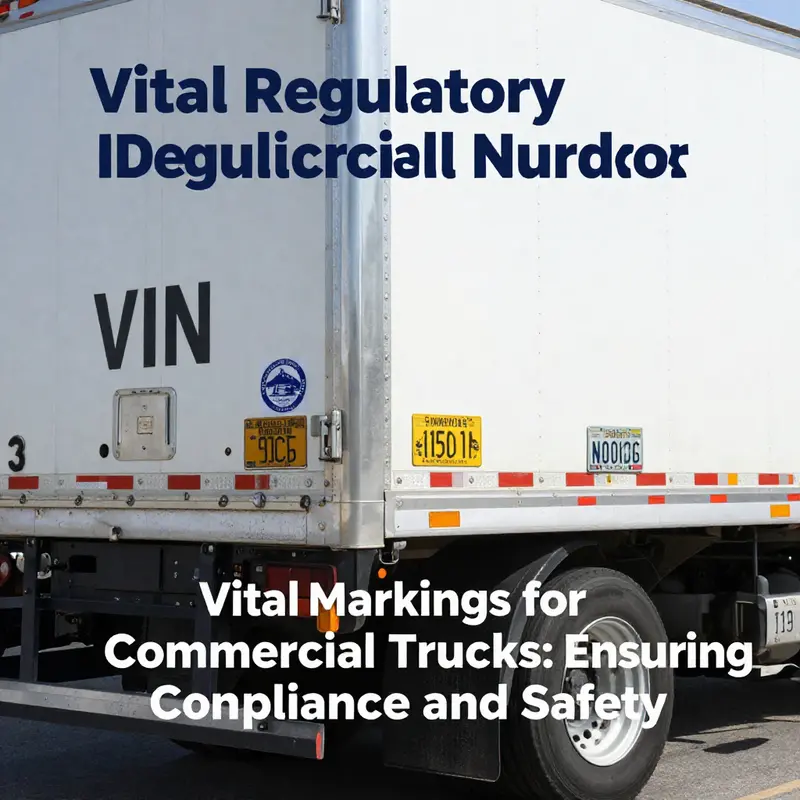
The highway is a living, moving ledger of compliance, and the commercial truck is the primary page where regulations are written in plain sight. The markings on a truck are not mere decoration or paperwork trivia; they are a functional language designed to keep fleets, motorists, and communities safer, while also enabling timely oversight by regulators. In a landscape where safety, accountability, and logistics efficiency collide, the visible identifiers on a truck perform four essential roles at once: they establish who is operating the vehicle, what it is allowed to carry, how its weight and equipment must be managed, and where responsibility lies if something goes wrong. The result is a continuous, practical dialogue between the vehicle and the road, a codified system that translates regulatory text into visible, understandable cues for law enforcement, shippers, and the general public alike. To understand what must appear on a commercial truck, it helps to follow the threads of each marking as they knit safety, traceability, and operational legitimacy into a single moving frame of reference.
At the center of this web is the Vehicle Identification Number, or VIN. This seventeen-character odyssey of letters and numbers is more than a serial tag; it is the vehicle’s permanent identity. The VIN is affixed to the truck’s frame or dashboard and must remain legible through the windshield. Its permanence is intentional. Once a VIN is assigned, it travels with the truck through ownership transfers, title changes, and fleet reassignments, linking every inspection, registration event, and recall notice to a unique, auditable record. For regulators, insurers, and fleet managers, the VIN becomes a map of the vehicle’s history—a compass that helps authorities verify that the truck has the right equipment, the correct maintenance cadence, and the proper regulatory clearances to operate on public roads. The importance of the VIN extends beyond compliance paperwork. In emergency and incident response, the VIN is the quickest, most reliable anchor to a vehicle’s file, including maintenance data, service bulletins, and defect histories. The physical placement of the VIN—clear on the frame or dashboard and visible through the windshield—ensures that, even amid road grime and high-speed travel, the vehicle’s core identity remains legible. It is a small marker with outsized consequences, because a misread or obscured VIN can stall a shipment, complicate an insurance claim, or trigger a regulatory inquiry that disrupts an entire operation.
Alongside the VIN, the vertically layered tapestry of markings includes the state registration plates. These plates certify that the truck, as a moving citizen of the road system, is registered with a particular state. They must be current, securely mounted, and legible to the eye and to any camera that surveys the highway. The plates signal not only legal standing but also fiscal responsibility to the state that issued them. As a practical matter, their presence helps authorities quickly confirm that the vehicle is operated by a legitimately registered carrier and that it complies with state-specific tax and fee structures. While the thumbnails of numbers on a plate may seem simple, they play a critical role in the real-time flow of interstate commerce, where a single plate can unlock or block entry at a weigh station, border crossing, or enforcement checkpoint.
A near-constant companion to these identifiers is the FMCSA compliance sticker, a symbol of federal safety rigor that applies to fleets engaged in interstate commerce. Displayed on the rear of the vehicle, the FMCSA compliance sticker communicates that the carrier meets the federal safety requirements established to keep the highway network orderly and safe. The sticker operates as a trust signal: a concise statement that the carrier has undergone the necessary audits, driver qualification checks, vehicle maintenance protocols, and safety management practices that federal law requires for long-haul operation across state lines. In practical terms, the sticker simplifies enforcement by providing a quick reference point for inspectors. It can facilitate smoother roadside checks, reduce unnecessary delays, and reassure customers and insurers that the carrier adheres to the safety baseline demanded by federal policy. The reason this sticker lives where it does is simple: safety and accountability do not begin at the state line; they are built into the carrier’s operating framework from the moment the engine starts.
Then there are the hazardous materials placards, if applicable. When a truck transports hazardous materials, the exterior of the vehicle becomes a rolling warning system. Diamond-shaped placards, color-coded by hazard class, adorn all four sides to convey instantly the nature of the risk—whether flammable, toxic, corrosive, or some other danger. These placards are not decorative; they are standardized messages that enable first responders, fire crews, and hazmat teams to tailor their actions in an emergency. The placement on all four sides is deliberate, ensuring visibility regardless of the vehicle’s direction relative to an incident. The regulatory backbone for placards lies in the U.S. Department of Transportation rules, codified in parts that specify the classifications, labeling standards, and the visibility requirements for placards. The weight of this marking is practical as well as legal: predictable hazard communication reduces response times and mitigates risk to people and property encountered along the route of transport.
Beyond hazard labeling, the cargo information and weight markings provide another layer of safety and legal clarity. While exterior display is not always mandatory for every load, accurate weight documentation is a universal requirement for a vehicle that may encounter axle, tire, or braking limits on the road. In some jurisdictions, additional signage is required for oversized or overweight freight. The cargo information becomes especially critical when routing through corridors with height, width, or weight restrictions, because it informs dispatch decisions, scale operations, and permitting processes. Even when the markings themselves are modest, the information they convey is foundational to safe loading practices, efficient logistics planning, and regulatory compliance that prevents damage to infrastructure and keeps roads safer for all users. The weight information, when present, also interacts with the vehicle’s data plate—the GVWR—the maximum permissible gross vehicle weight that includes the truck’s own weight plus its payload. This limit is not merely a numerical ceiling; it defines how a fleet can responsibly plan load configurations, tire choices, suspension behavior, and fuel efficiency. It also governs the kinds of permits that may be required for certain routes or for particular cargo classes, reinforcing the chain of custody from dock to destination.
A separate but equally critical category concerns the vehicle’s lighting and reflective markings. The FMVSS standards require functional headlights, brake lights, turn signals, and a spectrum of reflective markings that improve visibility in low light and adverse weather. The reflective elements are not optional adornment; they are safety features that enhance the truck’s conspicuity to other drivers, especially at night or in fog and rain. The absence or failure of proper lighting and reflection can escalate risk, trigger roadside alerts, and prompt corrective action from enforcement authorities. The design philosophy behind these features is straightforward: when a vehicle is large and heavy, every extra measure that increases predictability for other road users reduces the chance of a collision. The regulatory framework supporting these requirements is robust, with specific standards tied to vehicle type, duty status, and operating conditions. In practice, the lighting and reflective markings become a constant reminder that visibility is as important as speed or power on the highway.
Another essential element is the carrier’s name and address. Displaying the motor carrier’s name, its physical address, and often contact information on the exterior of the cab or trailer creates a direct line of accountability. In the event of a roadside discrepancy, accident investigation, or compliance inquiry, these identifiers help enforcement and partnering entities locate the responsible party quickly. The visible carrier information supports transparency and trust within the broader ecosystem of shippers, carriers, brokers, and customers. It also aligns with the industry’s emphasis on responsible corporate presence, where a clear line of communication is as important as the physical mechanics of the vehicle itself. Together, these elements form a cohesive signage language that supports not only regulatory compliance but also practical operations, enabling fleets to meet the demands of modern logistics while maintaining public safety standards on every mile of road.
To understand why these markings matter beyond the letter of the law, consider how they weave into a broader system of oversight and efficiency. The DOT number, the VIN, and the state plate together create a set of identifiers that cross-reference with inspection databases, insurance records, and maintenance histories. When a vehicle is flagged in an inspection, those marks serve as fast-tracking keys to the vehicle’s entire regulatory dossier. Hazard placards and weight data translate into immediately actionable information for emergency responders and route planners. The lighting and reflective markings enhance night-time performance and safety margins. The carrier name and address anchor the vehicle to the responsible entity, ensuring that liability, compliance audits, and customer protections are grounded in a traceable corporate identity. All these pieces operate not in isolation but in concert, so that a single truck on a dark highway can communicate a comprehensive, legally binding story without requiring a lengthy back-and-forth dialogue at every checkpoint. The system is not perfect, but it is purpose-built to reduce ambiguity, accelerate verification, and diminish the risk of noncompliance that could cause delays, penalties, or safety incidents.
From the perspective of fleet managers and compliance professionals, the enforcement environment rewards a proactive, holistic approach to markings. A fleet that maintains legible VINs, up-to-date DOT numbers, current state registrations, and accurate weight and cargo documentation is better positioned to withstand audits, respond to inquiries, and keep operations flowing. This does not mean that every mark must be treated as a checkbox rather than a living part of the vehicle’s operating story. On the contrary, the markings should exist in a way that aligns with real-world workflows: they should be durable, easy to inspect, and resistant to the soil of daily tasks, weather, and road exposure. The practical challenge lies in balancing compliance with performance—ensuring that signs and labels do not obscure, damage, or interfere with critical safety devices or the vehicle’s daily operation. It means choosing materials that endure wash cycles and salt exposure, placing numbers and symbols where they stay legible after routine maintenance, and aligning signage strategies with evolving regulatory guidance without turning compliance into a burdensome overhead. A well-marked truck, in this sense, is less a museum piece of regulations and more a moving, functional platform that communicates essential information in the moment it matters most: during inspections, emergencies, or critical routing decisions.
The chapter of regulatory markings does not end with the list of required signs. It continues in the way fleets integrate these requirements into their broader safety and operations programs. Compliance is not a static badge but a dynamic practice, one that adapts with changes in rules, technology, and the freight environment. For example, while the core requirements like VIN visibility and DOT numbers remain constants, the way carriers document weight, or the methods by which placards are applied and updated, can shift with updates to 49 CFR Part 172 or FMCSA guidance. In this living space, the markings act as a bridge between the stability of a company’s safety culture and the flexibility demanded by a market that moves every hour. The most successful fleets view these elements as strategic assets—visible reminders of responsibility, reliability, and readiness to serve customers while meeting public safety expectations across diverse jurisdictions.
If you are exploring this topic through industry lenses and ongoing discussions, you may encounter briefings and articles that connect these markings to wider regulatory themes. For example, industry conversations about cross-border regulatory issues frequently circle back to the fundamental visibility of operator identity, material classification, and weight compliance that the markings embody. A linked discussion from a related industry event highlights how these requirements are interpreted in a broader regulatory context and how carriers navigate them in cross-border operations. TCAS cross-border regulatory issues event. This point of reference emphasizes that the basic, tangible marks on a truck are not isolated rules; they are components of a coherent framework that supports safe, lawful, and predictable movement of goods across the supply chain.
For readers seeking a firm regulatory anchor, the official framework remains the U.S. Department of Transportation’s portal, which consolidates the rules, interpretations, and enforcement practices that give these markings their force. Given the evolving landscape of safety standards, those who operate or regulate commercial trucking homes must stay aligned with the latest guidance, recognizing how the signs on the truck relate to licensing, inspection, permitting, and incident response. The balance between clear, visible markings and practical day-to-day operation is delicate, but it is this balance that sustains the reliability of trucking as a cornerstone of commerce. In every mile of road, the markings speak a language of accountability—one that aligns the vehicle, the carrier, and the regulator in a shared commitment to safety and efficiency.
As the chapter closes on this topic, it is useful to anchor the discussion in a practical sense: every mark on a commercial truck has a purpose, a lifecycle, and a consequence. The VIN anchors the vehicle’s identity; the state plate and DOT numbers anchor its regulatory status; the placards, weight data, and cargo markings anchor its physical behavior in the world; the lighting and reflective components anchor its visibility; and the carrier name and address anchor accountability. When viewed together, these markings form a coherent, enforceable, and deeply functional map of a vehicle’s role in modern logistics. They are not optional frills but essential infrastructure—visible proof that behind every high-capacity transport operation lies a system designed to manage risk, demonstrate compliance, and protect the highway community. In the evolving conversation about safety performance, regulatory clarity, and the integrity of cross-border commerce, these markings remain the most tangible, universally understood markers of responsible trucking.
External resource for official guidance: https://www.fmcsa.dot.gov
Visible Compliance and Road Safety: Understanding Markings on a Modern Commercial Truck
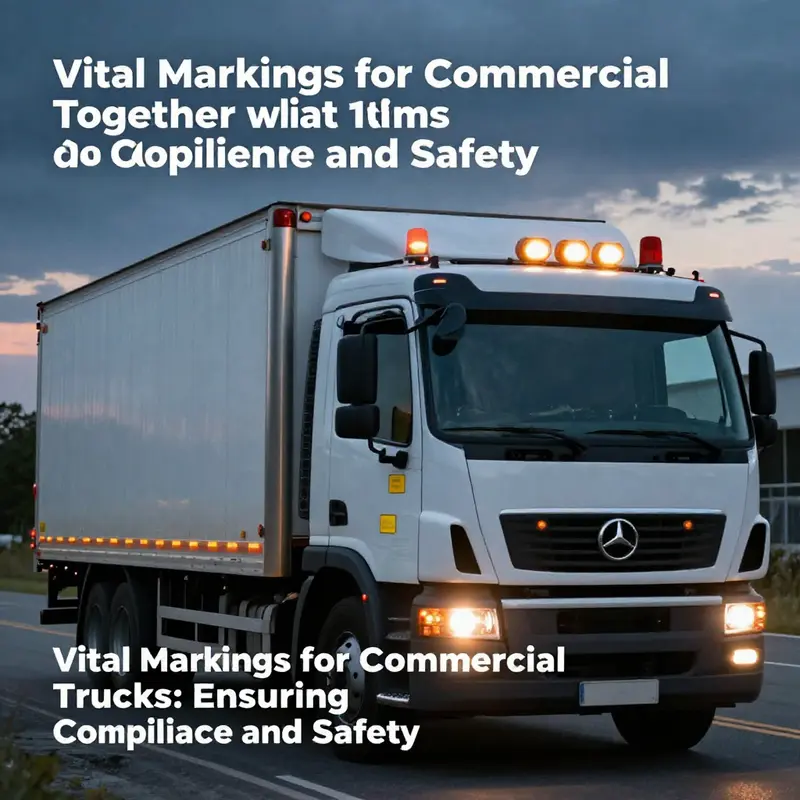
On the highway, visible identifiers and built in safety systems work together to protect people and cargo. The markings on a truck are more than branding; they are legal signals and navigational aids. The Vehicle Identification Number (VIN) is a 17-character code that ties a vehicle to its history and regulatory status. It is usually affixed to the dash or door frame and may be scanned or read by inspectors. A current VIN helps verify registrations, inspections and insurance status. Plates tell where the vehicle is registered and under what jurisdiction it operates. They must be legible and securely mounted to the cab or trailer. A valid registration and current plates support law enforcement and safe operation across borders. The FMCSA compliance sticker is a concise indicator that the carrier meets federal safety requirements such as driver qualifications, vehicle maintenance and hours of service. Placards warning about hazardous materials appear on the vehicle when needed and must match the cargo. Weight markings show the GVWR and, for overweight loads, additional signage may be required. Lighting and reflective markings improve visibility at night and in poor weather. Proper lighting includes headlights, taillights, brake lights and turn signals, while reflective tape enhances conspicuity. Company information such as name and contact details helps with roadside assistance and incident response, and should be presented clearly without clutter. Technology plays a growing role, with ADAS features like adaptive cruise control and lane keeping assist. These systems support safe driving but rely on regular calibration and maintenance to stay effective. A well marked truck with up to date safety devices is easier to identify, inspect and respond to in the event of an accident or roadside issue. The regulatory framework provided by the DOT and FMCSA sets the baseline for what must appear on a truck and how it should be maintained. Fleets that invest in clear markings and reliable safety systems demonstrate safety culture and operational discipline. In practice, the most effective approach blends visible compliance with proactive safety technology, reinforcing safety at every mile of the journey.
Visible Markers, Clear Consequences: The Identification Elements Every Commercial Truck Must Bear
Every commercial truck on American highways is a moving system of signals, records, and responsibilities. The items that must appear on the exterior and interior of the vehicle are not ornamental; they are the visible language of safety, accountability, and efficient regulation. When a driver rolls out of the yard, those identifiers do more than label the truck. They enable a chain of supervision that starts with the framing and ends with traceable history, crossing state lines and sometimes national borders. The weight of this system rests on a few essential items that must be present, legible, and current. Taken together, they form a practical map for inspectors, law enforcement, cargo interests, and the public, guiding decisions about whether a vehicle is fit for the road today and how it should be operated tomorrow. The result is not a checklist to be memorized and filed away; it is a dynamic framework that supports safety, commerce, and the public trust in a uniquely distributed transportation network. In this sense, identification elements are the quiet guardians of performance metrics, risk management, and predictable logistics that keep trucks moving and freight arriving on schedule.
At the heart of this system is the Vehicle Identification Number, or VIN, a seventeen-character code that functions like a vehicle passport. The VIN is not merely a serial tag; it is the primary hook into a vehicle’s life story. Permanently affixed to the truck’s frame or dashboard and often visible through the windshield, the VIN connects the machine to its manufacturer, its recall history, its service records, and its ownership chain. Inspectors use the VIN to confirm that the vehicle being operated matches the paperwork presented, to verify whether the truck has had any major alterations or recalls that could affect safety, and to track incidents that may involve the same vehicle across jurisdictions. When a driver is stopped for a routine inspection or for a safety concern, the VIN becomes the entry point into a broader evaluation of compliance, maintenance, and risk. A missing, altered, or illegible VIN triggers immediate questions and usually prompts a deeper audit to determine the vehicle’s status relative to all applicable rules.
Beyond the VIN, another foundational element is the weight and class framework that governs safe and legal operation. Among this framework, the Gross Vehicle Weight Rating, or GVWR, is central. GVWR specifies the maximum safe weight of the vehicle when fully loaded—this includes the weight of the vehicle itself plus cargo and any passengers or equipment. The GVWR is more than a number on a placard; it is a practical constraint that shapes route planning, braking performance, tire selection, suspension load distribution, and fuel efficiency. It determines what kind of interventions a carrier can pursue, what kinds of loads require special handling, and which road segments and bridges the truck may encounter without risking structural stress or regulatory penalties. For fleet managers and drivers, understanding GVWR means designing load plans that avoid overweight scenarios, scheduling maintenance that keeps braking systems and tires within their tested limits, and communicating clearly with dispatch about what can and cannot be hauled in a given configuration.
When the discussion turns to the transport of hazardous materials, the identification system tightens even further. Hazardous Materials Identification is a specialized subset of the broader signaling framework. If a truck is carrying hazardous materials, it must display appropriate placards—diamond-shaped signs on all four sides of the vehicle—that indicate the type of hazard and its general class. These placards are not decorative; they convey urgent information about flammability, toxicity, corrosivity, or other dangerous characteristics. They must conform to the U.S. Department of Transportation Hazardous Materials Regulations, found under 49 CFR Parts 171–180, and they accompany accompanying documentation that specifies the precise materials and quantities involved. The placards enable first responders to respond appropriately in an accident or incident, guide safety officers during inspections, and help other motorists anticipate how to drive around a vehicle that might present unique risks. The broader implications of placards extend into insurance requirements, carrier safety ratings, and the ongoing assessment of a carrier’s ability to handle certain classes of freight. The presence or absence of the correct placards, therefore, is a concrete indicator of regulatory alignment and operational readiness.
The exterior profile of a commercial truck also communicates through information about the cargo and the load itself. While not always required to be shown on the exterior, accurate weight documentation and, in some cases, load information, form part of the identification ecosystem. For oversized or overweight freight, additional signage may be mandated by state or local rules. This layer of information complements the GVWR by ensuring that the posted data reflects the actual sash of the load and that the truck can navigate the road network without violating bridge or highway restrictions. Clear load documentation reduces the risk of miscommunication with inspectors, shippers, and consignees, and it supports accurate billing and scheduling. Even when explicit signage is not visible from the outside, the data carried by the vehicle and the paperwork carried by the driver maintain a consistent, auditable trail that reveals what the truck is carrying and how it is being transported.
No discussion of identification would be complete without turning attention to the truck’s lighting and reflective markings. The Federal Motor Vehicle Safety Standards set forth requirements for functional headlights, brake lights, turn signals, and other signaling devices, as well as reflective tape or decals designed to enhance visibility in low light conditions. The visibility ecosystem includes not only the presence of lights, but their condition, alignment, brightness, and reliability. Proper lighting reduces the risk of collisions, supports the accurate interpretation of the truck’s movements by other drivers, and contributes to safer nighttime operations in all weather. The reflective markings extend the truck’s silhouette at a distance, particularly for large rigs with multiple configurations, helping other road users gauge speed and intent. In many regulatory environments, these features are subjected to routine checks during roadside inspections and may trigger more extensive evaluations when deficiencies appear.
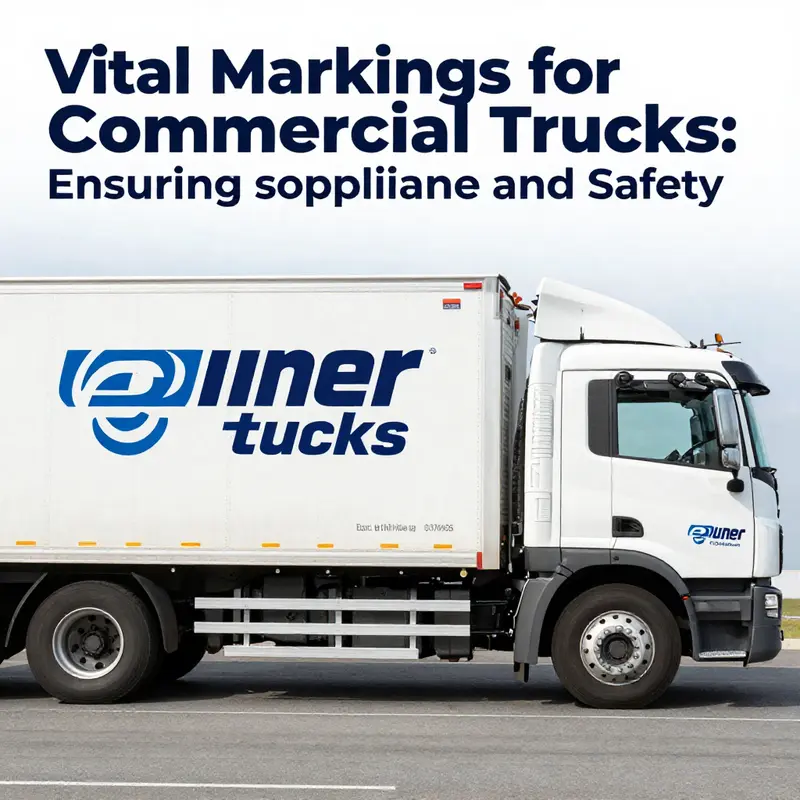
In parallel with the physical markers, there is a crucial social signal: carrier and company information. The truck’s name, logo, and contact information should be prominently displayed, typically on the side of the cab or trailer. This signage is more than branding; it is a practical contact point for incidents, questions about dangerous goods, and coordination with enforcement or emergency responders. Clear carrier information supports accountability and traceability across the supply chain. It also reinforces the relationship between the vehicle and its operator, underscoring that the truck is part of a larger network of safety protocols, maintenance schedules, and regulatory commitments. In this sense, the signage functions as a corporate and regulatory handshake, linking the on-road unit to the administrative and safety systems that govern its operations.
State registration plates, the visible confirmation that a vehicle is legally registered in a given jurisdiction, complete the triad of exterior identifiers. Plates must be current, legible, and securely mounted. They signal the residency and registration status of the vehicle, allowing law enforcement and traffic management systems to quickly verify that the vehicle is compliant with local registration requirements. In the context of interstate commerce, plates also serve as a quick reference to the vehicle’s operating jurisdiction, which can matter during inspections, weight checks, and route planning. The requirement for secure mounting and legibility is not a mere formality; it ensures that a vehicle can be accurately identified under varied lighting, weather, and motion conditions. The plate itself also interacts with other identifiers within a broader safety ecosystem, contributing to a coherent picture of ownership, responsibility, and the vehicle’s regulatory footprint across state lines.
Tying these elements together is a regulatory framework that governs not only what must appear but how it must be maintained. The FMCSA, the federal agency charged with overseeing interstate trucking safety, requires certain elements to be current and properly displayed. A current FMCSA compliance sticker on the rear of the vehicle communicates that the carrier has met federal safety requirements and is authorized to operate across state lines. This sticker, while seemingly minor, is a powerful signal of ongoing compliance with hours of service rules, driver qualification standards, vehicle maintenance requirements, and safety management practices. The sticker’s presence, along with a valid registration, VIN, and proper placards where applicable, forms a composite picture that allows regulators to verify that the carrier is actively maintaining the standards necessary for cross-border and cross-state operations. The interplay among VIN, GVWR, placards, lights, and company information demonstrates how a truck’s exterior identity is a living record of compliance and safety practice, not a static badge.
The legal and practical implications of these identifiers extend into inspections and enforcement actions. Routine roadside checks, port entries, and border crossings rely on a snapshot of the vehicle’s readiness to operate. Inspectors cross-reference the VIN with registration and ownership documents, confirm that the GVWR aligns with the truck’s configuration and load plans, verify the presence and legibility of the license plates, and assess whether the proper placards are displayed. They also check that lighting works and that reflective markings cover critical areas of the vehicle for visibility. If hazardous materials are in transit, the placards and accompanying documentation are scrutinized with special attention to the accuracy of the hazard class, quantity, routing, and emergency response procedures. When any of these elements are missing, out of date, or obscured, the consequences can range from fines and required corrective action to withholding clearance for interstate movements. The enforcement landscape thus reinforces the practical importance of keeping every element current, legible, and properly placed.
The integration of these markers into daily trucking practice also produces strategic advantages for carriers and shippers. Clear identification helps speed up inspections, reduces the risk of misrouting or misdelivery, and builds trust with customers who depend on precise information about the vehicle and its cargo. It also supports data-driven decision making within a fleet. By maintaining accurate records of inspection histories, maintenance cycles, and compliance statuses linked to the VIN and GVWR, a carrier can make informed statements about equipment reliability, maintenance spend, and safety performance. The tangible presence of identification elements on the truck’s exterior is thus inseparable from the intangible benefits of efficiency, predictability, and accountability in the transportation economy.
For readers seeking broader context and ongoing discussion about how identification elements intersect with regulatory considerations and cross-border operations, industry conversations continue to emphasize the importance of aligned messaging across jurisdictions. One forum highlights cross-border regulatory issues that arise when trucks move between different regulatory environments; it also underscores the need for consistent documentation and signage to prevent delays and penalties. You can explore a focused discussion on this topic at TCAS cross-border regulatory issues event. TCAS cross-border regulatory issues event.
The layering of identification elements is not a static snapshot but a living system that evolves with changes in safety standards, enforcement priorities, and logistics complexity. As freight patterns shift, with more volume routed through multi-modal hubs, the clarity and reliability of these markers become even more critical. The interplay among VIN, GVWR, hazardous materials identification, cargo and weight information, lighting and reflective markings, carrier signage, and state plates demonstrates a holistic approach to transport safety. Each piece supports decisions made by drivers, dispatchers, regulators, and emergency responders. The overall effect is a system that favors safety without sacrificing efficiency—allowing trucks to fulfill their role in the national economy while maintaining the high standards demanded by an increasingly complex transportation landscape.
The official source material that codifies these expectations remains the DOT and FMCSA guidelines. They lay out the precise requirements, the permissible methods of display, and the conditions under which different identifications become mandatory. For a comprehensive understanding of the governing rules, practitioners can consult the broader regulatory framework and the latest updates directly from the agency. The official DOT guidelines provide the authoritative reference for what must appear on the commercial truck, how it should be displayed, and how compliance is demonstrated during inspections and audits. As with any regulatory topic, keeping current with these guidelines is essential for fleets of all sizes, ensuring that every mile traveled is supported by verified compliance and a clear record that travels with the vehicle. For more detailed information, refer to the official DOT guidance at https://www.fmcsa.dot.gov.
Final thoughts
Understanding the regulatory requirements, safety features, and identification elements that must be present on commercial trucks is vital for compliance and operational success. By ensuring that your vehicles meet these standards, you not only adhere to legal mandates but also enhance safety for your drivers, cargo, and the public. With the right markings and features in place, your fleet can operate efficiently and responsibly while establishing a strong brand presence on the road.