
The Hess Truck commercial, renowned for its catchy jingle, represents a significant chapter in advertising history that not only spanned over 15 years but also left a lasting cultural imprint. For logistics and freight company owners, construction and mining enterprise procurement teams, and small business owners with delivery fleets, understanding the commercial’s duration and its evolving relevance can provide insights into effective marketing strategies. This article delves into the historical context and cultural impact of the Hess Truck commercial, examines its decade-spanning relevance, highlights the revivals and updates into the 21st century, and reflects on its enduring legacy. Each chapter will provide a comprehensive exploration of how long the Hess Truck commercial ran and the implications of its sustained presence in advertising.
A Generational Jingle: The Hess Truck’s 30-Second Run
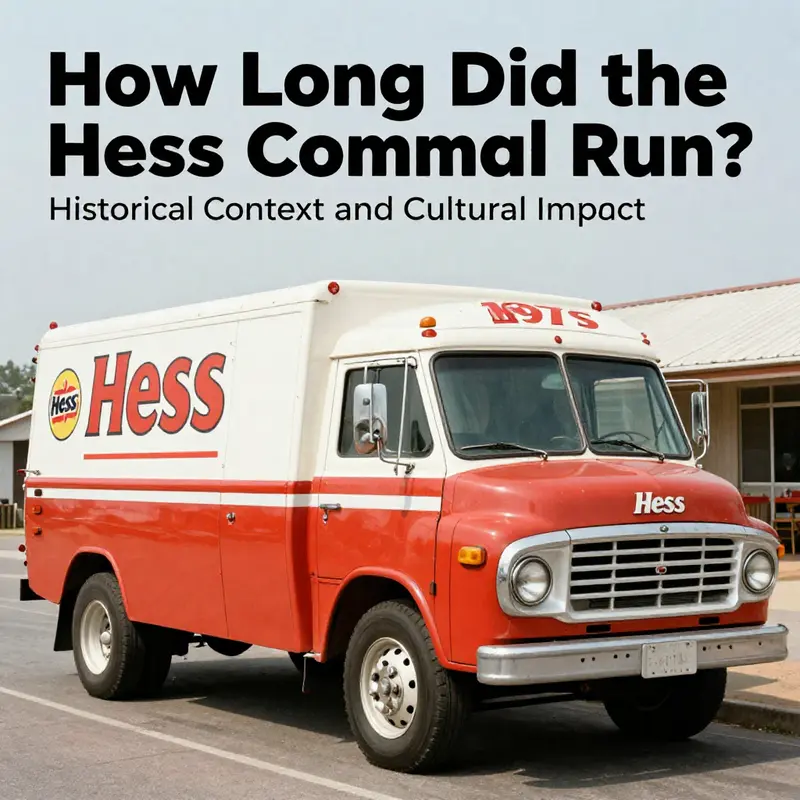
In the landscape of holiday advertising, the Hess Truck spot stands out as a compact 30-second tale that endured across decades. Debuting in 1974 with a red-and-white toy truck gliding through a snowy scene to deliver presents, its soft animation and a cheerful jingle created a seasonal mood that families welcomed each year. The short length—30 seconds—made it easy to slot into prime-time programming without displacing other content, helping it become a reliable anchor in holiday ad calendars. Over the late 1970s into the 1980s it aired regularly, then the campaign found new life in the 1990s and early 2000s through revivals that updated imagery while preserving the core emotion of generosity and wonder. The jingle and the simple narrative allowed the spot to travel across media and generations, creating a cultural artifact that felt both timeless and familiar. Analysts point to the Hess Truck as a case study in how a well-crafted, emotionally resonant idea can outlive a single campaign cycle and become part of a brand’s enduring mythology. The result is not just recall or sales impact, but a seasonal ritual that families come to expect, time after time, as part of the holiday storytelling fabric.
Beyond the Jingle: Tracing the Decades-Long Life of the Hess Truck Phenomenon
When people ask how long a single TV advertisement ran, they often expect a tidy arc: a burst of air time, a defined campaign window, and then a fade to the next marketing season. Yet the Hess Truck story resists that neat arc. It began not as a conventional paid spot with a fixed run, but as a broader, evolving marketing ritual that stretched across decades. If you define the question strictly as the lifespan of a particular commercial, the answer would be a finite period in the 1970s and 1980s, marked by an iconic jingle and a memorable animated rig. If you widen the lens to include the brand’s holiday promotion, the “Hess Truck” phenomenon persists far longer, weaving itself into the fabric of American holiday memory and customer loyalty. The result is a layered narrative in which a toy giveaway, a family tradition, and a handful of television spots converge to form a durable marketing heritage, one that outlives any single advertisement while preserving the same core promise: delight, quality, and a moment of surprise at the edge of winter holidays.
The origins lie in a family business that grew restless for different ways to connect with shoppers during a season that could feel chilly and transactional. The founder, whose name would become the brand’s banner, built a company on visibility and reliability. The early decades trace a path from a single branded fleet to a nationwide network of service stations. That visibility laid the groundwork for a powerful idea: offer something tangible and joyful to families, a small gift that would draw them back to the station not just for fuel, but for a moment of shared happiness. By the mid-1960s, this logic had crystallized into a concrete program. The first Hess Toy Truck appeared as a free promotional item distributed at the gas stations during the holiday season, beginning around Thanksgiving. It was not an advertised product you could buy or a paid television spot featuring a glossy hero; it was a gift with purchase, a direct-to-consumer gesture that amplified the everyday act of refueling with a moment of delight.
The toy truck design itself became a microcosm of the brand’s approach to marketing: a miniature, highly detailed replica of the company’s own service fleet, rendered in a distinctive white-and-green palette that instantly signaled the Hess name. It included small but notable features—working headlights and a water-fillable gas tank—that turned a simple trinket into something that families would treasure. The toy carried with it a promise of quality, a hallmark of a brand built on decades of hands-on attention to service and reliability. Distribution was seasonal and strategic, not promotional in the sense of a quick ad buy; the trucks were a limited, anticipated ritual that families sought out in the weeks leading up to the holidays. The effect was less about a single purchase decision and more about building a yearly moment that would anchor households to the brand across generations.
In this way, the Hess promotional program diverged from the standard ad-supported playbook. The campaign’s early years relied less on foreground advertising and more on in-store displays, long lines, and the emotional pull of a coveted, free gift. The ritual itself became a consumer touchpoint that carried its own gravity. Children grew up with the anticipation of a new toy truck arriving each year, their memories tethered to the brand’s holiday presence. The commercial, when it appeared in the television landscape, did not supersede the in-stores experience; it complemented it. What took on iconic status in the public imagination was the combination of a simple, well-made toy, the visual cue of the company’s color scheme, and a jingle that could lodge into the memory with the same stubborn stickiness as the toy itself.
The television component matured during the 1970s and into the 1980s, a period during which the most recognizable version of the commercial—often described by fans as the era of the animated truck and the catchy refrain—became a cultural touchstone. The jingle—reminiscent and brisk—accompanied scenes of a small, gleaming truck rolling through a winter-white landscape, its doors opening to reveal a miniature interior that mirrored the brand’s attention to detail in its full-size trucks. This version of the spot is frequently cited as the centerpiece of the commercial life surrounding the Hess Truck. It was not simply an advertisement but a mnemonic device, a short, repeatable loop that families could hum along to while shopping for gifts or chatting about holiday traditions. The running time of the original television advertisements, while not consistently documented in public records, sits within the standard 30- to 60-second range that defined many holiday spots of the era. Yet the talk around it tends to emphasize the longevity of the message and the ecosystem around the toy more than the duration of any one air slot.
If one maps the arc of the campaign by decade, the 15-year window from the mid-1970s through the late 1980s emerges as the period when the most enduring, widely remembered version of the commercial circulated. It was during these years that the jingle and the animated truck achieved a kind of evergreen status, a seasonal citation that sprang to mind even for people who had not watched television in years. But even this “run” is best understood as a living artifact rather than a finite campaign. The annual toy program continued to shape consumer expectations, even as the brand’s corporate structure and media strategy evolved. The company’s ownership changed hands, and the toys’ production shifted to licensed manufacturers, yet the underlying idea persisted: a high-quality, detailed toy truck given away for free during the holidays would create a lasting bond with families, encourage repeat visits to the stations, and reinforce a sense that the brand cared about the little moments that make irreplaceable holiday memories.
As the decades progressed, the tradition did not vanish with the end of a television stretch. Rather, it transformed. By the 1990s and into the early 2000s, the toy’s design grew more sophisticated, with features such as improved interior details and more interactive details that resonated with newer generations of children and collectors. The program survived corporate transitions and the broader media shifts that redefined how brands communicate with audiences. When the early 2000s rolled around, a reboot of sorts appeared: a modernized version of the jingle and updated animation that brought the familiar icon into a contemporary aesthetic. The story here is not about a single ad campaign surviving for a few seasons; it is about a cultural artifact that found new life as design, as a collectible, and as a ritual that families could pass down. The television spots, while less omnipresent than in their peak years, still appeared in some markets and formats, but the enduring power of the Hess Truck lay in the continuity of its holiday gifting tradition and the sense of anticipation it generated each year.
In the years that followed, the packaging and the production of the toy itself shifted away from a purely internal process and toward licensing arrangements with external manufacturers. The brand retained ownership of the holiday promise, while the execution leaned on collaborators who could keep the level of detail and the seasonal surplus of wonder that had become synonymous with the toy. This arrangement—an ongoing gift with purchase, supported by occasional media placements and reinforced by the very public memory of the earlier commercials—kept the Hess Truck phenomenon alive in a way that a single 30-second spot could never have managed. It also demonstrated a crucial marketing truth: longevity in brand building is often less about the duration of any one message and more about the cadence of meaningful experiences that happen again and again, year after year.
To understand the full scope, one must consider the broader ecosystem of the brand’s holiday marketing. The truck was never just a toy; it became a signal of value and craftsmanship. The white-and-green palette created a visual shorthand for reliability, much as the actual service stations once did on the highway. Families who queued up for the toy in late November did more than collect a free item; they joined a seasonal ritual that measured time in the calendar by the arrival of a new truck, a new design, a new possibility for a child to discover a tiny engine wonder under the tree. In that sense, the “commercial run” cannot be pinned to a single number or a single decade because the message persisted across media, across product iterations, and across the evolving business environment. The advertising when it occurred was part of a larger continuum: a careful blend of merchandise, in-store experience, and limited, high-signal media moments that kept the brand in the public eye during the holidays.
What then is the precise answer to how long the Hess Truck commercial ran? The most precise short answer is that the longest, most iconic television period lasted roughly 15 years—from the mid-1970s to the late 1980s. Yet the broader truth—often overlooked—shines brighter: the Hess Truck tradition outlived any single era of television. It weathered ownership changes, market shifts, and the rise of digital media by remaining faithful to a simple premise that never grew old: a well-made toy, given freely, at the moment when families gather to celebrate, can turn a routine purchase into a cherished memory. The commercial was a catalyst, not the whole engine. The engine was the ongoing promise of quality, the annual spectacle of a new toy truck, and the steady reminder that a brand could earn trust by making the holiday season a little brighter for children and parents alike.
In the end, the Hess Truck phenomenon offers a case study in the durability of a marketing concept that refuses to be confined by a calendar. It is a reminder that lasting brand loyalty can emerge from a seemingly small, thoughtfully executed gesture—one that grows deeper each year as new designs are added, and new families become part of the tradition. The memory of the iconic jingle, the glow of the white-and-green toy, and the quiet ritual of a long line at a gas station during the holidays all converge to reveal a larger narrative: a brand built not on a single advertisement, but on a lifetime of small, consistent acts of gift-giving that delight and endure.
For those who want to explore more about the origins and the enduring story behind this particular brand tradition, the official history provides a fuller arc of the company’s journey—from its early days on the highway to its current licensed manufacturing model and ongoing holiday outreach. Details at the brand’s historical archive illuminate how the gift that started as a promotional item grew into a cultural touchstone, and how the company’s broader mission to connect with customers through meaningful, high-quality products remained constant even as the business world shifted around it. https://www.hess.com/about/history
A Tale of Enduring Ads: The Hess Truck Campaign Across Decades

Advertising icons endure by evolving with care. This chapter traces how the Hess Truck campaign began in the 1970s, how it became a seasonal staple, and how revivals in the 2010s and beyond kept the character and melody alive while updating visuals, sound design, and distribution to fit new media ecosystems. The central idea is that nostalgia, properly managed, can anchor a long-running asset through changing markets and changing consumer habits. The Hess Truck story demonstrates how an evergreen campaign can stay legible to new generations by balancing fidelity to tradition with strategic modernization. It is a case study in maintaining brand memory across decades without sacrificing relevance.
Echoes of the Jingle: Tracing the Run of the Holiday Promotional Truck Ad and Its Enduring Legend
On a winter evening, as a family gathers around the radio or the television, a simple melody drifts through the room and settles into memory. The tune is bright, repetitive, almost portable, and it carries with it the image of a small, gleaming truck driven by the warmth of holiday anticipation. This promotional campaign, born in a different era of advertising and retail, grew into a cultural touchstone that outlived many of the campaigns that spawned it. The core question about how long the original campaign ran has fascinated historians of marketing and collectors alike: not the airtime of a single commercial, but the lifespan of the promotion itself—the run of the iconic advertisement that captured hearts across generations. The most widely cited timeline places the heart of the campaign in the 1970s and 1980s, a period when the jingle—singing its own name in high-spirited repetition—became a sonic banner for a family ritual that transcended mere shopping. Although the precise duration of a single broadcast is not exhaustively documented, the overall promotional arc is understood to span roughly fifteen years in its original form, from its mid-1970s debut through the late 1980s. This window—broad enough to encompass holiday anticipation, new toy models, and the slow transformation of promotional strategy—frames a larger question about how certain marketing artifacts endure in memory even after the media that carried them vanish.
The campaign is often remembered for its combination of craftsmanship and accessibility. The product itself—a high-quality, battery-powered toy truck—stood out in a market saturated with disposable novelties. Its design included features that signaled durability as well as delight: working headlights, a functional water tank in lieu of a fuel component, and a level of detail that suggested care rather than corner-cutting. The promotional piece that carried the campaign relied on a memorable jingle and animation that turned a commercial into a short, almost lyrical, ritual. The phrase that became synonymous with the campaign—“Hess! Hess! Hess!” in the canonical version—captured a sense of excitement that families could anticipate with each holiday season. Even as the production line and distribution networks evolved, that sense of anticipation persisted, fueling conversations, gathering rituals, and a growing mythology around a toy that many households treated as a holiday cornerstone.
The story behind the promotional toy itself adds to the sense of longevity. The lineage stretches back to a broader corporate effort in the 1930s and beyond, when the company that owned the distribution network built a consumer-facing identity through white, clean branding that symbolized reliability. The toy line, first introduced in the mid-1960s, was designed with an eye toward value and quality. The initial price point—recorded in historical accounts as modest for its day—translated into a sense of accessibility that made the toy approachable for families during the holiday rush. Parents queued for hours to secure the latest model, creating a recurring seasonal event that turned the toy into more than a gift. This was abetted by the company’s broader promotional infrastructure: clean stations, trusted service, and a nationwide footprint that could turn a single promotional item into a nationwide shared experience. The result was more than a product launch; it was a ritual that linked shopping, family tradition, and a memory-making process.
In examining how long the commercial itself ran, one must account for the renewal cycles that kept the campaign visible across decades. The iconic version—the animated promo with the distinctive tune and the gleaming truck—was produced and broadcast during the 1970s and 1980s, a window that allowed the brand to embed itself in popular culture. The duration reflects both the commercial’s capacity to resonate and the company’s willingness to revive and modernize the creative package. There were revivals in the early 2000s, when a more contemporary rendering of the jingle and updated animation re-entered the market. Those reboots did more than introduce a new look; they signaled an understanding that the core idea—the fusion of education, nostalgia, and holiday magic—could travel across media landscapes as audiences shifted from broadcast to digital platforms. The careful pacing of these revivals amplified the sense that the campaign’s core appeal was less about a specific moment in time and more about an enduring emotional cadence—the rhythm of a family tradition returning, year after year.
What makes this blend of nostalgia and craft so compelling is the way it reveals the power of a well-made promotional artifact to outlive the medium that carried it. The original run occupies a specific historical moment when television and radio advertising still shaped household rituals, yet the object—the toy and the memory of owning it—transcends the broadcast window. Collectors today speak of the trucks from those early years with a reverence that borders on kinship, noting that even as the store network disappeared or transformed, the toy line persisted as a collectible. Some models have become rare and valuable, prized for their association with childhood wonder and the sense of belonging to a shared holiday narrative. The broader cultural resonance lies not just in the advertisement itself but in the way the campaign created a tradition that families sustained long after the initial promotional push had ended.
The economics behind the promotion also offer insight into the durability of its appeal. A promotional item priced to be attainable at the time of launch helped ensure broad participation. The historical price point—translated into later dollars—places the toy within reach for many households, a crucial factor in fostering the sense that ownership could be part of a family ritual rather than a luxury. The design philosophy—quality over quick, low-cost production—meant that families perceived long-term value, which in turn reinforced recall across generations. When households retain memories of a promotional toy as more than a fleeting gadget, the promotion achieves what many marketers dream of: a durable association between brand, memory, and emotional resonance.
To understand the endurance of the campaign, it helps to think about three dimensions: design, ritual, and resurgence. First, the design created a tactile, visual story that was easy to recall. The animated truck, the soft glow of the headlights, and the gleam of the toy’s body all contributed to a short, repeatable narrative that could be consumed in under a minute and then carried forward in memory. Second, the ritual dimension—the annual hunt for the newest model, the way families prepared for the event, and the role of the toy as a centerpiece of holiday storytelling—made the promotion part of a family calendar. Third, the resurgence in the early 2000s allowed the narrative to conversation with a new generation. It was not merely a repaint of an old formula but a recalibration that acknowledged the changing media environment while preserving the emotional core of the tradition: the anticipation of a small, beautifully made toy arriving each holiday season.
Among industry observers and cultural historians, the question of duration often fits into a larger discussion about how long a promotional message can stay relevant without becoming merely nostalgic. The greasy edge of novelty fades, yet the memory remains. That is why a thirty- or forty-second broadcast from a prior decade can still evoke the exact same emotional response in a parent watching with a child who has never seen the original film. The campaign’s longevity underscores an important lesson for marketers and historians alike: the most powerful promotional artifacts endure not because they dominate a moment but because they embed themselves in daily life. They become part of a family’s sense of ritual, a quiet anchor in the passage of time that can be revisited with the same sense of curiosity and wonder each year.
As the story travels through time, it also traverses the shifting channels of promotion. The early broadcasts thrived in a media ecosystem dominated by scheduled television and point-of-sale displays in roadside stations. The later revivals leveraged updates in animation, sound design, and merchandising that reflected changing consumer expectations, while preserving the core message of reliability, craftsmanship, and holiday joy. This adaptability helps explain why the campaign’s reach persisted even as the broader media landscape evolved. It is the same phenomenon that many marketers observe when they study long-tail effects: a strong core idea remains legible, even when wrapped in new packaging. The memory of the jingle, the image of the truck, and the sense of family ritual may shift in form, but the emotional signal remains recognizable across time.
In reflecting on how long the promotional run lasted in its original era, it is useful to consider the broader context of retail and holiday culture. The campaign emerged during a time when promotional toys could drive traffic and create a memorable anchor for seasonal shopping. The idea of a family holiday tradition tied to a tangible object—one that could be passed down and reinterpreted with each generation—illustrates the power of well-timed, well-crafted marketing to become a cultural artifact. The toy’s continued presence in collectors’ portfolios shows that a promotion can outlive its television spot and become part of a family’s personal folklore. The enduring image of the glowing truck and its catchy chorus continues to surface in discussion about the power of promotional design to create lasting values—values that extend beyond the initial sale and into the realms of memory, identity, and shared experience.
For readers exploring how long a particular advertising campaign ran, this case study offers a reminder: the duration of the media itself is only part of the story. The true measure lies in the lifespan of the memory it generates and the rituals it helps sustain. In this sense, the campaign’s fifteen-year arc in its original form represents not just a timeline but a proof of concept for marketing that respects craft, nurtures nostalgia, and anchors itself in everyday life. The later revivals and the toy’s ongoing prominence among collectors further demonstrate that a well-executed promotional artifact can outlive its initial season, becoming a recurring motif in families’ holiday recollections. As people continue to tell stories about the year they first found the new model, or the time when the lights on the truck finally glittered just right under the Christmas tree, the advertisement’s influence remains active. It informs how brands conceive of seasonality, how households value tangible gifts, and how cultural memory can be shaped by the careful pairing of product design, sound, and narrative.
In conversations about longevity and cultural resonance, analysts often point to the way such campaigns become part of a broader ecosystem of industry practice. The interplay between product design, promotional storytelling, and consumer rituals demonstrates that the life of an advertisement is not solely measured in airtime. It is measured in the way it invites people to participate in a seasonal ritual, in how it becomes part of the shared language of a family’s holiday season, and in how it cushions the memory of a brand through decades of change. The legacy of this particular campaign suggests that, when done with care, a promotional item can become an enduring beacon of tradition, a reminder that the most durable marketing achievements are those that respect the gravity of memory and the warmth of shared experience. For those seeking a deeper understanding of how such longevity behaves in practice, the evolving story of the holiday truck ad offers a compelling template: one that blends craft, accessibility, and emotional resonance into a lasting cultural artifact.
External resource: https://www.npr.org/2016/12/03/504338784/the-hess-truck-a-holiday-tradition-that-lives-on
Internal reference for industry context: Excess capacity in the trucking market insights
Final thoughts
The Hess Truck commercial is more than just an advertising campaign; it is a testament to effective marketing that has stood the test of time. Its 15-year run in the 1970s through the late 1980s, alongside its modern updates, showcases the adaptability and relevance of strong branding strategies in logistics and delivery sectors. The musical jingle and animated truck have not only captured the attention of generations but have also paved the way for strategic advertising insights that logistics and freight company owners, construction and mining enterprise procurement teams, and small business owners can apply to their operations. As such, the Hess Truck commercial continues to serve as a powerful example of how consistent messaging can yield significant cultural impact, influencing marketing paradigms across industries.