
The history of commercial trucking marks a pivotal transformation in logistics and transportation, revolutionizing how goods traverse vast distances. The inception of this vital industry traces back to pioneering figures in the late 19th century, with Gottlieb Daimler’s 1896 invention of the ‘Phoenix’ truck emerging as a significant milestone. As we delve into its evolution, technological contributions, economic significance, and societal impacts, we unravel how the first commercial trucking company converged with a need for efficient goods transportation, setting the stage for modern logistics. Each chapter aims to enhance understanding of this critical industry’s roots and ongoing influence.
Genesis on the Open Road: The Winton Story and the Dawn of Commercial Trucking
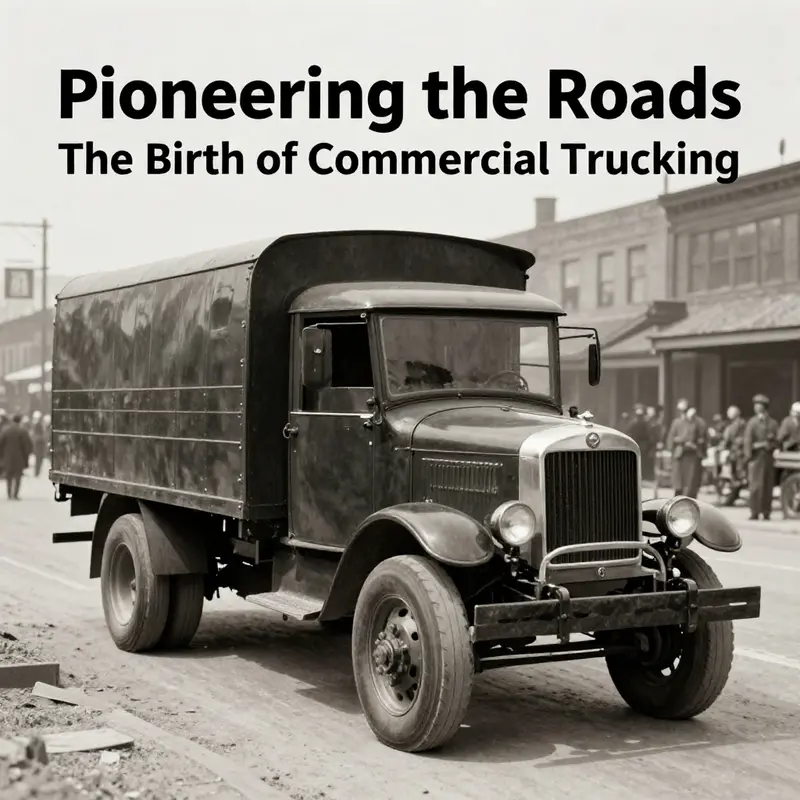
When the century turned toward the 20th, freight moved as much on imagination as on roads. The late 1800s had already begun to tilt the balance of commerce away from horse and wagon toward self-propelled machines. In that shifting landscape, a pivotal moment arrived not with a single spectacular invention, but with a quiet consolidation of a new purpose: moving goods as a dedicated business. The figure at the heart of this moment was not a showroom star nor a legislative victor, but an industrious craftsman turned entrepreneur who believed a motor carriage could haul cargo as reliably as a team of horses. In 1897, in Cleveland, Ohio, Alexander Winton founded what historians now regard as the world’s first dedicated trucking company. His venture did not merely operate a few wagons on a local byway; it established a practical, repeatable model for long-distance freight by road. The company’s first calls for freight service were humble in scale, yet their implications were expansive. Winton’s aspiration was to prove that a motorized vehicle could carry significant loads across meaningful distances, on a schedule, through weather and road wear, and in a way that businesses could depend upon. That confidence was the seed from which the modern trucking industry would germinate. The early years were as much about learning how to sustain a business as about learning how to move cargo faster. Winton had to solve a practical triad: reliability, efficiency, and economic viability. The machines of his era were powerful for their time but temperamental by today’s standards. They demanded careful maintenance, precise tuning, and an understanding of road surfaces that would feel familiar to any fleet manager today. Yet each successful run chiseled away at the perception that moving goods by motor carriage was a novelty rather than a necessity. The freight yard, once a patchwork of informal loading bays and hand-drawn schedules, began to resemble a nascent logistics operation with defined routes, predictable transit times, and a basic, but essential, concept of service level. The Winton enterprise did not float on a void; it rode the same currents that raised industrial cities, expanded manufacturing, and required more reliable movement of raw materials, parts, and finished goods. The 19th century had produced engines and chassis that could do more than glide on urban streets. They could cross rural landscapes and navigate intermittent infrastructure. The challenge was to translate that capability into a recurring, revenue-generating service. Winton’s audacious step was to treat freight as a core product, not a side benefit. He invited merchants to test the new service with visible assurances about timing, safety, and load integrity. In the early days, success meant a few dependable runs per week; in time, it meant a growing network of routes that could be scaled as demand intensified. The lessons were practical and immediate: trucks could reduce inventory cycles, shrink the time between order and delivery, and alter how firms valued transportation as a strategic asset rather than as a necessary cost. The transformation was not instantaneous, and it did not appear in one grand moment. It unfolded through a sequence of decisions that reflected the period’s paradox: the more a machine could do, the more carefully businesses had to think about how to use it. And so Winton’s company became a living laboratory. The way goods were loaded, the way routes were planned, and the way maintenance was scheduled all evolved in tandem with the growing expectations of customers. The road, once a barrier to efficient movement, began to resemble a conduit for commerce. The early trucking enterprise did not stand alone in a vacuum. It emerged alongside a broader technological arc that included the first attempts at motorized freight in Europe and the United States, and it benefited from the cross-pollination of ideas that occurred in industrial hubs. While the first motorized goods carriers in other regions were testing the balance between speed and payload, Winton’s American model demonstrated that a business could be built around the practical needs of cargo owners. The core concept—long-haul, reliable, road-based freight—had a persuasive logic that transcended regional peculiarities. It suggested a future in which goods moved with a rhythm calibrated to markets rather than seasons alone. This vision gradually shaped infrastructure debates, road-building priorities, and a growing demand for standardized practices in loading, securing, and documenting freight. A fleet-based service, even in those nascent days, required governance around scheduling, maintenance intervals, and financial terms. Winton’s early operations began to establish these norms, even if they were still informal by later standards. The importance of schedules, for instance, went beyond punctuality. It signaled to merchants that road transport could be as predictable as rail in some respects, while retaining the flexibility unique to road travel. The practicalities of operating a trucking venture—fueling, tire wear, weather-related delays, and the management of a rolling inventory of spare parts—also began to codify the operational DNA of what the industry would become. In reflecting on Winton’s contribution, one can hear the echoes of later debates about what it takes to sustain a long-haul freight operation. The emphasis on reliability fed directly into the broader economic logic of industrial expansion: if a business could move materials and finished goods more rapidly, it could downsize buffers, reduce capital tied up in stock, and respond more deftly to changing demand. The first commercial trucking company did not simply prove a new way to transport; it redefined the value proposition of transportation itself. It introduced a service-based economy of movement, where the act of moving goods became a continuous, underlying capability that supported manufacturing, retail, and enterprise at scale. The narrative also reveals how history is rarely a straight line from novelty to norm. The Winton venture faced a host of constraints that would later become familiar to every fleet operator: limited road quality, inconsistent regulation, uncertain weather, and the fragility of early powertrains. Yet each constraint catalyzed a solution. Customers learned to book loads with clearer expectations; drivers learned to stage routes with more precise timing; and engineers learned to design vehicles that could endure the daily rigors of highway work. In this sense, the birth of the first trucking company was less about a single leap and more about a disciplined accumulation of practice. It anticipated many of the concerns that later generations of logisticians would systematize: route optimization, maintenance planning, load optimization, and the economics of scale. By turning freight into a service with receipts, schedules, and a recognized cost structure, Winton’s enterprise anchored the commercial potential of road transport in the same ledger as machining, forging, and assembly lines. It did not immediately replace horse-drawn hauling, but it insisted that speed and reliability could coexist with sensible costs. The ripple effects extended beyond Cleveland. Trade networks began to adjust to a new rhythm of movement, which, in time, encouraged others to explore similar ventures or to modernize their own freight operations. The concept of a dedicated trucking company traveled across the Atlantic and into regions where roads and fleets would eventually mirror the same logic in different geographies. For readers tracking the historical arc of this industry, the Winton chapter provides a critical reference point. It marks a shift from experimental tinkering to purposeful enterprise. It is in this transition that one sees the embryonic form of freight networks that would later promote cross-border commerce, standardized vehicle manufacturing, and eventually the large-scale professionalization of trucking. The early years, though narrow in scope, illuminate a wider truth: the future of transportation rests not on a single machine, but on the sustained practice of turning a vehicle into a dependable service for a broad base of customers. That mindset continues to influence how fleets are built, how routes are planned, and how the economics of movement are managed. As we move toward the next chapters, the story threads into the broader pattern of industrial progress—how new engine technologies, evolving regulations, and expanding networks transformed a road-based service into a nationwide and then global system. The evolution from a solitary venture in Cleveland to a pervasive logistics capability required not just better machines but a culture of reliability and a willingness to iterate on business models in response to demand. Winton’s company did not claim to invent trucking as a concept; it proved that trucking could be a durable, repeatable enterprise with real economic gravity. That demonstration opened a corridor for others to enter, to refine, and to scale. The subsequent decades would bring more players, more routes, and more sophistication, as manufacturers, financiers, and operators learned to work together to move goods faster and more efficiently than ever before. Yet the core lesson endures: the first commercial trucking company crystallized a purpose—the transportation of goods by road as a disciplined business—and in doing so it laid down the blueprint for what the modern supply chain would come to demand. What started as a bold experiment in 1897 became a defining feature of modern commerce, a foundational step in the evolution of logistics that would stretch across continents and endure through countless cycles of challenge and renewal. For readers exploring the arc of trucking history, the Winton milestone anchors the narrative in a tangible moment when a business idea became a system, and a system became a lifeline for industries that needed to move with speed, predictability, and scale. To see how this early enterprise fit into the broader trajectory, consider how today’s fleets continue to balance capacity with demand, how cross-border movements are shaped by regulatory clarity, and how the long arc of trucking history informs the challenges and opportunities of the present. A concise historical context can be found in broader histories of truck driving, which illuminate the trajectory from early cargo experiments to the robust, global logistics networks of today. For a concise historical overview, see A Brief History of Truck Driving. https://www.crst.com/blog/a-brief-history-of-truck-driving
Internal link reference: In examining how early capacity and demand shaped later fleet discipline, discussions around trailer orders and margins provide a useful through-line for understanding how modern fleets manage scale while maintaining reliability. See the insight here: Trailer Orders Impact Truckload Margins.
External resource: A concise historical overview of how trucking evolved can be explored in more depth at https://www.crst.com/blog/a-brief-history-of-truck-driving.
From Daimler’s First Cargo Vehicle to a National Fleet: How Early Truck Tech Forged the First Commercial Trucking Company
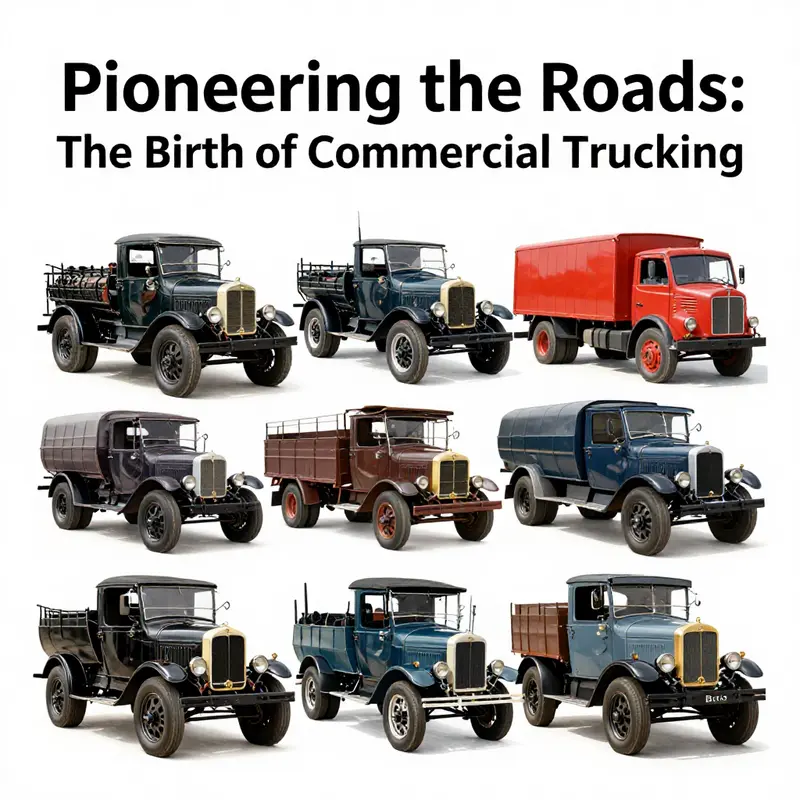
Tracing the origins of the first commercial trucking company reveals a chain of engineering breakthroughs, entrepreneurial risk, and evolving infrastructure. It is not a single invention but a sequence of advances that together unlocked long-haul road freight. In the late 19th century a German inventor built a cargo vehicle designed for heavier loads and longer trips, signaling a shift from ephemeral trials to practical transport. This vehicle did not immediately become a company, but it planted a crucial seed: roads could carry commercial freight with reliability, reach, and speed. Over the following decades, stronger frames, better suspensions, more robust transmissions, and safer braking systems began to align engineering with business aims. By the 1930s a United States fleet founder named McLean helped crystallize a scalable model for long-haul road transport, showing that trucks could deliver scale, flexibility, and regional coverage across vast landscapes. In short, the first commercial trucking company emerges at the intersection of invention and enterprise, where machines grow capable enough to support a reliable flow of goods.
Looking back, the significance lies in what the vehicle enabled rather than in any one machine. The early cargo truck made long-haul movement possible on roads that were rough and uneven, and it demanded a business logic that valued payload, transit time, and a service promise that could compete with rail. The technical path began with power: an internal combustion engine capable of moving heavier loads, then reinforced chassis and resilient suspensions to withstand rough routes. As transmissions advanced and braking systems improved, drivers gained more control and operators could scale operations with greater uptime. These developments turned the road into a credible freight channel and opened the possibility of faster, more flexible delivery across wider geographies.
Across the Atlantic and across the Atlantic decades, European firms and American builders shared a belief that road transport would complement rail. The late-19th century vehicle designed for goods and later diesel propulsion in the 1920s extended range and efficiency, reinforcing the idea that fleets could serve long legs and regional hubs alike. Diesel engines, emerging after World War I, offered better fuel efficiency and endurance, shaping the economics of fleets that would cover hundreds or thousands of miles. These milestones did not unfold in isolation; they invited financiers, regulators, and customers to imagine new patterns of commerce and regional specialization.
In the United States, a national economy hungry for efficient movement of raw materials, agricultural products, and manufactured goods created a fertile environment for fleets. Rail retained its strength, but road corridors and truck fleets could reach lanes rail could not, delivering door-to-door service and flexible delivery windows. The formal truck-haul business required a repeatable model: predictable maintenance, reliable drivers, and scalable finance. McLean’s 1930 venture demonstrated how disciplined asset management and route structure could turn trucking into a dependable, growing industry. The result did not erase rail history; instead it added a new modality that complemented rail and expanded national freight reach.
Technological progress also depended on supporting conditions—industrial capacity, financing, and a regulatory environment that evolved with larger fleets. Early engines, cooling and lubrication, and robust chassis had to endure sustained operation. Advancing brakes and transmissions improved safety and control, enabling operators to navigate heavier vehicles over longer distances. Each improvement lowered the barriers to entry and pushed incumbents to modernize. With a scalable business model, fleets could balance asset utilization against risk, leading to more predictable revenue streams and more expansive service footprints.
The broader history extends beyond one country. European innovation in diesel propulsion and standardized regulations blended with American fleet experience to shape global trucking practice. As highway networks expanded and fleet management matured, road freight became a cornerstone of modern logistics, capable of linking farms, factories, warehouses, and markets with speed and resilience. Contemporary discussions about emissions, efficiency, and cross-border policy continue this trajectory, showing how engineering choices from the earliest days anticipated today’s environmental and regulatory realities.
Laying the Road for Trade: The Winton Moment and the Dawn of Commercial Trucking
If we ask what truly shifted the economics of moving goods, the answer lies not only in a single invention but in the birth of a business model that could flex with demand, reach new markets, and redefine how companies thought about distance and delivery. The late 1890s were a hinge point for transportation. On one side stood the long reach of rail networks and the familiar cadence of horse-drawn wagons. On the other stood a nascent capacity to carry goods by road, with a motorized power behind it able to respond to the pull of economic opportunity with a speed never before imagined. In this turning of the wheel, the Winton Motor Carriage Company, founded by Alexander Winton in 1897 in Cleveland, emerges as a pivotal moment—the moment when trucking ceased to be a laboratory curiosity and became a business that moved markets. This is not simply a footnote in mechanical history but a marker of a broader shift: road freight as a direct link between manufacturer and merchant, a link that shortened supply chains and opened regional and national markets to competition, specialization, and scale.
Before the first motorized vehicles truly joined commerce, goods traveled at a pace set by rail timetables or by the endurance of horses. Railroads could haul vast quantities, but they followed fixed corridors, required transfers, and depended on the social and geographic lattice of stations, yards, and schedules. Horse-drawn wagons offered flexibility, yet they were limited by terrain, fatigue, and the clock. The arrival of purpose-built motorized trucks promised a different arithmetic. If a business could own a truck or arrange reliable trips on demand, it could shrink transit times, optimize inventory, and deliver directly from factory doors to storefronts, bypassing the delays that plagued traditional routes. The promise was as much managerial as mechanical: a way to orchestrate goods with the same precision as money, at a scale that matched growing urbanization and factory output.
Winton’s entrance into trucking didn’t happen in a vacuum. It followed a longer arc of experimentation with internal combustion engines and self-propelled carriers, but it distinguished itself by being oriented to commerce rather than mere experimentation. In 1897, an entrepreneur in Cleveland recognized that a motorized vehicle could operate as more than a novelty; it could perform a commercial function with reliability, repeatability, and the discipline a business required. The Winton operation began to demonstrate that a motor vehicle could perform the function of a freight carrier in a way that was directly scalable. It wasn’t just about moving a few crates from a factory gate to a local market. It was about building a system—a fleet, an itinerary, a schedule, and a service standard. The company showed that goods could be transported by road with direct routes, predictable timing, and the capacity to meet the needs of both manufacturers and retailers who sought flexibility alongside efficiency.
The economic implications of this shift were profound. Road-based freight reduced the dependence on fixed rail lines for many kinds of shipments. Manufacturers in growing industrial centers could reach adjacent towns and emerging markets without waiting for the next available rail slot. Retailers could assort more quickly, moving from seasonal stock concerns to a more continuous, responsive approach to customer needs. The logistics landscape began to recalibrate around the possibility of on-demand transportation. A cycle emerged: demand grew, trucks moved more quickly, inventories could be managed with greater precision, and the costs of moving goods gradually began to decline relative to the value of faster deliveries. This was, in effect, the groundwork for a modern distribution network—one able to integrate multiple modes, optimize routes, and support the dispersion of goods across wider geographies.
In the years that followed, the early trucking venture helped to spur a battery of improvements beyond the vehicle itself. The mere fact that a motorized freight carrier could operate as a reliable business unit encouraged investment in road infrastructure—paved surfaces, better signaling, and, eventually, the expansive highway systems that would transform commerce in the 20th century. It also sparked a rethinking of how products were produced and moved. The possibility of direct-to-retailer deliveries opened space for new production patterns, including more regionally focused manufacturing and a willingness to serve a broader array of outlets. In turn, suppliers and manufacturers began to consider distribution strategies not as an afterthought but as an integral element of product planning. The transportation function had become a strategic lever, capable of shaping pricing, market access, and even product design to some extent, as engineers and managers sought to minimize transit risk and maximize reliability.
The Winton episode also highlights the emergence of professional competence in road freight. Early trucking required more than a sturdy engine and a capable driver; it demanded discipline, maintenance discipline, and a basic commercial sense. Winton’s venture demonstrated that a truck could be part of a service offering, not merely a one-off demonstration of engineering prowess. This signaled the shift from artisanal, one-off transport to a repeated, brand-competitive service with measurable performance. In the American economy, where scale and speed increasingly defined competitive advantage, the ability to move goods with consistency opened doors for regional manufacturers to participate in broader markets. The effect rippled outward: smaller producers could aspire to reach distant customers; local supply chains could be extended; and urban markets could be fed with timely deliveries that kept shelves stocked and prices reasonable.
As this new era took shape, the broader picture included other important milestones, such as the introduction of additional technical improvements that reinforced the trucking case. While the Phoenix, built by Gottlieb Daimler in 1896, showcased a fundamental capability to carry goods over longer distances, the Winton operation gave the concept a business model and a scalable approach. The subsequent development of diesel technology—demonstrated notably by early diesel trucks in the ensuing decades—would further reinforce the viability of road freight by offering greater fuel efficiency and longer ranges. Taken together, these technological and organizational advances formed a foundation for the modern trucking industry: a system capable of moving goods faster, more reliably, and with greater reach than ever before. Yet it is the Winton moment—the moment when trucking became a dedicated commercial pursuit—that remains the most telling signal of a sea change in trade and commerce.
The consequences for markets were tangible and wide-ranging. Regions that were once peripheral in the national economy gained new life as goods could be moved with speed and predictability. Small and mid-sized enterprises could extend their geographic footprint without incurring the prohibitive costs of building a rail network of their own or maintaining a fleet of horse-drawn haulers. In this sense, motorized trucking helped democratize access to markets. It enabled more diverse product offerings to circulate beyond metropolitan hubs and created a competitive environment in which logistics costs and delivery times were not fixed constraints but variables that could be optimized with new managerial insight. The implication for urban development was also significant. As road transport became a reliable partner to manufacturing and retail, cities began to adapt their planning strategies to accommodate faster flows of goods, better access for freight vehicles, and the kind of infrastructure that would eventually support mass distribution and consumer economies at scale.
To connect these historical threads to the present discourse on trucking economics, one can see how early milestones reverberate in today’s questions about capacity, routes, and regulation. The modern conversation about supply chains, just-in-time manufacturing, and the resilience of distribution networks echoes the ambitions first demonstrated on Cleveland’s streets in the 1890s. The fundamental insight remains clear: when a reliable road freight option exists, it reshapes not only how goods move but how businesses plan their entire operation. The question of where the first commercial trucking company stood in this evolution is less about naming a pioneer and more about recognizing a pivot in which transportation, logistics, and commerce began to pull in the same direction. It is a narrative about how road power unlocked new degrees of market proximity and enabled a more dynamic, connected economy.
For readers who want to explore how these early shifts connect to broader industry dynamics today, consider looking into the ongoing discussion of trucking economic trends affecting trailer orders, which reflects how operators, manufacturers, and policymakers respond to the evolving speed and scale of freight on the road. https://truckplusllc.com/trucking-economic-trends-affecting-trailer-orders/ This linkage helps illuminate how historical breakthroughs in trucking give way to contemporary strategic decisions, even as the core challenge—moving goods efficiently and reliably—remains constant.
As a closing note, while the earliest motorized probes into freight transport laid the groundwork, it was the Winton operation that crystallized trucking as a commercial enterprise. The move from sporadic trials to a repeatable service capable of reaching multiple markets defined a new commercial calculus. It is this calculus that underpins the modern supply chain, a system that still relies on the core promise of road freight: the capacity to deliver what markets need, where they need it, with a speed and reliability that once lived only in the realm of imagination. For historians and practitioners alike, the story of Winton is a reminder that transportation is not merely about moving things from point A to point B; it is about enabling the economic imagination itself to expand, one mile of road at a time.
External reading for a broader historical perspective on early trucking and its evolution can be found in CRST International’s overview: A Brief History of Truck Driving.
From Cleveland’s Bold Start to a Nation on the Move: The First Commercial Trucking Company and the Rise of Modern Logistics
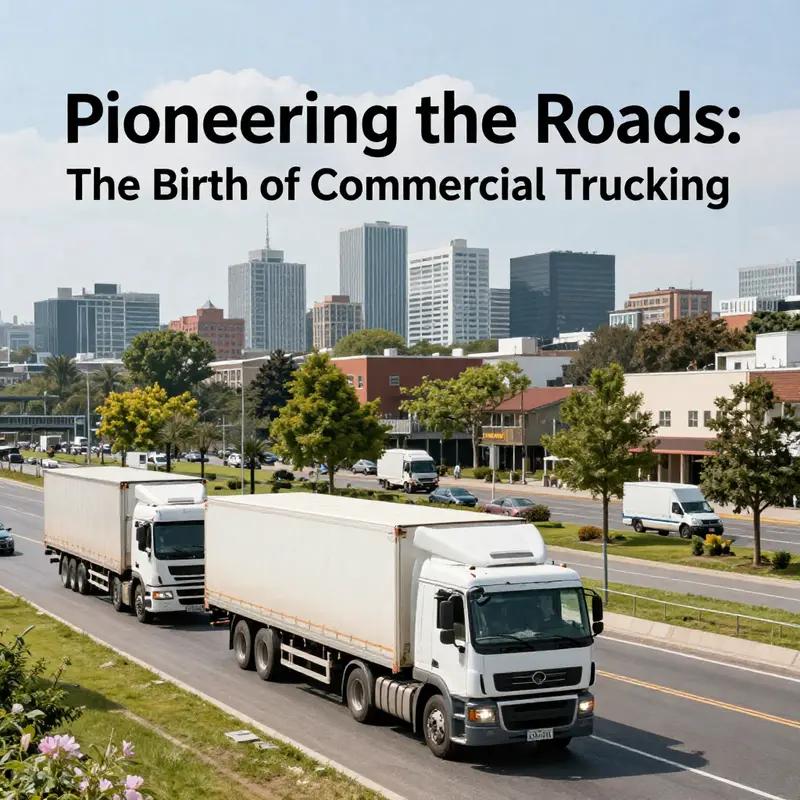
In the waning decades of the nineteenth century, as cities stretched farther from their rivers and rails, enterprise began to test a new idea: could a motorized vehicle haul freight over the plains and into the heart of a growing nation? The answer emerged in Cleveland, Ohio, in 1897, when Alexander Winton and the company that bore his name launched what many historians regard as the first commercial trucking enterprise. Winton’s venture did not simply move goods; it reframed the very act of commerce. For centuries, cargo traveled by horse and wagon, by canal boat, or by rail, each mode constrained by the rhythms of animal endurance or track and trackside infrastructure. Winton’s motor carriage, designed to carry substantial loads over longer distances, offered a different tempo and a different promise: goods could traverse more ground in less time, with a predictable schedule and a clearer line of sight between origin and destination. This promise did not unfold in isolation. It arrived at a moment when young industries in America and Europe were beginning to suspect that power could be harnessed to move more than people. The technical curiosity that surrounded early motorized vehicles had practical purpose: they could deliver raw materials to factories and finished goods to markets with fewer rests, fewer delays, and fewer variables than a mule team could endure. In that sense, the Winton Motor Carriage Company did not merely build a truck; it launched a logistics concept. It asserted that speed and reliability were not luxuries but necessities in commercial life, especially as businesses looked to scale production and distribution in a rapidly urbanizing landscape.
The transformation was not instantaneous. The early trucks were rugged machines built for function, and their adoption required a shift in thinking as well as roads. Yet the core value proposition was clear: motorized freight could bypass some of the bottlenecks that dogged horse-drawn freight, from the physical limits of animal endurance to the seasonal demands that disrupted supply chains. As businesses experimented with these new capabilities, they began to imagine longer horizons for trade. The literal road that formed before them was not only a path for goods but a corridor of opportunity, connecting regional markets into national networks. The changes spread gradually, carried by a combination of entrepreneurial risk, incremental engineering, and the evolving infrastructure that followed demand. The first commercial trucking company demonstrated that a private enterprise could turn a mechanical concept into a service, one that required not just machines but drivers, maintenance, routes, schedules, insurance, and a business model that could absorb the risks of early-stage technology.
What began in Cleveland soon resonated beyond a single company or a single city. Motorized freight reshaped the geography of commerce by revealing that distances were not just physical barriers but strategic ones that could be bridged by more deliberate logistics planning. The speed and reach offered by motor trucks allowed merchants to connect with suppliers and customers in ways horse-drawn routes could not. As goods moved more quickly and predictably, retailers could curate larger assortments and keep inventories more efficiently. The result was a transformation in how communities experienced commerce. Rural towns found new access to manufactured goods, while urban centers gained more reliable streams of raw materials and consumer products. The improved cadence of delivery allowed for broader retail networks to emerge, enabling stores to stock more diverse assortments and promotions to align with seasonal demand. In short order, the economics of supply chains began to reflect the reality that time, more than distance, became the key constraint on growth.
This shift did not happen in a vacuum; it unfolded within a broader panorama of late nineteenth and early twentieth century experimentation. In Europe and the United States alike, inventors and manufacturers pursued power trains, chassis design, and control systems that could endure real-world conditions. The earliest trucks, while modest by today’s standards, carried a logic of practicality: a vehicle capable of hauling goods across rough roads, negotiating hills, and sustaining a functional uptime would be the cornerstone of commercial viability. In such a landscape, the milestones attributed to the era—industrial acceleration, urbanization, and the formation of organized commerce—are inseparable from the birth of a dedicated trucking capability. The momentum would only grow as manufacturers refined reliability, as road networks expanded, and as a new class of businesses emerged to specialize in freight movement. The Winton story is not simply a founding myth; it is a blueprint for how a technology can migrate from novelty to necessity, and with that migration, how markets adapt to new cycles of capacity and demand.
As the industry matured, capacity management became a recurring theme. The early trucking firms learned that movement efficiency depended as much on planning and coordination as on horsepower. The commercial implications were immediate: with trucks able to deliver goods over longer routes, firms could design more ambitious production and distribution strategies. This, in turn, spurred the growth of retail networks, as merchants could routinely stock items that previously traveled only by rail or boat on slower timelines. The practical effects rippled through the economy. Manufacturers could source materials from farther away and still meet production schedules, while retailers could offer consumers a wider marketplace with faster restocking cycles. The social consequences followed closely. Access to a broader array of goods improved living standards, especially in communities that had been cut off from distant markets. At the same time, rural areas gained a foot in the door of national commerce, and the urban-rural exchange became more balanced as freight moved with greater velocity along newly legitimized routes.
In this historical arc, the Winton operation stands as a singular hinge point. It embodies the first serious act of industrial entrepreneurship in trucking, yet it also signals something larger: the industry’s capacity to evolve through iteration rather than a single breakthrough. The subsequent decades saw a proliferation of trucking firms, each learning from the early pioneers how to optimize routes, maintain fleets, and manage the financial risks that accompany new technologies. This is where the chapter’s thread begins to connect with the present. The logistics networks that today power global supply chains were seeded in that period by a few bold decisions: to invest in reliability, to regard cargo movement as a service with repeatable processes, and to treat transportation as a strategic component of manufacturing and retail. The transformation also helped to reimagine work itself. Truck drivers, mechanics, dispatchers, and logistics planners emerged as a new caste of professionals, shaping a field that would later sustain the complex, data-driven operations we see in contemporary freight markets.
To appreciate the full sweep of the Winton-era shift, consider how markets responded as trucking became more central to commerce. The early trucks created a feedback loop: faster goods movement encouraged larger production runs, which in turn demanded more reliable distribution services. Manufacturers could plan inventories with more confidence, while retailers could anticipate consumer demand with less lag. The consequence was a gradual move toward synchronized operations, a precursor to what modern supply chains would become. This evolution did not erase the importance of other modes of transport; rail and shipping retained their indispensable roles. Yet trucking introduced an adaptability that allowed products to move across the last mile—the crucial link between factory gates and shop shelves—more efficiently and with greater resilience to local disruptions. The result was a cascading set of effects: expanded employment in logistics, increased investment in road infrastructure, and a broader sense that a nation’s economic vitality could be measured by the reliability of its freight movements.
In looking back at the first commercial trucking company, one can trace a lineage that connects tightly to the broader narrative of innovation in the industrial age. The story highlights how entrepreneurial risk, engineering ingenuity, and practical service delivery combine to create lasting impact. It also reminds us that the trajectory of technology is often a series of small, cumulative steps rather than a single leap. The Winton chapter teaches that a company does not merely transport goods; it inaugurates a new way of organizing work, coordinating supply, and imagining what commerce can be. The road that began in Cleveland in 1897 did not end there. It branched into networks and systems that would continue to redefine how goods moved, how communities prospered, and how societies perceived the pace at which opportunity could travel from producer to consumer. In that sense, the first commercial trucking company did more than move freight. It accelerated the transformation of everyday life and laid the groundwork for the modern logistics era that followed.
For readers who want a broader view of trucking’s early arc and how these foundational changes matured into today’s networks, the history remains a reminder that what begins as a practical solution often evolves into a system-wide capability. As markets grew more complex and the need for reliability intensified, the trucking industry learned to balance speed, capacity, and cost in ways that would underpin the expansion of national and global commerce for decades to come. This continuity—from a single entrepreneurial act to a comprehensive logistics ecosystem—anchors the central question of this article: what was the first commercial trucking company? The answer lies not in a single date or model, but in a moment when a bold experiment proved that moving goods could be more than a craft; it could become an enduring engine of economic development.
External reading: A Brief History of Truck Driving
Internal note: for broader context on how modern market dynamics influence fleet decisions today, see the discussion on excess capacity in the trucking market insights: Excess capacity in the trucking market insights.
Final thoughts
In tracing the lineage of the first commercial trucking company, the essential elements of innovation, economic contribution, and profound societal changes emerge clearly. Gottlieb Daimler’s pioneering truck was not merely a vehicle; it heralded an era of logistics efficiency that changed trade dynamics forever. The evolution from those early days of trucking to today’s advanced logistics networks underscores the significance of this industry in every facet of our daily lives. Understanding this history allows contemporary stakeholders—from logistics providers to small business owners—to appreciate the strategic importance of efficient freight transportation in their operations and customer engagements.