
Commercial truck parking is often perceived as a logistical necessity in urban settings due to the increasing demand for freight transport. Alley Pond, an area known more for its recreational facilities than commercial use, sheds light on the multifaceted dynamics of truck parking. This article will examine the geographic context that necessitates truck parking in the vicinity, the implication of the term ‘commercial truck park,’ and the societal impacts on neighboring communities. Each chapter will unpack how these elements intertwine, providing valuable insights for logistics and construction sectors, as well as small business owners involved in freight delivery.
Alley Pond and the Quiet Grid: Why a Commercial Truck Park Emerges Near a City Park
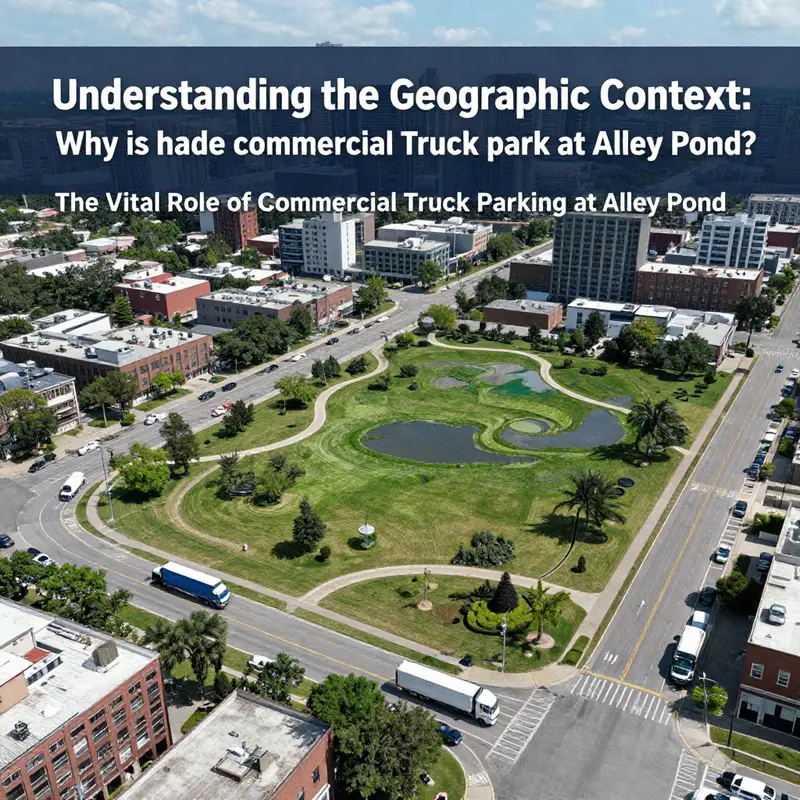
The quiet contours of Alley Pond Park in Queens rarely invite the image of a sprawling logistics enclave. Yet in conversations about urban trucking, the image of trucks parked near the park boundary often enters as a puzzling refrain. There is no formal, city-designated commercial truck park at Alley Pond, and the park’s generous green spaces, ponds, and woodland trails stand in sharp contrast to the fenced, lit, and staffed facilities that truckers typically rely on. The discrepancy between what people expect and what exists in practice reveals more about urban freight patterns than about one specific piece of real estate. A single name on a map rarely explains the whole story of how commercial trucks move through a dense metropolitan fabric. The term Alley Pond, when spoken in a trucking context, can be misheard or misinterpreted. It might evoke romantic visions of nature preserves, not the harsh realities of rest stops, security, and regulatory compliance. In truth, the phenomenon is less about a designated roadside park and more about the practical geometry of a sprawling freight system pressing into a compact urban area. The geography matters. Alley Pond Park sits near major arteries that freight and transit traffic commonly use. Its proximity to the Long Island Expressway corridor offers both a limitation and an option for truck movement. The park’s location near I-495 means that trucks traveling east or west still pass through neighborhoods where curb space, loading zones, and private lots are scarce. This is not a moral indictment of the site. It is a reflection of how heavy vehicles negotiate space in cities that were never designed with a single, expansive truck resting ground in mind. In urban planning terms, the absence of a formal truck park near Alley Pond is less surprising than the persistence of informal parking patterns that drivers encounter elsewhere along the same routes. The city’s zoning, traffic management, and law enforcement revolve around a combination of safety, noise, and neighborhood quality of life. When a truck parks on a side street or at the edge of a commercial lot, the scene can appear almost incidental to a passerby, yet it is not random to the drivers who depend on that space for a lawful pause or a safe waiting position. The reality is that trucks require a network. They need access to fuel, restrooms, security, and a controlled environment where fatigue laws can be complied with. In a dense urban corridor, those needs collide with residential sensitivities, curb-use regulations, and the finite supply of privately operated parking facilities. This collision often leads to a patchwork of lawful and unlawful practices around parks, industrial zones, and service roads. The patchwork is not a crime narrative so much as a portrait of market discipline. When there are gaps in the formal infrastructure—whether due to limited land availability, cost, or regulatory constraints—drivers seek alternatives that maintain safety, legality, and efficiency. Sometimes these alternatives look like temporary stops in vacant lots near the periphery of a park, or in the shadow lines of a warehouse complex adjacent to a major highway. In other cases, drivers may stage a rest break after a long, late night, seeking a quiet corner where cameras, lighting, and patrols offer a sense of security. The human element underpins all of this. A long-haul driver navigates a mix of fatigue management, time constraints, and the imperative to keep goods moving. The stress of meeting delivery windows can push a driver toward a site that offers a perception of safety and compliance even if the site is not formally sanctioned as a truck park. That perception—whether rooted in good driving habits or in the lack of alternatives—often shapes the “story” people tell about Alley Pond. It is a reminder that the urban freight system operates through choices, cost considerations, and the responses of local authorities who must balance competing priorities: the efficient movement of goods and the daily life of city residents. In this light, Alley Pond’s status is not a statistic about a specific facility but a lens on a broader pattern. Truck drivers rarely observe municipal borders as rigid barriers; they see corridors, stretches of highway, and commercial zones where the conditions for parking are more or less favorable. The absence of a formal truck park near Alley Pond does not imply that trucks never stop nearby. It means that when they do, they often do so within a complex set of constraints. They may use private lots, contract parking arrangements with nearby businesses, or simply rely on quiet corners along service roads where enforcement is discreet and predictable. The combination of proximity to a major expressway, a dense urban setting, and a mix of nearby industrial activity creates the conditions for occasional parking occurrences that the average park visitor might misinterpret as a designated facility. A more precise way to understand this scenario is to frame it within the larger rhythm of urban freight. Freight movement in metropolitan New York involves a web of logistics hubs, private parking yards, and regional distribution terminals that serve countless lanes of commerce. In Queens and the adjacent boroughs, such facilities often operate as discrete nodes within a much bigger network rather than as single, visible landmarks. The drivers who stop near Alley Pond are typically balancing multiple factors: legal parking availability, security, proximity to a delivery or pickup, and the need to comply with hours-of-service regulations. When a driver finds a nearby location that offers sheltered light, an accessible restroom, and a monitored perimeter, that spot becomes a practical choice—even if it sits on the edge of a recreational area or an industrial zone rather than inside a purpose-built truck park. The reality, then, is less about a mysterious or hidden site and more about the real-world constraints of urban freight. As cities grow and road networks become more congested, the demand for reliable, legal, and reasonably priced truck parking rises in tandem with the supply. In such a market, private parking facilities and logistics yards frequently fill the gaps left by public infrastructure. They do so not to antagonize neighborhoods but to ensure that drivers can rest, refuel, and resume their routes in a safe and compliant manner. It is a pragmatic arrangement, one that requires careful regulation and transparent enforcement to avoid turning a legitimate break into a breach of rules. The broader takeaway, then, is not a mystery of location but a study in supply and demand, urban form, and the human factors that govern how trucks interface with parks and neighborhoods. For those seeking a path to legal and safer parking near urban cores, the guidance remains clear: when formal options are scarce, the safest choice is to locate a permitted facility with security provisions, amenities, and clear access rules rather than relying on informal spots that can invite complaints or penalties. In practice, this means looking for nearby logistics parks, private lots, or designated rest areas that operate in compliance with local regulations and federal fatigue rules. It also means recognizing that the presence of trucks near a park does not prove a sanctioned, long-term facility nearby. It can reflect a temporary arrangement, a moment in the city’s busy freight calendar, or simply a driver making best use of limited space while awaiting a later, legal rest stop. This understanding sits within a larger narrative about how freight and cities inhabit the same geography, sometimes in tension, sometimes in cooperation. To connect this discussion to the broader dynamics of trucking in a regulated environment, consider how market forces, regulatory updates, and supply chain pressures influence the availability of parking spaces and the costs associated with securing them. A useful frame is to view parking as a lever in the logistics system—one that affects driver fatigue, delivery reliability, and the overall efficiency of the supply chain. When the market tightens, even well-managed routes can experience pressure, and drivers may stretch the boundaries of permissible parking out of necessity. Conversely, when there is surplus capacity, more spaces become accessible, reducing the incentive to improvise along park lines or service roads. The practical implications for communities around Alley Pond are modest but real. Local residents benefit when enforcement focuses on safety and nuisance without criminalizing legitimate crews simply seeking a sanctioned place to pause. Businesses benefit when drivers can find and pay for secure spaces that preserve delivery timetables and protect cargo. And drivers benefit when there is reliable information about where to park legally, what facilities are available, and how fatigue regulations shape the timing of rest breaks. To keep this discussion anchored, a useful reminder is that the urban freight system is not driven by a single site. It is a tapestry of sites, rules, and behaviors, woven together by the need to move goods efficiently while minimizing disruption to neighborhoods. The story of Alley Pond, then, is less a tale of a lone parking lot and more a story about how cities accommodate a necessary but often invisible layer of commerce. It invites us to think about how planners, law enforcement, and logistics operators can collaborate to expand safe, legal parking options in dense corridors without compromising the park’s ecological and recreational value. As the freight landscape evolves, so too will the patterns of where drivers choose to pause. In the meantime, the best guidance remains consistent: seek out formal parking options with clear guidelines, and use those spaces that support safety, compliance, and reliability for both drivers and the communities they pass through. For further context on broader market dynamics that influence parking availability, see the discussion on excess capacity in the trucking market — insights. Excess capacity in the trucking market — insights. External reference: https://truckstop.com/.
Alley Pond and the Truck Parking Myth: Unraveling Urban Freight, Park Boundaries, and the Reality of Parking in a City
When people hear the phrase “+commercial truck park at Alley Pond+,” they often imagine a formal facility tucked inside or beside a park. In practice, there is no designated commercial truck parking area inside Alley Pond Park, a large greenspace in Queens, New York City. The confusion usually comes from how language travels in the city context: a park name, a nearby street, or a peripheral parking area can all blur together in conversation. The term “+alley+” evokes narrow streets or back lanes, while “+pond+” points to water and open space. Add the word “+commercial truck park+” and the picture becomes a patchwork of assumptions about where trucks can wait, load, or rest. The reality is more nuanced and reveals much about how urban freight activity meets parkland, zoning, and the practical limits of city planning.
Alley Pond Park itself sits in Queens as a landscape designed for recreation and conservation. It is managed by the city’s parks department and features natural trails, a sizable pond, and spaces for community use. Its primary purpose is environmental stewardship and public enjoyment, not freight logistics. This core function helps explain why the park’s boundaries do not accommodate commercial truck parking. Zoning regulations around parks are strict for safety, environmental protection, and the overall health of urban communities. Within park boundaries, heavy-vehicle parking is routinely restricted to protect pedestrians, wildlife, and the integrity of landscaped areas. The legal framework is clear: commercial truck parking is not permitted inside the park, and enforcement reflects the city’s broader priorities of preserving public spaces for recreation rather than supply-chain storage.
If trucks appear near Alley Pond, the scene typically has one of several explanations. There may be temporary loading or unloading tied to park facilities—perhaps vendors delivering equipment for a permitted event or a maintenance operation serving park amenities. In some cases, long-haul drivers might pull over on adjacent streets or service roads that skirt the park’s edge to take a mandated rest break or to access nearby commercial corridors during a longer journey. In a city that never truly sleeps, drivers sometimes rely on unattended curbside or shoulder space when legitimate truck stops or rest areas are not immediately available along a given route. When such appearances become more frequent, they fuel the impression that a formal truck park exists at the site, which is usually a case of misinterpretation rather than a sanctioned facility.
To understand why this misperception persists, it helps to consider the practical realities of urban freight in a dense metropolis. Freight movement in and around New York City relies on a network of loading zones, legitimate truck parking areas, and carefully planned layovers that minimize conflict with residential neighborhoods and commercial districts. Parks like Alley Pond sit within a web of land-use design that includes industrial zones, business corridors, and transportation arteries. In those surrounding zones, there may be designated spaces for truck storage or unloading, but those spaces are separate from the park itself. The distinction matters: the park is a protected, public space, while nearby lots or lots-turned-positions for trucks belong to planning choices that balance access with safety and neighborhood quality of life.
For drivers, the key is to locate safe, legal spots and to avoid encroaching on public spaces not designed for heavy vehicle storage. This is not a small concern. The city’s intent is to ensure that freight activity supports commerce without compromising park ecology or visitor safety. When a driver needs to park responsibly, the recommended path is to consult local authorities and official freight guidance to identify legitimate parking facilities or rest areas outside the park’s footprint. Industry directories and nationwide networks exist to help drivers locate approved parking arrangements, but any route planning must respect local regulations and curbside rules. In this light, the myth of a formal truck park at Alley Pond serves as a reminder that urban freight planning requires clear boundaries and transparent enforcement to prevent conflicts between heavy vehicles and pedestrians—especially in areas with valuable recreational spaces and sensitive ecosystems.
The broader tension between freight needs and park protections also echoes how cities manage land use as a whole. When freight visibility increases near a popular park, it raises questions about signage, policing, and the distribution of capacity for parking and rest. One consequence is a push for better coordination between transportation authorities and park managers. If a community identifies ongoing issues with informal parking near a park boundary, a coordinated response can involve improving official truck parking options in nearby zones, increasing enforcement where rules are clearly violated, and providing clear public information about where heavy vehicles can legally stop for loading, unloading, or rest. In addition, planners might explore how to accommodate legitimate freight activities without compromising the park’s integrity, perhaps by creating controlled staging areas in adjacent zones that are equipped with lighting, security, and oversight. Such arrangements would reflect a sophisticated approach to urban freight that respects both commerce and public space.
These considerations also feed into how drivers and planners discuss capacity and competition for space. In conversations about the trucking industry, capacity imbalances and the distribution of available parking can influence the perception of a site being a de facto hub. When a city draws a boundary around a park and clearly marks it as non-parking territory for heavy vehicles, it helps prevent misuse while underscoring the value of parks as pockets of respite in a crowded urban fabric. From a planning perspective, the challenge is not simply to forbid parking near a park but to provide viable, legal alternatives that meet both economic and community needs. That means closer alignment between the locations of legitimate truck parking and the routes freight traffic follows, and a transparent, accessible process for drivers to locate those spaces through official channels rather than relying on improvisation near sensitive urban landscapes.
In thinking through these dynamics, it is useful to consider how professionals talk about capacity and demand without naming brands or products. A broader, non-brand-specific lens can illuminate why the idea of a dedicated truck park adjacent to a park often fails to materialize. The real story is one about space, safety, and municipal governance. It is about ensuring that freight movement supports economic activity while protecting public lands, water bodies, and the health of urban ecosystems. It is about how terminology can shape expectations: an “+alley+” or a “+pond+” may evoke something casual and benign, while the word “+commercial+” carries regulatory weight. When these terms collide in the public imagination, the result is a myth that obscures the careful planning that actually governs where trucks can wait, park, or unload in a city as complex as New York.
For readers who want to connect this discussion to a broader view of freight dynamics, there is value in examining how capacity and parking demand interact with urban geography. A broad look at how the trucking market adapts to shifting capacity and space pressures can provide useful context for understanding why a park-like site is not a viable solution for parking. The conversation is not merely about location; it is about aligning policy, enforcement, and infrastructure to support both commerce and community vitality. If you want a deeper dive into the market-side implications of capacity and parking demand, see the insights linked in the interlinked discussion here: Excess-Capacity in the Trucking Market—Insights.
Ultimately, Alley Pond Park stands as a reminder that urban green spaces are rare and valuable commodities that must be protected from unintended uses. The absence of a formal truck park on park land is not a deficiency of the freight system but a deliberate choice to preserve a public good. When discussions about truck parking arise in proximity to such spaces, the proper response is to direct attention to legal options nearby, clarify regulatory boundaries, and support improvements to nearby facilities that can safely accommodate heavy vehicles without compromising park usability. By keeping the lines clear between park boundaries and designated freight zones, cities can maintain the balance between supporting a robust supply chain and safeguarding the environmental and recreational value of urban parks. For official information about Alley Pond Park, you can visit the city’s parks department page: https://www.nycgovparks.org/parks/alley-pond-park.
When Freight Meets Green Space: Unpacking Why Commercial Trucks Edge Toward Alley Pond Park
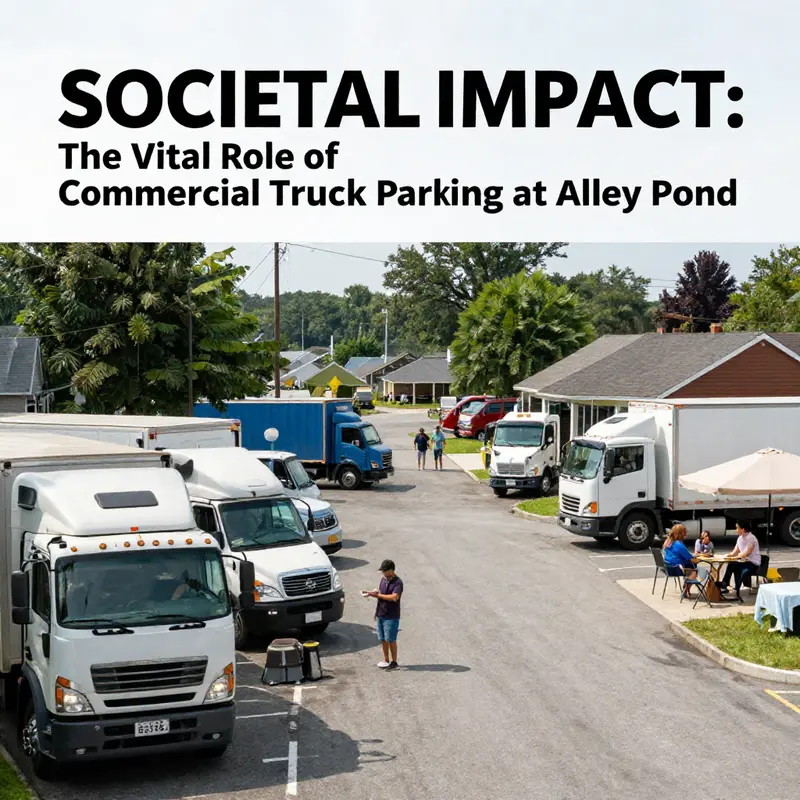
Alley Pond Park sits in the mosaic of Queens, a green expanse that invites families, runners, and casual strollers to pause amid city rhythms.
Yet, despite its serenity, the edges of Alley Pond Park occasionally become a stage for commercial trucking activity. There is no official designation that marks this area as a truck parking zone, and planning records emphasize protected green space rather than curbside commerce. The confusion surrounding the term “alley” in urban discussions—often a narrow street or back lane—can blur boundaries between formal parking lots and informal curbside use. In practice, trucks appear near the park not as a planned feature but as a symptom of broader logistics dynamics: the near-ubiquitous demand for rapid, local access to goods in dense neighborhoods and the gaps that sometimes exist in available, legal parking or staging space for large vehicles. In this sense, Alley Pond Park becomes less a formal node in a trucking network and more a quiet witness to a dispute between two essential urban needs: reliable delivery and livable public space.
The drivers who pause near the park are navigating a web of constraints that extend far beyond a single street corner. In dense urban neighborhoods, last-mile delivery has become an engine of both economic vitality and neighborhood friction. Retailers, restaurants, and institutions push for faster restocking, while couriers seek convenient staging points that minimize detours and fuel consumption. When legitimate loading zones are scarce or poorly timed, some drivers retreat to nearby curbs and shoulders, hoping to minimize disruption while still honoring their delivery commitments. The resulting tableau is not a rebellion against public spaces but a byproduct of a system that prioritizes efficiency over distance, speed over local cohesion, and scale over neighborhood rhythm. This tension is especially pronounced around green spaces that carry a protective zoning message: parks are not industrial zones, even if their perimeters become permeable to the practical needs of commerce. The risk is that the park’s tranquility is perceived as a friction point in the city’s economy, rather than as a shared resource that deserves, and can sustain, careful management.
From a public health and environmental perspective, the presence of commercial trucks near Alley Pond Park invites a layered examination. Traffic congestion compounds travel times for residents and undermines the predictability of everyday life. More traffic often means more engine idling and more stop-start movements, which in turn elevates diesel emissions in ways that are felt not only on air quality monitors but in everyday respiratory health for people who live in adjacent blocks. In neighborhoods already grappling with air quality disparities, even small increases in pollution can translate into measurable health effects, from coughing and wheeze to aggravated asthma. The noise footprint is not trivial either. Idling engines, swing doors of trailers, the clatter of loading pallets, and the general cadence of curbside activity intrude into the quiet of early mornings and evenings when families seek rest or teenagers study. Noise, when persistent, becomes more than a nuisance; it is a stressor that touches sleep quality, blood pressure, and overall well-being. The cumulative effect among residents—especially seniors and children—merits serious consideration within any urban-development dialogue.
A particularly instructive dimension of the discussion centers on the environmental quality of the park and the sunlight that it receives. A detailed shadows analysis from NYC planning sources notes that large-scale commercial truck operations can cast incremental shadows on portions of Alley Pond Park during certain times of the day and year. This shading effect does more than darken a few picnic tables. It has the potential to alter microclimates within the park’s ecosystem, suppressing the natural enthusiasm of sunlit play, decreasing photosynthetic opportunities for park flora, and subtly changing how park users experience the space. Reduced sunlight, especially in a city that already contends with heat islands, undermines efforts to provide comfortable outdoor experiences during hot spells and can discourage families from gathering in what should be a communal refuge. The shadows issue thus elevates a logistical debate—where to park and how to move freight—into a conversation about climate resilience, public health, and equitable access to shade and daylight for all residents.
Visual blight and safety considerations compound the complexity. The practical needs of certain truck configurations—open cargo beds for easy loading, tarping for weather protection, and the occasional mismatch between vehicle size and curb space—can give rise to temporary structures or awkward curbside arrangements. These setups do not merely disrupt street aesthetics; they can impede sightlines for pedestrians and cyclists, complicate the use of adjacent sidewalks, and elevate concerns about safety near residential blocks and school routes. Community members often voice worries about the cumulative visual impact of steady truck presence—especially when paired with periods of intense loading activity. The conversation shifts from a narrow focus on parking legality to a broader inquiry about how to design curb use that respects both commerce and neighborhood identity.
Displacement of community spaces is a subtler yet pervasive risk. In crowded urban cores, the allocation of prime real estate for trucking use—even temporarily—can crowd out playgrounds, bike lanes, or pedestrian corridors that city residents rely on for daily movement and recreation. Parks are priceless in dense cities precisely because they offer respite and social cohesion; when edge conditions convert into staging yards for freight, residents feel the physical and emotional pull of a space that is being traded away for convenience elsewhere. The resulting sense of erosion—of green space, of safe routes to schools, of places to gather—erodes trust between residents and planners. The challenge then becomes how to secure a future for the park that honors both the economic imperatives of freight movement and the social fabric of the surrounding communities. The path forward requires deliberate urban design choices, transparent zoning enforcement, and ongoing dialogue with residents who bear disproportionate exposure to the associated health and environmental risks.
What, then, is the way forward? The answer lies in balancing economic necessity with environmental stewardship and social equity. Urban planners and policymakers can pursue several strategies that reduce the pressure point at places like Alley Pond Park without stalling commerce or delivering goods inefficiently. First, invest in off-site distribution hubs and more robust, legally designated truck parking facilities that are geographically and operationally optimized to minimize curbside conflicts near sensitive areas. Second, implement time-based curb restrictions and enforce penalties for idling in residential zones, ensuring that loading activity occurs in a manner that respects nearby homes and schools. Third, expand and improve public transportation and multi-modal links to reduce the need for long dwell times in shortage zones. Fourth, create buffer zones and enhance landscaping to soften visual impact and provide shade—helping to preserve sunlight in park areas while offering a more pleasant experience for users. Fifth, promote community-led planning so residents can voice concerns early, shaping routes, hours, and staging locations that avoid encroaching on cherished green spaces. These steps are not panaceas, but they form a coherent framework for reconciling the legitimate needs of freight movement with the health, safety, and wellbeing of the surrounding neighborhoods and the integrity of Alley Pond Park.
To connect this local narrative to broader market and policy currents, one can explore how capacity dynamics influence curbside parking decisions and the geography of freight. A forward-looking lens highlights how a tighter or looser trucking market might shift where and how trucks queue or load in urban settings. For readers curious about these macro patterns, a focused look at the broader market insights can illuminate why some drivers and operators must improvise curbside locations when formal spaces are scarce. See this discussion on excess-capacity-in-the-trucking-market-insights for a deeper sense of the pressure points and opportunities at play, especially in markets where the balance between demand and available legal parking remains unsettled. https://truckplusllc.com/excess-capacity-in-the-trucking-market-insights/
The conversation around Alley Pond Park thus sits at the intersection of logistics efficiency, urban health, and environmental justice. It underscores the reality that city life is a negotiation—not a fixed arrangement—between what merchants need to move goods and what residents need to breathe, play, and rest in a green city. The research points to a clear conclusion: sustainable urban freight requires intentional design, transparent governance, and active community engagement. When zoning, enforcement, and infrastructure investments align with the values residents hold for their parks and public spaces, the neighborhood can sustain both the flow of goods and the integrity of the places that knit the community together. The outcome hinges on balancing speed and safety, throughput and sunlight, commerce and care. In this sense, Alley Pond Park becomes more than a backdrop for daily life; it becomes a test case for how cities can chart a humane path through the pressures of modern logistics. For those following the thread of urban infrastructure and health, the next chapters will build on how energy, heat management, and shade intersect with the everyday rhythms of freight, streets, and parks, shaping a future where green spaces remain accessible, vibrant, and safe amid the demands of a bustling metropolis. External context on how local initiatives respond to spatial energy production emphasizes the importance of adaptive planning and community-centered approaches in this ongoing narrative: https://www.nyc.gov/site/environment/energy-day.page
Final thoughts
In conclusion, the presence of commercial truck parking at Alley Pond serves as a microcosm of the challenges and necessities faced in urban logistics. Understanding its geographic context, operational significance, and effects on local communities informs stakeholders in shaping better parking solutions that consider both commercial needs and community wellbeing. This dual perspective emphasizes the importance of planning and collaboration in evolving urban environments, ensuring freight transport supports commerce while respecting resident quality of life.