
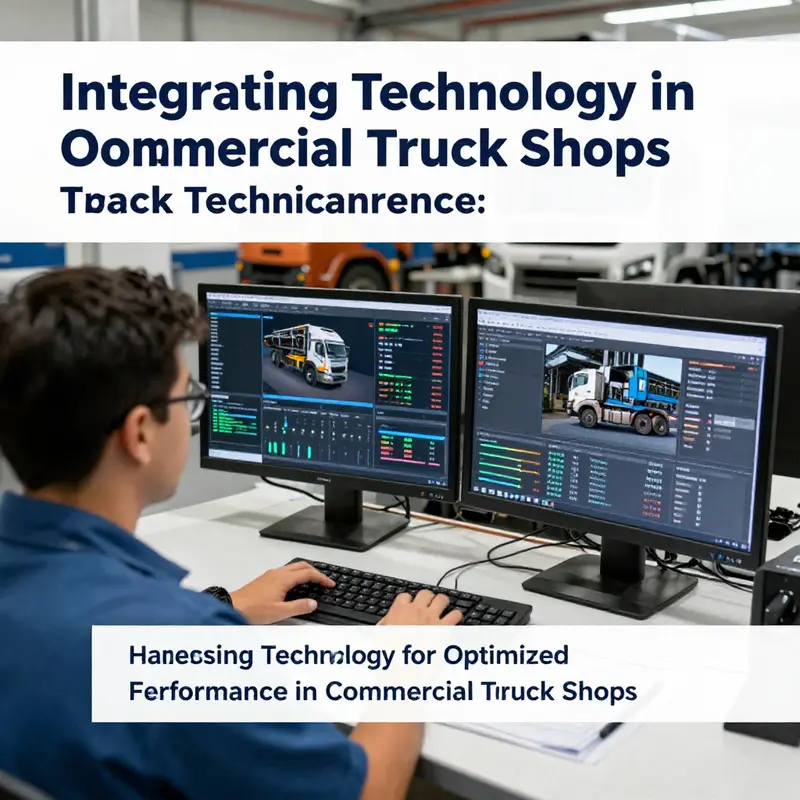
In the increasingly competitive landscape of logistics and freight operations, performance metrics for technicians play a crucial role. Commercial truck shops leverage advanced technologies to assess technician performance systematically through a combination of digital tools, standardized metrics, and integrated systems. This multifaceted approach facilitates real-time monitoring of work quality, maintenance compliance, and overall efficiency. As we explore how these strategies shape technician performance, each chapter will illuminate key processes such as integrating state-of-the-art technologies, employing robust Key Performance Indicators (KPIs), utilizing digital work order platforms, evaluating technician skills, and improving customer satisfaction. This detailed examination provides a holistic view of how truck shops can ensure exceptional service delivery while minimizing operational flaws.
null
null
Diagnostics in the Digital Age: How KPIs Shape Technician Performance in Commercial Truck Shops
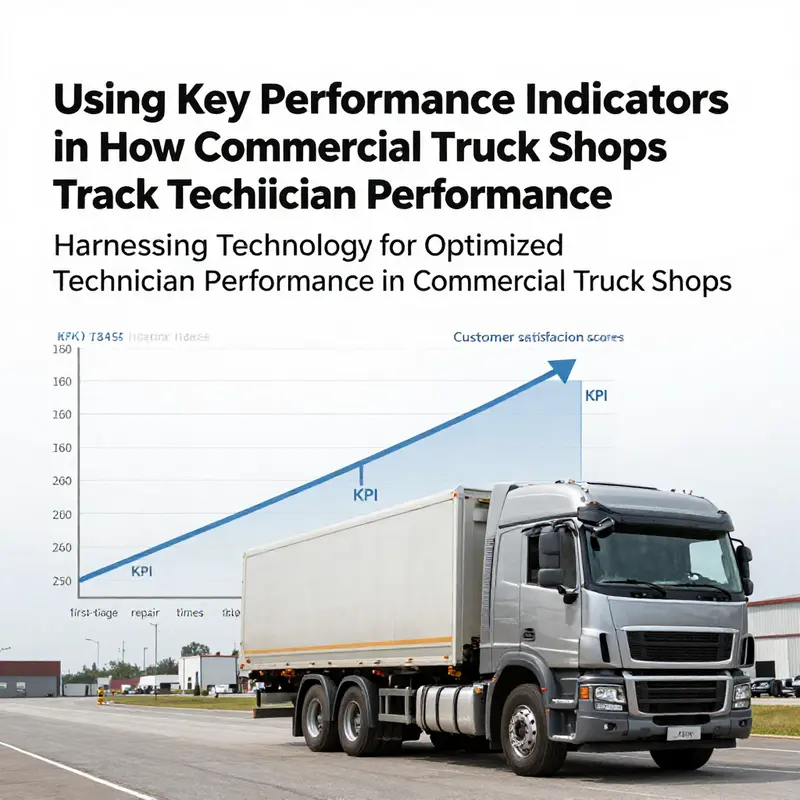
In modern commercial truck shops, performance tracking has shifted from gut instinct to data-driven discipline. Technicians work with digital tools drawing on vehicle data streams and centralized shop systems, turning hours and hands-on effort into measurable outcomes. Clear metrics and real-time information enable managers to understand not just how long repairs take, but how that time is spent, why a diagnosis is correct or not, and how the work aligns with safety, quality, and customer needs. The result is a feedback loop that elevates skill and reduces downtime that costs fleets and erodes reliability.
KPI-driven performance centers on indicators like first-time fix rate, which signals diagnostic skill and proper planning. A high first-time fix rate reduces repeats, vehicle idle time, and labor cost per completed job, while encouraging up-front verification and clear communication.
A second pillar is the average repair time, a gauge of workflow efficiency. Tracking repair times alongside task complexity helps identify bottlenecks in parts supply, diagnostics, or sequential handoffs, enabling better resource allocation and reduced waiting.
Parts utilization forms a third pillar. Linked to maintenance history and diagnostics, parts data helps evaluate whether correct parts are selected, cross-referenced, and used efficiently. This supports targeted training and better procedures rather than blame.
Customer satisfaction scores complete the KPI quartet. Feedback collected at service points informs how well the repair experience matches expectations and relates to timeliness, communication, and reliability. When feedback aligns with inspection results and rework rates, managers gain a robust view of technician performance.
The data ecology rests on integrating digital platforms: fleet management, telematics, vehicle networks, and diagnostic dashboards. Remote diagnostics reveal confidence levels, fault codes, and anomalies, enabling proactive planning rather than reactive responses.
From Digital Logs to Real-Time Performance: Redefining How Truck Shops Track Technician Excellence
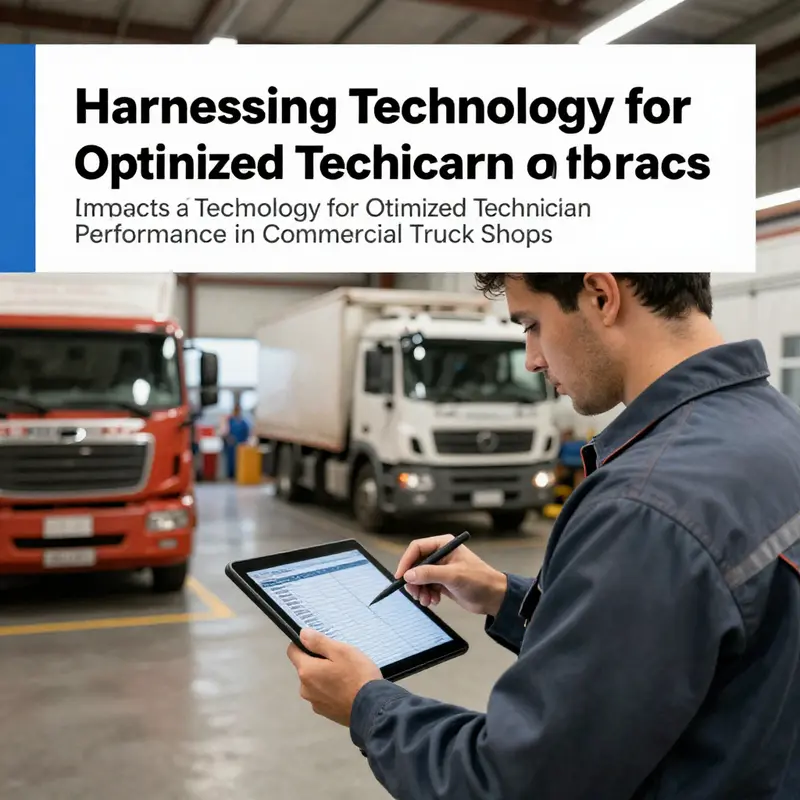
Digital work order platforms have moved from the periphery to the core of how commercial truck shops evaluate technician performance. No longer do managers rely on paper sheets and memory to judge speed or accuracy. Today’s platforms capture the full arc of a repair in real time, weaving together diagnoses, repairs, inspections, and parts usage into a single, auditable narrative. For the shop, this shift means that every action leaves a trace, every decision is supported by data, and performance conversations rest on verifiable facts rather than impression. The result is not a navel-gazing exercise in productivity, but a disciplined, data-driven approach that aligns shop floor reality with strategic objectives like uptime, safety, and customer satisfaction.
The most visible change is real-time visibility. A manager can watch how long a job takes from diagnosis through final test, observe how many labor hours accumulate for a given task, and see precisely which parts were consumed in the process. This transparency does more than satisfy curiosity; it creates a first-class feedback loop. Technicians understand that their progress is tracked against standard procedures, and shop leaders can detect deviations promptly. When a technician consistently finishes tasks within the expected time frame and uses parts efficiently, that pattern becomes a benchmark for others. Conversely, repeated overruns or unnecessary parts substitutions are flagged early, prompting targeted coaching rather than post-mortem finger-pointing.
The precision of automated logging is perhaps the most transformative feature. Every stage of a repair—diagnosis, repair, and final inspection—carries a timestamp. Over weeks and months, managers compile granular performance trends. They can see how a given technician handles diagnostic steps, whether they progress through a repair with steady accuracy, and how quickly they complete the final inspection. The data enable an evidence-based view of performance that goes beyond gut feelings or anecdotal notes. It also helps identify training needs. When a pattern emerges—perhaps a technician consistently struggles with a particular diagnostic sequence—manuals, simulations, or hands-on coaching can be deployed with surgical precision. This targeted approach preserves confidence among the workforce while lifting overall capability.
Accountability is intensified by the visibility digital work orders provide. Technicians know that their actions, timing, and decisions are recorded in real time, which nudges greater adherence to standard operating procedures. This does not translate into micromanagement; it fosters a culture of professional responsibility where adherence to safety protocols, accurate diagnoses, and careful parts selection are recognized as performance standards. Digital records become both a personal performance history and an organizational ledger, enabling straightforward audits, compliance reporting, and accurate customer billing. When a customer questions a charge or a repair claim, the shop can present a transparent reconstruction of the work performed, the parts used, and the time invested, all anchored by immutable timestamps.
Operational efficiency follows closely behind transparency. Digital platforms don’t operate in isolation; they speak to diagnostic tools and inventory systems, allowing cross-referencing between what was diagnosed, what was repaired, and what parts were consumed. This integrated view reduces errors that used to slip through the cracks—incorrect parts, skipped inspection steps, or mismatched diagnostic conclusions. It also surfaces opportunities for process optimization. For example, if data show that certain repairs consistently require shorter cycles when a particular inspection step is performed earlier in the workflow, managers can revise work orders to enforce that sequence. The cross-linking of data from diagnostics to parts to time creates a cohesive map of how a job should progress, and how well it actually did progress, step by step.
Beyond day-to-day efficiency, digital work orders yield meaningful long-term planning insights. The accumulated data become a reservoir for setting realistic benchmarks and calibrating compensation models. When performance data feed into a fair, outcomes-based pay structure, technicians see a direct link between the quality and speed of their work and their earnings. The same dataset informs workforce planning: firing up a development track for technicians who show strong diagnostic acuity or offering targeted refresher courses where data indicate gaps. Over time, shops build a living library of performance patterns that guide hiring, training, and succession planning. In this sense, digital work orders do more than measure performance; they shape the capabilities that fleets rely on for resilience and uptime.
A crucial advantage lies in the alignment between performance metrics and customer outcomes. First-time fix rate, average repair time, and customer satisfaction scores become more than abstract numbers. They anchor conversations about how technicians approach problems and how the shop as a system delivers results. If a technician consistently achieves high first-time fix rates while maintaining safety standards, managers can recognize and disseminate the approach they use, turning excellence into a replicable method. This is not about crushing every repair into a single KPI; it is about weaving a balanced scorecard that respects craftsmanship while encouraging speed, accuracy, and safety. Digital work orders make it possible to track these diverse dimensions simultaneously, ensuring a holistic appraisal rather than a narrow focus on one metric at the expense of others.
The integration with diagnostic and inventory systems also changes the relationship between technicians and the tools they use. When a repair is logged, the platform correlates diagnostic results with the parts and labor applied, creating a co-authored story of the repair. This narrative reduces ambiguity and supports accountability on both sides of the counter. It also generates opportunities for learning. Management can surface correlations—such as recurring diagnostic patterns leading to misdiagnosis or parts misselection—and translate them into focused training modules, corrected standard work, or updated checklists. In effect, the platform becomes a learning reservoir, not just a ledger of activity.
Preserving a human-centered approach remains essential even as data proliferates. The goal is not to replace judgment with metrics but to inform judgment with evidence. Senior technicians may be asked to review cases where data indicate a potential misalignment between diagnostic conclusions and final outcomes. They can provide context that numbers alone cannot capture, such as nuances of a vehicle’s operating environment or the variability of wear on a particular component. The most successful shops blend data-driven discipline with the tacit knowledge that seasoned technicians bring to the shop floor. In this synthesis, performance becomes a shared conversation rather than a solitary scoreboard.
The chapter of digital work orders also invites a broader view of how maintenance work is valued within a fleet operation. When performance data are visible across the shop floor and into a service history, stakeholders from fleet management, parts procurement, and field technicians begin to speak a common language. This shared language accelerates decision-making and aligns incentives with outcomes that matter to customers—reliable uptime, safe operation, and predictable maintenance costs. It also helps the shop quantify intangible benefits, such as improved morale and better adherence to safety protocols, by connecting these outcomes to verifiable actions recorded in the system. The result is a more coherent operating model where data illuminate not only what happened, but why it happened and how to replicate it going forward.
As with any data-driven transformation, there are guardrails to consider. The richness of digital logs makes data quality paramount. If entries are incomplete or timestamps are inaccurate, the reliability of performance analytics suffers. Shops must implement robust data governance: clear field definitions, validation checks, and regular audits of data integrity. Privacy and worker trust also matter. While transparency and accountability are valuable, they must be balanced with fair usage of data, ensuring that performance monitoring respects the dignity and professional development of technicians. Communication and change management are essential; technicians should understand how data will be used to support growth, not to police every move. When approached with transparency and a clear path to improvement, technicians often embrace the opportunity to enhance their practice through data-informed feedback.
The practical implications for the shop floor are substantial. Supervisors gain the ability to reallocate resources in real time, closing skill gaps with targeted mentorship and adjusting workloads to optimize throughput without compromising quality. Parts and tools can be scheduled with greater precision as the platform reveals trends in demand tied to specific repair types. In turn, customers feel the benefits in shorter downtime, fewer callbacks, and more accurate estimates of repair timelines. The entire lifecycle from diagnostic decision to final delivery becomes a traceable, optimizable process rather than a loose collection of independent tasks. This coherence is what differentiates high-performing shops in a competitive environment where uptime and reliability are the currency of trust.
For readers who want to explore the broader implications of digital work orders on operational efficiency and technician evaluation in the trucking industry, see the linked external insight that surveys these themes in depth. The article discusses how digital work orders are transforming truck shop management and provides practical perspectives on implementation and impact.
Internal reference note on data-driven margins and operations: as data accumulate, even financial considerations such as margins tied to parts and labor become more observable. For example, the way trailer orders influence truckload margins can be better understood when digital work orders log parts usage, time spent, and repair outcomes across multiple jobs. This kind of visibility helps leadership align pricing, procurement, and service standards with actual shop performance, creating a feedback loop that strengthens both reliability and profitability. See for yourself how this dynamic plays out in practice: Trailer orders impact truckload margins.
In sum, digital work order platforms redefine technician performance tracking not as a punitive surveillance tool but as a structured, transparent, and actionable framework. They connect the dots between diagnosis, repair, and outcome, turning data into insights that improve every repair, every day. The shops that embrace this paradigm do not just measure performance; they elevate it by turning granular activity into scalable competence, continuous learning, and sustained client value. This market evolution supports a culture where data-driven practice and human expertise reinforce each other, driving uptime, safety, and customer trust across the fleet.
External reference: Digital Work Orders Are Transforming Truck Shop Management. https://www.trucknews.com/technology/digital-work-orders-are-transforming-truck-shop-management-138469
Measuring Technician Skill and Efficiency in Commercial Truck Shops
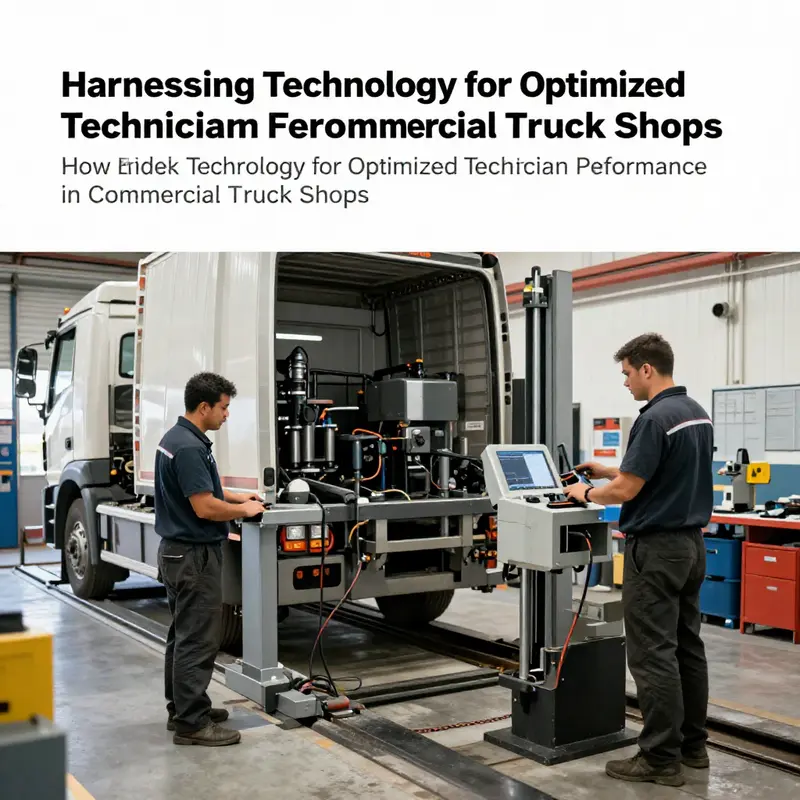
Measuring technician skill and efficiency in commercial truck shops is about translating hands-on work into reliable, actionable data. Modern shops blend fleet data, diagnostic results, parts usage, and safety records to build a balanced view of performance. The goal is to inform training and process improvements without slowing the daily workflow. Real-time telemetry from vehicles and integrated work orders create a record of each repair, including time spent, parts used, and the sequence of diagnostic steps.
Key metrics include efficiency ratio (billable hours divided by actual hours), first-time fix rate, average repair time, and safety adherence. When a repair takes longer in real time than anticipated, the efficiency ratio highlights potential waste or misalignment in the workflow or parts sourcing. Conversely, a ratio near or above one indicates that time spent aligns with the work billed, signaling efficient alignment between planning and execution.
Linking data across ECU/BCM diagnostics, parts management, and service history enables managers to see patterns that inform coaching and standardization. The result is not surveillance but a disciplined feedback loop that supports technicians in delivering accurate, durable repairs quickly and safely.
Ultimately, measurement should empower technicians by clarifying expectations, guiding targeted training, and highlighting continuous improvement opportunities. A well-designed metric program treats data as a tool for skill enhancement, not a weapon for penalizing performance.
Measuring Craft, Confidence, and Time: Elevating Customer Satisfaction Through Technician Performance Tracking in Commercial Truck Shops

In the commercial trucking world, customer satisfaction is measured not only by uptime and on-time deliveries but by the trusted consistency with which a shop returns a vehicle to service. Fleet operators juggle tight schedules, costly downtime, and the unpredictable wear and tear of heavy equipment. In this context, a shop’s ability to consistently deliver high-quality work on schedule hinges on something more than technician know-how: it hinges on reliable, observable performance. Modern shops have shifted from relying on intuition and anecdote to embracing a data-driven discipline that makes skill, speed, and safety visible. By tracking technician performance through integrated digital tools, standardized metrics, and real-time dashboards, shops can translate everyday repair work into tangible improvements in reliability and customer experience. The result is not hollow metrics but a culture of accountability and continuous improvement that fleets can trust, time after time.\n\nAt the core of this shift is the integration of the truck’s Electronic Control Unit (ECU) and Body Control Module (BCM) with fleet management and shop systems. This integration enables remote diagnostics and performance monitoring that extend beyond a single repair visit. When a truck enters the shop, the ECU and BCM send a stream of data about an anomaly, the sequence of fault codes, and real-world operating conditions. For technicians, this means work orders come with richer context rather than a list of symptoms, and supervisors receive real-time feedback about diagnostic accuracy and the Lincoln-log trail of what was checked, what was replaced, and what test cycles followed. The same digital spine supports timekeeping and parts tracking, linking every action in the repair process to a centralized record. The upshot is clarity: managers can see not only how long a repair takes, but why it took that long, where errors tend to recur, and which approaches consistently deliver correct, durable fixes.\n\nA complementary layer of visibility comes from digital work order platforms that document every step of a repair—from the parts used to the exact minutes spent on each task. This granular traceability does more than justify a bill. It reveals process bottlenecks and worker-specific patterns that would otherwise stay hidden. For instance, when a technician consistently spends more time on a diagnostic task than peers but achieves a similar first-time fix rate, it prompts targeted coaching—perhaps a need for refine diagnostic steps or better access to reference data. Conversely, a technician who completes complex alignments or alignments-related tasks faster with consistently precise results signals transferable best practices that can be standardized across the shop floor. This kind of evidence lowers the guesswork in workforce development and elevates the reliability of service delivery. It also reduces waste: when parts usage is tied to job outcomes, managers can identify mis-picks or incorrect substitutions in near real time, encouraging a more disciplined parts selection process and better maintenance planning for the fleet.\n\nThese capabilities converge around a suite of key performance indicators (KPIs) that connect operational efficiency with customer-perceived value. First-time fix rate remains a cornerstone, because fleets endure less downtime when the vehicle goes in for a repair and comes back ready for duty. A high first-time fix rate signals that technicians are diagnosing root causes correctly and selecting appropriate parts and tools. Average repair time matters too, but not in isolation. Context matters: a longer repair may be warranted if it prevents recurring failures or if the repair requires a high-precision alignment or a sensitive diagnostic procedure that must be performed carefully. The narrative a KPI tells becomes more meaningful when paired with adherence to service schedules and, crucially, customer feedback scores. CSAT and Net Promoter Score (NPS) illuminate the customer’s voice about communication, responsiveness, and perceived value. When data from shop floors and feedback from customers align, the trust in the shop’s capability strengthens, and loyalty follows.\n\nImplementation requires a thoughtful, scalable approach. Modern shop management software often provides real-time performance dashboards that present a live pulse of both individual and team output. Supervisors can see when a repair is slipping relative to the schedule, when a technician consistently runs late on certain tasks, or when a recurring diagnostic pattern emerges. Early alerts are not punitive but preventive: they flag delays or recurring issues so that managers can intervene with coaching, process adjustments, or resource reallocation before the client feels the impact. Importantly, the storytelling value of this data is a driver for improvement. When a technician sees how their work affects a customer’s experience, a sense of ownership grows. This is not about surveillance; it is about aligning professional pride with customer outcomes. The goal is to elevate routine mechanics into a disciplined craft whose outcomes are measurable, auditable, and improvable.\n\nA practical consequence of performance tracking is the establishment of a feedback loop that binds shop operations to customer expectations. Regular review cycles—such as weekly performance conversations—provide a forum to discuss benchmarks, recognize improvements, and design collaborative action plans. In these sessions, data is not wielded as a club but as a shared language. Technicians learn how their individual contributions scale into fleet reliability, and managers learn which coaching methodologies yield the greatest returns in service quality. This transparency fosters a culture where safety protocols are not seen as impediments but as essential guardrails that protect drivers, cargo, and uptime. Compliance data, safety check completions, and incident-free metrics merge with repair performance to present a holistic portrait of service excellence. When customers hear that a shop enforces a rigorous safety posture while delivering timely, accurate repairs, trust solidifies. The perception of competence accompanies the actual competence, and that perception translates into repeat business and stronger partnerships.\n\nLinking performance to customer satisfaction is not merely correlation; it is the actionable link that turns data into loyalty. When technicians understand the impact of their work on a driver’s productivity and a fleet’s bottom line, they become advocates for quality. The literature supporting this approach notes that formal technician performance tracking correlates with measurable gains in customer satisfaction. A 2025 industry study reports that shops embracing a structured performance-tracking program observed significant improvements in customer satisfaction scores within twelve months. While the specifics vary by shop, the trend is clear: reliability and clear communication—driven by data-informed practices—resonate with customers who rely on predictable service windows and first-rate repairs. The causal thread is straightforward. Timely, transparent service reduces unplanned downtime. Accurate diagnostics reduce the cost and complexity of subsequent visits. Clear communication reduces anxiety about repairs and builds confidence that the shop will fix issues right the first time.\n\nTo translate this into operational reality, shops adopt a rhythm of ongoing coaching and performance optimization. When dashboards reveal an underperforming technician, the response is not punitive but developmental: targeted coaching, access to better diagnostic templates, improved parts availability, or refined workflows. The aim is to convert a variance into a learning moment and a repeatable improvement. The best programs extend beyond the individual to the team, identifying shared bottlenecks such as parts flow, scheduling, or calibration routines that, once addressed, elevate everyone’s performance. The alignment between technician capability and customer expectation becomes a shared objective rather than a set of isolated measures. This alignment ultimately touches the customer’s experience in multiple, measurable ways: shorter wait times, higher first-time fixes, safer work practices, and clearer communication about timing and outcomes. Together, these factors compound into stronger trust, more stable uptime, and higher likelihood of fleet operators returning for future service needs.\n\nFrom a strategic perspective, the performance-tracking approach also offers a lens into broader market dynamics. It highlights the imperative for shops to stay resilient amid pricing pressures, supply fluctuations, and evolving regulatory expectations. While it is tempting to view efficiency as a cost-cutting exercise, the more accurate reading is that disciplined performance tracking protects service quality in the face of external stressors. It makes it possible to allocate scarce labor resources to the most impactful tasks, to anticipate parts shortages by recognizing patterns in usage, and to communicate more precisely about repair timelines with customers who need dependable schedules. The result is a service model that can absorb shocks without compromising the customer experience. For practitioners seeking a concise synthesis of market context with shop-floor realities, industry analyses point to how reliable, data-supported service delivery is becoming a differentiator in a crowded, cost-sensitive marketplace. In this sense, performance tracking is less about policing technicians and more about safeguarding the relationship with customers who rely on trucks to keep their operations moving.\n\nAs with any data-driven initiative, success depends on balancing measurement with humane, practical workplace practices. A culture that treats metrics as ladders rather than levers tends to crumble under pressure. When performance conversations are constructive, when dashboards are used to share progress rather than to assign blame, technicians feel supported. They gain clarity about expectations, tools, and pathways to improvement. That clarity translates to better outcomes for customers who value predictability, quality, and responsiveness. The loop closes when customers experience the combined effect: repairs conducted with precision, explained with clarity, and delivered on time. In that moment, the analytics become meaningful because they translate directly into the daily experience the fleet operator has every time a vehicle returns to service. The customer’s trust—the confidence that a shop will repair what is broken, fix it right, and keep it out of the shop longer—is the ultimate measure of success in a field where reliability is the product.\n\nFor readers exploring the broader implications, consider how the discussed approach fits into the bigger picture of industry adaptation. The narrative of performance tracking resonates with ongoing conversations about efficiency, quality, and accountability across trucking operations. It suggests a path where technology, process discipline, and human capability converge to deliver consistent results. In a sector driven by margins and uptime, this convergence is not optional; it is essential. It is where data, practice, and customer expectations intersect to create service experiences in which fleets sense reliability as a competitive advantage. The chapter’s themes—real-time diagnostics, granular task logging, KPI-driven coaching, and customer-centered outcomes—are not a checklist but a framework for building trust with customers who count on predictable, safe, and well-executed maintenance.\n\nInternal link note: This discussion aligns with industry analyses highlighting how market pressures underscore the need for reliable, data-backed service delivery. For a broader look at the realities shaping fleet maintenance strategies in challenging market conditions, see Trailer Market Crisis: Manufacturers Adapt Strategies. https://truckplusllc.com/trailer-market-crisis-manufacturers-adapt-strategies/\n\nExternal resource: To dive deeper into the research linking performance tracking to customer satisfaction, consult the ASE study on impact of performance tracking in commercial repair facilities. https://www.ase.com/research/2025-performance-tracking-customer-satisfaction
Final thoughts
Understanding and implementing effective tracking mechanisms for technician performance is vital in the trucking industry. By leveraging technology, robust performance indicators, and streamlined processes, commercial truck shops can enhance efficiency and service quality. This results in not only improved technician productivity but also greater customer satisfaction. Ensuring that technicians are held to high standards through these comprehensive data-driven methods equips truck shops to tackle the demands of modern logistics with confidence, leading to overall operational success.