
Truck farming emerges as a critical agricultural model, focusing on the commercial production of fruits and vegetables for public sale. This article delves into the nature of truck farming, contrasting its commercial aims with those of subsistence farming, which prioritizes personal sustenance over profit. Understanding these distinctions is vital for logistics and fleet management in agriculture, particularly for professionals in sectors like logistics, construction, and small businesses with delivery fleets who are integral to the distribution of produce. In the subsequent chapters, we will examine truck farming from various angles: first through a lens of commercial viability, followed by a comparison with subsistence farming, an analysis of its economic impacts, and finally, how geographical factors influence these agricultural practices.
Bridging Urban Demand and Rural Expertise: The Commercial Heart of Truck Farming
Truck farming is at once a refined tradition and a dynamic, modern commercial enterprise, hailed for its ability to bridge the gap between rural expertise and urban demand. The very term ‘truck farming’ evokes images of carefully tended garden plots dedicated not to mere subsistence but to the precise cultivation of high-value fruits, vegetables, and berries destined for local markets. Historically rooted in market gardening, this enterprise has evolved over the decades to incorporate state-of-the-art agricultural methods while remaining deeply connected to agrarian legacies. In contrast to subsistence farming—aimed purely at providing food for the farmer’s family—truck farming is engineered to generate profit, respond to consumer trends, and provide a steady stream of fresh produce that commands premium prices in competitive urban markets. The fundamental goal is clear: maximize yield and quality without sacrificing the integrity of the crop, a challenge that has spurred continual innovation in both growing techniques and business strategies.
Farmers engaged in truck farming typically cultivate modest-sized parcels of land that are strategically located near urban centers. This choice of location itself is a commercial decision, designed to minimize transportation costs and ensure the quick turnover of perishable commodities. These plots, often no larger than what is needed for intensive production, serve as microcosms of efficiency where every inch of soil is optimized. Soil management, careful water usage, and controlled pest management are essential in an environment where the margin for error is minimal. By reducing the need for long supply chains and avoiding the delays associated with distant distribution networks, truck farmers are able to deliver produce that is fresher than that obtained from more traditional, large-scale farms. This operational efficiency not only reinforces the commercial viability of the method but also positions truck farming as a vital component of resilient and localized food systems.
The commercial emphasis in truck farming is further amplified through the adoption of advanced cultivation techniques. Modern truck farmers rely on innovations such as drip irrigation, controlled-environment agriculture including greenhouses, and season extension practices that allow multiple harvests throughout the year. These approaches are not merely technical enhancements; they are strategic investments aimed at boosting productivity and ensuring year-round availability. By employing technologies to optimize water use and reduce wastage, farmers can simultaneously achieve higher yields and a lower cost of production per unit area. The use of greenhouses and other protective structures shelters crops from unpredictable weather conditions and pests, thereby reducing the risk of crop loss and enhancing product consistency. Through rigorous crop planning and precise timing of harvests, truck farming stands out as a commercial enterprise that is capable of adapting rapidly to seasonal changes and market variations, ensuring that consumer demand is met almost continuously.
At the heart of truck farming’s commercial success lies its integration with direct-to-consumer sales channels. Rather than relying solely on long, complex logistics chains, many truck farmers opt to serve local customers through diversified platforms such as farmers’ markets, community-supported agriculture (CSA) programs, and partnerships with local grocery stores. This sales model not only allows farmers to secure a premium for their produce, but it also builds brand loyalty and strengthens community ties by providing residents with reliable access to fresh, locally grown food. The proximity to customers creates opportunities for feedback and innovation, enabling farmers to adjust their crop selection and farming practices in real time. As communities become increasingly aware of the environmental and nutritional benefits of locally produced food, truck farming has assumed a role that extends beyond commercial agriculture—it contributes actively to local economies and community resilience. In a way, this innovative approach mirrors broader logistical and operational trends seen in other sectors, such as the initiatives highlighted in trucks-for-change supports Habitat for Humanity, where community impact is at the forefront of business strategy.
Economic viability in truck farming is also underpinned by its responsiveness to fluctuating market demands. Product quality, freshness, and seasonal availability are all factors that directly influence consumer purchasing behavior and, hence, the profitability of the enterprise. The emphasis on producing a consistent and reliable output encourages truck farmers to adopt meticulous planning, invest in technology, and pursue innovative business models that enhance efficiency. As urban populations expand and consumers become more discerning in their purchasing decisions, truck farming remains agile enough to introduce novel cultivars or even niche, high-value crops that command higher margins. This flexibility is especially significant in an environment where consumer tastes are continuously evolving and where market saturation can challenge even the most established producers. The ability to pivot quickly, adopt new practices, and leverage data-driven insights ensures that truck farming remains not only commercially viable but also primed for sustainable growth in an increasingly competitive market landscape.
Sustainability has emerged as a key pillar of modern truck farming. Commercial enterprises in this sector are now intertwining profitability with environmental responsibility by adopting practices such as organic cultivation, water conservation techniques, and the integration of renewable energy sources. These sustainable practices are not solely the result of regulatory pressures or consumer demand; they are intrinsic to the long-term strategy of maintaining soil fertility, reducing costs, and enabling year-round production in ways that harmonize with nature. For instance, crop rotation, cover cropping, and the use of biological pest controls help maintain the health of the land, ensuring that intensive production does not lead to long-term degradation. Moreover, sustainable practices in truck farming often extend into the use of eco-friendly packaging and efficient distribution models, thus reducing the overall carbon footprint of each produce run. This focus on sustainability not only enhances the commercial appeal of truck farming by aligning it with contemporary values but also lays a foundation for growth that respects natural limits and steers the enterprise toward a future where environmental and economic interests complement each other.
Beyond the techniques of production and market strategies, truck farming is a paradigm of resilient adaptation in the face of modern challenges. Urbanization brings a dual challenge of elevated consumer expectations and increased competition. The capacity to deliver fresh, safe, and nutritious produce in the shortest possible time is a demand that truck farmers meet by continually refining their practices and investing in innovation. In dense urban settings, where the shelf life of produce is intrinsically limited, the speed and efficiency of distribution are paramount. Truck farmers mitigate these challenges through the use of integrated supply chains, where technology plays a pivotal role in inventory management, demand forecasting, and logistics coordination. In a just-in-time operational framework, improvements in these areas translate directly into better quality control and reduced waste. This streamlined approach, where every element from planting to final sale is interconnected, demonstrates how truck farming has become a modern, commercially focused discipline that leverages both age-old agrarian wisdom and contemporary business acumen.
The evolution of truck farming is also reflective of broader shifts in consumer behavior and the food industry at large. As public concern over the provenance and treatment of food grows, there is a marked preference for products whose origins can be traced back to dedicated and transparent agricultural practices. Truck farming, which inherently favors local, short supply chains, has found itself at the nexus of this trend, offering an appealing alternative to the mass-produced, often opaque produce of industrial agriculture. Consumers today are not simply purchasing vegetables or fruits; they are buying a narrative of care, sustainability, and quality control that accompanies every item. In this context, truck farmers have become not just cultivators but stewards of consumer trust and quality assurance. This transformation is reshaping market dynamics and influencing policy decisions that favor local food systems over sprawling industrial models. By championing quality over quantity, truck farming reinforces its reputation as a commercial endeavor that prioritizes customer satisfaction and community health over mere production volume.
In the final analysis, truck farming stands as a testament to the power of innovation married to tradition. It offers an exceptional model for how agricultural enterprises can thrive in the modern economy by being both highly specialized and deeply integrated with local communities. The essence of truck farming lies in its blend of intensive, technologically supported production methods with a business model that is focused on direct market engagement and consumer satisfaction. As this niche of agricultural commerce continues to expand and evolve, it brings to the fore a broader lesson—modern farming does not have to be a relic of the past, but rather a forward-looking enterprise capable of meeting the challenges of today’s urban markets. It illustrates how the confluence of efficiency, technological innovation, and a relentless focus on quality can create a sustainable business worth emulating. For those seeking a succinct explanation of truck farming’s dual nature as both a traditional and intensely commercial form of agriculture, a visit to the Cambridge Dictionary provides an authoritative definition that encapsulates this vibrant industry.
Truck Farming vs Subsistence Farming: Commercial Imperatives and Market Dynamics
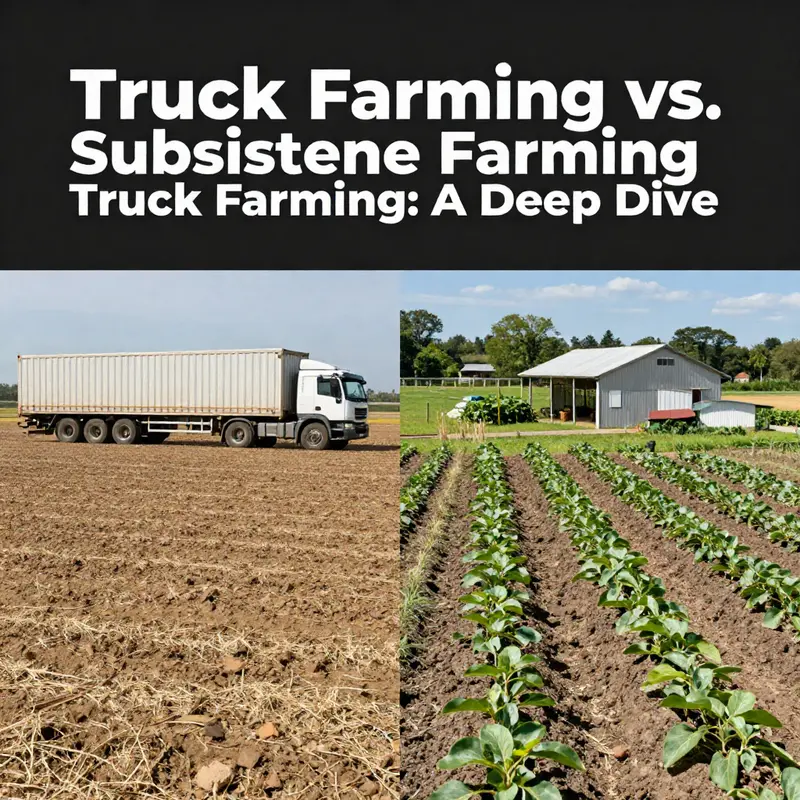
Truck farming, often referred to as market gardening, is a production model built around the rapid turnover of high‑value, perishable crops for sale in nearby urban markets. The farmer selects crops—such as lettuce, tomatoes, berries, or specialty vegetables—based on current consumer demand, price signals, and logistics constraints. Because the produce must reach market while still fresh, truck farms invest in efficient harvesting, packing, and transportation systems, and they frequently adopt technologies like precision irrigation, greenhouse extensions, and data‑driven market forecasting. The primary goal is profit: maximizing yield, quality, and speed to market while managing risks like price volatility and supply‑chain disruptions.
In contrast, subsistence farming is oriented toward self‑sufficiency rather than profit. The farmer’s primary objective is to produce enough food to feed the household and, in many cases, the local community. Crop choices are dominated by staple foods—such as rice, maize, tubers, or legumes—that provide reliable caloric intake. Production methods tend to be low‑input, relying on traditional knowledge, minimal external fertilizers, and simple tools. Because the output is consumed rather than sold, there is less pressure to meet external market standards or to respond quickly to price fluctuations.
The commercial nature of truck farming drives several distinct practices. First, market analysis becomes a core activity; farmers track consumer trends, seasonal price changes, and retailer requirements. Second, risk management tools—such as crop insurance, diversified planting, and forward contracts—are employed to protect income streams. Third, investment in infrastructure (cold storage, refrigerated transport, and direct‑to‑consumer sales platforms) is common to preserve product quality and reduce post‑harvest losses. Finally, branding and marketing efforts, including social media outreach and participation in farmers’ markets, are used to differentiate products and capture higher price points.
Subsistence farming, on the other hand, emphasizes resilience and sustainability. Farmers prioritize soil health, seed saving, and diversified cropping systems that can withstand climatic variability. Labor is typically family‑based, and the economic model is one of low cash flow but high food security. While some subsistence farmers may sell surplus produce locally, the scale is limited and not driven by profit maximization.
Both systems coexist within many agricultural landscapes, often influencing each other. Truck farms can provide local markets for surplus subsistence produce, while subsistence farms may adopt selective commercial practices—such as selling excess vegetables—to supplement household income. Understanding the divergent motivations and operational tactics of these two approaches is essential for policymakers, development agencies, and investors seeking to support sustainable food systems that balance economic opportunity with food security.
Revitalizing Rural Economies: How Truck Farming’s Commercial Model Fuels Growth and Innovation
Truck farming, a term that might at first sound like it involves freight and long-haul logistics, in fact refers to a vibrant form of commercial agriculture dedicated to market gardening. In this practice, farmers invest their time, resources, and expertise into cultivating high-value perishable crops destined for urban markets, making truck farming a quintessential example of a commercial enterprise that drives economic growth and community revitalization. The term itself—truck farming—derives from the notion of moving produce swiftly from fields to consumers, and it stands in stark contrast to subsistence farming, where the focus is on self-sufficiency rather than profit.
For many communities, truck farming has evolved into a dynamic engine of economic activity. The commercial nature of the enterprise is evident in the meticulous planning, investment, and continual innovation required to produce fruits, vegetables, and even ornamental plants that meet the standards of modern urban consumers. The focus on freshness and quality necessitates that these crops are grown in close proximity to rapidly expanding markets, ensuring that consumers receive their produce at peak ripeness while also enabling farmers to secure premium prices. This rapid turnaround not only elevates the status of truck farming within agricultural sectors but also amplifies its influence on local economies.
At its core, truck farming is about cultivating a resource that holds enormous market potential. Farmers often operate on a small plot of land, yet the intensive cultivation methods used enable them to produce large quantities of high-value crops. The commercial viability of truck farming is driven by quality, consistency, and the ability to adapt to changing market demands. This adaptability is bolstered by investments in modern farming techniques, including the use of advanced irrigation systems, climate-controlled greenhouses, and integrated pest management practices that allow for rigorous quality control and yield optimization. These technological advancements not only enhance the quality of the produce but also streamline operations, ensuring that each harvested crop contributes significantly to the bottom line of these farming enterprises.
One of the most compelling aspects of truck farming is its profound economic impact on rural communities. The commercial operations inherent in truck farming stimulate local economies by creating jobs, spurring growth in ancillary businesses, and encouraging investments that benefit entire regions. In many rural areas, the introduction and growth of truck farming have marked a turning point—transforming what once were struggling agricultural communities into bustling, economically stable regions. The ripple effects can be observed in the increase in employment opportunities, where labor is needed from the early morning hours during planting and harvesting to the later shifts at packing and distribution centers. This infusion of job creation not only benefits the immediate agricultural communities but also creates opportunities for neighboring towns, affecting the broader regional economy.
In addition to direct employment opportunities on the farms themselves, truck farming acts as a catalyst for support industries. Local suppliers of agricultural tools, irrigation equipment, and fertilizers benefit from a steady stream of business as farmers invest in the latest technologies to improve productivity. Similarly, agrochemical companies find a robust market in truck farming operations that demand effective and sustainable pest control solutions. The transportation and logistics sectors also play a crucial role, ensuring that the produce reaches urban centers promptly and efficiently, which is essential for maintaining the freshness that commands high market prices. The multiplier effect seen in truck farming is a classic example of how an innovative agricultural model can uplift an entire supply chain and stimulate economic activity at multiple levels.
Beyond the direct financial benefits, truck farming has been instrumental in the transformation of rural communities. Regions known for their fertile lands and favorable climates—such as certain parts of eastern Massachusetts—have experienced a renaissance driven by the commercial success of market gardening. Historical records reveal that truck farming not only introduced a steady flow of income into these areas but also helped to rejuvenate local infrastructures. Roads, local marketplaces, and even community institutions often receive a much-needed boost as economic winds shift in favor of commercial farming. The infusion of capital and modern agricultural practices has allowed these regions to reimagine their economic futures, attracting new investments and fostering an environment where innovation and tradition coexist to produce sustainable growth.
Another dimension of truck farming’s impact is its role in transforming the agricultural landscape through modern regulatory changes and evolving market demands. Over recent years, there has been an increasing trend towards organic certification and direct-to-consumer sales avenues. As consumers become more health-conscious and environmentally aware, the demand for organically grown, locally produced food continues to rise. In response to these market signals, many truck farmers have embraced organic farming practices, not only to meet consumer expectations but also to qualify for premium pricing. This strategic shift aligns with regulatory changes that encourage sustainable farming practices and support local food systems.
The modern regulatory environment, which now promotes initiatives like organic certification and community-supported agriculture (CSA) programs, is fundamentally changing the way truck farming operates. These changes open up new avenues for revenue generation. Farmers who achieve organic certification, for example, can market their produce at a higher price point and differentiate themselves in a competitive market. Furthermore, direct-to-consumer sales channels such as farmers’ markets and subscription-based box services have drastically reduced the number of intermediaries between the producer and the consumer. This not only results in higher profit margins for growers but also fosters a closer relationship between the farms and the communities they serve.
The ability of truck farming to create localized and efficient supply chains plays a crucial role in its economic sustainability. By minimizing the distance between farm and table, truck farmers help reduce the carbon footprint associated with long-distance food transportation—a pressing ecological concern in modern agricultural discourse. This commitment to sustainability, combined with economic self-reliance, ensures that truck farming remains a viable commercial enterprise even in the face of changing consumer tastes and stringent environmental standards. The synergy between sustainability and economic growth is perhaps most evident in how truck farming supports regional food systems, making local communities less dependent on global supply chains that are vulnerable to disruption.
While truck farming undeniably contributes immensely to localized economies, its influence is also felt on a broader scale. The concentrated efforts and innovations in these commercial farming operations have driven research and development in related sectors, including food safety, logistics, and even small-scale crop insurance schemes that provide farmers with a safety net during crop failures or market downturns. This integrated approach to commercial agriculture highlights how truck farming does not exist in isolation; rather, it forms a vital part of a complex economic ecosystem where every stakeholder benefits from shared growth and innovation.
Furthermore, the evolution of truck farming practices underscores a broader cultural shift. It represents the melding of tradition with modernity—a return to the roots of agriculture enhanced by scientific methods and regulatory oversight. As truck farmers harness modern technology to improve yields, they also maintain practices that honor local traditions. This blend of old and new is seen in the careful selection of crop varieties tailored to local tastes and in the use of time-tested methods that respect soil health while embracing new efficiencies. Community-supported initiatives and local cooperative efforts further amplify these benefits, fortifying the social fabric of rural areas and promoting a shared vision of prosperity and sustainability.
The commercial model that truck farming adheres to also provides an instructive case study in effective risk management and economic resilience. Diversifying crop outputs, adopting flexible production schedules, and staying abreast of evolving consumer trends are all strategies that help mitigate market risks. Moreover, the integration of advanced forecasting tools and data analytics has enabled truck farmers to predict market demands with greater accuracy, thereby optimizing planting and harvesting cycles to reduce waste and maximize returns. Such practices are vital in ensuring that truck farming continues to thrive amid economic fluctuations and unpredictable weather patterns—a challenge that is increasingly relevant in today’s era of climate change.
Beyond the immediate economic and operational considerations, truck farming also illustrates the transformative power of agricultural entrepreneurship. Farmers who venture into truck farming often display a high degree of innovation and an entrepreneurial spirit, continuously experimenting with crop varieties, production techniques, and sales channels to stay ahead in a competitive market. Their success stories, characterized by rapid adaptation and sustained growth, serve as an inspiration for small and medium-sized enterprises across various sectors. The lessons learned from truck farming—about scalability, market responsiveness, and efficient resource utilization—have far-reaching implications that extend well beyond the realms of agriculture.
In this interconnected economic ecosystem, the influence of truck farming extends into regional planning and infrastructural development. Investments in rural infrastructure, such as improved road networks, better storage facilities, and efficient distribution systems, are often stimulated by the growing demand generated by thriving truck farming operations. Such infrastructural improvements not only serve the needs of farmers but also contribute to overall regional development, making rural areas more attractive for additional forms of business and economic activity. The ripple effect of these developments is profound, fostering an environment where multiple sectors benefit from shared advancements in technology and logistics.
A notable aspect of truck farming is its capacity to create a sense of community and shared destiny among local farmers and residents. The collaborative nature of many truck farming ventures, which often operate within networks of cooperative associations and local farm groups, fosters strong bonds among those involved. This sense of community is further reinforced by the visible benefits that successful truck farming brings to an area—be it through the revitalization of a dilapidated market town or the creation of community spaces that celebrate local produce. The collective effort required to nurture and sustain a truck farming enterprise engenders a spirit of unity and shared pride, which in turn promotes economic and social cohesion.
While the commercial success of truck farming is indisputable, it is equally important to acknowledge the challenges that come with operating in an increasingly competitive market. Issues such as fluctuating market prices, the ever-present threat of crop diseases, and the complexities of supply chain logistics can pose significant hurdles. Yet, it is precisely these challenges that spur continuous innovation and adaptation among truck farmers. In response, many have embraced integrated solutions that involve collaboration with academic institutions for research and development, adoption of state-of-the-art farming equipment, and even participation in government-funded sustainability programs. Through these collaborative efforts, truck farming has consistently demonstrated its resilience and its capacity to adjust to changing market conditions while maintaining its commercial edge.
The overall narrative of truck farming, therefore, is one of constant evolution. It is a story that encapsulates how a traditional agricultural practice has reinvented itself to meet the demands of a modern, urbanized society. By focusing on high-value crops, leveraging innovative farming techniques, and aligning with contemporary market trends, truck farming stands as a paragon of commercial agriculture. Its impact on employment, local business growth, and regional infrastructural development underscores its significance as a driver of economic vitality.
Moreover, the lessons from truck farming serve to reinforce the importance of adaptability and strategic planning in agriculture. The commercial approach adopted by truck farmers is not static; it evolves in tandem with advancements in technology, shifts in consumer preferences, and changes in regulatory frameworks. This dynamic nature is what has allowed truck farming to remain competitive and even flourish amidst the challenges of modern agriculture. In many ways, truck farming epitomizes the spirit of innovation in agriculture—where tradition meets technology and where community-driven initiatives converge with market-oriented strategies to produce outcomes that are beneficial for everyone involved.
As the agricultural landscape continues to change, the story of truck farming is likely to offer valuable insights into how commercial farming strategies can be applied to a variety of agricultural contexts. The emphasis on localized production, rapid market response, and sustainable practices is not only relevant for truck farming but also offers a blueprint for other forms of commercial agriculture seeking to thrive in an era defined by rapid technological and economic shifts. Farmers and policymakers alike can draw inspiration from truck farming’s success, recognizing it as a model that integrates economic viability, social cohesion, and environmental stewardship into a unified approach.
In conclusion, truck farming represents a robust commercial enterprise that has catalyzed both economic growth and community revitalization in rural regions. From generating multifaceted employment opportunities and supporting a diverse network of ancillary businesses to transforming outdated rural infrastructures into vibrant economic centers, the impact of truck farming is extensive and multi-dimensional. Its focus on producing high-quality produce for urban markets, adherence to modern sustainability practices, and continuous drive for innovation mark it as a powerful and dynamic force in contemporary agriculture. For those wishing to delve deeper into the intricate economic structures, market trends, and historical significance of truck farming, further exploration can be found in the detailed study available at Economic aspects of truck farming and market gardening in eastern Massachusetts.
This comprehensive examination of truck farming reveals that its commercial orientation is not merely a matter of producing goods for sale but is emblematic of the broader transformative trends in agricultural practices. By harnessing the power of innovation, community collaboration, and strategic investments, truck farming has emerged as a beacon of how commercial agriculture can drive sustainable economic development and revitalization. Its continued evolution will undoubtedly yield further insights into the ways in which modern agricultural methodologies can bridge the gap between traditional practices and future technological advancements, ensuring that rural economies remain as dynamic and resilient as the communities they support.
Route to Profit: How Geography Shapes the Commercial Core of Truck Farming
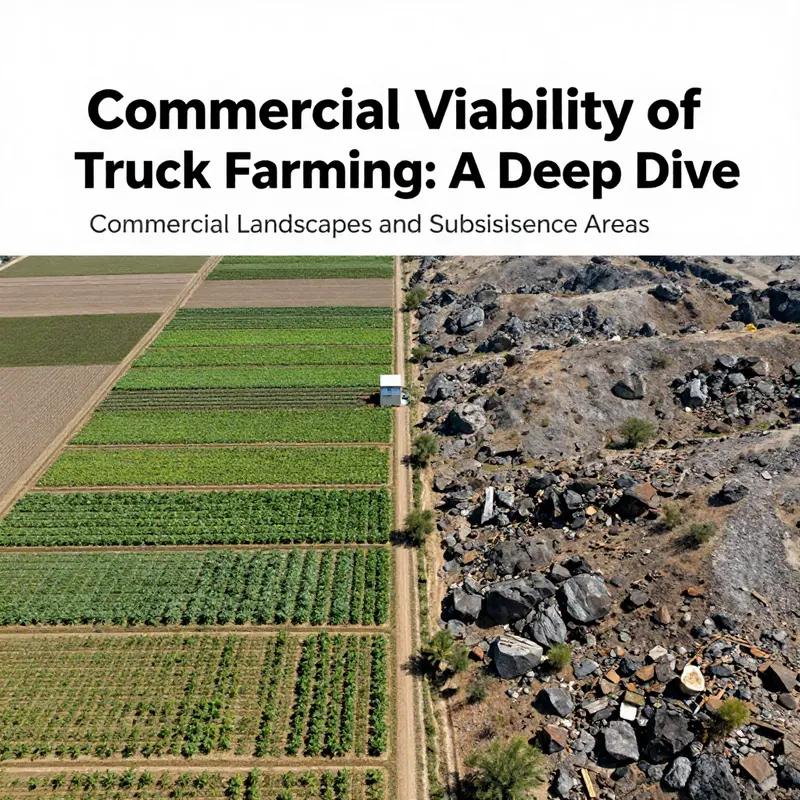
Truck farming, a term originally used to describe the cultivation of vegetables and fruits destined for markets, represents a fascinating blend of commercial enterprise and localized agricultural practice. Over time, this form of market gardening has evolved in response to both geographic and economic pressures. While it may seem that truck farming is simply a relic of a bygone era of small-scale market gardens, its very survival depends on a continuously shifting balance between location, infrastructure, and innovative logistical approaches. Central to the discussion is whether this type of farming can be characterized as a commercial venture or reduced to a practice of subsistence. A careful analysis reveals that geography plays a decisive role. The spatial setting—urban versus rural, developed versus developing—determines not only the productivity but also the economic viability of these operations.
In cities and near metropolitan hubs, truck farms have carved out a niche as high-efficiency producers of fresh produce. Farmers are strategically located in close proximity to urban markets, ensuring that their produce reaches consumers quickly while retaining its freshness and nutritional value. The reduced transit time from field to market is a cornerstone of the commercial success enjoyed by these enterprises. Urban areas, with their dense populations, offer a large consumer base. In addition, the bustling metropolitan landscape tends to attract more investment in modern infrastructure, such as controlled-environment agriculture systems. Facilities like greenhouses and hydroponic installations allow for year-round cultivation, even in regions with marked seasonal changes, thereby leveling the playing field in terms of supply consistency.
This proximity to markets brings with it manageable risk, especially when coupled with sophisticated transport and distribution networks. The development of these networks transforms the spatial relationship between the farm and the consumer, elevating it from a localized exchange to a more complex commercial operation. Farmers in urban and peri-urban areas routinely collaborate with distributors, retailers, and logistic providers to ensure that even the most perishable produce finds its place on the market shelves before it begins to deteriorate. These systems—a synergy of efficient transportation and rapid marketing—are foundational to truck farming’s classification as a predominantly commercial activity. By contrast, subsistence farming typically focuses on self-sufficiency and community barter rather than profit generation.
Yet, the influence of geography is not limited to urban centers alone. In rural and remote communities, truck farming takes on a different dimension. In these regions, farmers may adopt practices similar to those in commercial settings by growing surplus produce with the intention of selling locally or exchanging goods in nearby markets. However, several geographical challenges often necessitate adaptations. Limited road connectivity, sporadic electricity supply, and the absence of extensive logistics infrastructure typically hinder the scaling of truck farming into a truly commercial enterprise. Instead, these circumstances encourage innovative, low-cost solutions. In many rural settings, farmers have resorted to using cargo tricycles or small-scale vehicles that are well-suited for navigating narrow, unpaved roads. Despite their simplicity, these measures allow for the movement of produce from the field to market, albeit on a small scale.
Moreover, in these subsistence areas, the interplay between technology and tradition is especially noteworthy. New techniques, such as low-tech controlled environment setups that use natural ventilation and solar-powered irrigation, interlace with age-old practices of crop rotation and organic cultivation. These hybrid approaches underscore the adaptive nature of truck farming outside of urban boundaries. Even as the fundamental concept remains the same—growing produce for markets—geographical limitations force a shift in operating methods that can sometimes blur the lines between commercial and subsistence farming. Nonetheless, the overarching goal remains to generate income through the sale of produce, a pursuit that ultimately ties truck farming back to its commercial roots.
The evolution of truck farming is a narrative of adaptation. In commercial landscapes, particularly within urban clusters, farmers benefit from direct access to capital and modern technology. They utilize advanced transport solutions that drastically reduce the time from harvest to sale. For instance, innovative cargo tricycles, designed specifically for urban terrains and integrated into short-distance logistics strategies, have emerged as practical solutions in developing regions where road infrastructure might be lacking. Such technological integration not only accelerates the delivery process but also reduces spoilage, ultimately increasing the profit margins for farmers. This improvement in efficiency fuels the commercial aspect of truck farming, confirming that the model is robustly commercial in intent.
Skilfully blending time-honored agricultural practices with modern technological tools, truck farming in urban areas is increasingly seen as a sustainable solution to food security challenges. Sustainable practices in these settings focus on minimizing waste and optimizing resource use. Urban farmers deploy techniques aimed at reducing water consumption and utilizing recycled organic waste to produce natural fertilizers. These practices serve dual purposes: they cut operating costs and also appeal to a market that grows increasingly conscious about environmental stewardship. In these markets, eco-friendly produce can command premium prices, reinforcing truck farming’s place in the commercial sector. The continuous cycle of improvement—through technology, innovation, and sustainable practices—creates a positive feedback loop that propels the commercial viability of truck farming to new heights.
Even within well-developed urban areas, disparities exist. While some truck farming operations enjoy immediate access to bustling markets and modern support services, others may struggle with peripheral challenges. Urban sprawl, zoning regulations, and competition for land use can sometimes inhibit the expansion of commercial farming within city limits. The high cost of urban land necessitates a delicate balancing act for farmers trying to scale up their operations. In many cases, urban truck farms are nestled in transitional zones that blend residential, commercial, and industrial uses. The strategic management of these spaces requires an astute understanding of local policies, market dynamics, and spatial planning.
Farmers operating in these complex urban contexts must remain flexible. They often diversify their operations to include not only raw produce but also value-added products such as pre-packed salads, pickled vegetables, or artisanal preserves. This diversification acts as a buffer against market fluctuations and ensures a steady revenue stream. It also highlights the interplay between location and market strategy—the closer a farmer is to a densely populated market, the more feasible it is to experiment with innovative products. In this scenario, the geographical positioning of the farm becomes a primary asset, transforming what might otherwise be considered a risky venture into a stable commercial enterprise.
Rural truck farming, with its inherent challenges, requires a different set of skills and resourcefulness. In these communities, truck farming is often closely embedded within social and economic networks that have developed over generations. The relationships between local producers and consumers are based on long-term trust and mutual support. Despite limited technological advancement, these farmers have developed intricate systems of trade and barter that facilitate the movement of surplus produce into local markets. The slower pace of life in rural settings can sometimes lead to a more deliberate, measured approach to production and marketing. While the financial gains may not be as immediately striking as those in urban settings, the stability and communal trust inherent in rural truck farming can provide a solid economic foundation for small-scale operations.
A recurring theme throughout truck farming is the importance of market access. Whether in the heart of a bustling metropolis or in the more isolated expanses of the countryside, the ability to reach consumers is paramount. In urban centers, a robust network of retailers, restaurants, and local markets drives demand. Farmers here harness technology to manage supply chains that are both efficient and responsive to consumer needs. Conversely, in more remote areas the lack of formal market systems often compels farmers to form tighter community networks. These networks emphasize cooperation and shared resources, ensuring that produce is distributed even if not through conventional commercial channels.
One compelling example of how geography shapes truck farming can be found in regions where modern infrastructure meets traditional practices. In these transitional zones—where urban boundaries stretch into rural landscapes—farmers benefit from innovations that allow them to bridge the gap between commercial scale and local tradition. One valuable resource in navigating these challenges is the collective knowledge shared through industry networks and online platforms. For instance, insights on overcoming logistical hurdles can be found in detailed studies and analysis published by agricultural innovators. An internal discussion of logistical challenges in remote settings is captured in resources such as the article on bridging border barriers, which offers realistic approaches to managing the complexities of regional transport bridging border barriers meeting insights. Such references provide crucial context and actionable research findings for farmers operating on the fringes of commercial viability.
Modern technology remains a driving force in shaping the commercial aspects of truck farming. The ability to monitor crop health through advanced sensor networks, the use of data analytics to predict harvest yields, and the implementation of precision agriculture techniques have all contributed to refining the commercial focus of these farms. These technologies facilitate rapid decision-making and help farmers optimize their operations in real time. The integration of such innovations is particularly evident in urban areas, where the competitive pressure to reduce costs and maximize yields is most acute. Farmers in these high-density markets have increasingly embraced digital tools that allow them to fine-tune resource allocation and minimize waste. As technology continues to permeate agricultural practices, the commercial framework of truck farming is steadily reinforced.
While geography and technology converge to create a predominantly commercial model for truck farming, the tension between commercial and subsistence models remains a dynamic point of exploration. In many contexts, truck farming practices can resemble subsistence strategies, especially when implemented on a small scale in more isolated settings. These situations offer farmers an opportunity to experiment with hybrid models that merge the immediacy of local exchange with the aspirations of a broader market strategy. In such cases, the drive to generate surplus for sale coexists with the need to maintain self-reliance. The result is a complex, multilayered operational model that simultaneously honors traditional methods and embraces modern commercial techniques.
The economic implications are profound. The profitability of truck farming in commercial landscapes often relies on economies of scale. The ability to produce a large quantity of perishable goods within a compact timeframe significantly reduces overhead costs, despite the intensive labor and capital investment required. Proximity to urban centers often provides access to a more extensive labor pool as well as businesses specializing in storage and distribution. As a result, urban-based truck farms are better positioned to negotiate favorable terms and manage the inherent risks of agricultural production. This contrasts with more isolated operations, where small-scale efforts must work harder to achieve similar levels of efficiency due to higher relative costs associated with transportation and lower market access.
Many advanced commercial truck farms benefit from synergistic partnerships. In densely populated markets, farmers may work in collaboration with local retailers, food processors, and even technology firms that provide market intelligence data. The feedback obtained from these partnerships helps fine-tune production schedules, adjust crop varieties, and manage harvest cycles in ways that ensure a steady supply of high-quality produce. Such integration allows commercial truck farms to adapt quickly to shifting consumer preferences, seasonal variations, and unexpected market developments. The commercial orientation of these operations, therefore, is sustained not only by their physical location but also by their ability to interact dynamically with the broader economic ecosystem.
In addition to these market-driven aspects, the role of regulatory frameworks cannot be understated. Government policies and local regulations often influence the degree to which truck farming operations can flourish. In urban areas, supportive policies that encourage local food production and reduce bureaucratic hurdles can have a profound impact on the commercial success of truck farms. Investment in infrastructure, such as improved roads and modern storage facilities, further accentuates the advantages of proximity to urban markets. Conversely, in remote subsistence areas, regulatory environments may be less conducive to commercial expansion. Limited public investment and fewer incentives to upgrade rural infrastructure frequently impede efforts to scale up operations. Nonetheless, even in such challenging contexts, the entrepreneurial spirit of farmers often leads them to find innovative solutions that maintain the intrinsic commercial essence of truck farming.
Understanding the complex interplay of geography, technology, policy, and tradition is essential to grasping why truck farming is firmly positioned within the realm of commercial agriculture. Its foundational principle—cultivating perishable goods for sale—remains consistent across diverse landscapes. However, the operational dynamics vary markedly between urban centers and rural peripheries. In areas where proximity to a large consumer base, modern infrastructure, and favorable policies converge, truck farming transforms into an agile, profit-driven exercise. In these environments, the supply chain, from field to market, is streamlined through deliberate planning and technological innovation. The production process itself may become as much about managing risk and optimizing logistics as it is about growing crops.
At its core, truck farming exemplifies a model of agriculture where commercial imperatives override subsistence needs. The scale of operations, investment in technology, and focus on market connectivity collectively reinforce this identity. Even in instances where small-scale farmers adopt similar techniques on a limited basis, the primary intent remains the generation of surplus produce for sale rather than mere self-sufficiency. This commercial orientation is particularly evident when considering the broader economic landscape in which these farms operate and the evolving consumer demands within urban settings.
The landscape of truck farming today is a testament to a remarkable journey of adaptation and growth. Farmers continue to navigate challenges presented by diverse geographical settings and stately regulatory environments, often innovating beyond conventional paradigms to maintain viability. As urban centers edge ever closer to rural expanses, the geographic divide begins to blur, fostering an environment in which commercial truck farming can thrive even in less traditional settings. The sustained focus on commercial targets underscores truck farming’s critical role in providing fresh, locally-sourced produce to consumers, thereby cementing its place in the contemporary agricultural marketplace.
For those interested in exploring more about the influence of urban settings on modern agricultural practices, the Food and Agriculture Organization’s comprehensive analysis on urban agriculture offers in-depth insights and contextual understanding. Further details can be found via this external resource: Urban Agriculture Insights.
In conclusion, the geographical factors that underpin truck farming significantly shape its trajectory toward commercial success. Whether situated in urban zones with robust infrastructure and market systems or in more challenging rural settings where traditional practices complement modern techniques, the underlying drive is toward maximizing profit while ensuring produce remains fresh and highly marketable. The evolution of this practice, therefore, confirms that truck farming is fundamentally a commercial venture. The careful management of spatial dynamics, combined with an entrepreneurial approach to market connectivity, underscores the importance of geography in defining what truck farming is—and what it will continue to be—in the coming decades.
Final thoughts
In conclusion, truck farming is distinctly a commercial endeavor marked by its intention to generate profit through the sale of fresh produce, distinguishing it sharply from subsistence farming practices that prioritize self-sufficiency. The insights garnered through our exploration underscore the economic significance of truck farming and its role in shaping agricultural logistics. By understanding the geographical and operational nuances, stakeholders in logistics and delivery can better align their strategies with the agricultural sector’s demands, ensuring efficient supply chains and robust market presence.