
Navigating the complexities of compliance can be daunting for logistics and freight companies, construction and mining enterprises, and small business owners with delivery fleets. A critical aspect of this compliance involves obtaining a Department of Transportation (DOT) number for commercial trucks. This article delves into when and why commercial trucks are required to acquire a DOT number. It is essential for your operations, ensuring safety, legal adherence, and avoidance of potential penalties. Each chapter will explore specific requirements based on weight, passenger transport, hazardous materials transportation, and the consequences of non-compliance, equipping you with the knowledge to ensure your fleet meets regulatory standards.
DOT Numbers in Motion: Weighing, Passenger Loads, and Hazards that Trigger Commercial Truck Registration
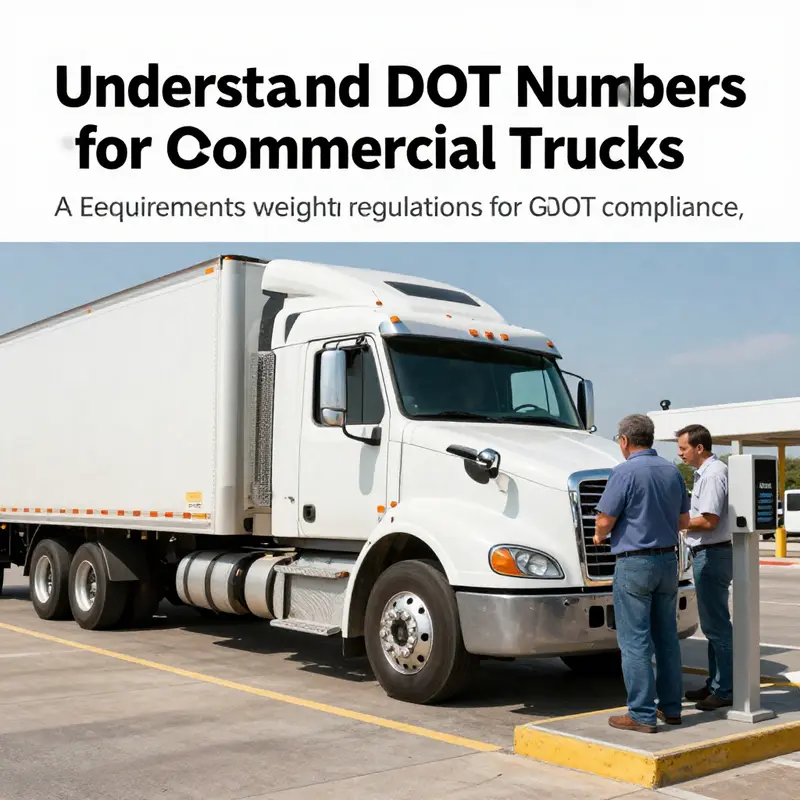
Registration and regulatory oversight in the trucking world hinge on a single, practical marker: the DOT number. It is not a badge of honor or a mere administrative formality. For carriers and drivers, the DOT number is the gateway to federal oversight, safety standards, and a predictable path through inspections, permits, and compliance checks. Yet the rules that demand a DOT number are not one-size-fits-all. They hinge on three core dimensions that customers, fleets, and even solo operators regularly misjudge: vehicle weight, passenger transport, and the carriage of hazardous materials. Together, these criteria create a framework that keeps the highway system functioning safely while preserving efficient commerce. To understand when a commercial truck must have a DOT number, it helps to follow how weight, occupancy, and hazardous materials play their roles in the broader regulatory story, and how those roles translate into real-world decisions for fleets of every size.
At the heart of the DOT number requirement is weight. A vehicle that carries a gross vehicle weight rating (GVWR) or a gross combination weight rating (GCWR) of 10,001 pounds or more falls squarely under federal registration for interstate commerce. The phrase “interstate commerce” matters because it separates activities that cross state lines or involve goods and passengers for compensation from purely intrastate work. A single heavy truck delivering across state borders, a tractor-trailer unit hauling cargo from one state to another, or a pickup with a heavy trailer used to move freight on a broader regional network—all of these scenarios commonly implicate DOT numbers. The weight threshold is not arbitrary; it aligns with the structural realities of highway safety, vehicle maintenance budgets, and the need for standardization in safety oversight. When a truck’s baseline rating exceeds that 10,001-pound line, the vehicle is expected to be registered, listed in the Unified Registration System (URS), and monitored under federal safety criteria administered by the Federal Motor Carrier Safety Administration (FMCSA).
To grasp how weight interacts with DOT numbering, imagine a carrier operating a single heavy-duty van integrated into a regional freight network. If that van’s GVWR sits at 11,000 pounds, and the operation involves moving goods for compensation across state borders, the company must consider obtaining a DOT number. The weight metric translates into a regulatory responsibility that follows the vehicle into every mile of interstate travel. The same logic applies to a truck-and-trailer combination with a GCWR above the threshold; the combination’s maximum potential weight, not the typical loaded weight on a given trip, determines the regulatory footing. This distinction matters when fleets plan their equipment purchases or refurbishments. A trailer with a curb weight plus a typical payload might transiently push a vehicle over the 10,001-pound line, even if the average load seems light. In those cases, the safety and compliance implications become real, and the need to register with the DOT becomes a practical obligation rather than a theoretical trigger.
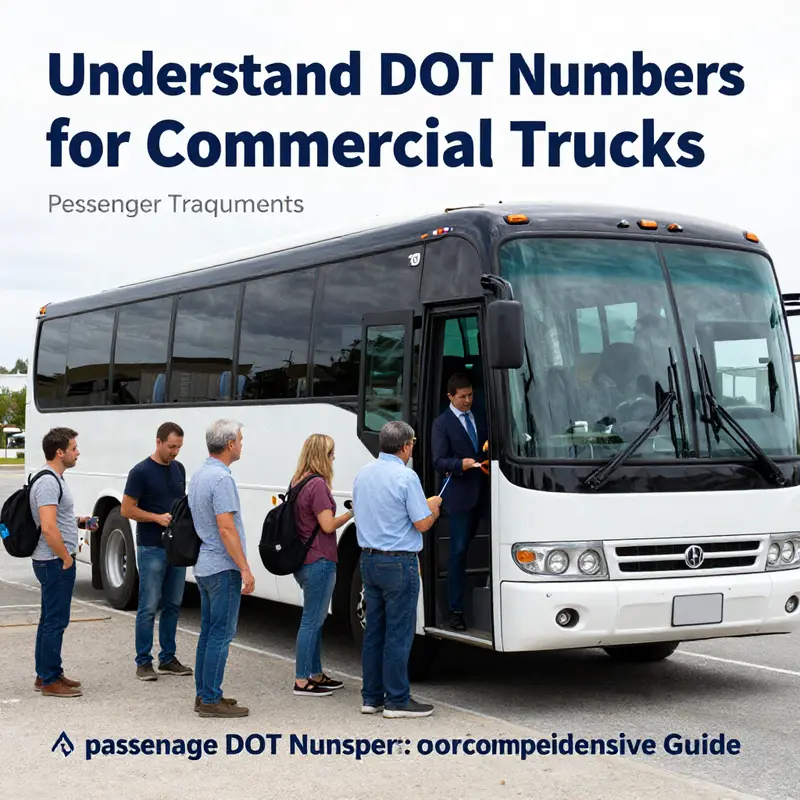
Beyond weight, passenger transport introduces a second, equally consequential threshold. The DOT framework considers not just goods but also people when reporting and regulatory coverage is involved. Vehicles that transport between nine and fifteen passengers, including the driver, for compensation fall under DOT-number requirements. This means a coach, shuttle, or passenger shuttle pulling a load for hire, even if its GVWR sits below the heavy line, may still require DOT registration because the operation involves people and compensation. The threshold expands further to sixteen or more passengers, with or without compensation. In these scenarios, the regulatory lens is even more pronounced, reflecting the safety implications of passenger transport—equipment standards, driver qualifications, hours-of-service considerations, and vehicle maintenance programs all align with passenger-carrying operations. The upshot is that the DOT number functions as a gateway to the FMCSA’s safety oversight for not only freight carriers but certain passenger services as well.
Hazardous materials introduce a third, critical axis for DOT registration. If a vehicle hauls hazardous materials that require a safety permit, the DOT number is required regardless of the vehicle’s weight. This rule recognizes the elevated risk profile associated with hazmat transport. Hazmat routes, packaging, labeling, handling, transport documentation, and emergency response requirements all rely on robust federal oversight, which in turn relies on the DOT number as a consistent identifier across jurisdictions. The safety culture surrounding hazmat is built on predictability and accountability, ensuring that carriers and drivers adhere to standardized procedures to minimize risk during loading, transit, and unloading.
Understanding these criteria—weight, passenger capacity, and hazardous materials—requires a broader view of how the regulatory apparatus operates. The FMCSA is the agency charged with enforcing these rules, licensing and monitoring carriers, and coordinating with state and local authorities to ensure penalties and corrective actions are applied consistently when necessary. Registration through the URS is not just a box to check; it is the formal mechanism that connects a carrier’s identity, equipment, and operating profile to federal safety standards. The URS serves as a central registry that allows FMCSA to track a company’s status, safety performance, insurance details, and the scope of operations. This centralized approach helps inspectors at roadside checks or audits quickly verify that a carrier’s number is valid and that the company’s fleet is aligned with federal requirements. The URS is not a one-time event, but part of an ongoing compliance cycle that requires periodic updates whenever there is a change in ownership, vehicle configuration, or the range of operations.
For operators, the practical questions that flow from these rules often come down to what to do when a vehicle is in a gray area. If a truck barely exceeds the weight threshold, does that mean immediate DOT-number registration? In most cases, yes, but the precise determination depends on the intended operations. Distinguishing between interstate and intrastate activity can be nuanced. A company may run a mix of operations—some intrastate within a single state, others crossing state lines for regional customers. The DOT-number policy is designed with that complexity in mind, but it does require careful attention to the nature of the service, the routing, and whether compensation is involved in any interstate movement. It is not unusual for a fleet to begin with intrastate work and expand into interstate routes as demand grows. In such situations, the DOT number becomes essential as soon as interstate commerce is initiated. The same logic applies when a fleet transitions from cargo-only to mixed operations that include passenger transport. Each shift of service type can trigger additional regulatory obligations, underscoring the importance of proactive planning and ongoing compliance management.
The process of obtaining a DOT number is more than a bureaucratic hurdle; it is a foundation for a compliant operating model. Registration under the URS requires company information, details about the vehicles, and an understanding of the scope of operations—whether the company intends to transport goods, people, or hazmat. For many carriers, the initial step is identifying the vehicles that will operate in interstate commerce and determining whether their GVWR or GCWR crosses the 10,001-pound line. From there, the operator considers whether any passenger-carrying services fall within the nine-to-fifteen or sixteen-or-more passenger categories and whether hazmat materials are involved. Each layer of consideration feeds into the registration decision, helping a carrier align its fleet, insurance, driver training, and safety programs with FMCSA expectations.
Once a DOT number is obtained, the work is far from finished. The DOT number must be maintained, updated, and renewed in response to changes in the company’s structure or fleet. A change in ownership, the addition or removal of vehicles, or a significant shift in the nature of operations requires corresponding updates in URS records. The FMCSA’s compliance framework relies on timely, accurate information so that safety data can be tracked and analyzed. When fleets fail to keep their URS records current, they risk sanctions that range from administrative actions to more severe penalties, including vehicle out-of-service orders during inspections and potential fines. Those consequences are designed not to punish for punishment’s sake but to ensure that safety standards, insurance coverage, maintenance practices, and driver qualifications remain aligned with the scope of operations.
In this landscape, the link between weight thresholds and DOT registration is not a mere formality; it is a practical, day-to-day decision-making tool. Operators who underestimate the significance of GVWR, GCWR, passenger thresholds, or hazmat requirements risk losing time and money on the road. A DOT-number misclassification can complicate dispatches, trigger unnecessary inspections, or create gaps in regulatory coverage that could affect insurance validity or carrier safety ratings. For small fleets and independent operators, the stakes are especially high: misreading a weight rating or overlooking a hazmat requirement can transform a routine shipment into a regulatory headache. Conversely, a well-understood framework allows operators to schedule maintenance and inspections, train drivers to meet the precise standards expected for their operation, and plan routes with the confidence that their compliance measures are in place and up to date.
As you chart the path from vehicle selection to interstate deployment, consider a few practical checks that help keep DOT-number obligations clear in daily planning. First, verify the GVWR and GCWR on the vehicle’s certification plate and manufacturer’s specifications. This step is essential because a fleet may own a vehicle with a high-rated chassis or a heavy trailer, but the actual operating weight on typical routes may not always reach the threshold. If there is any doubt, approach the question from the perspective of the vehicle’s maximum potential weight in the intended operating environment. If that maximum could reasonably push the vehicle into interstate, compensated transportation, or hazmat service, the DOT registration question becomes a necessary step. Second, map the business model against the thresholds for passenger transport. If a vehicle will routinely carry nine or more paying passengers, plan for DOT-number considerations that reflect the additional safety and driver qualification demands that accompany passenger service. Third, carefully assess hazmat transport plans. Even if the vehicle weight remains modest, the presence of hazmat shipments triggers a stricter regulatory regime, including special permits, training requirements, and ongoing compliance efforts.
All of these elements—weight, passengers, and hazmat—demonstrate that the DOT-number decision is not a static check but a dynamic assessment tied to the carrier’s operating profile. The end goal is a compliant, predictable, and safe operation that can withstand the scrutiny of roadside inspections and regulatory audits. In practice, a proactive approach is best. Carriers forecast their upcoming fleet needs, confirm how drivers will be qualified for the types of operations planned, and ensure that their safety programs cover the full spectrum of the DOT’s expectations. When a carrier understands how weight and use cases map to DOT requirements, the process of registration becomes a natural step in building a resilient business rather than a reactive hurdle during an audit.
For operators who are pursuing clarity on cross-border or multi-jurisdictional operations, a useful point of reference is the broader regulatory conversation that occasionally surfaces in industry briefings and professional groups. Communities and forums frequently discuss how to navigate complex regulatory overlays when operations span multiple borders, how to align fleet standards with diverse state-level requirements, and how to harmonize safety programs across different regulatory contexts. For readers who want to explore this facet further, one resource that offers context on cross-border regulatory issues can be found here: Cross-border regulatory issues event.
The voyage from a simple weight consideration to a full DOT-registered fleet is guided by established federal authority and practical, on-the-ground checks. The DOT number becomes a doorway to a comprehensive safety program, a standardized set of reporting requirements, and a registration record that travels with the vehicle across state lines. This structure supports not only federal oversight but also a smoother rhythm of operations for carriers that purposefully design their fleets to meet or exceed the safety expectations embedded in the URS system.
Ultimately, the decision to seek a DOT number is a decision to align with the federal framework that ensures consistent safety practices across a highly diverse and dispersed industry. It’s a decision that recognizes the weight and purpose of every vehicle, every route, and every load carried. It is a decision that keeps harbors of commerce moving—safely, predictably, and in a manner that can be trusted by shippers, drivers, insurers, and the public alike. And it is a decision that, once made, anchors a carrier in a system built to monitor, respond, and adapt to the evolving realities of freight and passenger transportation.
For additional guidance and official specifications on DOT-number eligibility, registration, and ongoing compliance, consult the formal resources provided by the Federal Motor Carrier Safety Administration. These materials offer authoritative details on how to determine the appropriate registration status, how to file for a DOT number, and how to maintain compliance over time. External resources provide the most current and comprehensive policy descriptions, which can help avoid misinterpretations that sometimes arise from secondary summaries or industry anecdotes. For official guidance, see the FMCSA site.
null
null
Hazardous Materials and DOT Numbers: When a Safety Permit Triggers Registration
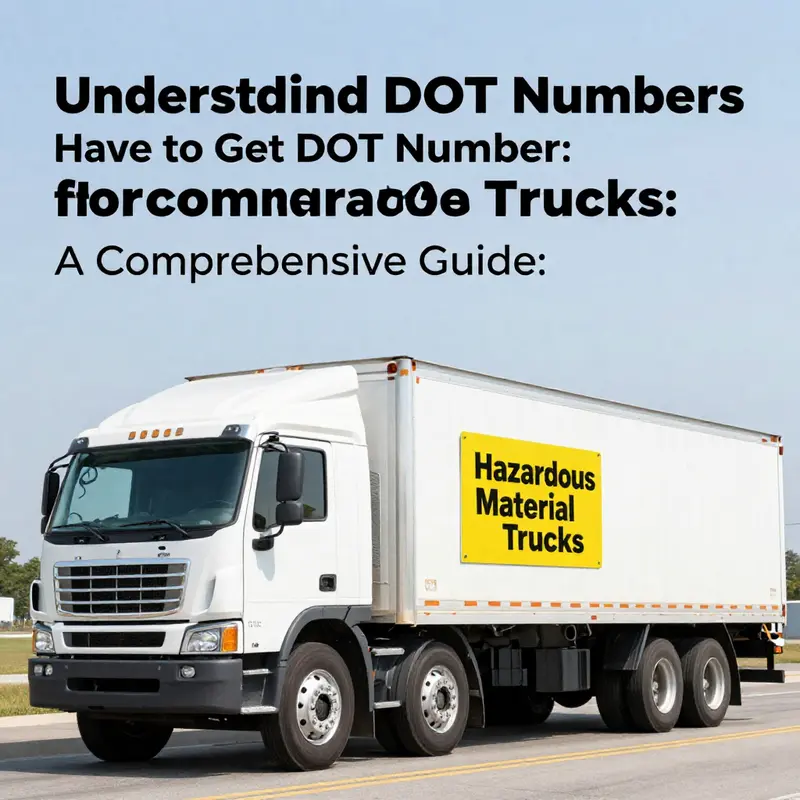
Hazardous materials create a special regulatory requirement for DOT registration. If a shipment requires a safety permit, the carrier must have a USDOT number and be properly registered with FMCSA to move hazmat in interstate commerce. The requirement is triggered not only by weight but by the need for a safety permit, and penalties for non-compliance can be severe. This chapter explains how hazmat permits integrate with DOT registration, the practical steps to obtain a DOT number, and the ongoing compliance obligations to ensure safe and lawful hazmat transportation.
Crossing the Compliance Threshold: When a USDOT Number Becomes Mandatory for Commercial Trucks and What It Means When It Isn’t
In the regulated world of commercial trucking, the USDOT number is more than a string of digits. It is a signal that a business has entered a system designed to monitor safety, accountability, and reliability across the vast network of roads and routes that connect states and, for many operators, nations. The question of when a truck must have a USDOT number isn’t a curiosity or a bureaucratic formality; it is a practical decision with consequences for operations, financing, insurance, and the reputation a carrier can build or lose. To appreciate the significance, it helps to trace the criteria that trigger the requirement, the logic behind those criteria, and the real-world implications when non-compliance slips into practice, whether by omission, misunderstanding, or deliberate avoidance.
Most trucking decisions revolve around weight, passengers, and the kind of cargo being moved. The first and most familiar trigger is weight. If a vehicle has a Gross Vehicle Weight Rating (GVWR) or a Gross Combination Weight Rating (GCWR) of 10,001 pounds or more, that truck is in the USDOT-number territory. In this simple threshold lies a broad swath of commercial trucking—from single-vehicle operations that haul heavy loads to multi-vehicle rigs that combine power to move freight across long distances. The moment a rig exceeds that 10,001-pound line, the regulatory clock starts ticking, and the carrier must be registered with the Federal Motor Carrier Safety Administration (FMCSA) and display a USDOT number on vehicles and in records. The urgency isn’t about stigma; it is about accessibility to legitimate operating authority, insurance coverage, and the ability of regulators to identify and oversee the operator in the event of incidents or audits.
But weight is only part of the picture. The regulatory framework recognizes that safety concerns aren’t limited to heavy trucks. Some operations involve hazardous materials, and those cargos demand a different kind of visibility and accountability. If a vehicle transports hazardous materials that require placarding, the USDOT-number requirement applies regardless of the weight rating. This provision acknowledges that the risk profile associated with hazardous materials is not strictly a function of how much the vehicle weighs. The placarding system is a visible, standardized signal to first responders and inspectors that special handling, routing, and emergency procedures may be necessary. The presence of placards creates a chain of safety obligations that a USDOT number helps manage, log, and verify. Carriers dealing with hazardous materials must be prepared to demonstrate compliance with hazmat safety requirements, training, and incident reporting as part of their ongoing regulatory exposure.
Another threshold centers on passengers. Vehicles used to transport people for compensation, or even for non-compensated transport under certain conditions, fall under USDOT oversight if they carry more than a defined number of passengers. Specifically, a vehicle that transports more than eight passengers (including the driver) for compensation, or 15 or more passengers (including the driver) regardless of compensation, triggers the need for a USDOT number. The passenger-carrying dimension reflects the safety and liability concerns inherent in mass transport. People share roadways in different ways, and when a vehicle shifts from moving freight to moving passengers, the regulatory lens tightens. The USDOT number in such cases is less a luxury and more a safeguard that supports consistent driver qualification files, hours-of-service tracking, and safety recordkeeping that are central to the FMCSA’s enforcement and outreach activities.
A further layer of complexity arises with interstate commerce. The FMCSA defines interstate commerce as transportation that crosses state lines for regulated goods, even if the vehicle itself would appear to stay within a single state for most trips. Interstate business has a higher level of oversight because it engages multiple jurisdictions, increases exposure to varying traffic environments, and expands the potential for systemic safety issues to ripple across borders. In practical terms, this means a carrier that engages in interstate transportation—whether the load is light or heavy, or whether it involves passengers or hazardous materials—usually falls under USDOT-number requirements. This interstate criterion ensures that carriers operating beyond a state’s boundaries can be tracked, audited, insured, and held to uniform safety standards.
The combination of these criteria means that a USDOT number is not a tool limited to large fleets. Small operators can quickly find themselves within the regulatory net if they cross a weight threshold, handle hazmat, carry multiple passengers for a fee, or operate across state lines. In some cases, a carrier might assume an exemption applies to intrastate operations only to discover that certain activities—such as cross-border shipments, multi-state routes, or hazardous-material movements—trigger the need for a USDOT number anyway. The practical takeaway is simple: if any element of the business could bring it under FMCSA oversight—heavy loads, hazmat, passenger transport, or interstate movement—the administrator’s desk keeps a file for that operator, and a USDOT number becomes the necessary credential to keep wheels turning.
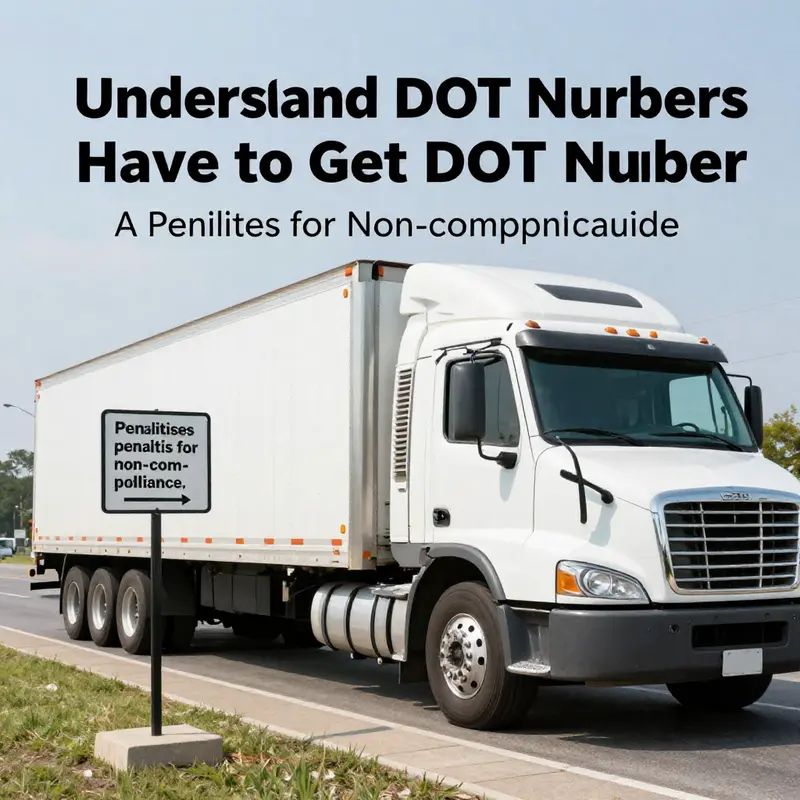
The consequences of non-compliance are not academic. Fines can reach up to $1,000 per day for operating without a required USDOT number. The consequences escalate quickly when regulators determine that a carrier is operating without the appropriate authority. Vehicles can be placed out of service, halting operations until the issue is resolved. The combination of fines and out-of-service orders creates a tangible financial risk: missed deadlines, rescheduled deliveries, and the cascading impact on customer relations and contractual obligations. Beyond the financial penalties, non-compliance invites a higher level of scrutiny—from safety audits to inspections—each adding time, cost, and uncertainty to a carrier’s operations. In a highly competitive trucking market, the reputational damage that can accompany an incident of non-compliance may outlive any short-term cost savings from avoiding registration, affecting customer trust, carrier capacity ratings, and access to insurance markets.
Inside this regulatory landscape, many operators find themselves asking practical questions about the process and timing of obtaining a USDOT number. The how is straightforward in principle but requires attention to detail. Carriers apply for a USDOT number through the FMCSA, typically via the FMCSA’s electronic registration system. The application collects information about the business—legal name, physical and mailing addresses, ownership, and type of operation. If the carrier is for-hire and operates across state lines, the application will often align with a Motor Carrier (MC) number and may involve more comprehensive safety and insurance information. Once the registration is approved, the USDOT number is assigned and must be displayed on the vehicle and in relevant business records. The timeline can vary. Some operators receive a number quickly, while others require additional documentation, especially if safety or insurance requirements are being scrutinized. The important practice is to begin the process before the business reaches the regulatory edge: don’t wait for a shipment delay or an inspection to reveal gaps in compliance.
Display and documentation matter as much as the registration itself. The USDOT number should be visible on the vehicle, typically on the cab door or the side of the trailer, so that inspectors can readily identify the operator. It should also appear on insurance documents and in the company’s internal records. This visibility is not merely about passing an inspection; it is about enabling safety and accountability in real time. Regulators can cross-reference the USDOT number with safety ratings, inspection histories, and incident records, helping to ensure that a carrier maintains the standards expected in modern transportation networks. For fleets that do a mix of heavy and light loads, passenger transport, hazmat routes, and cross-border shipments, the USDOT number becomes a single thread linking everything together—the safety culture, the compliance practices, and the operational data that fleets rely on to schedule, insure, and manage risk across hundreds or thousands of miles.
The practical realities of compliance extend beyond registration. Carriers should maintain up-to-date safety profiles, ensure hours-of-service compliance, invest in driver training, and implement robust safety management systems. The USDOT number is not a one-off badge; it is part of an ongoing relationship with regulators, customers, insurers, and the public. The cost of that relationship is felt not only in the annual renewal of licenses and insurance but also in the steady discipline of data integrity, recordkeeping, and transparent reporting. In this sense, the USDOT number becomes a baseline requirement that supports sustained reliability rather than a one-time hurdle to overcome before the next shipment.
As businesses map their regulatory obligations, they should recognize that the USDOT-number requirement can be a driver of strategic decisions. For example, a firm that anticipates growth through hazardous materials shipments or a fleet that plans to scale across state borders will benefit from integrating USDOT registration into the early stages of business planning rather than as a late- stage compliance after a contract is secured. The decision to register early creates a smoother path for fleet expansion, insurance procurement, and credit arrangements with lenders who often model risk based on regulatory status and safety history. In other words, the USDOT number is a foundational credential that informs the economics of trucking—costs, timelines, and opportunities—just as much as it determines legal permission to operate.
Navigating this landscape also means paying attention to the sources of information that keep a carrier compliant over time. The FMCSA maintains a wealth of data, guidance, and online tools designed to help operators understand their obligations and keep their records current. One widely used resource is the FMCSA SAFER (Safety and Fitness Electronic Records) System, which allows the public and regulated entities to access safety data, registration details, and information about a carrier’s compliance status. For operators, SAFER is a valuable checking tool—both to verify their own registration and to monitor their safety performance against evolving standards. For anyone who needs to verify a carrier’s regulatory standing, SAFER is the go-to public-facing portal that complements the internal recordkeeping and regulatory filings that keep a fleet compliant.
To connect these ideas to real-world navigation, many operators find it helpful to engage with broader regulatory conversations that touch on cross-border and multi-jurisdictional issues. Discussions around regulatory alignment, border readiness, and cross-border logistics often surface in industry forums and policy briefs. For readers who want to explore these themes in a broader context, a recent overview of cross-border regulatory issues offers a useful lens for understanding how USDOT-number requirements interact with other compliance demands in multi-state and international movements. You can explore these discussions at the event-focused hub provided by a recent cross-border regulatory issues gathering, which delves into how carriers adapt to changing rules, documentation standards, and enforcement priorities across jurisdictions. For more context on that discussion, see theResource linked here: cross-border regulatory issues event.
Of course, the path to compliance is not a static map; it evolves as industry dynamics shift, as new cargos emerge, and as enforcement priorities change. The FMCSA continually refines its guidance, and carriers should routinely review their status, update their registrations as needed, and verify with the SAFER system that their information remains accurate. The end goal is not simply to avoid penalties; it is to participate in a safety culture where every mile of highway travel is backed by consistent data, transparent processes, and a shared commitment to reducing accidents, injuries, and losses. In practical terms, this means that a carrier’s USDOT number should reflect active operations, current insurance, and complete safety programs. It also means that the business should be ready to demonstrate compliance during audits, inspections, or when a customer requests proof of regulatory status as part of the procurement process.
For operators who are building or expanding a fleet, the nuance is perhaps most important: understand the triggers, plan for the registration early, and integrate compliance into daily operations rather than treating it as a separate burden. A well-structured compliance posture reduces the risk of costly interruptions and fosters a more predictable operating environment. It also positions the carrier more competitively when bidding for freight—customers and brokers increasingly favor fleets that can demonstrate clear regulatory standing, robust safety practices, and transparent recordkeeping. When a USDOT number is part of the backbone of a business, it becomes a signal that the company has committed to the standard of accountability that the trucking ecosystem relies on.
As you assess whether a USDOT number is required for a particular operation, keep in mind that the specifics can be nuanced. Exceptions exist for some intrastate activities not crossing state lines and not involving hazardous materials or passenger transport; however, those exceptions are jurisdiction-dependent and may change with revised state rules or federal guidance. The most reliable approach is to perform a careful, documented assessment of every operation: does it involve interstate movement, hazardous materials, multiple passengers for compensation, or heavy GVWR/GCWR? If the answer is yes to any of these questions, the operation is typically within the USDOT-number framework, and timely registration is essential to avoid penalties and to support safe, compliant operations. The USDOT number, then, is less a destination and more a departure point—an initial step that opens the door to lawful, efficient, and credible trucking in a landscape where safety and reliability are the highest premiums.
In closing, the critical takeaway is straightforward: know the triggers, act early, and maintain accuracy. The USDOT number is a cornerstone of modern trucking compliance, enabling regulators to track safety performance, insurance coverage, and operational integrity across a carrier’s entire footprint. When your operation sits near one of the key thresholds—GVWR/GCWR of 10,001 pounds or more, hazardous materials needing placarding, passenger transport thresholds, or interstate commerce—the decision to register is not optional. It is the gateway to lawful operation, dependable service delivery, and a business foundation that can withstand the scrutiny that comes with scale. The cost of non-compliance, measured in fines, out-of-service orders, and reputational damage, far outweighs the time and effort required to obtain and maintain a USDOT number. For operators intent on sustainable growth, this is not simply a regulatory checkpoint; it is a strategic choice that aligns safety, accountability, and commercial viability in a market that rewards reliability as much as it does efficiency. The journey from awareness to registration is a straightforward one when approached with clear criteria, proactive planning, and a commitment to ongoing compliance that keeps freight moving and customers confident. For those who wish to explore the broader regulatory conversation linked to cross-border considerations, the discussion on cross-border regulatory issues event offers a valuable context for understanding how USDOT-number requirements fit within a larger framework of policy and practice across jurisdictions.
External resource:
For further information on the official safety and registration framework, consult the FMCSA SAFER System at https://safer.fmcsa.dot.gov.
Final thoughts
Understanding the requirements for obtaining a DOT number for commercial trucks is vital to ensure smooth operations in your business. Compliance not only avoids hefty penalties but also enhances safety and operational efficiency. By staying informed about the weight limits, passenger transport criteria, and specific regulations for hazardous materials, your organization can effectively navigate the complexities of DOT requirements. The importance of adhering to these regulations cannot be overstated; it forms the bedrock of a responsible and legally compliant transportation operation.