
Navigating the complexities of commercial insurance for hot shot trucking is crucial for logistics and freight company owners, construction and mining enterprise procurement teams, as well as small business owners managing delivery fleets. This guide demystifies the costs associated with hot shot trucking insurance, ensuring you understand the financial implications involved. The first chapter outlines the basic costs you should expect. The second chapter dives into the various factors influencing these costs, providing insights into how your specific situation can affect pricing. Following that, we will explore the different types of coverage essential for hot shot operations and how they impact overall expenses. Lastly, you will learn how to find the best rates that suit your unique needs, enabling informed decision-making to protect your business effectively.
Pricing the Risk: How Insurance Shapes the Economics of Hot Shot Trucking
Every decision a hot shot operator makes—what to haul, how far to drive, how to maintain equipment—pulls on a thread that winds through the cost of doing business. Insurance sits at the intersection of risk and economics, acting not merely as a shield but as a price signal that can alter routes, schedules, and even the pace at which a business scales. To understand how much commercial insurance costs for hot shot trucking, it helps to move beyond simple premium ranges and into the mechanics of risk assessment. The price you see on a renewal or an initial quote is not a single number pinned to a vehicle. It is the outcome of a careful weighing of cargo type, vehicle value, driving history, geography, and the scope of coverage chosen. While a general rule of thumb places basic commercial auto insurance in a narrow band—roughly a couple of thousand dollars up to several thousand dollars per year—the real story starts with the specifics of how you operate and what you carry. In hot shot work, where pickups and small box trucks ferry time-sensitive, often high-value freight, the coverage mosaic becomes more complex than in standard towed or full-size fleet operations. You will typically see several layers: liability, which is required; physical damage, including collision and comprehensive; and cargo, which protects the freight itself. If your cargo includes high-value equipment, machinery, or hazardous materials, the premium can tilt higher because the risk profile shifts. If you operate modestly, with a lighter load and shorter trips, you can often land toward the lower end of the spectrum. The balance point is found where the risk you pose, and the risk you carry, meet the limits you choose. The structure of the insurance is as important as the number on the quote. Liability coverage, for example, is a baseline necessity in most states, serving as the financial backstop for bodily injury and property damage you might cause to others. Physical damage coverage protects your own vehicle from the consequences of collisions, vandalism, weather, or other perils. Cargo insurance, which is especially important in hot shot work given the high value or specialized nature of some freight, can distinguish a business from a liability-limited operator. The costs of these components compound when you add the regulatory and compliance layer that accompanies hot shot operations. State requirements can vary, and some jurisdictions impose additional reporting duties, safety audits, or insurance-related obligations for operators who employ drivers. In Washington State, for instance, operators must navigate a framework that includes workers’ compensation for employees, trucking-specific reporting, and the possibility, for some operators, of self-insuring under state rules. Self-insurance is not a default option; it requires meeting stringent financial criteria and ongoing quarterly reporting. The administrative burden can be as much a cost driver as the premium itself, because it translates into more time and personnel dedicated to compliance. These realities matter when you’re budgeting for insurance. They matter when you’re negotiating with a carrier. And they matter when you’re planning growth, because a change in fleet size, cargo mix, or miles traveled can shift your risk profile enough to move you to a different pricing tier or coverage package. In practical terms, a driver hauling heavy equipment or hazardous materials might confront higher premiums not only due to the hazard itself, but because the exposure increases the likelihood of a claim and the size of potential losses. Conversely, a smaller operation with a modest cargo base and a clean driving record generally enjoys more favorable terms, all else equal. Insurers place heavy weight on the driver’s experience and record. Years behind the wheel, a clean accident history, and a disciplined safety record can translate into lower rates. In many regions, personal credit scores play a role, subtly shaping premium offers through risk models that consider the borrower as a broader indicator of financial responsibility. These factors are not mere inputs in a spreadsheet; they are manifestations of risk management in practice. For operators who want to understand the cost trajectory, the best approach is to start with a detailed profile of how you work. Questions to ask yourself include: How valuable is my cargo, and how well can I document its value? What is the typical distance I drive, and what is the reliability of my routes? Do I have a clean driving history, and how long have I been operating legally and safely? Do I employ staff, or am I a solo operator? What state-specific requirements apply to me, and how do I fulfill them? Answers to these questions enable a baseline quote and a roadmap for reducing costs over time. The relationship between risk and premium is not static. It shifts with market conditions, regulatory changes, and the availability of specialized coverage that recognizes the particularities of hot shot work. As the market fluctuates, the range people observe in practice can drift. The broad estimate of two to six thousand dollars annually for basic coverage remains a useful starting point, but it is not a guarantee. It reflects an aggregate across many operators and fleets with diverse profiles, not a one-size-fits-all law. When you engage with insurers, you may find that the same cargo and the same vehicle can yield different quotes from different carriers, simply because each insurer’s risk models weigh data differently. This is why gathering multiple quotes is not just prudent; it’s part of the price discovery process. It also helps illuminate what factors a carrier values most for your operation—distance, cargo type, vehicle age, or driver training—and where you might gain leverage by adjusting your risk profile. The quality of your documentation matters. A well-maintained logbook, up-to-date vehicle maintenance records, and clear cargo handling procedures not only reduce the probability of a claim, they also demonstrate to underwriters that you take risk management seriously. Safety programs that include driver training, regular performance feedback, and incident review can tilt the scales in your favor. In short, insurance for hot shot trucking is a dynamic blend of coverage, compliance, and risk management. You pay a price for the risk you carry, you secure protection against the losses you could incur, and you build a framework that can enable you to grow with confidence. If you want a concrete sense of how pricing plays out in the real world, consider how the landscape has evolved in response to shifting market conditions and regulatory demands. The price you pay for peace of mind is intimately connected to the way you run your operation, how you document it, and how you engage with insurers who understand the niche of hot shot work. For operators who want to frame their thinking in terms of strategy rather than arithmetic, a useful touchpoint is to reflect on the broader market dynamics that influence costs. The ongoing dialogue between supply and demand for trucks, the cost of parts and maintenance, the availability of drivers, and the evolving rules around safety and compliance all feed into an insurance price that is both a reflection of today’s risk and a forecast of tomorrow’s uncertainty. In practice, you can approach quotes as a negotiation anchored in data. Collect and organize your mileage logs, cargo manifests, maintenance records, and safety training certifications. Present a coherent story to underwriters about how you operate, what you haul, and how you manage risk. Ask for explanations about what drives differences in quotes from carrier to carrier. Does a higher deductible reduce premium? Does bundling auto and cargo coverages yield a discount? Are there add-ons, such as contingent liability or non-owned trailer coverage, that you should consider given your particular operations? The answers will vary, but the act of asking and comparing drives smarter decisions and potentially lower long-term costs. One practical implication of this framework is the realization that insurance is not merely a one-time purchase but a recurring component of cost management. Premiums will renew annually, and changes in your fleet, your routes, or your cargo mix can necessitate re-bidding or reconfiguring coverage. In hot shot trucking, where time is money and risk is embedded in every mile, being proactive with pricing becomes a strategic capability. For many operators, working with a specialist who understands the regulatory and risk nuances of hot shot operations yields meaningful benefits. Such providers can help you translate the specifics of your operation into coverage that aligns with regulatory expectations while avoiding unnecessary costs from over-insurance or gaps in protection. As you navigate the pricing landscape, it can be helpful to connect your insurance strategy with broader business considerations. If you anticipate expanding your service area, increasing weekly miles, or transitioning from owner-operator to a small fleet, start evaluating how those changes translate into new coverage needs and premium implications well before you scale. The objective is not simply to minimize price at the point of sale, but to align protection with growth, cash flow, and service commitments. A thoughtful approach to insurance also reinforces reliability in the eyes of customers and lenders. When you can demonstrate that you maintain robust coverage and adhere to safety and regulatory standards, you strengthen your credibility as a partner in supply chains that demand dependability and accountability. Throughout this process, it can be useful to stay connected with industry analyses that illuminate how other operators are adapting to market shifts and regulatory developments. For example, the broader conversation around trailer market dynamics and how manufacturers adapt to changing demand can offer valuable context for the price and availability of equipment, which in turn influences insurance considerations tied to asset value and depreciation. Trailer Market Crisis and Adaptation Strategies provides a snapshot of how macro shifts ripple through the risk landscape of trucking. Beyond this, a disciplined, rules-driven approach to pricing remains the most reliable path to sustainable insurance costs. In practice, that means maintaining clean records, investing in maintenance, and building strong driver safety cultures. The long arc of cost efficiency comes not from chasing lower premiums alone but from reducing the likelihood and magnitude of losses. When a claim does occur, the recovery is easier if you have clear documentation, cooperative communication with your insurer, and a prepared incident response plan. The operational payoff of this discipline is measured not only in dollars saved on a premium but also in the resilience of your business during market fluctuations, regulatory changes, or unexpected disruptions. For hot shot operators who want to ground their budgeting in credible data, a practical takeaway is to treat insurance as a strategic lever. Estimate a baseline premium using the typical range for basic auto coverage, then layer in cargo and physical damage according to cargo value and vehicle age. Add a risk-adjusted buffer for state-specific requirements and for the potential of self-insurance where applicable. Finally, weave in a risk-reduction premium—lower if you can demonstrate lower incident rates, better maintenance practices, and stronger training programs. In sum, the cost of commercial insurance for hot shot trucking is not a fixed figure but a reflection of how you negotiate risk, manage assets, and position your business for growth. The right coverage balances protection with cost, enabling you to fulfill delivery promises while preserving cash flow and pursuing opportunities across your service area. For operators who want to translate this understanding into actionable steps, the path is clear: prepare detailed operational data, seek multiple informed quotes, invest in risk-reducing practices, and leverage coverage structures that align with your cargo profile and regulatory obligations. The conversation about insurance costs is ultimately a conversation about risk tolerance, business strategy, and the kind of reliability you want to offer your customers. External resources on how insurers and regulators shape pricing can provide additional clarity as you refine your approach to risk and investment in your hot shot operation. External resource: https://www.cnsinsurance.com
Pricing the Risk for Hot Shot Truckers: How Cargo Value, Driver History, and Route Realities Shape Commercial Insurance Costs
The question of what commercial insurance costs for hot shot trucking rarely settles on a single number. Instead, the price reflects a mosaic of risk factors that insurers weigh as they translate a driver’s day-to-day realities into a premium. For many hot shot operators, the starting point remains a broad range—roughly two thousand to six thousand dollars per year for a basic commercial auto policy. That ballpark typically covers the core protections most hot shot specialists need: liability coverage, which fulfills legal obligations in most jurisdictions; physical damage coverage, including both comprehensive and collision options; and cargo insurance to safeguard high-value or specialized freight. Yet within that framework, the exact figure varies with cargo, history, equipment, routes, and the coverage limits chosen. Understanding how these elements interact creates a practical map for managing costs without compromising essential protection.
Cargo is usually the most visible signpost of risk for an insurer. Hot shot work often revolves around time-sensitive freight, from heavy construction equipment to delicate electronics or medical supplies. The higher the cargo value, the greater the potential tail of loss in the event of an accident or theft, and that tail translates directly into higher premiums. It is not just the raw value that matters; the nature of the cargo informs risk management requirements. Hazardous materials, for example, carry special handling protocols and exposure to stricter regulatory regimes, both of which heighten risk for an insurer. When you carry top-tier cargo, you may also be asked about loss history, packing methods, secure chaining practices, and cargo-specific safety plans. For some operators, adding cargo insurance becomes essential to round out the policy, and those protections add to the all-in price, especially when the cargo has to be transported under time constraints that force rapid loading and unloading. This is one of the core reasons why two operators with similar trucks can end up with noticeably different totals—one moving lower-value loads with careful packaging, the other handling high-value, sensitive gear that demands additional coverage and tighter risk controls.
A second pillar of cost is the driver’s record and experience. A long track record of clean driving—no accidents, no violations, no claims history—sends a signal to underwriters that the operator presents a lower risk. Conversely, even a handful of violations, a recent crash, or a history of claims can push premiums higher. Insurers also consider the operator’s age and level of professional training. Years behind the wheel paired with formal safety programs can unlock discounts that reflect a lower probability of future incidents. Some insurers also examine credit history as a proxy for financial responsibility and reliability, which can further tilt pricing. The practical upshot is clear: steady improvement in driving behavior and a record of safe operation can compound into meaningful savings over time, making a plan for ongoing safety training and performance tracking a smart investment beyond the immediate premium relief.
The vehicle itself is another critical determinant. Newer trucks equipped with modern safety features—such as collision avoidance systems, backup cameras, and electronic stability control—tend to be viewed as lower risk by many underwriters. These features mitigate the likelihood or severity of accidents, which translates into lower rates. Older vehicles, especially those with a history of mechanical issues, can drive premiums up as the probability of a breakdown or a costly repair rises. In practice, a well-maintained fleet that embraces preventative maintenance schedules and proactive inspections often garners a favorable rating, even if the vehicle’s age is not cutting-edge. It is not just the age; it is the overall state of readiness. Regular maintenance logs, timely repairs, and modern safety retrofit upgrades can signal responsible stewardship and help justify a leaner price over the life of the policy.
Routes and distances traveled address the exposure side of risk—how often and where you operate. A hot shot operator who primarily runs within a compact geographic area may face a different risk footprint than someone crossing multiple states or moving repeatedly through high-traffic corridors and regions known for severe winter weather, theft, or higher accident rates. The longer the trips and the more states involved, the greater the probability of incidents, paperwork, and regulatory scrutiny, all of which shape the premium. Frequent cross-border or cross-region work adds another layer of complexity, potentially inviting specialized coverage considerations and endorsements that come with a higher price tag. Insurers also weigh seasonal variability: peak demand periods may correlate with increased freight activity and, occasionally, with spikes in certain kinds of risk, such as weather-related disruptions. Those dynamics help explain why someone who runs tight routes with consistent conditions might pay less than a counterpart whose schedule features longer hauls through more volatile markets.
The choices you make about coverage limits and structures are the fourth major axis of cost. The baseline policy typically includes liability, physical damage, and cargo, but the exact per-occurrence limits, aggregate caps, and endorsements can swing the numbers considerably. Higher liability limits, for instance, protect against larger financial exposures from bodily injury or property damage claims, but they also raise monthly or annual payments. Likewise, full physical damage coverage—comprehensive plus collision—offers broader protection against risks like theft, vandalism, and weather damage, yet it is pricier than partial coverage. Cargo insurance can add a meaningful premium if you carry expensive freight or a high-volume payload that does not fit standard risk models. Endorsements such as non-owned vehicle coverage, hired autos liability, or contingent cargo insurance further tailor the risk profile but add to cost. The takeaway is that the cost is not merely a function of one factor but the totality of protective layers you elect to include. A conservative approach with higher limits will inevitably cost more, but it also better positions you to absorb a major loss without jeopardizing business continuity.
These dimensions—cargo value and risk, driver history, vehicle condition, route exposure, and coverage architecture—interact in nuanced ways. For example, a seasoned operator who runs high-value, time-sensitive loads but keeps a modern, well-maintained fleet and restricts routes to familiar terrain can achieve a premium that sits toward the lower end of the general range. In contrast, a newer driver with a mixed record, an aging truck, and a plan to haul high-risk loads across long distances could see premiums cluster toward the higher end, or even rise above the typical band, depending on the insurer’s assessment and the precise endorsements selected. Understanding these dynamics helps hot shot operators set expectations and build a pricing strategy that aligns protection with risk management. It also underscores why mid-year changes to cargo types, routes, or maintenance practices can prompt a re-quote from insurers.
From a practical standpoint, the pricing story is not only about what you carry but how you carry it. A thoughtful risk management program becomes part of the price conversation. For instance, operators who deploy telematics to monitor speeding, hard braking, and idling can demonstrate a proactive stance on safety. Regular safety training for drivers, documented pre-trip inspections, and a robust incident response plan also signal to underwriters that you take risk seriously. These elements may translate into discounts or more favorable terms as you align premium pricing with demonstrated responsibility. Negotiating is not merely about pushing for a lower rate; it is about presenting a coherent risk profile that justifies the protections you need while showing that you are actively reducing the probability and consequence of losses.
As you navigate the process of obtaining coverage, it helps to recognize that quotes can vary widely from one insurer to another, particularly in a specialized niche like hot shot work. Some underwriters are familiar with the unique mix of high-speed, high-value freight and the often agile, small-business nature of hot shot operations; others are more conservative in their appetite for risk. This variation is another reason to shop broadly and to compare not just price but service quality, claims handling, policy terms, and the speed with which you can obtain endorsements or adjust coverage as your operation evolves. It is reasonable to expect different insurers to present different pricing structures based on how they segment risk, what data they rely on, and how they weigh factors like cargo type or driver training requirements.
When it comes to actionable steps you can take today, start with a clear inventory of your operation. List the cargo types and their values, your typical routes, vehicle ages and maintenance histories, and any safety programs you currently deploy. Reach out to multiple providers, ideally those specializing in specialty trucking or hot shot operations, to solicit tailored quotes and to understand which endorsements will be essential as your business grows. If your operation crosses borders or involves shipments through states with distinctive regulatory environments, you may find value in exploring resources that discuss regulatory considerations and risk mitigation strategies relevant to cross-border work; a resource such as the Bridging Border Barriers meeting insights page can offer context on how policy and enforcement dynamics might influence risk perception and insurance needs in a nuanced way. Bridging Border Barriers Meeting Insights.
Beyond this immediate practical approach, it is useful to keep a long view on how insurance costs evolve as your business matures. The most reliable way to manage the cost of coverage is to reduce risk, not just price. By investing in newer or better-maintained equipment, instituting formal safety and maintenance protocols, and ensuring licensing and certifications are up to date, you lay a foundation for healthier insurance economics over time. The presence of a fleet safety program can transform a potentially adverse pricing scenario into a more predictable one. It is also prudent to align your coverage with realistic business needs. For example, if you carry relatively small, low-value loads and operate locally, you might prioritize essential liability and basic cargo protections, while still maintaining adequate physical damage coverage for security. If your operation expands into heavier, more valuable freight, or if you begin to operate over longer routes or through higher-risk areas, you can incrementally adjust coverage in a way that mirrors actual exposure. This staged approach can help you avoid overpricing early in your growth curve while ensuring protection scales with your risk.
As you prepare to engage with insurers, keep in mind that the ultimate price is a reflection of both your current risk profile and your intended trajectory. A policy that truly supports your business should balance affordability with certainty. It should cover the critical exposure—bodily injury and property damage, cargo loss, and the economic impact of a protected asset mishap—without forcing you into decisions that compromise safety or reliability. The end game is not merely a lower monthly payment; it is a stable platform that allows you to operate with confidence, knowing you have solid protections in place even as you pursue more ambitious freight opportunities. For deeper background on how insurance pricing is framed in the broader market, consult the National Association of Insurance Commissioners’ overview of commercial insurance concepts, which provides a technical context for these dynamics: https://www.naic.org/corporatefiles/insurancetopics/commercialinsuranceoverview.pdf. The guidance in that resource complements the practical steps outlined here and reinforces the principle that informed risk management remains at the heart of sensible insurance budgeting for hot shot trucking.
Beyond Premiums: How Insurance Coverage Types Shape the Cost Landscape for Hot Shot Trucking
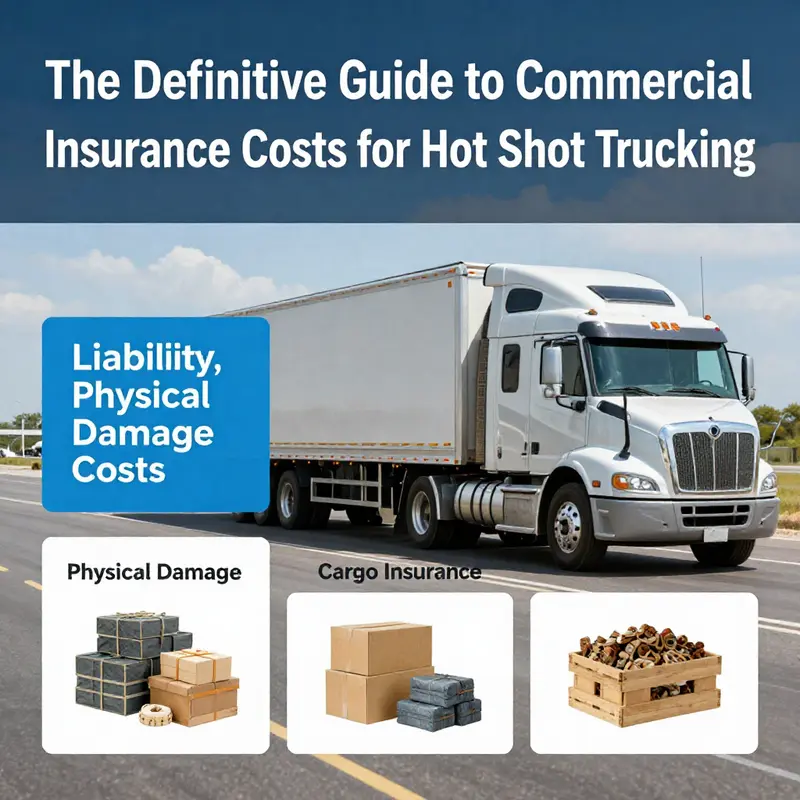
Hot shot trucking sits at the intersection of speed, reliability, and risk. The very nature of hot shot work—rapid deliveries of time‑sensitive loads using smaller, nimble trucks—means the costs of keeping a truck on the road extend far beyond fuel and maintenance. Insurance is one of the largest, most visible line items in an operator’s operating budget. Even within a single niche, the price you pay can swing widely based on how you design your coverage, what you haul, where you drive, and how you manage risk day to day. For many hot shot operators, basic, baseline coverage falls in a practical band of roughly two to six thousand dollars per year. That range is a general guide for a lean, essential package, but it is not a ceiling. The actual bill is a product of a layered system of coverages, each with its own purpose, costs, and trade‑offs that directly influence profitability and peace of mind on the road.
Far from being a single policy, the core of hot shot insurance rests on a set of interlocking protections. The first line is liability insurance, the fundamental shield that protects a business when it is at fault for bodily injury or property damage during a shipment or while performing duties related to the load. Liability is not optional in most states; it is the baseline that keeps a business from absorbing bankruptcy‑level claims after a serious accident. In practice, underwriters commonly frame coverage in tiers—one million per occurrence, two million, or higher—reflecting both the risk profile of the operator and the value at stake in the loads carried. For hot shot operators, higher limits are often prudent because time‑sensitive deliveries frequently involve higher speeds and more complex, congested urban routes where the chance of an incident escalates. The premium you pay for higher limits is not a mere line item; it’s a measure of the risk buffer you’re buying to protect future earnings.
A second essential layer is physical damage insurance, which covers the truck itself when it sustains damage in a collision, or when theft, vandalism, or natural events injure the asset. The cost of this coverage is tightly tied to the vehicle’s value, age, and equipment configuration. A newer, higher‑value hot shot rig will carry a higher collision and comprehensive premium than a plainer, lower‑value setup. Deductibles play a crucial role here: choosing a higher deductible lowers the annual premium, but it increases out‑of‑pocket costs if a claim arises. That trade‑off matters because hot shot operations often keep varied equipment in active rotation and may park in parking lots that feel convenient but introduce unpredictable exposure. When you weigh the decision, you’re not just deciding how much risk you want to absorb; you’re deciding how quickly you can react to a major incident without pinching cash reserves or disrupting service to clients.
Cargo insurance, sometimes grouped under Inland Marine coverage, is the third pillar of protection and perhaps the most freight‑specific. It protects the goods while in transit, including loading, unloading, and during any transfer between modes if applicable. For hot shot operators, cargo can range from electronics and medical supplies to industrial parts and heavy equipment. The value and volatility of the cargo—and thus the risk of loss or damage—drive this premium. High‑value or specialized loads command higher cargo limits and tighter coverage terms, while simpler or lower‑value shipments might justify more modest limits. Because cargo risk is so load‑dependent, it often requires more precise underwriting than other coverages. A policy that sits idle for weeks but suddenly carries a high‑value load can look inexpensive at a glance, only to reveal its true cost when the premium for that cargo tier is added. The benefit, however, is straightforward: cargo insurance spares the operator from bearing the full cost of replacement or repair, which could otherwise threaten financial stability and the ability to secure future contracts.
Another layer—though sometimes overlooked by new entrants—addresses non‑trucking liability. This coverage protects the operator when the vehicle is used for personal purposes or non‑work activities. Standard commercial liability sometimes excludes such use, leaving a gap that could expose the owner to claims arising from a weekend trip or a detour to a family event. Non‑trucking liability fills that gap, ensuring the business still has protective coverage during non‑work miles. It is a small but meaningful component in a comprehensive protection plan, particularly for owner‑operators who move between job sites, shop, and home with the same vehicle.
Hired auto liability follows closely, covering situations where the operator rents or leases a vehicle for business use. In hot shot operations, sometimes a load requires a rented or leased vehicle for a short period, or a subcontracted driver operates a vehicle that isn’t owned by the business. Hired auto liability ensures that the business remains protected even when the vehicle in use is not a permanent asset. This coverage prevents a vendor, partner, or temporary operator from triggering an unanticipated financial exposure in the event of an accident. For many hot shot operators, this becomes a cost of doing business when the project or client demands a specific capacity or a second crew, and it helps preserve the trust that clients place in reliable, responsible delivery.
Workers’ compensation, while a more structural protection for employees, speaks to the operational reality of hot shot businesses that employ drivers or other staff. In many states it is mandatory if you have employees, and even if your staff are independent contractors, certain contracts or state laws may create a requirement to provide workers’ comp. The premium here is shaped by payroll size, state requirements, and the nature of the work. It may be a straightforward cost if you run a small team with clear classifications, or a more complex assessment if contractor relationships blur the lines of control and responsibility. In the broader sense, workers’ comp is not simply a protection against on‑the‑job injuries; it’s a statement about the business’s commitment to its people, its reputation, and its ability to retain talent during lean periods.
Together, these coverages form a protective quilt that covers vehicles, cargo, people, and external parties. The exact mix—how much liability, how much physical damage, how much cargo, and where to place deductibles—shapes the annual cost in meaningful ways. The decisions are not purely actuarial; they are strategic, reflecting a business’s risk tolerance, client mix, and operational geography. The core message is clear: coverage types should be chosen not as a reaction to a single fear but as a coherent framework that aligns with how hot shot work is actually conducted—from the routes you run and the loads you carry to the hours you clock and the clients you serve.
Context matters when it comes to pricing. A driver hauling heavy equipment on a long interstate route will show a different risk profile than a driver delivering lighter loads within a metropolitan area. Cargo that is highly valuable or sensitive—such as electronics, specialized machinery, or medical supplies—tilts the calculus toward higher cargo limits and more stringent loss prevention requirements. The vehicle’s value, age, and condition influence physical damage costs, while the driver’s record, miles driven, and the geographic mix of operations influence liability and hired auto pricing. Location can also sway insurance cost through state regulations, insurance market conditions, and the prevalence of claims in a given region. In other words, the price tag on insurance is not merely the product of a single factor; it is the sum of many interacting risk signals that underwrite a policy and determine the level of protection a business can realistically maintain.
For operators seeking to manage costs without sacrificing essential protection, there is value in an informed, methodical quoting process. Prospective buyers should gather multiple quotes from insurers that have experience with specialty trucking or hot shot operations. The benefit of a market comparison is not merely the lowest price; it is the ability to compare coverage details, limits, deductibles, exclusions, and the ease of claim handling. A well‑structured quote reveals how each layer of protection would respond under a real‑world incident: what would be covered, what would be excluded, how claims would be assessed, and how long recovery might take. A thoughtful, transparent policy design balances the need for meaningful protection with the imperative to maintain predictable, controllable operating costs. Because coverage is a living component of a business—subject to changes in cargo types, routes, and growth plans—regular reviews are prudent. A new contract that adds a high‑value load or a shift into a new market can justify a re‑evaluation of limits and deductibles, potentially unlocking better, more cost‑effective protection over time.
From a budgeting perspective, the pattern familiar to many hot shot operators is straightforward: the cost of insurance sits alongside fuel, maintenance, tires, and tolls, but its impact is not only numeric. Insurance shapes risk management decisions across the business. Operators who invest in safer driving practices, better load security, and advanced telematics often justify lower premiums or improved terms. The evidence base for these savings lies in lower loss frequencies and more predictable claim costs, which underwriters reward with favorable pricing and more flexible renewal terms. In practice, this can translate into a more stable annual insurance expense that scales with the business’s growth rather than jumping unpredictably with each new shipment type or market move. It also reinforces the strategic value of training, compliance, and proactive risk reduction as not only operational necessities but working levers for financial performance.
The practical reality remains this: there is no one‑size‑fits‑all answer to the cost of insurance for hot shot trucking. A lean operation hauling modest payloads on regional routes will sit closer to the lower end of the cost spectrum, while a fleet that moves high‑value, time‑critical cargo across varied terrain and weather conditions will see higher totals. The way costs accumulate matters as much as the total itself. If you are structuring a financing plan for growth or pitching to lenders, it is useful to present not just the premium, but the design of your protection—how liability limits align with your client contracts, how cargo coverage is matched to cargo value, and how risk mitigation investments reduce future claim risk. In this sense, insurance costs become a transparent component of strategic planning rather than a mysterious line item on a bill. As you prepare to discuss these questions with underwriters or brokers, consider how your coverage choices reflect your operational reality and how a disciplined approach to risk can yield more favorable terms over time.
For readers who want to see how coverage decisions interact with broader cost dynamics in trucking, a practical touchstone is the relationship between cargo risk and margins. The way a load is valued, the route complexity, and the reliability of delivery windows all influence not only the price of coverage but the profitability of each mile. In a market where margins can be tight, a small shift in coverage design—perhaps a higher deductible on physical damage paired with a modest boost in cargo limits—can produce meaningful savings without compromising protection. This is where the art of insurance for hot shot trucking meets the science of cost management. It requires a clear view of risks, an honest appraisal of damage scenarios, and a willingness to align policy structure with business goals. The result is a more resilient operating model that can weather claims and market fluctuations alike.
To ground these ideas in a broader context, consider how a quote is shaped by the cargo mix, the vehicle profile, and the operation’s geographic footprint. The more you understand the levers underwriters weigh, the better you can tailor a coverage package that fits your real needs rather than a generic template. That means discussing the specifics of your loads, the typical routes you cover, the average miles per year, and any prior claims history. It also means acknowledging the non‑trivial but essential role of documentation and record‑keeping: maintenance histories, driver training certificates, incident reports, and load‑securement plans all contribute to the perceived risk and, therefore, the price a policy commands. In short, insurance costs are less about a random sticker price and more about the architecture of protection you assemble to sustain operations, protect assets, and preserve long‑term profitability.
As you move through this chapter and toward the next, you will see how these coverage decisions echo in the numbers you present to clients, lenders, and regulators. The goal is not merely to reduce premiums, but to stabilize coverage that genuinely mitigates risk. The right mix of liability, physical damage, and cargo insurance, complemented by non‑trucking, hired auto, and workers’ compensation where applicable, creates a shield that supports growth without surrendering financial stability. When you approach insurance as a fundamental business asset—one that shapes pricing, contract terms, and risk readiness—you begin to treat premiums as a calculated investment in reliability and resilience. With the right framework, hot shot trucking becomes not just a race to deliver on time, but a disciplined practice of risk management that sustains momentum, even in the face of the unpredictable realities that come with moving goods across the country.
For readers seeking a practical anchor, a deeper dive into how cargo value, route selection, and fleet structure interact with cost is available in resources that discuss the broader impacts of trailer orders and margins on truckload economics. For a focused look at how trailer procurement and capacity considerations influence cost structures, see the discussion on trailer orders and margins. trailer orders’ impact on truckload margins.
External resources for a deeper understanding of policy specifics and risk management practices are available through industry analyses. For a comprehensive overview of hot shot trucking insurance, including the coverage framework, typical limits, and how underwriters assess risk, refer to the external resource: https://www.insureon.com/blog/hot-shot-trucking-insurance-what-you-need-to-know
Toward Fair Rates: Understanding Commercial Insurance Costs for Hot Shot Trucking and the Role of Specialist Providers
It pays to understand how insurance costs affect hot shot margins. For many operators, the typical annual bill for basic commercial auto insurance sits in the range of about $2,000 to $6,000, depending on coverage choices. A standard package usually includes liability, physical damage (comprehensive and collision), and cargo coverage—protecting you, your truck, and the freight you haul. Liability is the baseline mandated by state law, protecting others from damages you might cause. Physical damage covers your truck against events like crashes, theft, and weather-related damage. Cargo insurance protects the freight you move, which can be highly valuable in hot shot operations that handle specialized or high-value loads. Remember, headline ranges are starting points and can move with risk.
Beyond the headline figures, premiums reflect the specifics of your operation. Factors include the type of cargo you regularly haul, with heavier or hazardous items typically carrying higher premiums. Vehicle value matters too; newer, high-value trucks push up collision and comprehensive costs, while well-maintained, lower-value rigs can help lower premiums. Driving history is a key signal—clean records tend to yield favorable pricing, while accidents or violations can raise rates or tighten underwriting terms.
Location matters as well. Regions with higher theft, weather exposure, or accident frequency can see higher rates. Your coverage limits and deductibles act as levers: higher limits and lower deductibles raise premiums but reduce exposure in a loss. In hot shot work, carriers also consider miles, route predictability, and whether you operate as a single owner-operator or a small fleet. Personal factors such as credit history and years of professional driving experience can influence pricing, with more experience often translating into better rates while lower credit scores can raise costs.
Specialist insurance providers that focus on hot shot and time-sensitive freight bring unique value. They map your loads and routes to a risk framework that better reflects actual exposure and help translate policy terms—liability limits, cargo terms, physical damage deductibles, and add-ons—into terms that fit your operation. Working with a specialist can often yield more accurate pricing and better coverage than a broad auto insurer because they understand the rhythms of time-sensitive shipments and the compliance demands you face.
In addition to pricing, a specialist can help with compliance alignment. The FMCSA governs hours-of-service, maintenance records, driver qualifications, and other safety requirements. A partner with deep regulatory knowledge helps you keep your coverage aligned with your compliance posture, which can improve underwriting outcomes and reduce the risk of gaps in protection. Encouraging proactive compliance gives underwriters confidence, sometimes translating into more favorable terms or rates.
For operators crossing state lines or international borders, cross-border and multi-state considerations add complexity. A policy that accommodates cross-border cargo terms, appropriate liability limits for multi-state work, and a track record of regulatory readiness can influence total cost of risk. Resources focused on cross-border issues—such as industry events and reputable carriers—offer guidance on how compliance, safety performance, and operational discipline shape underwriting decisions. You can learn more about relevant programs and events by visiting a trusted industry resource.
Ultimately, the best rate comes from a policy that mirrors your operating profile, a solid compliance posture, and a trusted advisor who can adapt coverage as your business evolves. When evaluating quotes, come prepared with your typical load mix, routes, maintenance discipline, and driver qualifications so your specialist can translate your risk into a fair price and robust protection.
Final thoughts
In conclusion, understanding the financial landscape of commercial insurance for hot shot trucking is essential to manage risks effectively while safeguarding your business. By being informed about the costs, factors influencing pricing, necessary coverage types, and strategies to find the best rates, you are equipped to make better decisions that can lead to significant savings and adequate protection. As the hot shot trucking industry continues to evolve, staying abreast of these elements will ensure robust operational resilience.