
The designation of your truck as a commercial vehicle is not solely determined by its size or type; it is primarily based on its usage. For logistics and freight company owners, construction and mining enterprise procurement teams, and small business owners with delivery fleets, understanding whether a truck qualifies as a commercial vehicle is crucial for compliance with licensing requirements and insurance implications. This article delves into the considerations that define commercial vehicles, exploring legal and licensing implications, characteristics that classify your truck, and the distinctions between personal and commercial use. Each chapter will build a complete understanding to guide your business decisions effectively.
Is It a Commercial Vehicle? A Comprehensive Look at Use, Weight, and Regulation
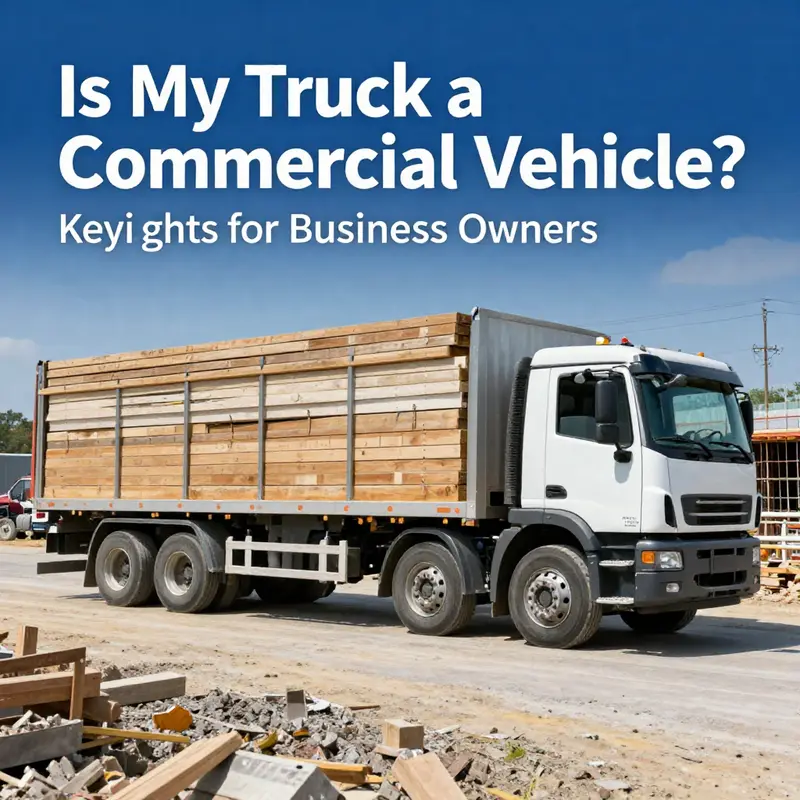
A truck sits in the driveway while its owner builds a business around trades, deliveries, or field services. The question of whether that truck is a commercial vehicle isn’t a matter of badge, size, or type alone; it hinges on how the vehicle is used and what it carries. The simple definition offered by the Cambridge Dictionary—that a commercial vehicle is a vehicle used for carrying goods rather than passengers—gives the lay of the land, but it only scratches the surface. In practice, the boundary between personal and commercial use can blur, and that blur matters. If you drive your truck primarily for errands, commuting, or family trips, it is generally not classified as a commercial vehicle. If, however, you rely on the same truck to move products to customers, haul tools and equipment for a trade, or transport materials for a job site, the vehicle steps into commercial territory. The distinction isn’t just bureaucratic; it carries real consequences for licensing, registration, insurance, and, in some cases, the way you operate on the road. The motorist who wants a clear, actionable framework for decision-making should begin with a careful audit of use rather than assuming a classification based on appearance or heft. The federal picture, while complex, is anchored in a few core questions about how the truck is used and what it is expected to do. The U.S. Department of Transportation’s perspective, codified through its regulatory and guidance materials, emphasizes that the primary function—carrying goods for a business—often defines commercial status more than the vehicle’s weight class or its passenger-carrying capability. This perspective helps explain why a compact pickup with a plow, a trailer, or a pile of tools on a regular business schedule can be treated differently from a family SUV with a bike rack. The regulatory emphasis on use underscores a practical truth: commercial designation is a working category, not a cosmetic label. The aim of this chapter is to translate that regulatory logic into a framework you can apply at home, in the shop, and on paper when you’re sorting out insurance needs, licensing requirements, and compliance steps. When you pause to map out use, weight, and purpose, the pathway becomes clearer, even if the rules feel intricate at first. A useful place to anchor your thinking is the broad triad that most people encounter in federal guidance: primary use, weight, and licensing. Each piece acts like a test that helps you decide whether your vehicle sits inside the commercial lane or remains in the personal-use traffic. The first question is straightforward in concept but often reveals nuance in practice: what is the primary use of your truck? If the answer is business-focused—delivering goods to customers, moving equipment for a job, or transporting tools to a worksite—then the vehicle is likely commercial from the perspective of typical regulatory frameworks. The emphasis on business use is not a mere formality; it reflects how the truck is integrated into daily operations, how it interacts with customers, and how it supports revenue-generating activities. When the truck serves as a mobile workshop, it carries the logistics backbone of the enterprise. If it delivers products to a storefront, a distributor, or a client site, the use-case bears directly on the vehicle’s classification and the surrounding regulatory obligations. The weight dimension tends to follow a more quantitative line, though it is equally capable of producing ambiguities in everyday life. The common federal threshold—vehicles with a Gross Vehicle Weight Rating (GVWR) or Gross Vehicle Weight (GVW) exceeding 10,001 pounds commonly fall into commercial classifications—serves as a practical benchmark. But even this benchmark has caveats. GVW is not always printed clearly on a single label; sometimes the calculation is based on the vehicle’s curb weight plus payload, which can vary with equipment, fuel, and cargo. In some cases, a vehicle that remains under the 10,001-pound line can become commercial because of how it is used or what it routinely carries. Conversely, larger pickups or light-duty vans can retain personal-use status if they are used primarily for non-business purposes and do not regularly carry goods for compensation or for business operations. The licensing piece—often the most explicit and the most confusing for everyday owners—can swing on a few different levers. Commercial vehicle licensing frequently intersects with the possibility of needing a Commercial Driver’s License (CDL), though not every commercial-use scenario requires one. CDL thresholds typically come into play when a vehicle exceeds certain weight limits, carries hazardous materials, transports passengers, or is used in ways that implicate safety regimes designed for commercial operations. This is one of those areas where jurisdiction matters. Some states align with federal guidance, while others adopt stricter or more nuanced rules about which classes of drivers must hold specialized licenses for particular operations. The same is true for registration: commercial vehicles may require registration categories, vehicle plates, or permits that are distinct from standard passenger-vehicle registration. The insurance landscape mirrors this complexity. Commercial use generally invites higher liability coverage due to the business risk associated with transporting goods or equipment and potentially operating in commercial traffic alongside other professionals. Insurance providers assess the exposure differently for vehicles used in a business context, and many policies reflect those realities with higher premiums, different terms, and additional endorsements that address business usage, cargo, or fleet considerations. The practical upshot is that misclassifying a vehicle can create gaps in coverage and compliance. It is not enough to rely on a gut feeling about whether the truck looks “commercial enough.” A disciplined approach involves verifying use with real-world patterns and documenting the purpose and operation of the vehicle. The first step in this process is to compile a concise narrative of how the truck is used week to week. Does it pick up and deliver goods to customers? Do you haul materials for job sites, transport tools, or move equipment that belongs to your business? How often does the vehicle drive on public highways while carrying business-related cargo? How independent is the vehicle from household transportation needs? These questions establish the boundary between personal and business use and help determine whether the vehicle should be treated as commercial for licensing, registration, and insurance purposes. After you have a clear use case, you should verify the vehicle’s GVW or GVWR. If you have access to the vehicle’s documentation—owner’s manual, the door jamb sticker, or the VIN-based spec sheet—the GVW figure is usually listed there. In cases where the payload can vary, you may want to calculate a typical payload and see how it affects the weight class across a typical workday or week. If the number sits above 10,001 pounds, the weight-based case for commercial status grows stronger. If it sits below that line, the use-based case carries more weight in regulatory considerations. Yet weight is only part of the equation. You should also check how your state handles licensing and registration for business use. Some states require that you register a vehicle as a commercial vehicle or obtain a special license plate when the vehicle is used primarily for business. Others keep registration classification aligned with vehicle type but require different inspection regimes, safety compliance, or hours-of-service rules if the vehicle operates as a commercial carrier, especially when it travels on intercity routes with cargo. The interplay of state and federal rules means you will benefit from a two-tier check: confirm the federal frame to understand the baseline, and then verify the state-specific requirements through your DMV’s guidance. If you want a reliable anchor for decision-making, the FMCSA guidance on vehicle classification provides a broader framework for understanding how the use and operation of a vehicle influence its regulatory status. Within the material you will encounter references to the impact of weight, use, and licensing on classification, and it becomes clear that the status of your truck is not a static label but a reflection of ongoing activity and purpose. As you read through the guidance, you may notice that certain business activities—even with lighter vehicles—trigger commercial considerations. A landscaper who uses a pickup with a trailer to haul mowers, soil, and landscaping materials is engaging in business use that frequently shifts the vehicle into the commercial category, potentially necessitating a different level of insurance, liability coverage, and in some cases licensing considerations. The key is to map out use and then test it against regulatory expectations, rather than assuming a classification based on appearance alone. The practical path forward includes a few straightforward steps. Start with a thorough audit of usage: what goods are moved, how frequently, to whom, and under what conditions. Keep a record for a period—say a couple of months—of trips that involve business tasks, noting cargo type, destination, and whether someone else could call this a commercial operation. Next, verify the GVW or GVWR, and cross-check the vehicle’s documentation against your state’s vehicle classification rules. If your use qualifies as commercial in the ways described, consult your state DMV or the FMCSA guidelines to determine whether a CDL, special registration, or additional safety requirements apply. Insurance is another pivotal piece. If the vehicle is used to transport goods for compensation or to support business operations, you will likely need a commercial liability policy, and you may need endorsements to address cargo coverage or the specific risks of your work. If your situation sits on the boundary, consider speaking with a trusted insurance professional who understands how small businesses and trades operate on the road. They can help you select a policy that aligns with your actual use, not just your vehicle’s physical characteristics. Throughout this process, a cautious approach pays dividends. Misclassifying a vehicle can create gaps in compliance that, in turn, complicate tax treatment, licensing, and even the ability to bill customers for needed transportation services. The overarching message is simple: use determines the category. Weight matters, but it does not decide alone. Licensing and insurance flows follow from the way your truck is deployed in daily business activity. The regulatory landscape is nuanced, and variances exist among jurisdictions, so the prudent path is to verify with your state DMV and the regulatory authorities that oversee commercial vehicle operations. If you want to explore broader regulatory insights alongside the practical steps outlined here, you can read more on topics related to how the industry adapts to changing capacity and regulatory realities in the trucking sector such as Excess capacity in the trucking market insights. Finally, for those who want to anchor their understanding in official guidance, the Federal Motor Carrier Safety Administration’s vehicle classification resources provide a comprehensive reference point. See the official materials on vehicle classification at the FMCSA site, and use their criteria to confirm whether your truck’s use warrants a commercial designation. For formal regulatory guidance, see the FMCSA Vehicle Classification page: https://www.fmcsa.dot.gov.
Crossing the Line: Is Your Truck a Commercial Vehicle and What That Means for Licensing
A quiet weekend errand can feel harmless, yet when the very same vehicle doubles as a work tool, the rules that govern it become anything but quiet. The question is simple in form but complex in consequence: is my truck a commercial vehicle? The quick answer is not about the truck’s size or badge but about how you use it. If the truck carries goods or materials for a business purpose, for pay or as part of a business operation, the odds are high that it falls under the commercial vehicle umbrella. If, however, you use it mainly for personal travel—to commute, run errands, or haul your family to a weekend outing—many jurisdictions will treat it as a private vehicle. The distinction may seem subtle, but it moves the vehicle from a routine consumer item into a regulated asset with licensing, insurance, inspections, and documentation requirements that attach to its use, not merely to its chassis. This is not an abstraction. It influences the kind of license you might need, the insurance you must carry, how the vehicle is registered, and what records you must keep. For anyone who wants to keep mobility without inviting regulatory trouble, understanding this boundary is essential.\n\nTo grasp the practical implications, consider how licensing fits into the daily rhythm of work. A commercial vehicle often triggers the need for a Commercial Driver’s License, or CDL, along with potential endorsements that align with the cargo and the vehicle’s configuration. The FMCSA sets the framework for these licenses, but each state implements testing and endorsements in its own way. The weight and type of the vehicle, the class of operation, and the kind of cargo can determine which CDL category applies to you. The requirement for a medical certificate—mandatory for many interstate operations—adds another layer of responsibility. The goal behind these standards is clear: ensure that drivers who operate vehicles used for transporting goods possess a baseline of medical readiness, driving skill, and knowledge of safety regulations. In practice, this can mean regular medical examinations and documentation that must accompany the license. The result is that a person who thought they were simply driving a personal truck may, in fact, be operating under a much more formal set of requirements.\n\nThe licensing landscape sits atop a broader infrastructure of vehicle registration and compliance that frames day-to-day operation. Commercial vehicles typically must be registered and licensed through the state DMV, and the process is not just a matter of ticking a box and paying a fee. Insurance coverage has to align with the vehicle’s use, and the vehicle must meet safety standards that include functional brakes, lights, tires, and mandatory safety equipment. Depending on the jurisdiction, there may be periodic inspections required to maintain compliance. In many cases, the line between a private and a commercial vehicle becomes especially important when the vehicle doubles as a work tool for a small business or a contract-based operation. The state will look at the vehicle’s primary purpose and how it is used in practice, which can determine the level of regulatory scrutiny applied. It’s easy to underestimate how much of a day-to-day difference this boundary can make, but once a vehicle crosses into commercial use, the obligations often multiply.\n\nAlongside licensing and registration sits the critical component of document management and usage tracking. If your company or you personally permit any level of personal use of a vehicle that is centrally financed or owned by a business, you face a potential liability dynamic in the event of an accident. Insurance policies crafted for commercial use frequently exclude coverage for personal use unless that use is explicitly permitted and logged. This protective gap is not a loophole to exploit; it is a risk management issue. To minimize exposure, many businesses implement clear policies on vehicle use, create detailed logs of mileage and purpose, and ensure every driver is properly trained and authorized. The act of maintaining accurate records is not merely bureaucratic ballast; it is a shield that helps define responsibility, control costs, and ensure that coverage remains in place when it is needed most. In practice, this means you may need to track which trips are for business, which are for personal errands, and which are mixed in a way that requires careful documentation. The discipline of logging becomes a core aspect of risk management, compliance, and long-term financial planning for any operation that relies on a vehicle to carry out work.\n\nAll of this matters because the boundary between personal and commercial use is not always obvious. A small business owner could start with a pickup used for occasional deliveries and then gradually expand the operation to more routes, more frequent cargo transport, and longer trips across state lines. At each stage, the regulatory posture can tighten, and so can the financial and logistical burdens. A vehicle that seemed perfectly ordinary on Monday may become a regulated asset on Tuesday as its use evolves. The same is true for part-time contractors who may drive their own trucks for a business’s projects, or for tradespeople who pick up materials directly from suppliers to bring to a job site. In such cases, the shift from private to commercial is not a matter of perception but of practical function. When the vehicle serves a logistical function for the business, when it is used to move goods or equipment necessary for a trade, when compensation is involved or expected in some form, then the vehicle trends toward commercial status.\n\nFor those who are uncertain, there are concrete steps to take that do not require fear or guesswork. Start with a careful assessment of the truck’s predominant use. If the vehicle supports business operations that involve transporting goods, materials, or tools necessary to fulfill a job, that strongly suggests commercial use. Next, review insurance coverage and the terms of the policy in place. If the policy excludes personal use unless specifically permitted and documented, you are looking at a flag that requires changes to align with actual practice. Talk with the insurer or a qualified agent about the correct classification of the vehicle and any endorsements that may be required for the cargo and the operation. Then consult the relevant licensing authority, keeping in mind that CDL requirements hinge on vehicle weight, configuration, and cargo type. The FMCSA provides a federal framework, while states tailor the testing and enforcement for local needs. Medical certification for interstate commerce is a common requirement, so verify whether your driving will cross state lines and whether the Medical Examiner’s Certificate is current and valid.\n\nIn parallel with licensing, vehicle registration and safety inspection become practical daily duties. Ensure your registration reflects commercial use when appropriate, and stay ahead of required inspections, including any periodic checks mandated by state or federal authorities. These inspections are not just formalities; they are designed to catch issues before they become safety problems on the road. A well-maintained vehicle reduces the risk of accidents, which in turn reduces liability and insurance costs. The maintenance of logs for mileage and purpose remains a central task for businesses that operate commercial vehicles. It is not simply about compliance on paper; it is about having a clear picture of how the vehicle is used, how it is maintained, and how it contributes to the success of the business. Without this clarity, a company can face coverage gaps, regulatory penalties, or unexpected legal exposure.\n\nThe practical consequences of misclassification are not merely theoretical. Operators who misstate the primary use can encounter fines, suspension of operating privileges, or more serious outcomes if violations lead to an accident. Criminal charges may come into play in extreme cases of negligence or fraud. The road to compliance is continuous, not a onetime effort. It requires ongoing education, routine checks, and a culture of accountability in which drivers, business owners, and managers share responsibility for staying within the boundaries of the law. One way to foster this culture is to stay informed about evolving regulatory landscapes that affect licensing, insurance, and vehicle operation. For example, cross-border operations, maintenance schedules, and emissions considerations all have bearing on whether a truck stays within personal use or becomes a commercial asset. A helpful reminder for those looking to deepen their understanding is to review events and resources focused on regulatory issues across borders and business environments. For a concise reference on cross-border regulatory issues, see the TCAS cross-border regulatory issues event. TCAS cross-border regulatory issues event\n\nThe broader regulatory ecosystem also includes information about emissions, safety standards, and more. While these factors may seem distant from the day-to-day question of whether your truck is commercial, they can influence licensing decisions and operational costs. For example, manufacturers and regulators continually debate how emissions and efficiency standards intersect with vehicle usage and weight classifications. Even if you drive a smaller pickup, if your operations include frequent cargo transport or specialized equipment, you may encounter standards that apply to commercial operations. The important point is to stay informed and to align your practices with actual usage. Keeping a consistent, truthful record of how the vehicle is used helps ensure that the license status, insurance, and registration remain aligned with reality.\n\nIf you are mapping out a path forward for yourself or your business, you may also find it useful to consult broader industry and regulatory resources. Engaging with authoritative guidance helps you avoid a mismatch between classification and practice. In addition to formal licensing and registration steps, consider how you structure your business policies to reflect the vehicle’s use. Clear guidelines about when the vehicle is for business versus personal use help reduce ambiguity and support smoother operations. It is not merely about avoiding penalties; it is about creating a reliable framework for decision-making and risk management. When you are confronted with a decision about whether to use the truck for a particular job or leave it for private use, the policy you implement can provide clarity and protect both the operator and the business.\n\nIn summary, the question of whether your truck is a commercial vehicle is not determined by a single attribute. It is determined by the pattern of use, the purpose of trips, the presence of compensation for transport, and the way the vehicle is integrated into business operations. The licensing landscape, vehicle registration, and usage tracking all hinge on that fundamental reality. If your operation involves transporting goods or materials for business purposes, the safest assumption is that you are dealing with a commercial vehicle and should prepare accordingly. If your use remains firmly private, you can still benefit from awareness of the lines and the protections that exist for private vehicle operation. Either way, the alignment of use, license, registration, insurance, and documentation creates a clear, enforceable framework that promotes safety, accountability, and peace of mind on the road.\n\nFor readers seeking additional context about regulatory and licensing obligations, official guidance from the U.S. Department of Transportation is a reliable resource. It can help you understand how federal standards interact with state requirements and how to navigate the complexities that arise when a vehicle is used for business purposes. The practical upshot is straightforward: confirm your vehicle’s primary use, ensure your insurance reflects that use, secure any required licenses and endorsements, maintain up-to-date registrations and inspections, and document how the vehicle is employed in day-to-day operations. By keeping these elements aligned, you reduce risk, improve safety, and avoid surprises that can disrupt business continuity or personal travel plans. For further reading on regulatory guidance, see the U.S. Department of Transportation’s official portal.\n\nExternal resource: U.S. Department of Transportation guidance on licensing and regulations can be found at https://www.transportation.gov.
Beyond Size: How Use and Purpose Define Your Truck as a Commercial Vehicle
The question you ask when you look at your truck—whether it counts as a commercial vehicle—often comes down to an intuition about size and appearance. Yet the authoritative answer is steadier and more nuanced: it hinges on how you use the vehicle, not merely how big it is. The Cambridge Dictionary’s straightforward definition of a commercial vehicle as one used for carrying goods rather than passengers provides a practical starting point. But to truly understand how your truck fits into the commercial category, you need to look at the role it plays in your work life. If your vehicle functions primarily as a tool for business—delivering products, hauling materials for a job site, or towing a trailer that supports income-generating activities—then it belongs in the commercial category, even if it isn’t the largest truck on the road. If, however, you rely on the same vehicle mainly for personal transport—getting to and from the office, running errands, taking family trips—the line between personal and commercial becomes clearer, and the vehicle generally sits outside the commercial classification. This distinction matters beyond label and into the everyday realities of compliance, cost, and risk management. In the framework of federal guidelines, the emphasis is on use, not just dimensions. The U.S. Department of Transportation defines a commercial vehicle in broader terms: any motor vehicle used to transport people or property for compensation or profit. This formulation includes delivery vans, freight haulers, tractor-trailers, and a wide array of service vehicles used by tradespeople and businesses. The essence is not whether a vehicle is tall or heavy, but whether it is operated with a business purpose at the helm. When a pickup is deployed to drop off packages for a company, when a contractor uses a truck to move construction materials between job sites, or when a mobile business trailer is towed to a client’s premises, these are all typical examples of commercial vehicle use. Even smaller vans that are common in the trades—think the cargo vans used by plumbers, electricians, and other service providers—qualify when they are used in service of a business. Such examples illuminate how the classification translates from theory to the road. The practical implications ripple through every aspect of operating the vehicle: safety standards, licensing, insurance, and registration requirements shift to reflect the vehicle’s role as a business asset rather than a private one. The distinction is not merely bureaucratic; it shapes everyday behavior, responsibilities, and protections for both the driver and the business. A close read of the regulatory landscape shows that driving a truck for hire or for business-related goods movement triggers considerations that would not arise if the vehicle were used solely for personal travel. The Federal Motor Carrier Safety Administration (FMCSA) offers detailed guidelines about what constitutes a commercial vehicle, and its rules are designed to ensure safety on the road and reliability in the logistics chain. In practice, the line is drawn at use. If you are transporting goods for compensation or profit, your vehicle aligns with the commercial framework. If you are transporting your own goods for personal reasons, it does not. This framing helps clear up common ambiguities—such as whether towing a trailer with equipment for a side gig makes a truck commercial, or whether a contractor’s pickup used for on-site material delivery qualifies. The nuance lies in the daily operations that give the vehicle its business purpose. Consider a scenario where a person drives a pickup to a client site with tools, parts, and a schedule that revolves around earning a living. In that moment, the truck is performing work functions. It is hauling, delivering, and enabling a service process. That is the hallmark of a commercial vehicle under federal understanding: the vehicle serves the business activity, and compensation or profit is part of the operational equation. The same logic applies when a vehicle is used to move equipment for a repair job or to transport a team between job locations. Design alone does not upend this classification. A compact cargo van may not look imposing, yet if it is being used to shuttle tools and supplies to customers for a service business, it falls into the commercial category. Conversely, a full-size pickup used primarily to drive to and from a personal residence for daily errands would typically remain a passenger vehicle in the eyes of the regulations. The distinction has concrete consequences. Insurance structures shift, with commercial coverage typically addressing higher liability exposure and a broader set of risk scenarios. Registration procedures can differ as well, with some jurisdictions requiring commercial vehicle plates or fleet identifiers for vehicles used in a business context. Safety standards and inspection regimes align with the vehicle’s role in commerce, encompassing requirements for vehicle maintenance, driver qualifications, and operating hours. The licensing landscape is another important dimension. In many cases, operating a commercial vehicle requires a commercial driver’s license (CDL) or other endorsements, reflecting the greater responsibilities and risks associated with carrying goods or passengers for hire. The FMCSA’s framework is built to ensure that drivers and vehicles meet the higher standards needed to protect the public and the supply chain. However, the need for a CDL is not automatic simply because a vehicle looks large. It depends on specific weight thresholds, passenger capacity, and the nature of the cargo or service. For those who are unsure whether their truck crosses the line into commercial use, a practical first step is to step back and map the actual day-to-day activities: what goods, tools, or equipment are moved; how often; who benefits from the movement; and whether payment or compensation is involved. If the answer is yes to any of these questions, the vehicle is likely in the commercial category. The process of confirmation is supported by federal resources, and the path to clarity often begins with official guidance. The FMCSA, as the federal authority charged with commercial vehicle safety, provides guidelines that help interpret the commercial-use threshold in real-world terms. Their materials can be consulted to verify the status of a truck in relation to the applicable regulations. For readers who want to understand how this logic translates to a specific truck in their fleet or driveway, the answer can often be found by reviewing how the vehicle is used in practice rather than by counting the miles it has driven or the bed length it wears. It is the function—what the vehicle is doing for the business—that matters. In this light, the classification emerges as a practical tool for planning, rather than a rigid label that follows a single metric. A business that uses a variety of vehicles for different purposes may find it essential to categorize each asset according to its operational role and the corresponding regulatory obligations. This approach helps in budgeting for insurance, planning maintenance cycles, and ensuring that licensing, registration, and safety training align with each vehicle’s responsibilities. An important nuance emerges when a vehicle performs mixed duties. A truck that sometimes transports goods for hire and other times is used for personal trips presents a hybrid scenario. In many jurisdictions, such mixed use requires careful attention to how the vehicle is registered and how drivers are insured and trained. The risk management implications are not trivial. When a vehicle is classified as commercial, it becomes part of a fleet or business asset that is explicitly subject to commercial safety rules, including hours-of-service regulations, vehicle inspection routines, and driver qualification standards. Even if the vehicle is occasionally used for personal travel, its commercial status can influence whether the vehicle is eligible for certain insurance products, how premiums are calculated, and what exclusions or coverage gaps may exist. For someone contemplating a truck’s status, the decision process benefits from a practical, grounded approach: start with the use case, confirm with the regulator’s guidance, and then align the license, insurance, and registration with the declared purpose. The insights from industry discussions and regulatory commentary reinforce the idea that the classification is not a badge the owner chooses, but a description of how the vehicle is employed to create value and income. In conversations about regulation and compliance, the emphasis remains on clarity and consistency. It is not merely about satisfying a rule but about ensuring that safety and accountability are embedded in the operations of businesses that rely on trucks to move goods and provide services. The broader implication for any truck owner is a reminder to document and monitor how the vehicle is used, how it is maintained, and how its duties align with the relevant regulatory framework. Documentation matters because it provides a transparent trail for audits, insurance assessments, and compliance reviews. When a vehicle is clearly used for business activities, the justification for its commercial status becomes straightforward. When the lines blur, it pays to pause, verify with official guidance, and adjust licensing, registration, and coverage accordingly. The regulatory landscape continues to evolve with shifts in emissions standards, safety priorities, and border and cross-state rules that shape how commercial trucks operate. Industry discussions often reflect these changes, underscoring the ongoing need for operators to stay informed and proactive. For readers who want to explore the broader regulatory context beyond their immediate state or province, industry conversations about emissions and compliance illuminate how standards are changing in practice. In this spirit, consider how the dialogue around emissions, economy, and safety influences the interpretation of what constitutes a commercial vehicle. As an example of the broader regulatory discourse, industry stakeholders note the ongoing efforts of manufacturers and regulators to seek clarity in emissions regulations, a topic that remains central to how fleets adapt to evolving rules and market demands. This context helps explain why the classification matters so much: it anchors accountability, informs cost considerations, and shapes the path to compliant operation. If you are faced with a specific decision about a truck in your care, a grounded approach is to document the vehicle’s primary use, look up the applicable criteria in the FMCSA guidance, and engage with your insurer to confirm how commercial status affects coverage. The practical takeaway is simple: use determines classification, and use dictates the regulatory and financial responsibilities that accompany ownership. The end result is less about arguing over terminology and more about aligning your operations with the rules that safeguard workers, customers, and the public. Where this alignment fails, risks rise—from unanticipated insurance adjustments to compliance gaps that could affect safety, scheduling, and profitability. Therefore, the most reliable path is to view each vehicle not as a generic asset but as a tool tailored to a specific business function. In daily life, that perspective helps owners and operators make informed choices about licensing, registration, insurance coverage, and maintenance plans. If the vehicle’s role changes, so too might its regulatory status. The road forward is to keep the business purpose at the center of every decision about the truck, to verify with official regulators when in doubt, and to maintain a transparent record of how each vehicle contributes to the enterprise. For further reading on how emissions and regulatory standards are shaping industry practices, see the referenced industry discussion on OEMs seeking clarity in emissions regulations, which offers a broader lens on regulatory evolution and its impact on fleet decisions. The practical upshot for readers remains clear: a truck’s classification is a functional judgment grounded in daily use, and that judgment should guide licensing, insurance, and compliance choices with confidence. For those seeking official guidance, the FMCSA’s resources provide definitive direction on commercial vehicle status, driver qualifications, and the safety expectations that accompany commercial operation. These standards are not abstract constraints; they are tools that help you manage risk, protect your workforce, and ensure that your business can move goods and services reliably and legally. External resource: FMCSA guidelines.
Is My Truck a Commercial Vehicle? Reading the Line Between Personal Use and Business Duty
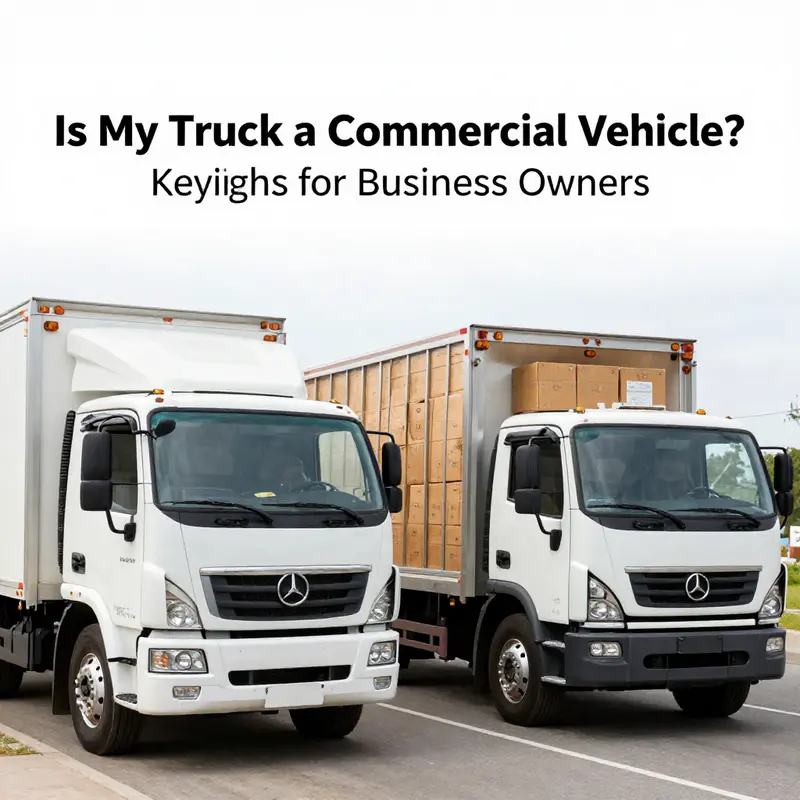
The question, Is my truck a commercial vehicle, often sounds like a paradox of labels, but it hinges on how the vehicle is used rather than how large it sits in a driveway. The Cambridge Dictionary defines a commercial vehicle as a vehicle used for carrying goods rather than passengers. That single line hides a broader truth: the everyday decisions you make about work, delivery, and logistics determine the vehicle’s legal status far more than its horsepower or its chrome finish. In practical terms, if your truck is a tool for earning money—hauling materials for a job, delivering products, or moving inventory for a business—its use leans toward the commercial. If you’re behind the wheel mainly for personal trips—commuting, errands, family trips—the same truck is likely to stay in the personal category, at least for regulatory and insurance purposes. The distinction matters because it ripples through licensing, insurance, maintenance, and even how the vehicle is inspected and retired from service. This is not a purely academic exercise; it is a decision that shapes costs, requirements, and the responsibilities that come with operating a vehicle on public roads. And because regulatory frameworks can vary by state and country, the central idea remains consistent: use, intent, and the resulting economic activity define the classification more than looks or size alone. When these lines blur, drivers often turn to official guidance and practical checklist methods to determine where their truck sits on the spectrum of private versus commercial use. The critical takeaway is that classification is an operational parameter as much as a legal label. It travels with your vehicle in every contract, policy, and permit that touches your daily routine as a truck owner or operator. The more you understand how your use is interpreted by authorities and insurers, the better you can plan for the licensing, registration, and coverage that align with your actual work, not a hypothetical ideal of what you think a “commercial” vehicle should look like. In the broad landscape of vehicle regulation, the notion of use as the determining factor has a long history of shaping costs and conduct on the road. While the public often focuses on what a truck can do, the system is more interested in what you actually do with it. A truck that exists to deliver goods from a warehouse to a storefront, a contractor’s supply run, or a fleet that shuttles equipment between jobs will carry a different set of rules than a truck that is used primarily for personal transport. The practical implication is straightforward: your classification governs your responsibilities and can influence whether certain routes, hours of operation, and maintenance schedules are mandated by law. As you think through your own routine, a useful mental model is to separate the activity into two buckets: revenue-generating use and personal mobility. If the truck’s main function is to generate income by moving goods or transporting paying passengers, it leans toward commercial use. If the primary function is personal mobility—driving to work, school, or family activities—the vehicle aligns with private use. This is the hinge that weds everyday practice to policy. It is not merely about what you do sometimes; it is about what you predominantly do, and how consistently that activity aligns with a business purpose. The practical consequences of that alignment show up when you check the formal documentation that travels with the vehicle. In most jurisdictions, the registration and licensing framework includes a Use Classification field or its equivalent. This field often labels the vehicle as Non-Operational or Private for personal use, or Operational or Commercial for business use. That label, far from being a bureaucratic footnote, serves as a legally binding indicator of how the vehicle is expected to be used and regulated. It anchors the policy on insurance, roadworthiness, and driver accountability. The implications go well beyond a sticker or a plate color. Insurance models, for example, rely on the risk profile generated by the vehicle’s intended use. Commercial vehicle policies are designed to cover higher exposure—longer miles, more frequent stops, more loading and unloading, and often higher driver turnover. It is not unusual for commercial insurance to cost two to three times more per year than a typical personal auto policy. The risk calculus for commercial fleets includes scenarios that are less common for private vehicles: loading and unloading with manual handling, transporting tools and materials across heavy traffic, and the possibility of longer workdays. For drivers, the licensing landscape often extends beyond a standard driver’s license. A Commercial Driver’s License (CDL) or its regional equivalent is a common requirement for certain classes of commercial operation. The specifics—what grade of CDL, what endorsements, what medical qualifications—are determined by the type of operation, the vehicle’s weight and configuration, and the transportation of passengers or hazardous materials. In many places, the driver’s licensing status dovetails with registration requirements for fleets. Businesses may need to register their vehicles with the transportation authority, maintain records of mileage and maintenance, and comply with hours-of-service regulations. These elements are designed to ensure safety, reliability, and accountability in operations that serve the public or the economy. Beyond licensing and insurance, the maintenance and inspection regime for commercial vehicles is typically more stringent. Commercial operators often face mandatory inspection cycles, which may include annual checks followed by more frequent reviews. The goal is simple: given the higher usage intensity that commercial operations entail, the vehicle must be dependable, well-maintained, and ready for the demands of continuous service. This is not merely a matter of compliance; it is about ensuring road safety and reducing the risks associated with frequent loading, stopping, and high-mileage wear and tear. The consequence of failing to meet these expectations can extend beyond fines. In some jurisdictions, a persistent failure to maintain commercial-class vehicles can impact eligibility for certain routes, toll exemptions, or eligibility to operate commercial gear in restricted areas. The life cycle of a commercially classified vehicle also tends to be treated differently from a private vehicle. There are retirement regulations that reflect the nature of commercial use. Some fleets face mandated scrappage or retirement windows that are dictated by the vehicle’s original use classification, not by its current condition. A vehicle originally built for service as a taxi, for example, might have a retirement horizon that cannot be extended simply by recouping its mileage or refurbishing the interior. Conversely, a private vehicle can plausibly remain on the road longer, as long as it remains compliant with safety standards and inspections. This divergence underlines a practical reality: classification has real, tangible consequences in how long a vehicle remains economically viable in service, and how it is regulated as it ages. The regulatory environment for commercial vehicles is designed to prevent systemic risk rather than to penalize individual drivers. Authorities keep a closer watch on driver hours, vehicle maintenance logs, and compliance with safety standards, because commercial operations frequently involve transporting other people or valuable goods. This oversight is balanced by the flexibility that businesses need to operate efficiently. The tension between safety and efficiency is managed through licensing, inspection, and record-keeping, not by providing an easy loophole to slip through. Yet even with clear rules, the line between personal and commercial use can blur. A carpenter who occasionally hauls lumber for neighbors, or a contractor who uses a pickup for occasional personal trips, may wonder whether those incidental personal tasks jeopardize the commercial classification. The answer rests on consistency and intent. If the vehicle is regularly used to support a revenue-generating activity, even if some personal use happens, the dominant use is commercial and should align with the corresponding requirements. If the business activity is small and irregular, there may be room for nuance; in such cases, discussing the situation with both insurers and the relevant licensing authority is prudent. A misclassification—whether accidental or deliberate—carries risks. If authorities determine the vehicle is being used for commercial purposes without the appropriate license or insurance, penalties can include fines, civil liability, or voided coverage in the event of a claim. Conversely, using a commercial vehicle for non-commercial tasks does not automatically erase the commercial classification. It can, however, complicate the risk profile for insurers and might trigger questions about usage consistency that can lead to policy adjustments. For a truck owner, staying aligned with actual practice is the simplest path to reducing uncertainty. Start with a clear assessment of how your truck is used most days of the week. Does it routinely move goods, equipment, or products for business, or is it primarily a passenger vehicle for personal transportation? Are you consistently transporting tools and materials for a job, or are you occasionally helping a friend move furniture? These questions matter because the answers drive decisions about licensing, insurance, and maintenance. If your work involves regular goods transport, consider confirming that your vehicle’s registration reflects commercial use, verify you have or need a CDL, and ensure your insurance policy accounts for the higher risk profile. If you are uncertain or your usage is evolving, a proactive approach can prevent costly retrofits or policy disputes later. Engage with your insurer early to review your driving patterns and the nature of your work. Update your registration and licenses as needed, and plan for any required inspections and maintenance regimes that accompany commercial use. As you navigate these considerations, you may encounter broader regulatory conversations that affect how fleets are managed and how regulations evolve. For example, regulations around emissions and fleet efficiency increasingly shape how operators manage their vehicles. When such issues arise, it can be helpful to stay informed about evolving standards and the practical implications for maintenance cycles, reporting, and testing requirements. For further reading on how emissions considerations intersect with fleet operations, you can explore targeted discussions on emissions regulations and fleet management, such as emissions regulations for fleets. This kind of coverage helps connect the dots between classification, licensing, and the broader regulatory environment that governs modern trucking. Ultimately, the decision about whether your truck is a commercial vehicle rests on how you use it day in and day out. It is a decision that should be made with accurate records, honest reflection on your business activities, and clear communication with the agencies and insurers that govern your operation. Treat it as a living attribute of your vehicle rather than a one-time classification you can ignore. By aligning use, licensing, and insurance with actual practice, you protect yourself against penalties and ensure that your truck can perform its role—whether as the backbone of a small business, a mid-sized delivery fleet, or a personal vehicle that occasionally touches the edges of commercial duty—without unexpected hurdles. The core idea remains straightforward: commercial use is defined by purpose and revenue implications; personal use is defined by private mobility. The blend may be nuanced, but the dominant pattern is the compass that points toward the right set of rules. For truck owners, recognizing where their vehicle sits on that compass is the first step in a responsible, cost-conscious path of ownership that respects both the law and the realities of daily work. External guidance from official sources corroborates this approach, clarifying licensing and safety obligations while providing a stable framework for decision-making in evolving regulatory climates. For official guidance, visit https://www.dot.gov.
Final thoughts
Identifying whether your truck is classified as a commercial vehicle is vital for compliance with regulations and to avoid potential legal issues. By evaluating the usage, understanding licensing requirements, and recognizing distinct characteristics, you can make informed decisions for your business. The implications of this classification extend beyond just legalities; they influence operational efficiency and insurance coverage, which are crucial for your success in the logistics and transportation industry.