
The operation of commercial trucks is foundational to numerous industries, from logistics and freight to construction and delivery services. Understanding the necessity of commercial registration for trucks is paramount for owners and operators. This article delves into the legal, safety, and economic implications of commercial registration, providing a comprehensive view of its critical role in business operations. In examining the legal necessity of registration, we’ll highlight the obligations for compliance that come with commercial vehicle usage. Following this, we’ll explore safety standards and compliance measures that safeguard not only the businesses but also the public. Finally, we’ll unpack the economic implications, revealing how proper registration influences taxation, insurance, and overall operational costs, thus ensuring sustainable business practices.
The Legal Grounding of Truck Commercial Registration: Keeping Business, Safety, and Accountability on the Road
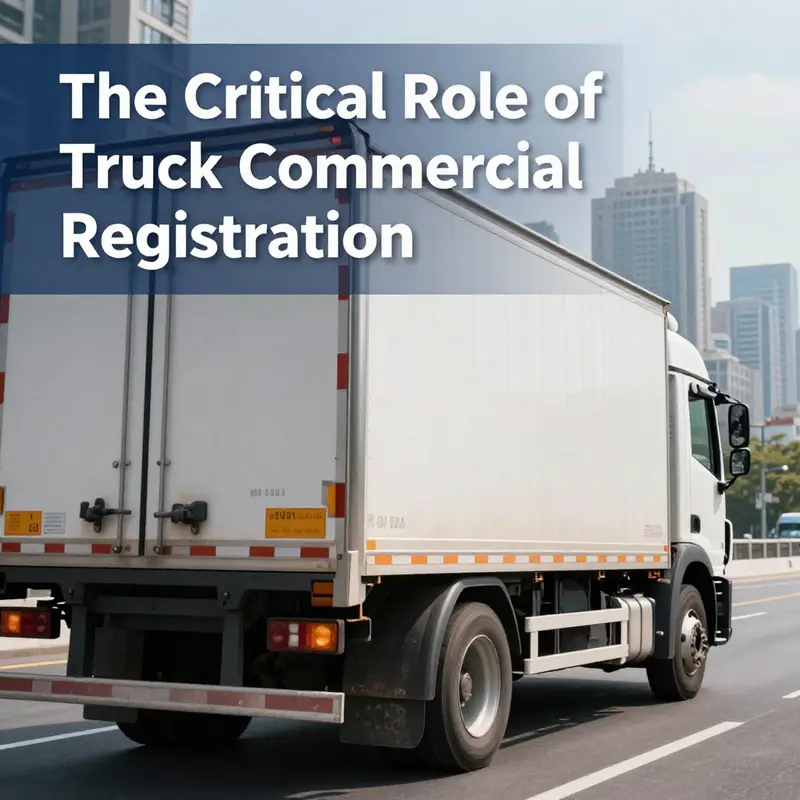
Registration is not a routine checkbox in the trucking world; it is the legal backbone that differentiates business use from everyday driving. When a vehicle shifts from personal to commercial purpose, the road becomes a shared responsibility that regulators, insurers, shippers, and authorities rely on to ensure safety, predictability, and fair economic play. A truck registered for commercial use signals to the entire system that this machine will haul goods or passengers for compensation, and that its operator embodies a set of standards designed to protect the public, the driver, and the supply chain that keeps communities fed and stocked. In that sense, commercial registration is less about plates and more about formal recognition of the truck’s role in organized commerce. It formalizes a business activity that touches many facets of life on the highway, from traffic flow and road wear to insurance costs and environmental accountability. Because the stakes are high—size, weight, and the potential impact of a commercial vehicle on others on the road—the registration framework is engineered to be robust, auditable, and interoperable across jurisdictions. The effect of this simple administrative act ripples across risk management, contract viability, and public safety, making it a foundational element for any operator who intends to move freight or people as part of a business model.
At its core, the legal necessity of commercial registration rests on a straightforward premise: a vehicle used in the course of business belongs to a regulated category. This category exists to prevent ambiguity about the vehicle’s purpose, which in turn clarifies what rules apply to its operation. When the vehicle is correctly registered, authorities know that the operator is signaling compliance with a concrete set of expectations—ranging from safety standards to financial responsibility. Conversely, driving a truck for commercial purposes with a standard passenger registration is a mismatch that can invite penalties and create gaps in accountability. The requirement is not merely ceremonial; it translates into real-world consequences for the operator, the fleet, and the communities these vehicles serve. A commercial registration is the official acknowledgment that a business activity is taking place on public roads, with all the regulatory duties that come with it.
One practical dimension of this framework is the legal operation threshold. In most jurisdictions, the path to lawful operation is paved by a clear declaration: the vehicle will be used for business purposes, or it will not. This distinction triggers a cascade of regulatory obligations designed to keep commercial travel predictable for other road users and for the markets that rely on timely delivery of goods. Without this formal recognition, the vehicle exists in a gray area where enforcement agencies may treat it as a personal conveyance, even if its actual use is commercial. The consequences of confusion here are not minor. State and federal authorities can levy fines, impound vehicles, suspend operating privileges, or pursue more serious charges if the operation is deemed noncompliant. The idea is not to complicate business but to ensure that anyone moving freight or passengers on public streets operates within a clearly defined legal framework.
Safety and compliance form another critical pillar. Commercial vehicles are subject to stricter safety standards and more frequent inspections because of their size, weight, and the potential impact of incidents involving them. Registration acts as a compliance mechanism that helps regulators confirm, over time, that the vehicle remains fit for road service. These standards cover a wide array of areas: braking performance, tire integrity, lighting, emissions, and overall structural safety, among others. In many places, commercial fleets must undergo periodic inspections and meet environmental requirements that reflect the vehicle’s duty to operate without unduly compromising public health or safety. Registration data—ownership details, insurance status, weight class, and other identifiers—enable inspectors to verify that a given truck has the requisite paperwork and has complied with these checks. In short, the registration process is a proactive safeguard intended to prevent avoidable accidents and to ensure that heavy-duty vehicles do what they’re designed to do without imposing unreasonable risk on others.
Taxation and fees form a financial dimension that strongly ties the registration system to the business model of trucking. A vehicle used commercially is typically subject to taxes and fees that reflect its potential road impact and economic footprint. These charges can be based on factors such as weight, engine size, and usage patterns, and registration provides a reliable basis for accurately assessing and collecting those obligations. For fleets and independent operators alike, the system offers predictability: the annual or periodic renewal fees, calculated according to objective criteria, feed into infrastructure funding and regulatory programs that maintain roads, bridges, and safety initiatives. The process also creates a straightforward mechanism for tracing ownership, vehicle history, and compliance status should questions arise during audits or investigations. This transparency is fundamental to fair competition, helping responsible operators compete on service quality and efficiency rather than on hidden regulatory liabilities.
Liability and insurance considerations are intimately connected to commercial registration. In most regions, commercial use carries mandatory insurance requirements that provide higher liability coverage to protect against damages and injuries arising from business operations. Registration data often interfaces with the insurance framework in meaningful ways: it helps establish the vehicle’s risk profile, corroborates the operator’s status as a commercial entity, and ensures that coverage remains in force during operation. When accidents occur, the ability to locate vehicle records, verify driver qualifications, and confirm the maintenance history becomes essential to the claims process and any regulatory inquiries. The linkage between registration and insurance fosters accountability across the lifecycle of a commercial operation—from onboarding and licensing to ongoing compliance and post-incident review.
The broader purpose of tracking and regulation is to maintain a coherent picture of the commercial vehicle population on the road. Authorities rely on registration to monitor fleet size, assess traffic patterns, and enforce standards that reduce congestion, emissions, and wear on infrastructure. For operators who cross jurisdictional lines, this aspect of registration becomes even more vital. Cross-border traffic, shared regulatory spaces, and varying state rules require a consistent baseline for determining which vehicles can operate where, under what conditions, and for how long. When a truck is registered as a commercial vehicle, it signals a commitment to operate within those boundaries and to comply with hours-of-service rules, weight limits, and environmental requirements that may differ by region. In this sense, registration supports a balanced ecosystem in which business efficiency can align with public safety and environmental stewardship.
A practical example helps illuminate why commercial registration matters in daily operations. Consider a pickup truck used for regular delivery services, a common scenario in which a small business moves packages to customers, repossessed goods for a lending program, or materials to a work site. If such a vehicle is treated as a passenger vehicle, the operator risks misclassifying the scope of business activity. This misclassification can restrict access to certain contracts, complicate liability coverage, and invite compliance challenges with weight and safety standards that apply to commercial transport. On the other hand, properly registering the pickup as a commercial vehicle aligns the vehicle with the appropriate regulatory regime. It signals to shippers that the operator adheres to safety and financial responsibility norms and makes it easier to participate in the broader logistics network. The result is not merely legal compliance but improved credibility with clients, insurers, and regulatory bodies. Details like maintenance records, vehicle history, and driver qualification information become readily accessible under the commercial designation, facilitating smoother audits and quicker incident resolution when accidents occur.
Against this backdrop, it is helpful to understand the regulatory thresholds that often define when a vehicle becomes a commercial motor vehicle (CMV). In the United States, for example, the Federal Motor Carrier Safety Administration (FMCSA) sets clear criteria that place vehicles into the CMV category. The most prominent trigger is a gross vehicle weight rating (GVWR) exceeding 10,001 pounds. Vehicles in this category are subject to the CMV regime and must meet safety, insurance, and recordkeeping requirements designed for heavier-duty operation. There are additional triggers that solidify CMV status, such as the transportation of hazardous materials or the carriage of more than eight passengers (including the driver). These thresholds are not just bureaucratic; they reflect the higher potential risk associated with moving larger loads or many people over public roadways. States complement federal criteria with their own registration processes, often requiring emissions testing, proof of liability insurance, and vehicle inspections as part of a comprehensive commercial compliance package. The interaction of federal and state rules creates a layered but coherent system that supports safe, reliable, and economically viable trucking.
The consequences of failing to align with these rules are serious. Noncompliance can lead to fines that scale with the severity of the violation, the vehicle being impounded, or the operator’s driving privileges being suspended. In worst-case scenarios, criminal charges may follow if the violation involves deliberate deception, fraud, or egregious disregard for public safety. The risk calculus is straightforward: the longer a vehicle operates outside the intended regulatory framework, the greater the chance of a costly incident, a costly audit, or a costly loss of operating license. For operators who rely on compliance to win and maintain contracts, the penalties extend beyond monetary losses. They can erode credibility, disrupt supply chains, and undermine relationships with shippers who expect consistent, compliant service. The registration system, therefore, functions as a proactive deterrent to these outcomes by aligning business practices with public policy aims and by facilitating accountability when incidents do occur.
Given the stakes, it is essential for truck owners and operators to approach registration as an ongoing, dynamic facet of business management rather than a one-time formality. Maintenance of current registration means staying aware of evolving rules, updates to safety standards, and any changes in insurance requirements. It also means ensuring that the vehicle’s ownership and usage status are accurately reflected in the records, so that renewal notices, compliance audits, and claims processes proceed without delay. This is why many operators maintain a routine of regular checks with both the state department of motor vehicles (DMV) and the federal regulator responsible for safety oversight. The DMV typically handles vehicle registration, license plate issuance, and related inspections, while the federal regulator oversees safety compliance, driver qualifications, and hours-of-service rules for those engaged in interstate commerce. The collaboration between these agencies creates a layered assurance that the vehicle remains fit for service, the operator remains financially responsible, and the public remains protected.
Interwoven with these formalities is the practical reality that registration supports business operations and competitiveness. For carriers and independent operators who strive to win contracts with shippers and participate in interstate commerce, having a valid commercial registration is more than a prerequisite. It is a credential that signals readiness to do business, a basis for contract compliance, and a tangible link to a broader ecosystem of standards—maintenance programs, insurance coverage, and safety training. When a fleet presents itself to potential customers, the availability of up-to-date registration, along with a demonstrable safety record, can influence decisions about who to hire for the critical task of moving goods across borders and states. The ability to show regulatory compliance, to provide maintenance histories, and to document driver qualifications is often as important as the capacity to move the freight itself. In markets that are increasingly complex and competitive, those who master the registration discipline can translate regulatory conformity into a reliable competitive advantage.
To navigate this landscape, operators should treat registration as an ongoing information asset. It is not enough to register and forget; the registration is a living record that must be refreshed as ownership, insurance, or business purposes change. As part of this approach, truck owners and operators should consult their state DMV websites and the FMCSA’s official resources to confirm current requirements, fees, and renewal procedures. Regulatory landscapes shift with policy updates, environmental standards, and infrastructure funding priorities. Proactively staying informed reduces the risk of noncompliance and helps ensure that a fleet remains eligible for the lanes, contracts, and windows of opportunity that define modern trucking. The FMCSA’s official materials, for example, provide a continuously updated reference point for comprehending how CMV status is determined, how insurance needs are structured, and how hours-of-service rules affect scheduling and capacity planning. Engaging with these resources is not a mere compliance exercise; it is an essential component of risk management and strategic planning for any business that depends on reliable, lawful access to public road networks.
For readers who want a broader lens on regulatory contexts that affect cross-border and interstate operations, there is value in exploring related regulatory conversations. A useful entry point is the TCAS cross-border regulatory issues event, which offers insights into how regulatory challenges across borders intersect with commercial vehicle registration and compliance practices. This resource helps situate the registration question within a wider framework of regulatory alignment and practical compliance strategies that trucking businesses must navigate if they are to operate smoothly across varied jurisdictions. You can follow this discussion here: TCAS cross-border regulatory issues event.
In summary, commercial registration is the legal, operational, and strategic bedrock for trucking as a business. It formalizes the vehicle’s role in commerce, aligns safety and environmental expectations with actual practice, and anchors the financial and liability structures that keep the industry functioning. It enables accountability, supports contract viability, and helps maintain a level playing field in a market where uptime and reliability often determine success. The practical takeaway for operators is straightforward: treat commercial registration not as a hurdle to clear but as an ongoing covenant with safety, accountability, and business resilience. This mindset helps ensure that the truck fleet is not only compliant but capable of contributing to a stable, efficient, and responsible trucking ecosystem that serves customers, communities, and the road network with integrity.
External resource: For a foundational reference on CMV safety and registration requirements, the Federal Motor Carrier Safety Administration (FMCSA) maintains updated guidance and regulatory information at https://www.fmcsa.dot.gov/.
The Gatekeeper of the Fleet: Safety Standards, Elevated Loads, and the Path to Truck Commercial Registration
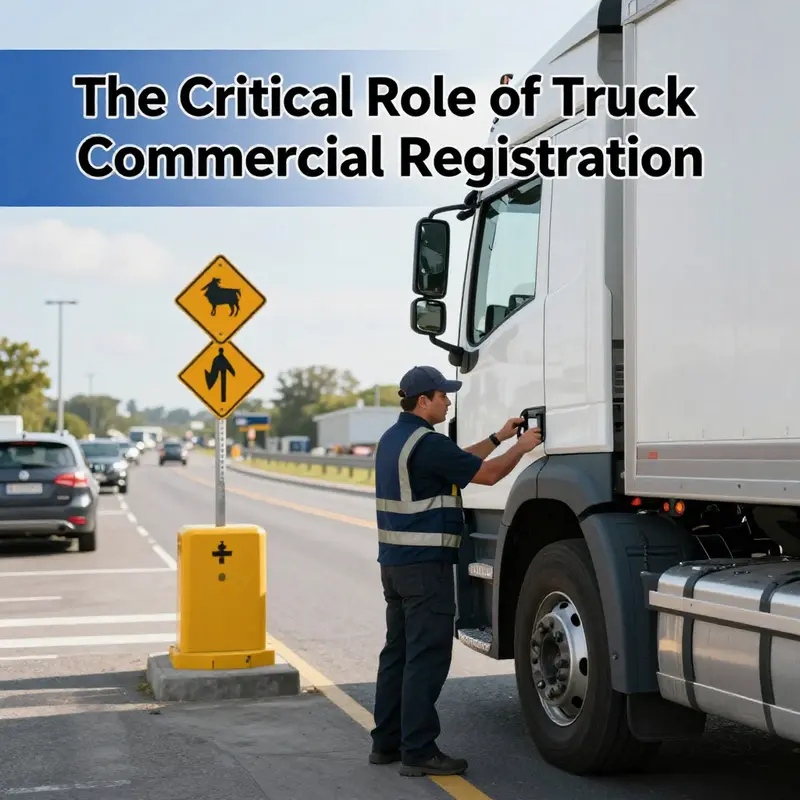
Registration is more than a bureaucratic hurdle; it is the formal acknowledgment that a vehicle operates in a business environment with obligations to safety, accountability, and public responsibility. When a truck enters service as part of a commercial operation, its registration becomes the gatekeeper that aligns a company’s logistics with a framework designed to protect drivers, other road users, and the surrounding environment. The rationale behind commercial registration rests on the recognition that goods and people are moved on public infrastructure not merely as a private convenience but as an ongoing economic activity. This recognition carries legal consequences, but it also seeds a culture of safety and reliability that regulators, insurers, and operators all rely upon. The chapter that follows weaves together the core reasons for requiring commercial registration with the specific safety standards that underpin it, highlighting how Europe’s formal standards translate into real-world processes for design, testing, documentation, and ongoing compliance. The result is a cohesive picture of why a truck used for business must be brought under a safety regime that is as structured and precise as the operations it fuels.
At the heart of modern commercial registration lies the imperative to ensure safe operation on public roads. Trucks that carry heavy payloads, travel long distances, or operate within busy work zones present risks that are larger than those associated with passenger vehicles. The registration system functions as an information and control mechanism. It records a vehicle’s primary purpose—commercial use—and ties that purpose to a set of regulatory requirements that address safety, environmental stewardship, taxation, and liability. In practical terms, this means that a business vehicle cannot simply be repurposed from a private registration to commercial use without demonstrating that it meets the relevant safety standards, has undergone the necessary testing, and possesses the appropriate insurance and risk management measures. The stakes are not theoretical; they translate into mandated inspections, certified conformity assessments, and ongoing maintenance protocols that ensure the vehicle remains fit for service throughout its life.
The most conspicuous dimension of safety standards concerns the core design and performance attributes that keep a vehicle stable, controllable, and predictable in a wide range of operating conditions. For trucks and industrial vehicles, safety concerns multiply when the machine is tasked with lifting, carrying, or transporting loads that create additional moments of force and possible energy release. A central element of this framework is the family of European norms that governs industrial trucks, including the more specialized provisions for vehicles with elevating operator positions. These requirements are codified to cover not just the vehicle’s baseline performance but also how it behaves when the operator is elevated or when the vehicle moves with elevated loads. The specific standard that anchors this discussion—DIN EN 16307-3:2023—sets out supplementary safety requirements for industrial trucks with elevating operator positions and those designed to travel with elevated loads. The standard, published in German but widely recognized across Europe, represents a crucial increment beyond foundational safety rules. It addresses how a vehicle maintains stability during lift operations, how operator protection systems function, how emergency stops are implemented, and how control system reliability is verified and sustained.
The notion of elevating operator positions is not a mere technical curiosity. In many warehouses and manufacturing environments, the operator’s cabin can be raised to provide better visibility over stacked pallets, congested aisles, or high-accumulation areas. This design choice introduces new failure modes: a lift angle that exceeds safe limits, a collapse of a lifting mechanism, or a control misstep that could cascade into a tipping or crushing event. DIN EN 16307-3:2023 directly targets these hazards by prescribing concrete requirements for stability during elevation, the integrity and resilience of operator protection structures, robust emergency stop mechanisms, and reliable control logic. The standard’s emphasis on test conditions and verification procedures signals a shift from purely theoretical safety criteria to demonstrable, auditable performance. In other words, compliance cannot be reduced to a checklist of features; it requires a documented demonstration that, under defined real-world conditions, the vehicle behaves in a manner that keeps operator exposure to risk within acceptable limits.
To understand why such standards are embedded in the registration process, it helps to place them in the broader regulatory architecture. EN 16307-3:2023 does not exist in isolation. It builds upon the base framework provided by EN 16307-1, which sets out the general safety requirements for industrial trucks. The combination of these normative bases ensures that manufacturers and operators have a layered map of expectations: the foundational safety principles, followed by more specialized, situation-specific provisions for vehicles with elevated operations and for those designed to travel with elevated loads. For regulators, this layered approach makes the compliance pathway clearer and traceable. It also supports the rigorous documentation that registration authorities require. When a truck is registered as a commercial vehicle, the responsible party must present evidence that the vehicle and its systems meet the applicable EN norms, supply risk assessments, and confirm adherence to design principles that minimize hazards associated with elevated operation. This documentation becomes part of the vehicle’s lifecycle record, a vital reference when inspections occur or when ownership changes hands.
The practical consequences of compliance extend beyond the act of registration. Safety standards inform the engineering choices made during vehicle design and refurbishment. They influence the maintenance regime, the inspection cadence, and the qualification requirements for operators and technicians. For example, the requirement to prove stability during lift operations means that manufacturers and operators must demonstrate that the vehicle’s lifting mechanism remains within safe limits across the range of expected loads and operating speeds. It also implies that operators must be trained to understand the limitations of the system, recognize early signs of instability, and know the steps to take when warning signals appear. The emergency stop mechanisms, too, must function reliably under a diverse set of conditions, from aggressive braking scenarios to momentary power losses. The control system’s reliability is not just a matter of software integrity; it encompasses hardware redundancy, fault-tolerant design, and robust diagnostics that can be communicated to the registration body if a failure occurs.
The registration process, therefore, becomes a formal conduit for translating engineering safety into everyday practice. In Germany, France, and other EU member states, authorities require manufacturers and operators to demonstrate conformance with the relevant European Norms through a combination of certificates, testing records, and risk assessments. This conformity assessment helps standardize safety expectations across a diverse market and creates a common language for evaluating whether a vehicle can be introduced into commercial service. The emphasis on conformity is not about hindering innovation; it is about ensuring that new capabilities, such as elevating operator positions or other advanced features, do not undermine overall safety. For a fleet manager, this translates into a disciplined procurement and maintenance process where every new vehicle or retrofitted machine is vetted against the same rigorous criteria before it enters service.
The lifecycle implications of safety and compliance are particularly salient when considering ongoing maintenance and periodic inspections. DIN EN 16307-3:2023 emphasizes not only the initial design and testing but also the continued integrity of safety-related systems. A vehicle that initially met the standard must be kept in a state of compliance through scheduled inspections, calibration of sensing and control devices, and verification of operator protection systems after any major service event. In practical terms, this means that a commercial fleet’s regulatory obligations do not end at registration. They persist through the vehicle’s operating life, with inspectors and auditors tracing the evolution of the machine’s safety features from factory floor to end-of-life demanufacturing. The emphasis on ongoing maintenance aligns with broader regulatory goals around environmental protection and public safety, as a well-maintained vehicle is less likely to contribute to emissions excess, mechanical failures, or accidental incidents that could destabilize traffic flow or harm workers in industrial settings.
From a fleet perspective, the safety standards that govern commercial registration are tightly interwoven with other regulatory domains, including hours of service, vehicle weight limits, and emissions compliance. Registration acts as the convergence point where the many strands of regulation meet. A truck that operates as a commercial vehicle is subject to regulatory oversight that accounts for how it is used, how it is maintained, and how its safety systems perform in the field. This holistic view makes registration less a one-off formality and more a living framework for risk management. When a company plans a purchase, retrofits, or an expansion of its fleet, the safety standards encoded in EN 16307-3:2023 and its companion norms help shape the decision-making process. They influence total cost of ownership by highlighting the need for qualified service, spare parts compatibility, and documentation that can withstand audits by insurers, authorities, and customers who require demonstrable compliance with safety norms prior to engaging in business relationships.
The internal alignment with safety standards also plays a role in the broader narrative of the industry’s push toward safer, more reliable operations. Regulators view these standards as means to reduce the likelihood and severity of on-road incidents and to manage the environmental and social costs of heavy-vehicle operations. For operators, adhering to the standards provides a quantifiable assurance that their equipment meets agreed-upon benchmarks for safety performance. This assurance can affect insurance premiums, liability exposure, and access to certain business opportunities that require demonstration of responsible fleet management. In this sense, safety standards are not merely technical curiosities; they are market signals that help identify capable operators and high-integrity equipment within a complex and competitive logistics landscape.
The practical takeaway for managers and technicians is clear. When a vehicle is positioned to perform as a commercial asset, its registration cannot be treated as a single event. It is the opening of a continuous dialogue among engineers, regulators, insurers, and operators about how best to maintain safety under evolving operational demands. That dialogue is grounded in a shared framework of standards and conformity criteria. DIN EN 16307-3:2023 represents a crucial spoke in that wheel, providing targeted safety guidance for a subset of industrial trucks whose design and use intensify risk in elevated operation scenarios. The standard’s focus on stability during elevation, operator protection, emergency stopping, and control-system reliability reflects a proactive approach to risk management: identify potential failure modes early, document verification, and commit to ongoing verification through testing, assessment, and maintenance. When a fleet manager references this standard during procurement or retrofitting discussions, they are not simply citing a rule; they are articulating a commitment to a safer, more predictable operational profile for drivers, warehouses, and the communities surrounding busy supply chains.
In this broader context, the chapter’s central argument about why commercial registration matters becomes even more persuasive. Safety standards convert theoretical risk reduction into tangible, auditable outcomes. They shape what a vehicle must be, how it must perform under stress, and how its performance is demonstrated to third parties who rely on the vehicle’s safety credentials. The registration process captures these outcomes in a formal record, ensuring that a vehicle’s commercial use is dependent on demonstrable compliance rather than assumptions. It also creates a traceable path for updates and remediations when standards evolve or when new safety technologies emerge. For operators facing a changing regulatory terrain, this system offers both predictability and a framework for continuous improvement.
To connect this discussion with a broader regulatory conversation and to underscore the practical value of staying ahead of standards, consider the ongoing dialogue around emissions regulations and how they intersect with safety obligations. For a perspective on how industry players seek regulatory clarity in emissions rules while maintaining safety commitments, see this resource on emissions regulations guidance: OEMs seek clarity in emissions regulations. This internal link anchors the chapter in a real-world concern that often accompanies safety compliance and commercial registration, illustrating how different regulatory threads converge on the compliance decision for fleets and their trucks.
Finally, for those who want to explore the formal European standardization context that underpins these requirements, the official technical framework remains available through the European Committee for Standardization. The CEN TC256 committee oversees standards related to industrial trucks, including those that govern elevating operator positions and elevated-load scenarios. Access to the full text, updates, and application guidance can be found on the CEN TC256 page, which serves as a concise portal to the normative family that informs national and regional registration practices. External references provide a critical bridge between classroom-like standardization and field-facing implementation, helping ensure that every truck entering commercial service is ready for the rigors of routine operation and the scrutiny of periodic inspections.
External reference: https://www.cen.eu/work/committees/working-groups/TC256
Registration on the Road: The Economic Architecture of Truck Commercial Registration
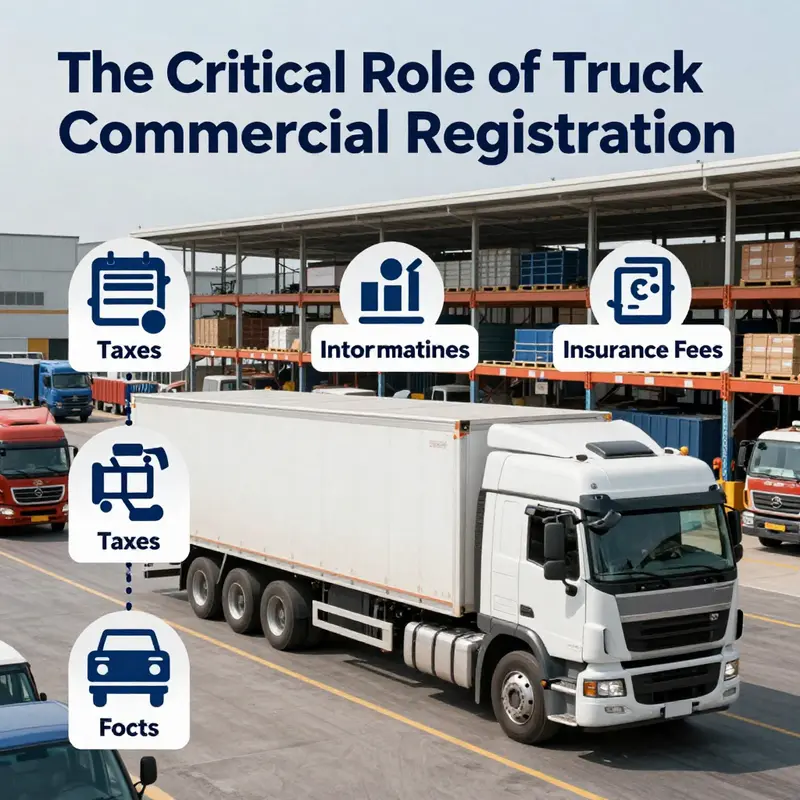
Registration on the road is more than a label affixed to a license plate or a box of forms filed with a regulatory agency. It is a deliberate economic instrument that shapes how businesses invest in fleets, how carriers price services, and how infrastructure is funded and managed. When a truck is registered as a commercial vehicle, governments acknowledge that its purpose extends beyond personal mobility to the movement of goods, people, and commerce. That acknowledgement carries consequences: it unlocks public safety standards, taxation streams, liability frameworks, and data flows that regulators and operators alike use to make sense of a fast-moving, capital-intensive sector. The practical consequence for a trucking business is the translation of regulatory status into a sequence of cost, risk, and opportunity calculations that travel through every decision—vehicle purchase, maintenance, routing, fuel strategy, driver retention, and even the location of warehouses and terminals. The economic implications of commercial registration therefore reach far beyond the paperwork that starts the process; they ripple through the business model itself, influencing competitive positioning and long-run viability in ways that are sometimes subtle, sometimes stark, but almost always material.
To appreciate why commercial registration matters economically, it helps to connect three strands: the price of operation on a mile-by-mile basis, the incentives embedded in registration design, and the wider policy context in which fleets must compete for capital, customers, and access to roads. The first strand is straightforward in its intuition. A truck that operates commercially bears costs that are, in part, a function of its public status. If the registration carries specific taxes or fees tied to weight, engine size, or emissions, those costs accumulate in the same way that a car’s license plate fees or fuel taxes accumulate for a private vehicle. For high-mileage fleets—think long-haul routes where trucks routinely cover tens of thousands of miles each year—these charges compound and can represent a nontrivial portion of operating expenses. The mileage-based charges being explored in various jurisdictions, sometimes framed as road user charges (RUC) or mileage-based user fees, illustrate how classification and tariff design can translate roadwear and congestion into a direct, predictable cost for operators. Although still debated in many regions, the early findings point to meaningful impacts on cost structures, with effects likely to cascade into pricing, procurement, and even work-force planning as fleets adapt to tighter margins or shifting demand patterns.
The second strand concerns how the structure of commercial registration can steer technology choices and fleet composition. Registration rules that weight fees by vehicle characteristics—such as weight, engine size, or emissions levels—signal which technologies are financially advantageous to deploy. When the policy toolkit rewards cleaner technologies, operators have a monetary incentive to move toward zero-emission trucks, hybrid approaches, or more efficient powertrains. Conversely, if the fee regime rewards older, heavier, or higher-emitting configurations, the market may resist upgrades, even where a business case for cleaner technology would otherwise exist. In this sense, registration acts as a subtle but potent capital allocation mechanism. It shapes the relative returns on investment in new assets, influencing capital budgeting cycles, depreciation schedules, and the risk assessments lenders undertake when financing fleets. The design of these rules—whether they are predictable, transparent, and tied to measurable performance criteria—matters as much as the absolute level of the charges. A well-designed system provides a clear horizon for years-long fleet modernization programs, encouraging operators to align their procurement with public goals and with the financial realities of their business plans.
The third strand places commercial registration within a broader policy and economic ecosystem. Governments use registration data not only to collect taxes or enforce safety, but also to monitor fleet size, distribution, and utilization patterns. These data inform decisions about infrastructure investment, congestion management, and environmental policy. For example, if a jurisdiction wants to reduce wear on overburdened roads or curb emissions in urban corridors, it may design registration to fund appropriate projects or to nudge operators toward cleaner options. In Europe, policy discussions often center on sustainable freight transport and industrial competitiveness, where the balance between environmental objectives and the health of the trucking sector must be carefully managed. The regional dimension matters because the economic implications of registration are not isotropic; they interact with fuel prices, labor markets, access to credit, and cross-border trade arrangements. An emphasis on harmonized, predictable rules tends to lower compliance costs and reduce investment uncertainty, which in turn supports greater efficiency and longer planning horizons for fleet operators.
Empirical observations across different regulatory environments illuminate how these dynamics play out in practice. In large economies that rely heavily on trucking for inland distribution, registration regimes can either stabilize or destabilize investment flows. Consider how well-designed licensing and registration systems create a stable business environment by reducing information asymmetries for operators and financiers. When a fleet’s registration status is aligned with transparent, enforceable standards and a credible enforcement regime, lenders and insurers are more comfortable underwriting equipment purchases and working capital needs. The result is improved access to finance and more favorable terms for fleet modernization. Conversely, opaque or capricious systems can raise perceived risk, prompting operators to adopt more conservative fleet strategies, delay upgrades, or seek capital in more costly forms. Over time, these patterns influence market structure—shaping concentration, capacity, and the ability of smaller operators to compete with larger entrants that have greater bargaining power in capital markets.
The international dimension adds texture to this analysis. In Europe, where manufacturers of heavy-duty trucks are prominent global players, policy shifts toward sustainable technologies carry outsized importance for industrial competitiveness. If registration and related mechanisms consistently reward cleaner trucks, European fleets can maintain a strategic edge by adopting technologies that reduce lifetime operating costs and meet stringent emissions targets. The alignment of commercial registration with environmental goals helps ensure that freight corridors remain viable as the region moves toward more stringent air quality standards and climate objectives. In Asia, particularly in large, rapidly growing economies, registration reform can alter corporate investment behavior in ways that echo across cross-border supply chains. A well-calibrated framework offers a degree of policy stability that reduces the risk of abrupt changes in cost structure, encouraging multinational operators to place bets on longer-term asset deployment and network expansion. Taken together, these international observations suggest a common theme: when registration systems are transparent, predictable, and linked to quantifiable outcomes, they become enablers of efficient capital allocation and, by extension, of broader economic performance.
Within this framework, the empirical question centers on how mileage-based charges, if implemented in some form, would affect competitiveness and operational efficiency. The trucking industry has shown interest in mileage-based user charges precisely because they promise to align road costs with actual usage. Yet, the literature to date indicates that the economic impacts depend crucially on design details and accompanying policy measures. A mileage-based approach can create incentives for shorter, more efficient trips, better route planning, and higher utilization of fuel-saving technologies. It can also alter how fleets distribute risk across routes, schedules, and maintenance cycles. For high-mileage operators, even modest per-mile charges can accumulate into meaningful shifts in operating margins, which may then be passed along to customers through freight rates, bargaining with shippers, or adjustments to service levels. For fleets that compete on price and reliability, small changes in cost structures can tilt market shares in favor of more flexible operators who can adjust routes or leverage alternative fuel options more rapidly. The competitive landscape, therefore, is not simply a function of the charges themselves but of how operators respond—how quickly they innovate, how they restructure their networks, and how readily they access finance to support those changes.
From a strategic perspective, the design of commercial registration serves as a signaling mechanism that communicates which business models are favored in a given regulatory culture. When registration policies reward efficiency—through weight-based efficiency tariffs, emissions-linked fees, or incentives for retrofitting older fleets with cleaner technology—fleet managers absorb those signals into capital planning, maintenance scheduling, and even the choice of suppliers and service partners. The linkage to suppliers becomes more pronounced when fleets optimize for total cost of ownership rather than upfront price. A policy environment that recognizes the value of durability, reliability, and fuel efficiency tends to foster a mature market for higher-quality equipment and for services that support smarter asset management. In practice, operators who anticipate the direction of reform can build more resilient portfolios by investing in telematics, driver training that improves fuel economy, and maintenance programs designed to extend asset life. These steps not only lower per-mile costs but also reduce risk, thereby improving access to capital since lenders view stable, long-run cost profiles as a reason to contract for favorable terms.
This is not merely a domestic calculation. As supply chains globalize, the way a country designs its commercial registration regime can influence the behavior of international fleets and OEMs seeking regulatory clarity as they plan production and investment cycles. In markets where OEMs lead the push toward cleaner, lighter, and more integrated powertrains, registration rules that recognize and reward such innovations become part of the investment thesis for manufacturers and operators alike. The structural alignment between policy, technology, and capital markets contributes to a more predictable business environment, which in turn supports more efficient freight movement, fewer capacity gaps, and more stable job creation across the logistics ecosystem. It is in this convergence of policy design, technological progress, and financial calculus that the true economic architecture of truck commercial registration reveals itself: a framework that can either smooth the path to greater productivity or introduce frictions that slow growth, depending on how thoughtfully it is constructed and updated over time.
To connect these ideas to real-world dynamics, consider the narrative of fleet procurement in relation to registration. When a carrier contemplates a new order, it weighs total cost of ownership, maintenance needs, and residual value under a regime that prescribes fees by weight or emissions. The decision is not solely a technical assessment of a truck’s performance; it is a fiscal posture toward the future. A system that stabilizes charges and provides predictable incentives helps fleets forecast cash flows, determine the viability of a multi-year financing arrangement, and justify the capital expenditure to shareholders or lenders. In contrast, a policy that introduces abrupt fee changes or opaque assessment criteria introduces volatility into the investment calculus, making it harder for operators to commit to long-term asset-heavy strategies. In markets where operators can diversify risk across a portfolio of routes and customers, they may absorb costs more readily, but even there the cost of complexity—compliance, monitoring, and administration—accumulates. The willingness of a carrier to invest in cleaner tech, advanced telematics, or more efficient logistics networks is thus tightly bound to how well the commercial registration regime communicates a stable, transparent economic signal that aligns with business fundamentals.
One practical implication of this alignment emerges in the linkage between registration and emissions policy. If a jurisdiction ties registration fees to emissions profiles, fleets have a clear incentive to pursue lower-emitting configurations. This helps governments pursue environmental goals while avoiding sudden, unpredictable disruption to the trucking market. For operators, the promise of lower overall operating costs through efficiency gains becomes a strategic driver, not a mere compliance obligation. The broader effect is a transformation of the market’s technology adoption curve: fleets begin to upgrade not only to meet regulatory minima but to advance beyond them in ways that reduce per-mile costs and improve reliability. In this sense, commercial registration can be a focal point for sustainable modernization, aligning environmental objectives with the need to maintain robust freight capacity and economic well-being.
The chapter’s synthesis is that commercial registration transcends bureaucratic formality. It is a structural device that channels investment, shapes competition, and guides the evolution of the trucking sector toward greater efficiency and sustainability. For policymakers, the lesson is to design registration regimes with clarity, predictability, and alignment with desired outcomes, recognizing that long-run growth in the freight economy rests on the twin pillars of cost discipline and innovation. For operators, the takeaway is to view registration not as a constraint but as a framework that can optimize financial and operational decision-making when the rules are coherent and forward-looking. And for observers watching the global trucking landscape, the message is that the way a country designs its commercial vehicle registration system can influence who wins and who stalls in a highly competitive, capital-intensive industry—on a road that connects production, consumption, and opportunity across regions and borders.
In this sense, the economic implications of truck commercial registration are not a single lever to pull but a constellation of signals that co-create incentive structures, capital costs, and strategic choices. When these signals are well calibrated, they illuminate a path toward more efficient networks, healthier margins, and cleaner freight transport. When they are misaligned, they can erode competitiveness, slow investment, and complicate the management of fleets that underpin modern supply chains. The balance is delicate and context dependent. It requires ongoing scrutiny, performance measurement, and a willingness to adjust the incentives to reflect evolving technology, energy markets, and user needs. As the trucking industry continues to navigate changes in demand, fuel costs, and infrastructure funding, the role of commercial registration as an economic instrument will likely become more pronounced, demanding careful design, transparent communication, and a shared understanding of the long-term goals that policy, business, and society seek to achieve with every mile driven on public roads.
To learn more about related trends and how they shape fleet procurement and policy considerations, readers may explore discussions on trucking-economic-trends-affecting-trailer-orders. This resource helps illuminate how broader market forces interact with regulatory frameworks to influence equipment choices and capacity planning across the industry. trucking-economic-trends-affecting-trailer-orders
External resources that offer a deeper, empirical look at road user charges and their economic implications can be found in the scholarly literature. For those seeking rigorous analysis, the study on Alternative Commercial Vehicle Road User Charges provides a foundational examination of how mileage-based charges interact with fleet economics and policy goals. This body of work offers a framework for assessing the trade-offs between revenue generation for road maintenance and the competitive dynamics of trucking markets. You can explore the detailed analysis at the external resource: https://www.sciencedirect.com/science/article/pii/S0965856423001774
Final thoughts
Understanding the comprehensive need for truck commercial registration is vital for business owners across logistics, construction, and delivery fields. Legal compliance not only safeguards operators from potential fines and legal repercussions but also promotes public safety and operational integrity. Emphasizing safety standards through registration ensures that businesses meet the high expectations of regulatory agencies and protect their drivers and cargo. Finally, recognizing the economic implications reinforces the necessity of proper registration in managing costs and insurance liability. By prioritizing these aspects, business owners can enhance their operational efficiency, reduce risks, and support sustained growth in their respective sectors.