
Understanding commercial truck fleet leasing is crucial for logistics, construction, and delivery businesses striving for efficiency and cost-effectiveness. This article unpacks various aspects of fleet leasing, encompassing different types of leases, their benefits, how to select reputable leasing providers, and the financial implications you need to consider. By delving into these chapters, readers will equip themselves with the necessary knowledge to make informed decisions in fleet management.
null
null
Navigating the Information Landscape for Commercial Truck Fleet Leasing: A Practical Guide for Business Leaders

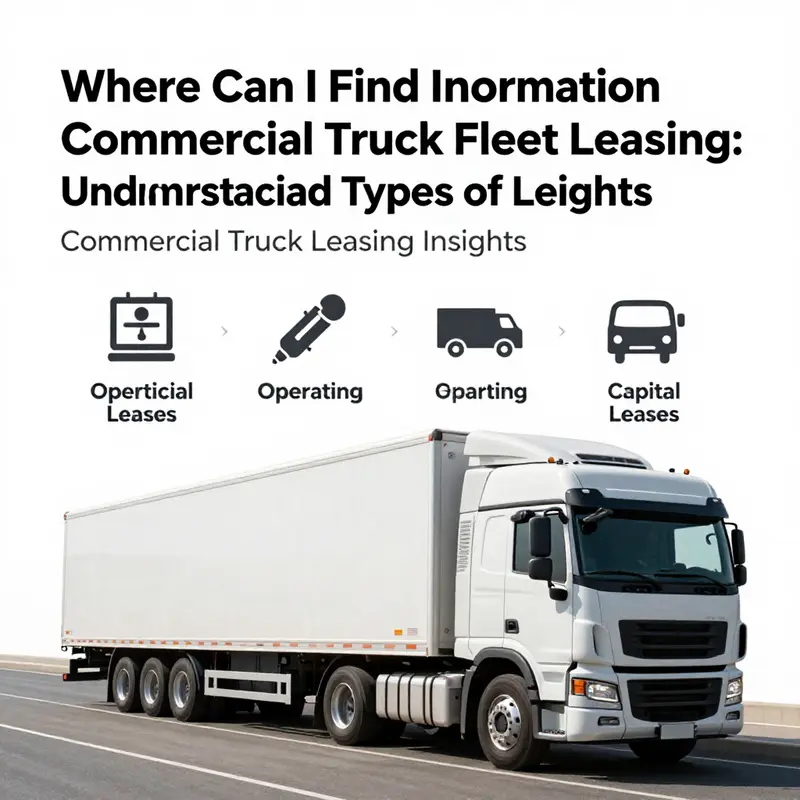
When a business contemplates leasing a commercial truck fleet, information becomes as important as the trucks themselves. Decisions about financing structure, maintenance responsibilities, and upgrade cycles hinge on credible sources, up-to-date data, and a clear-eyed view of how the market is moving. This chapter is a guide through the information landscape that business leaders use to decide whether leasing is the right fit, and how to choose a leasing arrangement that protects cash flow, supports growth, and maintains regulatory compliance. It is not a sales brief, but a map of where to look, what to look for, and how to interpret findings in a way that aligns with the company’s operational realities and strategic goals. The starting point is recognizing that reliable information about commercial truck fleet leasing comes from several overlapping domains: practitioner guides, industry analyses, regulatory bodies, and the ongoing experience of fleet operators. Among these, a widely cited resource is Indeed’s Guide to Commercial Truck Leasing: A Guide for Business Owners. That resource offers a practical overview of why businesses lease, the most common lease structures, and the key differences between operating leases and capital leases. Reading it in tandem with other sources helps ensure that a leasing decision is grounded in a realistic view of costs, risk, and operational flexibility. In practice, the core questions center on cost predictability, asset availability, maintenance burden, and the ability to adapt fleet size to demand. Cost predictability matters because leasing enables fixed, regular payments that reduce the budgeting unknowns that come with ownership. This can be especially valuable in a business where revenue streams are variable or seasonality is pronounced. When the monthly lease payments are fixed, the owner can forecast cash flow with greater confidence and plan for maintenance, fuel efficiency investments, and driver training without the distraction of escalating repair bills for aging vehicles. The predictability also supports more precise budgeting for insurance, tires, and other operating costs that tend to rise in a portfolio of owned assets. In the leasing framework, however, the terms of those fixed payments are not uniform. They depend on the lease type, the term length, the expected mileage, and the residual value or purchase option at the end of the term. This is where understanding the two most common lease structures—operating leases and capital leases—becomes crucial. An operating lease typically keeps ownership with the lessor and presents the vehicle as a service-like arrangement. The lessee pays for use, maintenance may be bundled, and the vehicle is often returned or refreshed at the end of the term. A capital lease, by contrast, is closer to ownership in economic terms; the lessee may assume more of the risk and reward of ownership, and the lease often culminates in an option to purchase the vehicle at a significant discount or for a predetermined residual value. Grasping the differences between these structures matters not only for accounting and tax treatment but also for how a fleet manager plans upgrades, manages maintenance, and negotiates end-of-lease options. The Indeed guide, while practical, is not the sole repository of truth. The trucking industry exists within a regulated and dynamic macro environment, and information accuracy improves when one corroborates guidebook insights with data from regulatory agencies and market analyses. For instance, the Federal Motor Carrier Safety Administration (FMCSA) maintains an official site that provides essential regulatory context for fleets operating under commercial motor carrier authority. This includes safety rules, compliance requirements, and guidance that can affect how a leasing arrangement handles insurance, vehicle inspection regimes, and driver compliance programs. With regulatory expectations in mind, leasing decisions should be evaluated against what the fleet will be required to demonstrate to stay in good standing with authorities. In addition to government and industry guides, it is useful to consider market-specific analyses that reflect current supply and demand dynamics, financing conditions, and technology trends. One way to stay attuned to these factors is to track how market cycles influence asset availability and pricing. For example, there are periods when new trailer orders, truck deliveries, and financing terms shift in response to macroeconomic conditions, interest rates, and fleet utilization levels. Reading about these cycles can illuminate why a lease quote may include different maintenance packages, mileage allowances, or upgrade options than a quote from a year prior. A practical approach is to read about trucking economic trends that affect trailer orders and to compare how those trends might influence leasing terms over the term of a contract. The linked discussion on industry trends, for instance, highlights the relationship between market demand, equipment utilization, and the decision to lease or purchase. When evaluating sources, it is essential to consider reliability, recency, and relevance to your business model. A credible guide will typically outline the benefits of leasing, the main lease types, and the nuances that differentiate them, while also acknowledging potential drawbacks such as mileage caps, residual risk, and service level considerations. Cross-referencing such a guide with regulatory and market analyses helps build a balanced picture. For example, the FMCSA site provides a regulatory backdrop that is critical for understanding what fleets must comply with, how those requirements may affect maintenance and inspection regimes, and how leasing arrangements can be structured to support compliance rather than hinder it. When you’re gathering information, start by clarifying your objectives. Are you seeking to maximize cash flow flexibility, simplify administration, or ensure access to the latest safety and fuel-efficient technologies? Your objective will shape which sources you emphasize and how you interpret lease economics. In this context, a few practical considerations emerge. First, cost predictability is a central benefit of leasing, but it must be evaluated through the lens of total cost of ownership (TCO). TCO includes not only the lease payments but also maintenance, insurance, fuel efficiency, downtime, and any penalties for excess mileage or excessive wear and tear at the end of the term. A transparent lease agreement should spell out who is responsible for routine maintenance, tires, and breakdowns, and whether the leasing company offers service packages that simplify administration. Service packages, in particular, can materially reduce the administrative burden on fleet managers. If the lessor assumes maintenance, the fleet manager can redirect time toward route optimization, driver training, and compliance initiatives. The value of such packages depends on vehicle usage patterns, route structures, and the reliability expectations of customers. Second, access to newer vehicles is a recurring driver of leasing’s appeal. Leasing makes it easier for a business to cycle through up-to-date, safer, and more fuel-efficient equipment without a heavy upfront investment. This can translate into lower maintenance costs, reduced downtime, and improved driver satisfaction due to more comfortable, modern cab interiors and advanced safety features. Third, scalability remains a core advantage. A growing business can add trucks to the fleet through a lease rather than tying up capital in assets. Conversely, a seasonal business can scale down with less friction than if it owned a large fixed asset base. The ability to modulate size helps align fleet capacity with demand, reducing the risk of underutilized equipment or stranded capital. This flexibility is particularly valuable in markets characterized by volatility in freight volumes, shifts in fuel prices, or evolving regulatory demands. To maximize the reliability of information gathered, leverage a diverse set of sources and apply a consistent framework to interpret them. Compare multiple lease proposals using a standard set of criteria: total monthly cost, maintenance coverage, how end-of-lease options are structured, mileage allowances, wear-and-tear charges, residual values, and upgrade timelines. This kind of structured comparison helps prevent the temptation to choose the lowest sticker price without considering the long-term implications for cash flow and fleet operations. It also supports clearer negotiations with lessors, because you can tether discussions to objective criteria rather than subjective impressions. In terms of where to look for those sources, a practical mix includes industry guides like the previously mentioned Indeed resource, regulatory bodies such as FMCSA for compliance context, and market analyses that describe current conditions in vehicle pricing, financing, and demand for fleet services. If you are searching for deeper context on market cycles and leasing implications, you might also consider reading about trucking economic trends affecting trailer orders. This kind of analysis helps illuminate how cycles in equipment demand can affect leasing terms, availability, and pricing over the term of a contract. For readers who want a concrete pathway to related content, a relevant internal link offers a focused exploration of industry dynamics: trucking economic trends affecting trailer orders. This resource provides perspective on how market conditions influence decisions about fleet composition, equipment turnover, and budgeting for either leasing or ownership. While it is helpful to explore these market signals, always return to the fundamentals: align your leasing decision with your operating plan, the expected utilization of each asset, and the regulatory requirements that govern your drivers and equipment. The best practice is to create a simple, repeatable decision framework that can be revisited annually or whenever the business undergoes a significant shift in volumes, routes, or service commitments. In that sense, information about commercial truck fleet leasing becomes less about chasing the latest trend and more about maintaining a disciplined approach to asset management. The framework should be documented in a way that stakeholders across finance, operations, and safety can understand and uphold. This includes agreeing on what constitutes “high utilization” for your fleet, what maintenance regime is acceptable under a given lease, and what the process is for upgrading or retiring vehicles at the end of the term. When such alignment exists, leasing decisions become an extension of the company’s broader operational strategy rather than a separate financial transaction. Finally, it is wise to ground your information gathering in the regulatory and safety context that governs trucking operations. Beyond the general business considerations, there are regulatory constraints, licensing requirements, and reporting obligations that can shape how leasing arrangements are structured and administered. The FMCSA Official Site is a focal point for this context. It provides authoritative information on safety standards, compliance expectations, and enforcement considerations that can influence lease terms—for example, how insurance coverage is treated in the event of an accident, or what documentation is required to maintain compliance when vehicles are operated under a lease. Access to this information helps ensure that the procurement of fleet equipment aligns with legal obligations, and that the leasing program supports a culture of safety and reliability across the organization. In sum, reliable information about commercial truck fleet leasing sits at the intersection of practical guides, regulatory insights, and market analyses. Begin with a solid foundational guide to understand the mechanics of leasing and the differences between operating and capital leases. Augment that foundation with regulatory context to ensure compliance and a realistic appraisal of risk. Then triangulate with market-focused analyses to interpret current conditions and anticipate how those conditions might change during the lease term. This approach yields not only a compliant and financially sensible fleet strategy but also one that is adaptable to shifting demand, new safety requirements, and evolving technology. For readers who want to explore related content that expands on these ideas, the linked article on industry trends related to trailer orders provides additional depth about how market cycles interact with leasing decisions. And for a broader regulatory lens, the FMCSA site remains an essential companion as you frame the lease procurement within the boundaries of the law. External resource: FMCSA Official Site. https://www.fmcsa.dot.gov
Finding Information on Commercial Truck Fleet Leasing: Vetting Providers and Making a Confident Choice
To evaluate commercial truck fleet leasing, start with reputable industry guides that explain leasing concepts, compare operating and capital leases, and translate terms into practical effects on uptime and cost. Gather information from multiple sources, including provider websites, third-party reviews, and customer references, then compare proposals using a clear specification sheet. Key evaluation criteria include maintenance coverage, end-of-lease options, mileage limits, and any hidden fees. Seek transparent terms and predictable pricing, and verify uptime and service reach. When meeting providers, request demonstrations of asset allocation and dispatch support, and collect references from similar businesses. Use a structured framework to translate your business needs into a request for proposals, focusing on total cost of ownership and compatibility with your duty cycles and geographic footprint. This approach helps you distinguish value from marketing and choose a partner who can deliver reliability, scalable service, and predictable costs over the term of the lease.
Financing the Fleet Wisely: The Financial Logic and Long-Term Trade-Offs of Commercial Truck Leasing

The search for reliable information on commercial truck fleet leasing often begins with sources that organize the practical questions business owners face. A resource like a leasing guide outlines the common lease types, the benefits of leasing over outright purchase, and the practical steps owners take to compare options. This chapter translates that guidance into the narrative of the financial logic behind leasing and the trade-offs that shape long-run outcomes. Leasing can help balance cash flow, asset value, and operating predictability, but it is not a universal solution. The right choice depends on how costs, risks, and benefits interact with a company’s strategy and daily operations.\n\nLeasing can substantially reduce the capital expenditure required to build or expand a fleet. Upfront cash saved by not purchasing trucks outright can be redirected toward drivers, telematics, routes, insurance, and compliance programs. This liquidity preservation is about preserving flexibility for seasonal demand, contract cycles, or growth. The monthly lease payments can be integrated into financial planning in ways that stabilize short-term metrics and cash flow. A key point is the total cost of ownership, which includes maintenance, fuel, insurance, and regulatory costs. Bundled services can simplify budgeting but require careful comparison against separate arrangements.\n\nOperating leases and finance leases have different balance-sheet treatments and risk profiles. The choice should align with liquidity goals, depreciation planning, and a company’s appetite for residual value risk. Terms such as duration, mileage allowances, maintenance commitments, and end-of-lease options shape long-run costs and flexibility. A well-structured lease can stabilize insurance costs and maintenance, but excessive fees or high mileage penalties can erode the advantage. The decision should be supported by forward-looking scenarios and a disciplined comparison of all-inclusive pricing across providers to ensure alignment with profitability and reliability.
Final thoughts
Understanding the intricacies of commercial truck fleet leasing is essential for businesses aiming to optimize their operations and finances. By familiarizing yourself with the types of leases, their benefits, how to select providers, and the underlying financial considerations, you can make informed choices that positively impact your bottom line. By investing time in research and evaluation, you can ensure your fleet operations remain efficient and cost-effective.