
Commercial dump trucks play a crucial role in the logistics, construction, and mining industries, enabling the efficient movement of dirt and other materials. Depending on a variety of pricing factors, understanding how these costs impact your overall budget is vital for procurement teams and small business owners alike. This article delves into three essential chapters that will cover the pricing factors influencing the cost of commercial dump trucks, how these trucks affect equipment selection and overall operational costs, and finally, how environmental and economic trends shape these purchases. Gaining insight into these aspects will empower businesses to make informed decisions that align with their operational needs and budgetary constraints.
Understanding the Price of Dirt Hauling: How Dump Trucks Fit Economic Reality
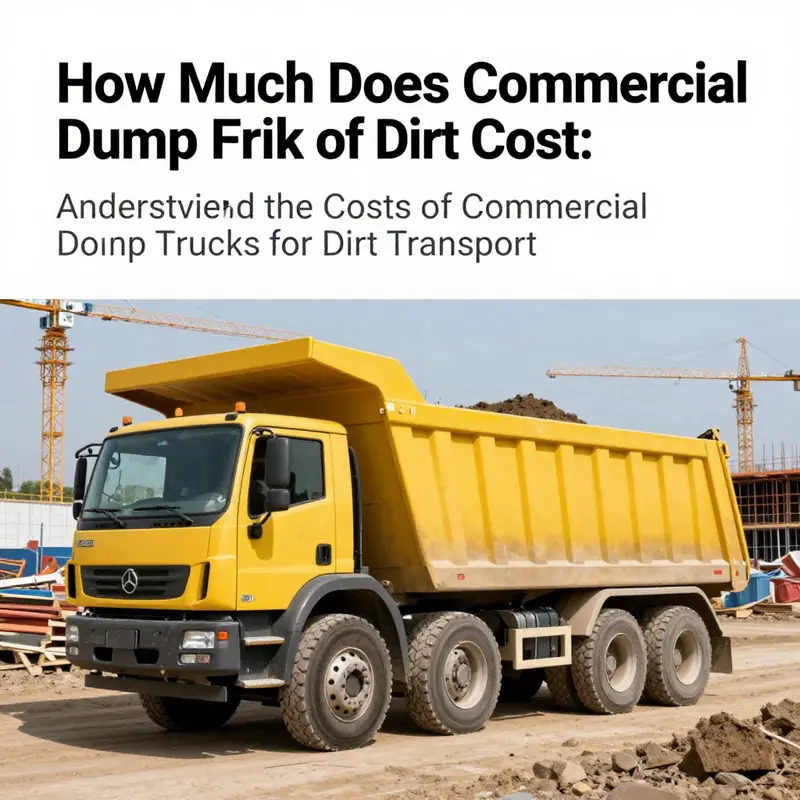
On a job site, the dirt hauler is more than a machine with a sticker price. To estimate true cost, you balance upfront price with fuel, maintenance, downtime, and lifecycle value. New dump trucks can start around $150,000 and rise with payload, drivetrain, and features, while good-used units often run from about $40,000 to $120,000 depending on age and condition. Diesel power remains common, but electric options are growing, offering potential savings in fuel and maintenance at the expense of higher initial cost. The choice between a standard dump configuration and a transfer system affects unloading flexibility, maintenance complexity, and resale value. Efficiency matters: higher payload per cycle, shorter cycle times, and reliable uptime reduce total ownership cost—especially on longer projects. A practical approach is to model upfront cost separately from recurring expenses: fuel or energy, maintenance contracts, tires, insurance, and downtime. Compare apples to apples: same payload capability, same duty cycle, and equivalent service support. For ongoing work, a higher upfront investment in a capable machine can pay off through reduced downtime and better cycle efficiency, while shorter programs may favor robust used units with straightforward maintenance. To stay current, rely on manufacturer pricing and industry databases, and watch regulatory trends that influence powertrains and service packages. In the end, price is a function of the job’s demands, the truck’s configuration, and the long run cost of ownership over the project lifetime.
The Material Equation: How Dirt Volume Shapes Dump Truck Costs and Equipment Choices
The dirt you move on any site is not just bulk material; it’s the reason a project exists and the metric by which the plan accelerates or stalls. In a world where the cost of a commercial dump truck is a fixed line item in your capital or operating budget, the amount of dirt handled per hour becomes the lever that dictates equipment selection, scheduling, and even risk management. The volume of dirt per load translates into a cascade of effects: the number of trips required, the amount of fuel burned, the labor hours spent on loading and unloading, and the wear and tear on every link in the transport chain. The interplay between volume and capacity is thus not merely a matter of choosing a bigger truck; it is a strategic decision that influences the entire project lifecycle.
In practical terms, a dump truck’s load capacity is the essential constraint. A truck with a larger payload can move more material in a single trip, which means fewer trips and less time spent on road and site. Fewer trips reduce truck-hours and crew hours, trim fuel consumption, and lessen exposure to on-site environmental conditions that can slow work. But increased capacity is not free. Larger trucks cost more upfront—new models can range widely from around 150,000 dollars to well over 300,000 for premium configurations and powertrains. Used units can be significantly cheaper, with price bands that reflect age, mileage, and condition. The decision to buy new or used, to invest in a die-hard haulage machine or to rent, hinges on a balance between capital expenditure and the operating costs that flow from each load. In many projects the economics hinge on the pickup rate—the number of cubic yards transferred per hour or per day—and the trucks’ reliability to maintain a steady cadence.
We think in terms of load density and the physical limits of the equipment. Dirt is dense; its weight per cubic yard varies with composition and moisture. Wet or clay-rich fill pushes weight up, while dry, loose material is lighter but can be more prone to windage and spillage. The payload limit of a dump truck is the real guardrail: you must stay within that limit or the truck can become inoperable due to overweight penalties or structural strain. Safety and regulatory considerations thus intersect with economics here. You may encounter weight restrictions on certain road segments or bridge routes, and those constraints can force you to split a project into more trips or to choose a truck with a different axle configuration. The result is a direct line from the dirt’s volume and moisture content to the equipment spec you need to meet the site’s constraints and the local road rules.
Mobilizing dirt efficiently demands more than simply picking the largest truck. Project constraints such as site access, turning radius, tire tracks, and ground bearing conditions determine whether a larger, higher-capacity machine actually yields net savings. On a dense urban job, maneuverability matters as much as capacity. A compact model with 3 to 6 cubic yards of payload can weave through tight streets and operate on lighter ground, while still delivering enough throughput to justify its use. On wide, open sites such as large excavations or mining operations, tandem-axle trucks can carry heavier loads per trip and meet the site’s larger material volumes with fewer cycles. But tandem-axle vehicles entail higher maintenance costs, more pronounced fuel use, and sometimes more stringent licensing or permit requirements. The engineering calculus sits at the center: you have to weigh the marginal benefit of more dirt per trip against the marginal costs of securing, fueling, and maintaining a higher-capacity vehicle, plus the potential for increased wear and tear on loading equipment, haul roads, and on-site infrastructure.
The discussion naturally threads into the realm of scheduling and logistics. Effective load management becomes a planning discipline. A project manager who can estimate daily dirt throughput with a high degree of confidence can align trucking capacity, loader productivity, and dump-site turnaround to create a reliable cadence. When a job requires thousands of cubic yards, the choice often tilts toward larger trucks because the cumulative savings on trips and labor become significant. But the same project may be better served by smaller, more nimble trucks if the site is constrained by clearance, underground utilities, or steep access ramps. The optimal choice is not a matter of chasing the biggest machine; it is about matching the truck’s capability to the site, the dirt’s characteristics, and the schedule’s pressure points. It is here that the broader market dynamics weigh in. If demand for capacity in a given region is high, the cost of trucks will reflect that scarcity; if capacity exceeds demand, operators can negotiate more favorable terms or add rental flexibility to control costs. In those market moments, the choice to pursue a larger, more expensive truck or to rely on a fleet of lighter, more versatile units can become a function of cash flow, risk appetite, and the need for predictable throughput.
From a construction or earthmoving perspective, the equipment selection is a triad of capacity, maneuverability, and cost. Single-axle trucks tend to be lighter on initial investment and have favorable fuel efficiency and simpler maintenance. They shine on smaller sites or processes with lighter loads where tight spaces demand precise handling. For heavy, continuous operations, tandem-axle trucks deliver higher payloads per trip and the efficiency of fewer cycles, even if they bring higher fuel consumption and greater maintenance demands. The trade-offs extend into the loading and unloading phases as well. Loading efficiency depends on the compatibility of the loader or excavator with the dump bed height and the truck’s design. On many sites, a mismatch between loader and truck can erase the gains from larger payloads by slowing down the cycle time at the start of each trip. Unloading performance matters too: a well-mated interface between the truck bed and the dump site can speed up tipping, reduce dust, and minimize spillage. These micro-decisions accumulate, shaping the project’s cost curve and its schedule.
The economics of dirt movement are also influenced by how dirt costs themselves are treated. While the truck’s price tag is a capital decision, the dirt’s price is a function of the project’s purpose and the local market for fill or topsoil. In contexts where soil is used as a fill or for grading, a contractor’s total dirt cost is a composite of the dirt’s price, the cost of moving it, the number of trips required, and the time value of money associated with the schedule. Although the numerical price of dirt moves with local supply and demand, the relentless piece of the puzzle remains: every cubic yard moved by a truck changes the project’s costs in a predictable way by altering the number of trips, the fuel burn, and the labor hours. If the project’s dirt movement requires 60 or more loads per day, even a modest increase in payload offers meaningful savings in fuel and labor. Conversely, if the dirt volume per day is modest, the incremental benefit of adding a larger truck can be marginal, and the higher capital expenditure may not be justified.
The longer arc of the narrative includes the evolution of technology and its impact on cost and capacity. Electric powertrains and other advanced drivetrains are reshaping the economics, just as automated features, synthetic oils, and telematics reshape the reliability and maintenance cost profiles of a fleet. While the upfront price for electric or high-efficiency models may be higher, the operating cost savings from reduced fuel use, lower emissions, and potential maintenance advantages can tilt the calculus in favor of those choices over the life of the project. The decision to opt for an electrified or conventional powertrain is itself a function of site conditions, fuel prices, and maintenance capabilities. It’s not simply a line item; it is a strategic risk-adjusted forecast of operating expenses, one that should be modeled against the project’s duration and the expected throughput.
In practice, the right choice is often a balanced combination: a fleet that includes a mix of sizes and configurations to cover a range of site constraints and dirt volumes. A single project might require three or four different truck types at various stages to maintain throughput while respecting access, ground conditions, and regulatory limits. This approach minimizes the risk of bottlenecks while preserving flexibility. It also enables more precise cost control: you can estimate the marginal cost of moving the next batch of dirt, rather than staring at a single, non-linear cost figure that hides the true dynamics of the work. Cost control becomes a matter of granular tracking—recording the exact number of loads, the miles traveled, and the fuel consumption per load for each truck type, and then applying those data points to forecast the next phase of the project with increased confidence. The result is a feedback loop: accurate dirt estimates feed better equipment selection, which in turn improves schedule reliability and cost predictability, and the cycle repeats as the site evolves.
Finally, the broader ecosystem matters. Markets are not static; capacity, prices, and availability shift with seasons, regulatory changes, and macroeconomic conditions. The decision to acquire or rent equipment, to standardize on a handful of payload capacities, or to diversify the fleet is shaped by supplier terms, financing costs, and the age distribution of the local fleet. An operator who tracks excess capacity in the trucking market gains a strategic advantage. The supply-demand balance can change the savings you expect from using a larger truck or a more fuel-efficient unit. For readers who want to explore this dimension, see the broader market insights on excess-capacity-in-the-trucking-market-insights. Excess Capacity in the Trucking Market Insights.
In addition, the chapter ends with an external industry reference that can ground your planning in current market realities and equipment availability: Truck Paper’s listings for used dump trucks provide a benchmark for what machinery is actually out there in the market, in what condition, and at what price. This external resource helps translate the theoretical cost curves into real-world options and helps validate the cost bands described here. For a direct look at available stock and specifications, see Truck Paper’s Used Dump Trucks listings: https://www.truckpaper.com/used-trucks/dump-trucks
This chapter is crafted to tie the dirt-moving problem to the economics of the equipment that makes it work. It is not a tale of the biggest truck but of the right mix of capacity, site access, and cost discipline. It invites readers to model throughput and price, to test the sensitivity of results to changes in dirt density, and to treat the truck as a dynamic variable in a larger system that includes loading rate, site conditions, regulatory constraints, and market cycles. The goal is a robust decision framework: one that recognizes that dirt volume is the dial that shapes a project’s cost architecture and equipment strategy—and that, in turn, empowers operators to design plans that are both efficient and financially sound. This approach also leaves room for adaptation as dirt types vary by project and as market conditions shift, ensuring that the same framework can guide both small, urban tasks and large-scale earthmoving endeavors.
To translate theory into practice, consider the following modeling mindset: start with a dirt-volume forecast for the project’s critical phases, then map that forecast to a spectrum of truck configurations. For each configuration, estimate the number of loads per day, the miles traveled, and the cycle time from wheel drop to site return. Apply a unit-cost analysis that includes fuel, maintenance, depreciation, and crew wages. Compare scenarios not just on the lowest upfront price but on total cost of ownership and schedule reliability. Add a risk-adjusted layer that accounts for potential delays from weather, road restrictions, or loader downtime. The result is a hierarchy of options, where the most economical path may not be the cheapest truck, but the option that yields the most predictable throughput with acceptable risk. This is the heart of planning for dirt movement: a rational, data-driven balance between volume, velocity, and value, anchored by a clear understanding that the dirt itself is the driver of both cost and capability—and that the truck is the instrument that turns soil into progress.
External resource note: Truck Paper’s listings provide real-world context for availability and condition of used dump trucks (https://www.truckpaper.com/used-trucks/dump-trucks). Internal link note: For broader market dynamics and capacity insights, see Excess Capacity in the Trucking Market Insights. Excess Capacity in the Trucking Market Insights.
Carrying the Load: What a Dump Truck of Dirt Reveals About Environmental and Economic Shifts in Infrastructure
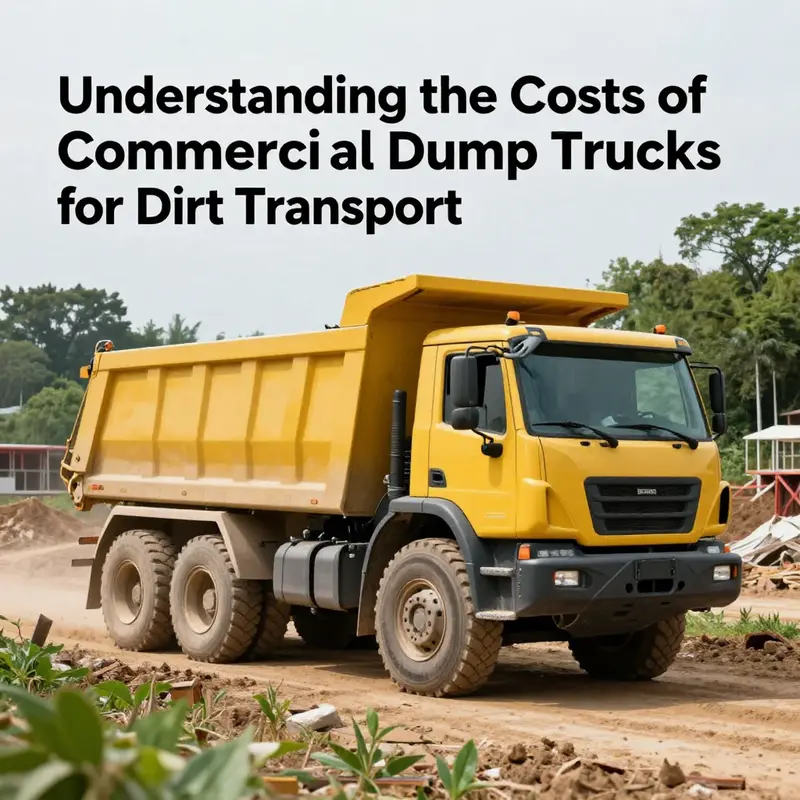
A dump truck loaded with dirt is more than a workhorse on a job site; it is a moving symbol of how modern economies balance growth with responsibility, how the cost of moving earth mirrors the costs of moving society forward, and how the invisible pressures of regulation, technology, and market demand shape the most rugged, pragmatic machines in the industry. When we consider the price tag of the trucks themselves—the difference between what a brand-new machine costs and what a well-kept used unit can fetch—we glimpse the larger economy’s ideas about value, risk, and durability. The dirt carried by these vehicles is a tangible proxy for the earthbound investments of cities, mines, and developers. It testifies to the scale of work required to build and restore, to the way infrastructure contends with terrain, weather, and resource constraints, and to the way industry reconciles the urge to move more material with the obligation to minimize harm to the air, land, and communities adjacent to construction corridors.
Environmental considerations begin with the vehicle’s engine and the fuel that powers it. Diesel-powered dump trucks, favored for their durability and torque, embody a substantial environmental footprint. They emit nitrogen oxides, particulate matter, and greenhouse gases in volumes that accumulate across thousands of hours of operation. The cumulative effect is a notable slice of emissions from the heavy equipment that underpins large-scale earthmoving. This is not a marginal concern; it is central to how governments and the public view the industry. In response, regulators have pursued tighter standards and more stringent testing. The industry, for its part, has responded with a spectrum of approaches—from improving engine efficiency and exhaust treatment to exploring electrification and alternative powertrains. Electrification, in particular, signals a fundamental shift in the calculus of operating costs and environmental impact. An electric powertrain can substantially reduce tailpipe emissions and can also lower maintenance costs, which matters when a single job may run for months and personnel costs are a constant consideration. Yet the upfront investment for electric or hybrid systems remains higher, creating a careful balance between immediate budget constraints and longer-term savings. In this tension, the chapter’s subject—the dump truck of dirt—becomes a lens into how the industry negotiates present cost with future benefit.
From the perspective of a project’s economics, the cost of the equipment itself is only part of the picture. The market for dump trucks—new and used—reflects the broader health of infrastructure and resource exploitation. As of early 2026, a brand-new, standard-sized dump truck tends to start near the mid-six figures and can quickly rise beyond the low-to-mid hundreds of thousands for larger configurations or those equipped with advanced safety, automation, or powertrain options. A comparable used model, by contrast, can be acquired for a fraction of the new price, typically ranging from the low tens of thousands to around six figures, depending on age, mileage, and condition. Those price ranges echo a longer-standing truth in construction and mining: capital costs are high, but depreciation and lifecycle expenses must be weighed against throughput, reliability, and downtime. A single breakdown or a stalled schedule can cascade into missed deadlines, penalty clauses, or reduced productivity, so the economics of ownership extend far beyond the sticker price. In this context, the decision to pursue new versus used equipment—tied to project duration, maintenance capacity, and anticipated fuel costs—becomes a strategic choice, not merely a budget line item. The broader market also shapes expectations. The global dump trucks market, valued in the tens of billions, signals robust activity in infrastructure and mining. Growth trajectories, often measured in compound annual growth rates, reflect a belief that the world will continue to invest in roads, bridges, tunnels, and resource extraction. That confidence, in turn, creates a cycle: more projects demand more machines, pushing manufacturers to innovate, which then feeds back into productivity and price dynamics.
What makes the dump truck a compelling focal point for environmental and economic discourse is not just its propulsion system or its payload, but the way it embodies trade-offs. The payload is the unit of work, but the efficiency of each trip is equally important. Driving with a full, heavy load consumes more energy per ton moved than running with a lighter load but more trips. In practice, fleets optimize for a balance: maximize payload while minimizing fuel burn and wear on tires, axles, and drivetrain components. This optimization is where technology begins to alter the equation. Automated or remotely monitored systems, for instance, can optimize routes, reduce idle time, and improve maintenance scheduling. Autonomous, unmanned heavy-vehicle platforms are not just about reducing human labor costs; they’re also about consistent, repeatable operations that curb emissions per ton of material moved. They represent a shift in the industry’s operating model, moving toward precision and predictability in environments that are often harsh and dynamic. The environmental benefits of such systems arise not only from reduced idling and optimized speed but also from better integration with other energy-saving technologies, such as hybrid powertrains and, in some cases, electrified power sources. This is the broader arc: machines become not just heavier and more capable but smarter and cleaner, even as they carry the heavy burden of dirt across challenging landscapes.
Amid these technical evolutions, the economic dynamics continue to push toward smarter capital investments and smarter operations. The market’s valuation and forecasted growth suggest sustained demand for earthmoving capacity, driven by urbanization, resource development, and the renewal of aging infrastructure. Yet this demand comes with a new suite of costs and expectations. Operators must account for stricter environmental rules, higher insurance and safety standards, and the rising cost of compliance. They must also evaluate the total cost of ownership—not just the purchase price but the lifecycle expenses of fuel, maintenance, parts, and downtime. In this milieu, even seemingly minor improvements—like redesigned mirrors with heating to combat frost and glare, or more ergonomic cabin layouts that reduce driver fatigue—acquire strategic importance. These features translate into longer driver life on the job, higher productivity, and fewer delays, which in turn weaken the financial case for cutting corners on equipment quality. The industry’s cautious optimism about electrification and automation is not a bet on a far-off future; it is a practical response to today’s pressures to reduce emissions while maintaining cost efficiency and reliability.
The environmental and economic narratives converge most clearly when we consider how policy, technology, and market forces intersect in daily operations. Regulators push for cleaner air and lower emissions, and the industry responds by accelerating research and adoption of cleaner powertrains, while also leveraging digital tools to manage fleets more efficiently. The push toward cleaner technologies has a dual effect: it raises upfront costs for fleet owners, but it also promises lower operating costs over the life of the equipment. In many cases, incentives, tax credits, or favorable depreciation schedules help offset the initial price premium for electric or hybrid systems, making the long-term arithmetic more favorable. For operators, the decisive question becomes not only what a dump truck costs today, but how much it will save them over its service life through reduced fuel use, lower maintenance, and improved uptime. In infrastructure-heavy economies, a single efficient fleet can expand project throughput, shorten schedules, and free up resources for additional work, reinforcing the idea that modern earthmoving is as much about intelligent resource management as it is about brute force.
The industry’s forward-looking trajectory is also shaped by the emergence of greener, smarter, and safer fleets. Electrification, while still evolving, is no longer a distant possibility but a growing component of many operators’ long-term plans. The initial premium is increasingly offset by lower fuel costs and less exposure to volatile fuel prices, as well as reduced maintenance costs associated with simpler drive systems and regenerative capabilities in certain configurations. Autonomy and advanced telematics offer a different kind of return: improved safety, fewer accidents, and more precise control over work cycles. The economics of scale come into play here; larger fleets can amortize the fixed costs of new technologies more effectively, accelerating the transition for companies with substantial dirt-hauling needs. In this sense, the dump truck’s load becomes a case study in how to blend environmental stewardship with compact, data-driven operations that attract investors, lenders, and project sponsors who want demonstrable efficiency and accountability.
It is also worth noting that the environmental and operational realities of dirt transport are not abstract; they shape day-to-day decisions on the ground. For example, when a project negotiates schedules with suppliers and contractors, it weighs not only the price of the earthmoving equipment but also its reliability, fuel efficiency, and the environmental footprint of the work. The choice between a new truck and a well-maintained used one is influenced by the expected workload, the availability of skilled maintenance personnel, and the cost of potential downtime. On a long project with strict deadlines, reliability often trumps every other consideration; a more expensive but dependable unit may prove cheaper in the long run than a cheaper but fragile machine that keeps breaking down. In regions where emissions regulations are particularly stringent, operators might gravitate toward equipment that aligns with compliance timelines and future-proofing strategies. The sensible operator connects the dirt moving exercise to broader goals: lower emissions per ton moved, safer work sites, and a clearer path to sustainable profitability. In short, a dump truck of dirt is the most visible artifact of a system in motion—pushed by markets, steered by policy, and advanced by technology toward a more efficient, more accountable extraction and transportation of material.
Within this tapestry, the numbers stand as both record and forecast. The market’s stated size and growth rate tell us about the scale of opportunity, while the price range for new versus used machines tells us about risk, credit conditions, and the depreciation dynamics that drive fleet refresh cycles. The environmental dimension—emissions, energy efficiency, and cleaner powertrains—translates into a practical decision framework for operators: invest now to realize long-term savings and compliance, or defer and risk higher costs later as regulatory and market pressures intensify. The result is a nuanced equilibrium in which stakeholders, from owners of fleets to project financiers, must weigh upfront capital against long-run environmental and economic benefits. In this dynamic landscape, the dump truck carrying dirt becomes not merely a tool for moving earth but a bellwether for how the industry navigates the interplay of growth, responsibility, and resilience.
For readers who want to explore these dynamics in a broader context, consider how regulatory clarity and industry adaptation intersect. A useful perspective within the sector highlights the ongoing dialog between technology developers and policymakers as they seek to balance innovation with enforceable standards. This conversation underscores the central insight of the chapter: environmental and economic trends are inseparable when evaluating the true cost and value of moving earth in a modern economy. The equipment’s price, its maintenance, and its fuel use together shape the financial feasibility of projects that rely on earthmoving capacity. They also reveal a sector in transition, where smarter machines, cleaner energy, and smarter management practices promise to deliver not only productivity gains but also a more sustainable footprint for a world that must keep building without paying twice for the same environmental debts.
In the broader sense, the dirt being transported is a reminder of the material foundations of our built environment. It is the budget line that pays for new highways, rail yards, and mining operations, but it is also a line that must be managed with care to minimize emissions, fuel consumption, and waste. The industry’s trajectory toward electrification and automation suggests a future in which the load carried by each vehicle becomes lighter in terms of emissions and heavier in terms of reliability and efficiency. This is the paradox that defines the era: to do more with less, to move more material with cleaner energy, and to do so while maintaining profitability and safeguarding communities and ecosystems. The dump truck’s journey—from raw earth to finished landscape or structure—mirrors society’s own journey toward a more sustainable, technologically enabled economy. It is in the rhythm of those wheels—the cadence of trips, the balance of payload, the regulation and the innovation—that the chapter finds its throughline: the dirt that must be moved to build the future also pushes the industry to move toward a future that moves cleaner, smarter, and more efficiently than before.
Internal link reference: For a deeper look at how emissions regulations are shaping equipment development and deployment, see OEMs seek clarity in emissions regulations. This discussion helps contextualize how policy dialogue translates into tangible choices on the ground and in fleet rosters, illustrating how environmental goals are translated into operational reality on every job site. https://truckplusllc.com/oems-seek-clarity-in-emissions-regulations/
External reading: For a broader understanding of global trends in ensuring the environmental friendliness of mining dump truck operation, see the related research article. https://doi.org/10.31407/ijees13.130
Final thoughts
Comprehending the pricing dynamics of commercial dump trucks is essential for logistics and construction companies as they make purchasing decisions. By evaluating how these costs vary and considering their implications on equipment selection and alignment with industry trends, stakeholders can optimize their investments. Understanding these factors not only enables better budgeting but also ensures compliance with evolving environmental standards. As businesses prioritize efficiency and sustainability, a strategic approach to procurement will undoubtedly pay dividends in the long run.