
The trucking industry is witnessing a crucial shift as it acknowledges the contributions of women within the workforce. As revealed by the 2024-2025 Women in Trucking Index, only 9.5% of professional truck drivers currently hold Commercial Driver’s Licenses (CDLs) in the United States. This chapter sets the stage to explore key themes: the current statistics detailing what percentage of commercial truck drivers are women, the barriers these women face entering the industry, the significant impact their presence has on industry dynamics, and strategic efforts that can be undertaken to enhance female participation in trucking. An overview of future trends will also be provided, presenting a holistic picture of the changing landscape of the trucking workforce.
Reading the Driving Demographics: What Percent of Commercial Truck Drivers Are Women and Why It Matters
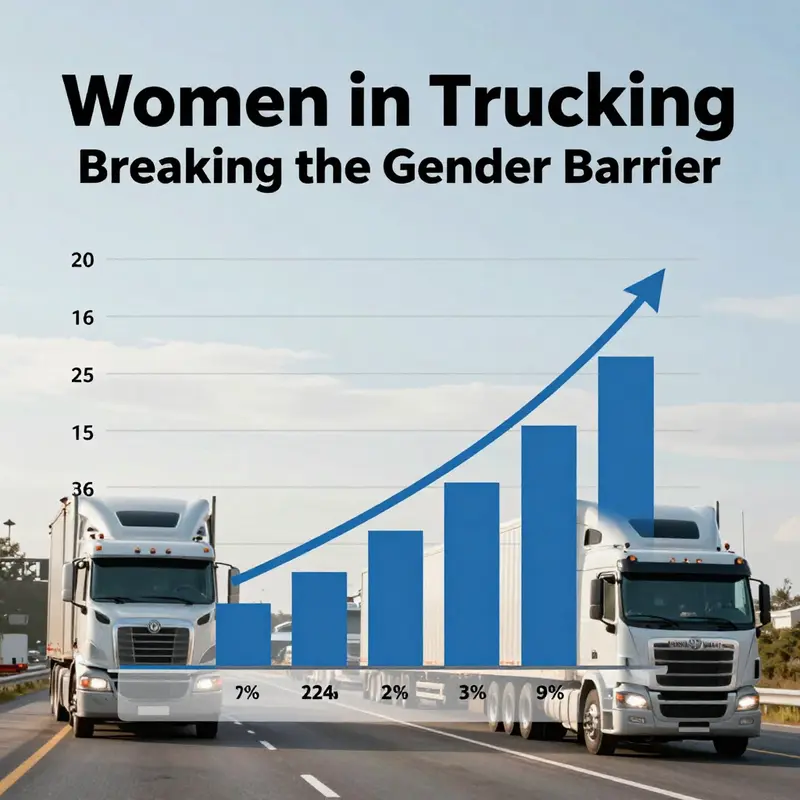
Numbers on who drives the nation’s freight tell a story about gender and work. In trucking, two figures shape the conversation: the share of women who actually drive commercial trucks and the share of women who hold the licenses required for those jobs. The 7.1% figure from the U.S. Bureau of Labor Statistics reflects women in the occupation of heavy and tractor-trailer truck drivers in 2023, highlighting that women remain a minority on the open road. By contrast, the share of women who hold Commercial Driver Licenses among drivers is higher, suggesting that among those pursuing licensure, women are more represented than in the broader occupation. These figures measure different things and must be interpreted with care. The data also interact with broader labor-market dynamics, recruitment challenges, and policy and training pathways that affect entry, retention, and advancement for women in trucking. Encouraging CDL attainment can help expand the pipeline, but progress depends on training access, early exposure, and workplace culture that supports women throughout their careers. The numbers are a diagnostic tool, not a verdict, guiding efforts to diversify entry points, improve retention, and tell a more complete story of women’s growing role in moving goods across the country.
Breaking Through the Cab Door: Barriers, Data, and the Slow Rise of Women in Commercial Trucking
When we talk about the percent of commercial truck drivers who are women, the numbers serve as both a mirror and a compass. They reflect a workforce that has long been male-leaning and they point toward the work required to broaden participation. In recent industry reporting, roughly seven percent of U.S. truck drivers are women, a figure that underscores the stubborn gap in participation even as diversity efforts are framed as drivers of safety, efficiency, and resilience on the road. The 2024–2025 figures also show that among those who hold Commercial Driver’s Licenses, the share of women rises to about 9.5 percent, suggesting that licensing status interacts with recruitment pipelines in meaningful ways.
Barriers operate at multiple levels. The absence of robust mentorship, limited visibility of female role models, and a culture that can feel unwelcoming to newcomers all contribute to a slower entry and higher turnover. Safety concerns—nighttime risks at rest areas, remote routes, and inconsistent support—also shape who applies and who stays. In response, fleets are piloting mentorship programs, upgrading in-cab technologies, and building networks that connect women for problem solving and career planning. Leadership commitments to equity, transparent reporting, and accountability are increasingly common, but require sustained effort across all levels of a company.
Data-informed action is essential. Beyond hiring campaigns, the industry is investing in onboarding experiences, flexible schedules, and safety-focused design to reduce barriers. Industry associations and regional programs play a crucial role in sharing best practices and expanding the talent pool. Looking ahead, the goal is not merely to raise a percentage but to widen the pipeline, improve the onboarding experience, and create a culture where women can enter, stay, and advance in trucking.
Steering Toward Diversity: How 9.5% of CDL-Holding Women Are Reshaping the Trucking Landscape
The number 9.5 percent sits at the center of a broader narrative about trucking’s evolving workforce. It represents women who hold Commercial Driver’s Licenses and actively drive, haul, and navigate the vast logistics network that keeps goods moving across the nation. This figure, drawn from the 2024-2025 Women in Trucking Index, marks progress in a field long dominated by men. It also signals that the industry is inching toward a more inclusive standard of excellence, one that recognizes talent wherever it is found and rewards competence, reliability, and steady performance. Yet the statistic is more than a tally. It is a lens on culture, leadership, safety, and strategy. When a growing share of drivers are women, the entire operation can begin to shift—from how teams communicate to how routes are planned, from how risk is assessed to how mentorship networks are built. The 9.5 percent is not a ceiling but a foothold, a point from which the industry can climb toward higher representation without sacrificing the standards that drive efficiency and safety on America’s roads.
To understand why this matters, consider the driver’s seat as a focal point where many strands of the industry intersect. At its core, trucking remains a labor-intensive, highly skilled profession that requires consistent decision-making under pressure, meticulous adherence to regulations, and a disciplined approach to customer service. Women entering this arena bring distinct strengths that complement existing skills. They often contribute differently to team dynamics, particularly in high-stress shuttle operations, long-haul convoys, and multi-stop deliveries where coordination and clear communication are critical. When the percentage of women rises, it tends to correlate with improvements in collaboration, more robust safety practices, and a broader range of problem-solving approaches. These outcomes matter not only for driver welfare but for the entire supply chain’s reliability, especially as the industry contends with chronic driver shortages and the persistent pressure to reduce lead times without compromising safety.
The statistic’s significance also lies in its drivers—the people who choose this career path, train for it, and stay in it long enough to pass on experience. Recruitment has become a central strategic concern. Carriers have invested in outreach programs that highlight achievable career trajectories, not just entry-level roles. These programs emphasize scalable routes from apprentice to experienced driver, and from there to leadership positions within fleet operations. The growth in women’s representation is partly a function of targeted recruitment messages, but it also reflects a shift in the social fabric that surrounds trucking. Societal perceptions about women in the workforce are evolving. As more stories emerge about women who excel in the cab, more would-be drivers see trucking as a viable, respectable profession rather than a niche occupation. This shift is reinforced by mentorship networks, industry associations focused on women in trucking, and a culture that increasingly values diverse viewpoints as a source of competitive advantage.
One consequence of a more diverse driver cohort is a broadening of the problem-solving repertoire that teams bring to daily operations. For instance, in dispatch rooms and on the road, varied backgrounds contribute to more nuanced risk assessments and more imaginative contingency planning. When a driver, navigator, or trainer brings a different lens to a routine challenge, it can translate into fewer near-misses and a more proactive approach to maintenance and compliance. The safety record of a fleet is not merely a reflection of adherence to the book but of how teams learn from mistakes, share insights, and reinforce best practices. Women’s growing presence can help accelerate that learning loop by elevating communication norms, encouraging questions, and ensuring that procedural updates reach every member of the crew, from seasoned veterans to new hires.
The economic backdrop amplifies the importance of this trend. The trucking industry continues to face labor shortages, a reality that has persisted for years, subtly shaping wage dynamics, service levels, and equipment utilization. When the supply of qualified drivers tightens, the value of every trained professional rises. In such a market, retaining skilled drivers becomes as critical as recruiting new ones. A more inclusive environment can contribute to higher retention, particularly if it is accompanied by concrete supports. Flexible scheduling where feasible, family-friendly policies, and accessible professional development can help retain capable drivers who might otherwise seek careers with less compatibility with personal responsibilities. Retention is not only about reducing churn; it is about preserving institutional knowledge, preventing gaps in customer service, and maintaining operational continuity across peak seasons and crisis periods.
The signals of progress are not only statistical but experiential. For women who enter trucking, seeing colleagues and supervisors who respect their expertise creates a feedback loop that reinforces confidence, competency, and ambition. The industry benefits when women who start as drivers see potential paths to become trainers, safety leads, maintenance coordinators, or fleet managers. This kind of upward mobility, in turn, diversifies decision-making at leadership levels and injects fresh viewpoints into governance, budgeting, and policy development. It is not accidental that many discussions about the future of trucking now center on workforce development and inclusive leadership. As automation and advanced driver assistance systems reshape certain tasks, the human element remains central. The ability to interpret data, anticipate customer needs, and communicate clearly across teams—these abilities often flourish in diverse teams that include women who have grown within the profession.
Another layer to consider is the way this share interacts with broader industry trends. The growth in female drivers aligns with steady gains in professional education, safety training, and cross-functional collaboration. It accompanies a push toward more inclusive safety cultures, where drivers feel empowered to speak up about near-m misses or maintenance concerns without fear of reprisal. The education pipeline—from CDL schools to on-the-job training and advanced certifications—also responds to this shift. When more women enroll and persist, schools and carriers adapt by offering materials and mentorship that speak to diverse learning styles and life circumstances. This adaptation helps normalize trucking as a long-term career rather than a temporary stage. The net effect is a more resilient industry, better prepared to navigate regulatory changes, shifting freight patterns, and the logistical complexities of a modern supply chain.
The numbers thus become a narrative about choices—the choices drivers make, the choices companies make in how they recruit and support talent, and the choices policymakers and industry groups make as they work to close gaps and remove unnecessary barriers. In this sense, the 9.5 percent figure is a baseline, not a verdict. It invites questions about what conditions enable more drivers to enter the field, stay in it, and rise into leadership roles. It invites examination of training pipelines, childcare support, wage progression, and career development opportunities. It invites a conversation about equipment design and cab ergonomics that may affect who can comfortably and safely operate a vehicle for long hours. It invites a closer look at how data are collected, analyzed, and acted upon to foster progress rather than simply celebrate a headline statistic. And it invites stakeholders to imagine a trucking ecosystem where gender is not a defining constraint but an attribute that, when embraced, adds depth to problem-solving, efficiency, and service quality. The practical implications are tangible: healthier workplaces, steadier driver rosters, and more reliable service levels for shippers and receivers who rely on dependable, timely deliveries.
As the industry continues to recover from the disruptions of recent years, the 9.5 percent mark sits within a broader recovery narrative. The link between workforce diversification and operational resilience becomes increasingly visible when you observe how teams handle spikes in demand, disruptions at borders, and the need to maintain uptime across a dispersed network. The way forward involves a coordinated blend of recruitment, retention, and advancement opportunities that acknowledge the value women bring to the cab, the planning desk, and the maintenance bay. The goal is not only to fill seats but to cultivate a culture where skill, safety, and collaboration are the baseline expectations for every driver, trainer, and fleet leader.
For readers seeking a concrete path to understanding the current state and future directions, consider how this diversity trend intersects with broader labor market signals. As a snapshot of what’s happening now, the 9.5 percent figure captures both progress and the work that remains. It is a reminder that the trucking industry is, at its core, a human enterprise that thrives when the workforce mirrors the diversity of the nation it serves. The momentum suggested by the latest index points to a future where women in trucking are not a niche but a core component of the industry’s ongoing modernization and resilience. Embracing that momentum will require continued commitment to inclusive recruiting, robust training, meaningful advancement opportunities, and thoughtful policy adjustments that address real-world barriers. When these elements align, the freight network gains not only capacity but character—a network capable of delivering reliably in a landscape shaped by change, competition, and the steady hum of progress.
For a deeper dive into the current state and future trends of women in trucking, refer to the official report: Women in Trucking Index 2024-2025 – NATSO Foundation.
Internal reference for further reading: you can explore related industry dynamics and worker trends in broader labor market discussions, such as the ongoing developments highlighted in this piece on trucking job recovery and stabilization: 2024 trucking job recovery stabilization signals hope.
External resource: For a comprehensive external perspective on the topic, see the Women in Trucking Index 2024-2025 which provides detailed analysis and context about the evolving role of women in the CDL community.
Shifting Gears: Pathways to Increase the Share of Women in Commercial Trucking
The trucking industry has long relied on a workforce that skews male, yet evidence shows a steady, incremental rise in the participation of women with Commercial Driver’s Licenses. This chapter outlines a practical, evidence-based approach to growth that treats recruitment, retention, workplace culture, and systemic barriers as parts of a single, interlocking system rather than as isolated initiatives.
A central pillar is targeted recruitment. To expand the pipeline, outreach should meet potential drivers where they are and speak to diverse life circumstances and ambitions. Partnerships with community colleges, vocational schools, and women’s organizations can create direct pathways to CDL training. Sharing authentic career narratives from women who have thriving trucking careers helps challenge stereotypes about who drives, where they come from, and what the job entails. Recruitment messaging that foregrounds safety, stability, and long-term opportunity tends to outperform generic appeals about “adventure.” The goal is practical and human: trucking as a sustainable, dignified profession with clear routes for skill development and advancement.
Beyond recruitment, retention is essential. Recruitment without retention simply shifts the problem. Flexible scheduling, predictable home time, and family-friendly policies support women who balance caregiving responsibilities and a demanding driving career. Transparent rest requirements and fair shift distribution—along with clear communication about career progression—help drivers feel supported and valued. Engage female drivers in policy design to ensure reforms reflect real experiences.
A welcoming workplace culture underpins retention. Provide gender-inclusive facilities, train managers and peers in unconscious bias, and maintain clear anti-harassment policies with accessible reporting channels. Leadership must model inclusive behavior and accountability. Mentorship programs that pair new female drivers with experienced colleagues can accelerate skills, create belonging, and demystify advancement pathways.
Pay equity and transparent advancement are critical. Regular pay audits, clearly communicated criteria for promotions, and a culture that rewards skill and safety help sustain a diverse driver cadre. When advancement opportunities are transparent and accessible, women are more likely to pursue and persist in growth tracks.
Crucially, these strategies must sit within a broader systemic framework that recognizes an aging workforce, growing demand for drivers, and a competitive labor market. Continuous feedback loops, climate surveys, anonymous reporting channels, and open forums help align policy with lived experiences. Translate input into concrete changes—adjust routes to meet family needs, update training curricula, and expand facilities to foster inclusion. The outcome is a virtuous cycle: improved recruitment supports retention, which strengthens mentorship and accelerates career progression, ultimately increasing the share of women with CDL credentials over time.
To assess progress, organizations should track metrics such as the proportion of women CDL holders, retention rates, tenure, leadership representation, and cross-functional assignments. Data-driven oversight ensures gains are real and durable. As the industry treats gender diversity as a core strategic capability, leadership commitment—from executives to frontline managers—turns policy into day-to-day practice.
Toward a More Equal Highway: Forecasts for the Share of Women in Commercial Trucking
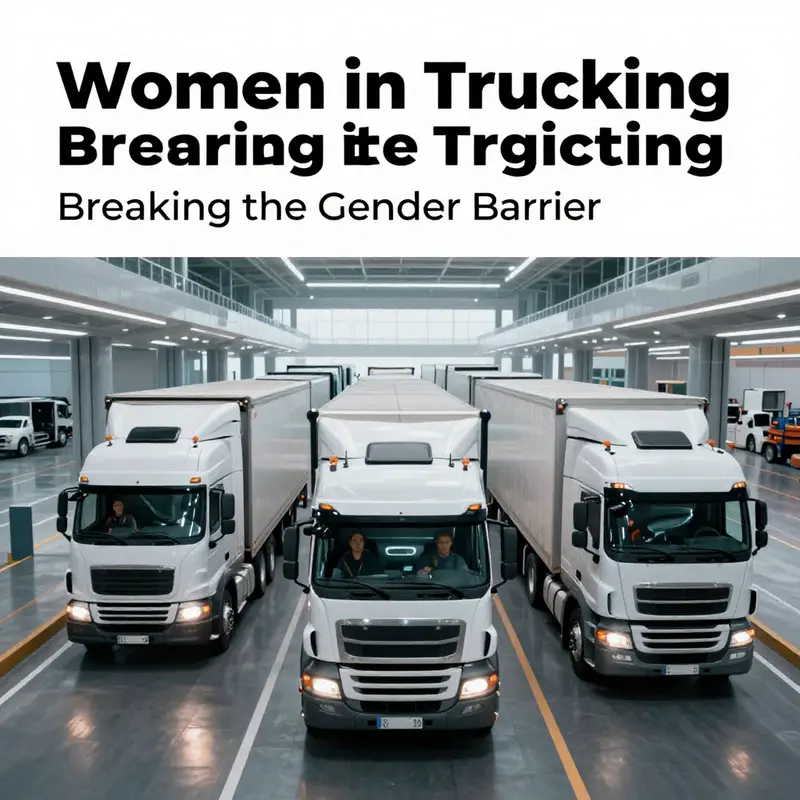
The road ahead for women in trucking is rarely a straight line, yet the latest data point from the Women in Trucking Index—nine and a half percent of CDL holders in the United States being women—reads as both a milestone and a prologue. It marks progress in a field long shaped by tradition, yet it also signals the work still needed to ensure that opportunity, pay, and leadership are not restricted by gender. This number is not just a percentage on a page; it is a reflection of recruitment strategies, training pipelines, and the daily realities of a profession that has historically skewed male. When you consider the broader narrative, the trend is one of gradual ascent aligned with the industry’s urgent need to attract more drivers and the society’s ongoing push for workplace equality. The trajectory matters because it informs how fleets will compete for talent in a tight labor market and how policy makers, educators, and industry advocates will shape pathways into the cab for more women.
From a long view, the gains are striking. In the early 2010s, women comprised roughly 3% of the U.S. truck-driver population. Since then, the share has risen, with reports indicating movement toward the low double digits. In 2019, a Wall Street Journal article, citing the American Trucking Associations, highlighted a 68% rise in the number of female professional drivers. Those shifts did not occur in isolation. They followed targeted recruitment campaigns, the rise of women’s organizations focused on trucking, mentorship networks, and a broader shift in public perception about women’s roles in physically demanding, highly skilled jobs. What this means in practical terms is that more women are seeing trucking as a viable, long-term career with opportunities for advancement, better pay, and the potential for flexible schedules that accommodate family responsibilities—the kinds of factors that historically limited entry for women.
The present moment sits at a critical intersection of opportunity and constraint. On one side, the industry faces a persistent driver shortage that makes every recruited driver valuable. On the other, employers are increasingly aware that diversity is more than an social good; it is a strategic asset. Teams that include women bring different perspectives, communication styles, and problem-solving approaches to freight planning, safety, and customer relations. These differences can translate into operational efficiencies, improved safety culture, and broader appeal to a wider pool of applicants. With freight volumes rising in many sectors, the industry is compelled to rely not only on more drivers but also on more diverse voices to design routes, schedules, and support structures that accommodate a multigenerational, multicultural workforce.
The forces nudging this trend forward hinge on organized advocacy and practical policy changes. Organizations devoted to advancing women in trucking have expanded scholarship programs, created clearer licensing pathways, and pushed for workplace cultures that support work-life balance. These initiatives dovetail with broader industry associations that emphasize a pipeline approach: align training with credentialing, provide mentorship from seasoned drivers, and promote stories of women who have built leadership careers within fleets. The result is a more robust attraction pipeline that does not merely fill seats but nurtures talent with the potential to move into supervisory roles, safety leadership, or operations management. In practical terms, this means more women receiving not only their CDLs but sustained access to the training and development that lead to long, satisfying careers rather than short stints on the road.
Looking ahead, the outlook is cautiously optimistic. The detailed research results for this chapter underscore a pattern: continued growth in women’s representation is plausible as long as the industry sustains and expands its diversity-focused efforts. The consensus among industry observers and researchers is that the upward arc will persist, driven by ongoing recruitment programs, improved workplace flexibility, better support systems, and more effective public awareness campaigns that demystify trucking for potential entrants. In other words, the momentum is real, and it is anchored in tangible actions that respond to the workforce realities of the 21st century.
One important counterbalance is the evolving labor market and the broader economic context in which trucking operates. The demand for freight services remains strong, and capacity constraints are shaping how fleets recruit and retain drivers. In such an environment, employers increasingly recognize that a diverse workforce is not only ethically desirable but also logistically advantageous. Companies that actively invest in inclusive hiring, safe and supportive workplaces, and clear career paths for women may experience lower turnover, higher job satisfaction, and improved safety metrics. The link between workforce diversity and operational performance is not just theoretical; it is becoming a practical consideration in long-term strategic planning for fleets that hope to weather cyclical fluctuations and supply-chain pressures.
To situate this trajectory within broader industry dynamics, consider the labor-market signals that have accompanied trucking’s recovery. The sector has seen fluctuations as the economy cycles through peaks and troughs, yet the underlying driver shortage has persisted, creating a steady incentive to widen the recruitment aperture. This creates an essential context for the anticipated uplift in women’s participation: when more entry points exist and more companies commit to inclusive practices, women’s representation can rise in a more durable way. As demand continues to grow and technology reshapes the job, the industry will rely more on human capital that reflects the customer base and the communities it serves. Women in trucking can contribute to safer roads and improved service quality by broadening the perspective applied to route optimization, traffic management collaborations, and regulatory compliance.
A practical implication of these trends is how companies approach career development and education for aspiring drivers. The pathway from classroom instruction to the cab is increasingly designed around mentorship, hands-on experience, and visible role models. Training programs that pair new entrants with experienced female drivers, acknowledge the unique challenges of the road, and provide flexible scheduling options can help retain women who might otherwise leave early in their careers. The interplay between training quality and retention is particularly important in an industry where early attrition rates can be high. If the training experience is supportive and realistic about the realities of long-haul life, more women are likely to stay, accumulate experience, and eventually advance to leadership positions that influence policy, safety standards, and day-to-day operations on the fleet floor.
The chapter’s synthesis points toward a future in which women could constitute a substantially larger portion of the professional truck-driver population, assuming continued commitment from industry associations, employers, and policymakers. The two pillars—recruitment intensity and workplace culture—will shape the pace of change. Recruitment must go beyond one-off campaigns and become part of a systemic effort: outreach at trucking schools, partnerships with community colleges, and targeted scholarships that create visible pathways into the occupation. Workplace culture must evolve to ensure that safety, flexibility, compensation, and career progression are aligned with the needs of a diverse workforce. In this sense, forecasts are not mere projections but a call to action to align incentives with the goal of a more inclusive trucking landscape.
To illustrate the practical potential of this change, consider how a broader pool of qualified applicants can influence fleet operations in something as concrete as scheduling and route planning. A more balanced gender mix can improve communication across teams, enhance safety cultures, and broaden the set of experiences that inform decisions around load planning and maintenance. In turn, this can create a virtuous cycle: better retention and morale support better safety records and on-time performance, which then strengthens the industry’s reputation and appeal to future entrants. The cumulative effect of these interactions is the prospect of a trucking workforce that reflects the diversity of the communities it serves, delivering improved outcomes for drivers, fleets, shippers, and the public.
For readers seeking a sense of how labor-market dynamics interact with the broader industry, one can look to ongoing conversations about job recovery and stabilization in the sector. The chapter references a range of sources that discuss how job gains and the stability of employment contribute to more stable recruitment patterns, a context in which diversity-focused hiring becomes both feasible and advantageous. In particular, coverage that highlights the resilience of trucking employment highlights the potential for women to enter and remain in the profession as more firms invest in supportive infrastructure and inclusive policies. The practical takeaway is clear: the trajectory toward greater female representation is closely tied to the industry’s ability to offer meaningful, sustainable careers rather than short-term, high-turnover roles. 2024 trucking job recovery signals hope.
Internal link to a relevant industry discussion: 2024 trucking job recovery signals hope
For the most up-to-date and authoritative insights on this evolving trend, refer to the official report from the Women In Trucking Association: https://www.witassociation.com/wit-index
Final thoughts
The trucking industry stands at a pivotal moment, with women increasingly taking their place among professional drivers. The statistic that 9.5% of commercial truck drivers are women highlights both progress and the work that remains to be done. Addressing the barriers to entry, understanding the impact of female drivers, and implementing strategic initiatives are essential for sustainable growth. As we look to the future, it is crucial for all stakeholders in logistics and freight to recognize the value of diversity. Fostering an inclusive environment will not only help alleviate the labor shortage but also enhance operational dynamics. Engaging with this topic is imperative for anyone invested in the success of the trucking industry.