
Creating demand for your commercial truck business is crucial for sustaining growth and building a competitive advantage in the industry. As logistics and freight company owners, construction and mining enterprise procurement teams, and small business owners with delivery fleets, understanding and implementing effective strategies to attract and retain customers is essential. This guide delves into the key components necessary for achieving demand generation, focusing on niche definition, digital marketing, strategic partnerships, exceptional service, and operational efficiency. Each chapter will provide actionable insights that, when integrated, empower you to navigate the complexities of the market with confidence.
Niche Mastery in Trucking: Defining Your Focus to Create Real Demand

Demand in the commercial trucking world does not arise from sheer volume alone. It emerges when a carrier defines a precise reason for a shipper to choose you repeatedly, even when other options exist. The chapter that follows describes how to translate a set of capabilities into a market proposition so clear that buyers see you as the natural partner for their most important moves. This is not about chasing every load; it is about channeling effort into a lane where your expertise, reliability, and service design become the economy of trust that shippers pay for. The road to demand begins with a deliberate focus on a niche—the exact intersection of what you do best and what the market most urgently needs—and ends with the capacity to command premium terms because you solve a real, recurring problem rather than simply filling a truck space.
In practice, that means treating your business as a specialist in a micro-market rather than a generalist in a crowded arena. The payoff is not just higher margins; it is a more predictable pipeline, a reputation built on proven outcomes, and a set of routines that make growth sustainable rather than episodic. To start, define the niche by being honest about your strengths and the market’s real needs. You do not need to be perfect at everything; you need to be excellent at something others cannot easily duplicate. If you can align your capabilities with a high-demand, low-competition segment, you gain a disproportionate share of the value you create. This is the essence of demand creation: you become a magnet for loads that fit your unique approach, and you develop offerings that others cannot easily copy or outprice.
In the modern trucking landscape, the strongest niches address specific pain points at scale while preserving a personal touch in delivery. For some operators, it means temperature-controlled freight for perishables or pharmaceutical products, where compliance and timing matter more than the cheapest rate. For others, it might be last-mile delivery for e-commerce, where speed, accuracy, and coordination with retailers determine customer satisfaction. A fourth lane—intermodal or cross-border freight—offers predictable routes and regulatory clarity. Across these lanes, measurable value is key: on-time delivery windows, real-time tracking, and clear communication reduce the noise of commoditization and make your capability tangible.
As you refine your niche, pursue market validation through direct conversations with potential clients. Ask about current pain points, listen for recurring patterns, and calibrate your service design to what buyers actually value. The more you align operations with these specifics, the more customers perceive you as indispensable rather than optional. Technology acts as a force multiplier: telematics, real-time cargo monitoring, and transparent dashboards turn your niche into a measurable, auditable experience for clients, while a simple client-facing tracking interface further builds trust. The result is a virtuous cycle: focus drives performance, performance justifies stronger pricing, and pricing supports deeper client relationships that sustain a steady demand pipeline.
Finally, treat niche definition as an ongoing practice. If signals change, be prepared to refine or pivot rather than cling to a misfit strategy. Invest in assets that directly support your lane and cultivate a reputation system around your niche by collecting and sharing measurable outcomes. In crowded markets, the differentiator is not the lowest rate but a focused capability that reduces risk and increases certainty for a defined group of customers.
Clicks to Cargo: Turning Digital Marketing into Real Demand for Your Commercial Truck Business
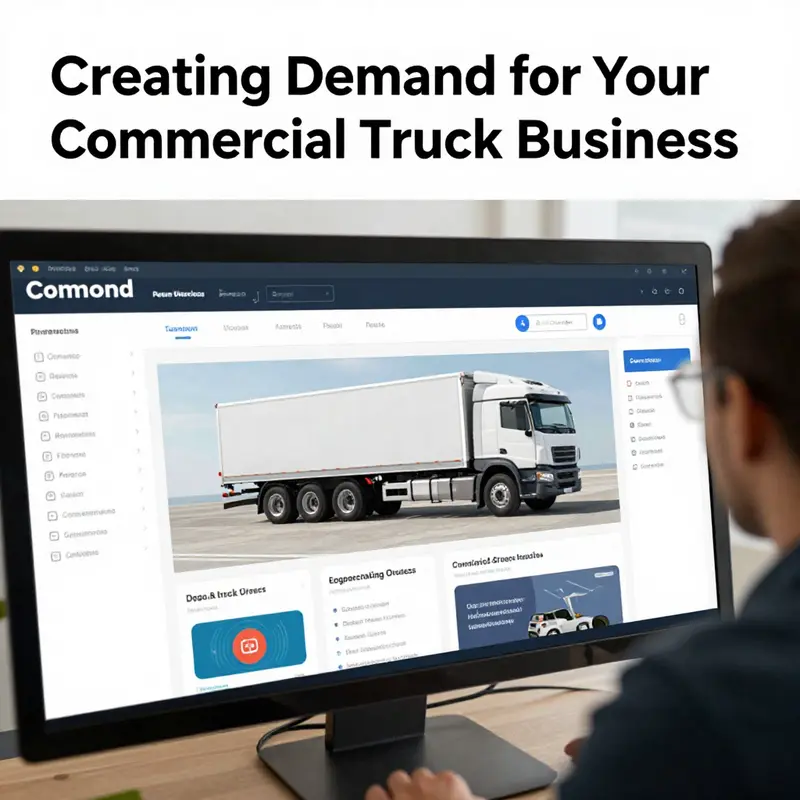
Marketing that once felt optional now sits at the core of demand in the commercial trucking world. The customers you want to reach—fleet managers, route planners, and shippers—do most of their research online before they ever pick up the phone. This shift is not a trend; it is a structural change in how decisions are made. If your fleet is going to compete for capacity in a crowded market, your digital presence must do more than look professional. It must solve problems, illuminate value, and prove reliability in a way that resonates with busy operators who crave predictable outcomes. The journey from awareness to booked loads is a carefully choreographed sequence of touchpoints, each designed to move a potential client closer to choosing your service. At the heart of this approach is a disciplined, data-informed understanding of who buys trucking services, what keeps them awake at night, and how they prefer to consume information during different stages of the buying cycle. You don’t need to be everywhere at once. You need to be where your ideal customers are, speaking in a voice that feels human, urgent, and genuinely useful.
Central to this approach is a clear, defensible niche paired with a compelling value proposition. The most successful operators stop trying to be everything to everyone and instead become indispensable within a precise segment. Consider the needs of cold chain logistics, furniture and appliance delivery, urban construction material transport, or specialized hazardous goods. A strong niche becomes a magnet for relevant inquiries, not by shouting louder, but by answering specific questions with authority. Your digital footprint should broadcast a unique promise—perhaps speed of delivery, superior real-time visibility, or an all-in service package that includes unpacking or cleanup on arrival. The moment you articulate a concrete benefit that matters to a particular customer, you invite trust and a reason to engage.
From there, the marketing machine must be data-driven. The most effective campaigns start with precision targeting: understanding who is researching what, which terms they use, and what content finally compels them to reach out. Data comes from the digital trails customers leave—pages they visit, questions they ask, and the time they spend on load boards or fleet-management resources. This insight lets you craft messaging that speaks directly to a shipper’s operational pain points. It also supports segmentation, so your outreach can switch gears as a prospect moves through the funnel. You might discover, for instance, a rising interest in reliability metrics, or a growing concern about fuel efficiency on long hauls. Your content and campaigns should adapt to these priorities, not pretend they don’t exist.
In this ecosystem, speed and responsiveness are competitive advantages. A standout practice is rapid follow-up on inbound interest. When a lead expresses interest, a quick, confident response can be the difference between a stalled inquiry and a sealed contract. The concept is simple but powerful: demonstrate that you listen, you understand timelines, and you can mobilize quickly. A well-run operation turns this principle into a tangible process. This is not about automated templated replies only; it’s about a thoughtful, timely engagement that shows you value the prospect’s time and needs. The right cadence, delivered with clarity and empathy, reduces friction and builds momentum at the moment a buyer is ready to move.
Your digital presence should also help buyers navigate the entire journey—from awareness to decision to onboarding. End-to-end demand generation funnels map this path with intention. Start with broad awareness through informative content and accessible insights. Move to lead capture with resources that deliver real value, such as practical guides on route optimization, payload considerations, or the economics of different service bundles. Then guide prospects toward conversion with streamlined, transparent touchpoints, including clear pricing concepts, service level expectations, and a frictionless booking or inquiry tool. The tool itself matters as a signal of modernity and reliability. It should be intuitive, fast, and capable of capturing essential details that help your team tailor the proposed solution before a conversation begins.
This is where the relationship between manufacturers, dealerships, and fleet operators becomes crucial. Digital marketing does not replace relationship-building; it amplifies it. A well-designed platform can surface real-time inventory visibility, performance analytics, and helpful sales tools that empower dealers and fleets to close deals more efficiently. When a fleet sees that a carrier can consistently meet commitments, track loads, and provide proactive updates, the trust needed to commit to longer-term contracts grows quickly. Working with partners who share your commitment to reliability creates a network effect: stronger partnerships lead to more referrals, more stable revenue, and a clearer path to growth. The aim is to transform your digital presence from a brochure into a responsive, problem-solving engine that acts as a consultative partner rather than a transactional vendor.
Content plays a pivotal role in this transformation. A steady stream of high-quality materials—blogs, videos, infographics, and webinars—helps your audience learn without feeling sold to. Thoughtful content educates about operational efficiency, explains the tradeoffs between different configurations, and demonstrates how your fleet tackles common obstacles like cold-chain integrity or heavy-load handling. A simple but powerful content idea is to publish practical guides that answer questions potential buyers ask in the early stages of research, such as how to optimize a delivery route, how to reduce loading times, or how to ensure compliant and safe transport of sensitive goods. A short video showing a professional loading process, with an emphasis on safety and care, can be more persuasive than a long written description. The key is to align content with the real-world decisions buyers face and to present clear, tangible value, not jargon.
Local search and presence remain essential even in digitally driven markets. Your business should be easy to find when nearby shippers search for dependable transport. This means ensuring your business information is consistent across channels and that customer reviews reflect a track record of on-time delivery and careful handling. Beyond listings, visible proof points—case studies, client testimonials, and quantified outcomes—can move a prospective customer from interest to inquiry. In practice, this means documenting and communicating results, such as on-time delivery rates, handling success stories, and any cost-saving benefits your clients have realized. Those stories become the social proof that turns a curious browser into a motivated buyer.
For broader market context and how these dynamics interact with capacity trends, explore the industry’s current discussions about excess capacity in the trucking market. Excess capacity insights in trucking market — insights offers a lens on how supply slack can dampen or shift pricing and incentivize service differentiation. Such context helps shape messaging that emphasizes predictability, reliability, and flexible capacity in ways that resonate with shippers facing fluctuating demand. If you want to deepen your understanding of how marketing shifts are reshaping the buyer’s journey, remember that digital strategies do not operate in isolation; they respond to broader market forces and customer expectations.
Ultimately, the best digital approach to demand creation in the trucking industry is not a single tactic but a coordinated, adaptive system. It begins with a sharp niche and a differentiated value proposition, then adds data-driven targeting, fast and meaningful engagement, and a convenient, transparent conversion path. It includes building a trusted ecosystem that strengthens manufacturer and dealership relationships while providing customers with a seamless, informative experience. It also relies on a content engine that educates, demonstrates, and reinforces the operational advantages of partnering with your fleet. When executed with discipline, this approach converts online visibility into qualified leads and, ultimately, into recurring business. The aim is to transform the online browsing moment into a credible, preferred choice for a shipper’s next load.
External resource: How Digital Marketing Is Reshaping the Commercial Vehicle Industry
Forging Alliances that Move Freight: Building Strategic Partnerships to Drive Demand in Your Commercial Truck Business

Strategic partnerships are not a garnish on a growing trucking operation; they are a growth engine that expands reach, credibility, and the range of solutions you can offer buyers who increasingly expect end-to-end capabilities. In a market shifting toward automation and decarbonization, alliances between OEMs, technology developers, and logistics providers are redefining what customers demand from a carrier. Recent industry developments illustrate how these coalitions accelerate adoption by reducing risk, simplifying integration, and expanding service ecosystems that are practical for shippers to buy into. For a fleet operator, this is less about chasing every new trend and more about joining forces where technical readiness, customer need, and business models align, creating a seamless value proposition that would be hard to achieve alone.
Consider the pattern unfolding across the global market: a leading truck manufacturer partners with a renowned autonomy software developer to align product roadmaps and upgrade the service network. The intent is clear—speed up market rollout and strengthen after-sales support so fleets can explore advanced capabilities without shouldering every risk themselves. Although the specifics of technology and branding are evolving, the underlying promise remains steady. When a fleet can rely on a tightly integrated system that combines dependable equipment with ongoing software updates, maintenance, and training, the perceived and real cost of experimentation drops. This is the kind of shared belief that turns curiosity into orders and pilots into scalable programs. The value, in short, is not just new hardware or new software, but a credible pathway to what customers want next.
A parallel emphasis lies in electrification and its regulatory context. Partnerships between battery suppliers and vehicle manufacturers, backed by joint fundraising or shared deployment pilots, can deliver turnkey solutions that reduce total ownership costs and simplify financing, charging infrastructure, and maintenance planning. In this frame, partnerships become risk-shares—distributing the capital, the learning curve, and the coverage that a shipper needs to commit to a longer-term transportation plan. The critical point is how these alliances are structured to deliver practical, measurable outcomes for customers. They are not about one-off demos; they are about repeatable, predictable performance in real-world operations, with a clear return on investment in reliability, efficiency, and service levels.
The most successful partnerships are not one-off collaborations but durable ecosystems. They are built on a shared understanding of customer needs, a commitment to co-development, and a governance model that keeps both sides accountable. In practice, this means joint roadmaps that reflect what shippers actually require—consistent transit times, real-time visibility, maintenance predictability, and the ability to scale up capacity when demand spikes. It also means a joint approach to marketing and selling: a package that bundles equipment, software, and service with a single point of contact, clear service level agreements, and a transparent cost structure that makes the value easy to quantify for buyers.
This is where the literature converges with on-the-ground practice. Industry commentators describe how ecosystems enable OEMs and service providers to meet regulatory expectations and environmental goals without forcing fleets to stitch together incompatible components. The collaboration also helps reassure fleet operators about the transition to greener technology, because the partnership promises a coherent, supported pathway rather than disparate pilots that end up as isolated experiments. As the industry evolves, the emphasis shifts from showcasing the latest feature to delivering integrated, reliable outcomes that help customers meet their own sustainability and compliance targets. Within that shift lies a critical lesson for anyone aiming to create demand through partnerships: the value lies in the way the alliance reduces friction for the customer, not just in the novelty of the technology.
If you are shaping a partnership strategy for your own business, begin by mapping the ecosystem you want to serve. Identify potential partners whose strengths align with your niche—whether that is cold chain logistics, urban freight, or hazardous materials handling—and look for overlaps in customer segments. The goal is to create a joint offering that a shipper would choose over a patchwork of independent solutions. Approach can be framed around shared customer outcomes rather than technical specifications alone. Offer a pilot or a staged deployment that proves value with minimal risk to the customer. Present a simple business case that highlights uptime, cost per mile, and service transparency. This framing helps partners see a direct line from collaboration to profitability, which is essential for sustaining long-term engagement.
An important lever in this process is the alignment of regulatory strategy with product and service development. In many regions, OEMs and their technology partners are learning how to navigate evolving emissions standards, safety mandates, and cross-border compliance. Partnerships that explicitly address these concerns—from data sharing protocols to defined responsibilities in incident response—build trust with fleet operators and easing procurement decisions. For instance, when OEMs seek clarity in emissions regulations, a tightly integrated ecosystem can present a coherent, compliant package rather than a constellation of independent components. This is not merely a compliance tactic; it is a compelling value proposition for customers who want predictable, auditable performance. OEMs seek clarity in emissions regulations
Beyond the technology and compliance narrative, the strength of a partnership depends on governance. You should establish joint decision rights on priorities, performance metrics, and investment levels. Define who owns what part of the customer journey—from initial outreach and pilot to full-scale deployment and ongoing support. Decide how data will be shared and who can access which insights. Create revenue and cost-sharing models that reflect the contribution of each party and the risk each is willing to assume. When governance is thoughtful and transparent, it becomes a source of confidence for customers and a foundation for sustainable growth. It also signals to the market that your organization is serious about delivering integrated, end-to-end solutions rather than isolated ventures that may or may not scale.
Partnerships also unfold into a broader ecosystem strategy. Attending and contributing to industry events—whether they are regional logistics summits, cross-border regulatory forums, or major supplier conferences—helps you stay in sync with the needs of buyers and the capabilities of partners. These forums are where real conversations about co-development, joint go-to-market plans, and risk-sharing come to life. They are the places where a carrier can move from being a vendor to becoming a strategic partner in a shipper’s growth story. Industry associations can amplify your reach, enabling referrals and collaborative opportunities that would be harder to secure through direct selling alone. In this sense, alliances function as both a product strategy and a market strategy, accelerating demand by making your offering more credible and complete in the eyes of customers.
The bottom line is straightforward: to create demand through strategic partnerships, you must deliver credible, scalable, end-to-end solutions that reduce friction for customers. That means not only aligning technology but also creating a shared customer experience, a joint commitment to reliability, and a governance model that makes the collaboration easy to buy from. It also means doing the legwork to establish a pathway for ongoing engagement—maintenance, updates, and training—so fleets can grow with confidence rather than outgrow the alliance they signed up for. When customers see a single, coherent value proposition backed by a trusted ecosystem, the willingness to commit grows, and demand follows.
For fleet operators and trucking businesses looking to scale, the message is clear: cultivate partnerships that are designed for the long haul. Build them around real customer outcomes, not just the next technology demo. Ensure the alliance can deliver consistency in performance, simplicity in procurement, and clarity in accountability. And remember that the ecosystem you help shape can become a differentiator in a crowded market, turning partnerships into a primary driver of demand rather than a secondary tactic. As the industry continues to evolve, those who invest in meaningful collaborations will likely be the ones who move the freight—and the market—with the greatest speed and resilience.
External context for further exploration of how cross-domain partnerships are accelerating autonomous trucking is available here: https://www.observator.net/news/2026/01/28/chuantuo-plus-ai-autonomous-truck-partnership
Trust as Competitive Fuel: How Exceptional Service Builds Reputation and Creates Demand for Your Trucking Business

In a market where bids hinge on reliability as much as rate, exceptional service is a strategic engine for demand. Clients want partners they can depend on when schedules tighten, cargo moves across borders, and compliance matters. A reputation for dependable performance attracts new opportunities, and it reduces the cost of growth because satisfied customers become repeat buyers and advocates who refer others.
Consistency compounds. When a carrier arrives on time, handles freight with care, and communicates clearly about changes, trust grows. Trust lowers perceived risk for shippers and brokers, making them more willing to assign complex or high-value loads to you rather than to a competitor. Industry data show high customer satisfaction correlates with repeat business and referrals, a tangible path to sustainable growth.
What does exceptional service look like day to day? It starts with predictable performance: a delivery window kept, a well-maintained fleet, and a team ready to adapt to weather, traffic, or port constraints. Real-time updates and proactive problem solving turn potential friction into proof of competence.
Technology supports the experience but must be human-centered. Real-time tracking reassures clients, while a single point of contact can translate data into actionable updates and coordinate alternatives when plans shift. Transparent billing with clear, itemized invoices reinforces trust and reduces questions.
Flexibility as a differentiator: last-minute changes, staggered delivery windows, or route adjustments show you value the client’s business. Small touches—assistance unloading, tidy handoffs—build goodwill that pays off on the next job.
The reputational impact extends beyond individual shipments. A track record of reliability reduces friction in the sales process, making pilots and longer-term contracts more likely. It also enables reinvestment in service enhancements – maintenance, training, and process improvements – that create a virtuous cycle of service quality and demand.
Ultimately, service excellence lowers acquisition costs and strengthens lifetime value. It is not a one-time effort but an ongoing discipline guided by leadership and frontline empowerment. When service becomes the default, the market responds with more inquiries and a stronger, more sustainable growth trajectory.
External resource: https://www.trucking.org/insights/research-and-data
Efficient by Design: Turning Operational Discipline into a Demand Engine for Your Trucking Business
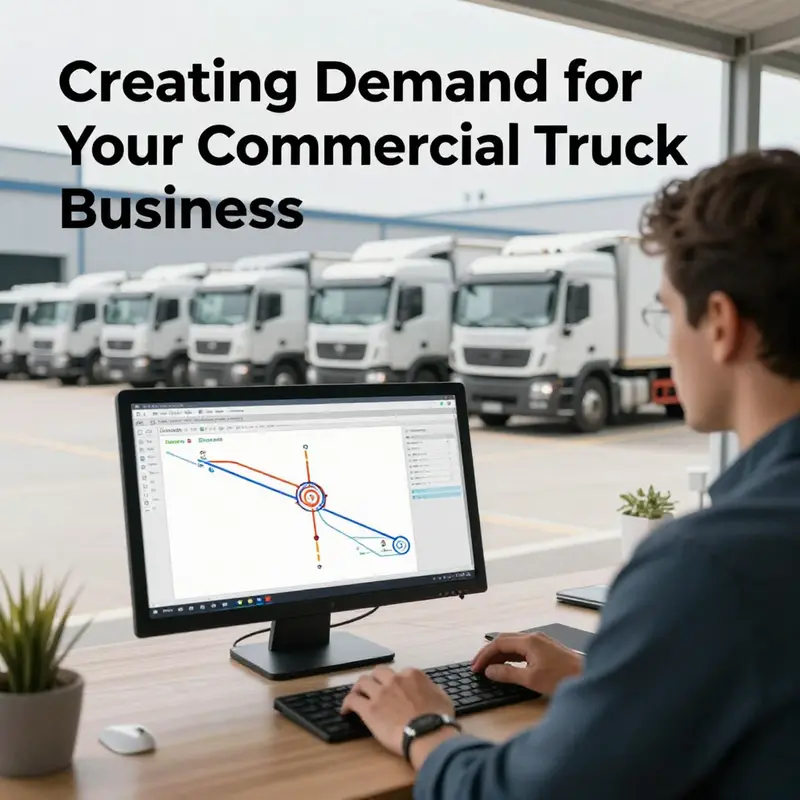
Operational excellence isn’t a nice-to-have in trucking; it’s the quiet engine that powers every demand moment you encounter. Shippers don’t simply buy capacity; they buy reliability, predictability, and a partner who can bend to their needs without buckling under disruption. In a market where margins tighten and competition intensifies, the way you run your fleet—from the moment a load is assigned to the moment it’s delivered—becomes the clear signal that you are the right choice. When the gears of your operation mesh seamlessly, demand doesn’t wait for marketing campaigns; it follows the trail of consistent performance, transparent communication, and sustained value. You don’t create demand by shouting louder; you create it by operating smarter, faster, and more safely than the competition, so shippers know they can count on you, day after day, load after load.
Efficient design starts with how you manage the core asset—the fleet. Real-time visibility across every vehicle allows you to see more than location. It reveals conditions that affect service quality: fuel burn, idling, maintenance needs, and driver behavior. Telematics and fleet-management practices give you a living pulse of your operation. When a truck’s fuel economy dips or a wheel-tire combination shows unusual wear, you can intervene before a minor issue becomes a costly delay. This isn’t theoretical; it’s the practical advantage of knowing where every mile is earned and where every minute saved translates into a promise kept for a shipper awaiting a time-critical delivery. In practice, this means rerouting around congestion, adjusting departure times to catch green windows, and preserving the precious on-time performance that clients rate highest. The result is more consistent service levels, lower variability, and a reputation that travels faster than any marketing message.
Beyond visibility lies the discipline of maintenance. A predictive approach turns maintenance from a reaction to a failure into a proactive program. Diagnostic data—engine health, tire wear, brake conditions, and coolant temperatures—feeds a schedule that keeps trucks out of the shop and into service. The payoff goes beyond uptime; it’s about predictable capacity you can stand behind when a shipper asks, Can you handle this week’s peak? By aligning maintenance with actual wear and performance, you reduce the shock of unplanned downtime and minimize the cost of emergency repairs. A fleet that stays in peak condition delivers a lower total cost of ownership, which translates into more competitive pricing opportunities and a broader capacity to take on complex, time-sensitive loads.
The human element remains at the center of dependable service. Driver performance and retention are not just HR concerns; they’re operational differentiators. Training programs that teach smooth acceleration, steady speeds, and anticipatory driving cut fuel use and wear while improving safety and timing. Recognizing and rewarding top performers helps keep your best drivers on the job, reducing turnover costs and preserving route knowledge that matters for on-time delivery. A motivated, well-trained driver pool translates into fewer delays, steadier schedules, and a better experience for shippers who depend on you to meet precise delivery windows. In turn, these improvements feed into a stronger value proposition—your reliability becomes a reason for customers to consolidate freight with you rather than experiment with new carriers.
Routes and schedules are where efficiency touches every facet of demand generation. Modern route optimization isn’t about a single best path; it’s about intelligent, data-driven decision-making that accounts for real-time traffic, weather, road restrictions, and service windows. When routes are optimized around actual conditions, you reduce travel time, minimize empty miles, and shrink fuel costs. The incremental gains compound across a month and a quarter, allowing you to offer more aggressive service commitments or tighter delivery windows without sacrificing margins. This is the kind of capability that makes you a preferred partner for planners who must align multiple shipments with limited carrier options. The outcome is not just lower operating costs; it’s greater capacity to respond quickly to new opportunities, a powerful attractor for shippers seeking dependable partners in a volatile market.
As you fine-tune operations, value-added services become more than extras; they become demand accelerants. Real-time shipment tracking, digital proof of delivery, and flexible scheduling options increase transparency and trust. Clients who can see a shipment’s progress and receive confirmations without chasing status updates place a premium on reliability. These features shift the conversation from price alone to total value, enabling you to justify premium service levels and win business from cost-focused buyers who still need assurance that their goods arrive intact and on schedule. When your operations are consistent, you can package and communicate these capabilities as a standard offering, rather than a perk, and that clarity resonates with decision-makers who must justify every transportation expenditure.
Partnerships and network effects amplify the impact of internal efficiency. A well-run carrier becomes a sought-after partner for shippers, brokers, and logistics providers who want to fill capacity without sacrificing quality. By delivering dependable service and predictable performance, you earn opportunities to embed yourself in longer-term arrangements, which reduces sales effort and creates a steadier stream of loads. Strategic collaborations with complementary players expand your reach and improve load matching, ensuring you’re not left chasing random opportunities but instead connected to a network that continually feeds your capacity. These relationships also create learning loops: as you absorb new routing patterns, packaging requirements, and service expectations, you tighten your operations even further, turning efficiency into a self-reinforcing advantage.
Sustainability rounds out the operational value proposition. In many markets, environmental considerations are increasingly a proxy for reliability and quality. Efficient operations naturally reduce fuel consumption and emissions, meeting both regulatory expectations and customer preference for greener supply chains. As buyers scrutinize vendor practices, the ability to demonstrate responsible operations becomes a differentiator that attracts business from organizations with sustainability mandates. This outward signal reinforces your core strengths—cost discipline, dependable service, and transparent communication—while aligning with broader business goals that extend beyond a single load. Trailer orders impact truckload margins, a seemingly administrative concern that echoes through pricing, utilization, and service consistency. When you approach order decisions with a discipline that links equipment cycles to service outcomes, you preserve capacity for peak periods, avoid unnecessary capital expenditure, and keep your cost structure aligned with the value you deliver. See the deeper implications at Trailer orders impact truckload margins.
The culmination of these strands—fleet visibility, predictive maintenance, skilled drivers, intelligent routing, value-added transparency, and strategic partnerships—creates a dependable machine that ships prefer to work with. Demand follows from performance, not from promises alone. When you can consistently meet tight windows, protect goods, provide clear tracking, and adapt to shifting conditions, your reputation becomes the loudest form of marketing. Shippers and brokers begin to route more freight your way, not because you shout about capability, but because you demonstrate it in every mile. And as your network of clients grows more stable, you gain the freedom to invest more in the elements that further boost efficiency, creating a virtuous loop: efficiency attracts demand, demand accelerates efficiency, and the cycle repeats.
In this way, the chapter on operational efficiency is not a standalone blueprint for cost cutting. It is a strategic framework for building enduring demand. It positions your business not as a commodity carrier competing on price, but as a trusted partner whose execution quality, technological literacy, and people-centric culture set a higher standard for the industry. The result is not just a better bottom line; it is a stronger market presence, a clearer reason for shippers to choose you, and a sustainable path to growth that you can scale across markets and cycles. For operators willing to invest in disciplined processes and real-time visibility, efficiency becomes the most persuasive form of demand generation—one that turns your daily operations into a continuous, self-sustaining funnel of opportunities.
External resource: https://www.supplychaindive.com
Final thoughts
Creating demand for your commercial truck business is not an isolated process but rather an integrated approach that incorporates niche definition, effective digital marketing, strategic partnerships, exceptional service, and operational efficiency. By focusing on these key elements, you can carve out a strong position in the market and respond to the evolving demands of your clients. Ultimately, a holistic strategy not only attracts new customers but also fosters long-term loyalty, ensuring sustainable success in the competitive transport landscape.